UTV Motion Pictures Plc (UMP Plc) has emerged as one of the top film production companies, challenging established players in scale and box office hits across different genres and budgets. The roster includes Jodhaa Akbar, Race, Fashion and Mumbai Meri Jaan.
Listed in Alternative Investment Market (AIM) of the London Stock Exchange, UMP has set its eyes on good scripts, filmmakers, and talent while scaling up. Taking a cautious approach on film acquisitions, the company’s focus has been to set up a good team and produce movies on their own.
UMP has also attempted to line up an international IPR basket with movies like The Namesake and The Happening. The adventure has been mixed so far and 2009 could see a retrenchment of such plans, though a $2 million project is being produced singularly by UTV for the first time in the US.
Riding with a series of hits, UMP targets a revenue of Rs 3-3.5 billion this fiscal. The company has also inked syndication deals with Zee and Colors to maximise revenue opportunities while retaining the first airings for UTV’s Hindi movie channel.
Finding the turf too competitive and price-driven at this stage, UTV has exited the home video business. The company inked a deal with Moser Baer, licensing for five years the home video rights for 25 movies produced till June 2009.
With Walt Disney an equity partner, UTV has grabbed the distribution rights of Disney’s Hollywood content for the Indian market. This has not halted UTV from entering into a string of relationships with Hollywood majors including Fox.
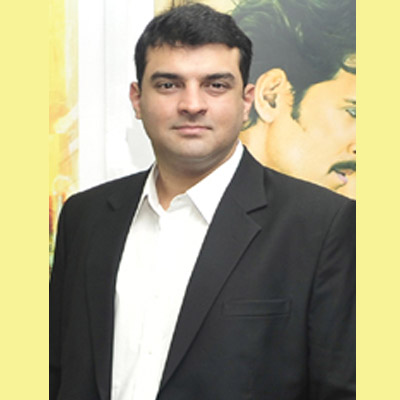
In an interview with Sibabrata Das, UTV Motion Pictures CEO Siddharth Roy Kapur talks about the challenges that film producers face with pressure on star costs and RoI (return on investments) and how the company has grown into a powerhouse in such a short span of time.
Excerpts:
|
UTV has cut costs in its broadcasting operations due to economic slowdown. Will the motion pictures business see a similar scale back plan? |
||
|
The capital employed in the movie business till the first half of Fy’09 is Rs 7.26 billion. Will the deployment see the same pace? |
||
|
The Namesake and The Happening has been UTV’s efforts to build an international IPR basket. Will 2009 see a retrenchment in these plans as we don’t hear of any movie with Will Smith or others kicking off in the year? |
||
|
In a bid to scale up, several Indian film studios have burnt their fingers by acquiring movies at high cost. Has UTV consciously decided to stay out of such acquisitions? Acquisition prices will see a change as we are entering a period of economic slowdown. Though we acquired two movies (Race and Kismat Konnection) out of the 10 that we released in 2008, it is not part of our overall business plan. Our strategy is to produce our own movies. We are not looking at acquisition to scale up. |
||
|
Do you see pressure on revenues this fiscal because of recession? |
||
|
||
|
How much did two of your biggest hits – Jodhaa Akbar and Race – contribute to the kitty? Our business model is to produce a few big budget movies while lining up mid-range and small films. We do not want to put all our eggs into one basket. We make movies in different genres, with different makers, and in different budgets. We are developing various labels to address different segments. The common thrust across all the segments is to have quality that is really consistent. |
||
|
Will the RoI improve in the coming years? |
||
|
UTV Motion Pictures did a deal with Disney to distribute their Hollywood content in India. How big a revenue opportunity will this throw up? |
||
|
Walt Disney has done a co-production with Yash Raj Films. But despite having a stake, why haven’t they gone ahead with a joint Bollywood movie project with UTV? |
||
|
Why did UTV decide to exit the home video business? We will handle the home video business in overseas markets and have offices in US, UK and Dubai. |
||
|
Will we see a more aggressive regional movie lineup from UTV in 2009? |
||
|
||
|
Do Bollywood films make a more strong multiple revenue stream? |
||
|
Will UTV continue to do syndication deals?
We have done syndication deals with Zee and Colors. We will continue with the syndication model as we have our own Hindi movie channel. Unless, of course, we get a very good pricing for a 3-year or 5-year deal. |
||
|
Will UTV’s big drive in 2009 be scaling up?
Our focus in 2008 was to get the team in place and work with right scripts and talent while scaling up. We will continue to build on that in 2009. We will explore all revenue opportunities including new ones like pay-per-view (PPV) on DTH. We offered Oye Lucky! Lucky Oye to DTH operators on PPV mode within a short time of theatrical release. This is a massive opportuinity in future and we intend to properly monetise the satellite market in a big way. |
||
|
UTV has invested in gaming companies. How are you exploiting the new media opportunities?
We have mobile gaming for all our movies. For developing console gaming, it would require a long lead time and we do not have the product yet for it. |


 Firangi is set to launch on 25 February, importing content from across the world -Germany, France, Spain, Argentina, Mexico and Israel.
 Sapre has research to back this up. A recent research “Understanding the Psyche of Hindi Serial Viewers,” done by Starcom India and Hansa Research, reveals that 2/5th of viewers of Star Plus and Zee TV find Hindi soaps repetitive and boring.
 Sample this: UTV‘s Bindass has four original shows – Hassley India, Shakira, Sun Yaar Chill Maar and Third Degree, while it has around six international contents which include The Benny Hill Show, Japanese Pro Wrestling Show, Gotcha, Motorrad Cops, Whacked Out Sports and Challenges of Fire.
  Over the last 5 years, the dubbed content market has grown 10 to 15 per cent per annum, and is expected to grow further. Entertainment (TV and film) has reached new territories and all this has been due to dubbing. For example, without being dubbed in Bhojpuri, Spiderman would have never reached that part of India.”
 UTV‘s dubbing department has long-term exclusive associations with channels like Hungama, National Geographic Channel, History Channel, Bindass, Bindass Movies, Nick and Disney. It does more than 1,000 hours of dubbing every year.
 Cost-cutting from TV production houses is a big obstacle. Says Mehta, “Since the production houses which do dubbing always go for cost cutting, they do not place high value on a premium artist. As a whole, they compromise on the voice quality.
 Defends Firangi business head Rajeev Chakrabarti: “We are completely aware of the sensibility and ethos of India. We at Firangi do not just translate and lip-sync for the characters. With the exception of shooting, we do the entire post-production work, which involves scrutinising sex and nudity.”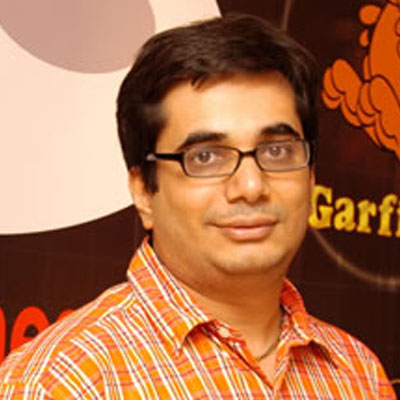

 Finding a target group that wasn‘t specifically tapped by the other channels was her first task. She commissioned research firm PQR to help her discover what she calls “our zone.”
 As UTV Youth venture COO, Mehta is geared up with a three phase plan and a piggy bank of Rs 1 billion (drawn from Rs 2 billion outlay over three years) devoted to the first year alone. In GENX, the joint venture company that will roll out the channel and other youth-related initiatives, Malaysia-based Astro will be a 50 per cent equity partner.
 As part of its approach, UTV seems to be adopting a multiple revenue model that old timer music channels MTV and Channel [V] have tried and tested in the market. MTV VP creative and content Ashish Patel calls this form as ‘multi-platformication’ which includes online, mobile, events, retail and merchandise.
 Though not a direct threat, music channels have been targeting a similar demographic segment. “UTV, however, seems to be having a sharper focus within that TG by eyeing programming at the 17-21-year-olds. But we are essentially music channels and having been in existence for so long, are not really worried,” says Channel [V] head honcho Amar Deb.