Tag: UTV Global Broadcasting

  • Disney India sees senior level exits

    Disney India sees senior level exits

    MUMBAI: It was in October, last year, that the news of Ronnie Screwvala deciding to step down as the managing director of Disney India (then Disney UTV) broke.


    Screwvala, since then, has pursued his entrepreneurial goals and invested in various companies and Siddharth Roy Kapur has taken over the company’s India operations, effective 1 January.


    Nonetheless, the move has lead to many other changes in the company. In the recent past, many at the senior management have left the company.


    The first one to leave after this change was the Disney UTV Media Networks managing director MK Anand. He is currently the managing director and chief executive officer at Times Television Network.


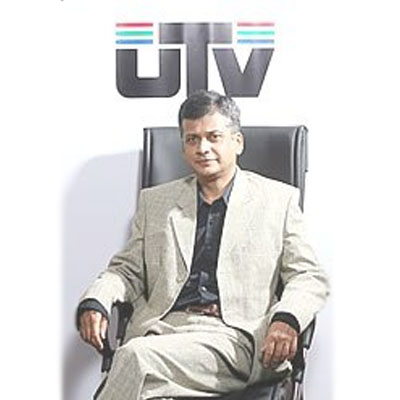
    Anand had joined UTV Global Broadcasting in 2009 as CEO and after the Walt Disney acquisition in 2012, he was appointed the managing director of Disney UTV Media Networks.


    He was followed soon by others. Two of its employees left to join Shah Rukh Khan’s Red Chillies Entertainments. Gaurav Verma joined the production house as its new chief revenue officer while Manish Hari Prasad joined it, after being instrumental in getting the (Disney) studio its most successful film, ‘Chennai Express’, on board.


    Verma , as Disney executive director theatrical distribution, handled worldwide theatrical distribution, while Prasad was the creative director of UTV.


    The latest to move on from the network is Shikha Kapur. Kapur who was heading marketing for Studios, Broadcasting (youth and movie) and the Interactive business and served as the vice president of the company has joined Fox Star India as chief marketing officer.


    As per industry sources, this isn’t the end of top management leaving the company. Many more will be soon following in biding goodbye to Disney India.


    The sources blame Ronnie’s exit and Kapur’s elevation behind these exists.


    We will have to just wait and watch what happens next.

  • UTV’s verticals profitable in FY’11, movie dominates

    UTV’s verticals profitable in FY’11, movie dominates

    MUMBAI: The movie business is still UTV Software Communications’ leading vertical, but the television and gaming segments have supported the company’s growth in FY’11.

    UTV has achieved its movie revenue guidance for the fiscal, posting a turnover of Rs 4.54 billion. while all the verticals have turned operationally profitable.

    For the full-fiscal, the company with varied interests in movie production, broadcasting and gaming has posted a a consolidated net profit (after minority interest) of Rs 1.35 billion, a 154.03 per cent jump from Rs 533.32 million a year ago.

    UTV’s operating revenue for the fiscal jumped 40 per cent to Rs 9.29 billion, from Rs 6.64 billion in the earlier year. Television business aided 38 per cent of the topline during the fiscal.

    The company has consolidated the financials of UTV Communications (USA) LLC, IG Interactive Entertainment, UTV Global Broadcasting, UTV TV Content, UTV Games, First Future Agri & Developers, UTV New Media, Indiagames and the group’s stepdown subsidiaries -Ignition Entertainment, True Games Interactive, Genx Entertainment, UTV Entertainment Television, UTV Tele-Talkies, RB Entertainment Ltd & Vikatan UTV Content and the JV Screenshot Television Limited.

    Movie Segment:

    Aided by films like Rajneeti, No One Killed Jessica, Saat Khoon Maaf, and Dhobi Ghat among others, the movie business revenue jumped 44 per cent to Rs 4.54 billion, from Rs 3.15 billion a year ago. Operating profit went up 60 per cent to Rs 1.53 billion, from Rs 951 million.

    UTV was largely de-risked with a combination of pre-sales and committed revenues on account of music, home video, TV and ancillary revenues prior to the release of the movies.

    Television Segment:

    The television segment revenue jumped 43 per cent to Rs 3.56 billion, up from Rs 2.49 billion a year ago.

    The company posted operating profit of Rs 309 million from the segment compared to an operating loss of Rs 2 million in the earlier year.

    Games and Interactive division:

    UTV’s gaming and new media business raked in Rs 1.2 billion, contributing to 13 per cent of UTV’s total revenue. The company had registered a revenue of Rs 1.07 billion from the segment in the previous fiscal.

    The segment saw an operating profit of Rs 141 million, as against an operating loss of Rs 148 million in FY’10.

    The segment comprises Ignition, Indiagames, True Games, web and mobile foray of the company.

    As of 31 March 2011, UTV had a net debt of Rs 8.19 billion.

    Shares of UTV jumped 4.01 per cent to close at Rs 654.55 on the BSE.

  • TV news industry should look inwards

    TV news industry should look inwards

    MUMBAI: The electronic news industry in India is in a bad shape. There is an over-dependence on advertising income, too many players (including some non-serious ones) occupy the space, content has degraded, and pressure is on revenues.
    If things remain this way, the future of electronic news is not very bright. This was the general consensus of the panel which debated on “The Future of Electronic News”.

    The session, moderated by Indiantelevision Dot Com founder, CEO and Editor-n-Chief Anil Wanvari, had TV Today Network executive director and CEO G Krishnan, MCCS CEO Ashok Venkataramani, UTV Global Broadcasting CEO MK Anand and CNBC Awaaz editor Sanjay Pugalia in the panel.

    Venkataramani said that the time had arrived for the TV news industry to look inwards. Talking about content, he said he couldn’t remember the last time when a 24-hour news channel broke a story that was followed by the print media the next day. He also pointed out that it is not necessary to dramatise content.

    Venkataramani remarked that unlike BBC, Indian channels don’t invest in documentaries. “We have not seen value in that,” he said.

    He also pointed out that the utilisation of their biggest investment – OB Vans – is less than 20 per cent. “60 per cent of the time, these vans spend in travelling from one place to other, 20 per cent of time they are idle, and the remaining time is when they are used for live reporting. Which business can grow where the biggest asset has a utilisation of under 20 per cent?” he asked.  
    Despite news channels having national network and bureaus, 40-45 per cent of the stories are coming from the stringers, Venkatarmani added.

    Pugalia took a cue from Venkataramani and spoke about the lack of confidence in the editorial operations. He said that reporters were made editors when they should have done reporting for 10 more years. “So they don’t have an idea of what can work and lose confidence in their own content. Every morning, instead of thinking what we are doing today, we think of what the other channels have done.”

    He also blamed the non-serious players for the degradation in content. He said that because one player is showing frivolous content, everyone is following that. “We need to break ourselves out of the the rat race and kick out the intruders and non-serious players. It is wrong to give frivolous content in the name of competition.”

    The panellists agreed that digitisation would help the industry grow.

    “There has been a huge delay in the digitisation and it is a clear roadblock, which has become a spiralling problem. All stakeholders must try to find out a solution in the immediate future. Digitisation will also bring down carriage costs,” Krishnan said.

    According to Anand, the low entry barrier by the government has added to the woes of the industry. While competition is dividing the pie, there is not much room for growth. Managing the cost is also an issue, he added.

    Venkataramani said the industry should invest in content production and delivery for news breaks.
      

  • ‘Strategic investor will take stake in the broadcasting entity’ : Shantanu Aditya – UTV Global Broadcasting executive director and V&S Boardcasting CEO

    ‘Strategic investor will take stake in the broadcasting entity’ : Shantanu Aditya – UTV Global Broadcasting executive director and V&S Boardcasting CEO

    UTV is lining up nine channels and is planning to bet Rs 6 billion in it. The company is in talks with strategic investors to support its broadcasting venture which will be under the umbrella of UTV Global Broadcasting.

    The aim is to try and carve out a place in the youth and niche segments. The three TV verticals UTV wants to operate on are Genx Entertainment which will roll out the four youth-centric Bindass channels, UTV News for the business news channel, and V&S Broadcasting for movie and Hindi speciality channels.

    The company expects the Hindi movie channel to drive this bouquet of pay channels along with Bindass.

    In an interview with Indiantelevision.com's Sibabrata Das and Renelle Snelleksz, UTV Global Broadcasting executive director and V&S Broadcasting CEO Shantonu Aditya chalks out the road ahead for UTV's plans in the broadcast space.

    Excerpts:

    How is UTV arranging funds for the slew of nine channels it plans to launch?
    The total investment requirement for these nine channels is Rs 6 billion. While UTV will be investing Rs 1.5 billion as part of its contribution, the balance will be raised by a combination of equity at a premium and any other suitable instrument.

    Is UTV in talks to rope in strategic or financial investors?
    We are in advanced talks to get a strategic investor who will hold minority stake and come in at a premium.

    Will the strategic investor take stake in UTV Software Communications, which is the listed entity, or in the broadcasting arm?
    It will be in the broadcasting entity and not in UTV Software Communications. The broadcasting initiatives are under UTV Global Broadcasting. It has three wholly owned subsidiary companies – Genx Entertainment, V&S Broadcasting and UTV News Ltd. I wouldn't be in a position to comment on exactly where the investor is going to take a stake.

    Does UTV Software Communications have a stake in UTV Global Broadcasting?
    UTV Global Broadcasting is privately held. But this equity ownership arrangement could change after the investor is roped in.

    UTV had earlier announced that Genx, which would launch the Bindass channels, would be a joint venture with Astro as an equal partner. So is it that the three subsidiaries would be having different partners and still you would have an investor in the parent company?
    It is premature to discuss this at this stage.

    Is there a possibility of Astro picking up stake in UTV Global Broadcasting?
    As I said earlier, we can't comment on this at all.

    Will UTV News Ltd. have a separate structure as news channels uplinking from India come under a 26 per cent cap on foreign investment?
    We will abide by the current guidelines on investment in news channels.

    Speculation is that a group of Indian investors are going to invest in the news channel?
    We are speaking to a number of interested investors. It will be premature to mention any specific names at this stage.

    Will you be launching Bindass it in the first week of September?
    We will be progressively rolling out all the nine channels by mid-2008. Bindass, the youth Hindi general entertainment channel, will be up soon. This will be followed by Bindass Movies.

    Will they be pay channels?
    All our channels will be pay from the first day of launch. The first two channels are priced together at Rs 20 in non-Cas (conditional access system) and Rs 10 in Cas markets.

    'If you have a good acquisition and syndication strategy, you can build a successful Hindi movie channel'

    What are the other two channels to be launched by Genx under the Bindass brand?
    They will be in the regional space. Most probably they will be Tamil and Telugu language channels. But we are currently conducting research to support this.

    What are the four channels being launched by V&S Broadcasting?
    We will be launching a Hindi movie channel which will drive our distribution bouquet along with Bindass. We will have a world movie channel and there will be two Hindi speciality channels. We are also launching an English business news channel as we feel there is a considerable gap between viewer expectations and what they get right now.

    What are the scheduled dates for these channel launches?
    We are launching the World movie channel in November. The two Hindi speciality channels should be up in January and February. The business channel is targetted for a January launch and we should be ready with the Hindi movie channel in February.

    UTV had tied up with Palador Pictures for the world cinema venture with Olive as the brand. But with the split and Palador getting back all the titles, isn't it a setback for UTV?
    We have already acquired 150 titles and are looking at 300 at the time of launch. We will be screening the best of contemporary cinema and see a big opportunity in this. There are award winning titles and there are also good films from Bosnia, Iran and Argentina.

    Will high-priced DVDs be an important source of revenue and support system for this kind of cinema which will in any case attract niche audiences?
    We will have DVDs and theatrical release. We haven't decided whether we should go in for a high pricing or a volume strategy. But the channel has to drive by itself.

    How will you make a mark in the Hindi movie channel space when the existing players are entrenched, many more are on eve of launch, and acquisition costs are high?
    We are looking to launch with a bank of 300 titles, of which 50 films have already been acquired. The dynamics of the business is also changing. I see a syndication model coming into place and a lot of sharing of titles across channels. You may not see clean straight exclusive deals over a longer period as in the past. There will be a variety in the way you purchase movie rights.

    If you have a good acquisition and syndication strategy, you can build a successful model. Movie channels are platform agnostic and audiences are loyal to titles.

    While several broadcasters are eyeing the GEC space, why is it that UTV decided to foray into the niche genres of special interest channels?
    We have consciously decided to stay away from launching a general entertainment channel primarily because there has been a drop in viewership of 30 per cent in the Hindi GEC space in the age bracket of 15 – 35 years. The market needs segment-dedicated channels – and that is the domain we are entering into.

    Distribution of the new channels is a critical area. Have you set aside huge carriage costs?
    Carriage charges are a challenge. However, we have signed contracts with almost all the multi-system operators (MSOs) for our first set of channels.

    Have you stitched deals also with the direct-to-home (DTH) operators?
    I can't comment at this stage.

    Given the current media boom that the industry is witnessing, how are going to attract and retain talent?
    We have already recruited around 170 people for our broadcasting business. We are drawing in talent through a combination of compensation and stock options. Retention is a big part of our strategy.