Tag: Uttaran

  • The List Of Indian TV Serials That Broke Stereotypes

    The List Of Indian TV Serials That Broke Stereotypes

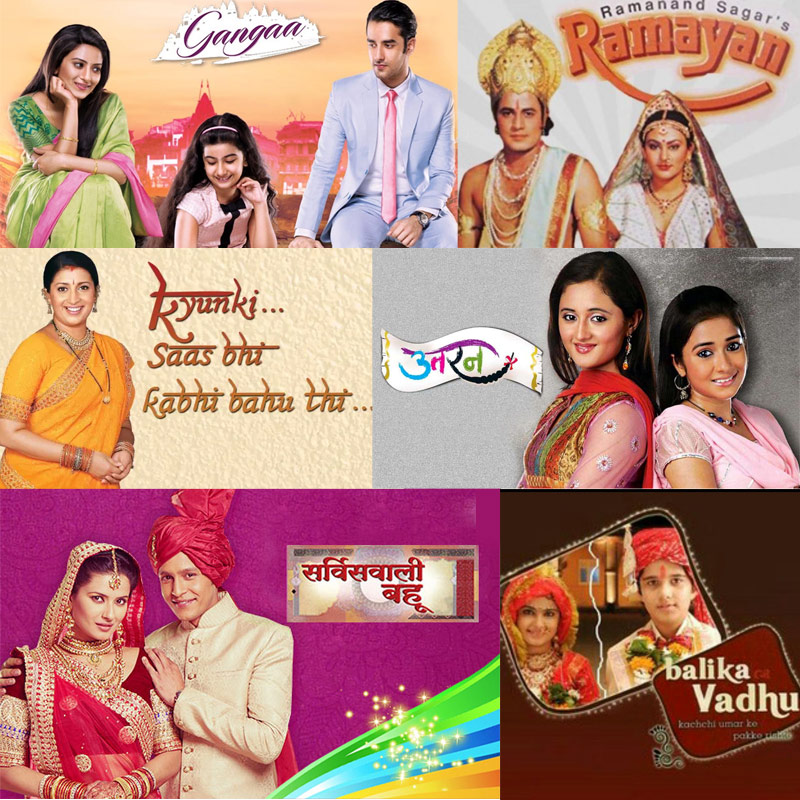
    Since the dawn of the television industry, you all must have seen hundreds of serial dramas. Over the last three decades, serials have been a major part of our daily life. From ‘Ramayana Epic’ to ‘Kyunki Saas Bhi Kabhi Bahu Thi’ to ‘Service Wali Bahu’, everyday family members will sit together in the evening at the dinner table and watch these serials and laugh and cry together. These daily soaps influenced, dominated and established a large part of our society. And there is no doubt in saying that they left their essence to the core of our hearts and minds.

    However, the emerging socialization in the past decade has greatly changed the mindsets of the people of our country. For the better, this has also encouraged our serial directors to deviate from the usual saas-bahu dramas to more social stories, which is both hit among masses and useful to educate new-age India and break stereotypes.

    With the introduction of modern technology, smartphones, online casino, and Netflix we are rarely left with dull moment. Meaningful plots of the TV shows have helped in changing the perceptions of the people who still believed in the items of old faiths, stereotypes, and taboos!

    Here’s the list of Indian TV serials that have broken the stereotypes over the past few years:

    GANGAA

    Gangaa was launched on March 2, 2015 and is still an ongoing TV serial that airs on &TV. This TV series took up the serious issue of child widow custom in India. The plot revolves around Gangaa (played by Ruhana Khanna), a child widow. She has an indomitable will to survive and live her life to the fullest, against all old-age beliefs and norms that society is trying to impose on her. This shows the main aim is to abolish the child widow culture that is still rampant in many parts of the country.

    UTTARAN

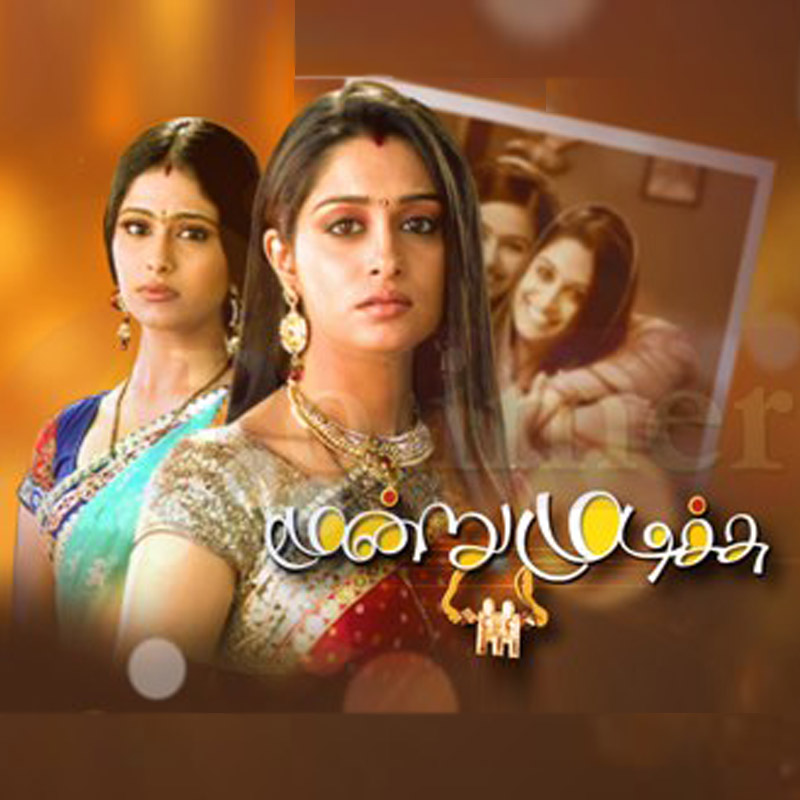
    Uttaran debut in December 2008 and we all saw the finale episode of this amazing Indian soap opera in January 2015. This show is about two childhood friends, Ichcha and Tapasya that come from the different strata of society. This TV series showcases how despite the vast difference in their status, these two little girls become the best of friends. However, cut to 10 years we see some jealousy creeping into their relationship due to the entry of some negative characters. However, the initial theme of the show seems to break all the stereotypes regarding friendship and teach us how friendship is about connection and not about social status.

    BALIKA VADHU

    With 2,245 episodes in a span of approximately 8 years, Balika Vadhu swayed the nation from its very beginning. This show's main premise revolves around the still ongoing child marriage in our country. The child groom and bride were played by Avinash Mukherjee and Avika Gor respectively. The story revolves around the two getting married as children, growing up together, and facing difficulties related to child marriage because of their family’s involvement in the process. Through their strong storyline, this shows keeps on throwing across some critical social messages to the audiences. In 2008, the series won the ‘Best Programme With A Social Message’ award at the 8th Indian Telly Awards.

    Service Wali Bahu

    This Indian soap opera was launched in February 2015. The story of this women-centric show revolves around Payal (played by Kratika Sengar), who is a civil engineer, a homemaker and a sole bread-earner of her family. In order to support her in-laws and unemployed husband, she goes out to work. Not only the protagonist is earning bread but is taking care of household and homemaking tasks. This serial shows full support to feminism which also talks about other Indian customs such as the dowry system. Payal’s life has inspired many women in our country and it won’t be wrong to say that it has broken many stereotypes and old norms regarding women.
    These TV serials have changed the way people think and have shattered many stereotypes. And the new open way of thinking will take our country forward.

  • The battle for original Tamil TV content in Tamil Nadu

    The battle for original Tamil TV content in Tamil Nadu

    MUMBAI: Another South vs North battle is brewing in Tamil Nadu.

    Over the past four years, a new secondary market has developed for top notch Hindi general entertainment fiction shows in the state. Tamil television networks have been picking up Hindi series, dubbing them into Tamil and putting them on air.

    Among the Hindi shows that have got a Tamil home figure: Naagin, Ballika Vadu, Thapki Pyar Ki, Swaragini, and KumKum Bhagya, Udaan, and Uttaran, Na Aana is des Laado, Tu tu Main Main, Parvarrish – Kuchh Khattee Kuchh Meethi.

    These have been shown on channels such as Polimer TV, Raj TV, Sun TV, and Vijay TV and have generated good ratings.

    But that market is coming under threat on account of two developments – large networks such as Viacom18, Star India, Zee TV, are moving into launch their own Tamil GECs (either their first or second channels) and hence they are discontinuing the licensing of the dubbed Hindi shows – at least the more popular ones – to other Tamil channels.

    On another front, the Tamil TV fraternity is coming up in arms against the increasing invasion of Hindi shows on the small screen. In fact, a day-long protest has been planned for 14 August at Valluvar Kottam, a monument dedicated to the famed poet Thiruvalluvar, in Chennai. Taking part in the protest will be small screen actors, producers, directors and technicians.

    Estimates are that dubbed Hindi series account for 40 of the 80 slots for fiction on all Tamil television channels. The reason: the lower cost of acquiring the series and dubbing them. The production cost of a single original episode is anywhere between Rs 60,0000 to Rs 2.5 lakh; the acquisition price for a single ready dubbed Hindi series episode is anywhere between Rs 35,000-Rs 50,000 per episode.

    The production values however are much higher in the case of Hindi fiction and the shows which are normally acquired already have a successful track record. Hence, Tamil TV channels have been banking on them. And over the past two years, more and more of these dubbed series have been attracting and retaining Tamil audiences.

    This is what has got the TV unions’ goose; they say their members are losing employment. And the federation of small screen technicians says it is also going to write to Tamil Nadu chief minister Jayalalitha to help fight what it calls a menace.

    However, broadcasters say it is all about business. Raj Television Network – which currently has Mann Vasanai (Ballka Vadhu), Poovizhi Vasalile (Udaan), Kanchana (Shastri Sisters), Indira (Thapki Pyaar Ki) running on its channel – vice-president programming and production vice-president Amit Bose points out that whatever is made in the north can’t be shown in Tamil; and Tamil GECs are not about all out dubbed content.

    “But being a content creator if the content is working and getting good ratings for the channel then wouldn’t I bring in dubbed content?” he asks. “For us it’s an opportunity to bring content that suits Tamil audiences,” he adds.

    According to him, both broadcasters and producers and technicians are right in their place. “They are protesting keeping their interests in mind,” he says. “But we are also right. They want employment and an assured income from their experience and knowledge and from my knowledge I want to have a fair say in how to run my business.”

  • The battle for original Tamil TV content in Tamil Nadu

    The battle for original Tamil TV content in Tamil Nadu

    MUMBAI: Another South vs North battle is brewing in Tamil Nadu.

    Over the past four years, a new secondary market has developed for top notch Hindi general entertainment fiction shows in the state. Tamil television networks have been picking up Hindi series, dubbing them into Tamil and putting them on air.

    Among the Hindi shows that have got a Tamil home figure: Naagin, Ballika Vadu, Thapki Pyar Ki, Swaragini, and KumKum Bhagya, Udaan, and Uttaran, Na Aana is des Laado, Tu tu Main Main, Parvarrish – Kuchh Khattee Kuchh Meethi.

    These have been shown on channels such as Polimer TV, Raj TV, Sun TV, and Vijay TV and have generated good ratings.

    But that market is coming under threat on account of two developments – large networks such as Viacom18, Star India, Zee TV, are moving into launch their own Tamil GECs (either their first or second channels) and hence they are discontinuing the licensing of the dubbed Hindi shows – at least the more popular ones – to other Tamil channels.

    On another front, the Tamil TV fraternity is coming up in arms against the increasing invasion of Hindi shows on the small screen. In fact, a day-long protest has been planned for 14 August at Valluvar Kottam, a monument dedicated to the famed poet Thiruvalluvar, in Chennai. Taking part in the protest will be small screen actors, producers, directors and technicians.

    Estimates are that dubbed Hindi series account for 40 of the 80 slots for fiction on all Tamil television channels. The reason: the lower cost of acquiring the series and dubbing them. The production cost of a single original episode is anywhere between Rs 60,0000 to Rs 2.5 lakh; the acquisition price for a single ready dubbed Hindi series episode is anywhere between Rs 35,000-Rs 50,000 per episode.

    The production values however are much higher in the case of Hindi fiction and the shows which are normally acquired already have a successful track record. Hence, Tamil TV channels have been banking on them. And over the past two years, more and more of these dubbed series have been attracting and retaining Tamil audiences.

    This is what has got the TV unions’ goose; they say their members are losing employment. And the federation of small screen technicians says it is also going to write to Tamil Nadu chief minister Jayalalitha to help fight what it calls a menace.

    However, broadcasters say it is all about business. Raj Television Network – which currently has Mann Vasanai (Ballka Vadhu), Poovizhi Vasalile (Udaan), Kanchana (Shastri Sisters), Indira (Thapki Pyaar Ki) running on its channel – vice-president programming and production vice-president Amit Bose points out that whatever is made in the north can’t be shown in Tamil; and Tamil GECs are not about all out dubbed content.

    “But being a content creator if the content is working and getting good ratings for the channel then wouldn’t I bring in dubbed content?” he asks. “For us it’s an opportunity to bring content that suits Tamil audiences,” he adds.

    According to him, both broadcasters and producers and technicians are right in their place. “They are protesting keeping their interests in mind,” he says. “But we are also right. They want employment and an assured income from their experience and knowledge and from my knowledge I want to have a fair say in how to run my business.”

  • Colors to awaken rural masses with ‘Udann’

    Colors to awaken rural masses with ‘Udann’

    NEW DELHI: The channel, which launched with path breaking shows like Balika Vadhu and Uttaran, is once again treading into the social issues gripping our nation.


    The new series, Udann, inspired by renowned filmmaker Mahesh Bhatt, will commence on Colors from 18 August.


    Bhatt was originally intending to make it into a film, which he had thought of 25 years ago, since the film industry then only wanted entertaining fare in the liberalised economy of the early nineties.


    He believes that while the Indian woman can call herself emancipated in many ways, she still cannot walk shoulder to shoulder with men. And bonded labor and exploitation of women continue to remain a curse, which is a matter of shame for India.


    The new series is produced by Gurudev Bhalla, once an assistant of Bhatt and Dhaval Jayantilal Gada while Robin Bhatt and Javed Siddiqui have scripted the show.


    Bhalla says he had sought Bhatt’s permission to make the series after he was approached by Colors to collaborate on TV, with suitable changes that will suit the medium.


    Moreover, Gada and Bhalla express that a lot of research has gone into ensuring that the story is told in the right spirit. They also worked closely with NGOs fighting against bonded labor to ensure realistic representation.


    Colors CEO Raj Nayak says that the channel was not put off by the fact that the series was launching at the same time as Amitabh Bachchan’s Kaun Banega Crorepati season eight on Sony and Nisha Aur Uske Cousins on Star Plus. The time slot (8.30 pm) had been picked as Madhubala has ended and the other series are running well in their respective slots.


    In fact the launch of the series had been planned much earlier to be around Independence Day since that was the theme of the series – freedom – but it could only be launched on a Monday.


    According to Colors weekday programming head Prashant Bhatt social issues like bonded labor is widely prevalent even in 21st century urbanised India and needs to be brought to fore and fought against. Udann narrates a tale about the life of Chakor who has a strong survival instinct which keeps her sailing through the toughest situations. Her rebellious yet endearing nature proves that simplicity and innocence together will make for an attractive viewing proposition for audiences. In Chakor’s story that represents the unrealised hopes of countless Indians, suppressed by this barbaric practice of bonded-labor, viewers are sure to find an inspiring story of hope and resilience.”


    Furthermore, Nayak says Colors accepted the idea of the serial as its ‘DNA is social themes’.  Sources peg per episode production cost at around Rs 8 lakh to Rs 12 lakh.


    Since the issue of bonded labour is linked to rural areas, the channel will promote and even hold press meets in Taluka headquarters, apart from using all media like radio, hoardings, TV and social media to promote the series.


    The series stars young Spandan Chaturvedi in the main role of the child Chakor, Sai Ballal, and Sai Deodhar-Arvind.

  • Colors hops back to number three

    Colors hops back to number three

    Updated: 07:41 PM


    MUMBAI: In week 28 of TAM TV ratings, Colors proved its might and bounced back to number three position. It registered 342,279 GVTs, up from 320,019 GVTs. Moreover, it was the only Hindi general entertainment channel (GEC) to gain this week, while all the others saw a fall in viewership.


    So what worked wonders for the Colors? Almost all its properties have seen an increase in the viewership. Thus, Sasural Simar Ka noted 4,366 TVTs, up from 4,179 TVTs, Uttaran recorded 2,262 TVTs, up from 2,188 TVTs. Talking about its non-fiction properties, Comedy Nights with Kapil witnessed a huge growth in the ratings and garnered 7,615 TVTs, up from 5,834 TVTs, Jhalak Dikhhla Jaa registered 4,246 TVTs, up from 3,323 TVTs and The Anupam Kher Show stood at 2,591 TVTs, up from 1,445 TVTs.


    Talking about numero uno Star Plus, it continues to dominate the chart by leading the number one position. It stood at 673,330 GVTs, down from 703,493 GVTs. So was it a lull period for the channel? Most of its fiction properties have seen a fall in the viewership. Thus, Pyar Ka Dard Hai noticed 5,111 TVTs, down from 5,258 TVTs, Saath Nibhaana Saathiya scored 7,909, down from 9,402 TVTs, Iss Pyar Ko Kya Naam Du recorded 2,517 TVTs, down from 2,656 TVTs.


    Zee TV enjoys its number two position with 424,522 GVTs, down from 479,080 GVTs. Almost all its properties have seen a drop in the viewership. The channel’s chart leader Jodha Akbar noticed 7,598 TVTs, down from 7,998 TVTs, Aur pyar Ho Gaya observed 3,992 TVTs, down from 4,014 TVTs. Its non-fiction property India’s Best Cine Stars Ki Khoj also saw a drop and recorded 2,608 TVTs, down from 3,482 TVTs.


    Life OK moves back to number four with 324,996 GVTs, down from 347,760 GVTs. The channel’s hot property Savdhaan India recorded 2,530 TVTs, down from 2,626 TVTs. Maha Dev noted 1,720 TVTs, down from 1,843 TVTs and Gustakh Dil observed 1,772 TVTs, down from 1,809 TVTs.


    Sony continues its successful journey at number five with 248,304 GVTs, down from 287,707 GVTs. CID still seems to be the popular among the masses as it scored 4,394 TVTs, up from 4,145 TVTs. Maharana Veer Pratap also saw a rise in the ratings as it 3,056 TVTs and Crime Patrol scored 1789 TVTs, up from 1,732 TVTs.


    Sab stood at number six with 248,304 GVTs, down from 275,947 GVTs. The channel’s chart topper Taarak Mehta Ka Ooltah Chashmah recorded 6,460 TVTs, down from 7,019 TVTs. Badi Door se Aaye Hai noted 2,444 TVTs, down from 2,732 TVTs and Chidiya Ghar garnered 2,719 TVTs, down from 3,012 TVTs.

  • Colors set to launch ‘Meri Aashiqui Tum Se Hi’

    Colors set to launch ‘Meri Aashiqui Tum Se Hi’

    MUMBAI: TV czarina Ekta Kapoor who has been ruling the television industry for more than two decades is riding high on success. Colors together with Balaji Telefilms is all set to present one-sided love story, narrated from the male protagonist’s point of view. Nothing hurts more than love not reciprocated, and this is what exactly Kapoor’s next show deals with.

    Christened Meri Aashiqui Tum Se Hi, the show is set in present-day Mumbai and narrates the story of two close friends Ranveer and Ishaani. The series will also highlight the thin line of difference between true friendship, loyalty and unending love.

    Come 24 June, the new series will showcase the value of a big fat Gujarati family every Monday-Friday at 10pm. The show will replace Uttaran, which had a successful seven years stint in the industry.

    Colors weekday programming head Prashant Bhatt said, “With Meri Aashiqui Tum Se Hi, we are looking forward to extending the love story offerings on Colors that will take the audiences on a whirlwind journey of every emotion associated with friendship and unrequited love. We are happy to collaborate with Ekta Kapoor yet again to put forth a refreshing and unexplored love story. We hope our viewers will revel in this avant-garde story presented to them from the male protagonist’s point of view.”

    Emphasising the thought, “Even love unreturned has its rainbow” the show vividly traces the journey of Ranveer (Shakti Arora) whose amorous friendship with Ishaani (Radhika Madan) becomes a painful point in his life, as he finds himself unable to confess his undying love for her.

    Speaking about show Kapoor opined, “The USP of the show is the emotional journey that the audiences will trace with Ranveer, as his feelings for Ishaani pull at their heartstrings and resonate the empathy that comes with a love that can never be his. Every actor in the show has been carefully chosen for the character they will be portraying, making them the perfect fit as they play crucial roles in taking the storyline forward. Our characters are relatable and if viewers are able to feel the pain that Ranveer feels every time his heart breaks a little more, it will be an ultimate win for us.”

    Shakti Arora aka Ranveer said, “For Ranveer, his life revolves around Ishaani. He has been in love with her for as long as he can remember, but he is also conscious of the fact that his feelings will never be reciprocated. Getting into the skin of Ranveer’s character was extremely difficult for me because expression of emotion is very important to me. I hope audiences do enjoy my portrayal of a silent lover whose single aim in life is to ensure that Ishaani is happy.”

    Speaking about her television debut, Radhika Madan aka Ishaani said, “I always aspired to be a choreographer…acting was never on the cards. However, now that I am making my television debut with Meri Aashiqui Tum Se Hi under the expert guidance of Ekta Kapoor and the Colors creative team, I feel elated yet anxious at the same time! Ishaani is the perfect Indian girl who believes in love and all the good things in life and I am working really hard to get into the mould of her character. The experience shooting for the show has been incredible so far and I hope that audiences support me as I venture into this new and unknown world of acting.”

    Supporting the lead pair of Shakti and Radhika will be a powerful star studded cast which includes veteran actor Sarita Joshi as Ishaani’s tyrant grandmother together with Gauri Pradhan-Tejwani who is making a comeback on television after a gap of five and a half years with this show as Falguni.

    Gauri Pradhan-Tejwani will be seen in a brand new avatar as Ishaani’s mother. Completing the picture-perfect family portrait will be popular theatre actor Prithvi Sankala as Ishaani’s father along with talented actor-writer Shahab Khan as Ranveer’s father, amongst others.

  • Eros International to offer top rated TV content on ErosNow

    Eros International to offer top rated TV content on ErosNow

    MUMBAI: Eros International plc (NYSE: EROS) (“Eros”), a leading global company in the Indian film entertainment industry, today announced that it is adding top Bollywood television content to its large selection of movies and music content on its online streaming platform, ErosNow (www.erosnow.com).

    Beginning in May, 2014, ErosNow free as well as paying subscribers will have access to the highly popular television programming ranging from top rated current serials and soaps to reality shows such as Balika Vadhu, Uttaran, Sasural Simar Ka, Beintehaa, Rangrasiya, Sanskaar (Season 2), Madhubala, Comedy Nights with Kapil and Khatronke Khiladi (Season 5). These programs will be available on ErosNow within 36 hours of their television premiere in India with thousands of hours of catch up episodes.

    Speaking on the development, Rishika Lulla Singh, Chief Executive Officer of ErosNow said, “ErosNow is the only unique online streaming service in the world to offer both current and classic Bollywood blockbusters, music videos and popular television shows. The addition of even more premium television content offers our subscribers the instant access they crave to today’s most compelling and highly rated TV shows and series in India.”

    ErosNow is available across multiple platforms and provides subscribers with thousands of hours of free content through their PC, smartphone or tablet just by signing up for an ErosNow account. Subscribers can also choose to purchase a premium ErosNow subscription that provides access to the latest online premieres, HD quality content, and offers downloading capabilities across multiple devices for quality entertainment on the go.

  • Overseas market for Indian content and channels is very lucrative: Gaurav Gandhi

    Overseas market for Indian content and channels is very lucrative: Gaurav Gandhi

    MUMBAI: Imagine you’re in a far out place like Serbia and switch on the television to find Anandi of Balika Vadhu emoting in Serbian or in Hindi along with subtitles.  

    It may come as a surprise to viewers but not to broadcasters and producers keen to tap into the nearly three crore and counting Indians settled across the globe. One such being IndiaCast – an alliance forged between TV 18 and Viacom 18 two years ago. Currently present across 90 countries through its channels including Colors, MTV, Nickelodeon, Rishtey, News 18 India and ETV, the broadcaster aims to reach at least 150 countries in future. Some of IndiaCast’s popular shows include Balika Vadhu, Uttaran and Lado

    Indeed, pay-TV is a booming business outside of India with ARPUs at about $16 to $17 as compared to a measly $3 to $4 within the country. The roughly Rs 1,600 crore market has the potential to grow to more than Rs 3,000 crore in the next few years. 

    While the market first opened up in the late 1990s, courtesy Hindi films, of late, television soaps are raking in the moolah for broadcasters.   

    “A lot of markets originally opened up to Indian content through Bollywood such as Poland, Malaysia and Russia. But now these markets and many more in Eastern Europe, Central Asia and Africa are consuming a lot of our television fiction/drama content- in fact much more than Bollywood. One of the key reasons is that in some of these countries their local Television production is not so well established and so they import a lot of content of overseas markets – and sensibilities of Indian dramas work well in this context,” explains IndiaCast group COO Gaurav Gandhi. 

    Broadly speaking, there are three to four large import hubs in the world – Latin America, Turkey and Egypt, Korea and India. Off late, Turkey has picked up the radar with it growing to an approximate Rs 900 crore business with shows such as The End and 1001 Nights. Turkey’s bordering with Asia as well as Europe makes its content click more with the people and next in line is India. However, the amount of content India creates is a lot more than what can be consumed with all the big GEC networks creating about 200 hours of content per week.

    Apart from Indians settled abroad, content syndication now extends to local audiences as well. For instance, Zee Network has launched language – and area – specific channels like Zee Aflam and Zee Alwan in the Middle East and Veria Living in the USA. On the other hand, IndiaCast is building its own brands (more recently, Rishtey and News 18 India) across the world by making south Asian content available to everyone. 

    Potential markets for Indian content include UK, the Middle East, Australia, Singapore and Canada. Canada and UK are home to older Indian migrants while USA is home to recent migrants. There are strict regulations on shows in Canada while USA has affluent people who can pay for high television rates.

    “Distribution in the UK can be a challenge – with one large platform dominating the space. Also income disparities are huge when it comes to south Asians so pay-TV penetration at high rates is a deterrent to reach certain sections of the diaspora. We realised that there is an opportunity in the Free-to-air space and if we can offer a quality entertainment product, we can get a good share of eyeballs. That’s exactly what happened with Rishtey – which became an instant hit first and then we went and converted Colors to FTA. The model has turned out extremely beneficial commercially as we control two of the top three three slots on the Broadcasters’ Audience Research Board (BARB) rating charts for South Asian channels – which in turn have led to a big chunk of mainstream advertisers approaching us. These two along with News 18 India have made us the second largest South Asian network (in terms of advertising revenue) in the UK,” says Gandhi. For the record, BSkyB is the largestpay-TV broadcaster in the UK with News Corp (that also owns Star India) having a majority stake in it of 39.1 per cent.

    Australia is an untapped market but one highly plagued by piracy; he adds. Pakistan too had a lot of piracy till Colors tied-up with Geo TV to air shows at the same time as their telecast in India. The APAC feed for Colors was launched last month. IndiaCast hopes to launch full-blown channels in future in the markets where it syndicates content.

    Close to half of the UAE population is of South Asian origin market. The advantage here is that all the mainstream brands target the South Asian diaspora and IndiaCast has global brands like Pepsi, Jeep, Toyota, Emirates, Kraft, Ford, GM etc advertising with its channels. “It is a buzzing ad market. Our ad portfolio is similar to any Arabic or English channel in the Middle East (ME). The majority brand and media decision making for the ME region happens out of Dubai and Abu Dhabi,” he says. Meanwhile, Singapore is a relatively smaller market but with a good amount of Indian population; thus, leading to launch News 18 India in Singapore and the ME last week. 

    While USA and UK remain conventional markets, there’s an emerging tail of countries hungry for Indian content including Georgia, Croatia, Uzbekistan, Armenia, Azerbaijan, Poland and Greece. 

    Just last year, IndiaCast inked a deal with Tata Communications to simulcast its popular Colors’ shows in Pakistan. Also, reaching out to this growing consumer base is proving to be more cost-effective for the broadcasters. “Cloud delivery systems are providing cheaper transport solutions but many DTH and cable platforms in key markets are still hesitant to accept this as an alternative. IP platforms and OTT services have a far cheaper infrastructural set up compared to a DTH platform. Also there are minimal issues of capacity constraints on them,” he highlights.  

    IndiaCast segments the international markets in three parts. First, are the markets where it can fully reach with its linear full time channels and alongside do marketing, distribution and ad sales. The second set of markets are where it finds it difficult to land full channels for either regulatory (Pakistan) or capacity (Malaysia/South Africa) issues , but these markets have high demand for Hindi content. Here the focus is to do output deals for syndication as well as branded blocks of our content. The third set of markets is where the target is the locals (and not south Asians) with its content by dubbing or subtitling the same. “This third set of markets has been growing extensively for us and includes markets – like Serbia, Bosnia and Herzegovina,  Romania, Macedonia, Kosovo, Georgia, Croatia, Bulgaria, CIS countries (Azerbaijan, Kazakhstan etc), Uganda, Kenya, Senegal, Mali, Togo among others. This third set of markets is growing really fast and can be a big market in the future,” says he optimistically.

    IndiaCast has syndicated shows such as Balika Vadhu, Uttaran, Sasural Simar Ka, Laagi Tujhse Lagan and Madhubala to Eastern Europe while in Pakistan shows such as Bigg Boss, Khatron Ke Khiladi, Comedy Nights with Kapil and Jhalak Dikhhla Jaa have proved to be quite popular. The channels in Pakistan that get IndiaCast channels are Geo TV, Apna TV, Hum TV, ARY Digita, Urdu TV and A Plus TV. In Eastern Europe it reaches to Serbia (Pink TV, Prva Srpska Televizija), Bosnia (OBN, Pink TV), Macedonia (Sitel TV, Alsat, Kanal 5), Montenegro (Pink M), Croatia (Doma TV, RTL Televizija), Bulgaria (Nova TV) and in CIS countries channels such as Kazak TV.

    “If we look at our content sales/syndication revenues outside India, I can say that 50 per cent of that revenue comes from targeting locals/mainstream audiences (not south Asian) – and most of this is from our drama series. That’s a big change over the last two to three years,” Gandhi adds. 

    Market sources peg IndiaCast’s revenue from international distribution and syndication to be approximately Rs 250 to Rs 275 crore. “The overseas market for Indian content and channels is very lucrative – it’s already at Rs 1600 to Rs 1700 crore market and growing steadily. Three crore Indians overseas is a huge number and for them the Indian content is not just about entertainment – it’s an emotional connect with home,” points out Gandhi. 

    IndiaCast’s smaller but most rapidly growing business is its digital distribution through syndication of content to online platforms. Gandhi claims that the broadcaster’s digital business has grown four times in the last year with money made through OTT platforms such as Netflix and iTunes; through VODs such as YouTube; and through telco partnerships.  

    Speaking of competing broadcasters in the pay-TV market outside India, Gandhi says, “There is enough headroom for all four big players to grow and I firmly believe to expand the market we need to work together in certain areas even though we compete amongst us. If a new platform is coming up then it needs to have channels from multiple broadcasting groups and not just one of us.”

    At the same time with digitisation at a steady pace in the country, Gandhi hopes that someday soon, the ARPUs here will be Rs 500 that will bring profit to most in this business.

  • Hindi GECs lend colour to Holi celebrations

    Hindi GECs lend colour to Holi celebrations

    MUMBAI: Squirt coloured water on your friends and dear ones or smear their faces with Gulaal… anything goes for it’s that time of the year when you can say, “Bura na maano, holi hai”.

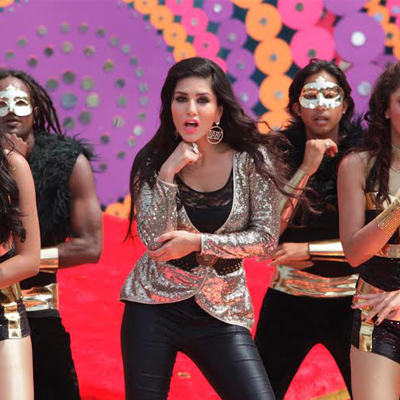
    With the festival of colours just round the corner, Hindi GECs are going hammer and tongs to jump into the Holi revelry. Kick-starting the celebrations will be Colors’ ‘Beintehaan Jazbaat Ke Rang’ on 15 March from 7.30 to 9pm. The show will bring together protagonists of Colors’ many shows such as Bani- Ishq Da Kalma, Uttaran, Balika Vadhu, Beintehaan and Rangarasiya. Among a slew of performances, Sunny Leone, who stars in Balaji Motion Pictures’ upcoming Ragini MMS 2, will be seen shaking a leg to the films hit number, Baby Doll.

    Zee TV will air a three-hour special titled Zee ‘Holi Mahotsav- Ladakpan ke suhaane’ rang on 16 March at 6pm and 17 March at 4pm. The Sapne Suhane Ladakpan Ke team will invite other Zee artistes to celebrate Holi in the Benares style while audiences will be given a sneak peek into celebrations in other states of the country including UP, Punjab and Rajasthan. Hasya kavi Surendra Sharma will grace the event that will also witness performances by on-screen couples such as Jodha-Akbar and Zoya-Asad.

    Says Zee TV programming head Namit Sharma: “This year, the Holi Mahotsav on Zee will be a celebration of the sheer diversity of content we offer as a broadcaster. The grand revelry with colors will be in Benares where the Sapne Suhane Ladakpan Ke family invites artistes of all our other primetime shows to join in. Showcasing the various styles in which Holi is celebrated across different Indian states, we’ll have beautiful acts that represent the country’s vibrant cultural canvas.”

    As for Star Plus, the channel is all set for a waterless Holi on 17 March at 12.30pm with ‘Masti Gulal Ki’, a two-hour-long celebration highlighting the importance of conserving water while keeping the fun element intact. Produced by Frames Productions, the show will be hosted by real-life couple Jennifer Winget and Karan Singh Grover with Ritvik and Asha, Ravi and Sargun, Sanjeeda Sheikh, Digangna Suryavanshi (Veera), Sayantani Ghosh, MJ 5 and Krushna Abhishek joining in the celebrations.

    Star Plus SVP and programming strategy Nikhil Madhok says: “Star Plus’s initiative of a waterless, environment-friendly Holi is in perfect sync with our core philosophy of Nayi Soch. Holi this year coincides with World Water Day, so the message becomes even more relevant. Masti Gulal ki will show how Holi can be great fun even without the use of water. It will be a really entertaining event.”

    According to Frames Productions founder Hemant Ruprell, it took almost three weeks to put together the show. “It is a message. We are heading toward summer and with the kind of drought in so many parts of India, we thought we would do it differently this time and send out a message to people that celebration of Holi is about colors and not necessarily asking for 20-25 water tankers. We wanted to go waterless, but wanted to make it as colorful and dynamic,” he says. “Unlike others, we have done a proper stage event for Holi and not in a fictionalized manner.”

    Star Plus’ sister channel, Life OK, will telecast ‘Holi Hain… Life OK Hain’ on 17 March at 8 pm. Bharti Singh and Karan Kundra will be the hosts while Savdhaan India presenters Sushant Singh and Pratyusha Banerjee will join in the festivities and talk about women’s safety on the occasion of Holi.

    Vibhav Roy and Parvati Sehgal (Gustakh Dil) will showcase fun acts, while Gaurav Bajaj and Sukirti Kandpal ( Kaisa Ye Ishq Hai)) will recreate romance on the small screen. The star performer will be Yo Yo Honey Singh and the music will get a comic tadka as Yo Yo Honey Singh and Bharti Singh slug it out in a Punjabi versus Bhojpuri rap.

    On Sony Entertainment Television, there will be Holi integrations on three shows – Ekk Nayi Pehchaan, Boogie Woogie and CID.

    During the 16 March episode of Boogie Woogie, along with performances by the top six contestants, hosts Sargun and Rakshit will perform on the song Balam Pichkari from Yeh Jawaani Hai Deewani. They will be later joined by the judges and there will be performances on songs like Holi Khele Raghuveera from Baghban and Do me a favour let’s play Holi from Waqt-The Race Against Time.

    Ek Nayi Pehchaan will see the entire Modi family gather under one roof to celebrate the festival on 17 and 18 March. As for CID, there will be a special one-hour episode on 17 March at 9 pm, replacing the two daily soaps, Nandini and Jee Le Zara.

    Sony Entertainment Television SVP head-marketing Gaurav Seth says: “A lot of the channels use these special days for topical value and obviously, cultural festivals hold a big place in the Indian family. Viewers like to see their favourite characters mirroring their own lives. It is good for us to have those special events.”

    As for Sony’s sister channel, Sab, this year, it will celebrate a Bollywood-style Holi with all of its actors on 17 March at 9pm. ‘Sab Ki Filmy Holi’ will ensure that viewers shake a leg alongside as they watch it with their family.

    The lovable small screen couple, Daya and Jetha, will anchor the show that will see performances by Daya – Jetha, Taarak – Anjali, Bhide – Madhavi, BabitaIyer, Indu-Mukundi, Koel-Ghotak, Jeannie-Juju, Bagha-Bavri, Chukku-Lily and Machli-Kapi. While gags by Aamir Ali, Sayantani, Kamya Punjabi, Kiku Sharda and Rajesh Thakur will tickle the viewers’ funny bone.

    On-screen celebration of festivals such as holi help these channels make a stronger connect with their audiences.

  • Making sense of the loss-making Bigg Boss

    Making sense of the loss-making Bigg Boss

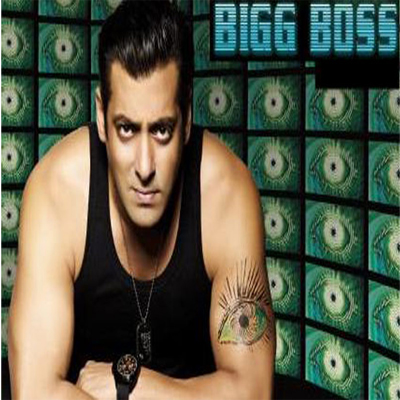
    MUMBAI: Love it or hate it but you just can’t ignore it! Which is what not just viewers but also television channels have been doing ever since Endemol India introduced Bigg Boss.


    First presented by Sony Entertainment Channel in 2006 with Arshad Warsi as the host, the ever popular reality show started off with a bang only to end with a whimper when the channel was forced to relinquish the loss-making show.


    Though that didn’t stop a five-year-old Colors from taking up where Sony had left, the channel continued to lose a lot of money over Bigg Boss even as the show became more and more popular.


    Intrigued by Colors’ determination to hold on to such a loss-making property, indiantelevision.com posed the question to CEO Raj Nayak in an earlier interview, to which he answered: “I do it because it is a cult show. People wait for it. Advertisers want it. If you speak to ‘Streax’, the owner told me two containers were bought in Afghanistan because of Bigg Boss. That is Bigg Boss for you.”


    He further said: “We generate PR worth Rs 15-20 crore when Bigg Boss is about to start. That’s the kind of cult image the show has – 100 days of non-stop entertainment during prime time, like an IPL match. We will not stop doing those things as the viewers want it. So, as long as it matches my bottom P&L, I am able to manage it, I am fine.”


    Indeed, one of the reasons to continue investing nearly Rs 120 to Rs 130 crore in Bigg Boss is the kind of buzz it generates well ahead of the launch. The contestants, their choice of clothes, their language and mannerisms, the controversies around them – constitutes fodder for endless discussion and hence, nothing to be unhappy about.


    Also according to Nayak, Bigg Boss gets the best advertisers by virtue of it getting the best ratings. Fact is while fiction is Colors’ staple food, advertisement rates for non-fiction shows are higher. Then again, walking the tightrope between fiction and non-fiction is of essence.


    Yet another reason for continuing with Bigg Boss is the rub-off it has on ‘Brand Colors’. “When you go to a restaurant, there will be many dishes (Chef’s specials) that will be expensive. They don’t make money on that but they keep it because some people keep coming for those dishes. And yet, these people eat other stuff as well,” explained Nayak.


    The show was high on viewership throughout the season; however it was its finale episode that added a cherry on the cake. It had all the makings of a ‘masaledaar’ blockbuster including power-packed performances by the contestants and the host Salman Khan himself.


    “The season seven has been the most watched, most buzzed and most trended season of all times,” believed Colors’ weekend programming head Manisha Sharma.


    Bigg Boss seven debuted with 7,711 TVTs on its opening day and continued to have a successful run for several of weeks.


    The spill-over effect of the popularity of Bigg Boss was felt on shows Colors airs before and after Big Boss. For example, in week 44 of TAM TV ratings, viewership of Madhubala rose to 4,441 TVTs from 4,305 TVTs a week earlier and that of Uttaran jumped to 4,299 TVTs from 3,722 TVTs.


    For Lodestar UM vice-president Deepak Netram, Bigg Boss is the kind of show which is an investment for the long term for the channel.


    A senior media planner said while Colors is seeing a 10 to 15 per cent year-on-year increase in the cost of producing Bigg Boss, the show continues to have a loyal set of viewers and continues to deliver on ratings.


    “It’s like you are making a product but not getting the right price for it. But does that mean you will stop making the product? Obviously, you will continue making the product. The problem you have is in terms of sales,” he said.


    Yet another planner opined the channel wouldn’t give up on the show. “If the show is making losses, it does not mean it won’t happen. Some other channel will pick it up and make it. So, they will sell it to their competitors. And the show has its audience; they will lose the viewers.


    So, to not lose those viewers, Colors will have to make the show. To get the right value, you’ve got to get sales active,” he rounded off.