Tag: USTR

  • Bush taps Chris Israel to head US’ IPR enforcement initiatives

    Bush taps Chris Israel to head US’ IPR enforcement initiatives

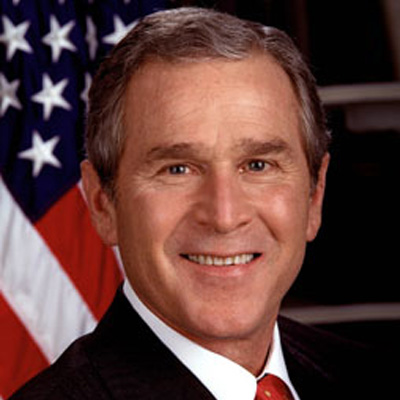
    MUMBAI: US President George Bush has created a new senior-level position to fight the menace of global piracy and counterfeiting of American products ranging from Hollywood movies to Detroit auto parts.

    Bush has tapped Chris Israel as the new coordinator of international intellectual property enforcement. He is currently the deputy chief of staff for US commerce secretary Carlos M Gutierrez. Israel was at one time a public policy executive at Time Warner.

    In his new role, Israel will work with agencies across the US administration to develop policies to address international intellectual property violations and enforce intellectual property laws overseas. In this role, he will head the international work of the National Intellectual Property Law Enforcement Coordination Council (NIPLECC) and coordinate and supervise international intellectual property protection plans among other agencies.

    Israel will accordingly play a significant role in the implementation of the Bush Administrations STOP Initiative. Nearly seven per cent of the goods in the global marketplace are counterfeit. According to USTRs 2005 Special 301 Report, in China alone, 90 per cent of the music and movies sold are pirated. The Bush administration states that it has worked aggressively to combat intellectual property theft through enhanced enforcement and prosecution for intellectual property crimes and also through state of the art intellectual property protections in trade agreements.

    Gutierrez says, Intellectual property theft costs US businesses billions of dollars and weakens our economy. American ingenuity and innovation are driving forces in our economy and we need to protect our ideas, both at home and abroad. This new position will help us to be more aggressive and also help us to better coordinate our fight against intellectual property pirates.”

    Israel has served as deputy chief of staff for the Secretary of Commerce since 2004, where he has helped advance the Bush administrations agenda of growing the economy, promoting trade expansion and protecting intellectual property rights.

  • Thailand moves to improve pay TV piracy

    Thailand moves to improve pay TV piracy

    MUMBAI: The Thai government has outlined a ten point plan to improve the pay TV piracy environment within Thailand, including commitments by cable ops to respect the Intellectual Property Rights of pay TV networks, both local and international.

    Thailand is currently on the United States’ Intellectual Property Rights USTR 301 Watch List. The Thai authorities’ clamp down on pay TV piracy comes at a time when Thailand is formally entering Free Trade Agreement talks with the US early this summer. Among the US’ negotiating objectives are strengthened measures in Thailand that provide for the compensation of rights holders for the infringement of IPR and to provide for criminal penalties under Thai law sufficient to have a deterrent effect on piracy.

    The Cable and Satellite Broadcasting Association of Asia, which has welcomed the Thai authorities’ move, estimates there were US$370 million in gross losses to pay-TV piracy within Thailand in 2003. Casbaa and its member companies also conservatively estimate that there are in excess of one million unauthorised subscribers to pay-TV services in Thailand. It is estimated that Baht 1.5 billion (US$38.5 million) was lost to the Royal Thai Government in 2003 from foregone tax revenues such as pay-TV licensing fees, corporate taxes and VAT.

    Casbaa is encouraging the Thai authorities to place the control of pay-TV piracy under the responsibility of a single government department, or an individual senior government official, which can act as a clearing house for this increasingly serious issue. Says Casbaa CEO Simon Twiston Davies, “We applaud the concept of a focused official monitoring body and the requirement for detailed accountability on the number of subscribers. But what we now need is a genuine commitment to enforce this new regime. The new guidelines for pay-TV service providers must be introduced quickly and they must be adhered to.”

  • India on US priority watch list regarding global piracy

    WASHINGTON: It is not just Indian music companies that are seeing their profits being eroded by the pirate. The US recently issued its annual list of countries with the worst record of protecting copyright material and other intellectual property.
    India has been placed on the Priority Watch List in a special 301 report along with Argentina, the Bahamas, Brazil, Lebanon, the Philippines, Poland, Russia, and Taiwan. The Priority Watch List entails a greater level of scrutiny than the Watch List for possible future sanctions unless the alleged inadequacy of protection is remedied .
    The US Trade Representative’s Office (USTR) made the following unflattering comments about us, ” India’s copyright law, which is generally consistent with international standards, was weakened by amendments enacted in 2000 that undermine protection for computer programmes. Enforcement against piracy remains a growing concern for US copyright industries, especially given that pirated imports are entering the market from Southeast Asia and that there is growing Internet piracy. We will continue to consult with the Indian Government to resolve outstanding TRIPS compliance concerns, but if these consultations do not prove constructive, we will consider all other options available, including WTO dispute settlement, to resolve these concerns.”
    The list has once again put Ukraine as the number one menace. A Reuters report indicates that the USTR will continue enforcing the $75 million in US sanctions on Ukraine would on account of the country’s failure to adopt and enforce adequate protections against the illegal copying of optical media products such as music CDs, movie DVDs and computer software. The sanctions were first imposed last year.
    Ukraine is the only country on the Priority Foreign Country list. In addition the dual problems of rampant piracy coupled with lack of enforcement exist in Russia, Taiwan, Poland, Brazil. China and Paraguay remain subject to special monitoring under US trade laws.
    The International Intellectual Property Alliance (IIPA), a consortium of publishing, film, software and recording industry groups, estimates that global piracy costs US copyright industries more than $22 billion annually. The 50 countries listed in the USTR annual report accounted for $9.8 billion of those annual losses, the group said.
    On the positive side the report notes that implementation of an World Trade Organisation agreement on intellectual property rights had helped to improved protection worldwide. For instance Colombia and Hungary are now protecting confidential medical test data in line with their WTO obligations.