|
Tag: USP
-

‘As content creators, we have to be more entrepreneurial in our approach’ : Castle creator and executive producer Andrew Marlowe
-
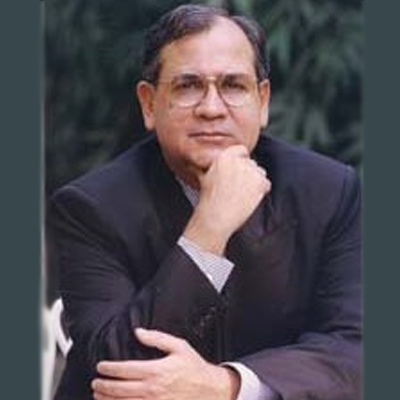
‘We are refreshing BBC Entertainment in January’ : BBC Worldwide Channels director South Asia Deepak Shourie
BBC Worldwide Channels is looking at cracking the Indian market a lot more seriously. The two channels, BBC Entertainment and CBeebies, were almost invisible for three years with a sole presence on Tata Sky, a DTH service provider.
Now a lot more investments are being planned and the focus will be on beefing up the content and distribution of these two channels.
BBC Entertainment is being refreshed in January and programming will be designed based on time bands for India.
A local feed for CBeebies in Hindi is being examined, though a definite plan on this is some time away.
For BBC Worldwide Channels, Asia is the fastest growing market. And within this region, India is emerging as an important market.
While India has been flooded with American English entertainment content, BBC believes that the British flavour will be its big differentiator.
In an interview with Indiantelevision.com‘s Ashwin Pinto, BBC Worldwide Channels director South Asia Deepak Shourie elaborates on the India plans for the two channels.
Excerpts:
How has BBC Worldwide grown its channel business over the past couple of years across Asia?
The BBC Worldwide Channels business is ?262.5 million, up from ?225.5 million in the earlier year. The revenue from Asia grew from ?19 million to ?37 million. Asia is, thus, growing faster compared to the rest of the world.BBC is investing in new channels and geographies. About 35 per cent of BBC Worldwide‘s revenue comes from the channel business.
In India, people say we are too late to enter. Are we? Global media companies are looking at India now. English content is watched by the affluent class. But is there space for everybody? People will have to find their strong propositions. BBC Entertainment will appeal to audiences who watch factual, entertainment and lifestyle content. We are bringing all of these genres into one channel. Our aim is to be a one stop destination.
How important is India as a market for the BBC compared to that of Hong Kong and Singapore?
The size is attractive. It is a market that is hot now. The other markets are good, but small demographically. India will be a very important market for us going forward.What is the roadmap that BBC Worldwide has set for their channel business in India?
BBC World News is already there distributed in 34 million homes and holds its own as a premier news channel.As far as BBC Worldwide‘s channels are concerned, we have had BBC Entertainment and CBeebies in the market since 2007, but only as a small presence on DTH. They have not been mainstream. These two channels have had no advertising.
We are refreshing BBC Entertainment in January with the tagline ‘Seriously Entertaining.‘ Our TG is 15-34 SEC A,B. In the daytime, viewing is leisurely. So we have lifestyle shows like Grand Designs that has Kevin McCloud following homebuilders. In the evening, we have factual entertainment like wildlife. Lifestyle content also airs like Extreme Makeover: Home Edition. At night, from 10 pm onwards, we have shows like Spooks, Top Gear and Sherlock.
But why wasn‘t a push made earlier?
That is always going to be a million dollar question. Should we have pushed earlier or is now the right time? The English market is expanding rapidly. So there is nothing wrong in entering now. The BBC Worldwide team in the UK is looking at India seriously now.How much is being invested in India and when do you expect to turn profitable?
I cannot talk about numbers. However, all that I can say is that we see an opportunity here. Any market takes time to mature. Viewership traction has to be built along with the advertising base.
‘Research has confirmed that the audience we look at does not want localisation. There is enough local content around. The English audience wants international content‘Is the look and feel of BBC Entertainment being changed?
The whole look and feel will change. The aim is to make it more vibrant and colourful.And from January, we will design programming based on time bands for India. There will also be a lot of fresh content and new shows.
From 6-11 am, you have will light content like Trish‘s Fresh Country Kitchen. Early evening from 7 pm -10 pm will have a mix of lifestyle and factual shows like BBC Earth. Post 10 pm, we move towards more edgy, fast paced content like Luther which is about a detective who is fascinated by the darker side of human nature. London Live, which looks at the music scene, will also air at this time.
The English GEC space is known for having ‘snacking‘ viewers. How do you plan to build loyal viewers?
People want quality entertainment. It is not so much about storyline building as it is in the Hindi GEC space. People will come back to the show because of quality – there are shows like Wonders Of The Solar System and Human Planet. The key is to reach the audience with relevant content and, thus, offer advertisers relevant eyeballs. If you do this, then loyalty will automatically build.Is having a British flavour going to be your USP?
That is important. Most content on air is from America. The BBC produces a wide ranging amount of content which has not been seen like Wallander, with Kenneth Branagh playing a detective in Sweden. The channel will give you everything.You also have other players coming into this genre like Big CBS. Do you see viewership growth happening as a result or will there simply be fragmentation?
Viewership will change and grow. The question is whether everybody will get the viewership they are targeting. Fragmentation is a challenge. To counter it we are giving consumers everything in one channel. Our aim is to make an impact in the English entertainment space. The more you fragment by focusing on one genre, the chances are that people will see it.Are you selling BBC Entertainment to advertisers?
Yes! The response is encouraging. We want to fill our inventory with quality clients. You have premium brands coming into the country. The world‘s most expensive car, Bugatti Veyron, has just been launched. They need to reach out to the relevant audience who are upscale. We will provide this audience segment. BBC Entertainment is being pitched as the Best of the BBC.The English space is worth $200 million and I see it growing. The nature of the market is such that you will depend more on advertising. Digitisation needs to spread for subscription revenues to really pick up.
What are the synergies between BBC Worldwide Channels and the other businesses of BBC Worldwide?
The magazine business has properties that the channels can exploit. An example of this is Top Gear.English GECs have started following a stripped strategy where one show airs at a time block across the week as opposed to a different show airing each day. Is BBC Entertainment doing something similar?
A stripping strategy is good if you have long running shows. If it is not there, then it will not work as a concept. It depends on the concept. You can have factual content at a certain hour across the week, which we do. A documentary, though, cannot have that. The runtime is limited.Will localisation play a role in your strategy?
No! Researchhhas confirmed that the audience we look at does not want localisation. There is enough local content around. They want international content. The English audience is getting more confident. They are world citizens. They want world programming. Local shows will add a lot of cost for us, but not much value.
What is being done for CBeebies?
We could look at launching a local feed for it in Hindi in due course. As of now, we have not come up with a strategy for it.Are you launching more channels in India like BBC Knowledge?
Not at the moment. BBC Entertainment has everything. When the time comes to have a wider bouquet of channels, we will look at it.BBC is launching BBC HD in more territories this fiscal. Is HD still some time away for India?
HD is the future. Right now there is a bandwidth issue. Also, there are not many consumers who have HD ready television sets. When these two issues are sorted out, you will see a push for HD content. There will come a time when SD becomes HD.How will you leverage the mobile with 3G coming in?
We will focus on this when the time comes. We know that people will want not just news but other genres like factual content.There will come a time when SD becomes HD. -

‘To not take a position is not a virtue’ : Times Now Editor-in-Chief Arnab Goswami
A late player in the news game, Times Now sits at the top with its hard news stance and round-the-clock news focus.
The Mumbai terror attack coverage is where the tide turned in Times Now‘s favour as the older players ceded ground. Though it is still a close chase in the ratings race, the channel has stayed ahead at a time when the news genre is finding it difficult to expand.
Some critics have attributed the channel‘s success to its sensational treatment of hard news. Times Now Editor-in-Chief Arnab Goswami, the architect behind the channel‘s uprise, however, believes that the channel has stayed away from it and also kept a distance from the mixing of news and gossip.
For a channel that just completed four years, the bespectacled Goswami does not hesitate to take a point of view in an obvious case of right and wrong. “In the Ruchika case, we called Rathore a molestor DGP,” he argues. As he says, “to be unsure of news is not a virtue.”
In a candid interaction with Indiantelevision.com‘s Gaurav Laghate, Goswami shares his views on the definition of news, the relevance and importance of hard news vs sensationalism and the leadership of the channel he manages.
Excerpts:
Did the coverage of 2611 Mumbai terror attack help Times Now increase its viewership share?Yes, 26/11 increased our viewership share. We were No 1 even before that but the channel‘s consistent leadership gap grew from then on.
Many people believe that it‘s because of something different that we did during the terror attacks. I can‘t pinpoint at what we did differently because I was live all the time. So I can‘t give a comparative view. But yes, after that there has been an upsurge in our viewership.
If you look at all weeks after 2611, there would be about 60 weeks or so that have passed. And we have been number one in 99 per cent of the weeks since 26/11.
What data are you quoting? Tam says in 25+ All India market, the competition is neck-to-neck…
We take 25+ AB, 1 million-plus towns. This is the market that everyone considers when it comes to English news channels.
We are 13-14 per cent ahead of our closest competitor NDTV in this market, and we are very happy with this viewership figure. There is no competition in that sense.
But from the content point of view, have you incorporated any changes in news gathering after the attacks?We don‘t have to do it. Those who may have made mistakes would have to do it. We did not make any mistakes, so there is no question of making any change or taking any corrective step.
But isn‘t the overall quality of news journalism declining?
Quality keeps increasing. There is more news content today than there was 2-3 years back. The focus on hard news is coming back. Yes, there are lots of channels which show programmes not centred on hard news, but the excesses are fewer.
There is a strong code of conduct which seems to be working. So, all in all, I think the last 2-3 years have been good for the news channel industry.
So you think NBA is the right body to tackle the issues of content regulation? Or is there a need for an independent body?
I strongly believe that self-regulation is the only way out. Both the NBA (News Broadcasting Association) and the BEA (Broadcast Editor‘s Association), of which I am an active member, are the best forums to carry out that self regulation. There is no scope for slightest government interference in regulatory processes. And I think there is total unanimity amongst them.
‘Yes! I had a point of view in the Ruchika case. We called Rathore a molester DGP. Is that wrong? We called the killer of Francis Induwar a Maoist terrorist‘
Not government interference, but a body like OfCom (UK) may be?
No. I think the way people are regulating right now is good enough. You don‘t need a new regulatory system. You don‘t have to reinvent the wheel. Self regulation is working, it should be encouraged and that‘s that.
Are news channels running the risk of dipping into sensationalism to shed the image of bland coverage?I don‘t do sensationalism. I don‘t believe in sensationalism, so I don‘t want to discuss sensationalism as it has nothing to do with me.
But what is sensational and what is not is sometimes a matter of perception. For some people even covering the IPL may be sensationalism. These are subjective matters and I don‘t want to pass a sweeping judgment on it.
Times Now has completed four years on 1 February. Where do you find yourself today?It is quite apparent to us in the Times Now newsroom that almost every other English news channel and several Hindi news channels follow us. I find it flattering.
What has changed is that with the leadership of Times Now, people in this country are given the news clearer, faster and more directly than any channel or group in the past has given them. People love that. Whether or not it will work for other channels to copy us, I don‘t know. But so far, it doesn‘t seem to be working.
I will say that Times Now has set totally new standards in news reporting, which some seem to be taking a cue from. And I am happy about that. Besides that news is news, definition of news does not change anywhere.
And what is the USP of Times Now?The USP of a news channel has to be news. I don‘t believe that getting 100 people to sit together and talk for 100 minutes is the job of a news channel. Some channels still do it.
In my view that is an antiquated approach. Some people believe that the town hall approach, where you get 100 people to sit and talk, is what a news channel should be doing. I don‘t think so.
So you come to Times Now; it‘s the only place among the news television channels in India today which has news every second, every minute. It works for us.
So what were the high points in these four years?In 2007, when we hit the No. 1 spot for the first time, and within 15 months after entering the market, it was a major high point for me and my team.
The opportunity to make a real change in our society, and be part of a campaign that reopened the Ruchika case recently, personally was a very big high point.
I will not call 26/11 a high point, because it was not. It was a painful experience for all of us. But in terms of objectivity of our reporting, it was a high point. My reporters did not hype, did not over dramatize; they were straight forward, to the point and honest. And I think the difference showed. Professionally it was a high point, though personally it was a sad event for all of us.
And when we completed 2009, we won 50 weeks out of 52, it was a high point. You see, to win is good but to win decisively, like we did in 2009, and that too without any major news event besides the elections is a high point for us.
For me, staying there is more important than getting there. It means a lot to me and my team. Biggest high point was that my core editorial team has supported me and stayed with me in every step since launch. Many of them are behind the camera, but they run the systems in the channel and help us stay No 1.
So what all has changed during these four years?Oh! Dramatic changes… Times Now today and Times Now when it launched… In fact, there is a new thing happening daily on the channel. On an average, we have introduced over 200 changes, which may be in production style, graphics, shows, nature of reportage… it may vary. I am a great believer of innovation and I think one of the reasons we have won is because we have a very innovative team. But that‘s the beauty of our business which constantly enables us to change according to what‘s happening around us.
That‘s where we stand out from competition. They do the same and they look the same. But may be it‘s got to do with the youth and energy of Times Now and the average age of our team compared to competition. We have got far more energy and passion as compared to any of our competitors.
‘Some people believe that the town hall approach, where you get 100 people to sit and talk, is what a news channel should be doing. I don’t think so‘
Aren‘t you disturbed that the news genre has shrunk as per Tam data?
I am not concerned about the news genre. I am concerned about my share in the news genre. But what it means is that despite Times Now gaining share, the others collectively are losing. So the others should be worrying.
I am very pleased with our viewership trend, because it is just growing. If I go by latest Tam figures for the C&S 25+ AB market, we are averaging about 36-37 per cent channel share.
But why is the news genre shrinking?
I do not think news genre is shrinking. Everything is relative. The viewership of news channels is greatly dependent on news events. So when there is a major event, you may find a 25 per cent jump and it may not grow further till the next event. But it will not fall majorly. So it means that people who came to you largely stayed with you.
Now within this share, why Times Now is growing and why NDTV or CNN IBN and other channels are shrinking is something they should be worried about. My relative share is increasing week on week. My polynomial is showing an upward curve.
Today there is a lot of gossip shown on news channels. So is hard news dying?I don‘t think that people will accept gossip after some time. You cannot mix up news and gossip. And so it‘s best if we don‘t cross that line. A lot of gossip passes as news on many channels, but not on Times Now.
Hard news is what I believe in; it is the only thing that we do, and the only reason why Times Now is No. 1.
You said your focus is on news only. You don‘t see the need for specific features and shows?We do specific shows – The Newshour at the very critical 9 pm slot holds almost 60 per cent share. None of the other English news channels come close. Weekend shows like Total Recall is hugely successful. We have feature programming, but yes, I do not believe in diluting news with features.
Do you consciously take an aggressive stance on television?To not take a position is not a virtue, to prevaricate is not a virtue, and to be unsure of news is not a virtue. You look at all the stories recently, and you ask yourself which channel do I remember? Answer is Times Now.
Take the Australian racial attacks, for instance. Nowhere my reporting was stilted or prejudiced. Similarly, the BT Brinjal case. To not talk about the health issues with BT Brinjal is not appropriate. Similarly, questions raised on RK Pachauri. To report the questions is not taking a position. So the reporting we do is transparent and honest. People see it and accept it. Let viewers decide.
But you have very strong opinions which are visible on the screen.If there is an obvious case of right or wrong, I can‘t pretend not to know what is right and what is not. And if in that situation, I prevaricate or chose to be silent, then that is wrong.
Yes! I had a point of view in the Ruchika case. We called Rathore a molester DGP. Is that wrong? We called the killer of Francis Induwar a Maoist terrorist. On the contrary, you should ask people, who do not call them Maoist terrorists, why they are not calling them that. I am stating the fact.
I am sure in what we do and my viewers are sure that Times Now will not deliberately keep the truth away from them.
You say news should be popular and not populist. But isn‘t this a very thin dividing line?It is a thin line but the challenge of our job is to be sure on which side of the line you are in. There is not a single story where people can say we did anything populist on Times Now.
My concern is not with my competitors but with my viewers. We have never done anything which is factually incorrect, ethically wrong, or journalistically compromised. And as long as we don‘t do any of these three, we don‘t need to explain where we stand.
What do you think about investigative journalism?Ours is not an investigative channel, it is a news channel. There is nothing called 100 per cent investigative channel, neither is Times Now, nor is any other channel. I am no expert in investigative journalism.
But some channels have investigation teams…
I don‘t have. You should ask the channels which have had or have special investigation teams. What I can certainly tell you is that I don‘t take or do sting operations from anybody or for anybody.
How much focus is on the website, timesnow.tv?
We have a very successful website. And we are continuing to innovate on it. There is a lot of synergy between Timesnow.tv, Indiatimes and TimesofIndia.com.
We have large viewership through these synergies, which we continue to build and expand. And in the future, this is going to be a major thrust area for us. We are planning to increase and revamp our online content, reach and connectivity. This is the area we will be working a lot on in 2010.
Times Now had taken a very strong stance against Pakistan. But after Times Group‘s “Aman Ki Asha” campaign, it has mellowed down?It is not true. What we do on the news and what we do on the campaign Aman Ki Asha are not mutually contradictory. And we have done several shows on Aman Ki Asha, of which some have been the highest rated shows.
But it doesn‘t mean that we do not report on what Qureshi or Gilani say. Whether the peace process will really move forward or it is just symbolic – we do both. There is no contradiction in this.
Does the network strength help?
With campaigns like Aman Ki Asha, it does. It also gives us access to lots of quality content. And our news stories sometimes find space in Times of India, purely on merit of course. So there is a natural synergy.
-
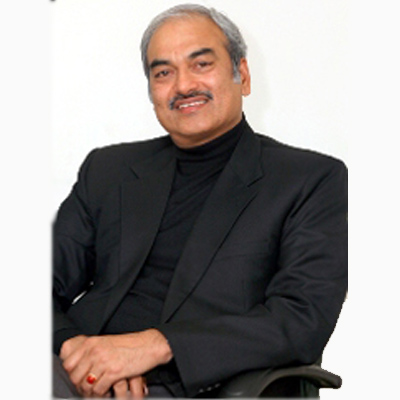
‘NDTV is adequately funded to support its expansion’ : Narayan Rao – NDTV Group CEO KVL
NDTV Ltd is on an expansion overdrive. In over a year, it has launched a slate of channels and moved beyond news into the lucrative Hindi general entertainment space.
The company has attracted NBC Universal to pump in $150 million for an effective indirect holding of 26 per cent stake in NDTV Networks Plc. Further capital infusion of $120 million has come from a clutch of investors.
NDTV’s stake in the joint venture company with Malaysia-based Astro has increased from 20 per cent to 30 per cent. The company has also launched NDTV Arabia to tap customised channels in international markets.
Shepherding this growth has been NDTV Group CEO KVL Narayan Rao. In an interview with Indiantelevision.com’s Sibabrata Das, Rao chalks out the company’s expansion plans and the need for the group to consolidate its operations.
Excerpts:
Is NDTV floating a joint venture company with The Hindu Group to launch a Chennai city-centric channel?
We are setting up a joint venture company with The Hindu Group where we will hold 51 per cent. The Hindu Group will have the balance 49 per cent and the JV will launch MetroNation Chennai in the next 3-4 months. Hindu is a reputed brand at the regional and national level. So we decided to have a content and commercial relationship. It was a natural gravitation towards each other.Will we see NDTV get into more such deals with print owners to tap regional markets?
Regional news is not something on our radar. Our area of expertise is in English and Hindi language news. Our strategy is to do city-centric channels.Are the MetroNation channels being transferred to a subsidiary company called NDTV News Ltd?
The intent is there to have MetroNation as a subsidiarised company. Since it has separate business requirements, we have got a chief executive officer for it. A distinct entity will bring in greater efficiencies.NDTV ended last fiscal with a consolidated loss of Rs 1.86 billion. When do we see a turnaround?
We are in the stage of incubating various businesses. We have seen exponential growth over the last one year and have expanded into the non-news segment as well.We forayed into the Hindi general entertainment space with NDTV Imagine in January this year and have just launched Imagine Showbiz. We launched MetroNation in Delhi last year and it is doing well in terms of audience and reach. Now our focus will be to monetise this.
We have already obtained licence for the World Cinema channel and will be launching it in the next couple of months. MetroNation in Mumbai will probably come up in the next fiscal. We have our plate full.
Is NDTV spreading itself too thin?
There are opportunities and media companies are exploiting this. There is, however, an expectation from the marketplace to grow the topline which is putting unnecessary pressure on several media firms. Nobody is given a chance to consolidate. We need to structure that expansion and build the management bandwidth.As for NDTV, we are adequately funded to support our expansion drives. We have have built the quality and ability to scale up. And in the news business, credibility is the only way to move forward.
‘Regional news is not something on our radar. Our area of expertise is in English and Hindi language news. Our strategy is to do city-centric channels‘Will NDTV Networks Plc. raise money by listing on the Alternative Investment Market (AIM) of the London Stock Exchange?
NDTV Networks has raised $120 million from a clutch of investors including $20 million from Velocity Interactive Group (earlier called ComVentures). This is the holding company for the verticals including NDTV Imagine Ltd, NDTV Lifestyle, NDTV Convergence, Labs and NGEN Media Services (50 per cent). We have decided that it is better to build the businesses rather than go for an initial listing.NBC Universal has the option to increase its stake from 26 per cent to 50 per cent. Will NDTV part with majority in its non-news company?
NBC Universal has put in $150 million to subscribe to shares of our Dutch subsidiary company which will give it an effective indirect holding of 26 per cent in NDTV Networks. We will never part with control. The other investors are in NDTV Networks.Colors has made a strong debut. Will this affect the break even period of NDTV Imagine which reportedly has a funding support of $106 million?
NDTV Imagine is well on track and is growing steadily. The funding is adequate to take it to EBITDA positive stage. I can’t talk about other GECs.While the trend in an entertainment bouquet is to have a GEC and a Hindi movie channel, NDTV Imagine Ltd has launched a niche channel in Showbiz through a joint venture partner. What is the holding structure and potential for this channel?
NDTV Imagine Ltd will hold 51 per cent in the JV and the balance 49 per cent will be with Cinestar. It is a growing segment and has tremendous potential.The launch of a Hindi movie channel is also in the pipeline. We are already in the process of acquiring movies. We are also going to be present in film production.
NDTV’s consolidated revenue was at Rs 3.66 billion for FY’08. What contributed to this 31 per cent jump in turnover over the year-ago period?
NDTV 24X7 and NDTV Profit have seen strong growth. NDTV India’s revenues, however, are not growing at the same pace because of the editorial positioning it has opted to take.Isn’t there a temptation to take NDTV India the tabloid route as many Hindi channels have successfully done to grow audiences?
Going the tabloid route is not our strength. That is not our USP. NDTV India is holding on to revenue because of quality. We believe in the long run, good news will prevail and more audiences will come in.How is the joint venture with Malaysia-based Astro faring?
The venture has already launched channels in Indonesia and Malaysia. We were given 20 per cent stake against a fee that we were to charge Astro for our services. Our stake in the joint venture is going up to 30 per cent.NDTV Emerging Markets is a subsidiary company which launched NDTV Arabia. Are we going to see more such customised channels being launched in other countries through this company?
NDTV Arabia will now break into local news bands. It is our first venture into the Middle East and Africa as a customised channel. Yes, NDTV Emerging Markets will launch more such channels in other international markets to provide local news content. It is part of our international expansion plan to reach out to new target audiences.NBC Universal’s investment of $150 million for 26 per cent stake in NDTV’s Dutch subsidiary company puts the valuation at Rs 24.2 billion. The market cap of NDTV Ltd, which includes the news channels as well, was marginally higher at Rs 24.5 bn (July-end). Since the true value is not captured, is this the reason why NDTV Ltd is planning to de-merge the company into “news related businesses” and “non news businesses?”
The aim is to unlock shareholder value and to promote the focused growth of our various businesses. Consultants are working on this and we will evaluate various options after receiving their feedback. -
![‘Blogumentary is our USP’ : Amar K Deb- Channel [V] India head honcho](https://wordpress.indiantelevision.com/wp-content/uploads/2025/12/honcho-Amar-K-Deb.jpg)
‘Blogumentary is our USP’ : Amar K Deb- Channel [V] India head honcho
Thirteen years on, Star India’s music channel is experimenting with ‘blogumentary’ content and has adopted the tagline Channel [V] made by you.
The recipe for getting more eyeballs in a genre which is seen to be stagnating also includes the reality format.
In an interview with Indiantelevision.com’s Richa Dubey, Channel [V] India head honcho Amar Deb speaks about his plans to incorporate user generated content as a key value of the channel in its new avatar while hanging on to the central positioning of being a “music channel.”
Excerpts:
Is there pressure for music channels to reinvent as their revenues are stagnating?
We have revenues going up by 25 per cent every year. Advertisements and trailers are a major source of our income.MTV has recently repositioned itself as a youth channel. Is Channel [V] also looking to target youth with alternative content outside music?
Channel [V] is a music channel. We love and believe in promoting music. On Channel [V] music is flanked by other stuff like glamour, humour, and fun which are also youth centric.So you advocate the benefits of non-music properties?
Get Gorgeous is one of the highest rated shows on the channel. It’s great because we found some really beautiful looking girls who are not models and they went on to become Miss India and Miss Universe.We also discover new faces and talent with shows like Launch Pad. Our promos are popular and have got terrific responses. We won 17 awards at Promax, New York. Our average is of getting around 40 awards every year. That is a good sign.
How do you split up the music and non music shows?
We are a music channel and our programmes are all music centric. We largely have music based shows except for a couple of shows like Get Gorgeous. We stick to music while some or other fun things keep happening like Simpoo, Channel [V] IQ etc.What about the interactive elements that MTV has introduced?
Channel [V] has come up with that by introducing blogs in our content mix. This happened in January and we have got a good response.How did you go about selecting bloggers?
We had around 2000 people applying for it. We reviewed 200 and finally choose ten of them. Those ten were given hand held cameras and they shot the concert in there own creative ways.Following this, we did Launch Pad and Get Gorgeous which was also shot by bloggers. With this trend, we have got more and more viewers and people participating in the contests run by us. Thus reinforcing our stand as – Channel [V] made by you.
How else have you extended Blogumentary on Channel [V]?
After the Channel [V] concert, entire eight sessions at Hard Rock Café for Launch Pad was shot by bloggers. Get Gorgeous was shot by Bloggers and that is the speed in which we will take the entire concept forward. Blogumentary is our USP and we see others following us.What happens to the production team if bloggers play such an important role?
Our production team is always there to help our bloggers. It is just a kind of innovation that we are doing. They are the ones who direct the bloggers. The post production team works really hard to make the entire program look interesting. They make sure that bloggers create things that get viewers hooked on to our content. ‘On Channel [V] music is flanked by glamour, humour & fun which are also youth centric’
Is this reflecting the new face of Channel [V] which has turned 13?
For the first time on Indian television, we did a ‘blogumentary’ in Channel [V] concert. Fans and young people had cameras and were shooting the eventwhich saw performances from Atif Aslam, Akon and many more.This resulted in an eight week, spectacular television series of half hours.With reality shows gaining importance even among music channels, what is your take on the inclusion of this format into programming?
We did reality with Popstars 1 and 2 and Super Singers. These were not talent hunts. They provided platforms for people to perform. However, we are not doing traditional reality shows where judges throw tantrums and walk out. On Channel [V] nothing is scripted. Everything is spontaneous and real.But isn’t controversy a necessary ingredient for a successful reality series?
Unfortunately, today’s channels have lost the sense of reality and they are not able to do justice to it. If you do something just for the heck of it to create sensation, it does not prove to be reality.What are the upcoming properties in the pipeline?
We will unveil My India Report, which is also based on the blogging format. There is a recruitment procedure going on right now which is also online. We want to know whether the new generation really lives with the values that our forefathers lived with. We want to know the views of today’s generation on various issues. It’s like a docudrama wherein five young people go out, speak to people, and capture it. They will together document what it is to be an Indian today.The show is still in the pre-production stage. Currently, we are looking for the kids who will travel across the country. The recruitment is happening online. We expect to launch it in three month’s time.
Unlike Freedom Express which was promoted by our VJs, My India Report will be done by the freshers and bloggers.
Channel [V] has been very active in the internet space. What are the plans on that front?
We have a strong online presence. Lot of our stuff is lined up in YouTube. Lola videos are amongst the most watched videos on YouTube and she has a large fan following on Orkut.Channel [V]’s Bai promotion was highly appreciated. All our properties have a vast community on the web. We are very ‘new media friendly’ – and a lot of the new media generation is aware of what we do. In fact, the band that we found for Launch Pad was through Orkut.
Channel [V] made by you is a huge user generated content phenomena.
What has the channel lined up on the promo front?
So far Simpoo, the animated character, has been by far the best promo that we did. People really liked and enjoyed watching it. So we have a new Simpoo KBC promo coming up.Our promos always reflect the trends of society. For example, we have a promotion for Get Gorgeous saying Moral Police sue us. It got us eyeballs.
We will be unveiling many more promos including one based on an upcoming Go Green Campaign on Global Warming.
Does Channel [V] bank a lot on movie marketing?
Channel [V] is a popular chosen platform for movie marketing. Rang de Basanti, Bluff Master and Don were some of the exclusive movies that we promoted on Channel [V]. Ram Gopal Verma’s Aag is the next movie we are going to promote. We are still working on it. -

Zoom to launch ‘Levis Diva Quest’ on 21 October
MUMBAI: In line with the reality show craze on television channels these days, the Times Group’s glamour and lifestyle channel Zoom is launching a reality show the Levi’s Diva Quest.
The show has been introduced as part of the channel’s revamp strategy. Zoom is on the lookout for the most stylish anchor through the Diva Quest. It is also planning to launch a few more shows over the next one month.
“We are now poised to get into the next stage of our life cycle and there are a host of new initiatives both in terms of content and marketing slated to launch in October-November this year. Diva Quest is a stepping stone in that direction that we have taken,” says Zoom business head MK Anand.
The show has been introduced with an aim to hunt for the most stylish anchor for the channel. It would kick off on 21 October. It will be aired on Saturday and Sunday at 9 pm and will be hosted by ramp model Aparna Kumar.
This is not the first time Zoom is indulging in the area of glam and glitz. Earlier, it had launched in L’oreal Paris Elite Model Look India 2006, Pond’s Banungi Main Miss India and Red Hot Countdown.
The 15 shortlisted contenders will be scrutinized by a panel of judges including ace photographer Subi Samuel, makeover specialist and choreographer Achla Sachdev, celebrity tarot-card reader Sunita Menon, ad-man Prahlad Kakar and acclaimed TV host Mini Mathur.
From this lot, the contestants would further be wittled down to 10. The grand finale will be held on 29 October at the Intercontinental, Mumbai.
Talking about the unique selling point (USP) of the show photographer Subi Samuel claimed, “Like other shows, we are not overtaking their personalities and transforming them, we are just grooming them to be able to deal with the glitz and glamour”
-

Manorama News unveiled; ‘varied content’ USP
MUMBAI: Print major Malayala Manorama Group has launched its maiden television broadcast venture Manorama News, a 24-hour free-to-air news channel. The channel hit the airwaves with a news bulletin at 12 noon on 17 August and the day also marked the beginning of the Onam month for Keralites.
Manorama News attempts to make a mark in the highly contested Malayalam (Kerala) television market with its USP of ‘varied content’. “Our strategy is to offer varied content than just news. We have lined up a complete set of different news formats targeted at different viewer segments,” MM TV — the broadcast arm of Malayala Manorama — COO Anil George told indiantelevision.com.
MM News has divided the state into three regions — South (Thiruvananthapuram), Central (Kochi) and North of Kerala (Kozhikode) — to enable itself to dish out local news in a better way. The channel telecasts three different beams of six local news bulletins every day catering to the regions on an exclusive basis. Except these six local news bulletins, the rest of the channel programming is uniform for the entire state.
Apart from the three key local points of Thiruvananthapuram, Kochi and Kozhikode, MM News has set up its studios in Delhi and Mumbai.
MM News offers a package of half-an-hour news bulletins, making it a total of 12 news bulletins per day. The channel airs extended news programmes early morning and in the night. The morning news show Pularvela, slotted for 7 am to – 8:30 am – functions as a platform to provide and discuss all the early news stories coming in. Manorama News Hour, from 9 pm to 10 pm, will provide an in-depth analysis of the day’s news with the updates.
MM News targets the viewer segment which vies for lighter stuff with a 7 pm show Sakalakala. The crime news genre has been taken care of with Kutapathram at 10 pm. the ‘business class’ is targeted with business news bulletins twice in a day, at 5 pm and 11 pm. Vanita, a female-oriented show, has an afternoon slot at 2:30 pm. The channel has also lined up a celebrity interview series to mark the beginning.
MM News’ interactive prime time chat show Ningal Parayoo explores the channel’s online space and the mobile short code 7333. According to George, MM News will change its short code to 6776 as the group is planning to acquire a uniform mobile interactive identity.
“For the time being, we will be using the short code 7333 for Manorama News. But soon, the entire Manorama group will come under the short code 6776,” says George.
Speaking on the initiatives made on the distribution front, George says the channel has a 100 per cent presence in Kerala and Delhi, while plans for the other key centres are on the anvil.
“We are working on the distribution front and we will be soon hoping on the Direct to Home (DTH) platform as well. At present, we are not available in the Gulf region. However, talks are on and we would be making it to the Gulf very soon,” he says.
When queried on the channel’s strategy to make a first impression in the market, George said even entertainment channels had been considered as competitors. “It is not that, we are fighting with the existing news channels of the space. We consider even entertainment channels as out competitors. MM News is launching a number of innovative formats and the plan is to bring in viewers from the other viewing genres also. The national scenario, where news channels are really improving their viewer-base with various innovative strategies, has been really inspiring.”
Speaking on the immediate target, George said the plan was to let the content bring in viewers and then advertisers. “Our focus is on building a brand in the interest of consumers by offering them the right content. In the next six months, the plan is to win the mindshare and we are sure that the revenue share will follow.”
MM News follows a two-pronged marketing strategy to create a buzz in the market, according to George. “Our immediate goal is to provide a different experience of news broadcasting to the viewer. The strategy is to let the content bring in the viewer. Then, we will have a consistent advertising campaign series across different media wings of Manorama to promote the channel,” he says.
When queried on MM TV’s next television venture, George said the company is presently looking at a couple of genres. “We have a long term strategy of getting into other ventures. A couple of formats have been thought of, but no time frame has been set yet.”
-

‘Ratings not an apt way to judge Awaaz performance’ : Sanjay Pugalia – Awaaz editor
If news channels are largely described as niche, then Awaaz is a niche within the niche. Positioned as a consumer Hindi news channel, it breaks the general connotation of a business channel as being designed for people dealing in big business.
Awaaz is primarily, as Editor Sanjay Pugalia points out, for anybody who wants to spend Rs 100 fruitfully or save even that Rs 100. Looking at the way the India economy is changing, Pugalia expresses that there is a gap that has been successfully filled by Awaaz — the 15+ SEC AB in the Hindi speaking markets.
Pugalia believes that the existence of Awaaz has given a new definition to this news category.
In a freewheeling conversation with Indiantelevision.com’s Manisha Bhattacharjee, Awaaz editor Sanjay Pugalia provides a low-down on how the consumer channel has shaped up over the last 18 months.
Excerpts:
Awaaz underwent a change in its on-air-look? Isn’t it too early for the channel to undergo a makeover?
When the channel was launched, we followed the time and tested format of CNBC-TV18. Now that we have completed 18 months in the space, it was time to give a distinct identity to the brand Awaaz, as we are addressing a much broader audience base and our offering is very different from CNBC-TV18. Awaaz is an independent product appealing to our kind of target audience. Earlier, we wore blue and white, now the channel dons red and white.What is the unique selling point (USP) of Awaaz?
The consumer channel is primarily targeted at small investors. It is first and foremost for those viewers or consumers who are earning some money, saving some and need proper advice to invest. The channel has been principally designed in the manner wherein experts provide inputs in a manner that will help consumers take their own decisions on all the possible ways he / she can save or make money.The channel is a powerful vehicle for small investors, buyers, sellers, etc and it provides opportunities aimed at effectively reaching our target audience.
Is this an indication that TV18 failed to target this segment through CNBC-TV18?
It is wrong to say so. CNBC-TV18 created the business news space within the English space for the big corporates. The channel’s coverage extends from corporate news, financial markets coverage, expert perspectives on investing and management to industry verticals and beyond. The channel has been catering to business more relevant to different constituencies across the nation.Awaaz on the other hand is for the small investors in the Hindi speaking market. It indeed covers the entire business space from the consumers’ perspective. Who is the consumer? It could a taxpayer, an employer, a small investor, shopkeepers etc. These consumers are interested in the current share or stock market, trade, small business, managing and saving as well as investing. All these needs are serviced through our shows.
When you say that the word ‘consumer’ covers a vast gamut of audience, trade, equity, non-equity, financial sector etc? Where do women fit in the gamut?
It is largely noticed that female viewers are much less in comparison to male viewership on any given news channel. But it is otherwise on Awaaz. We have a very strong female viewership, approximately 45 per cent. Our key driver show is Smart Shopping, which airs at 4:30. When the same show airs at 10:30 pm, it brings in male viewership.The unisex shows are Awaaz Plus, Tax Guru (tax is generally perceived as a male subject), Weekend Masti, Hum Honge Kamyaab, Jiyo Zindagi, Chalti Ka Naam Gaadi, Glamour Bazaar and Trend Mill to name a few.
Let me reiterate a point, ratings is just not the apt way to judge the performance of the channel. It is merely an auxiliary data that gives us an insight to the performance of the channel.
If you say ratings are not the rightful way to judge the performance of the channel, then how do you pitch it to the advertisers?
It is difficult for me to comment on the marketing side of the channel. But all I would like to add is that the advertisers solely do not rely on Tam data, they also have other means like their own research and other external research which they commission as well as their gut feelings for the channel to make a decision to spend on the channel. Mind you, Awaaz, like CNBC-TV18, has a good number of out-of-home viewership, which is not recorded by Tam.In this fragmented news market how do you deal with your competitors?
Honestly, we have no competitors in this space.Well, you are forgetting Zee Business. Isn’t this channel in the same space and targeting your kind of audience?
Well, as I said we have no competitors in this space. In any case, we are 300 per cent to 400 per cent bigger then Zee Business. ‘Network synergies should not be confused with similarities‘
Coming from the same TV18 network, is Awaaz cannibalizing big brother CNBC-TV18?
We cannot cannibalise each other being under one network. We can only strengthen each other and synergies and leverage each others strengths. But it is necessary to comprehend that as a network synergies should not be confused with similarities.22 May experienced a massive market crash. Besides retail investors, even small time investors panicked? As you strongly term your channel as a consumer based one, how did you address your TG?
‘Caution’ has always been the word from the day we launch the channel, while addressing the news and information needs to the small investors, the mutual fund buyers, shoppers, small time insurance agents etc. This does not mean either that while cautioning them, the investor should stay away from equities. They have to be convinced about their investment ideas after weighing the pros and cons.Let’s take the Tam data during the market crash in isolation. According to the data, on 22 May, Awaaz recorded a 2.3 per cent channel share, beating the general Hindi news channels during the 9 am to 4 pm time band, followed by Aaj Tak (1.50 per cent), Zee News (1.43 per cent), NDTV India (1.16 per cent), Star News (1.15 per cent) and followed by the rest.
TV18 network is involved in a lot of on-ground initiatives. What kind of on ground initiative is Awaaz into?
All our ground-initiative is marketing backed and strengthen our brand by involving our viewers. When we carry out any on-ground shows it has to be relevant to the issue and place.How different is your weekend band from that of weekdays?
We have branded our weekends as Smart Weekend, which has been created recently. It’s primarily a day long exercise covering various topical aspects of the week providing a holistic and exhaustive coverage from across the nation. The weekend gone by was entirely devoted to the best colleges of Top 10 cities in India. Besides, for those students who did not secure good marks, we provide inputs from across the nation with alternative college and courses for them.Now that TV18 is hiving of its internet business into a separate company, is the network aiming at launching a portal to complement Awaaz, just as in the case of CNBC-TV18 and moneycontrol.com?
I can’t comment as it is a business decision.What is making business news channels such a success in India?
The news needs of TV viewers has dramatically changed in India, because of growing economy, urbanisation, spread of wealth and increased purchasing power to millions of Indians. They want to know about the things; products and services, they can use in order to make decisions every day about shopping needs, investments, spending and saving… and they want it in a relevant, useful manner.Awaaz, in this space does it effectively. Viewers’ habits are changing so fast that sometimes media is not able to keep pace with it. But Awaaz is a product of the future and it will only grow as the economy makes new stride and goes global.
How will all of the emerging ‘viewer-in-command’ technologies — like IPTV — impact traditional broadcasting?
New technologies will only grow opportunities and expand the market for us. They will add value to our services. Mind you, those who would be using technology like IPTV, will be in the homes with more than one TV set and more importantly millions of Indians are yet to buy a TV set. Traditional broadcasting will continue to remain 2/3rds of the pyramid and the remaining 1/3rd will consume the new offerings.