Tag: US

  • Shift to broadband in US cable industry will mitigate TV subscriber loss: Moody’s

    Shift to broadband in US cable industry will mitigate TV subscriber loss: Moody’s

    BENGALURU: Rising demand for broadband services will compensate for the loss in TV video subscribers and help sustain industry growth through 2016, says Moody’s Investors Service. As a result, the rating agency maintains its stable outlook on the US cable industry.


    Broadband gaining ground, video slides, voice stable


    Key takeaway:

    The key takeaway is that the broadband offset is substantial, and much higher than in the past couple of years. In 2013, for every video subscriber lost, cable signed up 1.4 broadband customers. In 2016, Moody’s are projecting a 2.4x multiple.


    Broadband subscribers outnumbered total video subscribers in Moody’s rated universe for the first time at the end of 2014, and the agency forecasts that this spread will widen to seven per cent by the end of 2016 as demand for broadband continues to grow.


    “This change in subscriber demand represents a fundamental shift in consumer appetite and the economics of the cable business model,” said Moody’s vice president and senior analyst Jason Cuomo. “The loss of video subscribers is a fundamental weakness, but broadband demand and pricing actions are more than fully offsetting the negative video trends.”


    The report says that broadband demand continues to grow faster than pay-TV subscriber losses. Companies in Moody’s rated universe had a little more than 126 million (12.6 crore) Revenue Generating Units (RGU – equal to the number of subscriptions at a service level) at the end of last year. Moody’s project that RGUs will grow to over 130 million (13 crore) by the end of 2016, representing a CAGR of approximately 1.7 per cent. Broadband is now the leading product, as video continues to slide and the number of phone customers holds steady.


    Moody’s says that the number of pay-TV subscribers in its universe has gone done from 50 million (5 crore) in 2013 at the rate of about 1 million (10 lakh) per year and its predicts that by 2016, the number will reduce to 46 million (4.6 crore). During the same period, broadband subscribers would increase from 49 million (4.9 crore) in 2013 to 57 million (5.7 crore) by 2016. Voice subscribers in 2013 at 25 million (2.5 crore) would increase to 27 million (2.7 crore) by 2016.


    Phone subscribers have also been growing between three – four per cent, but the report says that the pace is trending down and could moderate to below two per cent by 2016.


    Lower revenues, better margins


    This mix shift has changed the economics of the business, with the top line suffering from the loss in video revenues, while creating opportunities to grow EBITDA and margins that are better in broadband.


    The industry continues to raise prices for broadband services, driving average revenue per unit higher. Demand is being largely driven by video consumption, which requires more and faster bandwidth, positioning cable companies to further monetize their high-speed distribution system. At the centre of this transformation is streaming content “over-the-top” to deliver video-on-demand services, which is growing quickly, according to the report “Pricing, Broadband Demand Ease Pressure from TV Subscriber Losses.”


    The report says that Broadband generates much lower revenues than residential TV, (roughly half, on average) but much higher margins and EBITDA per customer. In addition, the business is growing much faster than the rate of loss in video subscribers (more than 2:1,) which supports both revenue and profits.


    Pay-TV produces the highest revenue per customer among the three main service offerings, significantly exposing the top line when subscribers defect. To put the risk in context, Charter’s annual video revenue per residential subscriber was $1,068 in 2014, much higher than the $540 for residential broadband and $235 for residential phone service. However, programming costs are high, and rising despite the loss of revenue, squeezing EBITDA and margins.


    The net effect of the mix shift is revenue growth of nearly four per cent, a rise in EBITDA of approximately three – four per cent, and relatively stable EBITDA margins of 38-39 per cent.


    “Despite the concerns that the cable industry is about to lose its competitive footing, it still maintains a steady share of the triple-play bundle — offering a package of video, broadband and phone services,” said Cuomo.


    Growth drivers are new subscribers, SMEs


    The large majority of growth is coming from new residential customers. Commercial is only a small contribution but growing quickly. Small to medium-sized business demand for broadband is growing and cable is attracting their business with competitive speeds. Time Warner Cable and Charter, for example, have reported growth rates over the last four years that average 15 per cent and 22 per cent, respectively.


    Although their commercial businesses are less than five per cent of total revenues, for both companies, new commercial broadband subscribers represented approximately eight per cent of all new broadband subscribers in 2014.


    Video going over-the-top, but on cable’s terms


    In video, the big story continues to be consumer demand for viewing content ‘Over-the-Top’ (OTT) on multiple devices — arguably the number one threat facing cable. OTT is the epicentre of risk in an industry at the very early stages of a rapid transformation. The speed of broadband, proliferation of devices, and emergence of content streamers such as Netflix Inc. have made this type of “non-linear” alternate possible. The pace is accelerating (Netflix now has over 40 million subscribers, starting from zero in 2007 when it was first introduced in the US) as the awareness of alternate viewing options grows. This may also be at least partially responsible for driving subscriber losses — although Moody’s believes the great majority of users are also pay-TV subscribers that migrated OTT as a complimentary service.


    Content companies facing huge challenge


    Rapid development of new content, more widely distributed through new media channels, over a larger number of devices, and at lower cost, is a huge challenge for content owners struggling to maintain market leverage by controlling content rights. Extracting value from every property they own is easier when it’s all sold in a bundle. This neat and simple packaging model is beginning to break down, however, as content is offered in skinnier bundles and a la carte. In this model, the value shifts to the highest-quality content assets, exposing those with lower viewer ratings and therefore lesser value.


    As the industry transforms, the friction of change could temporarily slow video-subscriber defections. The move to OTT can be stalled by a rise in broadband price or recognition that stacking OTT content is more costly than expected, especially when buying sports and other high-value content. Content unbundling and programming offered via apps may also create confusion and inconvenience for the customer. Issues including new bills to manage, more frequent ID authentications, and the need to search, find, and switch between apps may end up being more cumbersome than simply switching channels on a cable remote. Until addressed, these issues will help cable buy time.


    Cable’s pricing power is driving ARPU higher


    The industry has consistently raised prices as they continue to pass through most of the rising programming costs and charge higher rates for more services. This pricing power could rise further once pending acquisitions are completed. Based on Moody’s forecast for ARPU of $837 by the end of 2016, the CAGR will be approximately 2.5 per cent from 2013 with a slope in ARPU that has been essentially linear, despite the rise in competitive threats. This has been largely driven by the rise in content costs, but can also occur as owners attempt to reprice OTT programming on the same, or similar, terms as current pay-TV economics.


    Moody’s expect this trend to continue given cable’s strong market position. In particular, we think the cable industry is positioning itself to charge higher prices for broadband to offset the loss in video ARPU. This could come in the form of higher prices for more data consumption, faster speeds, data limits that force customers to pay for higher speeds, or a fee for the use of Wi-Fi hot spots, which so far has been free. Given the high cost of mobile broadband and limited coverage of mobile Wi-Fi, viewing streaming video in-home, on cable Wi-Fi is currently one of the lowest-cost/highest-quality experiences available — and ripe for price increases.


    While there is healthy growth in prices, competition will keep growth rational. Another major constraint to higher broadband pricing is regulation, now that broadband is subject to Title II of the Communications Act of 1934. Price hikes are likely to be tolerated by regulators, but only as long as they are reasonable and customary. The government has stated that they are disinterested in pricing regulation, but their position would likely change if prices rose aggressively and consumer complaints mount. Moody’s outlook assumes no regulatory intervention.


    Industry Consolidation


    Moody’s notes that industry consolidation resulted in a number of transformative deals over the past year, but further consolidation is unlikely through 2016 given the size and concentration of the largest and smaller players.

  • Ad budgets in US shift from television to digital platforms

    Ad budgets in US shift from television to digital platforms

    NEW DELHI: Even as the switch over to digital technology is beginning to show pace in India, digital video ad spend grew by 42 per cent over the past year to total $7.46 billion in 2015 in the United States for the sixth consecutive year.


    Within the next four years, that number is expected to nearly double and reach over $13 billion by 2019, according to a report on 2015 US State of the Video Industry by Verizon’s AOLPlatforms.


    According to the report, marketers are reprioritising traditional advertising budgets and adding dollars to digital video. TV budget growth is stagnating, with a sizeable portion of those dollars being reallocated to video advertising.


    Mobile and video are converging, posing new opportunities and challenges to the industry. Overall mobile video advertising spend increased 18 per cent since 2014, but marketers say measurement remains a key pain point.


    Almost 91 per cent of brands and agencies are buying video programmatically and continue to make larger investments into the technology year-over-year. Eighty-eight per cent of publishers claim they sell their video inventory programmatically, a noticeable 37 per cent leap from 2014.


    Programmatic TV is gaining popularity as audience fragmentation hits an inflection point. Over the next year, 41 per cent of television buyers–a 3x increase since 2014–plan to rely on programmatic technology to make more strategic TV investments.


    Advertisers and agencies devote over 30 per cent of their overall video budgets to branded video content. Brands intend to grow these investments 10 per cent in the next year.


    AOL Platforms surveyed nearly 300 US brands, agencies and publishers to get a holistic view of the current state of video advertising.

  • NewsX, India News line up special coverage on PM Narendra Modi’s US visit

    NewsX, India News line up special coverage on PM Narendra Modi’s US visit

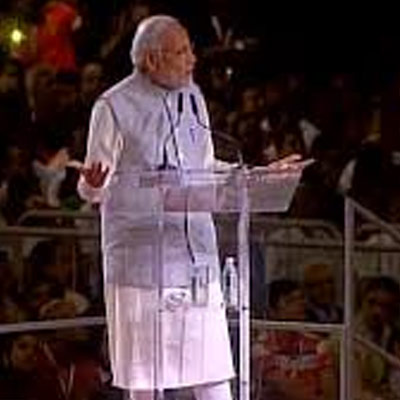
    MUMBAI: All eyes are trained on Indian Prime Minister Narendra Modi’s second visit to the US, which is also the first time in three decades that an Indian PM visits the west coast.


    Understanding the geopolitical and economic gravity that this event brings for India and the world at large, news channels NewsX and India News have lined up expansive coverage for viewers throughout Modi’s visit.


    The programming line-up on NewsX and India News includes special shows, exclusive interviews, roundtable discussions and prime time debates. Viewers can also tune into the live reports of the events unfolding from ground zero including live coverage from San Jose where Modi will address the Indian-American community.


    While NewsX will present roundtable discussions in collaboration with the US-India Political Action Committee (USINPAC), an American, Bipartisan Political Action Committee representing Indian-Americans, India News will report special stories from New York.


    This special line-up of programming on NewsX and India News will be driven by the channel’s team of editorial experts led by NewsX editor-in-chief Rahul Shivshankar and India News editor-in-chief Deepak Chaurasia along with veteran journalists like Kartikeya Sharma, Geeta Mohan and Sheetal Rajput, who will travel to the US to cover the visit and provide the viewers with in-depth live reportage.


    “Not only Indian viewers, but the whole world is keeping a close eye on this much anticipated visit. Through our extensive coverage, we look forward to continue our leadership and deliver on the expectations of our viewers of being the most trusted network,” said Chaurasia.

  • Air China launches live TV streaming in flights

    Air China launches live TV streaming in flights

    NEW DELHI: Air China has launched its first in-flight live television broadcast by streaming pictures showing Beijing’s huge military parade that marked the 70th anniversary of the end of the Second World War.


    The live broadcast was shown on the Air China aircraft’s TV screens as well as on passengers’ mobiles.


    Passengers were able to watch the live broadcast thanks to the satellite TV service provided on the flight, or on their own mobile devices, including tablets and smart phones, which were connected to the plane’s entertainment system, China News Service reported.


    Air China said it hoped to mark the occasion with live streaming of the parade to symbolise the “end of an era” when Chinese airlines were unable to broadcast live television.


    In partnership with the China’s civil aviation authority, government broadcasting authorities and satellite networks, Air China said it has carried out research and testing for more than a year before making the breakthrough with its in-flight broadcast equipment.


    The airline said that in the future passengers would be able to access state TV broadcasts and a variety of provincial-level TV shows on flights.


    Many airlines abroad, including those in Europe and the US, have been offering live TV broadcasts streamed via satellite TV, satellite and in-flight Wi-fi for several years.

  • Bhaarat Today beams test signals in India, gets formal launch in US

    Bhaarat Today beams test signals in India, gets formal launch in US

    NEW DELHI: Bhaarat Today, a channel aimed at showing the glory of Hinduism and the integrity of the country, has been launched simultaneously in the United States and India.


    A Telugu and English channel, it is the initiative of Swami Paripoornananda who has succeeded in launching the channel after two years of planning.


    Paripoornananda wants the channel, which is a news-cum-general entertainment channel (GEC), to emphasise the need to trace back the richness of the Indian philosophy that survived the onslaught of many religions and many countries. 


    The channel’s test signals have commenced on the Intelsat20 satellite at 68.5 degree east. Bhaarat Today channel will telecast programmes in test trail soon. The formal launch of the channel in the United States was on 12 September.


    Parameter Details:

    Satellite: Intelsat20@68.5E(C-BAND)

    Freq Rate: 3754

    Symbol Rate: 9300

    Polar: Vertical

    Modulation: Mpeg4/dvb s2

    Mode: Free To Air (FTA)

  • DC villains take over Warner TV this fall

    DC villains take over Warner TV this fall

    MUMBAI: Villains are making an epic comeback on Warner TV this season, as DC Comics’ most nefarious foes will battle it out against their legendary superhero counterparts in three high-profile return series.


    On Tuesdays, Gotham fanatics will have to buckle up for Season 2 in the next instalment of this Batman origins-story. Having won theCritic’s Choice Television Award in the Most Exciting New Series category in its first season, Gotham Season 2 will see the rise of new and ambitious villains, as well as the emergence of the infamous Riddler, Penguin and The Joker. Right after that, the channel also premieres the highly anticipated first season of  Blindspot. It will be revving up suspense and thrills in a larger conspiracy setting, pointing towards a series of unsolved crimes and a beautiful body full of tattoos.


    iZombi  makes a comeback with its second season on Wednesdays. The series follows Rose McIver stars as Olivia “Liv” Moore, a 25-year-old medical resident on the fast track to a perfect life until she’s turned into a zombie.


    On Thursdays, season 4 of Arrow makes its mark on the channel. Uneasy alliances and rivalries shift as Oliver Queen faces his most difficult challenge yet – facing villainous Ra’s al Ghul and the League of Assassins.


    On 26 September, Warner TV will also play tribute to arguably the biggest superhero with Batman Day. Watch out for a Batman movie marathon starting from 10:30 am, that will feature Batman Begins and The Dark Knight franchise. This is the start of a crescendo, which will see a new season of The Flash, and premieres of Supergirl and DC’s Legends of Tomorrow hit the screen in 2016.


    As if that wasn’t enough, Warner TV will also exclusively air the latest series of The Big Bang Theory starting 25 September.


    The summary of the line up is as follows:

    Tuesdays: Gotham S2 premieres 22 September / 9 pm (SG/HK/MY/PH)

    Tuesdays: Blindspot premieres 22 September / 9:50 pm

    Wednesdays: iZombie S2 premieres 7 October / 9 pm

    Thursdays: Arrow S4 premieres 8 October / 9 pm

    Friday: The Big Bang Theory premieres 25 September / 9 pm

  • BBC to launch US OTT service in 2016

    BBC to launch US OTT service in 2016

    MUMBAI: BBC is planning to launch a new over-the-top (OTT) video service in the US by next year. 


    BBC director general Tony Hall made the announcement during the Royal Television Society Convention in Cambridge.


    “Following on from our AMC partnership in the US, we have just signed a new joint venture with Sony Multi-Screen-Media to launch a BBC Earth channel to India. And we’ll begin to try out businesses that go direct to the public. Next year, we’re launching a new OTT video service in America offering BBC fans programmes they wouldn’t otherwise get – showcasing British actors, our programme-makers – and celebrating our culture,” Hall said.


    He also informed that the plans would increase commercial returns from BBC Worldwide to ?1.2 billion over the next five years, more than 15 per cent higher than the returns of the previous five years.


    While addressing the conference, Hall said that BBC would work with global partners to grow BBC Worldwide further, taking advantage of the demand for British programming and new digital opportunities with offering such as the new OTT service.


    Hall hit back at critics, pointing out that to deliver the quality content licence fee payers should expect, the BBC needed a commercial strategy where BBC Worldwide delivers as much as possible back into public service programmes. He said that in 2014 the commercial arm was an indivisible part of the BBC and had a turnover of ?1 billion that gave the BBC a record return of ?226 million.

  • M&C Saatchi trains eyes on Asia; names Ben Welsh as creative chairman

    M&C Saatchi trains eyes on Asia; names Ben Welsh as creative chairman

    MUMBAI: With its eyes trained on the rapidly growing Asian market, M&C Saatchi has named Ben Welsh as the agency’s creative chairman of Asia. Welsh was formerly at M&C Saatchi Sydney as executive creative director.


    Welsh’s appointment marks a change in emphasis for the network. Asia as a region has changed dramatically in recent years – China took over as the largest economy from the US in 2014, India has the fastest growing advertising industry in the world and Japan is the second most innovative country in the world. The addition of Welsh demonstrates the network’s spotlight on Asia.


    Welsh’s focus will be pitching for both international and national brands in each region, attracting creative talent and developing the creative output of the five agencies the network runs there.


    Welsh has helped to establish M&C Saatchi Sydney as the leading creative shop in Australia – and has led the agency to its biggest trophy-haul yet at Cannes this year, consolidating its position as the country’s number one creative agency. M&C Saatchi Australia came home with a coveted Titanium Lion, one of only five up for grabs, to cap off a 10-Lion haul.


    M&C Saatchi CEO worldwide Moray MacLennan said, “This appointment underlines our commitment to the core of our business – the creative product. Ben is the best combination of strategic thinker and creative leader. Add in his boundless energy and Asia will be hugely strengthened. He is also an excellent brand ambassador for M&C Saatchi having worked for us for the last 18 years.”


    Welsh added, “I’m really excited at the thought of what we can do in the region. We have some brilliant people and I look forward to working with them to create an impact in such a diverse part of the world.”


    Welsh will start his new role on 1 October. His appointment follows the departure of Chris Jacques who was regional CEO. He will be based in Sydney but regularly travelling to Singapore, New Delhi, Kuala Lumpur, Shanghai and Tokyo.


    Welsh joined M&C Saatchi Sydney in 1997 as a senior writer and was then promoted to creative director in 2003. Previously, he led a team of over 50 creatives working across digital, direct, retail and above the line media in Australia’s largest agency.

  • Viacom18 broadens reach with Rishtey Asia launch; rebrands channel in UK, US

    Viacom18 broadens reach with Rishtey Asia launch; rebrands channel in UK, US

    MUMBAI: Viacom 18 has launched the Asian version of its Hindi variety entertainment channel Rishtey, which will be beamed across 20 countries in the Asia Pacific, Middle East and Africa region.


    Additionally, the network has also rebranded Rishtey in the UK and US to Rishtey Europe and Rishtey Americas. 


    The content on the channels is specially curated with shows catering to the specific needs of the viewers in the respective regions.


    IndiaCast group CEO Anuj Gandhi said, “After receiving an encouraging response from viewers in the UK and US, we are now looking at expanding our reach in the APAC, Middle East & Africa regions. Rishtey Asia is a wholesome entertainment channel, which connects everyone in the family making it a preferred entertainment destination for viewers. With the channel now being available across twenty countries, we are strengthening our ties with distribution networks to engage with a larger audience segment.”


    In Australia and New Zealand, Rishtey Asia will be available on Vision Asia, Yupp TV, Lebara Media Sevices. The channel will further be available on Eitisalat, Du and Yupp TV in the Middle East, Azam TV, Space TV and Mauritius Telecom in Africa, Digital System of Nepal in Nepal, and Scan International Company in Thailand.


    IndiaCast business head – Middle East & Africa Sachin Gokhale added, “We have thoroughly studied the content need gaps existing in the South Asian TV space in Middle East, Africa and Asia Pacific regions and through Rishtey, have created a unique channel with carefully handpicked content that will fill those gaps and deliver never before seen entertainment to our viewers. The channel has carefully put together the best content across various genres ranging from drama, lifestyle and kids, to youth and blockbuster Hindi movies, giving the discerning viewer access to new and exciting content options. Our content is conducive to creative marketing campaigns, and through the insights provided by our research team, we hope to mobilize and engage audiences online and offline.”


    Speaking on the re-branding of Rishtey Europe and Rishtey Americas, Gandhi said, “Through the rebranding exercise, we have carefully aggregated a diverse programming line-up across genres, bringing together an eclectic mix of shows not only from the Viacom18 bouquet of offerings, but also syndicated from broadcasters across the globe. We are confident that geo-targeting the content for Rishtey Europe and Rishtey Americas will enable us to further engage with our viewers.”


    Rishtey Europe is currently available on Freeview, Sky, Virgin, Freesat and leading OTT platforms, whereas Rishtey Americas is available on Dish and Sling in USA, Flow in the Caribbean region (Trinidad & Tobago) and Bell and Rogersin Canada.


    “Our business has grown more than four times in last three and half years, and 30 – 35 per cent of our revenue comes from global business,” Gandhi informed.


    Colors & Rishtey CEO Raj Nayak added, “Since its inception in 2012, Rishtey, as a brand, has adapted its content, to regional viewer preferences, which has struck a favourable chord in UK, USA and Canada. We are confident that the new content line-up will appeal to our regional viewers in the respective markets and further add to the success of the channels given the widespread appeal of the channel across-age groups. We believe that the time is right for us to elevate the positioning and programming line-up of Rishtey Europe and Rishtey Americas.”


    The content line-up on Rishtey Europe and Rishtey Americas includes young love stories Kaisi Yeh Yaariyan, Turkish drama Pabband Ishq, period drama Siyaasat and the Pakistani show Nail Polish.


    The channel will also offer kids’ content Luv Kush and Krishna Balram giving regional viewers a flavour of Indian mythology. Bollywood films like Hasee Toh Phasee, I Love New Year, and Bombay Talkies amongst others will also be available for viewers.


    If consumers want only regional content of a particular language, they need to subscribe to the base pack first and then choose the specific pack, a system that can certainly get disrupted by the OTT development. “OTT players will bring in huge change in the ecosystem as it gives consumer the total control of paying for particular content. Australia is an example of that where in people have shifted to OTT and IPTV. Niche channels will see a huge growth with the establishment of OTT players,” informed Gandhi.