|
MTV India was primarily known for music, comedy, spoofs and “Fully Faltoo” attitude. The team of Cyrus Oshirdar (creative and content), Cyrus Broucha and Cyrus Sahukar was giving its viewers a “no-tension” dose of comedy and music.
In 2007, Viacom and Network18 got together to create a joint venture. What followed was the redrawing of the roadmap for MTV. The positioning changed and music became shorter in line with its new image of being a youth entertainment channel.
The man in charge of this content revamp was Ashish Patil as he churned out shows that would stand the new look – Its My MTV. From Fully Faltoo to Kick Ass and from Bakra to Splitsvilla, MTV has scored points in segmenting, targeting and positioning for the youth.
The channel has also extended its wings in the US, New Zealand and Australia.
In an interview with Indiantelevision.com’s Gaurav Laghate, MTV India GM and senior VP creative and content Patil says that the game has just started.
Excerpts: |
|
|
Is the ongoing producer-plex owner’s tussle affecting MTV as there is no new music release to lap up for content? |
|
|
Why are you going less on music and more on non-music content? |
|
|
What was the need for this change in identity?
And so far as the business goes, the music pie is limiting. Music as a commodity is playing everywhere; so eyeballs are limiting and revenues have hit a ceiling. |
|
|
Even the market leader in the music channel genre had to change? |
|
|
So what is the new positioning of MTV? |
|
|
|
|
How will you describe your TG?
This target audience is very fickle and impatient. If they don’t like something, they have multiple options to switch over to. And anything that catches youth eyeballs is competition for me. Be it malls, gizmos, movies, mobiles, ipods, internet, etc. |
|
|
So that is why you are making your presence felt on internet and other space? |
|
|
But don’t you think some of the content is not fit for small towns, or non-metros? |
|
|
Is your programming strategy confined to unlicensed thrill, living on edge and speed?
So my aim is to cater to all the needs of my TG. We are now building on our franchise. Earlier I had only Roadies as a fixed offering on Saturdays at 7 pm. Now I have shifted it to Sundays and got the highest opening for Splitsvilla season 2 on Saturdays. |
|
| So you mean you are now getting appointment viewing? Absolutely. As I said, earlier we used to launch shows on Saturdays at 7 pm band. I had a great following there, courtesy Roadies. It was a gamble when I shifted it to Sundays, but it did well for us. Now I have viewers for Saturday as well as Sunday. Also, in December, I launched Haven @ 7 on weekdays. So I am taking baby steps to get more viewer attention. I am already getting more viewership than many general entertainment channels (GECs). |
|
|
So what are the plans ahead? |
|
|
How has the JV between Viacom and Network18 helped in MTV’s growth in India?
Also, both (Viacom and Network18), as players, are front-foot batsmen. It has put our transition in the fourth gear. Our efficiency has increased and so has our brand value, distribution, marketing, headcount and infrastructure. |
|
|
Have we seen MTV’s revenues grow over the last couple of years?
Ad sales accounts for 65 per cent of our revenues, of which 5 per cent comes from international clients. Around 15 per cent comes from affiliates, which is also increasing. 15 per cent comes from Viacom Brand Solutions (client lead stuff, events and advertiser funded programming) like The Fast and The Gorgeorus, Stunt Mania etc. The remaining 5 per cent comes from L&M and movie previews (Ghajini).
Also, we are opening up supplementary revenue streams through mobile, web, and even through ticker. Our ticker has a fan community on social networking sites and advertisers want to be there. |
Tag: US
-

‘When you are a market leader, it’s necessary to shake things a little’ : Ashish Patil- MTV India GM and senior VP creative and content
-

‘2008 has been HBO’s best year in terms of quality and quantity of programming’ : Shruti Bajpai – HBO South Asia Country Manager
As the television landscape gets more crowded with new entrants, the challenge for existing players is to keep innovating. HBO, which has bought out the stakes of its partners in the Asia venture except Paramount, still has exclusive licensing arrangements with Sony, Universal, Warner Bros and Paramount/DreamWorks.
Late last year, the English movie channel launched an anchor slot HBO Wicked Hour. The focus in this slot is on action, thrillers, suspense, sci-Fi and critically acclaimed movies for the late night male viewers. This is part of the channel’s strategy to create new programming blocks to cater to specific TGs.
In an interview with Indiantelevision.com’s Ashwin Pinto, HBO South Asia country manager Shruti Bajpai talks about the challenges that confront English movie channels and the pressure to focus on content and branding.
Excerpts:
Why did HBO buy out its partners in the Asia venture except for Paramount?
This was a management decision in keeping with HBO’s expansion plans across the world. HBO wanted to further build on its strong position in the US. The majority equity stake in HBO Asia is a further testament to this expansion.Does the channel now have to bid for new titles coming from its former partners?
We have exclusive licensing arrangements with Sony, Universal, Warner Bros and Paramount/ DreamWorks. This arrangement continues uninterrupted. This is the reason why we have such a strong inventory.What are the challenges that are going to confront the English movie genre over the next few years?
The last few months have seen a spate of launches in the Hollywood/International cinema and there are some more expected this year. There is an intense amount of clutter in the overall TV channel space and the viewer is spoilt for choice.I am of the firm opinion that channels with compelling and consistently ‘winning’ content will continue to flourish while the others will just about manage to survive at the periphery. Hollywood movies are beginning to grab a bigger chunk of India’s huge movie market, traditionally dominated by Bollywood.
A larger Indian audience than ever before is viewing the Hollywood movies and the appetite for such content seems to be increasing. Breaking through the clutter and being able to hold on to the attention of the audience, which is usually short due to the ample choices available, will be a rising phenomena in this category.
How has HBO fine tuned its programming strategy?
HBO has been following the mantra of ‘Big, New, Most’ for Indian viewers. We have always devised innovative and topical themes around our movies, instead of fitting it in a “genre for each day” bracket. We do not believe in doing automatic repeats the morning after, like other channels.Has HBO spruced up the content this year because of new competition?
It will not be wrong for me to state that 2008 has been HBO’s best year in terms of the quality and quantity of programming. We have a supply of blockbuster hits that take center stage every month like Superman Returns, Ghost Rider, Happy Feet and Mr. Bean’s Holiday.In addition, we also air critically acclaimed movies and blockbusters that anchor the Saturday primetime slot at 9 pm. These have included Munich, World Trade Centre, Memoirs Of a Geisha, Blood Diamond. Upcoming titles include Spiderman 3, Surf’s Up and The Pursuit Of Happyness.
What is also important is our focus on entertaining themes. These are conceptualised for the channel every month. They target different TGs and advertisers. Some examples of these are HBO Animation Fest, Mad About Diamonds, Fast Cars and Gorgeous Babes, HBO Earth Day.
Also playing a role are tentpole events. We did a Hollywood’s Best initiative which featured Oscar nominated/winning movies, HBO is Summer during May and June, which featured Summer of 60 Nights. Here, a blockbuster movie was shown every night. Moreover there were also mini-stunts under the HBO is summer umbrella like Entrapment, Martial Arts Specialists ‘Codename: SuperKids etc. All these have resounded with our target audience.
To add to this, we have looked to raise the bar when it comes to quality programming with original series like Entourage, the third season of which has just begun on the channel and themes like HBO- Movies with a difference that showcases movies that make us sit and think.
Have new programming blocks been created to cater to different TGs?
Our most current anchor slot HBO Wicked Hour was launched late last year. It focuses on action, thrillers, suspense, sci-Fi and critically acclaimed movies for our late night male viewers.Right now, we are focussed on building this slot and also other key slots like It’s a Guy Thing, Midday Matinee, Family Sunday etc. We are always on the lookout for creating new programming blocks to cater to specific TGs.
As the audience gets more fragmented in the metros, the challenge for English movie channels is to reach out to the smaller cities as well. How is HBO targeting these viewers who are aspirational?
Television is one of the biggest sources of entertainment for people across categories in India. Where the audiences have evolved, programming has also seen a huge turn around on the small screen. With the choice and variety on offer for the Indian audiences, the television industry today is booming. It is not only in the metros but also the smaller towns where there are potential viewers. What matters ultimately is the content that is shown – if the content is different and unique, it is well appreciated by the viewers.The increase in multiplexes in smaller towns and the increase in global travel by Indians from all across the country have added to the familiarity with Hollywood movies and shows. HBO is a global brand and this helps in the affinity towards the channel.
How has the channel fared on the ad sales front?
The ad revenues are growing year-on-year. Turner, our ad sales partner, has done an excellent job to maximise revenues and also retain a number of advertisers exclusively on HBO. ‘DTH is growing, but the format is still the classic ‘one price for all channels’ rather than specialised packages. This is expected to change as the market matures‘
Has perception among clients about this genre improved?
HBO is perhaps one of the few channels that is more than just a channel; the brand gives a big boost to the channel’s perception.Also, English movies is a genre that our ad clients consume on a regular basis.
What are the kind of packages you offer clients that go beyond the 30-second spot?
We have different packages that are tailor made for different clients. One of our packages is the brand integration package where we seamlessly integrate the positioning of the brand that is being advertised into the theme for the month. We also have a lot of contests that we do for the advertisers that go beyond the 30-second spot.Channels have started advertising on rival bouquets. Does HBO accept ads from other channels that are not part of Zee Turner or is there a conflict of interest?
We do accept advertising from other channels, but are careful in picking those that have the right fit. Some of the channels that have recently advertised on HBO are BBC Entertainment and English business channel UTVi.Is HBO looking to boost its content around news shows to add variety to filmed content?
HBO has always believed in giving its Indian audiences the best of international programming and content across genres. We already have a diverse mix of blockbusters, all time favourites and original productions. In fact HBO is the only channel to have both the raters and the differentiators.The third season of the show Entourage just premiered in late June and we have Big Love coming soon. Also, the recently-aired two part mini-series in the US, The Andromeda Strain, which is based on the best-selling novel by Michael Crichton, is going to be on our channel soon.
Does HBO do a lot of marketing and promotional activities to create awareness?
HBO’s marketing and promotional activities have always looked to be innovative and clutter breaking. This year we have had many multimedia campaigns to announce our Summer line-up, our mega blockbusters and our shows.We have a well planned strategy for the rest of the year, especially during the festive season of October-December. As we speak, we are running a multimedia campaign that includes a contest, to promote Spiderman 3.
The hope is that addressability will get a push this year with DTH (direct-tohome) seeing new launches this year. How do you see the distribution scenario evolving?
As new launches increase, distribution becomes critical. We are also hoping that addressability gets implemented in the right manner.DTH is also growing, but the format is still the classic ‘one price for all channels’ rather than specialised packages and introduction of new tiers. This is expected to change as the market matures.
-
‘US, Europe and Canada are growing markets for Indian content’ : Adris Chakraborty – Globosat Entertainment director
With the Indian television market booming and the NRI community becoming more affluent, platforms in the UK and US are looking to service this community better. Hoping to take advantage of this is ethnic content aggregator Globosat Entertainment. Formed three years back, the company hatched a deal with Sahara to distribute its channels in the US, UK and Europe. It also markets the religious channel Aastha and works with various platforms.
Indiantelevision.com’s Ashwin Pinto caught up with Globosat Entertainment director Adris Chakraborty to find out more about the company’s future plans.
Excerpts:
What are the changing trends for demand of Indian content overseas?
Bollywood and cricket are the dominant forms of entertainment. Soaps fare less well as the connect is not there; dubbing or subtitling is needed, or else language becomes an issue. News works but to a much lesser extent, as a lot of the diaspora gets that from the internet. To get people to pay for a news service is difficult. People are to an extent also interested in Indian subjects like alternative healing systems, the investment climate, etc.How is Globosat positioning itself to take advantage of this?
We want to leverage the appeal of Bollywood through video-on-demand service offerings. We are talking with production houses to make their content available on VoD through DTH (direct-to-home) and cable platforms. There are entertainment and movie channels.We are also talking with recently launched Indian broadcasters who want to have a presence abroad. We are also talking with FM radio stations to figure out opportunities to distribute their content on a national scale in the US, UK and Europe, under a subscription-based service model.
Which are the Indian and South Asian channels that Globosat is currently distributing?
We distribute the Sahara channels in the US, UK and Europe. We also market NDTV News and promote Aastha channel in the US.Besides, we are looking at value-added services like ring tones. We are in discussions with a technology service provider to offer subscription-based Bollywood ringback tone services for the South Asian diaspora. We want to work with them to also offer an SMS-based revenue service. The SMS based-revenue, which is big in India, is not being exploited for the South Asian audience. So an NRI watching an Indian Idol on Sony cannot participate through the SMS route. We want to create these kinds of alternative revenue opportunities for our broadcast partners.
Is interest in Indian content also spreading among mainstream TV viewers in the US and other countries?
Bollywood is doing that. It is appealing not just to Indians but also to Bangladeshis, Pakistanis and the Hispanic population. They have subtitles or dubbed content.What are the services that Globosat offers?
We work in the ethnic content aggregation and distribution business with focus markets in the US, Canada and UK. Since we understand the South Asian market, we started off in this space.With a full-fledged marketing team, we help content owners promote and distribute their offerings under different platforms on a subscription basis. We work with multiple platforms and with multiple markets to get the best possible distribution and revenue for broadcast partners. Content distribution could be in the form of VoD for Bollywood movies. We work with DTH platforms and cable networks to help aggregate their VoD content. We have a 60,000-square-foot playout and broadcast facility in New York with five studios. We also have studios in San Francisco and in Toronto.
‘Demand overseas for Indian content is more dominant in the areas of Bollywood and cricket. Soaps fare less well as the connect is not there. News works but to a much lesser extent, as a lot of the South Asian diaspora gets that from the internet‘What are the platforms you have relationships with?
Our partners include DirecTV, Dish, Rogers, Comcast, Time Warner Cable, and BSkyB in the UK. As the platforms deal with many genres, it is important for us to help them give a marketing push to our offerings. The platforms, after all, do not have the time and energy to market our channels. We offer a value add as we understand the community.What is the scene for Indian regional channels in the US, UK?
They have their own viewing pockets. They are mostly a-la-carte offerings on different platforms. However, there are three Bengali channels which are offered as a package and as a la carte as well.Do you use Soundview Broadcasting to create innovative content for South Asian audience in the US?
We have a couple of shows. There is a show called Green Card about the process of getting one. Then we have Astro Guide and we also do a community news programme Your Voice where we cover the US. We do all this for Sahara. We provide NGOs an opportunity to come and discuss issues on a show called Centrestage.We produce some content for Aastha in the US. This includes religious festivities. We do some local programming and plug it on the feed to build up better connection with the subscribers. We also shoot film premieres, interviews and give it to our partners.
Viewers want to know the reaction to a latest film, for instance. We do this from the point of view of building the subscriber base for our partners. Local production helps build an emotional connect.
What is the strategy Globosat follows in terms of marketing its offerings?
Our marketing mechanism is such that we participate in the major media, cultural and trade events in the US, UK, Canada and Europe which are relevant for South Asians. Sometimes we are allowed to put up a booth and run promos of our broadcast partners. We do a lot of cross promotions with print publications. In addition, we do direct mails, dealer network promotions, etc. We also sponsor events like Miss India USA.We work with platforms to create new offerings. In Europe, in conjunction with a few channels, we created a DTH platform in partnership with a technology playout called GlobeCast. We partnered with Sony in the UK and created a bouquet to be a compelling subscription-based service. This caters to the Indian and Pakistani diaspora. We also have a major Pakistani channel in that bouquet.
Do you also do ad sales for channels?
We have started a full-fledged media agency called Media Morphosis. We help clients with media and print placements. It could be PR or cross- promotion strategies. We are connected with large advertisers, and this helps our broadcast partners. We also use this to market the Globosat channels.We are in the process of launching Media Morphosis in India. The aim is to offer our services to Indian channels that are abroad and want help attracting advertisers. We will also help companies who want to reach the South Asian community in the US, UK and Europe. We are talking with Star to do their ad sales in the US.
Mainstream travel agencies, insurance and money transfer companies in the US and UK find us useful if they want to reach out to the affluent South Asian community. These advertisers also want to partner with broadcasters. We help them leverage relationships in the most cost-effective manner.
We also organise below-the-line activities, road shows, etc. From a media-buying point of view, we work with a lot of channels. The agency is two years old and we did a gross billing of $2 million with a 30 per cent margin.
Will you be expanding your footprint to Africa, Australia and Europe?
We would like to. However, at the moment the bandwith in Australia and Africa is limited. We want to maximise our distribution in the US and Europe which is a large exercise. Canada is a growing market for Indian content.South America, unfortunately, is fragmented on the distribution front. Piracy is rampant and the Indian population is also too small to justify going there and marketing our offerings.
New media platforms like mobile, net, etc. are growing through platforms like JumpTV. How is this impacting the channel distribution business?
It is a good thing for us and our broadcast partners. We have room to do more effective deals. Earlier, it was mostly DTH. If a broadcaster comes to us, we can now take him to all the platforms. One thing, though, is that mobile technology is very primitive in the US. So it will take time to develop as a broadcast medium there.In terms of revenue, what targets does Globosat have?
With a turnover of $9 million, we are experiencing steady growth.What plans do you have for other ethnic content?
We have tied up with an IPTV platform. They have created a bouquet of Chinese channels. They want us to help them promote and distribute that bouquet in Europe. Our affiliate Soundview also has an Afro-French channel, a Caribbean channel and a Punjabi channel which we distribute in the US and Canada. -
BBC’s show ‘Spooks’ to examine the relationship betweeen the US, UK and Iran
MUMBAI: UK pubcaster the BBC has announced that its spy show Spooks will return later this year on BBC One. The complex relationship between the UK, Iran and the US is put under the spotlight … but who can really be trusted under this new world order? In India the show airs on BBC Entertainment which is carried on Tata Sky.
Over the course of 10 hour-long episodes, Adam, Harry and the team are immersed in their most intricate operation to date. The broadcaster says that the distinction between friend and foe becomes ever more blurred. Rupert Penry-Jones, Hermione Norris and Peter Firth return as officers Adam, Ros and Harry of Section D, MI5.
Raza Jaffrey, Miranda Raison and Hugh Simon also reprise their roles as Zaf, Jo and Malcolm, and welcome new arrival Connie played by Gemma Jones. In the drama, Iran’s covert scheme to become a nuclear power leads to growing mistrust between the British, American and Iranian governments, who all nurse their own agendas to help or hinder the Middle Eastern state in its efforts.
The volatile climate culminates in a series of high risk operations both at home and abroad. The opening episode sees Zaf, undercover in Tehran, attempt to place a bomb on a civilian train in an effort to flush out a key Iranian spy, an act which could have dangerous ramifications not only for Zaf but for the whole team.
Meanwhile, the electric atmosphere between Adam and Ros comes to a head, but things are complicated further by Adam’s dangerous ongoing affair with a key asset inside the Iranian embassy.
Spooks producer Katie Swinden says, “For the first time ever, we’ve chosen to explore one theme throughout the series, and one which is an ongoing concern in today’s world affairs agenda. The relationship between Britain, Iran and the US is such a delicate and topical issue that it opens up a wealth of new storyline possibilities to us.
“Audiences will be able to follow Adam, Harry, Ros and the team as they take on their most challenging operation to date, and will get to see them in a whole new range of dangerous and exciting situations.”
The BBC executive producer Sarah Brandist says, “Spooks, one of the autumn highlights for both BBC Drama and BBC One and this year, takes on a more global feel by telling bigger, bolder stories across a wider landscape.
“BBC One viewers, who are already eagerly awaiting the gang’s return, will be treated to an explosive opening two-parter and, from then on, the action flows from beginning to end. Spooks has returned in style.”
-
NDTV inks distribution deal with BT for UK, US
MUMBAI: British Telecom’s (BT) media and broadcast division has inked an agreement with news broadcaster NDTV to be its global network supplier. This will enable the distribution of NTDV to the pay TV platforms BSkyB and DirecTV in the UK and US respectively. This is part of NDTV’s global growth strategy. BT will carry the live NDTV news bulletins to multiple platforms on its state of art network specially rolled out for television and media companies.
BT GM, client management Asia Pacific and EMEA Deepakjit Singh Chatrath said, “We are indeed excited about fuelling a certain part of NDTV’s global growth plans. This is indeed an excellent opportunity for BT to showcase its network especially in terms of resiliency, security and a round the clock global service. We are confident of building this relationship as a benchmark for today’s broadcast industry.”
BT presently down links the signal at UK from the PAS 10 satellite, and then carries it over its Media – IP network to BskyB’s platform in UK. This also includes bringing the signal to the BT Tower and making it fit for the U.S. viewer and then transporting the signal to the DirecTV platform in Los Angeles for it to be broadcasted over the DirecTV’s US platform. BT also takes care of repurposing the formats and other services for the US market.
BT already has implemented the carriage of signal to BskyB platform and to DirecTV is planned for launch by end of July.
NDTV CTO Rahul Deshpande said, “For today’s broadcasters the big business goal is globalisation. We have chosen BT as it offers a suite of services such as world class security, end to end network monitoring and water-tight service agreements that have been built into BT’s IP network”.
BT’s Media & Broadcast Media-IP network is the only IP network which can connect the customer to multiple platforms across many countries without getting out of the network.
-

”In the entertainment field there is nobody else who does what E! does’ : Kevin MacLellana – Comcast Entertainment Group, International president
With the advent of digitisation in India, more international broadcasters are looking to launch channels in the country. A case in point is E! Networks. It runs E!, which focusses on Hollywood news, stories and features. It will also launch its fashion and lifestyle channel Style internationally later this year.
E! Networks is looking to launch at least one, if not both of these channels before the end of the year in India. It is in talks with distribution networks to negotiate deals. Indiantelevision.com’s Ashwin Pinto caught up with Comcast Entertainment Group, International president Kevin MacLellan to find out more.
Excerpts:
Could you give me a brief overview of E!’s international business and the content it offers?
E! has two sources of revenue. One is its programme sales. It has been selling foreign programming into foreign markets as far back as 1992. This was after it launched in 1991. Then in 2002 we started to sell the E! Network into foreign markets in 2002. Over the last five years we have garnered 46 million subscribers in over 100 countries.How important is Asia in terms of content consumption and revenue vis-?-vis Europe and the US? Which are your top three markets in this region?
It is very important. The 46 million subscribers that I mentioned did not exist till five years ago. Over a third of E! Networks subscribers come from outside the US. Malaysia, Indonesia and Singapore are the top three markets in Asia. They account for 65 per cent of viewership in Asia.We have 12 feeds globally not including the US. In Asia there are three feeds.
India is going through a period of digital transition with Cas and DTH. How do you view this market in terms of potential and has a timeline been set to launch E! and Style?
The Indian market has always been extremely interesting to me. I was part of the team that helped launch Sony in the 1990’s. India has been interesting on account of the success of HBO. I was quite skeptical about how it would fare as I felt that Bollywood would be the programming that everybody wanted to see.Now it has become apparent to me that due to the upper echelon of Indian society in terms of the wealthier people with larger disposable incomes they have a significant interest in Hollywood films. From our perspective, India is a big market to reach for in Asia. The problem was that E! launched internationally pretty late in the game in 2002-2003. Analogue was pretty full by then.
We had to find other platforms that had available capacity. We are so pleased to see DTH, IPTV taking off in India. We believe that the audience that has the money to invest in these platforms has a strong interest in Hollywood. We would like to launch E! and Style by the end of this year.
The English entertainment and lifestyle segment in India is getting more competitive. What is E!’s USP that you feel will help it stand out from the other players?
In general, entertainment and lifestyle programming is becoming more popular everywhere. In the entertainment field there is nobody else who does what E! does. We are the experts in Hollywood. We are not experts in Bollywood and to try and pretend to be anything we are not is a big mistake. We have learnt that by going into many markets, whether it is the UK, Italy, Japan, Malaysia.We cover Hollywood better than anybody else and this is what sets us apart. To find out everything on Hollywood and see it done in a high quality rich looking channel is what viewers expect from us.
From Style’s point of view there are many lifestyle channels out there from the likes of Discovery and Scripps. Most of those channels appeal to 25-49 year old females. The Style channel has been successful in the US as it appeals to a younger female crowd. You are talking about a 12-34 year old female. Women at that age are just setting their buying trends. They are choosing brands that they will use for the rest of their lives. Style targets a young, technologically savvy woman. E!’s target is 18-49.
The similarity between the two networks is that we are appealing to what we call the ABC1 demographic. This refers to a high income, highly educated, metropolitan audience.
Over the last three years how has E! gone about creating awareness in Asia?
Our aim was to go into each market and secure sophistication. There is no point in marketing unless you are strong in distribution. So what we have done is countries like Thailand, Hong Kong, Singapore, Indonesia is spending money with the local operators. Due to the limited distribution in all Asian markets doing general marketing like ads in newspapers makes very little sense. It is important to market to viewers who can access the channel.A good way to do that is to do marketing campaigns with the operators themselves. We do outdoor campaigns and it helps that E! has famous faces appear on the channel. We can do ads in print magazines with pictures of Brad Pitt, Angelina Jolie, Jennifer Aniston. The A-list names grab people’s attention a lot more than say an ad for a documentary would.
In India you have licensing deals with broadcasters like Zee and Star. When you launch, will this side of the business get affected?
Yes! I believe that there is an important mix between sales and channels. While we do sell content to channels it is important for the viewers to know that the main place to get E! content is on the channel itself and not on other networks. Viewers must know that the best place to get news on Hollywood is E!.However, to go back to the marketing issue, it helps to put a little of your content on the bigger networks with a broader reach. It helps familiarise the audience with the E! brand. I am sure that there will be a reduction in the content we sell once we launch.
Right now, we do volume deals with Indian broadcasters where we sell 200-250 hours of programming. This will change. The number of hours sold will come down.
Apart from India, China is a key market for most channels but has proven difficult to crack. What is your gameplan there?
We have been lucky in China. We shoot the content ourselves. We own the rights. Other studios have financing partners and they all have some rights. We produce 1100 hours of programming. We do not acquire programming nor do we commission very much. We own our content across multiple platforms. We have the flexibility to be more realistic in doing deals in China.What has prevented some studios and production firms from being able to have a business in China is that they are inflexible in terms of what they are willing to do with their rights. We can sell 700 hours each year to multiple channels. On CCTV for instance there is an hour of content. CCTV can also use this content as they expand their broadband and mobile businesses.
The disappointment in China is not our ability to sell there. It is to have our brand be available. However the good thing about China is that the rules for online are not as restrictive. So we can sell our content on television and maintain a brand presence online.
What is the split between advertising and subscription revenues? What targets have been set?
In Asia it is all affiliate revenues. There is no advertising. In Australia and New Zealand we have a significant amount of ad revenue – 35 per cent. In Latin America most of our revenue comes from advertising as is the case with the US.Our biggest goal is to launch Style later this year globally and to increase the subscription revenue of E!
Are you looking at working with retail firms as well with Style as it is about fashion and accessories?
What is good about Style is that it comes built in with a bunch of cross-promotional exercises. In the US the network has a lot of high-end brands. We have worked out global ad sponsorship deals. For instance, we do a programme that focusses on the Versace fashion shows.To what extent has E! Networks’ programming budget gone up over the last couple of years?
It has gone up hugely by over 50 per cent in the past five years. Most of this is due to the amount of money being spent on high end reality shows. There was a time when reality shows were inexpensive. They are now becoming almost as expensive as scripted drama and comedy. Talent has become more expensive. In general I would say that there is more creativity in the reality genre.There was point when you had elimination reality shows and home based reality shows (like Big Brother) where you lock people in a house. Now you see reality shows that are based on game shows that are on mockumentary formats. This would be a hybrid scripted reality show. You will see more shows like MTV’s Laguna Beach, which is partially scripted and partial reality.
‘I believe that there is an important mix between sales and channels. While we do sell content to channels it is important for the viewers to know that the main place to get E! content is on the channel itself and not on other networks.‘What are the new shows that E! is developing?
There is a show called Paradise City, which is similar to Laguna Beach. It follows the biggest performers of Las Vegas. One character can be a playboy bunny. Another one can be a rock star.Another show Sunset Tan looks at Beverly Hills, Malibu beach life. The wealthiest mansions and homes in the Summer become vacant. They rent for $30,000 a week from June till the end of August. Rich families from across the world come in. Their kids hang out in nightclubs, drive sexy cars.
We are doing a show on the New York socialite scene. Our aim is to expand beyond Hollywood. We will look at other wealthy people who are becoming a part of what we call pop culture.
I believe that you are creating original content for Asia. Could you shed light on this?
We will premier a show called Young Hot Asia. This is a documentary about 15 of the hottest young Asian stars. They are making a mark not just in Asia but also in Europe and the US. There have always been the Jackie Chans. Chow Yun Fats and Michelle Yeohs but in the last three years you are starting to see Asian talent that nobody had heard of before making a noise
overseas.We will do specials on film festivals held in Asia. We will look at how Asian content is influencing television content in the US and in Europe. Ideally with India there should be 70:30 mix of
Hollywood and Bollywood content. We can also have the Indian perspective on Hollywood. We can shoot in India and focus on people who are fascinated with Hollywood.The problem is that since we are launching on digital tiers it cannot support a great deal of local production.
You recently hired American Idol host Ryan Seacrest. How has he helped boost the channel’s profile?
He has become more than just our news anchor. He is also our Red Carpet host like for the Oscar Awards. He is pretty much the spokesman for the channel now. Our news ratings have risen by 50 per cent.The median age for our news has dropped to 32 from 38 which is very low. It is also rare. National broadcast news tends to have a viewer age above 50. Ryan is bringing the younger American Idol audience with him.
What are the challenges in doing celebrity news vi-a-vis regular news?
Access is a challenge. The audience has an unending desire for gossip and for paparazzi type footage of celebrities. They want to celebrities particularly when they are not on the Red carpet all beautiful and made up. There is huge interest in looking at celebrities when they are not prepared. With E! our main source of content are celebrities and their publicists and agents.We have to ride the line to feed the audience what they want. A lot of people cover celebrities in a mean spirited way. We need to avoid that and provide the audience with what they are looking for. When cover celebrity news you have to remember that the publicists are very powerful. Unlike other kinds of news where you are just reporting the facts here you have publicists and PR agents who are constantly trying to skew the way we cover things.
Don’t you get accused of pandering to the stars to get access?
(Laughs) We are not a news company like CNN whose aim is to report in an unbiased manner. We pander to the stars on some shows but there are others where we do not. We have a documentary series E! True Hollywood Story that looks at stars who have fallen due to factors like drug use, sexuality, extra marital affairs.We are doing one on Kirsten Dunst who am I sure is not going to be happy about everything that is on the show. We did not get information by talking to her but through sources. It is covered in a very realistic, unflattering way. On the other hand Celebrity Profile celebrates stars. So we do both types of programming. We don’t apologise for it.
What are the other channels in E!’s portfolio?
We have a channel called Versus. It focusses on outdoor sports like skiing, hockey, snowboarding. It is not about extreme sports but sports that viewers are very familiar with. The other channel is G4 and it focusses on videogames. Its target group is boys 12-29. We will not launch Versus in Asia right away.That is because you buy sports regionally. So it is difficult to have a pan regional network for it. I am more interested in launching G4 in Asia and India. Internationally G4 will launch late next year.
In India the government has banned FTV for two months. A similar fate had fallen on AXN at the start of the year. I would appreciate your views on government regulation.
India is not quite as strict as Malaysia and Singapore. We have a feed for those two countries and the content is not as open as what we air in Australia and New Zealand. We could air the Malaysia and Singapore feed in India.This feed is more on the conservative side. As India grows I would eventually look at having a feed just for India. At the moment though the digital platforms in India do not make it economically viable to have a feed just for this country. Any international broadcaster who is planning to enter India and have a separate feed just for it has no plans to breakeven. When subscribers grow for our channel in India then we would look to have a separate feed and we would be looking for more leeway compared to Malaysia and Singapore.
One challenge for media firms in the digital age is re-purposing of content for mobile and the Internet where consumption is increasingly taking place anytime, anywhere. How is E! going about this task?
We have done well in this regard as we own all our content. Normally people who make films, dramas and comedies do not own the rights to their properties. We do not face this difficulty. Broadband and mobile can be done on a region-by-region case. We have group called Short Programming and New Media Content (Spanc).They launched a year and a half back and already everyday we put 90 minutes of streamed content up for mobile. It is a cut down version of the shows we make and the news that we provide. Operators can also take 20-25 minutes of clips either on a VoD basis or on a SVoD basis. Some operators only take the streamed content while others only take the VoD content. Some take both.
Online we have a broadband channel called The Vine. It is available at E! Online. The site has 80 editorial people. The Vine is streaming video. One popular section is called Planet Gossip. It has video stream segments from gossip columnists all over the world.
What role are merchandising and DVDs playing in helping E! diversify its revenue streams?
I am just launching a DVD business. E! has never released DVDs overseas. We will be coming with an international DVD called Beverly Hills Plastic Surgery Secrets. It features 10 of the top plastic surgeons in Beverly Hills talking about the best way to do procedures. It looks at what procedures leave scars and which ones do not.How has E! Online boosted its content offerings?
We cover entertainment news from an aspirational perspective. Other sites only have a section for entertainment news. Some sites cover entertainment from a paparazzi, lowest common denominator view.We were profitable through the dotbomb era and it is still profitable. Our site has been profitable for the last seven years.
E! Online 2.0 will launch this Summer. This will have social networking. So people can chat about their favourite stars. They can go into our library, find photos of their favourite stars and swap them with each other. One can upload one’s photo of a star if one has a digital camera. Taking photos of stars is happening more frequently in Los Angeles.
-

Cea heralds next phase of digital TV transition in the US
MUMBAI: The Consumer Electronics Association (CEA) in the US is celebrating the arrival of the next phase of the historic digital television (DTV) transition.
All products shipped with analog television tuners will also include a DTV tuner. The milestone marks the final phase-in of DTV tuners and comes as DTV industries and consumers prepare for all-digital broadcasting in February 2009.
CEA president and CEO Gary Shapiro says, “The finish line for the transition to digital broadcasting is less than two years away, and the consumer electronics industry has reason to celebrate this latest milestone on the pathway to a successful transition.
“As of 1 March, any product shipped with an analogue TV tuner will also include a DTV tuner, making access to the benefits of DTV a reality for more American consumers as these shipments reach the retail store shelf.”
Shapiro explained that consumers are not required to purchase a new television in order to continue receiving programming after the DTV transition; owners of analog sets will be able to view broadcast television with a digital-to-analog converter box or through cable or satellite service. But in order to enjoy the full benefits of DTV – particularly high-definition television (HDTV) with its eye-popping pictures and digital surround sound – the consumer would want to purchase an HDTV.As part of CEA’s ongoing effort to help consumers understand the transition from analog to digital television, CEA’s Video Division Board adopted language last year for manufacturers and retailers to alert consumers purchasing an analog-only set that a digital converter box will be required as of February 17, 2009 for over-the-air reception.
In a February 2007 letter to more than 600 retailers, Shapiro encouraged retailers to include the analog labeling language in product displays as an additional measure to ensure consumers are informed about how analog sets will receive over-the-air broadcasts after the transition. This voluntary labeling initiative is part of an industry-wide educational effort that supports a successful digital television transition. CEA also has a wealth of consumer DTV educational material available on www.myCEknowhow.com. This is a web destination for information on the digital television transition.
-

Nickelodeon to launch its first theme park in US by 2008
MUMBAI: Viacom kid’s entertainment brand Nickelodeon and Mall of America have announced a partnership to set up the first-ever stand alone Nickelodeon theme park in United States by spring 2008. This initiative is also part of a re-branding initiative of the Mall’s seven-acre amusement park.
SpongeBob, Dora, Diego & Jimmy to come alive at first Nickelodeon theme park in US
An official announcement states that the construction will begin after the architectural plans are complete. Though the majority of the creative elements are in development, including the official name of the new park, one of the first rides to be introduced in the park is a roller coaster based the animated Nick series, Avatar: The Last Airbender. Construction is expected to begin in 2007.Nickelodeon will also aim to establish its largest retail presence in the world at Mall of America, with a brand new Nick store occupying more than 4,000 square foot space, offering consumers items such as branded tee-shirts, souvenirs, novelties and more. The network will also introduce healthy dining options throughout the parks’ eateries, in line with its four year old health and wellness pro-social initiative for kids and families, Let’s Just Play.
Throughout the design and creative process, Mall of America and Nickelodeon will conduct research and gain feedback on different concepts and designs by working with an advisory panel of kid experts to weigh in on key decisions and issues, adds the release.
Nickelodeon Recreation senior vice president Howard Smith. “We’re absolutely thrilled to expand our brand with our first stand alone Nickelodeon theme park and our largest retail presence in such a wonderful destination.”
As part of the partnership, Nickelodeon will bring its top characters, interactivity, and its signature iconic green slime to Mall of America. The newly revamped park, and the first ever Nickelodeon theme park, will feature new rides, live shows, retail, games and entertainment, and food service establishments themed with top ranking network properties including: SpongeBob SquarePants, Dora the Explorer, Go, Diego, Go!, Avatar: The Last Airbender, Danny Phantom, Jimmy Neutron: Boy Genius, The Backyardigans and many more. Costumed characters and live interactive entertainment from these Nickelodeon and Nick Jr. shows will also find a home at the Mall.
Mall of America vice president business development Maureen Bausch. “We expect the newly themed park will draw even more new visitors from around the United States, as well as international travel markets.”
-
HBO, American Girl in multi-platform deal
MUMBAI: US broadcaster HBO and American Girl a direct marketer, children’s publisher and experiential retailer, have entered into an overall relationship to develop a variety of multi-platform ventures including theatrical films, series, specials and documentaries.
The first project to be greenlit by HBO Films will be an American Girl live-action theatrical film based on the popular historical character Kit Kittredge. The film will tell the story of the clever and resourceful Kit Kittredge, a nine-year-old girl growing up in 1934 during America’s Great Depression. HBO Films senior VP Julie Goldstein is the executive in charge of the production, which is scheduled to go into production this summer.
HBO Films president Colin Callender says, “We are thrilled to be working with Ellen Brothers and the team at American Girl, whose brand has become an extraordinary phenomenon in recent years.
“This is an unprecedented opportunity to align the forces of both the HBO and American Girl brands in a groundbreaking collaboration that will enable us to take advantage of the rapidly expanding, multi-platform, multi-faceted promotional opportunities spanning all areas of distribution.”
-
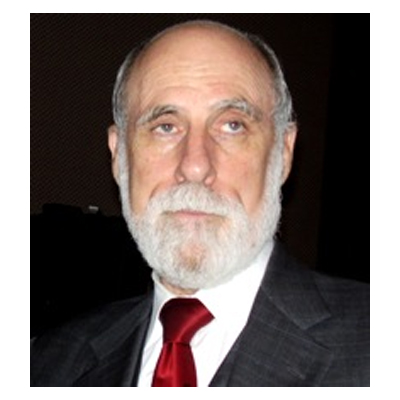
‘Mobiles will be the first introduction to the internet for an awful lot of people’ : Vinton G Serf – Google’s vice president and chief internet evangelist
Google’s Vice President and Chief Internet Evangelist Vinton G Serf is regarded as one of the fathers of the internet. While in Bangalore, he shared his views, Google’s objectives and the future of the internet, with Indiantelevision.com’s Tarachand Wanvari.
Excerpts:
IPR issues – You say that Google would like to make information available everywhere globally. Recently a Belgian court passed a ruling against Google over copyright. Google has been accused of dragging its feet in bringing in technology to take care of IP rights and help fight piracy. What does Google propose to do now on this issue?
First of all, I’d like to point out that Google does not preview the content and we don’t claim any ownership or anything like that. Our intent is to make people aware of content which is already on the network. There are issues arising when someone who pulls copyright material and someone else has put that material improperly on the network. Google is unaware of any of the copyright claims when that information shows up on the net, it was there.
Our package is very much like the package that was established in the US called the Digital Millennium Copyright Act.
The US DRM is not as good as the framework in the EU.
Actually, there is some tension in here between the piracy laws and the copyright laws and there is uncertainty as to how that is going to be resolved. The European Commission is trying to figure out how to adapt their intellectual property and content protection laws to match the US DRM laws.
Google earth has run into several problems with regards to security. Lot of concerns have been raised about sensitive locations being viewed easily. What do you propose to do about this?
Our policy is that whenever we have an issue arising with the national authorities, we take it away. We do understand their problems, and in fact there are any number of images that have been adapted. But I do need to point out to you that the data that we are using is not ours, typically it is available for free like the Nasa Landsat. Anyone could have access to it, and so removing it from Google Earth does not necessarily solve the problem, because the imagery is there. It’s also commercially accessible, in other words if you wanted that information, particularly if someone deliberately wanted the security overhead in order to mount an attack, if they have a coherent capability to attack, they probably also may have the ability to purchase this information quite independent from Google. So the problem is more complex than taking things out of Google Earth. The problem is that a lot of the overhead imagery is widely accessible. Period.
I actually do not know of the specifics of the issues here in India, I can say that for some US installations we have removed or replaced information with less resolution or in some cases actually wiped out – like the White House for example, you can’t see the roof, it’s simply been covered up digitally. So those are things where actions have been taken.
We face this all the time with regards to content that is indexed in different parts of the world you’ll find governments with different views, usually the Chinese example, the one everyone brings up, but I want to mention that there are other places. For example in France and Germany, it is illegal to profit form Nazi war memorabilia, and so it is considered illegal literally to put up images of these materials. So we have to consciously remove them form the google.de and the google.fr index. We understand that and we try to work with governments.
The way mobile penetration is going on compared to laptops and desktops, do you see the internet more as a virtual net?
In some ways yes. I think that we’re going to see expansion in all directions 802.11, Wifi, as opposed to physical networking technology. Lots and lots of mobiles which I think will be the first introduction to the internet for an awful lot of people in the world. Their first opportunity to interact with the internet may be on a mobile device.
‘The ability to respond to an individual interaction, and to produce relevant advertising material in these different media is very important for us to consider‘As evangelist at Google, is it right for Google to acquire companies like Youtube, etc. Basically your core competency lies in developing search engines, aren’t you moving away from those core competencies?
I disagree that we are going away from our core competencies. First of all, we acquire a lot of companies, because their technology we think is helpful. It’s true that our primary business is search and we have never lost track of that. But remember what’s driving the company right now is advertising, because advertising is how we pay for everything. And so you have to remember that the core of the business is revenue generation through target advertising. And we are very interested in all the mediums, not just the online internet, which has turned out to be wonderful for us. But that doesn’t mean that the other advertisement mediums should be ignored. They are still quite valuable.
Youtube and Google video are media and so is radio. So we have been experimenting with video advertising, with audio advertising and with print advertising. Using similar kinds of techniques, the thing which is probably the most critical is the ability to produce an intervention in real time as opposed to the traditional thing where you produce a video advertisement which is a part of a television show actually prepared months or weeks ahead. The ability to respond to an individual interaction and to produce relevant advertising material in these different media is very important for us to consider.
Could you speak on Web 2.0 and Web 3.0?
I actually think those are two marketing terms and I sort of reject them out of hand as being overly simple. I do think however that the web as we know it with xml and html and so on has created an infrastructure layer on top of which you can now do things and so to the extent that there is a Web 2.0, maybe it uses web services and Service Oriented Architecture, it’s still very nascent, still very infantile. Long ways to go before we see it grabbing hold. I even chatted with Infosys this morning abut that and we have a similar view that it is still very much in its infancy.
But, the concept is very compelling that you could standardize interaction. I hope we do it right this time. We tried once before in 1980, we called it the Webtronic Data Interchange and it didn’t work out because it was too vertical. So I sort of don’t like the terms Web 2.0 and Web 3.0., the thought behind them is standardizing of exchanges creating a layer of infrastructure that everyone can use and build on.
How much is your India R & D center involved in solving these issues and challenges?
In very obvious terms, we have a large number of Indian researchers and engineers at Google working very hard on many of these problems. So it’s a direct contribution at least to Google.