Tag: US

  • Zee forms task force to tackle piracy in US

    Zee forms task force to tackle piracy in US

    MUMBAI: Asia TV USA, the exclusive distributor of Zee channels in the Americas, has initiated a technical task force, making sustained efforts to seek out those who are pirating programming and signals from the Zee suite of channels.

    Zee said it is taking all steps to prohibit piracy where streaming of content on services such as Live TV Box, Shava TV, Jadoo TV and Boom TV permit viewers to access Zee’s content illegally.

    Zee has been successful in shutting down Zee content on Live TV Box and Jadoo TV that was being streamed illegally.
    "We recognize that consumers are being led to believe that Zee content is legally available for free on these streaming boxes. However, Zee in the Americas is a premium subscription service that viewers pay a monthly fee to receive," a Zee spokesperson said.

    It also said that it will not hesitate to take action against illicit services such as those described above as well as South Asian retail stores that sell these boxes.

  • Zee to sell ad inventory for Jaya channels in US

    MUMBAI: Zee Entertainment Enterprises Ltd (Zeel) is making efforts to push its advertising revenues up in the international market at a time when its subscription income is flattening.

    The company is going to sell ad inventory for the Tamil-language Jaya channels in US.

    Zee Americas, a subsidiary of Zeel, has partnered with Canada-based television broadcasting, distribution and communications company Ethnic Channels Group to handle the ad sales for Jaya TV, Jaya Max and Jaya Plus.

    With this partnership, Zee will create a Deccan Pack that will give advertisers access to viewers that were previously unaddressed.

    The pack which will consist of Jaya TV services, Zee Telugu and Zee Kannada will allow businesses to target an additional 160,000 unique households. Zee will offer access to these viewers in partnership with Ethnic Channels Group based in Canada.

    Zee Americas CEO Suresh Bala said, “Tamil is spoken by 7 per cent of the South Asian population in the United States and Jaya TV has about 15 years of broadcast history behind it making it a great resource to offer advertisers. As Zee is the best platform to reach the Hindi speaking segment of South Asians in the US, we are thrilled to be the only network offer advertisers an opportunity to have dialogue with this formerly untapped south Indian market segment.”

    Ethnic Channels Group President Hari Srinivas said, “The Zee Group is one of our largest partners. The Jaya TV Group is also our main partner in the USA market. This unique relationship will be of immense benefit to the advertising community as the Jaya TV Channels are watched by many Tamils in USA.”

  • ‘Our goal is to make UFC the No. 2 property for Six after IPL’: UFC Chairman and CEO Lorenzo Fertitta

    ‘Our goal is to make UFC the No. 2 property for Six after IPL’: UFC Chairman and CEO Lorenzo Fertitta

    Founded in 1993, the Ultimate Fighting Championship (UFC) has gone on to become the largest Mixed Martial Arts brand in the world. Having established itself in markets like US, Canada, and Brazil, the UFC has made its first big push in India through a broadcast deal with Sony Six.


    Apart from having a television presence in the country, UFC also plans to build the sport with on-ground activities and talent hunt initiatives. Its ultimate aim: to make UFC the second biggest property for Sony Six after the cash-rich Indian Premier League (IPL).


    Indiantelevision.com‘s Ashwin Pinto caught up with UFC Chairman and CEO Lorenzo Fertitta to find out the organisation‘s plans for India and the strategy it will be following to grow the sport in the country.


    Excerpts:


    Q. When you bought UFC in 2001 what was the aim and to what extent has this been achieved?
    A. At that time what we wanted to do was create a combat sport organisation that had some structure and brand around it. We looked at boxing as we have always been boxing fans. Big fights occur in Las Vegas.


    But what we found is that boxing was very fragmented. There was no brand and structure which a lot of times prevented the sport from putting on the fights that fans wanted to see. So we saw an opportunity in the UFC to take combat sport to a new level because there would be an organisation, structure and a brand.


    Our vision was to take the UFC from a niche sport to a global brand. We wanted to create a great entertainment product for the fans. We have accomplished our aim. We are the largest combat sport organisation. We are broadcast in 150 countries to a billion homes in 22 languages.


    Q. You once said that when you bought UFC it was the worst brand in the US because of all the negativity. Could you talk about the strategy followed that helped the company turn things around?
    A. Firstly we developed rules and regulations that we now call Unified Rules of Mixed Martial Arts. We worked with various state governments to have them recognise those rules and UFC as a sport. The third thing was really promoting the athletes and presenting them as being world class. The previous owners really focussed on the violence and spectacle of the sport.


    We focussed on the athleticism of the fighters and the competition. The aim is to have athletes compete in a safe way. The sport is a combination of martial arts like Judo, Jujitsu, Boxing and Taekwondo.


    Q. As per research how is the UFC brand perceived in India and globally today?
    A. Globally we are looked at as the market leader in mixed martial arts. We are seen as the premier organisation. In India it is too early to tell. I don’t think that there is a lot of awareness in India about mixed martial arts. I think that people are intrigued about the success that we have had around the world. The question is can we replicate that success here?


    Q. What would you say is your USP vis-a-vis other events like Bellator and boxing?
    A. Relative to other sports, what we do is put on fights that fans want to see. All fighters are contracted by us. It is easy to put matches together. Our aim is to never have a mismatch. So we put fighters in an event who are evenly matched. Most fights don’t go to a decision. Matches are fast paced and you have outcomes that are very definite and defined.


    Boxing is one dimensional. In the UFC, on the other hand, you can grapple, kick, punch and put the opponent in a submission hold. It is interesting from a strategic standpoint and more fast paced. That is why younger people like it. In 2006 UFC overtook boxing as the biggest provider of pay per view events. Last year in November over nine million Americans watched a heavyweight fight on Fox. Bellator would be lucky to get 90,000.

    ‘We liked the approach that Sony was going to take. We also liked being affiliated
    with the IPL. And we wanted to be on a sports channel‘

    Q. So is MMA more mainstream compared to a decade ago?
    A. Without question! In the markets where we have a presence in, it is a mainstream sport. We produce more than 30 live events in a year.


    Before we acquired the UFC mixed martial arts was a fringe attraction, largely unregulated and unable to appear even on pay per view platforms. All that has changed.


    Q. MMA like soccer is a sport that works everywhere, unlike cricket which works in some markets, NFL which is only present in the US and baseball which is only present in the US and Japan. Is that because viewers can identify with the aggression and competitive nature of the fighters?
    A. I think the reason is that it is simple and easy to understand. A lot of other sports have rules. If you have not grown up watching cricket or the NFL, you will never understand how the game is played.


    When you put two athletes in the Octagon and make them compete everybody gets it. It is not hard to explain.


    Q. Is there an entertainment quotient in the UFC or is the focus just on the sport?
    A. The way we present the product is very important. We spend a lot of money putting on a big show. At the end of the day it is the fighters, the action and the quality of the fights that sells. We broadcast all our events in HD. We have aired some events in 3D. We look at emerging technologies to make the viewer experience better.


    Q. What revenue growth does UFC expect this year and how much comes from television fees?
    A. Sixty per cent comes from television fees. Then you have live ticket sales. Beyond that you have sponsorship.


    The US accounts for over half our revenue. Canada would be second, Brazil third and Europe next.


    Q. Which are the top three markets for UFC?
    A. The US is number one. Canada is number two and Brazil is number three. We see a lot of similarities between Brazil and India. Both are emerging economies. There is a growing educated class of younger people who are looking for a new and exciting sport. We think that is what the UFC represents.


    Q. How big is Europe?
    A. Europe is big, particularly the UK as well as the Baltic states like Sweden and Denmark where the UFC is very popular. We are just starting in Italy, France, Spain and Germany and we plan to bring events to
    Central Europe sometime next year.


    Q. Where does Asia fit in the scheme of things?
    A. 2013 and 2014 are important years for us in Asia. We did our first event in February in Tokyo and it was a success. Our second event was in Macau in November. Then we want to do events in the Asian capitals like Shanghai, Singapore, Taipei, Hong Kong and Kuala Lumpur.


    Q. How did the deal with Six come about and what are the terms of the deal?
    A. This is a four-year deal. Hopefully we will be able to extend it and make it a long term relationship. Our goal is make UFC the number two property for Six after the IPL.


    We came to India two years ago. We started looking here and have worked for a long time. We have had interest expressed from every major media company here. We have had discussions with companies like Zee, NDTV and Star.


    We liked the approach that Sony was going to take. We also liked being affiliated with the IPL. And we wanted to be on a sports channel.


    Q. What is the gameplan to grow the UFC brand in a country where WWE is hugely popular?
    A. When we started the UFC, WWE was popular in the US. But people figured out quickly that while we were real, the WWE was fake. We were, thus, able to migrate a lot of fans over to the UFC.


    In India, we see the same thing happening, particularly with the younger demographic base. Once they see how exciting the UFC is and that it is real, they will migrate from WWE.


    The gameplan is firstly using the distribution of Six and airing live events. They also use our library to educate fans on what is going on in the UFC. Then there is the reality show ‘The Ultimate Fighter’.


    This will develop Indian fighters and is the most important thing for us. In order to be successful, we have to have Indian fighters that can compete at an international level. We appreciate Sony‘s dedication in producing ‘The Ultimate Fighter: India’ with us.


    Q. Could you talk more about Ultimate Fighter?
    A. This is a reality show which is in its 17th season. We have done versions in the US, Australia, Brazil and the UK. It is about 16 young fighters who live in a house together. They train together. At the end of each episode there is a fight and the winner progresses. The event takes place over 13 weeks.


    The Indian edition takes place next year. The two semi finalists fight together to determine who gets the UFC contract.


    Q. When does the first season kick off?
    A. We are looking at a time frame of September next year. We will spend the next six months looking at different fighters around the country and do casting calls. In terms of venues, Mumbai and Delhi will be important. We will be looking at facilities that a city can provide.


    Q. How did the idea of doing reality television come about?
    A. When we bought the brand, it was tarnished. People associated it with violence. We knew that we needed to do something that was different that explained why it was not about violence and why these athletes were so special.


    We created the reality show so that people were not just watching a fight. They were watching how these guys lived, interacted, what their background was, their family life, and how they train. It helped change the perception of the sport. This show has changed the face of mixed martial arts.

    ‘When we started the UFC, WWE was popular in the US. But people figured
    out quickly that while we were real, the WWE was fake. We were, thus, able to migrate a lot of fans over to the UFC. In India, we see the same thing happening, particularly with the younger demographic base‘

    Q. Is there cross viewership happening between UFC and WWE as athletes like Brock Lesnar and Ken Shamrock have competed in both?
    A. There is some cross viewership. Our TG is males 18-34. WWE skews a little bit younger – teenagers. I see UFC’s appeal spreading across India including in the wrestling belts in the rural areas.


    Q. Has UFC considered launching its own TV channel?
    A. Not yet! We felt that we needed to make an investment and grow the brand before making this move.


    Q. What growth has there been in the amount of content UFC offers in the past three years?
    A. We have increased it significantly. A lot of this is driven by our television deal in the US with Fox. We went from being on a one cable channel which was Spike TV to being on the Fox platform which includes programming for four networks that they own. Our programming has tripled year on year.


    We felt that there was a demand that people wanted to see more fights. We wanted our product on multiple platforms in the US. We are on a free to air channel Fox, on a cable channel FX and on a smaller sports cable channel which is called Fuel TV. Hitting every tier within the US media market was important to help us continue to build our brand.


    Q. What challenges does the economic slowdown pose for UFC?
    A. We have been fortunate that we have not been affected very much by the economy. The reason for that is that no matter how bad things are, people still want to consume entertainment. All sports whether it is
    the UFC, NFL, NBA are doing well.


    Q. Sports entertainment outfits like Super Fight League have come in. How do you think it will push the sport in the country?
    A. It will boost popularity. Competition is a good thing. We come in as a premier organisation which if we succeed will help other leagues.


    Q. There is a view that UFC has followed NBA’s approach to grow which lies in buying rival promotions. Is that a fair assessment?
    A. I don’t know that we are following anybody’s strategy. We have over time acquired a number of leagues to get their athletes over to the UFC. We also got their library. Strategically it made a lot of sense. The biggest acquisition was Pride Fighting Championship which was based out of Japan.


    We also bought Strikeforce which was based in the US. Female fighters take part here. We could license these rights to Six as well. There is potential for that. As all these athletes are under one company it allows us to put on fights that fans want to see.


    Q. How do you view new media platforms like Internet and mobile?
    A. Our core customer base is very proficient online. They consume a lot of their entertainment on YouTube. They are on Facebook and Twitter; it is important to our strategy. We have a large portion of our library online. You can subscribe and go back and watch fights, interviews, updates etc. We try to use Facebook, Twitter to market UFC and spread the word about the upcoming fights.


    Q. Has China been a difficult market to crack due to government regulation?
    A. We are taking it very slow. We have not had any issues or any problems. China is the birthplace of martial arts. There is a huge appetite for this sport there.


    Q. Where do you see the UFC in India five years down the line?
    A. I think that we could be the number two sport after cricket. In Brazil we are not just the number two sport but are also getting close to the popularity of soccer. Many times we get more viewership than the Brazilian national soccer team does.

  • BBC World News, BBC America expand distribution in the US

    BBC World News, BBC America expand distribution in the US

    MUMBAI: BBC America and BBC World News today announced wider expansion in Time Warner Cable systems for the BBC‘s 24-hour global TV news channel BBC World News in the US and increased distribution for BBC America, the home of acclaimed series ‘Doctor Who‘, ‘Copper‘, ‘Luther‘, Top Gea‘r and ‘The Hour‘.

    BBC Worldwide America executive VP network distribution Sandy Ashendorf said, "It‘s been a record-breaking year for BBC America, as our iconic sci-fi series Doctor Who has reached new heights and we‘ve created new original programming including ‘Copper‘, our highest-rated series premiere ever. We‘re excited to expand BBC America‘s partnership with Time Warner Cable and launch BBC World News, which has seen record distribution growth in the past year."

    BBC World News will be added to the digital basic package in most Time Warner Cable systems before the end of December 2012. It will see increased distribution in several cities. By year-end, BBC World News will be carried in top US markets including New York City, Los Angeles, Chicago, Boston, Philadelphia, Washington DC, and San Francisco.

    As a result of its expanded relationship with Time Warner Cable and other multichannel operator deals over the past two years, BBC World News will have grown its reach by over 10 million new homes in 2012 and in total, BBC World News will reach 25 million full time homes in the US following the Time Warner Cable launches.

    GN COO Jim Egan said, "I‘m delighted to see BBC World News coming to Time Warner Cable – this is another important foothold for our global news channel in the highly competitive US market. We are really pleased by the growing demand in the US for a global news network which is both non-partisan and non-sensational in approach. BBC World News is about serious news; with on the ground reporting and analysis from different parts of the world and a mandate to inform and provide a balanced view. We know that audiences around the world value the channel‘s distinctive world view and we are pleased that more US viewers now have access to it."

    Time Warner Cable also will increase BBC America‘s reach. In January, BBC America will debut new drama ‘Ripper Street‘, set in London in the aftermath of Jack the Ripper, and new original series ‘Wild Things with Dominic Monaghan‘. New episodes of ‘Doctor Who‘, ‘Copper‘, ‘Luther‘, ‘Top Gear‘, ‘The Graham Norton Show‘, ‘Being Human‘, ‘The Thick of It‘ plus new original drama ‘Orphan Black‘ and mini-series ‘Spies of Warsaw‘ have also been announced for next year.

    The past two years have been an important breakthrough period for BBC World News as it continues to expand its distribution. The BBC is investing heavily in new programs and facilities as it seeks to build on recent successes growing audiences and reputation around the world. This will include the launch of new state of the art studios for the channel in January 2013, at the BBC‘s new building in central London.

    BBC World News has the largest audience of any BBC channel in the world, reaching over 350 million households and broadcasting in over 200 countries and territories worldwide, with access to more than 70 international newsgathering bureaus. Its programming includes the Emmy©-winning daily newscast, BBC World News America, anchored by Katty Kay from the BBC‘s studio in Washington DC. Broadcasting 24-hours a day, the channel offers US audiences high-quality global news from the BBC‘s network of global correspondents, as well as documentaries and current affairs programming, in an HD format.

    Within the US, BBC Global News is an international multimedia provider of news and current affairs programming across broadcast and digital platforms. Alongside the 24 hour TV news channel BBC World News, more than 500 local public radio stations in the US broadcast BBC World Service content – mainly news and current affairs programming, including the flagship global newscast ‘Newshour‘.

  • The Hobbit earns $13 million in midnight runs in the US

    The Hobbit earns $13 million in midnight runs in the US

    MUMBAI: The Hobbit: An Unexpected Journey grossed $13 million in midnight runs on Friday in the US.

    Peter Jackson‘s 3D fantasy-adventure is the first title in a planned trilogy which is based on J. R. R. Tolkien‘s novel The Hobbit that was published in 1937.

    Starring Martin Freeman as Bilbo Baggins and Ian McKellen as wizard Gandalf, the movie is co-produced and co-financed by New Line and MGM.

    It is distributed by Warner Bros.

  • US ad spend rises by 7 per cent in the third quarter

    MUMBAI: This year continues to be one of growth for the US ad industry. According to Nielsen, ad spend in the US was up by seven per cent in the third quarter of 2012 compared with the same time last year-with the ad-heavy US presidential election and the London Summer Olympic Games likely contributors.

    The third quarter was big for automotive and auto dealerships in the US, which ranked first and third, respectively, for amount spent. Model year-end promotions traditionally make the third quarter the biggest of the year based on ad sales, and six of the top 20 companies based on ad spend during the period were auto manufacturers.

    Other third quarter sector leaders included fast food restaurants, wireless/telecom, retail, motion picture and pharmaceuticals. Auto spent $2.7 billion an increase of 26 per cent. The motion picture category though saw a decline in spend by 12 per cent to $689.7 million. Pharma‘s spend also fell by 22 per cent to $661.7 million.

  • BBC World News commissions new series ‘Changing Fortunes’

    BBC World News commissions new series ‘Changing Fortunes’

    MUMBAI: BBC World News has announced ‘Changing Fortunes‘, a new six-part series that will challenge assumptions about patterns of wealth in the early 21st century. Produced by Films of Record and Duke& Earl, the series will broadcast from 2 February 2013. The show is sponsored by Coutts.

    ‘Changing Fortunes‘ takes a contemporary look at the new generation of wealthy men and women that have emerged in the last two decades. The fall of the Soviet Union, the liberalization of India and the opening of China have brought vast new markets into the global economy. The resulting commodities boom has created an explosion of wealth from Brazil to Africa. And the internet and technology continue to generate new fortunes.

    As a result, the rich are getting younger, more female and less Western.

    From India, the US, to Brazil, Europe, Africa and China – the series meets some of the innovators, entrepreneurs and business success stories whose fortunes offer a window into our rapidly changing world.

    From the Nigerian entrepreneur heading one of Africa‘s largest energy companies to the world-renowned beauty expert and CEO of a leading US cosmetics company, each episode in the series profiles individuals who will reveal their extraordinary journeys to success.

    BBC World News head of commissioning Mary Wilkinson said, ” ‘Changing Fortunes‘ offers a fascinating insight into the economic history of the last twenty years and the accumulation of wealth. All of the individual stories we feature are remarkable and demonstrate that the newly rich are diverse and very global.”

    Coutts head of products, services and marketing Ian Ewart said, “Insight and deep understanding have driven Coutts‘ commitment to serving clients‘ needs for over 300 years, and that commitment remains as true today as it ever was. These outstanding programmes show how emerging trends find their origin in enduring client needs and how wealth generation originates from enduring truths. We want to answer the questions that wealth poses, and what it means today and for tomorrow.”

    Duke and Earl client services director Marc Heal said, “Duke and Earl are proud to be producing this exciting series for BBC World News. ‘Changing Fortunes‘ will challenge expectations and reveal how global patterns of wealth are shifting in the new economic paradigm. We are at a fascinating turning point for the world economy and it is a controversial time to be rich. Each programme in ‘Changing Fortunes‘ will challenge expectations and offer viewers a unique glimpse into the motivations and aspirations of the new wealthy.”

  • Video providers in US to launch STBs meeting energy efficiency norms

    Video providers in US to launch STBs meeting energy efficiency norms

    MUMBAI: Fifteen industry-leading multichannel video providers and device manufacturers that deliver service to more than 90 million American households are launching an unprecedented Set-Top Box Energy Conservation Agreement that will result in annual residential electricity savings of $1.5 billion or more as the commitment is fully realised, the Consumer Electronics Association (CEA) and National Cable & Telecommunications Association (NCTA) announced.

    Participating companies include providers (listed according to number of customers) Comcast, DirecTV, Dish Network, Time Warner Cable, Cox, Verizon, Charter, AT&T, Cablevision, Bright House Networks and CenturyLink, and manufacturers Cisco, Motorola, EchoStar Technologies and Arris. Through the voluntary, five-year Set-Top Box Energy Conservation Agreement, which goes into effect 1 January 2013, these companies commit to the following:

    • At least 90 percent of all new set-top boxes purchased and deployed after 2013 will meet the U.S. Environmental Protection Agency (EPA) ENERGY STAR 3.0 efficiency levels. Based on market projections for set-top box deployments, this will result in residential electricity savings of $1.5 billion annually, as the agreement is fully realized.
    • For immediate residential electricity savings, “light sleep” capabilities will be downloaded by cable operators to more than 10 million digital video recorders (DVRs) that are already in homes. In 2013, telco providers will offer light sleep capabilities, and satellite providers will include an “automatic power down” feature in 90 percent of set-top-boxes purchased and deployed.
    • Energy efficient whole-home DVR solutions will be available as an alternative to multiple in-home DVRs for subscribers of satellite and some telco providers beginning in 2013.
    • “Deep sleep” functionality in next generation cable set-top boxes will be field tested and deployed if successful.

    “Providing American consumers with innovative services that deliver great video content and reduce in-home energy costs is win-win for customers and participating companies,” said Michael Powell, NCTA President and CEO. “Multichannel video providers and device manufacturers are proud to participate in this unprecedented initiative, and we will continue to pursue even more ways to reduce the overall energy footprint of our services.”

    According to the EPA, which administers the Energy Star program, set-top boxes that are Energy Star-qualified are, on average, 45 percent more efficient than conventional models. The new energy conservation initiative will produce more energy savings overall, and five years earlier than originally anticipated by the U.S. Department of Energy (DOE) in its most recent review of set-top box energy conservation issues. Prior to this agreement, 2018 was the earliest date that any DOE set-top box standards would have been implemented.

    “Our industry today commits to a comprehensive initiative that will lead the way to energy savings for consumers in this popular and rapidly evolving product category,” said CEA President and CEO Gary Shapiro. “The Set-Top Box Energy Conservation Agreement will protect innovation and consumer choice while reducing energy use and saving money.”

    Companies involved in the new Set-Top Box Energy Conservation Agreement will meet regularly to review and update energy efficiency measures, and to host ongoing discussions with the DOE, the EPA and other interested government agencies and stakeholders on new technologies and equipment. To create accountability and support transparency, the agreement’s terms include detailed processes for verification of set-top box performance in the field; annual public reporting on energy efficiency improvements; and posting of product power consumption information by each company for its customers.

    The $1.5 billion estimate of Energy Star 3.0 (ESv3) savings takes into account the replacement of DVR and non-DVR set-top boxes with set-top boxes that meet ESv3 energy efficiency levels. It also accounts for the continued trend by consumers to use more DVRs. The estimate adopts the most recent projections from energy advocates of consumer demand for more DVRs in a “business as usual” trend and then assumes that the projected demand is satisfied with DVRs meeting ESv3 efficiency levels.

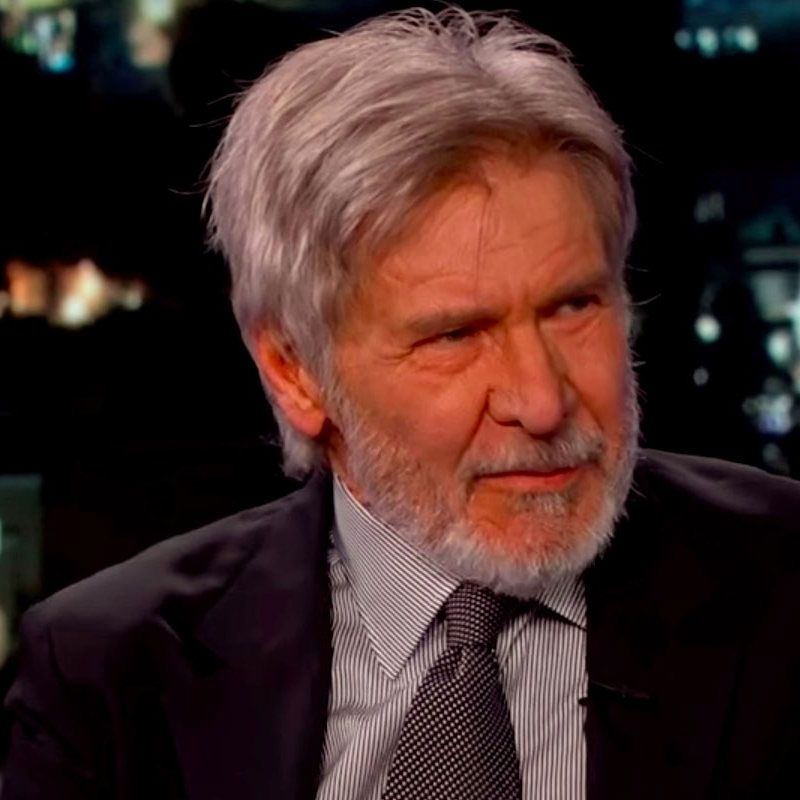
  • Voters choose Harrison Ford to helm US in an entertaining poll

    Voters choose Harrison Ford to helm US in an entertaining poll

    MUMBAI: With Barack Obama edging out Mitt Romney to become the US president for the second time, a survey commissioned by The Credits, a website sponsored by the Motion Picture Association of America, asked voters which Hollywood president would they have voted for instead of Obama or Romney.
    Harrison Ford‘s tough Air Force One Commander in Chief James Marshall came out on top with 23 per cent of the votes. Coming behind was Morgan Freeman as President Beck in Deep Impact. Bill Pullman‘s act of President Whitmore from Independence Day came in third with nine percent.
    Though female candidates were put on the ballot, they didn‘t fare well. They took the last three places. They were Cherry Jones (Fox‘s 24), Geena Davis (ABC‘s Commander in Chief) and Mary McDonnell in SyFy‘s Battlestar Gallactica.

    The survey also opened up the voting to any actor, not just those who had played a president. In this, Denzel Washington came on top followed by Morgan Freeman and a two-way tie for third place between Clint Eastwood and Harrison Ford. While both Eastwood and Ford were favoured by Romney supporters, the women heavily favoured Washington.
    There was also a question about which fictional character would best lead the country during a zombie apocalypse.
    Potential voters believed Samuel L. Jackson‘s experience in exterminating serpents in Snakes on a Plane would help him to deliver the nation from an undead plague. Milla Jovovich‘s character from the Resident Evil franchise came in at No. 2, while Tom Cruise‘s character from War of the Worlds rounded out the top three slots.

  • Resident Evil…tops b-o collection in US and Canada

    Resident Evil…tops b-o collection in US and Canada

    MUMBAI: Resident Evil: Retribution, the horror sequel, grabbed the top spot at the US and Canadian box office over the weekend by amassing $21.1 million (13 million pounds),it is understood. On the other hand, the 3D version of Walt Disney‘s cartoon Finding Nemo took the No. 2 spot in the US and Canadian box-office charts with an intake of $17.5 million, according to Disney.
    Resident Evil: Retribution is the fifth film in a franchise that stars Milla Jovovich as heroine Alice in a battle against the Umbrella Corporation and its army of zombies. Domestic sales were in line with distributor Sony‘s pre-weekend projection for the low- to mid-$20 million range.
    In international markets, the film added $50 million, for a worldwide total of $71.1 million. It did particularly well in Asia.
    Sony president of distribution Rory Bruer credited Jovovich for the continuing success of the Resident Evil franchise.
    Meanwhile, people of all ages headed to theatres to see Finding Nemo for the first time in the 3D format. The film ranks as one of the most successful from Disney‘s Pixar animation studio, generating global sales of $868 million during its original run.
    Disney spent less than $5 million to convert the film to the 3D format. Although weekend numbers came in slightly lower than Disney‘s original projections, Disney‘s executive vice president for motion picture distribution Dave Hollis said the tally was in line with previous 3D re-release openings.
    After two weeks at No. 1, the Demon film The Possession slipped to third place generating sales of $5.8 million.