Tag: US networks

  • Discovery Intl 3Q revenues up 24 %

    Discovery Intl 3Q revenues up 24 %

    MUMBAI: Discovery Holdings, which, owns a 50 per cent stake in Discovery Communications (DCI) has announced its results for the third quarter, ended 30 September 2005.

    DCI’s revenue of $639 million and operating cash flow of $171 million are 15 per cent and six per cent ahead of the same period a year ago, respectively.

    Discovery International’s revenue increased by 24 per cent due to increases in both subscriber fees and ad revenue as also,favourable exchange rates. Net ad revenue increased by 25 per cent primarily due to higher viewership in the
    UK and an increased subscriber base in the UK and Europe. Net subscriber fees increased by 24 per cent due to increases in paying subscription units in Europe and Asia and international joint venture channels combined with contractual rate increases in certain markets.

    Operating expenses increased by 26 per cent due to the previously announced investment in its Lifestyles category designed to develop and grow that market opportunity. Operating cash flow increased by 15 per cent due to the increased revenue. Excluding the effects of exchange rates, revenue increased by 23 per cent and operating cash flow increased by 23 per cent.

    Revenue in the US, increased by 11 per cent due to increases in subscriber fees and advertising revenue. Net subscriber fees increased by 16 per cent as the US Networks had a 14 per cent increase in paying subscribers combined with contractual rate increases at most networks.

    Free viewing periods related to a number of
    US networks, principally networks that are carried on the digital tier, began expiring in 2004 and DCI is now recognising subscriber fees for those networks. Net subscriber fee increases were also attributable to lower launch support ammortisation, a contra-revenue item, as the result of extensions to certain affiliation agreements.

    Net ad revenue increased by six per cent as higher ad sell-out and rates were partially offset by lower audience delivery at certain networks. Operating expenses increased by 12 per cent due to an increase in programming and marketing expenses across US networks. Operating cash flow increased by nine per cent to $165 million.

    Revenue in its commerce, education and other divisions increased by 15 per cent, principally as a result of a 38 per cent increase in revenue at Discovery Education and a 10 per cent increase in average sales per store offset by a seven per cent decrease in the average number of stores. Discovery Education revenue increased due to acquisitions that were made over the past year and an increase in the number of schools purchasing its products and services.

    The operating cash flow loss in its commerce, education and other divisions increased by $8 million, or 50 per cent, primarily due to the previously announced investment in Discovery Education. DCI’s outstanding debt balance was $2.7 billion as of 30 September, 2005.

    For 2005, revenue is expected to grow between 11-15 per cent. Operating cash flow is expected to grow by around five per cent. Operating income is expected to grow by 10 per cent.

  • Van Toffler is MTV US Networks Group president

    Van Toffler is MTV US Networks Group president

    MUMBAI: MTV Networks US chairman and CEO Judy McGrath has announced key executive appointments.

    Van Toffler who was formerly MTV, MTV2 and MTV Films president is now MTV Networks Group president.

    He is now responsible for MTV, MTV2, VH1, CMT and the upcoming gay channel Logo. Brian Graden is Logo’s president. Graden is also MTV Networks Music Group president. He reports to Toffler. Graden will also serve as a creative liaison for MTV’s international operations, working with them on development efforts.

    Larry Divney who was Comedy Central’s president returns to Viacom as MTV Networks ad sales COO.

    McGrath added, “Van Toffler is one of the few executives who lives successfully and comfortably in the music, television, film and business worlds. His passion for our culture helps us maintain the rich creative mix the audience has come to expect from all things MTV.

    “Under Van’s leadership MTV has achieved record ratings and revenue, MTV2 is enjoying tremendous growth as an emerging brand, and MTV Films has a great slate ahead.”

    Talking about Logo McGrath said, “I’m thrilled to tap into Brian’s creative strength for Logo — and to extend his programming expertise to CMT and our international channels, as well. Brian has brought innovation and an unprecedented number of hits to MTV.

    “He was instrumental in the reinvention of VH1, which has never been hotter, and he’s already played a key role in the development process at Logo. With Brian at the helm, I am confident that Logo will be successful and will have an authentic voice that will resonate with its audience.”

  • TF1 licenses new US networks series from BVITV

    TF1 licenses new US networks series from BVITV

    MUMBAI: Buena Vista International Television (BVITV) has licensed the eagerly-anticipated new US network drama series Lost and Grey’s Anatomy to commercial broadcaster TF1 in France. This was announced today by BVITV vice president, sales EMEA Alison Homewood and TF1 head of acquisitions Laurent Storch.

    The one hour action-thriller series Lost explores the darker side of human nature when a group of survivors of a plane crash are stranded together on a remote, hostile desert island. As the strangers work together to create order in their makeshift community, and to stay alive, there are darker, dangerous forces at work around them. The series has been written by J J Abrams (creator of TV’s Alias) and Damon Lindelof (Crossing Jordan). Lost features a large international cast, starring Matthew Fox and Dominic Monaghan.

    The one hour mid-season drama Grey’s Anatomy stars Patrick Dempsey and Ellen Pompeo in a series following young interns and their colleagues in a tough surgical training program at a Seattle hospital. As the interns cope with the challenges of their professional lives, and the complications of their personal lives, they only have each other to rely on to get through.

    Under the terms of the agreement, Lost will air on TF1. Lost is currently airing on the ABC Television Network and Grey’s Anatomy is to air mid-season on ABC.

    For BVITV, this agreement was negotiated by Florent Gaignault, vice president, sales, French-speaking Europe.

    Homewood commented, “We’re delighted that our new network dramas are creating such a buzz amongst international broadcasters. To be selling these two series at this early stage, in such key territories, bodes well for the wider international launch of the series here at MIPCOM.”

    Laurent Storch said, “The pilots of Lost and Grey’s Anatomy are very exciting and TF1 is eager to offer both series to the French viewers. We are very glad this deal once more shows the great relationship we entertain with our long time partner BVITV.”

  • US networks go overboard to ‘cover’ for Jackson repeat

    US networks go overboard to ‘cover’ for Jackson repeat

    MUMBAI: One fallout of all the jumping around that has been going on following pop princess Janet Jackson’s half time flash at last Sunday’s Super Bowl is the way the US broadcast networks are falling over themselves to prevent any repeat.

    The first of course is CBS which took the most heat for Jackson’s breast bare. Sunday’s (Monday morning in India) upcoming telecast of the Grammy Awards will be delayed live to allow censors to suitable edit both audio and video images.

    It doesn’t stop there though. ABC’s live telecast of the Oscars on 29 February will for the first time see the network implementing a delayed airing. One wonders if this has anything to do with the Super bowl show-all or provides ABC a convenient escape route to edit out any unwanted anti-establishment tirades similar to what Michael Moore delivered last year. Moore, while picking up the award for best documentary for his anti-gun film Bowling for Columbine had trashed President George Bush as well as the US-led invasion of Iraq. To quote Moore from his speech: “We live in a time with fictitious election results that elect fictitious presidents. We live in a time when we have a man sending us to war for fictitious reasons.”

    It needs noting here that ABC’s decision to use a delay on the Oscars was made over the objections of the Academy of Motion Picture Arts and Sciences.

    The “cover-up” wave extends to beyond just live events. NBC network edited Thursday’s episode of ERto remove a brief shot of an elderly patient’s breast.

    Defending its action, the network said it had “unfortunately concluded that the atmosphere created by this week’s events has made it too difficult for many of our affiliates to air” what producer John Wells called “the incidental exposure of an elderly woman’s breast in the context of a medical trauma.” And Wells was pointed in his criticism of the ERediting, issuing a statement that it could have a “chilling effect” on writers.

    One only hopes that the network “crackdown” is just a passing phase and will will be given a quiet burial once the dust has settled on the Jackson affair.

    Speaking of Jackson, a Fox News report says that some deal is being worked out wherein both Jackson and the man who actually did the “rip-off” pop toy boy Justin Timberlake will be part of the Grammy telecast on CBS.

    Till now the news had been that only Timberlake would definitely be performing (being nominated for five Grammies, including Album of the Year is a great incentive to be forgiven any transgression).

    According to Fox, the proviso for getting re-entry is that each of them must issue a one-sentence apology on screen about their actions at the Super Bowl.

    Could the reported softening have anything to do with Jackson’s boyfriend, producer Jermaine Dupri, protest resignation from the Atlanta chapter of NARAS? Maybe, maybe not.

  • BBC DG Dyke says TV broadcasting should not be left to the market

    BBC DG Dyke says TV broadcasting should not be left to the market

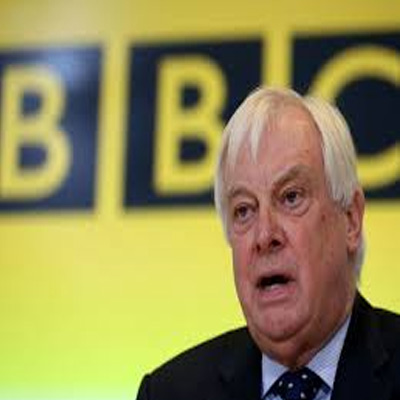
    MUMBAI: “Broadcasting is too important to be left purely to the market”. The remark was made by BBC Director-General Greg Dyke in New York.
     

    Dyke was in the US to receive the prestigious International Emmy Directorate Award for outstanding services to broadcasting.

    He said that television is not “just another commodity” like Starbucks or Coca Cola and disagreed with those who argued that television should be left to the market. “What is at stake is the kind of television people have a right to expect in their society TV which reflects their culture and their values.


    “Television is only different from coffee or Coke if we recognise that fact. If we treat TV like these things, it will become like them. We end up with nothing more than a briefly enjoyable experience devoid of any lasting value.”

    He added, “It’s wrong to see the BBC as a separate entity, divorced from the rest of the UK broadcasting system. “A strong, publicly-funded broadcaster at the heart of our industry has a positive influence far beyond the confines of our own channels and services.”

    Dyke added that, with the continuing take-up of subscription television and the advent of discussions on Charter Review, the role of all broadcasters was more vital than ever. He said that the BBC must and would continue to have a leading part by producing indigenous programming that reflected British tastes, British values and British culture.

    He also sounded a warning note regarding the ‘Americanisation’ of the UK media. This is happening because of the size of the American market and the recent legislation that made it possible for an US company to buy any of the UK’s commercial broadcasters. This would, argued Dyke, threaten a television landscape that reflected national culture and values. Programming would evolve into a commodity rather that something of intrinsic value and unbiased. As a direct result challenging news and current affairs would be the first to suffer.

    Dyke went on to use the recent Iraq war to illustrate the difference in news coverage of the BBC and US networks. “News organisations should be in the business of balancing their coverage, not banging the drum for one side or the other. This is something which seemed to get lost in American reporting during the war.”

    Coming back to the UK Dyke noted that despite its size, Britain spent more money per person on home-grown programming. Compared to the US where annual spend per person was $65, in the UK broadcasters spent $75 dollars per head, of which $40 was spent by the BBC.

    “The BBC uses public money to create a powerful incentive for domestic investment across the board. Our freedom from commercial pressures allows us to set the benchmark for quality and range which the other networks must be willing to match if they are to compete” he said.

    Any move to cut the BBC out of the equation would have a detrimental effect. Its commitment to indigenous programming across all its services meant that the UK’s main commercial broadcasters were similarly committed. Without the BBC the UK broadcasting industry would follow natural market forces to maximise profit by increasing the amount of imported programming with less money spent on original programming.

    Therefore, despite the arguments put forward by some commercial broadcasters, the BBC was vital as a catalyst for competition, quality and creativity. However, together with the rest of the UK broadcasters, the BBC faced the threat posed by globalisation Dyke added.

  • US networks to mark second 9/11 anniversary quietly

    NEW YORK: The second anniversary of the events of 9/11 is expected to be a quiet affair for American television networks.
    While there will be news stories, broadcasters do not plan to interrupt their regular schedules unless something else should happen. The scenario was completely different last year when broadcasters used the day to air round the clock specials.
    An AP report indicates that while NBC, ABC and CBS have not yet finalised things, they do not anticipate having any 9/11 specials in the prime time band. The networks are waiting to see if New York City will announce any commemorations that they feel are worth covering. ABC indicated that its regular news programmes will examine whether or not Americans are safer than before 9/11.
    The network will assess the level of damage done to Osama bin Laden’s terrorist network, whether the money used to prevent and respond to terrorist attacks was well-spent and the balance between civil liberties and domestic security.
    That the second anniversary is not high on the priority list can be gauged from the fact that CBS plans to rerun Scott Pelley’s interview with President Bush conducted last year on 8 September. The terrorist attacks have become more of an ongoing story and will be treated as such.