Tag: US

  • Bite-sized dramas are about to swallow the streaming world whole

    Bite-sized dramas are about to swallow the streaming world whole

    CANNES: Forget your boxsets. Forget your hour-long dramas. Audiences are ditching long-form television for something far more intoxicating: episodes that fit in your pocket and demand your full attention in under ten minutes.

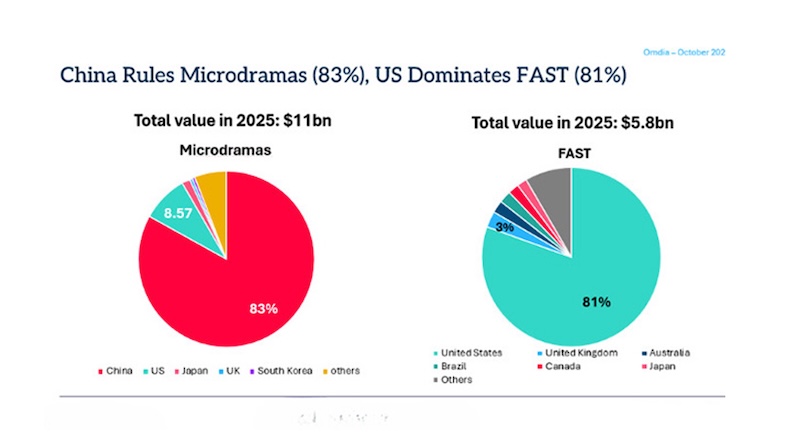
    Microdramas—those addictive mini-narratives designed for mobile consumption—are redefining entertainment. And the numbers are staggering. According to Omdia, the consultancy that presented its findings at Mipcom, Cannes, this genre will nearly double the revenue of Fast channels, which are projected to pull in just $5.8bn next year.

    “Viewers are willing to pay for content that captures them emotionally in seconds,” said María Rua Aguete, head of media and entertainment at Omdia. “Microdramas demonstrate that attention spans may be shorter, but engagement is deeper and more valuable.”

    The monetisation model is brutally simple: hook viewers with free episodes, then charge them through subscription or pay-per-episode channels. This approach accounts for more than 60 per cent of total revenue. The payoff is formidable. Average revenue per user can reach $20 per week—or up to $80 per month—making microdramas extraordinarily profitable.

    China dominates the space, generating 83 per cent of global revenue, fuelled by a colossal audience and a mobile-first culture. Beyond China, the US claims half of international revenue, with Japan, South Korea, the UK and Thailand emerging as hungry new markets.

    “Microdramas are redefining what it means to tell premium stories in the digital age,” Aguete said. “They combine the immediacy of social media with the emotional depth of dramatic television. They are short, addictive, and irresistible.”

    This isn’t a fad. As consumer habits shift inexorably towards mobile and short-form content, microdramas are poised to become the centrepiece of digital entertainment—a seismic fusion of social video and traditional storytelling that will reshape how the world consumes drama. The wave is here. And it’s only just begun to crest.

  • Creators boost Mipcom 2025 as television’s old guard opens the door

    Creators boost Mipcom 2025 as television’s old guard opens the door

    CANNES: The suits and the streamers are finally doing business. Mipcom 2024 pulled in 10,600 delegates—a modest uptick from last year’s 10,500—but the real story wasn’t in the numbers. It was in who showed up and what they were selling.

    Buyers rose to 3,340, up 100 from 2023, with Britain leading the pack, followed by the US , France, Germany, Turkey, Canada, Spain, Italy, Japan and South Korea. Yet the buzz on the Cannes market floor centred on a new breed of attendee: the creator economy, which Lucy Smith, RX France’s Mipcom and Mip London boss, called “the biggest shift in a generation for Mipcom.”

    YouTube planted its flag with a prominent presence, including a packed keynote featuring Pedro Pina, the platform’s EMEA chief, media cartographer Evan Shapiro and BBC Studios’ Jasmine Dawson. The session offered what Smith described as the “definitive playbook on partnerships,” demonstrating how traditional media can tap new audiences and build fandoms through collaboration.

    The convergence went beyond talk. Deals between legacy players and digital creators flowed throughout the week. “It feels like a tipping point for the industry,” Smith told reporters at a wrap press conference. “The relationship between the creator and mainstream economies isn’t binary. The opportunities come from collaboration, not from working in isolation.”

    Mipcom’s pitch to creators was simple: meet everyone worth meeting in one place, at one time, and figure out who can help build new business models. The market staged its first brand-funded content summit, BrandStorytelling, bringing agencies and brands face-to-face with the global production and distribution world. Early feedback suggests it’s here to stay.

    Traditional sales and distribution—”the engine of MIPCOM,” as Smith put it—roared back to life. Every major American studio turned up. Three big international advance screenings drew talent from around the world. Rights deals showed fresh flexibility, with windowing making a comeback, albeit in more complex forms than before.

    The market floor hosted 350 exhibitors, including 88 newcomers such as YouTube. Yet not everything pointed upward: MIPJunior attendance slipped to 940 from 1,000, reflecting ongoing headwinds in children’s programming.

    Smith struck a bullish note. “From change comes opportunity. The industry is resilient, it regenerates. The fact that this definitive global market has been held here every year for the past four decades is testament to that.”

    Next year’s edition runs from 12 to 15  October. The creators will be back. So will everyone else.

  • Yu-Gi-Oh deals its hand to gen alpha readers

    Yu-Gi-Oh deals its hand to gen alpha readers

    MUMBAI: Talk about a power play, Yu-Gi-Oh is turning the page. Konami Cross Media NY has struck two heavyweight publishing deals to draw in gen alpha readers, proving that the 25-year-old anime juggernaut isn’t ready to fold any time soon.

    Announced at the Brand Licensing Europe show in London, the agreements bring Random House Children’s Books and Panini Group into the fold, giving Yu-Gi-Oh a shiny new shelf life in classrooms, kiosks and bookfairs worldwide.

    “As the largest publisher in the world, Random House Children’s Books is leading the charge by expanding its anime portfolio with Yu-Gi-Oh,” said Konami’s SVP of marketing and licensing Jennifer Coleman. Expect child-friendly titles, activity formats, and collectables that will pop up across the US, Canada and even military bases overseas.

    Panini, meanwhile, is rolling out Yu-Gi-Oh sticker and activity books in France and French-speaking Belgium, with ambitions stretching into Latin America and across Europe. Known for its sticker albums and unmatched distribution network, Panini sees Yu-Gi-Oh as a perfect fit for younger fans who want to “play, peel and collect” before diving into the trading card game or anime.

    “Gen alpha is the first generation raised on tech from day one,” noted Panini’s senior licensing manager Licia Dallolio. “We’re excited to create experiences that feel natural to their world.”

    It’s all part of Konami’s long game: hook the kids early, then let them graduate into the anime, trading card battles and digital titles that keep the franchise booming. With over 1,000 anime episodes, countless card sets, and fans spanning three decades, Yu-Gi-Oh isn’t just shuffling the deck, it’s stacking it for the future.

  • India’s tourism bonanza continues as foreign arrivals hit record high

    India’s tourism bonanza continues as foreign arrivals hit record high

    MUMBAI: India’s tourism sector is roaring back to life, with foreign tourist arrivals surging to nearly 100 million last year—the highest on record. The ministry of tourism announced that 99.5 million foreigners visited India in 2024, up from just 15.3 million during the pandemic-ravaged year of 2021.

    The recovery has been spectacular. Foreign exchange earnings from tourism more than quadrupled from Rs 64,000 crore in 2021 to Rs 293,000 crore in 2024. Tourism’s share of GDP has jumped from a measly 1.5 per cent in 2020-21 to 5.2 per cent in 2023-24, making it a significant economic driver.

    Americans lead the charge, with 1.8 million visitors in 2024, followed closely by Bangladeshis at 1.75million. The British, Australians and Canadians round up the top five source markets. Notably, Australia saw its visitor numbers soar from just 34,000 in 2021 to over 518,000 in 2024.

    The boom has created jobs too. Employment in tourism rose from 68 million  positions in 2020-21 to 84.6 million in 2023-24, providing livelihoods for millions across the country.

    Union minister for tourism and culture Gajendra Singh Shekhawat shared these figures in parliament, highlighting how India has bounced back from the travel restrictions that decimated global tourism. International tourist arrivals, including non-resident Indians, reached 206 million in 2024.

    The numbers suggest India is capitalising on pent-up demand for travel as the world emerges from the pandemic’s shadow. With its rich cultural heritage, diverse landscapes and competitive costs, India appears well-positioned to maintain this momentum.

  • From cradle to kitchen Foodxp serves up postpartum comfort on a plate

    From cradle to kitchen Foodxp serves up postpartum comfort on a plate

    MUMBAI: Move over fancy plating and fast food postpartum plates are having a moment. Foodxp, the food and lifestyle entertainment channel, is set to debut a refreshingly grounded culinary series titled Diapers to Delight, spotlighting the often-overlooked world of postpartum nourishment. Premiering 26 May at 9:00 PM IST, the show will air across India, Bangladesh, the US, and the UAE, bringing heartfelt recipes and ancient Ayurvedic wisdom to modern screens.

    Hosted by chef Deepa Chauhan, the series features 15 plus carefully curated dishes designed to nurture new mothers from the protein-packed Gond ke laddoo to warming Raab and Moringa soup. The recipes are as practical as they are healing, tapping into traditional Indian kitchens to serve dishes that comfort both body and spirit.

    “Diapers to Delight isn’t your typical food show. While most focus on street snacks or fancy plating, this one asks a question we often forget: what should a new mom eat after childbirth? With warmth, wisdom, and a dash of spice, it serves up answers rooted in care and tradition,” says Foodxp creative director Geetika Jain.

    At a time when fast-paced living has edged out age-old practices, the show aims to reclaim the kitchen as a space of support, healing, and family wisdom not just for Indian audiences, but also for diaspora families seeking cultural reconnection through food.

    To take its mission further, Foodxp is launching a free digital companion recipe book, featuring all the dishes from the show. It’s a small but meaningful step in helping new mothers and caregivers whip up recovery-friendly meals with ease.

    “When I had my children, I wish I had access to something like this. Through this show, I hope to make that journey easier for other women,” shares chef Deepa Chauhan.

    So whether you’re a first-time parent, a curious caregiver, or someone who just loves a good bowl of warm, healing food mark your calendars. Diapers to Delight is not just cooking; it’s caring served hot.

  • C Com Digital cracks the autism code with Frat campaign in the US

    C Com Digital cracks the autism code with Frat campaign in the US

    MUMBAI: Mumbai-based C Com Digital has pulled off a stunner across the pond, crafting a high-impact digital campaign for Religen Inc, a US healthcare company, and its flagship diagnostic product, the Folate Receptor Antibody Test (Frat). 

    The goal? 

    Raise awareness around early autism diagnosis. The result? Over a  million reached, 15,000+ tested, and a major shift in the conversation.

    FRAT identifies folate receptor autoantibodies—linked to cerebral folate deficiency, a condition often associated with autism spectrum disorders. With over 52 per cent of tested individuals showing these markers, the stakes are high and the science, complex.

    But C Com didn’t just throw facts at the feed. They brought the story to life—with animated explainers, viral social content, sharp infographics, and blogs aimed at both physicians and families. A single TikTok testimonial—a parent recounting their child’s transformation post-diagnosis—went ballistic, racking up 800K+ views and tens of thousands of shares.

    More importantly, the campaign halved cost-per-click and drove a whopping 754 per cent spike in new users.

    “This was more than just a campaign; it was a mission,” said C Com Digital founder/director Chandan Bagwe. “While we led the digital execution, the insights and support from FRAT, medical experts, and families made this a truly collaborative project. It demonstrated how storytelling and science can work hand-in-hand to create real awareness and action.”

    Religen Inc founder Bhushan Sawant added, “C Com Digital played a key role in crafting the campaign’s messaging and outreach, and the results speak for themselves. Their understanding of healthcare communication helped us engage with families and professionals meaningfully.”

    The campaign also stepped beyond the screen—partnering with autism support groups, engaging in platforms like the National Taca Conference, and driving participation in the #BlueBucketPledge. From online virality to offline solidarity, the message was loud and clear: early diagnosis changes everything.

    A masterclass in humanising health tech, this Frat campaign proves that when done right, digital storytelling doesn’t just inform—it transforms.

    Pictured above Chandan Bagwe (Left)  and Bhushan Sawant (Right)

  • Yum Brands adds flavour to tech with Manish Jain at the India GCC helm

    Yum Brands adds flavour to tech with Manish Jain at the India GCC helm

    MUMBAI: A tech topping on a global pizza, Yum! Brands is stirring the pot in India with a spicy leadership update. The parent company of KFC, Taco Bell, Pizza Hut, and Habit Burger & Grill has appointed Manish Jain to lead its digital and technology (D&T) India Global Capability Centre (GCC).

    Jain will take charge of Yum!’s India-based digital operations and shared services, bringing to the table over two decades of experience spanning the US, Malaysia and India. He will report directly to James Watts, chief people officer, Yum! digital & technology.

    Yum!’s D&T India GCC is a crucial cog in the company’s global engine, tasked with building tech solutions and supporting services across all Yum! brands. Jain’s appointment marks a strategic step forward in reinforcing India’s position as a digital powerhouse for the global quick-service restaurant (QSR) giant.

    “I am honored to take on this role and excited to help build the India Global Capability Centre in support of Yum! Brands’ strategy for good growth and its goal to be an employer of choice in the region,” Manish Jain said.

    Before joining Yum!, Jain served as service director for the Asia-Pacific region and India country head at Getronics International, overseeing customer success and shared services. He was also the founding director of BT Group’s Global Business Services unit in India, where he spent over 10 years scaling operations from the ground up.

    With Jain at the helm, Yum! Brands aims to not just scale digitally but serve up innovation with a side of world-class culture. His appointment is expected to bolster the GCC’s ambitions in tech development and shared services, reinforcing India’s growing influence in global operations.

  • Roku reports strong growth in 2024, surpassing $4bn revenue

    Roku reports strong growth in 2024, surpassing $4bn revenue

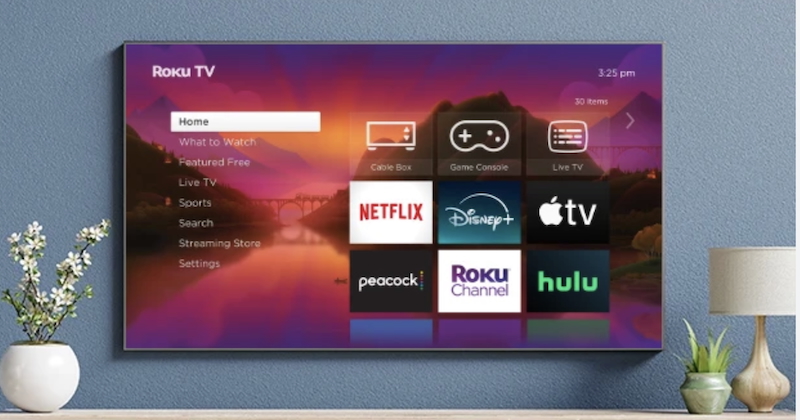
    MUMBAI: Streaming platform specialist Roku has announced robust financial results for 2024, with total net revenue reaching $4.1 billion (£3.2bn), marking an 18 per cent year-over-year increase. Platform revenue grew to $3.5 billion, up 18 per cent year-over-year, or 15 per cent excluding political advertising spend. Gross profit rose 19 per cent to $1.8 billion.

    The company reported significant growth in its user base, with streaming households reaching 89.8 million, representing a net increase of 9.8 million from 2023. Streaming hours climbed by 21.1 billion to 127.1 billion hours, whilst average revenue per user reached $41.49 on a trailing 12-month basis, up 4 per cent.

    In a letter to shareholders, Roku highlighted its fourth quarter achievement of surpassing $1 billion in platform revenue, a 25 per cent year-over-year increase. The company noted that its US market penetration has exceeded half of all broadband households.

    Device Business Performance:  The company maintained its position as the leading TV operating system in the US, Canada and Mexico. Device revenue rose 20 per cent to $590.1 million in 2024, with fourth-quarter revenue of $165.7 million, up 7 per cent. However, increased seasonal discounts affected fourth-quarter device gross margins, which stood at negative 29 per cent.

    Content Platform Growth:  The Roku Channel, the company’s content platform, reached approximately 145 million people in US households during the fourth quarter, maintaining its position as the third most popular app on the platform. Streaming hours on the channel increased by 82 per cent year-over-year, with more than 80 per cent of streaming hours originating from the Roku Experience in December.

    Future Outlook:  For the first quarter of 2025, Roku forecasts total net revenue of $1.005 billion, a 14 per cent increase year-over-year. The company projects platform revenue growth of 16 per cent, whilst device revenue is expected to remain flat due to elevated inventory levels following the holiday period.

    For the full year 2025, Roku anticipates total net revenue of $4.61 billion, with platform revenue reaching $3.95 billion, representing 12 per cent growth. The company expects to achieve positive operating income by 2026.
    The company will discontinue quarterly reporting of streaming households and average revenue per user metrics from the first quarter of 2025.

  • Sinclair to take ANI’s My India to US TV homes

    Sinclair to take ANI’s My India to US TV homes

    MUMBAI: My India is going to Uncle Sam. Indian news Agency Asian News International (ANI) and  Sinclair subsidiary Sinclair  Broadcast have signed an agreement wherein the latter will take the former’s weekly TV programme My India to major American cities.

    Launched in Q2’24 and produced by  ANI, My India offers a 30-minute in-depth reportage and analysis of  India’s economy, vibrant culture and growing impact on the global stage. My  India also captures the deepening people to people (P2P), business to business (B2B) and government to government (G2G) ties between two of the most important democracies in the world. 

    Hitherto, the show could  be viewed in the US through Komo TV’s FAST channel and its affiliated YouTube channel, and on Tag Tv’s You Tube channel in the US and Canada.
     

    My India the TV show

    My India will be made available across the US  in Washington DC, California, Rhode Island, Ohio, Michigan, Florida,  Indiana, Seattle, Baltimore, Texas, and Wisconsin among others over Sinclair-owned  TV stations affiliated with ABC, CBS, NBC, and Fox.

    Said Sinclair  president & CEO Chris Ripley: “The expanded distribution of My India highlights the close connections between the world’s oldest democracy and the world’s largest democracy. We look forward to continuing our partnership with  ANI.”

    Said ANI CEO Sanjiv Prakash: “The relationship between  ANI and  Sinclair  has already proven to be successful and is a testament to the strong bond between the US and India. We are excited to reach a broader audience in the US, including the  Indian diaspora and beyond. We look forward to bringing My  India showcasing unique and personal stories highlighting  India’s ancient culture and thriving traditions to more homes in America.” 

    The expanded partnership between Sinclair and  ANI builds on the solid foundation established between the two companies with a joint mission to provide high quality news stories from  India and the broader south Asia region to a diverse set of American audiences interested in understanding the  India story, said an ANI press release. 

  • dentsu’s global ad spend report predicts 6.8 per cent growth for 2024

    dentsu’s global ad spend report predicts 6.8 per cent growth for 2024

    MUMBAI: Advertisers, marketers and media establishments around the globe can bring out the bubbly. dentsu’s latest Global Ad Spend Forecasts has revealed a projected buoyant 6.8 per cent growth in global advertising spend for 2024, reaching $772.4 billion. This growth projection has been revised upwards following the return to double-digit growth (+10.7 per cent) of digital ad spend, the impact of sporting, political events and improved outlooks across the US, UK, Brazil & France. 
     
    Ad spend growth is forecast to continue at 5.9 per cent in 2025. The American region is expected to lead in 2025 with 6.3 per cent growth, driven by rich US and Brazilian markets where digital and streaming see sustained investments. The Asia-Pacific market is forecast to increase by 5.8 per cent, with AI-driven ad placements contributing to the increase in digital ad spend in markets like India. Lastly EMEA (Europe, the Middle East and Africa) has projected growth of five per cent, with strong digital performance in key markets including the UK. As the industry enters what dentsu identifies as the algorithmic era, data-enabled advertising will increasingly shape media strategies, with algorithmically enabled ad spend forecast to reach 79 per cent of total ad spend by 2027. 

    Artificial intelligence (AI) is no longer confined to experimental phases. It has become an integral tool for creating personalised, one-to-one consumer experiences. Generative AI applications like OpenAI’s GPT models are embedding themselves in everyday services, from Duolingo’s AI-driven tutor to Spotify’s personalised AI DJ. These advancements mark a new era of micro-moments that enhance user engagement by delivering tailored interactions at scale.

    As algorithms increasingly gatekeep content visibility, brands are tapping into niche communities and fandoms to drive meaningful connections. Influencers, from content creators like Mr Beast to hyper-localised niche experts, are key to cutting through the digital noise. Additionally, connected television’s growing reach provides fertile ground for cross-platform storytelling, combining scale with intimacy. Paid social is forecast to grow by 8.7 per cent in 2025 (7.8 per cent three-year CAGR to 2027), supported by an integrated ecosystem that blends shopping, video, search, and gaming capabilities. This channel remains critical for engaging younger audiences, with 79.7 per cent of gen Z using Instagram monthly and 42 per cent of CMOs planning to boost influencer marketing investments. Paid search is expected to increase by 6.7 per cent (6.5 per cent three-year CAGR 2027), driven by continuous advancements in AI-powered features that sustain relevance amid the rise of social and retail search.

    Retailers are stepping beyond traditional advertising, transforming their platforms into data-rich media ecosystems. Amazon leads this charge with a $50 billion ad revenue engine, while others like Walmart and TikTok are innovating through acquisitions and self-serve advertising solutions. This convergence is reshaping how brands measure success and optimize campaigns, fostering a holistic view of the consumer journey. From a media channel standpoint, the report highlighted that digital is expected to remain the fastest-growing channel, with a projected increase of 9.2 per cent in 2025 (8.8 per cent three-year CAGR to 2027) to reach $513.0 billion and capture 62.7 per cent of global ad spend. Significant growth is anticipated across key digital segments, with retail media leading the way at +21.9 per cent year-over-year (19.7 per cent three-year CAGR to 2027) as advertisers capitalise on the high value of retailer consumer data and increasingly invest in offsite advertising, including connected TV. 

    In a world flooded with content, quality emerges as a non-negotiable factor. Advertisers are increasingly prioritising transparent, sustainable programmatic supply chains and investing in impactful creatives to capture attention in crowded digital environments. 

    Attention metrics, such as “attentive seconds,” are now as critical as traditional ROI measurements, signaling a shift towards more meaningful audience engagement. Online video advertising is projected to rise by 8.0 per cent as advertisers continue to seek out high attention and trusted environments. Programmatic advertising is set to grow by 11.1 per cent and will account for more than 70 per cent of digital ad spend, with sustained momentum (10.9 per cent three-year CAGR to 2027). 

    Television ad spend growth is forecast to show marginal growth of 0.6 per cent in 2025, with connected television rapidly increasing (+18.4 per cent) thanks to ad-supported streaming, and broadcast television declining (-2.5 per cent). Meanwhile, print media continues to contract, while cinema and out-of-home (OOH) advertising continue to grow by 3.2 per cent and 3.9 per cent, respectively. 
     
    Significant ad spend increases are anticipated in finance (+6.4 per cent), pharmaceutical (+5.8 per cent), and travel and transport (+5.5 per cent) as these sectors adapt to meet evolving consumer needs. 

    Says dentsu’s global practice president- media Will Swayne: “Our 2025 forecast underscores the pivotal role of media in today’s economy. Data-driven and digital-first media investment strategies continue to reshape how brands connect with consumers. The surge in algorithmic media capabilities will drive fresh opportunities for brands to engage meaningfully and effectively with existing and new customers.Media investment strategy is key to transformation and growth as brands keep pace with evolving consumer behaviors.

    “As digital channels continue to lead the way, the global advertising landscape is entering a new phase of growth and innovation. The projected 9.2 per cent increase in digital ad spend for 2025, driven by segments like retail media and connected TV, underscores the immense value of data-driven strategies. As algorithmic media capabilities take center stage, brands have an unprecedented opportunity to connect with consumers in more personalised and meaningful ways. The future of advertising is not just digital – it’s deeply connected, data-empowered, and poised for transformative growth,” added dentsu chief executive officer – media South Asia Anita Kotwani.

    Despite technology’s global proliferation, access remains uneven. From regulatory hurdles to the high costs of advanced AI features, digital divides are becoming more pronounced. Brands must adopt nuanced, locally informed strategies to ensure inclusivity while navigating fragmented markets.

    The algorithmic era promises opportunities for innovation in media and marketing. However, success will hinge on a brand’s ability to adapt to evolving consumer behaviors, leverage cutting-edge AI tools, and balance global aspirations with local sensitivities.

    This year of impact calls for brands to be bold, innovative, and deeply attuned to the digital zeitgeist. The possibilities are infinite, but the imperative is clear: in 2025, making an impact is not optional—it’s the only way forward.

    (Picture generated using Dall-E 3 generative AI tool)