Tag: uplinking

  • TRAI begins discussion on uplinking, downlinking guidelines

    TRAI begins discussion on uplinking, downlinking guidelines

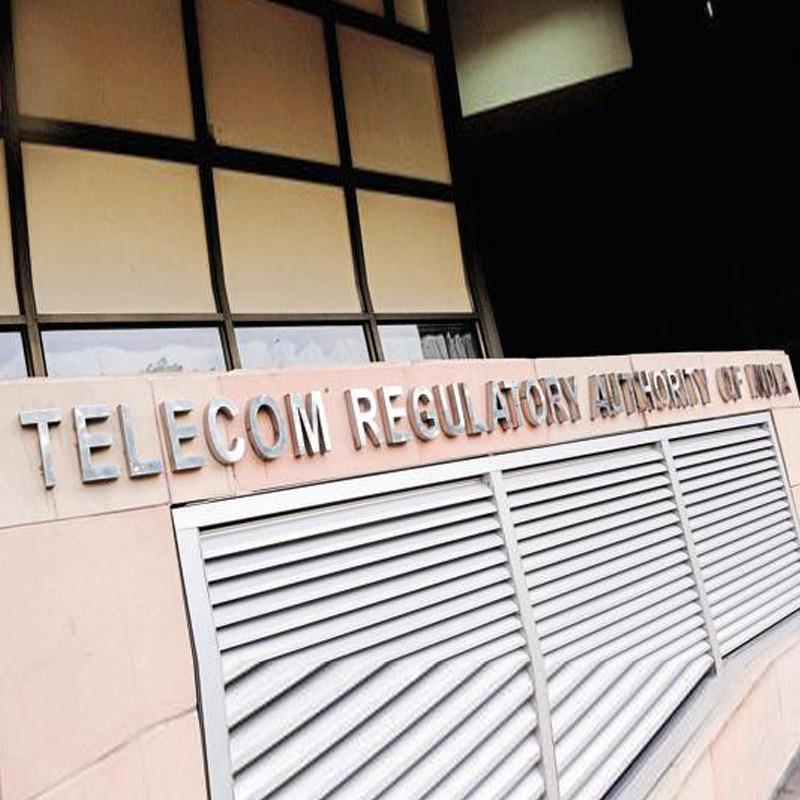
    MUMBAI: The Telecom Regulatory Authority of India (TRAI) has set the ball rolling for consultation on uplinking and downlinking guidelines with stakeholders. The regulator convened an open-house discussion (OHD) on its consultation paper on ‘issues relating to uplinking and downlinking of television channels’ in India on 11th April 2018. A number of stakeholders, including associations, broadcasters, service providers and individuals, attended the OHD.

    The TRAI has initiated this consultation process to seek the views of the stakeholders on the issues involved. The objective of this consultation process is to review the provisions of the existing uplinking guidelines and downlinking guidelines so as to ensure orderly growth of the broadcasting sector and in turn provide impetus to socio-cultural and economic development, a release issued the telecom regulator stated.
    A total number of 38 stakeholders have submitted their comments on the issues raised in the consultation paper.

    The TRAI had floated a consultation paper on issues relating to uplink and downlink of TV channels in India mid-December 2017 on receiving a reference from the Ministry of Information anf Broadcasting (MIB) to study the particular aspect and come out with suggestions. This consultation was initiated even as the regulator had been discussing various other issues with stakeholders of the broadcast and cable sectors on ease of doing business and inputs for the National Telecom Policy (NTP) 2018. Subsequently it submitted its recommendations to the government on the ease of doing business and NTP.

    Also Read:

    MIB nod to TV channels on hold till TRAI uplink, downlink suggestions

    MIB proposes installation of chip in DTH boxes: Report


  • TRAI extends dates for comments on uplinking/downlinking consultation paper

    TRAI extends dates for comments on uplinking/downlinking consultation paper

    MUMBAI: The Telecom Regulatory Authority of India (TRAI) has extended the deadline for receiving comments on the consultation paper relating to uplinking and downlinking of TV channels. The new dates for receiving comments and counter-comments are 31 January and 10 February respectively.

    The TRAI had released the paper on 19 December 2017 inviting comments by 18 January 2018 but has pushed the date on the request of stakeholders. It has also warned that no further extension of dates will be entertained.

    The paper seeks to update guidelines and also talk about setting up of teleports. Ministry of Information and Broadcasting (MIB) additional secretary Jayashree Mukherjee had sought TRAI’s views on the issues keeping in mind the changes in technology, market scenarios and lessons learnt over six years since the last guidelines were passed.

    The specific question asked to broadcasters was if there was a need to redefine the definition of news and non-news channels.

    The paper also hints at a possible hike in the net worth requirement to obtain uplinking/downlinking licence to ensure only serious players stay in the game.
    On the teleport side, the TRAI is asking the industry how to define the word in the digital era, licencing norms, fee structures and if there is a need to restrict the number and location of teleports in India.

    Also Read:

    Trai paper seeks to streamline uplinking, downlinking norms

    TRAI sees merit in using satcom for broadband delivery

    MSOs move Madras HC seeking relief on inter-connect pacts

  • Trai paper seeks to streamline uplinking, downlinking norms

    Trai paper seeks to streamline uplinking, downlinking norms

    MUMBAI: Following a prod from the ministry of information and broadcasting (MIB) additional secretary Jayashree Mukherjee, the Telecom Regulatory Authority of India (TRAI) on 19 December issued an industry consultation paper which seeks to update guidelines related to uplinking, downlinking, of TV channels and the setting up of teleports.

    Mukherjee had sought the TRAI’s recommendations on these issues keeping in mind changes in technology, market scenarios and lessons learnt over the past six years since the guidelines were passed.  

    In its paper, Trai has asked stakeholders, such as broadcasters, if there was any need to redefine news and current affairs TV channels and non-news and current affairs TV channels more specifically.

    Pointing at a possible hike in the net-worth requirement of Rs 5 crore for obtaining a licence for uplinking or downlinking of TV channels, and an increase in process fees for applicants, the paper states that non-serious players were able to obtain licenses, which were either traded or leased to a different entity.

    “To  ensure  that  only  serious  players,  who  are  interested  in  the business of satellite TV channels, apply for obtaining license for  uplinking  or downlinking of TV channels, one way could be to increase the entry barriers. The other way could be to eliminate the incentives, which encourage trading and/or sub-leasing of licenses. Further, sub-leasing or trading of channels can also be controlled by putting in place certain checks, which discourage such practices,” the release stated.

    The paper argues that an increase in entry barriers for uplinking of TV channels from India may encourage diversion of such business opportunities to outside India. Moreover, Trai has raised the question of auctioning satellite TV channels as a complete package similar to FM radio channels. Or if industry thinks that it is possible to auction individual legs of satellite TV broadcasting – uplinking space spectrum, transponder capacity?

    And it has opened up an issue which has been a sore point for the industry: if it is advisable to restrict the use of foreign satellites for satellite TV broadcasting or uplinking of satellite TV channels to be downlinked in India from foreign soil? And also whether it is possible to auction channels without restricting the use of foreign satellites and uplinking of signals of TV channels from foreign soils. The paper appeals to stakeholders if there could be a better way to grant a licence for a TV satellite channel then what is presently followed in order to simply the procedure.

    Other issues the TRAI is seeking industry’s input on is whether encryption of all satellite TV signals – whether free to air or pay TV and what timeline should be given to licensed broadcasters to launch their channels from the date of issue of a licence and the penalties that should be levied on them in case they fail to restore their disrupted channels within a specified period. The consultation paper also approaches sensitive issues such as terms of  the tradeability of licences by a licencee.  

    On the teleport side, the TRAI is seeking to get industry’s understanding of what a teleport should be defined as in a new digital era, the licensing norms, fee structures for processing a licence, if there is a need to restrict the number of teleports in India, and their location like say in a park.

    The industry watchdog has requested that industry sends in its inputs by 18 January 2018.

    Also Read: TRAI sees merit in using satcom for broadband delivery

    TRAI’s Consultation Paper on VoIP can affect mobile TV, IPTV

    MSOs move Madras HC seeking relief on inter-connect pacts



  • MIB reverts to earlier norms of seeking nod from ISRO on uplink/downlink of TV channels

    MIB reverts to earlier norms of seeking nod from ISRO on uplink/downlink of TV channels

    NEW DELHI: At a time when one arm of the government is said to be exploring review of usage norms for satellite frequencies for users of satellite services, Ministry of Information and Broadcasting has cancelled an earlier order — which simplified clearances for uplinking and downlinking of TV channels on permitted teleports and satellites — and reverted to an older tradition of also getting an okay from Department of Space (DOS), which could make the process lengthy.

    In a recent official communiqué, MIB stated DOS observed that by not referring TV channels’ applications relating to uplink/downlink to it, certain “key aspects” provided by the applicant were “not getting examined” and which could “create interference issues and difficulties in coordination with Indian satellites” at a later stage.

    Pointing out that a policy decision taken earlier by it has been reviewed

    in the light of DOS observations, MIB added, “It has been decided to revert to the erstwhile practice of referring all applications, seeking uplinking permission/change of teleport and/or satellite in respect of TV channels, to DOS for its no-objection with reference to proposed satellite’s coordination with Indian satellites.”

    A prior nod from DOS for uplink/downlink of TV channels on teleports and satellites, already permitted by MIB, was considered “duplication” of the clearance process and, thus, done away with by MIB in February 2017 as part of PM Modi-led government’s bid to ease norms of doing business in India. DOS, managed directly by the Prime Minister’s Office, oversees activities of Indian Space and Research Organisation (ISRO), an organization responsible for Indian satellites.

    MIB, while withdrawing its early-2017 order, said its decision comes into effect immediately.

    Interestingly, according to government sources, Wireless, Planning and Co-ordination (WPC) division, under Ministry of Telecoms, is exploring a review of clearance norms for users of satellite services in India and also optimizing value of satellite frequencies.

    At present, for a customer of satellite services, whether on Indian or foreign satellite, getting clearance for satellite capacity is a lengthy and time consuming process involving green signal from multiple government organizations, including DOS/ISRO and WPC.

    Telecoms and broadcast regulator TRAI has suggested a couple of times, in lengthy set of recommendations, that with an explosion in communications services, it was time India ought to explore an Open Sky Policy relating to satellite services; especially in KU-band category.

    ALSO READ:

    ISRO stresses on indigenization; TRAI for Open Sky policy

    Prasar Bharati, Dish TV, Star, Zee and BES bat for KU-band open-sky policy

    Will foreigners buy into easing of FDI in cable TV, DTH?

  • TV channels’ failure to start in a yr: 18% permits cancelled

    NEW DELHI: Action is taken whenever a channel which has been given permission to uplink fails to do so within a year, the Parliament has been told.

    Under the roll-out obligations for operationalisation of private satellite TV channels furnished under the clauses 2.5.1 and 3.5.1 of uplinking policy Guidelines 2011 and 5.9 of downlinking policy guidelines 2011, the applicant companies are required to operationalise the permitted TV channels within a year from the date the permission is granted by the MIB.

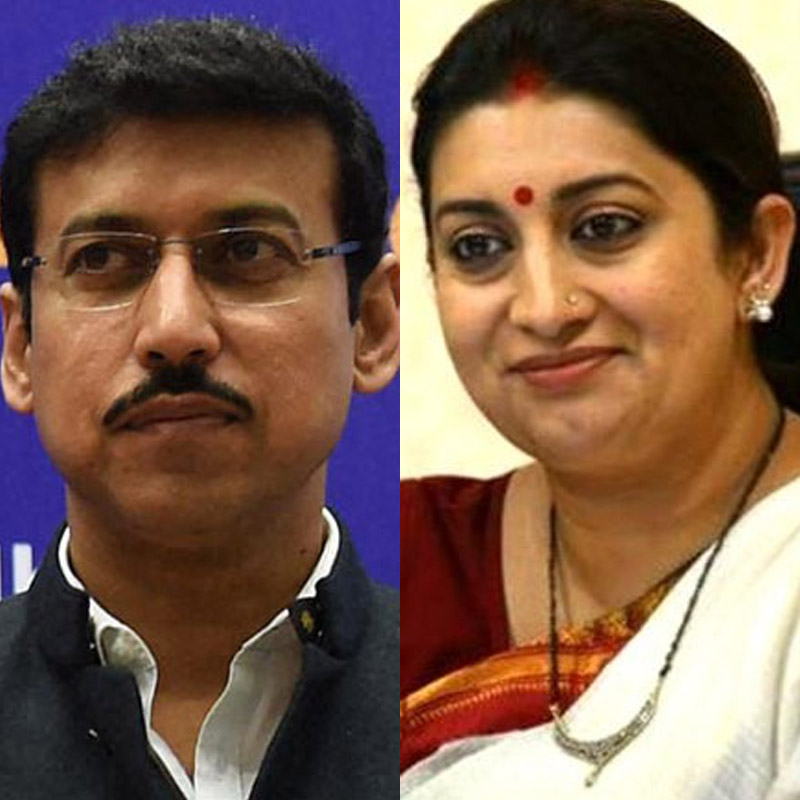
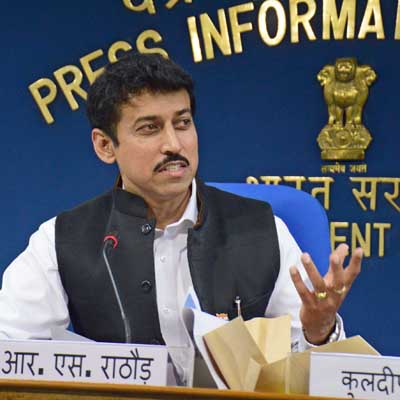
    Minister of state for information and broadcasting Rajyavardhan Rathore has said that whenever an instance comes to the notice of the ministry where the company fails to fulfil the roll-out obligation, action is taken against the company under the clauses 2.5.2 and 3.5.2 of uplinking guidelines and clause 5.9 of downlinking Guidelines which entails the forfeiture of PBG and cancellation of permissions.

    After the permission for uplinking of a channel is issued by the ministry, the Wireless Planning and Coordination Wing, Department of Telecom, assigns frequency spectrum (bandwidth) to the teleport operators to enable them to uplink such TV channels,  Rathore said.

    The minister said a total number of 1078 permissions had been issued for uplinking and downlinking of private satellite TV channels as on 30 June last, out of which 195 permissions (18 per cent approximately) have been cancelled so far.

    Rathore said the typical value of bandwidth/data rate required to transmit (uplink/downlink) TV channels are calculated in two categories of transmission are:

    TV Broadcasting with platform bit rates per channel (in Mbps)

    Typical

    SDTV with MPEG-2 3

    SDTV with MPEG-4 1.5

    HDTV with MPEG-2 16

    HDTV with MPEG-4 8


  • TV channels’ uplinking / downlinking procedure simplified

    MUMBAI: The ministry of information and broadcasting of the government of India has simplified the procedure for processing of application for uplinking/downlinking of TV channels. Marked to all broadcasters & teleport operators, this order, signed by the joint secretary to the government of India K Sanjay Murthy has come into immediate effect’

    All applications requiring permission for uplinking / downlinking of private satellites TV channels/ teleports/ news agencies/ DSNG etc. are processed as per clause 9.2 of the policy guidelines for uplinking of television channels from India dated 5 December 2011, which is reproduced below:

    “9.2 — On the basis of information furnished in the application form, if the applicant is found eligible, its application will be sent for security clearance to the ministry of home affairs and for clearance of satellite use to the Department of Space (wherever required)”.

    After detailed and careful consideration, the competent authority has decided that the following procedure would be followed in dealing with the phrase “wherever required” as mentioned in clause 9.2 of Uplinking Policy Guidelines’.

    DoS clearance would be required in case of applications seeking permission to set up teleports and operating DSNG vans.

    DoS clearance would not be required for TV channel applications proposing to uplink from teleports which are already cleared by DoS and permitted by the ministry of information and broadcasting.

    Also Read:

    Non-news temporary uplinking approvals in 15 days

    81 teleports permitted to uplink, downlink TV channels


  • Don’t air live Cauvery violence: MIB to b’casters

    Don’t air live Cauvery violence: MIB to b’casters

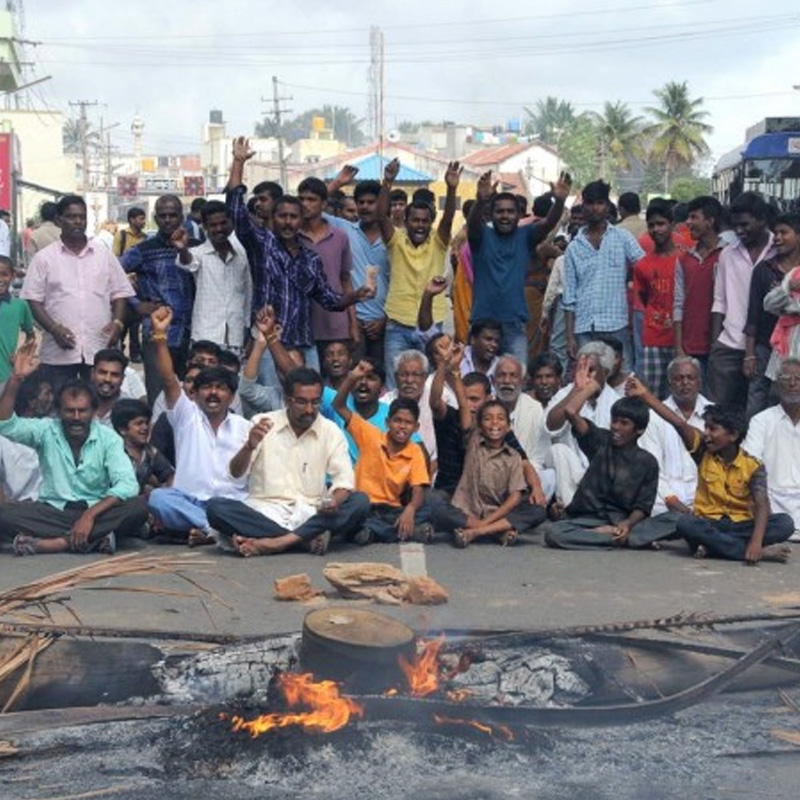
    NEW DELHI: Noting that it had come to its notice that certain television channels had been telecasting provocative news / programmes relating to the Cauvery dispute, the Government on Tuesday evening asked the media to avoid live telecasts or file shots of violence.

    A statement issued by the Information and Broadcasting Ministry said the reportage may use shots of the Cauvery river and security forces. It said news, views or comments relating to the dispute should be telecast only after proper verification of facts and presented with due caution.

    TV channels have been asked to exercise restraint while covering incidents of rioting. Cable TV and satellite channels have been asked not to carry news in such a way that it incites violence. Earlier, I&B Minister M Venkaiah Naidu urged the media to exercise restraint in coverage of such incidents.

    The note issued by Director (Broadcasting) Neeti Sarkar stated that, as per the conditions/obligations of permission / approval for uplinking / downlinking, the channels are bound to follow the Programme Code and Advertising Code prescribed under the Cable Television Networks (Regulation) Act 1995 and rules framed thereunder.

  • Don’t air live Cauvery violence: MIB to b’casters

    Don’t air live Cauvery violence: MIB to b’casters

    NEW DELHI: Noting that it had come to its notice that certain television channels had been telecasting provocative news / programmes relating to the Cauvery dispute, the Government on Tuesday evening asked the media to avoid live telecasts or file shots of violence.

    A statement issued by the Information and Broadcasting Ministry said the reportage may use shots of the Cauvery river and security forces. It said news, views or comments relating to the dispute should be telecast only after proper verification of facts and presented with due caution.

    TV channels have been asked to exercise restraint while covering incidents of rioting. Cable TV and satellite channels have been asked not to carry news in such a way that it incites violence. Earlier, I&B Minister M Venkaiah Naidu urged the media to exercise restraint in coverage of such incidents.

    The note issued by Director (Broadcasting) Neeti Sarkar stated that, as per the conditions/obligations of permission / approval for uplinking / downlinking, the channels are bound to follow the Programme Code and Advertising Code prescribed under the Cable Television Networks (Regulation) Act 1995 and rules framed thereunder.

  • Channels uplinked for beaming overseas have to follow laws of receiving country: Rathore

    Channels uplinked for beaming overseas have to follow laws of receiving country: Rathore

    NEW DELHI: Although the 36 channels uplinked from India and downlinked overseas are not bound by the Programme and Advertising Codes, the Indian government said that the uplinked content should not contain anything, which is against the sovereignty, integrity and national security of India as well as its relations with friendly countries.


    The permission to these channels was given under the Uplinking Guidelines of November 2011.


    Minister of State for Information and Broadcasting Rajyavardhan Rathore told the Lok Sabha today that these channels will be required to ensure compliance of the rules and regulations of the target country for which content is being produced and uplinked.


    These channels will be required to preserve the recordings of proceedings for at least six months for monitoring purposes, he said.


    A majority of the channels are from the Zee Group targeting different countries including the United States and South Africa, while others include Raj TV and South Asia World TV.

  • MIB asks broadcasters to apply 15 days in advance for live telecast permission

    MIB asks broadcasters to apply 15 days in advance for live telecast permission

    NEW DELHI: The Information and Broadcasting Ministry has asked non-news television channels, needing temporary permission for uplinking various events, to apply at least 15 days in advance to the proposed event for permission for uplinking.


    Reiterating this, the Ministry has warned that it ‘may not be in a position to entertain such requests’ if applications are not filed on time.


    Reasonable time is also needed for permission from the WPC Wing of the Communications and Information Technology Ministry after the clearance by the I&B Ministry, it was pointed out.


    “Strict compliance to these instructions will ensure smooth functioning at both Ministries in order to process the broadcasters requests well in time,” the I&B Ministry said.