Tag: uplinking

  • TRAI issues consultation paper on regulatory framework for ground-based broadcasters

    TRAI issues consultation paper on regulatory framework for ground-based broadcasters

    Mumbai: The Telecom Regulatory Authority of India (TRAI) has issued a consultation paper titled ‘Regulatory framework for ground-based Broadcasters’, inviting input from stakeholders on the need for a regulatory framework to govern ground-based television broadcasting technologies.

    The ministry of information and broadcasting (MIB) has, over the years, issued guidelines for the uplinking and downlinking of satellite television channels in India. These guidelines mandate that broadcasters use satellite-based mediums to provide their channels to distribution platform operators (DPOs). However, advancements in technology have now made it feasible for broadcasters to distribute their content terrestrially. Like satellite-based television, terrestrial broadcasting can also be carried over multiple DPO networks, allowing commercial retransmission to subscribers.

    In light of these technological advancements, there is now a recognised need for a regulatory framework to enable the use of ground-based broadcasting technologies.

    TRAI had earlier forwarded recommendations on the regulation of platform services, including those relevant to ground-based broadcasters, to the MIB in 2014. However, the MIB’s recent communication, dated 22 May 2024, notes that while guidelines on platform services were issued in 2022, the context surrounding TRAI’s 2014 recommendations regarding ground-based broadcasting may have evolved. The MIB has thus requested TRAI to review and issue fresh recommendations under Section 11(1)(a) of the TRAI Act, 1997.

    In response, TRAI is now seeking comments on the newly released consultation paper. Stakeholders are invited to submit their comments by 15 November 2024, with counter-comments due by 29 November 2024. Comments can be submitted electronically to advbcs-2@trai.gov.in and jtadv-bcs@trai.gov.in.

  • I&B ministry proposes guidelines for encryption of channels

    I&B ministry proposes guidelines for encryption of channels

    Mumbai: In an organised press briefing on Wednesday, the ministry of information & broadcasting introduced revised uplinking and downlinking guidelines for TV channels in India, as I&B secretary Apurva Chandra informed. The earlier guidelines were issued in 2011.

    As per the new guidelines, the encryption of channels is now mandatory for all bands other than C band.

    The following objectives are set to be achieved by the proposed guidelines:

    1. Ease of compliance for the permission holder:

    The proposed guidelines give importance to ease of compliance for the permission holder.

    a) There is no requirement to obtain prior permission for live event telecasts; only the pre-registration of events would be necessary.

    b) The requirement of prior permission for a change of language or conversion from Standard Definition (SD) to High Definition (HD), or vice versa is also not required.

    2. Ease of doing business

    a. The guidelines proposed a specific timeline for the grant of permission.

    b. Limited liability partnership (LLP) entities can also seek permission.

    c. A news agency can get permission for a period of five years instead of one year.

    d. A channel can be uplinked by using the facilities of more than one teleport/satellite, as opposed to only one teleport/satellite.

    e. The new guidelines have removed certain restrictions on the transfer of a channel from one entity to another.

    f. A teleport operator can uplink a foreign channel for being downlinked outside India, enabling earning of foreign exchange for the operator.

    3. Simplification and Rationalisation

    a. One composite set of guidelines instead of two separate guidelines;

    b. The structure of the guidelines has been systematised to avoid duplication, and common parameters, including financial requirements, etc., have been placed in appendices;

    c. The penalty clauses have been rationalised to separate the nature of penalties that have been proposed for different types of contraventions as opposed to the uniform penalty as at present.

  • I&B ministry extends deadline to submit comments on draft policy guidelines for uplinking, downlinking

    I&B ministry extends deadline to submit comments on draft policy guidelines for uplinking, downlinking

    MUMBAI: The ministry of information and broadcasting (MIB) has extended the time till 7 June for submitting suggestions or comments on draft policy guidelines for uplinking and downlinking of television channels. MIB published the guidelines on 30 April.

    The last guidelines for uplinking and downlinking of satellite television channels were issued by the ministry in 2011. 

    MIB drafted the suggestions after consulting with stakeholders and also invited comments on the draft from them within the 15 days of publishing it. But some of the stakeholders expressed inability to draw up the response within the time limit requesting a further extension of the deadline. 

    Here are the major guidelines issued by MIB:

    Online application on Broadcast Seva for teleport or TV channels 

    A company or Limited Liability Partnership (LLP) may apply on Broadcast Seva on payment of processing fees for setting up a Teleport or Teleport Hub and uplinking, downlinking of a news TV channel or a non-news TV channel. The online application shall be processed from the standpoint of eligibility conditions and shall be subject to clearance and approval by the department of space, ministry of home affairs, and whenever considered necessary, by the department of revenue, ministry of finance. However, if considered necessary, the ministry may cause inspection of the physical premise or location.

    Regulations for logo and name of a channel

    For uplinking a news channel or a non-news channel, it has to furnish the proposed name and the logo of the channel along with a trademarks registration certificate regarding the ownership of the name and logo during applying. A company/LLP shall display on the permitted TV channel only that name and logo which has been approved by the ministry. Hence, display of name and logo which has not been permitted or the display of dual logos would be treated as a violation of the guidelines.

    Operational status of a permitted TV channel

    A TV channel is required to remain operational during the currency of the permission.  Where a TV channel is unable to remain operational for a continuous period of more than 60 days, the company/LLP shall inform the ministry of the status along with reasons for the channel remaining non-operational. Provided that failure to inform the ministry regarding non-operational status of a channel beyond a continuous period of 60 days will be deemed to be a violation under the guidelines. Moreover, the channel shall not remain non-operational for a continuous period exceeding 90 days.

    Live telecast of events

    · A news channel which is given permission under these guidelines may uplink news and current affairs content by using the Satellite News Gathering (SNG)/ Digital Satellite News Gathering (DSNG) equipment permitted to it, or hiring such equipment owned by any other permitted news channel owner or a teleport operator, after registering such hiring by means of an application on Broadcast Seva portal.

    ·  A non-news channel having permission under this guideline may, for the purpose of broadcasting an event live (other than an event which is in the nature of news and current affairs), irrespective of the technology used for uplinking the event, register itself online on Broadcast Seva, at least five days preceding the first date of a live event, furnishing such details and documents as may be specified in the application for registration, including the following date, time, venue and name of the event; the channel’s/ teleport’s willingness to broadcast/ uplink the proposed programme/event; due authorization of the event owner along with specific dates and timings of the proposed programme/event, a valid WPC license issued to the teleport operator, where a SNG/DSNG equipment or any such technology is used requiring WPC license, where an equipment or technology other than SNG/ DSNG is used, detailed specifications thereof.

    ·  A foreign news channel/agency may be granted permission up to one year at a time for live uplinking from time to time through a pre-designated teleport, by way of an application made in this regard online on the Broadcast Seva Portal.

    Transfer of permission of a television channel or teleport 

    A TV channel or a teleport can be transferred by a company/LLP, to another entity only with prior approval of the ministry. However, transfer under the sub-section shall be permitted under the following situations:

    Merger/demerger/ amalgamation duly approved by the court/ tribunal in accordance with the provisions of the Companies Act 2013, and the company/LLP files a copy of the order of the court/tribunal sanctioning the said scheme; transfer of business or undertaking in accordance with the provisions of applicable law, and the company/ LLP files a copy of the agreement/ arrangement executed between itself and the transferee company/LLP; transfer within group company, and the company files an undertaking stating that the transfer is within the group companies.

    Uplinking of television channels for viewing only in foreign countries

    TV channels operating in India and uplinked from India but meant only for foreign viewership are required to ensure compliance of the rules and regulations of the country for which content is being produced and uplinked.

    A channel owned by a foreign company/entity may be allowed to uplink its content to be viewed outside India by using the facility of a permitted teleport operator by way of an online application on Broadcast Seva furnished on its behalf by the concerned teleport operator.

  • MIB issues notice to 69 channels to provide technical parameters with EMMC

    MIB issues notice to 69 channels to provide technical parameters with EMMC

    MUMBAI: Ministry of Information and Broadcasting (MIB) has issued a notice instructing 69 private satellite channels to provide complete set of technical parameters with Electronic  Media Monitoring Centre (EMMC)  of the ministry. While the notice was issues on 25 September, the channels have been asked to provide necessary details within 15 days.

    “It has been brought to the notice of this ministry that 69 private satellite TV channels permitted by this ministry (list attached) have not shared their technical parameters with Electronic Media Monitoring Centre (EMMC) of this Ministry,” the MIB said in the notice.

    MIB also highlighted in the notice that clause 5.5 of the extant uplinking guidelines mandate broadcasters to provide for the necessary monitoring facility at its own cost  for  monitoring  of  programmes  or  content   by the representatives of  the MIB or any  other  government agency  as  and  when  so required.

    ”Accordingly,  all   the   concerned    broadcaster    companies  are   required   to   provide complete  set of technical  parameters I Cam Module I VC Card (for pay channel)  in respect of their permitted  TV channel(s) to EMMC  for content  acquisition purpose  positively  within  15 days  of  issue  of  this  notice,  failing  which  action  shall  be initiated  in accordance with  the uplinking  guidelines, 2011,” the ministry stated.

  • MIB permits name change of 21 satellite channels

    MIB permits name change of 21 satellite channels

    MUMBAI: The Ministry of Information and Broadcasting (MIB) has approved a total of 21 applications from satellite channels for name change.

    Among the newly renamed channels, ABP News HD, Sony Marathi HD, Colors Rishtey, Colors Cineplex, Times Now World, Colors Cineplex HD are some of the significant ones.

    ABN News HD is the new name for ABP Kannada, Sony Marathi HD for Ten Golf HD, Colors Rishtey for Rishtey, Colors Cineplex for Rishtey Cineplex, Times Now World for the earlier Times now HD and Colors Cineplex HD for Cineplex HD respectively. The ministry also recently granted permission to Star India to rename Movies Ok as Star Gold 2.

  • MIB restricts eligibility for temporary uplinking for non-news events

    MIB restricts eligibility for temporary uplinking for non-news events

    MUMBAI: In a fresh notice, the Ministry of Information and Broadcasting (MIB) has laid out a new norm for temporary uplinking applications for live coverage of non-news and current affairs TV channels. Now, only those channels and teleport operators that are already permitted by the MIB will be eligible to apply for temporary permits. This notification comes into effect immediately.

    It reiterated that no other entity apart from permitted broadcasters and teleport owners will be given permissions for uplinking in the case of temporary live events.

    The Telecom Regulatory Authority of India (TRAI) had suggested its recommendations to ease norms for uplinking and downlinking of TV channels. The MIB later stated that these suggestions were under consideration but did not give any time frame for making them into regulations. These norms last came into effect in 2011.

  • MIB seeks details to simply forex payments for broadcasters, teleport ops

    MIB seeks details to simply forex payments for broadcasters, teleport ops

    MUMBAI: In what it says is aimed at further easing norms for doing broadcast business, the government has asked for particulars from TV channels and teleport operators using services of foreign satellites for uplinking and temporary uplinking so payment of foreign exchange processes could be simplified.

    Broadcasters need to provide the name of the company, name of the service provider, name of the country of the service provider, purpose for bandwidth utilization, service order number and validity of agreement, Ministry of Information and Broadcasting said in a recent advisory.

    In 2014, the Ministry of Information and Broadcasting (MIB) advised all broadcast companies and teleport operators to strictly follow the guidelines under the provisions of the FEMA Act 1999 and a notice by the RBI requiring prior approval of the MIB for making remittance of foreign exchange towards availing transponder services on foreign satellite for up-linking of TV channels/teleport services/DSNG operations/temporary events.

    The TRAI has also urged (http://www.indiantelevision.com/regulators/trai/trai-releases-recommendations-on-easing-broadcast-business-180226) the government to simplify the norms regarding licensing and clearance processes for broadcast companies. It even suggested that satellite spectrum allocation must be done through the year for the convenience of broadcasters.

    It asked for streamlining of process for granting permission, giving security clearances within 60 days and setting up an integrated portal for everyone’s convenience.

    Late last year, the ministry had asked TRAI (http://www.indiantelevision.com/regulators/trai/trai-paper-seeks-to-streamline-uplinking-downlinking-norms-171219 )to come up with a new set of rules for uplinking and downlinking norms since the previous one was six years old and technological advances have changed the broadcast sector. One of the key questions was whether there was a need to redefine the meaning of news and current affairs and non-news channels.

  • MIB cancelled 14 channels’ permissions on MHA advice

    MIB cancelled 14 channels’ permissions on MHA advice

    MUMBAI: The Ministry of Information and Broadcasting (MIB) is getting strict on giving channel licences, even cancelling some. 14 channels, whose licence was cancelled by the MIB due to security denial by Ministry of Home Affairs (MHA), challenged the decision and have got a stay order from the High Court.

    Out of these fourteen channels, twelve channels are news channels and two are non-news channels. Mahua Media Private Limited, Mavis Satcom Limited, STV Enterprises Limited, Alliance Broadcasting Private Limited are the concerned parties.

    After cancelling permission to 236 channels, the number of private satellite TV channels having valid permission in India stands at 867 as on 30 June 2018. While 384 channels are news channels, the rest i.e. 483 are non-news channels.

    According to earlier statistics, the total number of private satellite and pay TV channels stood at 875 as on 28 February, 2018. In the last one year, there has been a dearth of licences being handed out. The earlier part of 2018 saw the addition of just two channels namely Discovery Jeet HD and DSport HD.

    Of the 867 permitted private satellite channels, TV channels permitted for uplink from India and also to downlink into India are 766 among which 364 are news channels and 402 are non-news channels. Five news and eleven non-news channel are permitted for uplink from India but not downlink into the country. 85 TV channels are uplinked from abroad which only have downlinking permission in India. This category includes 15 news and 70 non-news channel.

  • Amit Khare appointed as new MIB secretary

    Amit Khare appointed as new MIB secretary

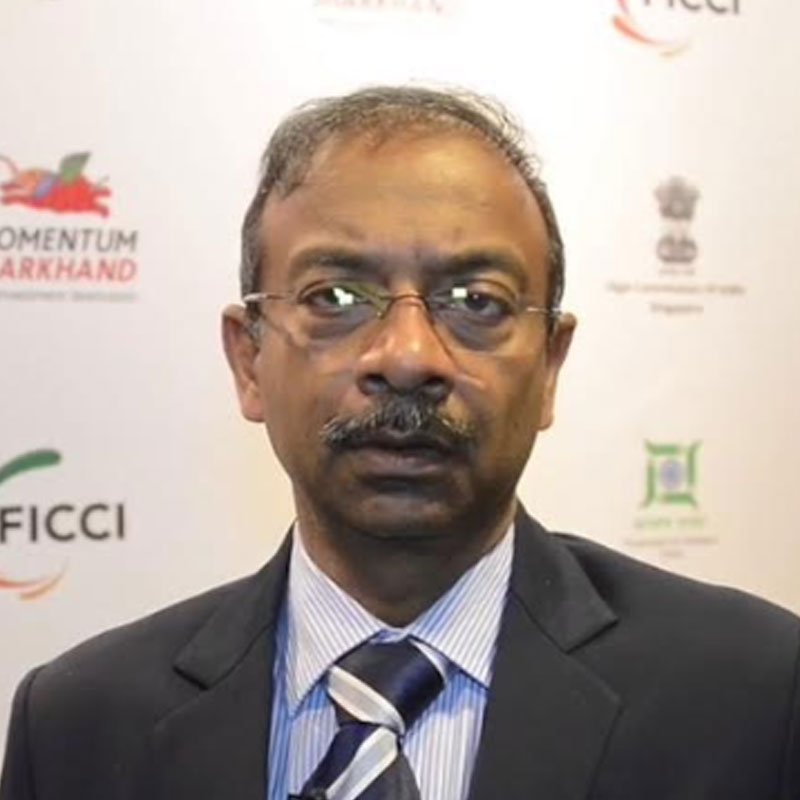
    MUMBAI: Jharkhand state development commissioner and a whistle-blower civil servant Amit Khare has been named as the new secretary of the Ministry of Information and Broadcasting (MIB). He will take over from NK Sinha who is due to superannuate on 31 May 2018 after a comparatively quiet stint of approximately nine months at a high profile ministry that has constantly remained in the news after finance minister Arun Jaitley gave up the MIB portfolio in 2016 to concentrate on India’s economy.

    The announcement regarding MIB and Khare came on Friday as part of a big bureaucratic reshuffle initiated by the government that is now gearing up for general elections either late this year or first half next year as its five-year term in New Delhi officially comes to an end in May 2019.

    Khare is a 1985 batch Indian Administrative Service officer and is presently serving in Jharkhand. Considered an upright civil servant, he is credited for unearthing the multi-million dollar fodder scam two decades ago in Bihar for which some powerful politicians, including former Bihar chief minister Lalu Yadav, and senior officials have been handed jail sentences of varied time periods.

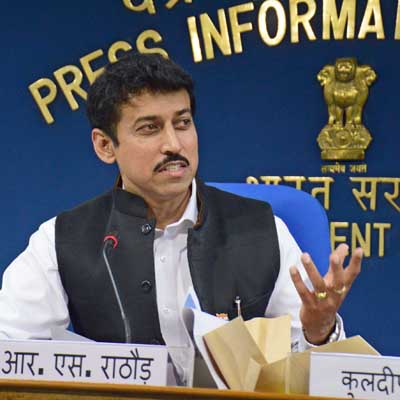
    Meanwhile, media industry observers hoped that with Khare’s arrival next month and junior minister Rajyavardhan Rathore entrusted with independent charge of MIB last week, some freshness and action would also arrive at the ministry, which has been under fire in recent months for not only taking controversial policy decisions (one of them relating to regulation of fake news being rolled back after PM’s Office intervened), but also angering its own foot soldiers or the Indian Information Service officials by arbitrary transfer postings and allegedly bungling on a film award event where the president of the country was to be present.

    A senior TV executive on condition of anonymity said both Rathore and Khare would hopefully end power games within MIB and actually work to live up to PM Modi’s claims of easing norms for doing business in India; especially as the media industry has been straining to get some helping hand from the government in difficult economic times when the sector is still in the process of recovering from after-effects of demonetisation of high value currency notes in 2016 and a new tax regime of goods and services tax of 2017.   

    Rathore’s senior Smriti Irani, a former TV actress who was handed the dual charge of MIB along with textiles ministry almost a year back, has somehow been in the news for wrong reasons and was divested of the portfolio last week when the Prime Minister initiated a reshuffle of his cabinet colleagues.

    Broadcast industry has been complaining of arbitrary policy decisions being taken by MIB under Irani, including attempts at creating artificial entry-level barriers by insisting on TV channels shift to Indian satellites from foreign ones and hiking administrative processing fees many folds. Industry organisation Indian Broadcasting Foundation recently petitioned the PM’s Office drawing attention to the likely ill-effects on the industry if certain norms regarding uplinking and downlinking, being debated at MIB and regulatory body TRAI, came into force.

    Media reports have also indicated that in the last nine months inaction had come to such a head at MIB that inter-departmental power games had stalled a decision on over 100 applications for new TV channels, apart from other sundry issues. So, media industry stakeholders expect a breath of fresh air to blow in the corridors of New Delhi’s Shastri Bhawan, which houses the MIB along with some other ministries, with Rathore-Khare duo taking charge.

    Earlier this week, Vikram Sahay was appointed as a joint secretary in the MIB.

    ALSO READ:

    Smriti Irani moved out of MIB as Rajyavardhan Singh Rathore gets independent charge

    MIB moves to regulate online media: various organisations join issue   

    PMO directs MIB to withdraw guidelines on fake news

    Time to have rules ensuring no one player dominates media: Smriti Irani

    Smriti Irani exhorts DD to leverage reach better