Tag: United States

  • Pocket FM surpasses $25 mn ARR

    Pocket FM surpasses $25 mn ARR

    Mumbai: The audio series platform Pocket FM has announced its entry into the US market and international development.

    The company published a performance update for the period October 2021–September 2022 after finishing its fourth year of operations in September 2022.

    Due to the launch of the micropayment model and advertising solutions, the company’s ARR (annualised revenue run rate), as recorded through October 2022, has surpassed $25 million.

    In its fourth year of operation, the platform has seen a 10X increase in revenue thanks to the addition of micropayments, with 500,000+ weekly transactions.

    Commenting on its fourth-year performance update, Pocket FM co-founder & CEO Rohan Nayak said, “We started with a vision to redefine the audio entertainment space, reviving it as a mainstream entertainment form with audio series, and unearthing unique and unheard stories for our listeners worldwide. As we scale up to emerge as the global audio series platform, we will continue to strengthen our content library and nurture and grow our creator community across the world to keep our listeners entertained.” 

    He further added, “We are glad to have led this category creation with sustainable and profitable growth. As we successfully discovered the content monetisation model in the audio space, our revenue has grown 10X to $25 million ARR in just 12 months. With the continued momentum and expected growth targets, we foresee another 4X growth in our revenue during our fifth year of operations, thus entering the $100 million ARR club within five years of our operations.”

    Content, creators, and consumption

    With 733 audio series, the audio series platform has expanded its selection of content. As a result, audio series, a fictional long-form audio storytelling genre developed and pioneered by Pocket FM, have increased by 270 per cent. With over 90 per cent  of all time spent on the platform, this category has dominated consumption.

    The company’s creator community has grown to over 500,000 people worldwide, and its listener community has increased to over 80 million people. In its fourth year, streaming on Pocket FM has increased by 75 per cent and surpassed 40 billion minutes.

    The age range of its listeners, which makes up more than 80 per cent , is 15 to 35. The majority of people in this category enjoy family drama, romantic suspense, and thrillers. In addition to these well-liked genres, Pocket FM has observed a positive pattern of consumption in the fantasy segment, which has seen a 4X increase in listening minutes. 

    User insights 

    With a median age of only 28.4 years, India is a young country, and younger people have found Pocket FM’s storytelling to be engaging. 85 per cent of all Pocket FM listeners are younger than 35, with 68 per cent falling under the age of 25. Due to its extensive library of content, Pocket FM is incredibly well-liked in rural areas as well as small towns, but among the top five cities on the platform are Bangalore, Mumbai, Delhi, Pune, and Hyderabad.

    Over 50 million people listen to audio series, a long-form storytelling genre that Pocket FM developed and promotes. Of these listeners, 26 per cent  are romance junkies, and 20 per cent  are thriller fans. On average, its audience listens for more than 100 minutes every day.

    31 per cent  of Pocket FM listeners tune in to their preferred programming while in motion, primarily during their commute to and from work between the hours of 9 a.m. and 12 p.m. and 6 p.m. and 9 p.m. It’s interesting to note that listeners are more attentive to the platform before bed or when they are unwinding. During the hours of 12 p.m. to 6 p.m. and 9 p.m. to midnight, about 45 per cent of listeners tune into Pocket FM.

    Pocket Novels

    In addition to its audio programming, Pocket FM launched its online reading service, “Pocket Novel,” in October 2021. More than 100,000 novels have been uploaded by the writer community to Pocket Novel in the past year or so.

    Similar to Pocket FM, Pocket Novel has seen a daily average user time of 100+ minutes. During that time, it has recorded well over 400 million reads. Additionally, the company has begun turning the best-selling novels into audio series and has added a robust pipeline across genres.

    Tech and Product

    To increase user engagement and retention, Pocket FM is doubling its investments in its AI and ML capabilities and focusing on developing a sophisticated, personalised content recommendation engine. Additionally, it is developing cutting-edge text-to-speech, image, and NLP generative AI capabilities, which will accelerate content testing and production.

    Additionally, it is enhancing its AI capabilities for content moderation and quality testing that are automated.

    Funding

    With two rounds of capital injections in its fourth year, Pocket FM is in a strong financial position. In December 2021, the company raised $22.4 million in Series B funding, and in March 2022, it raised $65 million in Series C funding.

    The company has raised $93.5 million in total.

  • Best Jobs For Indians In the USA

    Best Jobs For Indians In the USA

    Everyone, no matter where he is, wishes to live a better life. The United States is a popular destination for international students, particularly Indians pursuing higher education since it offers a diverse range of work prospects in addition to a world-class education.

    Among the highest-paying careers in the United States include those in the trucking sector, medical, computer technology, marketing, economics, construction, and law.

    However, if you only want to work there, all you have to do is get a USDOT registration and start trucking. It is one of the highest-paying jobs in the US.

    Aside from transportation, jobs in marketing, sales, and business managers are predicted to expand at a quick pace of 15% from 2022 to 2030, nearly matching the average wage for all professions.

    Here are some of the highest-paying jobs in the US.

    Trucking

    Truck drivers in the United States have the finest pay. It is among the most lucrative jobs. It’s also difficult because it entails a lot of driving and long-range travels, as well as lengthy overnights and other things. However, if you are prepared to take on this task, you may make a significant amount of money.

    With a trucking career, you can expect not just a decent compensation, but also a variety of bonuses and incentives that will keep you motivated. Other advantages of working as a truck driver include flexibility. Many well-known transportation and logistics firms in the United States are now offering flexible work hours in exchange for a high income.

    Psychiatrists

    Psychiatrists help those who are suffering from mental diseases. They frequently encounter people who are depressed or anxious, or who are abusing drugs. A degree is required in pre-medical studies and four years of clinical school are required to get to be a psychiatrist. After that, he’ll have to go through a three- to five-year residency program before being allowed to work independently.

    For a variety of reasons, it is one of the greatest employment opportunities for Indians in the United States. Private practice psychiatrists supplied their perks. Psychiatrists who were paid a salary enjoyed paid vacations and travels, as well as health retirement savings schemes.

    There has been a significant focus on psychological health in society as a whole. Given the current state of the globe, this could not be more true. This emphasizes the importance of psychiatry and the necessity for psychiatrists.

    Marketing

    The Indian market is huge with millions of brands to conquer. This interests the US-based companies that tend to open their offshore companies in India. But before that, they need to understand what drives the customers in such countries and how to advertise in them. This is why companies in the US are now hiring Indian marketing managers.

    People in advertising professions work on all aspects of a company’s marketing operations, including research, development, and coordination. More specialized fields, such as consumer research, innovative branding, public affairs, and event organizing.

    It is one of the highest paying jobs and depending on their performance and the venture in which they operate, these individuals may be eligible for rewards, bonuses, incentives, and even revenue sharing. As a result, even for a newcomer to this profession, the pay scale will be competitive, which is one of the primary advantages that has made this one of the most popular career alternatives in recent years.

    Final Thoughts

    The above-mentioned jobs are among the highest-paying jobs for Indians in the US, however, one can also go for a little investment and open his or her grocery store or drive a taxi. It is important to know the market before you decide what to do with your career.

  • Why 2019 was the worst year for security breaches in this century

    Why 2019 was the worst year for security breaches in this century

    Did you know that 2019 was the worst year for data security? Cases of data breaches were escalating not only in the United States, but across the entire world. In fact by mid-2019 it was clear that it would be a bad year, with the number of data breaches up 54% year-on-year.

    The losses companies face due to each data breach is substantial. According to this report by The Ponemon Institute, the average cost of a data breach stands at about $4 million – and in the case of small and medium businesses, it often puts them out of business.

    But before you can protect yourself from security breaches, you need to understand why they happen in the first place.

    Main Causes of Data Breaches

    More often than not the data breaches in 2019 weren’t because of some highly-skilled hacker pulling off a stunning heist. Instead, while hackers may have been involved in some fashion – the root cause often lay elsewhere.

    On the whole, the main causes of most of the data breaches in 2019 are:

    •  Malware that sneaks onto company computers and creates vulnerabilities that can be exploited.
    •  Human error that includes the use of weak passwords, sharing personal information, or falling for phishing scams – all of which can lead to company accounts being compromised.
    •  Unpatched security vulnerabilities that in some cases could have been fixed via an update.
    •  Insider threats by malicious actors working within the company to transmit data or compromise cybersecurity measures.

    Based on these reasons you may have started to realize that many data breaches could have been avoided – and that much is definitely true. The only question is: How?

    How to Avoid Data Breaches

    After the damage caused by data breaches in 2019, it should come as no surprise that the focus has been on how to prevent a recurrence in the future. And while many cybersecurity measures can be implemented, the one that is definitely at the forefront is employee monitoring software.

    Employee monitoring is a unique solution to help avoid data breaches on multiple fronts. By tracking the activity of employees it is possible to prevent cases of data breaches that are caused by human error and insider threats. On top of that it can also help to prevent malware to a certain degree.

    Case in point: If WorkExaminer was installed and set up, it would be possible to track what employees are doing at any given point in time and what apps they’re using. That is key to stop insider threats, because it will help identify any suspicious activity. The monitoring doesn’t have to be in real time, and WorkExaminer can generate reports to make it more convenient.

    Aside from monitoring activity, WorkExaminer can prevent threats in other ways. It can monitor the communication of suspicious employees via IM chats, email, and keystroke logs. It is also able to capture screenshots directly to show what is going on or act as evidence.

    In the same way WorkExaminer can prevent insider threats, it can also reduce human error to some degree. When employees visit suspect websites or share personal information, the activity can be flagged for further action.

    Similarly malware can be prevented as well by using WorkExaminer to monitor files that are downloaded onto employees’ computers and making sure they are scanned if anything suspicious shows up.

    Final Words

    Make no mistake, the risk of security breaches and data theft are not going anywhere – and if anything it will only increase over the next few years. Because of that you need to make sure that you’re doing everything possible on your end to minimize that risk.

    As you can see, WorkExaminer is a good place to start. It has the features that you need to monitor your employees so that you’re aware of any threats before they end up causing a data breach. Keep in mind that you can also use employee monitoring to boost productivity and efficiency, which makes it doubly useful.

    Long story short, if you haven’t already started to implement employee monitoring and improve your cybersecurity, you should definitely think about putting it on your agenda as soon as possible.
     

  • India tops list in requesting TikTok for content restrictions, user info access

    India tops list in requesting TikTok for content restrictions, user info access

    MUMBAI: India has topped the list in making the highest number of legal and emergency requests to takedown specific content and to access user information, TikTok said in its first-ever Transparency Report for the first half of 2019 (1 January 2019 to 30 June 2019).

    A short-video sharing application in its report claimed that India made over 99 legal requests and eight emergency requests to TikTok, taking the total requests to 107. Followed by the United States of 79 requests, of which 68 are legal and eleven for emergency requests.

    ByteDance owned TikTok in its report said that at least 47 per cent of India’s requests have been complied with by the platform, whereas it has obliged to 86 per cent of requests made by the United States.  

    The chart of content restricts missed China’s name. “We did not receive any requests from countries other than those listed in the chart below,” the transparency report said.

    TikTok, the China-based application touts over 1.3 billion installs worldwide, has recently been banned by the United States army amid security concerns. Similarly, the platform, which has gained popularity in India, has also come under scrutiny over objectionable content.

    Meanwhile, TikTok it received over 3345 copyrighted content takedown notices from across the world, of which 85 per cent content was removed, the report said. “We honour valid take-down requests based on violations of copyright law, such as the Digital Millennium Copyright Act (DMCA).”

    Like TikTok, the social media giant Facebook, along with search-engine giant Google have also been coming out with transparency report in a timely manner that specifies takedown requests.

  • FICCI FRAMES: Legitimate screens, stricter laws, best practices for IPR

    MUMBAI: A National Intellectual Property Rights policy is a healthy prescription for the creative industry that seeks to provide an enabling framework for monetisation, protection and enforcement of copyright, but this can only succeed if there is robust law enforcement in addition to more punitive provisions.

    This was the gist of “Own, Convert and Protect Intellectual Property as a Driver of Innovation and Growth” at the FICCI FRAMES 2017.

    It is equally necessary for creative minds to understand their intellectual property rights globally, and constant amendment of relevant laws, apart from better co-ordination among all stakeholders in the media ecosystem.

    Solstrat Solution advisor S Rama Rao in his special address that set the tone of the discussion explained the difference between tangible and intangible assets such as intellectual property, which, he said was a human right with legal entitlement. He quoted Article 27 Para 3 of the United Nations Charter which underlined the significance of IP.

    However practically, the creative industry’s on lack of understanding of the value of IPR combined with inadequate enforcement mechanism and an inconsistent regulatory framework that stands in the way of the industry’s growth aspirations.

    Saikrishna & Associates senior partner Ameet Datta moderated a discussion where four participants gave their views on different aspects of IPR in India and globally.

    Among the leading lights of the industry who elucidated on the blueprint for translating policy into practice, the Paris-based International Federation of Film Producers Associations (FIAPF) chief representative Benoit Ginistry said a robust law-enforcement system needed to be in place to ensure intellectual property rights are protected.

    Lauding the Indian IPR laws, he said it was a positive step. Globally, he said, IP laws needed to be updated. Ratification and implementation of the laws was important, and technical performance measures (TPM) needed to be secured, he said.

    Ginistry suggested that one needed to protect investments and licences, and one needs to go beyond the copyright laws. India must join anti-piracy groups and campaigns in Europe, Japan and South Korea.

    Whether administrative measure or enforcement was vital to control IPR violation because of proliferation of streaming sites, MPA V-P Asia-Pacific Hank Baker half-jokingly commented that the world today does not allow the creator the leisure of creating and sharing creativity at will. “People are inclined to steal somebody else’s work,” Baker regretted.

    Appreciating the Indian government efforts and laws to protect IP, Baker said that around 42 countries were following “Best Practices” (also including site blocking and watermarking) in the creation and protection of IP. “The shelf life of a movie is a few weeks, but as soon as it is released, a cat and mouse game begins,” Baker complained. Decrying the existence of a transnational pirate network, he said that the ecosystem and the legal framework must be prepared to deal with any IP infringement.

    Baker was sad that the industry had never been as vulnerable as it was now. Censorship and limited number of screens to showcase new films were the other impediments. “People want to see when they want to see – no matter what,” Baker said matter-of-factly. There needs to be wider approach to support the industry.

    Reiterating the United States’s US$ 250 billion annual loss owing to violations, US consul-general to Mumbai Thomas L Vajda said IPR was a huge priority as the world was moving to a knowledge economy. Giving information about the formation of an IP working group two years ago, Vajda said US government was working with a number of state governments in India including Maharashtra towards protection of IPs. For the sake of IP protection, he said co-operation of different sectors was needed. “It’s not just the role of police to help protect IPs, different ministries must be involved in protect original content,” Vajda said.

    Vajda supported the ideas of spurring more innovation, protecting ideas and promoting more investments, but “a genuine intent is important.”

    Speaking about the protection of music IPs, Sony Music Entertainment president – India and Middle East Shridhar Subramaniam said IP laws had been gradually tweaked and a lot of finesse achieved. Although happy about the national policy and amendment to copyright laws in the last couple of years, Subramaniam said he was unhappy about the (monetary) value loss owing to violations by hiding behind safe harbour laws. The primary intent of the laws was to protect the interest of the creator, he added.

    Effectively checking piracy was a court-driven process, he said. Other measures that were being taken were blocking pirate sites and taking down rogue apps, Subramaniam said.

    The Sony Music executive recommended expanding the scope of licencing vis-à-vis radio, broadcasting and internet. He suggested trying and passing on benefits of innovation to the users. National registry and documentation help grow businesses, he felt, but lamented that there was no control over piracy originating from neighbouring markets.

    Music was tech-enabled consumption, Subramanian said, adding that there was a need to foster an environment of licencing. “Our input cost is not regulated,” he said. Although music legitimately belongs to the rights holders, some were using methods disguised as innovation. While ranking the federal states, Subramaniam opined, one could consider IP-friendliness as one of the primary criteria for selection.

  • Corning uses Micromax Vdeo to narrate tough dabbawalas’ story

    MUMBAI: Corning Gorilla Glass has unveiled a global marketing communications campaign, Incredibly Tough, highlighting incredibly tough people, doing incredibly tough things using devices that are equally tough. The campaign will be promoted across social media channels, on regional online TV platforms and through multiple language influencers including Marathi.

    The Incredibly Tough campaign highlights stories of extraordinary people using devices that feature Corning Gorilla Glass in some of the toughest ways imaginable, including a parkour athlete training and taking on tough city streets; an adventurer trekking one of China toughest roads and, in India, the incredibly tough Dabbawalas of Mumbai.

    Corning Gorilla Glass has been used on nearly five billion devices worldwide, including more than 1,800 product models across 40 major brands.

    In India, the campaign kicked off with an online story based on Mumbai’s Dabbawalas. Done in collaboration with Micromax’s new Vdeo series for the value segment, the Incredibly Tough Dabbawala story begins with the Dabbawala’s morning early on a working day, sees him travel across Mumbai, collect, deliver and re-collect the lunch boxes before heading home on Mumbai’s local trains where he uses his phone to send messages to his family and watch a video clip. The featured Dabbawala comments on the importance of his device and how technology has changed how they work every day.

    This real-life story accentuates Corning research in India that highlighted the importance of a mobile phone to consumers. In a recent poll, nearly 58% of consumers polled in India said that their smartphone is the most expensive thing that they carry with them daily, and their single biggest worry is damaging their device.

    The campaign includes promotion of the video, development of a microsite dedicated to the Dabbawalas and other marketing assets to highlight the lives of a Mumbai institution. Uniquely for the Dabbawalas, the promotion will be featured in India, the United States and China.

  • Zee Cinemalu added to US portfolio

    Zee Cinemalu added to US portfolio

    MUMBAI: Leading content conglomerate, Zee Entertainment Enterprises Limited (ZEEL), has announced the launch of its Telugu movie channel, Zee Cinemalu. The channel is available on Dish and Sling TV in the US as a part of the popular Telugu pack. This launch brings the total tally of Zee channels in the US to 37, making Zee the biggest multi-cultural broadcaster in the United States.

    Zee Americas business head Sameer Targe said, “Movies are an integral part of the lives of the Telugu audience and the stars of Telugu cinema are worshipped as demigods. The Telugu community in the USA is close to half a million strong and is growing at more than 10pc every year. With the positioning of ‘Dil Pai Super Hit’, Zee Cinemalu offers a wide variety of movies from different genres with an aim to win the hearts of the Telugu audience.”

    To represent such a larger than life environment, megastar Chiranjeevi unveiled the Zee Cinemalu logo at an event in India last year in September, which was attended by the most prominent members of the Telugu film fraternity.

    The channel will entertain US audiences with its major blockbusters including Akhil, Brahmotsavam, Kumari21F, Supreme and A Aa. To further engage viewers, Zee Cinemalu will showcase first-of-its-kind properties like ‘7 days 7 premieres’, the simulcast of mega events, Just For Laugh gags, ‘Bangaru Bujji’ – a filler which connects cinema and the day-to-day life of an individual and DSP Live in USA, a musical show featuring Devi Sri Prasad.

  • China, India world’s largest Internet markets

    China, India world’s largest Internet markets

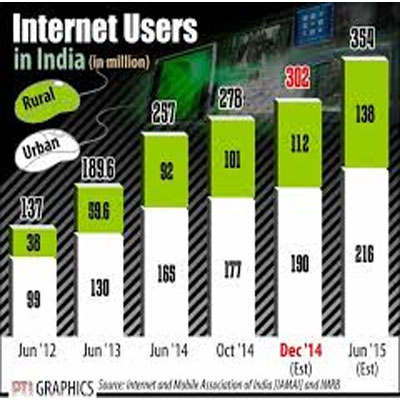
    NEW DELHI: India has overtaken the United States to become the world’s second largest Internet market, with 333 million users, trailing China’s 721 million.

    A new report released by the UN Broadband Commission for Sustainable Development also confirms that just six nations – including China and India – together account for 55% of the total global population still offline.

    While Internet access is approaching saturation in richer nations, connectivity is still not advancing fast enough to help bridge development gaps in areas like education and health care for those in poorer parts of the world, according to the 2016 edition of The State of Broadband report.

    Globally, an estimated 3.9 billion people are not using the Internet. But, the report estimates that, between them, China, India, Indonesia, Pakistan, Bangladesh and Nigeria account for 55% of all unconnected people, while 20 countries – including the US – account for a full 75% of those not using the Internet.

    These findings suggest that targeted efforts in just a few key markets could help enormously in redressing the gaping ‘digital divide’ between those who are online and those still offline.

    India also recently overtook the US to become the world’s second-largest smartphone market, with an estimated 260 million mobile broadband subscriptions.165 countries have deployed ‘4G’ high-speed mobile networks. As smartphone penetration reaches near-saturation in the US, Europe and mature markets in Asia like Japan and Korea, India and Indonesia in particular are expected to drive future growth.

    According to latest ITU figures, by end 2016 3.5 billion people will be using the Internet, up from 3.2 billion last year and equating to 47% of the global population. The top ten developing countries for household Internet penetration are all located in Asia or the Middle East.

  • China, India world’s largest Internet markets

    China, India world’s largest Internet markets

    NEW DELHI: India has overtaken the United States to become the world’s second largest Internet market, with 333 million users, trailing China’s 721 million.

    A new report released by the UN Broadband Commission for Sustainable Development also confirms that just six nations – including China and India – together account for 55% of the total global population still offline.

    While Internet access is approaching saturation in richer nations, connectivity is still not advancing fast enough to help bridge development gaps in areas like education and health care for those in poorer parts of the world, according to the 2016 edition of The State of Broadband report.

    Globally, an estimated 3.9 billion people are not using the Internet. But, the report estimates that, between them, China, India, Indonesia, Pakistan, Bangladesh and Nigeria account for 55% of all unconnected people, while 20 countries – including the US – account for a full 75% of those not using the Internet.

    These findings suggest that targeted efforts in just a few key markets could help enormously in redressing the gaping ‘digital divide’ between those who are online and those still offline.

    India also recently overtook the US to become the world’s second-largest smartphone market, with an estimated 260 million mobile broadband subscriptions.165 countries have deployed ‘4G’ high-speed mobile networks. As smartphone penetration reaches near-saturation in the US, Europe and mature markets in Asia like Japan and Korea, India and Indonesia in particular are expected to drive future growth.

    According to latest ITU figures, by end 2016 3.5 billion people will be using the Internet, up from 3.2 billion last year and equating to 47% of the global population. The top ten developing countries for household Internet penetration are all located in Asia or the Middle East.

  • Telangana govt & film industry set up crime unit to fight software piracy

    Telangana govt & film industry set up crime unit to fight software piracy

    NEW DELHI: The Telangana Intellectual Property Crime Unit (TIPCU), which has been in the planning for almost five years, is being formally launched this week in Hyderabad to create a sustained platform to bridge communication between industry stakeholders, ISPs, policy makers, enforcement agencies aided by legal and financial experts to fight software piracy.

    TIPCU has been set up by the Telangana government in collaboration with the United States Trade Marks and Patents Office (USTPO), the Federation of Indian Chambers of Commerce and Industry, the Telugu Film Industry and the Motion Picture Distributors Association (MPDA, India).

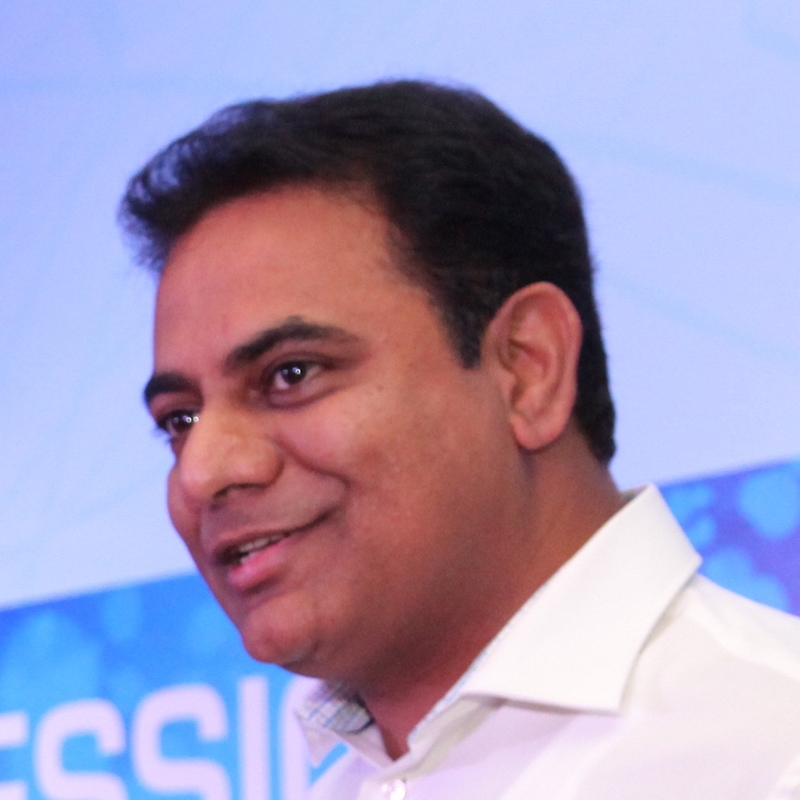
    State IT minister K T Rama Rao and United States Ambassador Richard Rahul Verma will formally launch TIPCU on 24 June at a meet followed by a discussion on the copyright enforcement model by key government officials and senior industry leaders.

    TIPCU will set in motion, online content protection initiatives through proactive and stringent enforcement measures to counter online film piracy.

    Rajiv Aggarwal, Joint Secretary in the Department of Industrial Policy and Promotion of the Central Government which now deals with IPR issues and state IT Secretary Jayesh Ranjan will also speak on the occasion. Several filmmakers are also expected to speak at the event.

    TIPCU will create a watch list of pirate websites similar to the IWL (Infringing Website List) of the British PIPCU at regular intervals; evolve mechanisms to counter online film piracy; and create an industry interface for sharing of intelligence on such syndicates.

    It will work on effective measures to curb flow of revenues to infringing sites; and monitor high risk (Ad-supported) websites and initiate suitable actions to choke revenues to such sites. It will bring down and block infringing links, websites, hosting and streaming sites; provide immediate relief to the film Industry without having to obtain Court orders; and systematically eradicate pirate websites and platforms illegally hosting or streaming copyright content.

    It will also evolve enforcement mechanisms to align with the ever-changing digital content landscape and criminal syndicates operating therein.

    Earlier on 6 May 2016, indiantelevision.com had reported about the setting up of TIPCU and the collaboration of the state IT Department with the film industry and the USTPO. 

    Also read:

    Telangana leads fight against online piracy in partnership with film industry
    http://www.indiantelevision.com/movies/hindi/telangana-leads-fight-against-online-piracy-in-partnership-with-film-industry-160506