Tag: Union Cabinet

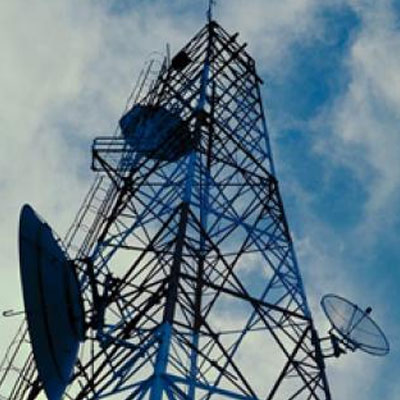
  • Reserve price for the auction of telecom spectrum in 1800 MHz and 900 MHz bands finalised

    Reserve price for the auction of telecom spectrum in 1800 MHz and 900 MHz bands finalised

    NEW DELHI: The reserve price for 1800 MHz band has been fixed for Rs 1,765 crore per MHz Pan India, which works out to be Rs 8,825 crore for 5 MHz Pan India.

    The Union Cabinet has approved the finalisation of the reserve price for auction of spectrum in 1800 MHz band for all service areas and for 900 MHz band in Metro service areas of Delhi, Mumbai and Kolkata.

    According to the recommendation of the Empowered Group of Ministers, the reserve price for 900 MHz band of Rs 360 crore, Rs 328 crore and Rs. 125 crore per MHz in Metro service areas of Delhi, Mumbai and Kolkata respectively.

    The decisions will result in further efficient utilisation of the scarce natural resource of spectrum facilitating expansion of telecom services in the country.

  • Govt initiates steps to help Hindustan Photo Films

    Govt initiates steps to help Hindustan Photo Films

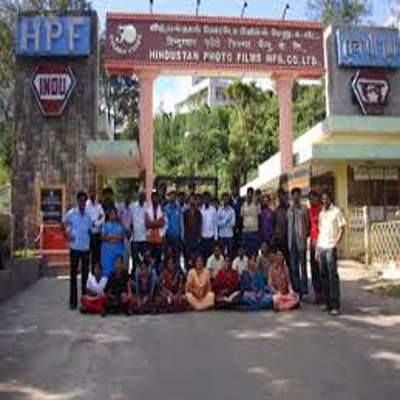
    NEW DELHI: Hindustan Photo Films Manufacturing which has for long suffered as being on the list of sick industries is one of the six companies to be given the minimum public shareholding of 10 per cent requirement under a proposal accepted by the Union Cabinet.


    The Cabinet Committee on Economic Affairs has approved creation of the Special National Investment Fund for the specific objective of meeting the minimum public shareholding of 10 per cent requirement in six Central Public Sector Enterprises (CPSEs).


    Hindustan Photo Films has for years been responsible for supplying raw stock to filmmakers.


    Since these Companies were not financially sound, it was found difficult to meet the minimum public shareholding by following SEBI approved methods. However, government was keen to comply with the requirement in all government companies. The Department of Disinvestment discussed the matter with SEBI and has proposed to meet the minimum public shareholding in the above six Companies.


    The salient features of the fund are:


    (i) The number of shares that is required to make the six companies compliant with the minimum public shareholding will be transferred to the Special National Investment Fund out of government of India shareholding on irrevocable basis without any consideration.


    (ii) The Fund will be managed by independent professional fund managers.


    (iii) The Fund will sell the shares within a period of five years.


    (iv) The funds realised from the sale of shares would be used for social sector schemes of the government.


    (v) The modalities of the sale of shares in the fund would be decided by the existing EGoM.


    Under the Securities Contracts (Regulations) (Second Amendment) Rules 2010 of 9 August 2010, all government companies are required to have at least 10 per cent public shareholding and where public shareholding is less than 10 per cent, the companies were required to comply with this condition within a period of three years by following methods permitted by SEBI for this purpose.

  • What the media & govt ecosystem is doing on potrayal of women in advertising

    What the media & govt ecosystem is doing on potrayal of women in advertising

    NEW DELHI: The Advertising Standards Council of India (Asci) rejected six of the fourteen complaints relating to wrongful depiction of women in advertisements during 2012 and 2013.


    Advertisements were taken off or voluntarily withdrawn by the channels in five cases after the Asci raised the issue of indecent representation about women, Information and Broadcasting Ministry sources said.


    Two cases are still pending with Asci for appropriate action and the inter-ministerial committee demanded an apology from four channels which had carried the advertisement of a deodorant.


    The advertisements mostly about deodorants were aired on just over thirty channels. Other advertisements were about mobiles, creams for women, razor blades, innerwear and lingerie, a condom brand, and a carbonated drink.


    Meanwhile, the government has already announced that the Indecent Representation of Women (Prohibition) Act 1986 is to be amended to include the audio visual media and material in electronic form.


    Sources in the women & child development ministry told indiantelevision.com that the aim would also be to strengthen the penal provisions.


    The sources clarified that the move had nothing to do with recent rape case and its coverage on the electronic and social media, and had been approved by the Union Cabinet much earlier for being moved in parliament as an amendment to the Act.


    At present, the Act has provision for prohibition of advertisements containing indecent representation of Women, and prohibition of publication or sending by post of books, pamphlets, etc; containing indecent representation of women. But this will not apply to any book, pamphlet, paper, slide, film, writing, drawing, painting, photograph, representation or figure where it is justified as being for the public good.


    Meanwhile, home ministry sources said there was no proposal to amend the Indian Penal Code to keep a check on the vulgarity/objectionable content in programmes and advertisements telecom on various Doordarshan channels.


    I&B ministry sources denied that any representation had been made by it to the two ministries to amend the existing laws or to formulate a new code for the content telecast on DD or other TV channels. The sources added that DD strictly adhered to the Programme and Advertising Codes and so no programme containing vulgarity or objectionable content was telecast by the pubcaster.


    Parliament had been told recently that more than ninety per cent of the advertisers comply with the orders of the Asci.


    I&B Minister Manish Tewari informed parliament that in 2012-13, a total of 2,954 complaints were received against 784 advertisements. A total of 640 of these complaints had been upheld and the advertisers had been asked to withdraw or modify the advertisements.


    Asci has informed the ministry that it has set up a new initiative wherein advertisements which are extremely inappropriate, indecent, vulgar and against public interest are suspended pending investigation.


    In cases where it appears prima facie that an advertisement is in serious breach of the Asci code and its continued transmission on any medium causes or has the effect of causing public harm, then Asci would, pending investigation, forthwith direct the advertiser/the advertising agency/the media buying agency and the media concerned to suspend the advertisement.


    Asci also informed that they will write to the concerned ministries to take appropriate action against advertisers who do not comply with the Asci orders.
  • Broadcast Bill still has minefields to clear before becoming law

    Broadcast Bill still has minefields to clear before becoming law

    So the government again renews its long-in-the-trying attempt to get broadcast regulation in place. Is it just us or is this feeling of déj? vu that it may be another exercise in futility shared by the industry as well?

    Still, that doesn’t take away the importance of having a comprehensive legislation for the sector that is estimated to be worth Rs 427 billion in 2010 according to the PricewaterhouseCoopers report presented at this year’s Ficci Frames convention.

    The Broadcasting Bill has been dangling on an uncertain thread for close to a decade now. Several information and broadcasting (I&B) ministers in several governments, who have tried to maneuver it past the corridors of the houses of Parliament and into law, have come and gone. All have failed; none have had the drive to push it through. It has proved to be an untouchable piece of legislation; a hot potato that is dropped every time an effort is made.

    The Bill tries to address the issue of encouraging domestic originating content on TV channels by mandating a 15 per cent share for it.
    _____****_____

    Another attempt is being made to enact the covered-with-dust Bill. A draft has been prepared for the Union Cabinet’s persual and initial indications are that it is going to impact almost everyone in the broadcasting food chain. It is slated to be introduced in Parliament during the Monsoon session by not-even-a-year-in-the-seat I&B minister Priya Ranjan Dasmunsi.

    I&B ministry secretary SK Arora has been working for a long time on putting together the document. Help has been sought from several quarters while drafting the Bill: the US FCC, Casbaa in Hong Kong, other consultants, consumer groups and interested parties.

    The Bill tries to address the issue of encouraging domestic originating content on TV channels by mandating a 15 per cent share for it. Then it caps cross media ownership at 20 per cent, and even share of voice for a TV channel or cable TV network nationally at 15 per cent. A Broadcasting Regulatory Authority of India (Brai) is to be set up (have we not heard this one before?), which will monitor the content on TV channels and oversee the broadcast industry in all its aspects the same way as the Telecom Regulatory Authority of India does in the telecom sector.

    No broadcaster or cable TV operator is going to cede power and control they have acquired over the years they have been operating in India.
    _____****_____

    The first piece of legislation is more than welcome and should in the medium to long term give a boost to local TV production and more so animation. Of course, it goes without saying that it is in the interest of local broadcasters to create local content that appeals to audiences and there’s no running away from it if they are seeking to make money out of the market. That they have so largely shied away from doing so, may be part of their business plan. There will be some bickering about this by some of the players.

    Of course, the government will have to specify whether the 15 per cent content cap relates to fresh domestic prime time content or to recycled content. Remember some broadcasters might buy garbage worthy shows dirt cheap and put them on air late at night in order to fulfil the legislative norms.

    Additionally, a transition period will have to be specified so that the domestic production industry gears up to deliver the quality animation and programming that is demanded internationally, so that international broadcasters can – if they want – buy worldwide rights.

    On the whole, over time the 15 per cent imposition could well catapult TV documentary makers and animation studios into the next level. Though some argue that the cap should be higher, it is a good start.

    That is just the soft part of the Bill though. Trying to control share of voice and restricting cross media ownership are two clauses that are arguably going to get the entire Bill stuck in a quagmire; lot of it political. Reason: hectic lobbying is going to commence to do away with them. It is these clauses which in the past have prevented the Bill from becoming a law. And, it is quite likely to do the same once again.

    No broadcaster or cable TV operator is going to cede power and control they have acquired over the years they have been operating in India. Many of their business models are based on this power.

    The setting up of Brai is another moot point. It’s about time a content watchdog was set up. The other option is that the industry kowtows to a xenophobic government’s every content concern and censorship demand.

    Additionally, the draft Bill fails to clearly address broadcasting in a converged era to hand held devices and mobile phones.

    A key question everyone is asking: will the Bill go through this time? It looks unlikely to have an easy ride and, in all probability, will be knocked into another shape and form. Or, it may end up being still born. Its passage will depend on how much pressure the I&B mandarins — and the Congress-led coalition government — are willing to withstand not only from the Opposition, but also allies, some of whose sympathisers have big media dreams in East and South India.