Tag: Union Cabinet

  • Digital India: Optical fibre connecting islands to cost Rs 1100 crore

    Digital India: Optical fibre connecting islands to cost Rs 1100 crore

    NEW DELHI: A direct link is to be built through a dedicated submarine Optical Fibre Cable (OFC) to strengthen communication between Mainland (Chennai) and Port Blair and five other islands – Little Andaman, Car Nicobar, Havelock, Kamorta and Great Nicobar.

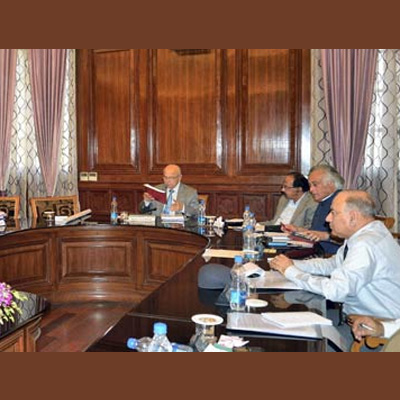
    The Union Cabinet chaired by Prime Minister Narendra Modi said the estimated cost of the project is Rs 1102.38 crore including operational expenses for five years. The project is likely to be completed by December 2018.

    The approval would equip Andaman & Nicobar Islands (ANI) with appropriate bandwidth and telecom connectivity for implementation of e-Governance initiatives; establishment of enterprises & e-commerce facilities. It will also enable the provision of adequate support to educational institutes for knowledge sharing, availability of job opportunities and fulfil the vision of Digital India.

    The Andaman and Nicobar Islands are of immense strategic significance for India. The geographical configuration and the location of the Andaman & Nicobar Islands chain in the Bay of Bengal safeguard India’s eastern seaboard. Provision of secure, reliable, robust, and affordable telecom facilities in these islands is of importance from a strategic point of view to the country and also an important requirement for the socio-economic development of the islands.

    Currently the only medium of providing telecom connectivity between Mainland and Andaman & Nicobar Islands is though satellites, but the bandwidth available is limited to 1 Gbps.

    Satellite bandwidth is very costly and its availability is limited due to which future bandwidth requirement cannot be met solely through it. Then, there is an issue of redundancy, that is, no alternate media is available in case of any emergency. Lack of bandwidth and telecom connectivity is also hampering socio-economic development of the islands. Hence it is essential to have submarine OFC connectivity between the Mainland India and Andaman & Nicobar Islands, being the only option for catering to projected future bandwidth requirements.

  • Digital India: Optical fibre connecting islands to cost Rs 1100 crore

    Digital India: Optical fibre connecting islands to cost Rs 1100 crore

    NEW DELHI: A direct link is to be built through a dedicated submarine Optical Fibre Cable (OFC) to strengthen communication between Mainland (Chennai) and Port Blair and five other islands – Little Andaman, Car Nicobar, Havelock, Kamorta and Great Nicobar.

    The Union Cabinet chaired by Prime Minister Narendra Modi said the estimated cost of the project is Rs 1102.38 crore including operational expenses for five years. The project is likely to be completed by December 2018.

    The approval would equip Andaman & Nicobar Islands (ANI) with appropriate bandwidth and telecom connectivity for implementation of e-Governance initiatives; establishment of enterprises & e-commerce facilities. It will also enable the provision of adequate support to educational institutes for knowledge sharing, availability of job opportunities and fulfil the vision of Digital India.

    The Andaman and Nicobar Islands are of immense strategic significance for India. The geographical configuration and the location of the Andaman & Nicobar Islands chain in the Bay of Bengal safeguard India’s eastern seaboard. Provision of secure, reliable, robust, and affordable telecom facilities in these islands is of importance from a strategic point of view to the country and also an important requirement for the socio-economic development of the islands.

    Currently the only medium of providing telecom connectivity between Mainland and Andaman & Nicobar Islands is though satellites, but the bandwidth available is limited to 1 Gbps.

    Satellite bandwidth is very costly and its availability is limited due to which future bandwidth requirement cannot be met solely through it. Then, there is an issue of redundancy, that is, no alternate media is available in case of any emergency. Lack of bandwidth and telecom connectivity is also hampering socio-economic development of the islands. Hence it is essential to have submarine OFC connectivity between the Mainland India and Andaman & Nicobar Islands, being the only option for catering to projected future bandwidth requirements.

  • IIS review aimed at strengthening cadre

    IIS review aimed at strengthening cadre

    NEW DELHI: The Government has decided to undertake a cadre restructuring of the Indian Information Service (IIS) Group ‘A’ with an aim of better functioning of media and communication arms of government.

    This decision was taken at a meeting of the Union Cabinet chaired by the Prime Minister Narendra Modi today.

    The restructuring will involve addition of two posts at apex level, five at Higher Administrative Grade and 19 posts at Senior Administrative Grade level with matching reduction at other levels.

    The restructuring will address the problem of existing stagnation in the IIS Cadre and will improve the career prospects of IIS officers.

    The announcement after the cabinet meeting said the Cadre review exercise will result in better functioning of media and communication arms of the government.

    The Cadre review comes in the backdrop of ongoing efforts to expand the outreach of pro-people policies of the government and the need to disseminate the information of such measures which have grown manifold in the recent years.

  • IIS review aimed at strengthening cadre

    IIS review aimed at strengthening cadre

    NEW DELHI: The Government has decided to undertake a cadre restructuring of the Indian Information Service (IIS) Group ‘A’ with an aim of better functioning of media and communication arms of government.

    This decision was taken at a meeting of the Union Cabinet chaired by the Prime Minister Narendra Modi today.

    The restructuring will involve addition of two posts at apex level, five at Higher Administrative Grade and 19 posts at Senior Administrative Grade level with matching reduction at other levels.

    The restructuring will address the problem of existing stagnation in the IIS Cadre and will improve the career prospects of IIS officers.

    The announcement after the cabinet meeting said the Cadre review exercise will result in better functioning of media and communication arms of the government.

    The Cadre review comes in the backdrop of ongoing efforts to expand the outreach of pro-people policies of the government and the need to disseminate the information of such measures which have grown manifold in the recent years.

  • Kantar gets stay on cross-shareholding norms; TAM can continue publishing viewership ratings

    Kantar gets stay on cross-shareholding norms; TAM can continue publishing viewership ratings

    NEW DELHI: While declining to stay Policy Guidelines for Television Rating Agencies in India, the Delhi High Court today directed that the sections relating to cross-holding will not come into force till the conclusion of the petition by Kantar Market Research Services, a shareholder of TAM Media Research, the only television viewership rating agency in India.


    Fixing the next date of hearing for 6 March, Justice Manmohan also stayed sections 16.1 and 16.2 of the Guidelines, thus giving freedom to TAM to continue offering its ratings to its clients.


    Taking note of the undertaking by Mr Mukul Rohatgi, senior counsel for Kantar, the Court said TAM would get another two weeks to get registered as required by the Policy Guidelines.

    The Court also took note of the undertaking by Rohatgi that the full list of companies that are associated with TAM and their clients will be placed on the website within two weeks.


    The sections relating to cross-holding which state that the same company cannot hold shares in both TRP companies and the media are 1.7a and 1.7d.


    The earlier deadline for TAM Media Research to get registered under the Policy Guidelines was 15 February.


    When Rohatgi insisted on a stay of the policy guidelines till conclusion of this case, Justice Manmohan and Additional Solicitor General Rajeev Mehra said senior counsel Harish Salve who had argued on behalf of Kantar yesterday had made it clear that he was only fighting the issue of cross-shareholding. In fact, Justice Manmohan said Salve repeated this point at least five times.


    Rohatgi had sought to reiterate the point made by Salve that the policy guidelines had been issued through an executive action without any statutory authority of law.


    While Rohatgi filed an affidavit today listing companies that have a holding in Kantar, he assured the Judge that the list of clients would also be place shortly on the website and filed in the court.


    In his order, the Judge took note of the fact that both Salve and Rohatgi have argued that the guidelines are without the sanction of any statutory body.

    Kantar had argued yesterday that any action relating to fundamental rights had to be done through an act of Parliament and not by an executive order.

    Salve had said any attempt to regulate television rating agencies was tantamount to interfering with the freedom of speech and expression under Article 19(1)(a).


    The provisions of Policy Guidelines for Television Rating Agencies in India that have been stayed are:
     
    1.7 The company shall comply with the following cross holdings requirements.
     
     (a) No single company/ legal entity, either directly or through its associates or inter-connected undertakings, shall have substantial equity holding in rating agencies and broadcasters/advertisers/ advertising agencies.
     
     (d) A promoter company/member of the board of directors of the rating agency cannot have stakes in any broadcaster/ advertiser/advertising agency either directly or through its associates or inter-connected undertakings.
     
    16. PROVISIONS WITH RESPECT TO EXISTING RATING AGENCIES
     
    16.1 These guidelines shall also be applicable to the existing rating agencies.
     
    16.2 No rating agency shall generate and publish ratings till such time that they comply with the provisions of these guidelines.

  • Kantar gets stay on cross-shareholding norms; TAM allowed to publish ratings

    Kantar gets stay on cross-shareholding norms; TAM allowed to publish ratings

    NEW DELHI:  Kantar Market Research Services has managed to get the relief it wanted from the Delhi High Court on the cross-shareholding norms for television rating agencies.


    On a petition by Kantar challenging the government’s cross-shareholding norms for TV ratings agencies, the HC has stayed the operation of four sections — 1.7a, 1.7d, 16.1 and 16.2 — that relate to cross-shareholdings and to publishing of TV viewership ratings  in the Policy Guidelines for Television Rating Agencies in India.


    Kantar had filed the petition as the new policy would have resulted in TAM Media Research, a company it has jointly promoted with Nielsen India, having to shut operations.


    The court has given TAM two weeks to register itself under all the other provisions of the policy that was recently approved by the Cabinet Committee of Economic Affairs and comes into effect from 15 February.


    In addition, the court has also stayed the operation of a clause that prevents existing TV rating agencies from publishing viewership ratings till they company with the provisions of the policy. TAM is the only company in India providing TV viewership ratings.


    The Delhi High Court will hear further arguments in the case on 6 March.


    Meanwhile, TAM has been ordered to place on its website the list of its shareholders and also the list of its clients.


    The provisions of Policy Guidelines for Television Rating Agencies in India that have been stayed are:


    1.7 The company shall comply with the following cross holdings requirements.


     (a) No single company/ legal entity, either directly or through its associates or inter-connected undertakings, shall have substantial equity holding in rating agencies and broadcasters/advertisers/ advertising agencies.


     (d) A promoter company/member of the board of directors of the rating agency cannot have stakes in any broadcaster/ advertiser/advertising agency either directly or through its associates or inter-connected undertakings.


    16. PROVISIONS WITH RESPECT TO EXISTING RATING AGENCIES


    16.1 These guidelines shall also be applicable to the existing rating agencies.


    16.2 No rating agency shall generate and publish ratings till such time that they comply with the provisions of these guidelines.


    Click here for the updated story

  • Kantar argues TV ratings regulation requires legislative action

    Kantar argues TV ratings regulation requires legislative action

    NEW DELHI: Kantar Market Research Services, a promoter of India’s only television ratings agency TAM Media Research, said today that any action relating to fundamental rights had to be done through an act of Parliament and not by an executive order.


    Harish Salve, counsel for Kantar, said during the hearing on his client’s petition in the Delhi High Court against regulations for television ratings agencies that the government should have issued an ordinance and then replaced it with an act of Parliament since any attempt to regulate television ratings agencies was tantamount to interfering with the freedom of speech and expression under Article 19(1)(a). Any order curtailing fundamental rights must have statutory backing, he claimed.


    He said even the Telecom Regulatory Authority of India which had earlier given a report on TV ratings in 2008 and the Parliamentary Standing Committee which had considered the issue later in the same year had been of the view that the government could not tamper with the content. In any case, Salve argued that TRAI was only concerned with carriage and not content and can only make recommendations.


    He wondered why the Government did not act after it received the TRAI report in 2008 to push through legislation on this issue.


    He said the executive order under Article 73 was part of the government’s agenda to push for control of content.
     

    He said there will be a complete blackout of television viewership ratings under new government regulations since the Broadcast Audience Research Council (BARC) was still in the planning stage.
     

    He also said that the law was in any case clear that the government was a licensor for broadcasting and not TAM which was a private rating agency. As a private agency, it could not be told not to have cross-media holding.
     

    While still not granting a stay on the regulations that come into effect from 15 February, Justice Manmohan said he will continue hearing the case tomorrow but may consider ‘interim arrangements’ if the hearing lingers on.


    The Judge also asked Kantar to place on its website the shareholding pattern of various shareholders in TAM since the primary objection taken by Kantar is to the reference to cross-media holding in the proposed regulations.  


    The three respondents Union of India, the Telecom Regulatory Authority of India (TRAI) and the News Broadcasters Association (NBA) have filed their affidavits and will present their views tomorrow on Kantar’s petition for an interim stay. 


    Salve, who concluded his arguments today, said Kantar did not have any cross-holding in the broadcasting sector. He claimed that TAM was operational in 37 countries.
     

    Senior counsel Mukul Rohatgi, who also represented Kantar, said the committee that recommended BARC had itself admitted that TAM was the best rating agency in the country, and had not made any recommendations with regard to cross-media holdings.


    During the last hearing, the judge had wanted to know why TAM was not present itself, and Salve said that the issue of cross-media holdings mentioned in the guidelines affected Kantar which was a major shareholder and not TAM.

  • Delhi HC to further hear Kantar case tomorrow; hints at an interim arrangement

    Delhi HC to further hear Kantar case tomorrow; hints at an interim arrangement

    NEW DELHI: The deadline for implementing the TV ratings agencies policy is inching closer. But Kantar Market Research Services, a shareholder of current and only ratings agency TAM, had decided that it had to challenge the guidelines in the Delhi High Court.


    While still not giving it a stay order today, the court has decided that it will continue hearing the case. The next date of hearing is tomorrow. Kantar counsel today argued that the directive of the ministry on TV ratings guidelines had been done under an executive action, which can be questioned in a court of law. Counsel for Kantar also said that since the Broadcast Audience Research Council (BARC) was still under formation, there would be a total blackout if TAM is not allowed to function.


    Justice Manmohan while hearing the case remarked that though he was in favour of concluding the hearing before 15 February, he would ‘consider issuing an interim arrangement if the hearing goes on longer than that date’. 15 February is when the guidelines will become effective.


    The three respondents Union of India, the Telecom Regulatory Authority of India (TRAI) and the News Broadcasters Association (NBA) will present their case on Kantar’s petition for an interim stay order tomorrow. 


    Click here for the updated story

  • No stay order for Kantar for now: Delhi HC

    No stay order for Kantar for now: Delhi HC

    NEW DELHI: It was just a week ago that one of the shareholders of TAM – Kantar Market Research decided to move the High Court against the TV ratings guidelines. Now, as the case was taken up in the Delhi High Court today, the issue has become a little clearer.
     

    According to the HC, Kantar won’t get a stay order on the petition for now just because the deadline to make the TV ratings guidelines is effective from 15 February. However, Judge Manmohan said that Kantar’s case will be heard again on 11 February and a final decision will be taken then.
     

    Counsel for Kantar, Harish Salve argued that the stay order was necessary as the guidelines were not framed under any statute of law. Additional Solicitor General Rajeev Mehra, appearing on behalf of the Union of India, said that the guidelines had been recommended by the Telecom Regulatory Authority of India (TRAI) which was a statutory body. The judge also remarked the same. Both Mehra and the counsel for TRAI accepted the notice and agreed to file their affidavits within time.


    The other big development in the case was the inclusion of the News Broadcasters Association (NBA) also coming as an intervener and joining the case as the third respondent apart from the Union of India and the TRAI. NBA counsel, A J Bhambhani pointed out that TAM only covered about 8000 homes in India, which doesn’t cover all the TV homes and thus isn’t a complete survey.
     

    Interestingly, the judge curious to know why instead of TAM approaching the court, a stakeholder Kantar has taken the step. To this, Salve said that the move was taken as Kantar is a major shareholder in TAM and the guideline related to cross holding affects Kantar and not TAM.


    Responding to a question posed by the judge, Salve said that TAM had nothing to gain by pushing up the TRPs. Its clients were advertisers and broadcasters and not the common viewer. Any rigs in ratings would be strongly protested against, he said. Salve also brought to the fore that regulations or guidelines need to be placed before the Parliament for approval.
     

    The case will now be heard once again on 11 February with Kantar fighting it out against the government, TRAI and the NBA.


  • BSNL, MTNL to get financial help on surrender of BWA Spectrum

    BSNL, MTNL to get financial help on surrender of BWA Spectrum

    NEW DELHI: Bharat Sanchar Nigam Limited (BSNL) and Mahanagar Telephone Nigam Limited (MTNL) have got the approval for financial support from the Union Cabinet on surrender of Broadband Wireless Access (BWA) spectrum.


    Upfront charges paid for such spectrum would be refunded.


    The objective of this decision is to provide financial support to the extent of one-time upfront charges paid for BWA spectrum for six service areas of BSNL and both service areas of MTNL on surrender of the spectrum. The six licensed service areas of BSNL are Gujarat, Maharashtra, Andhra Pradesh, Karnataka, Tamil Nadu and Kolkata.


    The amount to be refunded to BSNL is Rs 6724.51 crore and Rs 4533.97 crore for MTNL. The refund will be made to ensure support for the revival and revitalisation of BSNL and MTNL in the competitive telecom sector. It shall also help these PSUs to arrange finances to meet basic financial commitments such as operation and maintenance of their telecom network.