Tag: Union Budget 2022

  • Budget 2022: 5G & rural broadband BharatNet to boost overall internet connectivity

    Budget 2022: 5G & rural broadband BharatNet to boost overall internet connectivity

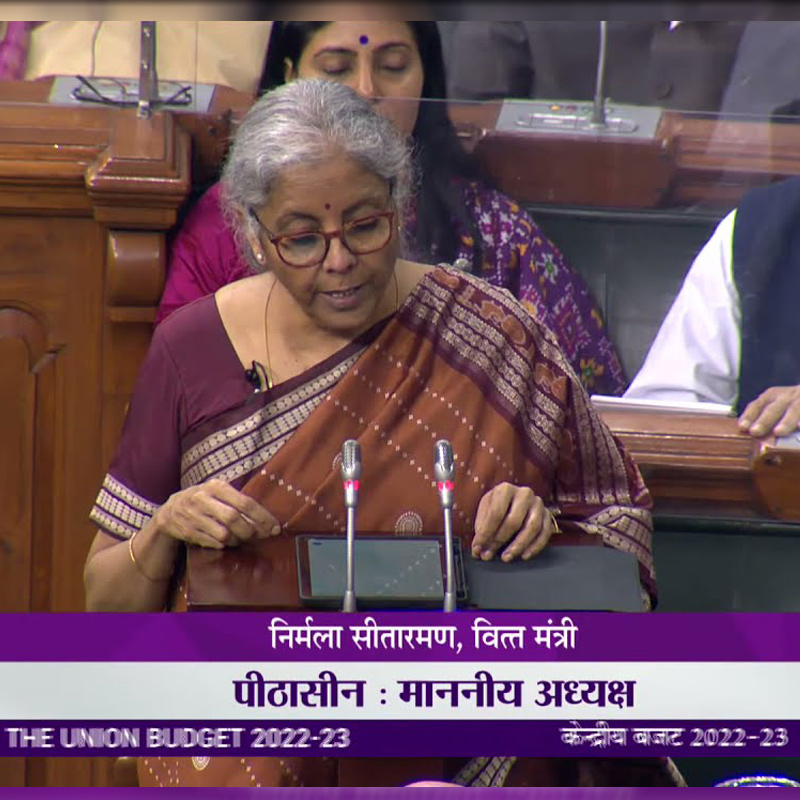
    Mumbai: Giving a boost to the country’s Digital India ambitions, finance minister Nirmala Sitharaman while announcing the union budget 2022 on 1 February said that 5G telecom services will be introduced in India in FY2022-23. Spectrum auctions are likely to be held soon to facilitate the roll-out of 5G by private telecom companies. Design-led initiatives for 5G and other technologies will henceforth be included in the production linked incentive (PLI) scheme, added Sitharaman.

    Among other big announcements impacting telecom/internet connectivity, BharatNet broadband is expected to be ready by 2025. Contracts for laying optical fibres in all villages will be awarded under the project through public-private partnerships in 2022, 2023. “Our vision is that all villages and their residents should have the same access to e-services as urban areas,” stated Sitharaman while adding that five per cent of the annual collections Universal Service Obligation Fund will be allocated to enable affordable broadband and mobile penetration in rural and remote areas.

    The government’s flagship rural broadband connectivity program, BharatNet aims to bring broadband to 361,000 villages across 16 states, including 1.37 lakh gram panchayats. by acting as a middle-mile network allowing Internet service providers (ISPs), local cable operators, MSOs and other agencies to use its bandwidth and incremental fibre.

    According to the economic survey released on 31 January 2022, as on September 2021, 5.46 lakh km Optical Fiber Cable has been laid, a total of 1.73 lakh Gram Panchayats (GP) have been connected by Optical Fiber Cable (OFC) and 1.59 lakh Gram Panchayats are service ready on OFC under the BharatNet project. In addition, 4173 GPs have been connected over satellite media. Wi-Fi hotspots have been installed at 1.04 lakh Gram Panchayats of which services are being provided at 0.64 lakh, catering to more than 16.17 lakh subscribers with a data usage to the tune of 5670.42 TB per month

    The survey further revealed that internet penetration in the country is growing steadily with internet subscribers increasing from 302.33 million in March 2015 to 833.71 million in June 2021. While 67.2 percent of internet subscribers had narrowband connections and 32.8 percent had broadband connections in 2015, the composition had reversed by June 2021 with only 4 percent of subscribers having narrowband and 96 percent with broadband connections. As of September 2021, around 161 villages out of 354 villages have been covered with mobile service.

    Here is what the industry experts had to say:

    Elara Capital’s Karan Taurani noted, “Push towards affordable and high speed fixed broadband internet will boost digital content consumption and smart TV penetration into rural and smaller towns. It will also lead to shifting of eyeballs from TV to digital at a much rapid pace in smaller towns too, just like it has happened in metros.”  This will help enable strong user and consumption growth for the B2C-led internet and new-age companies, which in turn will lead to a rapid shift from traditional to digital. According to him, this could have a positive impact on overall advertising, as internet companies now account for a sizable share of ad spends in India.

    However, Taurani rued the absence of initiatives to protect the interests of traditional media despite the negative impact of Covid. “There was no relaxation on the license fees or royalty for radio industry, no financial grant or tax benefit for the traditional media which has seen a sharp decline over last two years and still struggles to get back to pre Covid levels, and no reduction in GST for cinema ticket prices, despite cinema being one of the most impacted medium during the pandemic,” he said.

    Welcoming the push for internet connectivity, Logicserve Digital founder and CEO Prasad Shejale said, 5G spectrum auctions will finally make the dream of a tech-savvy India a reality, further boosting the country’s digital infrastructure. Additionally, the launch of a design-led manufacturing scheme for the 5G ecosystem as part of the PLI scheme will ensure affordable broadband and mobile communication even in far-flung areas. The availability of high-speed internet connectivity in urban as well as rural areas will encourage marketers to experiment with blockchain, AR, VR. The overall budget is future tech-enabled and balanced.”

    “Media consumption is in for a disruption like never before. 5G is going to change the way digital functions and is going to just accelerate the metaverse and Web3 adoption,” added White Rivers Media CEO and co-founder Shrenik Gandhi.

    Specialised task force for AVGC

    The M&E industry will also benefit from setting up a specialised task force for the promotion of Animation, visual effects, gaming and comics (AVGC) industry, as well as the expansion of the ‘One class, one TV channel’ program of PM eVIDYA from 12 to 200 TV channels proposed under the budget.

    Zeel MD and CEO Punit Goenka said, “The holistic focus on broad-based economic recovery in the Union Budget, with a huge emphasis on job creation and digital ecosystem of the country, is positive for India Inc. at large. The steps announced to build domestic capacity for the Animation, Visual-Effects, Gaming, and Comics segment will certainly help enhance capabilities, enabling the Country to compete more effectively at a global stage. An extension in the credit line guarantee scheme is also a welcome move, which will provide some much-needed relief to the relevant sectors which were impacted due to the pandemic.”

    According to vernacular audio platform Khabri’s co-founder and CEO Pulkit Sharma, regional languages will be empowered through the program, which enables all states to provide supplementary education in regional languages for classes 1 to 12. “These digital initiatives will provide for a more conducive environment for the adoption of tech-based learning and which will directly route to empowering youth from real Bharat,” he said.

  • Budget ’22: India to roll out 5G services in FY23, says FM Nirmala Sitharaman

    Budget ’22: India to roll out 5G services in FY23, says FM Nirmala Sitharaman

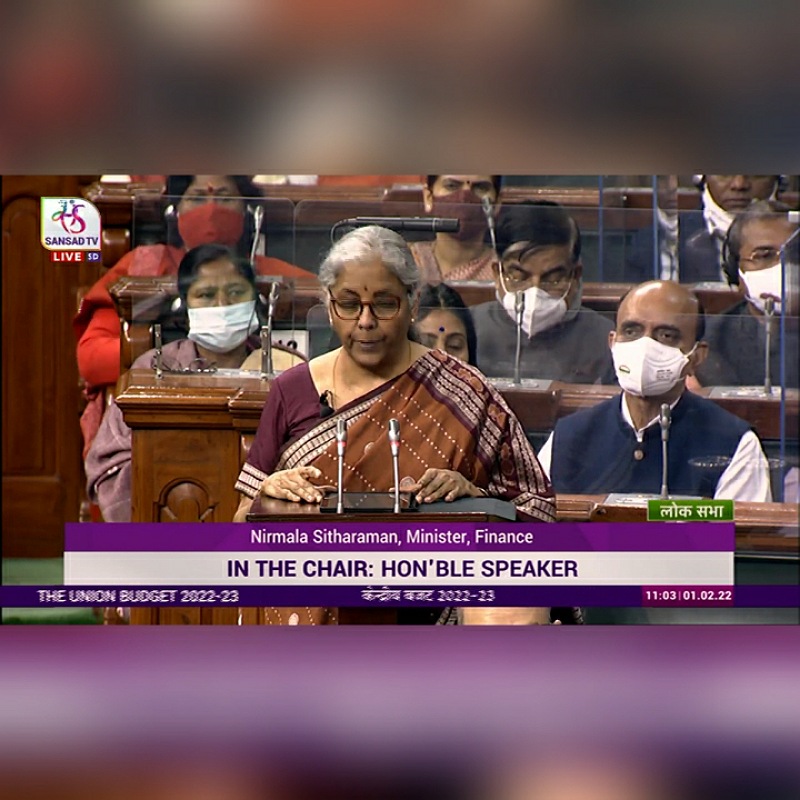
    Mumbai: Finance minister Nirmala Sitharaman on Tuesday announced that the 5G telecom services will be introduced within the financial year 2022-2023. The minister in her union budget 2022 speech said that the auctions will be held in the next fiscal year (FY2022-23), after which private companies are expected to roll out the service.

    The contracts for laying optical fibres will be done through public-private partnerships, Sitharaman further said.

    The minister added that five per cent of the annual collections Universal Service Obligation Fund will be allocated to enable affordable broadband and mobile penetration in rural and remote areas.

    Sitharaman also announced the inclusion of design-led initiatives for 5G and other technologies in the production-linked incentive (PLI) scheme.

  • Budget2022: Govt to set up task force to promote animation, video gaming industry

    Budget2022: Govt to set up task force to promote animation, video gaming industry

    Mumbai: The government has proposed to set up a specialised task force for the promotion of the animation, visual effects, gaming and comics (AVGC) industry. The announcement was made by finance minister Nirmala Sitharaman while presenting the annual budget 2022 on Tuesday.

    “Animation, Visual Effects, Gaming and Comics (AVGC) sector offers immense potential to employ youth. An AVGC promotion task force with all stakeholders will be set up to recommend ways to realise this and build domestic capacity for serving our markets and the global demand,” said Sitharaman.

    The announcement was welcomed by the industry, with Federation of Indian Chambers of Commerce and Industry (FICCI) hailing it as a big win for the sector.

    FICCI chairman – AVGC XR Forum and Punnaryug Artvision founder Ashish SK said that the budget announcement of the formation of task force for AVGC Promotion has come at the most appropriate time. “After setting a strong foundation in the last two decades the Indian AVGC – XR is poised to grow phenomenally in coming decade. The creative skills from India needs nurturing to a great extend to enable the growth of the sector. Setting up of a task force will definitely bring in a great focus on positioning Indian AVGC sector for services exports, co-productions, growth of Indigenous intellectual property and its consumption patterns within India and overseas,” he said.

    According to industry representatives, the Indian AVGC – XR sector is expected to have a major share of the media and entertainment industry. The horizon and use cases of AVGC – XR verticals have expanded beyond its day-to-day defined utility in architecture, life science, legal, education, industrial, urban planning, sports, digital universe, metaverse etc apart from media & entertainment.

    “The AVGC task force is a huge step by the government to promote the sector. We wholeheartedly welcome it and FICCI AVGC-XR Forum will continue to work closely with the government on various policy initiatives to realise the growth potential of the Industry. This industry vertical has tremendous scope for employment generation and exports,” said FICCI co-chairman – AVGC- XR Forum, and Graphiti Studio founder Munjal Shroff.

    In its latest report released last month, the Confederation of Indian Industry (CII) and Boston Consulting Group (BCG) had also projected that India’s media and entertainment industry which is currently valued at around $27 billion is all set to grow at 10-12 per cent CAGR to become a $55-70 billion industry by 2030. The report had also highlighted that the industry’s next phase of growth will be led by OTT, gaming, VFX and animation.

    The finance minister said the union budget seeks to lay a foundation and give blueprint of the economy over the next 25 years – from India at 75 to India at 100.

  • Expectations Budget ’22: Fuel prices, medical expenses remain major concerns shows Kantar survey

    Expectations Budget ’22: Fuel prices, medical expenses remain major concerns shows Kantar survey

    Mumbai: With the third wave of pandemic raging on, the majority of consumers expect the government to increase focus on strengthening the healthcare infrastructure, showed the latest pre-budget survey conducted by data insights company Kantar.

    According to the survey conducted across 12 cities, healthcare tops consumers’ concerns, followed by mounting medical expenses, and fuel prices. In a telling indicator of the increased health care expenses over the last two years, 53 per cent of consumers, especially those from non-metro cities, said they expect an increase in deductions for their medical/health insurance.

    The rising fuel prices too have also taken a toll. At least 72 per cent of the people surveyed expect the government to bring petrol and diesel under the ambit of GST to bring down the fuel costs. With increased focus on climate change and sustainable living, 60 per cent of consumers expect the government to prioritise subsidies on electric vehicles in the coming year.

    Tax Deductions

    With respect to consumer expectations in terms of tax deductions, investments under 80C covering multiple investment options emerged at the first rank with 60 per cent claiming they want an increase in deductions from the same. The younger, affluent salaried class consumers seemed to have a higher desire (65 per cent) for this, as compared to mass consumers (57 per cent), according to the survey.

    Home Loan EMI emerged third with 39 per cent of consumers seeking an increase in tax deduction on their Home Loan EMI’s. A higher skew for this increase was seen in metros at 41 per cent.

    “As we step into the third year of the pandemic, the public wants the government to further invest in public health infrastructure and other favourable policies like tax deductions for insurance, which help alleviate the burden of medical expenses. Concerns about fuel prices come through, as does a desire that the government should help us wean ourselves off dependency on dirty and ever more expensive fossil fuels, through e-vehicle subsidies,” said Kantar executive managing director- South Asia, Insights Division Deepender Rana.

    Cryptocurrency

    Cryptocurrency as an investment avenue is expected to continue making noise this year as well. Intention to invest in cryptocurrency also showed a jump to 32 per cent, as against 19 per cent in July 2021, possibly driven by awareness and exposure that advertising and celebrity endorsements have generated over the last few months. Millennials seem to be keener on trying this new investment avenue as their intention to invest is higher at 32 per cent as compared to those in the age group of 36-55 years which is at 26 per cent.

    “As cryptocurrencies take off and the government mulls a tax on crypto transactions, investors want the government to play a role in encouraging yet regulating these innovative finance instruments through India’s own cryptocurrency,” added Rana.

    Majority expect India to launch its own official cryptocurrency in 2022. There is an overwhelming preference towards investing in India’s cryptocurrency with 79 per cent claiming to invest in that over existing cryptocurrencies like Bitcoin, Ethereum, Dogecoin etc. This is driven by the perceptions of it being more secure due to clear regulations laid down by RBI.

    Interestingly, the survey also indicates that consumers are leaning towards adopting the new tax regime since it came into existence on 1 April 2020. At least 55 per cent said that they intend to choose the new tax regime in 2022.

    The survey mapped consumer sentiments and expectations from the union budget, scheduled to be unveiled on 1 February. As many as 1419 consumers aged between 21-55 years including a mix of salaried and business owners as well as mass and affluent class from the metro & non-metro cities were interviewed from Mumbai, Delhi, Chennai, Kolkata, Pune, Hyderabad, Bangalore, Ahmedabad, Indore, Patna, Jaipur, and Lucknow.