Tag: Union Budget

  • How CNBC-Awaaz managing editor Anuj Singhal sees Budget 2025 panning out

    How CNBC-Awaaz managing editor Anuj Singhal sees Budget 2025 panning out

    MUMBAI: Hindi business news channel CNBC-Awaaz  has budgeted oodles of programming and innovations as it seeks to give its viewers a simplified rendition of the Union  Budget when it is presented by finance minister Nirmala Sitharaman. 

    The channel’s managing editor Anuj Singhal shared his views on the upcoming Budget 2025 and detailed the channel’s comprehensive programming strategy to decode its impact on the economy and markets.

    Reflecting on the previous year’s budget, Singhal noted, “The 2024 Budget was essentially a vote-on-account, but significant announcements like the rationalisation of capital gains tax stood out. We expect the government to continue streamlining the tax structure and closing existing loopholes.”

    Singhal emphasised CNBC-Awaaz’s audience-focused approach under the theme Make or Break, aimed at day traders and investors closely tracking budget announcements. He highlighted the inclusion of expert panels, such as the Budget Editors, featuring CEOs and market specialists dissecting budget impacts on stocks and investments. The Budget Jury will cover tax, mutual funds, and broader market trends from both common investor and market perspectives. Additionally, a Tech Panchayat  will provide real-time stock trading insights based on budget developments.

    Addressing the challenge from digital-first competitors, Singhal revealed plans for a digital-exclusive stream featuring prominent anchors and experts on YouTube and other platforms. “We are fully leveraging our position as the number one digital business news platform in terms of reach,” he said.

    Singhal assured viewers of CNBC-Awaaz’s capability to track market reactions in real-time. “Our anchors live and breathe markets. We’ll keep one eye on the budget and the other on live stock movements, ensuring our audience doesn’t miss a single detail.”

    Special formats, including interactive charts and live market check-ins, will further enrich the coverage.
    On anticipated policy changes, Singhal was cautious: “We do not foresee a significant policy shift. The government’s prudent fiscal approach has served it well. Any major change would indeed be surprising.”

    With a robust line-up of expert opinions and digital innovations, CNBC-Awaaz aims to provide unmatched coverage of Budget 2025, empowering traders and investors with actionable insights.

  •  Zee Business launches Budget Get Set Grow special series for Union Budget 2025

     Zee Business launches Budget Get Set Grow special series for Union Budget 2025

    MUMBAI: It’s getting down to business about the budget. Zee Business is set to air its special programming series Budget Get Set Grow on 1 February 2025, starting at 7 AM. The series aims to decode the Union Budget 2025, offering in-depth analysis of its impact on the economy, businesses, and citizens.

    The programme will feature expert panels comprising economists, policymakers, and industry leaders who will break down key budget proposals and their implications. Sector-specific insights will cover infrastructure, manufacturing, green energy, and technology, providing a comprehensive understanding of the budget’s potential to drive growth and foster innovation.

    In addition to expert-driven discussions, the series will provide real-time perspectives to help viewers understand how fiscal policies affect everyday lives. The coverage aims to empower businesses and investors with actionable insights to navigate the evolving economic landscape.

    Zee Business managing editor  Anil Singhvi said: “The budget is a crucial step in shaping India’s economic journey. Budget Get Set Grow is designed to simplify and analyse the budget’s potential, enabling viewers to plan for a brighter future with confidence.”

    Zee Media CEO  Karan Abhishek Singh added: “The Union Budget represents a vision for India’s future. With Budget Get Set Grow, we are dedicated to delivering credible and insightful coverage that breaks down the budget’s impact across key sectors and industries.”

    Viewers can catch the live broadcast on Zee Business and stay informed about the government’s vision for sustainable development, innovation, and inclusive growth.

  • Times Now claims leadership during union budget week

    Times Now claims leadership during union budget week

    Mumbai: Times Now is claiming supremacy in the English news channel category during budget week with a 34.3 per cent viewership share (Source: BARC| 10L+| NCCS AB 22+| Wk.30 2024) and an impressive 12,48,000 reach (Source: BARC| 10L+| NCCS AB 22+| Wk.30 2024).

    A press release issued by it states that its budget coverage “stood out for its extensive and comprehensive programming, featuring detailed infographics highlighting key economic indicators, sector-wise expectations, and significant announcements.”

    The channel has also stated that it was  “No 1 on budget day, dominating the genre with a 33.7 per cent viewership share (Source: BARC| 10L+| NCCS AB 22+| 23 July 2024).”

    Times Now has further claimed that it became the preferred choice amongst viewers for budget-related news thanks to its seasoned journalists and strategic content. During finance minister Nirmala Sitharaman’s speech, it said that it registered a 34 per cent viewership share, “the highest in the genre” (Source: BARC| 10L+| NCCS AB 22+| 23 July 2024, 11 AM – 12 Noon),  Real-time graphical analysis of the speech kept viewers informed on the budget’s implications, making this the most crucial hour of the day with a reach of 44,000 (Source: BARC| 10L+| NCCS AB 22+| 23 July 2024, 11 AM – 12 Noon).

    Times Now’s union budget programming featured examinations of the Indian economy and its challenges during pre-budget discussions. Key panel discussions offered crucial insights into the budget, with tax experts Rohinton Sidhwa and Saloni Roy decoding its significance for various sectors, industries, and the middle class.

    Former chief economic advisor KV Subramanian provided perspectives on expected reforms, while representatives from industry bodies like CII outlined their demands from the government.

    Prominent government personalities, including union minister of commerce and industry Piyush Goyal, minister of petroleum and natural gas Hardeep Singh Puri and minister of railways and information & broadcasting Ashwini Vaishnaw, along with top departmental secretaries and opposition voices, shared exclusive insights on the budget.

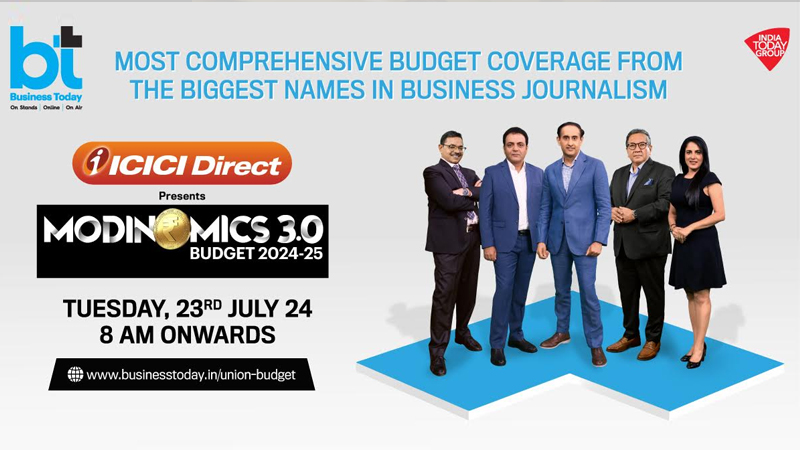
  • Modinomics 3.0: All set for Budget 2024-25 with Business Today

    Modinomics 3.0: All set for Budget 2024-25 with Business Today

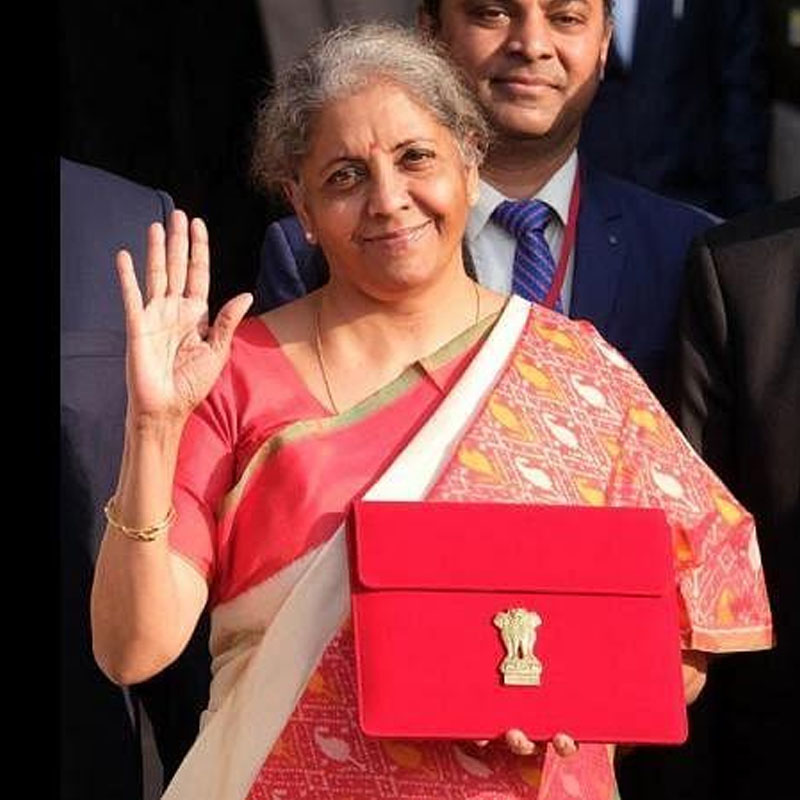
    Mumbai: The stage is set for the first Budget of prime minister Narendra Modi’s third term. Union finance minister Nirmala Sitharaman will deliver her seventh Union Budget on Tuesday, 23 July. As anticipation builds up for this crucial event, Business Today has geared up to provide an in-depth analysis of the Budget fine print.

    Business Today’s ‘Modinomics 3.0’ coverage focuses on the expectations in a time of changed political alignments, around issues like the need for tax breaks, prudence versus populism, and the need to boost jobs and ensure growth. Supporting India’s Aatmanirbhar stock market and helping people earn, invest and prosper is also part of the detailed coverage.

    From changes in direct taxes to pushing infrastructure and manufacturing, from a new deal for agriculture to social welfare—this Budget has many expectations rising.

    Business Today will be there to track the nuances of the Budget. BT also welcomes its Presenting Partner ICICI Direct for its high-impact Budget Special Modinomics 3.0.

    I-Sec operates www.icicidirect.com, a virtual financial supermarket, meeting the three needs sets of its clients—investments, protection, and borrowing. Through its four lines of businesses—broking, distribution of financial products, wealth management, and investment banking—I-Sec serves customers ranging from retail and institutional investors to corporates, high net-worth individuals and the government.

    Business Today’s 360° offerings span print, digital, livestream, VoD, social media, OOH, and brand partnerships to ensure its exclusive content reaches a wider audience and offers insights for decision-makers.

    It’s the most comprehensive Budget coverage from the biggest names in business journalism, ensuring a thorough understanding of the fiscal landscape and its implications.

    Tune in to all the action across the Business Today multiverse and get in-depth information as the budget starts and ends with BT.

  • Zee Business becomes viewers’ top choice for Budget Day 2022

    Zee Business becomes viewers’ top choice for Budget Day 2022

    Mumbai: For the biggest event of the year – the budget 2022 coverage, Zee Business had planned way ahead of the competition and was the first to decode the ‘Growth Booster’ tagline and this was adapted by other channels, websites and publications, said the business news channel. Zee Business had planned the programme keeping in view the expectation of the viewers and this helped the channel reach them on multiple platforms. 

    “It is not an ordinary achievement that a channel got ahead of a popular general news channel in the country and Zee Business has accomplished a historic feat and has become the top choice of viewers for union budget coverage and it was top watched channel on YouTube livestream in India ahead of Aaj Tak, CNBC Awaaz and other channels for the FM budget speech and peak concurrent. The highest number of viewers during the budget coverage livestream had crossed over 104K for Zee Business, a phenomenal achievement for any news channel,” said the channel in a statement.

    On Facebook, Zee Business was top business news channel in India in terms of both interactions and views on Budget Day. The hashtags #BudgetOnZee and #GrowthBoosterZee were trending on first and second spots briefly on Budget Day on Twitter that showed the support of its viewers on the channel.

    Everyone in Zee Business team had worked hard and has had their share of contribution in making this a special budget coverage for the channel. It was a very well-coordinated effort of the editorial team and marketing team to push the promos and content heavily on the channel and rope in support from the Zee Media Network in days ahead of budget. The exclusive lineup of guests on air leading to the Budget Day, on Budget Day and post-budget was crucial ensuring the viewers are glued to the channel. 

    The marketing team activated the Zee Media Network to push, like, comment the content published by Zee Business on various platforms ensuring that the hashtags were trending on Budget Day. Running a contest on the channel and regular announcements on air of the contest winners helped in getting the necessary chatter about the expectations from the union budget on various platforms and helping people aware of the mega event and trend on Twitter. Such events teach us that well-coordinated  and hard work pays off. In this case Zee Business has left an impression in the minds of the viewers that budget means Zee Business.

    Zee Business yet again proved to be India’s go to channel for profit and wealth as it offers ‘information’ and ‘insight’ and brings business and economy coverage. It has dynamic and innovative programming that is devised by understanding the pulse of the market and makes complex news simple.

  • Budget 2022: A clear push towards a digital economy, start-ups

    Budget 2022: A clear push towards a digital economy, start-ups

    Mumbai: Finance minister Nirmala Sitharaman on Tuesday presented the Union Budget 2022 in Parliament. The minister said that the country is set to clock an economic growth rate of 9.2 per cent in the current financial year, in what was her shortest Budget speech yet. While the budget made no tax concessions for the salaried class, some of the key areas it focussed on was a push towards a digital economy, and start-up ecosystem.

    The FM proposed a 30 per cent tax on income from transactions of cryptocurrencies and other virtual assets. Also, to bring such assets under the tax net, Sitharaman proposed a one per cent TDS (tax deducted at source) on transactions in such asset classes above a certain threshold, while also including gifts in crypto and digital assets in the to-be taxed list.

    Sitharam also said that the Reserve Bank of India (RBI) will launch a ‘Digital Rupee’ based on blockchain technology in 2022-23. The Central Bank Digital Currency (CBDC), according to the finance minister, will provide a significant boost to the digital economy and lead to a more efficient and cost-effective currency management system.

    The FM also announced the extension of the Emergency Credit Line Guarantee Scheme (ECLGS) that provided additional credit to over 1.3 crore MSMEs till March 2023. Additionally, its guarantee cover has been expanded by Rs 50,000 crore to Rs 5 lakh crore. Apart from this, in a year riddled with mental health well-being concerns amid the pandemic, FM Sitharaman announced the launch of a ‘National Tele Mental Health Programme’ for better access to quality mental health counselling and care services, in a move that signifies the normalising of mental health as a legitimate area of focus for us as a nation.

    Industry reactions on the Union Budget have been pouring in, and most of the industry stakeholders saw the twin announcements of the digital rupee and the taxation on “virtual digital assets” as a focused drive from the government to regulate the crypto space. Some felt that regulating a decentralised space is a paradox in itself, and took the cautious approach by saying how this plays out needs to be seen.

    Here is what the industry experts had to say:

    CoinSwitch founder and CEO Ashish Singhal who is also the co-chair of Blockchain and Crypto Assets Council (BACC) welcomed the government’s decision to introduce central bank digital currency (CBDC) to accelerate digitisation. Calling it the ‘the gateway to the future decentralised world, aka Web3.0’, he said, “The budget provides clarity on taxation and shows the government’s intent to take a business-friendly approach while protecting the interest of consumers and the exchequer. The regulatory guidance on tax from the government furthers the mainstreaming excitement of this emerging asset class with over $6bn worth of investments in India. Hopefully, this will induct more digital-savvy Indians into the financial ecosystem willing to explore newer forms of investing and wealth creation.”

    OKX.com CEO Jay Hao believes that India is slightly lagging in the digital currency race mainly due to the regulatory hurdles and reluctance in accepting the growing popularity of digital assets/digital currency around the world. “If we look at the global scenario, central banks around the globe have already launched or are about to launch their digital currency,” said Hao, adding that he hoped the announcement made regarding CBDC is implemented without any further delay as it will give a much-needed push to the blockchain industry in India. He also asserted that higher taxes may discourage investors from choosing crypto as an investment avenue and delay the mass adoption of crypto assets in India.

    CoinDCX co-founder and CEO Sumit Gupta hailed taxation of Virtual Digital Assets or Crypto as a step in the right direction. According to him, this will give a much-needed clarity and confidence to the industry. The introduction of CBDC sends a clear signal of India being a digital-first, efficiency-driven, and transparency-led system, he added.

    Mudrex CEO and co-founder Edul Patel also termed it as a progressive step towards boosting crypto adoption in the coming years. The sentiment was shared by other industry executives who felt the government legitimatised crypto assets in India in an indirect way by coming out to tax the same.

    Dentsu India chief client officer Narayan Devanathan said the budget is “future-focused, aiming at the distant vision of India@100”, instead of being focussed on the present. Expressing dismay over the omission of much-needed concessions in critical sectors like health, Devanathan said, “A punishing 2021 for the aam aadmi with more-than-usual expenditure on health and sustenance meant the general populace was looking for immediate relief that would place more cash in their household budgets. That did not happen. Nor was there any extraordinary investment in relieving the healthcare expenditure burden. Even the MSME sectors were only handed a slightly longer lease of life with the extension of the ECLGS, but there was no real move to stimulate consumption by placing more cash at consumers’ disposal, for example, extending LTA claims to restaurants (and not just accommodation).”

    According to Blink Digital co-founder and COO Rikki Agarwal the government sent mixed signals with its proposed announcement of a new digital rupee powered by blockchain technology and taxing digital assets. While the move has cleared the impending ambiguity around the cryptocurrencies in India, signifying its acceptance as an asset and legalising it to boost the economy, imposing heavy taxes on digital assets is an indication that the government intends to discourage the same, he says, adding, “We will wait for more clarity on the regulations.”

    Wunderman Thompson South Asia CEO Shams Jasani said the budget highlighted that government is finally recognising that digital is getting to be bigger and bigger. “With so much talk on digitisation I think the digital revolution has already come in India. And the sheer push on digital infrastructure in the country will help a lot more content consumption and a lot more content creation as well. Also, the reach of the medium is going to grow into the rural areas and smaller towns & cities,” he said, adding that, “Governments across the world are going to ultimately get into the digitalisation of currencies, backed by Crypto technology or blockchain technology, and that is the future of currencies. So that is going to take off and that will also legitimise the whole idea of cryptocurrencies in India.”

    DDB Mudra Group chief operating officer and chief financial officer Anurag Bansal opined that the Union Budget looks neutral, with no major changes in taxation, adding that the launch of digital Rupee based on blockchain technology is a big move to bring in official cryptocurrency in India. Managing the Fiscal deficit while pushing for growth and investments is a great balancing act taken on by the government, he feels; one that will give a boost to capital investments and infrastructure development.

    White Rivers Media CEO and co-founder Shrenik Gandhi termed the budget as ‘fairly balanced’ in that there is sufficient emphasis being laid on up-skilling, and making right investments in tech which is the need of the hour. Speaking of the expected benefits, he added, “Let’s not forget that this is India’s #Budget and not a Big Bazaar scheme announcement. So, the immediate benefit may not be seen right now but considering the long-term narrative, it is a fairly established budget.”

    According to Publicic Groupe South Asia CEO Anupriya Acharaya, the Budget was positive, growth-oriented and with reforms in the right direction. “The advent of 5G is sure to transform communications – for our industry it will help the creation of better AV, voice and AR/VR experiences. It will also fuel digital payments, streaming entertainment, gaming, e-commerce, tele-medicine etc which in turn will aid more Unicorns! From e-passports, to battery swapping for electric vehicles, setting up of optic fiber in villages, setting up of a digital university and skilling through an e-portal, the big push is for technology, digital infrastructure and empowerment,” she added.

    Parle Products senior category head Mayank Shah said putting money in the hands of consumers really helps, so they go out and buy products. “So that was more on the front of ensuring that the demand remained robust given that we have gone through two years of pandemic. That was something that industry expected, either by tax cut, or by increasing the slabs tax brackets or by probably increasing the standard deduction limit. Those were the things that we expected but not much has been done there.”

    Thomas Cook (India) MD Madhavan Menon said the budget was disappointing from a Travel & Tourism perspective. “The Budget made no reference to the industry’s recommendations to aid revival, including rationalisation of taxes (a complete GST holiday, exemption of TCS on outbound tours, reduction in indirect taxes), removal of SIES benefit capping of Rs 5 cr,” he said.

    Mad Over Donuts ED Tarak Bhattacharya also rued that the budget gave no attention to the hospitality industry in particular. “Our industry continues to bear the brunt of the pandemic, probably more than a lot of other sectors. We were hoping for some relief or some measures that would help the industry in the months and years to come,” he said.

    Food and Beverage startup Wat-a-Burger co-founder & CEO Farman Beig said the government has been supportive towards the F & B sector and did announce some steps to help the sector bounce back by shifting the GST compliance onto online food delivery partners on behalf of the restaurants. “However, some relief in terms of ITC (Input tax credit) would have further catalysed the recovery of the sector which otherwise is on the bleeding end. Currently, when the industry is struggling to manage the fixed cost with GST, it requires immediate boost, and cutting down ITC would have worked wonders,” he added.

    TCL India head of marketing Vijay Kumar Mikkilineni welcomed the FM’s increased focus on the consumer electronics industry and formation technology. “The 2022 Union Budget allocated 1.97 lakh crore ($26 billion) for PLI projects, notably electronic components, which are among the 13 vital sectors that would undoubtedly help our economy expand. Furthermore, reduced customs taxes will encourage electronics manufacture, which will benefit the electronics industry,” he said.

    CEO of SPPL – exclusive licensee of Thomson in India Avneet Singh Marwah said, “This budget has been more like announcements and slogans. I’m surprised how FM missed on health and education, which are two main pillars of the economy, despite the pandemic. On one hand the government talks about how electronics will contribute one trillion to the economy and on the other for consumer electronics no major announcements, no roadmaps have been given to the industry.”

  • ET Now and ET Now Swadesh unveil budget day programming

    ET Now and ET Now Swadesh unveil budget day programming

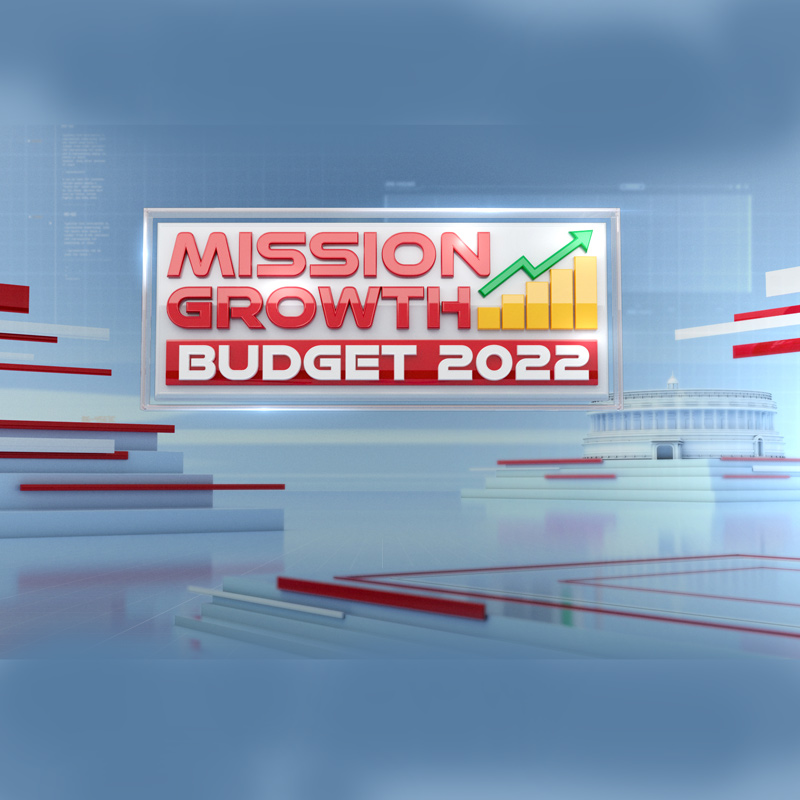
    Mumbai: ET Now and ET Now Swadesh have announced exclusive budget-day programming under the theme ‘Mission Growth: Budget 2022.’ The curated lineup of shows will commence from 7 a.m on 1 February.

    The channel will leverage technology and AR graphics to present a simplified budget analysis. The live coverage will commence with the finance minister’s speech followed by an in-depth analysis of budget 2022-23 by ET Now and ET Now Swadesh managing editor Nikunj Dalmia.

    This will be followed by an exclusive segment with Indian economist, journalist and columnist Swaminathan Aiyar. A panel of experts including HDFC Life MD and CEO, DLF whole-time director and CEO Ashok Tyagi, M&M executive director (auto and farm sectors) Rajesh Jejurikar, Fortis Healthcare MD and CEO Ashutosh Raghuvanshi, SBI former chairman Rajnish Kumar will analyse the budget.  

    A panel featuring HDFC Asset Management Company ED and CIO Prashant Jain, market veterans Madhusudan Kela and Shankar Sharma, Aditya Birla Sun Life AMC MD and CEO A Balasubramanian, ICICI Prudential AMC ED and CIO S Naren will offer insights on post-budget investment strategy and wealth creation.  

    ET Now consulting editor Mythili Bhusnurmath will present a segment on the story behind the budget numbers and will help viewers understand the budget undertone. An expert team from Deloitte India will share their top takes from the budget.

    The two channels are also running a slew of digital and on-air short format video content that will simplify the union budget. A segment called ‘Aasaan Bhaasha Me’ will help viewers get a better sense of this year’s budget and round up all budget-related highlights.

    “Jayant Sir Ki Class” a show featuring former minister of state for finance Jayant Sinha will explain concepts, terms, and de-jargonise the budget. The show will air on the channels as well as social media platforms.  

    The channels have also announced an on-air contest “Budget Master” starting on 1 February where participants can enter the contest by watching the channels and answering questions asked every hour between 9 a.m and 2 p.m. “Five winners will be selected and gratified with an iPhone,” said the channel in a statement.

  • Budget 2020 proposals offer few benefits to M&E industry: EY India

    Budget 2020 proposals offer few benefits to M&E industry: EY India

    MUMBAI: As always, the industry's hopes from union budget 2020 were high. According to a report from EY India while the budget proposals offer few benefits to the industry, some of the changes may have a material impact which will need to be assessed.

    “The budget proposals will provide relief to the foreign companies earning income such as license fees from making compliances in India, provide clarity and do away with avoidable tax litigation through reduction in withholding tax rate for technical fees as well as withholding tax provisions for e-commerce operators. New media and digital business qualifying under start up incentives will get additional impetus from the measures proposed. Reduction in newsprint import duties will help print industry which is going through a tough business cycle. Tax amnesty scheme for resolution of pending litigation offers an opportunity to reassess the tax game in the country,” the report adds.

    The report states that the proposed alternate personal tax regime will be relevant to mass employment by the industry in its content production processes, however, it is difficult to determine whether the regime will provide a material differential cash surplus to the employed.

    It also adds that expansion of domestic tax regime will lead to tax uncertainty for foreign companies with no resource to any credible advance ruling mechanism which will allow them to understand their tax position upfront.

    “Removal of exclusion relating to theatrical receipts would certainly put pressure on the finances of the film businesses with a 10 per cent withholding tax rate and increase their compliance burden. The uncertainty attached to film business certainly makes a strong case for a rate much lower than applicable 10 per cent withholding tax rate. Increase in import duties will lead to increased cost for businesses,” it adds.

    Key impacts:

    ·  Withholding tax rate on “fees for technical services” reduced from 10 per cent to 2 per cent, reducing potential litigation on withholding tax rate on content production services and certain other services which do not qualify as “professional services”.

    ·  Exclusion of consideration from “sale, distribution or exhibition of cinematographic films” removed from “royalty” definition that may make theatrical and other receipts from exploitation of cinematographic films taxable and subject to withholding tax at 10 per cent.

    ·  Expansion of domestic source rule will bring to tax income of a nonresident from (i) advertisements targeted at a customer located in India

    (ii) sale of data collected from a person in India and (iii) sale of goods or services using data of customer located in India.

    ·  The list of services subject to Equalisation Levy provisions remain unchanged.

    ·  Exemption provided to non-residents earning royalty and fees for technical services from the requirement of filing a return of income, subject to fulfilment of stated conditions.

    ·  Relief provided d to the print industry by reduction in customs duty on newsprint and paper.

  • CNBC-TV18 steals a march over the rest, this Union Budget with its remarkable marketing initiatives

    CNBC-TV18 steals a march over the rest, this Union Budget with its remarkable marketing initiatives

    MUMBAI: With an aim to stay ahead of other brands, CNBC-TV18, India’s leading business news platform conceptualized and executed a host of marketing initiatives communicated via Brand partnership, Outdoor innovation and Social media campaigns. Laying impetus on constantly innovating and evolving themselves to resonate with today’s well-informed audiences, the channel has not only grabbed the audience’s attention by offering them content that is authentic and comes with industry perspective, but have once again cemented their position as one of the most-reliable names/leaders in the business and finance sector.

    One of their ground-breaking activities see them in a brand partnership with the hospitality chain Socials café, where they have ingeniously positioned CNBC-TV18 as the headquarters for the Union Budget. This activity sees them place swatch tags on the food tables across metros, with contextual messaging co-relating the Budget to eating out. Some of the messages read as “Understand how Budget 2020 will impact your restaurant bills” and “How will Budget 2020 will impact your social plans”.

    The brand has put its best foot forward in their outdoor advertising campaigns as their OOH hoardings exemplify the brand’s ethos of always having something creative to offer. The innovative campaign has billboards based on icons. The icons indicating various products and services turned green (cheaper) and red (costlier) – alternatively ahead of the Budget building curiosity on the potential implication on the pricing of these goods/services.

    In an attempt to connect with the millennial audience, the social media campaign was simple and direct to the point. With a creative message that defines how this Budget is expected to impact the consumer, the brand enlightens its viewers on its gravitas. The set of interesting creatives depicts that Union Budget commands your discretionary spends and lifestyle choices. One such creative simplifies the concept by comparing an international holiday to a local one.

    Network18 English Business News Cluster CEO Basant Dhawan  said, “In a bid to stay relevant to ever-evolving consumers, we have come up with these unique initiatives. Keeping consumers at the center of the Union Budget, we intend to help them understand the implications of the Union Budget in their daily lives. These initiatives will help re-emphasize CNBC-TV18 as India’s Budget Headquarters.”

  • English News viewership decline continues in week 3 of 2020

    English News viewership decline continues in week 3 of 2020

    BENGALURU: Viewership of English News channels continued a downward spiral in in week 3 of 2020 (Saturday, 18 January 2020 to Friday, 24 January 2020, week under review). Analysis of Broadcast Audience Research Council of India (BARC) data of 44 weeks between week 13 of 2019 and week 3 of 2020 reveals that the four week combined average viewership of the top 5 English News channels declined 23 percent for week 53 of 2019 and week 3 of 2020  (4 week period under review) to 1.724 million weekly impressions as compared to the average combined viewership of the 44 week period of 2.235 million weekly impressions. Viewership during the period under review declined 15.1 percent from 2.032 million weekly impressions calculated for the immediate trailing 4 week period (week 49 to week 52 of 2019).

    The last few weeks have been reasonably eventful. Among the newsworthy happenings include the fact that the fall out of the Citizenship Amendment Act is still unfolding, not only in India but in other geographies as well. Further, assembly elections for the state of Delhi have been announced, the lawyers of the condemned Nirbhaya rapists managed to delay their executions to the first of February. Please refer to the figure below for the four week average of combined ratings of top 5 English News channels between weeks 13 of 2019 and 3 of 2020.

    It must be noted that BARC had stopped publishing data in the public domain between weeks 6 and 12 of 2019 to allow for ratings to stabilize after the implementation of Telecom Regulatory Authority of India (TRAI) New Tariff Order (NTO), hence data between weeks 13 of 2019 and 3 of 2020 has been considered in this paper. Though the combined ratings of the top 5 English News channels in week 3 of 2020 were slightly higher than those of the immediate trailing week (week 2 of 2020), they were 24 percent lower than the 44 week average.

    The figure below shows that combined ratings of the top 5 English News channels between week 13 of 2019 and week 3 of 2020.

    Week 3 of 2020

    Ranks 1, 2  and were held by the same channels in week 3 of 2020 as in the previous week – Republic TV, Times Now and India Today TV retained places 1, 2 and 3 respectively. DD India pushed its way to fourth rank from fifth rank in week 3 of 2020,  while CNN News18 dropped to fifth place from fourth. Please refer to the figure below: 

    Two channels lost viewership in week 3 of 2020 – CNN News18 and Republic TV as compared to the previous week, while the other 3 made slight gains. Arnab Goswami’sfirst placed Republic TV saw viewership decline by 5 percent to 0.568 million weekly impressions from 0.598 million. At rank two, Times Now saw viewership climb 11 percent to 0.472 million weekly impressions from 0.425 million weekly impressions. Third ranked India Today Television saw  viewership increase 4.3 percent to 0.265 million weekly impressions in week 3 of 2020 from 0.254 million weekly impressions in week 2. At rank 4, DD India saw viewership rise 7.3 percent to 0.207 million weekly impressions in week 3 of 2020 from 0.193 million weekly impressions in the previous week. CNN News18 saw ratings decline 12.3 percent to 0.186 million weekly impressions  in week 3 of 2020 from 0.212 million weekly impressions in week 2.

    Please refer to the figure below: