Tag: Union

  • Netflix boasts eye-watering viewing figures

    Netflix boasts eye-watering viewing figures

    MUMBAI:  Netflix, the streaming behemoth that enjoys reminding us all that it was first to the party, has revealed its subscribers collectively frittered away a staggering 94 billion hours watching content between July and December 2024. One can only imagine how many unwritten novels, unlearned languages, and unvisited gymnasiums those hours represent.most watched films

    The company, displaying its customary selective transparency, proudly announced that the comedy caper Carry On topped its film charts with 137 million views. Curiously, Netflix neglected to convert this figure into actual viewing hours—perhaps calculating the true extent of global procrastination proved too depressing even for its data analysts.

    Union (131 million views) and Rebel Ridge (129 million) followed closely behind, with Beverly Hills Cop (97 million) and Our Little Secret (81 million) rounding out the top five films that kept humanity from more productive pursuits.

    On the series front, to absolutely nobody’s surprise, Squid Game continued its cultural stranglehold with its second season amassing 87 million views. The Perfect Couple (which, ironically, describes Netflix’s relationship with its audience’s leisure time) secured 75 million views, while Monsters: The Lyle and Erik Menendez Story drew in 70 million viewers with its cheery subject matter.

    most watched shows

    Meanwhile, Emily in Paris continues to defy both critics and cultural cringe in its fourth season, with 58 million views suggesting that viewers simply cannot get enough of watching an implausibly employed American navigate the treacherous waters of croissants and couture. Nobody Wants This completed the top five with 57 million views—a title that clearly doesn’t apply to the show itself.

    The streaming giant’s announcement serves as both a flex of its market dominance and a gentle reminder that we’re all spending far too much time staring at screens. Nonetheless, with numbers like these, Netflix executives are likely too busy counting their subscribers to worry about counting sheep at night.

    (While like millions of others globally, we too are fans of Netflix and probably contributed a few thousand hours to Netflix’s 94 billion hours, we decided to write this piece in a fun,  almost irreverent manner, just like the content Netflix offers. Cheers!)

  • Hollywood averts massive strike by film and TV workers

    Hollywood averts massive strike by film and TV workers

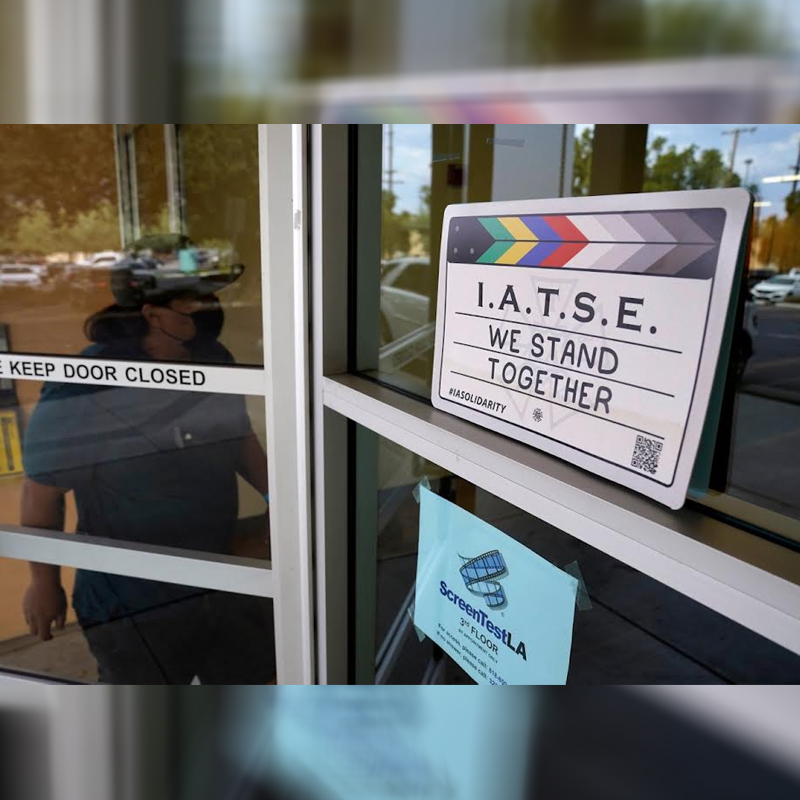
    Mumbai: The International Alliance of Theatrical Stage Employees (IATSE), the union which represents film and television crew members throughout North America, and the Alliance of Motion Picture and Television Producers (AMPTP), have reached an agreement on a new three-year contract averting a major strike less than a day before the walk-out deadline.

    “This is a Hollywood ending,” IATSE International President Matthew Loeb said in a statement. “Our members stood firm. They’re tough and united. We went toe to toe with some of the richest and most powerful entertainment and tech companies in the world and we have reached an agreement with the AMPTP that meets our members’ needs.”

    This strike would have been the first in the union’s 128-year history and the first major crew strike since World War II. The 11th-hour deal avoids a potentially crippling shutdown which would have impacted film and TV productions nationwide, with worldwide ripple effects, just as studios struggle to recover from heavy losses caused by production shutdowns and theatre closures due to the Covid-19 pandemic.

    The agreement, which still must be ratified by the union’s membership, includes improved wages and working conditions for streaming productions, a retroactive wage increase of three per cent annually, increased funding for health and pension plans, a minimum 10-hour turnaround time between shoots with a 54-hour break after a five-day week and also includes still unspecified diversity, equity and inclusion initiatives.

    The deal was met with a sigh of relief across Hollywood after talks stalled over the summer leading the IATSE to vote in early October on a strike authorisation with the overwhelming support of 98 per cent of union voters. The 60,000-member union represents a wide range of production crew members including cinematographers, camera operators, set designers, carpenters, hair and make-up artists, and many others.

    The strong support of the union membership gave leaders considerable leverage to press their demands. The IATSE has traditionally preferred to quietly negotiate earlier agreements avoiding confrontations with the studios. However, members’ frustrations have grown to a breaking point with working 14+ hour workdays with few breaks and no weekends off.

    In addition, as studio executives realised how devastating this strike could be, just as they were beginning to crawl out from beneath the effects of the Covid-19 pandemic, the IATSE felt further emboldened to take a tougher stand.

    The union’s focused goals were: livable wages for the lowest-paid workers; more turnaround time between workdays; genuine meal breaks; rescue of the union’s ailing pension and health plan; and a bigger cut of the revenue from streaming shows. Studio executives acknowledged that they could no longer defend previous deal points allowing for such incessant work hours, as reported by the Los Angeles Times.

    The strike has been officially called off with this tentative agreement as union members will be heading to the ballot box in the next few days to give or refuse their stamp of approval, with both sides remaining hopeful.

  • Cabinet gives go-ahead to TV ratings regulatory mechanism

    Cabinet gives go-ahead to TV ratings regulatory mechanism

    NEW DELHI:  The Union Cabinet today gave the go-ahead to the television ratings guidelines ,which had earlier been proposed by the Telecom Regulatory Authority of India (TRAI) in September 2013, cleared by the Ministry of Information and Broadcasting (MIB) in November. The ministry had then forwarded the proposed guidelines for the cabinet’s approval. With the cabinet’s clearance the MIB will now have regulatory control over TV ratings agencies in India.


    This was disclosed by MIB minister Manish Tewari after the cabinet meeting.


    The guidelines cover detailed procedures for registration of ratings agencies, eligibility norms, terms and conditions of registration, cross holding restrictions, methodology of audience measurement, a complaint redressal mechanism, sales and use of ratings, audit, disclosure norms, reporting requirements and action on non-compliance of guidelines etc.


    The guidelines state that TV ratings providers – including TAM Media which is the industry standard currently – will have to first get registered with the MIB. The registration will be given to them only if they comply with the rules the TV ratings guidelines have enumerated. Among these figure:


    * No single company / legal entity either directly or through its associates or interconnect undertakings shall have substantial equity holding that is, 10 percent or more of paid up equity in both rating agencies and broadcasters/advertisers/advertising agencies. 


    * The ratings agency should have a net worth of at least Rs 20 crore.


    * Panel homes for audience measurement shall be drawn from the pool of households selected through an establishment survey. A minimum panel size of 20,000 is to be implemented within six months of the guidelines coming into force. Thereafter the panel size shall be increased by 10,000 every year until it reaches 50,000. 


    * Ratings ought to be technology neutral and shall capture data across multiple viewing platforms viz. cable TV, Direct-to- Home (DTH), Terrestrial TV etc. 


    * Secrecy and privacy of the panel homes must be maintained. 25 percent of panel homes shall be rotated every year. 


     * The rating agency shall submit the detailed methodology to the Government and also publish it on its website. 


    * The rating agency shall set up an effective complaint redressal system with a toll free number. 


    * The rating agency shall set up an internal audit mechanism to get its entire methodology/processes audited internally on quarterly basis and through an independent auditor annually. All audit reports to be put on the website of the rating agency. Government and TRAI reserve the right to audit the systems /procedures/mechanisms of the rating agency. 


    * Non-compliance of guidelines on cross-holding, methodology, secrecy, privacy, audit, public disclosure and reporting requirements shall lead to forfeiture of two bank guarantees worth Rs 1 crore furnished by the company in the first instance, and, in the second instance shall lead to cancellation of registration. For violation of other provisions of the guidelines, the action shall be forfeiture of bank guarantee of Rs. 25 lakh for the first instance of non-compliance, forfeiture of bank guarantee of Rs 75 lakh for the second instance of non-compliance and for the third instance, cancellation of registration. 


    * A time of 30  days would be given to the existing rating agency to comply with the guidelines. 


    * The guidelines would come into effect immediately from the date of notification. 


    The Guidelines for Television Rating Agencies in India are designed to address aberrations in the existing television rating system. These guidelines are aimed at making television ratings transparent, credible and accountable. The agencies operating in this field have to comply with directions relating to public disclosure, third party audit of their mechanisms and transparency in the methodologies adopted. This would help make rating agencies accountable to stakeholders such as the Government, broadcasters, advertisers, advertising agencies and above all the people. 


    Television Rating Points (TRPs) have been a much debated issue in India since the present system of TRPs has reportedly not found favour with industry, consumer groups, broadcasters, agencies, government who have said they are riddled with several maladies such as small sample size which is not representative, lack of transparency, lack of reliability and credibility of data etc.


    In 2008, the MIB had sought recommendations of TRAI on various issues relating to TRPs and policy guidelines to be adopted for rating agencies. TRAI, in its recommendations in August 2008, had amongst other things recommended the approach of self-regulation through the establishment of an industry-led body, that is the Broadcast Audience Research Council (BARC). 


    The MIB had constituted a Committee under the Chairmanship of Dr. Amit Mitra, the then Secretary General FICCI, in 2010 to review the existing TRP system In India. The committee also recommended that self-regulation of TRPs by the industry was the best way forward. 


    Since, the BARC could not operationalise the TRP generating mechanism, the  sought recommendations of TRAI in September 2013 on comprehensive guidelines/accreditation mechanism for television rating agencies in India to ensure fair competition, better standards and quality of services by television rating agencies. TRAI recommendations on Guideline for Television Rating Agencies were received in September 2013. While supporting self-regulation of television ratings through an industry-led body like BARC, TRAI recommended that television rating agencies shall be regulated through a framework in the form of guidelines to be notified by MIB. It also recommended that all rating agencies, including the existing rating agency, shall require registration with MIB in accordance with the terms and conditions prescribed under the guidelines.