Tag: Unilever

  • BigCity goes Down Under to play the loyalty game in Australia

    BigCity goes Down Under to play the loyalty game in Australia

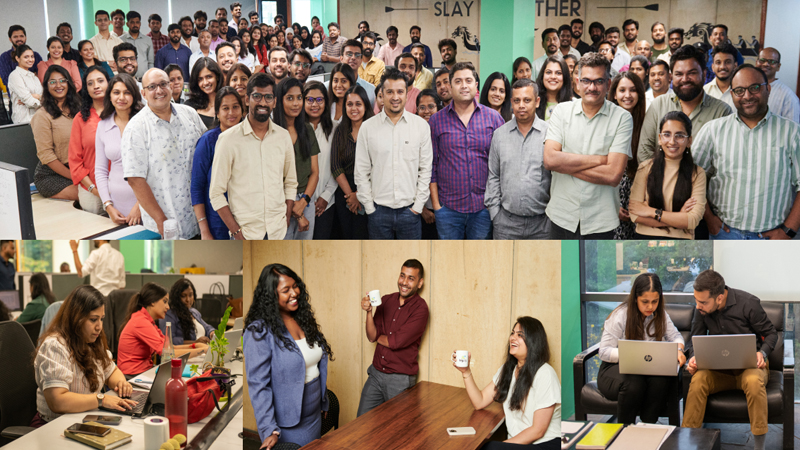
    MUMBAI: When it comes to loyalty, BigCity just levelled up this time, all the way Down Under. BigCity Promotions, one of India’s most awarded sales promotion and loyalty agencies, has announced its entry into Australia with the launch of a new office in Sydney, marking its first international expansion in nearly two decades. The move signals the company’s ambition to replicate its India success across the Australia–New Zealand (ANZ) region, a market ripe for disruption in the loyalty and engagement space.

    Founded in 2006, BigCity has become something of a legend in India’s reward ecosystem known for turning mundane promotions into high-voltage brand experiences. With 8,000 plus programs executed for over 500 global brands, including Pepsico, Unilever, Mondelez, Coca-cola, Samsung, and Amazon, the agency has earned a reputation for blending creativity, technology, and measurable impact.

    From B2C reward programs to B2B loyalty solutions and gamification-led engagement, BigCity has redefined how brands connect with consumers and trade partners alike. Its proprietary plug-and-play platform lets brands launch campaigns within days offering faster time-to-market, reduced costs, and full creative flexibility. Built on an in-house technology and analytics stack, it also enables deep insight into consumer engagement, redemptions, and ROI, giving marketers the holy grail of modern marketing measurable loyalty.

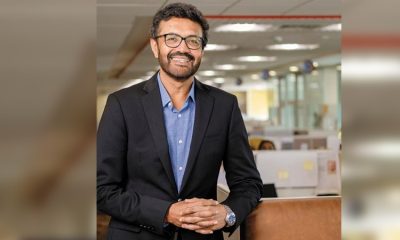
    The Sydney office will serve as BigCity’s regional hub for Australia and New Zealand, extending its full-service suite to local and global brands in the region. The operations will be spearheaded by Gunjan Kumar country director, who brings over 27 years of global experience across telecom, banking, retail, and FMCG. Having driven client engagement and loyalty strategies across continents, Kumar is tasked with building the BigCity playbook for the ANZ market, one that blends local insight with the brand’s signature executional agility.

    “Australia is a market ripe for transformation, and our goal is to bring the same scale, creativity, and speed that have powered some of India’s biggest campaigns to brands here,” said BigCity Promotions co-founder Vikas Shah. “For nearly two decades, BigCity has redefined how brands engage through innovation, technology, and storytelling this expansion is a natural next step in that journey.”

    BigCity’s forte lies in its ability to gamify engagement, transforming passive audiences into active participants. Its campaigns often feature instant-win mechanics, leaderboards, challenges, and digital contests, all designed to boost brand love and repeat purchase intent. This gamified approach has proven especially potent in cluttered categories like FMCG and telecom, where attention spans are short but loyalty can be won with the right mix of fun and function.

    The expansion also comes at a time when the ANZ market is seeing brands look beyond conventional loyalty cards and cashback models. With digital-first consumers demanding more personalised, experiential rewards, BigCity’s data-driven, experience-centric approach may find fertile ground.

    In India, the company has long been the behind-the-scenes architect of some of the country’s most memorable campaigns, the kind that combine large-scale activation, complex fulfilment, and regulatory precision without ever losing the element of play. It’s this operational mastery that BigCity now hopes to bring to Sydney’s brandscape.

    As the company steps onto foreign shores, the move underscores how homegrown Indian marketing innovation is beginning to travel the world not as an imitator, but as an industry leader exporting expertise. For BigCity, the next game has just begun. And this time, it’s on a whole new continent.


  • Making sense of success, one click at a time

    Making sense of success, one click at a time

    MUMBAI: If taste had a strategy and smell could sell, brands would already be halfway to market glory. At a Mumbai session titled “Winning With The Senses: How Sensory Science Drives Market Success”, industry experts dived nose-first into the subtle science of sight, sound, touch, taste, and smell, and how these sensations can turn ordinary products into emotional experiences.

    The panel brought together Supriya Dang, independent consultant and ex-Unilever strategist; Sandeep Budhiraja, director and promoter of Spark Sensory; and Nirmala Metwal, consumer sensory insights leader at Mondelez International. Moderated by Sunder, the discussion explored how brands can quite literally strike the right chord, or scent, with consumers.

    Supriya opened the floor by showing how sensory design acts as a bridge between product and perception. She cited Surf Excel’s packaging “click,” the lid’s sound mimicking a washing machine shutting, as a clever cue for reliability and completion. Touch also took the spotlight, with tactile beads in handwash formulations creating a more interactive, premium experience. And who could ignore the irresistible pull of freshly baked cookies? Their aroma, Supriya said, doesn’t just smell good, it sells.

    Sandeep followed with a more technical look at how sensory science replaces guesswork with data. From quantitative descriptive analysis to temporal dominance tests, he explained how trained sensory panels map out taste, texture and aroma, turning subjective preferences into measurable insights. He noted that in a market flooded with “me-too” products, sensory cues are the secret ingredient for differentiation. “When brands blend science with storytelling, loyalty follows,” he said.

    Nirmala brought in the brand perspective, sharing how her Mondelez team cracked what “refreshing” really means for an orange drink. It wasn’t just about flavour, it was about the right hue of orange, a balanced sweet-sour taste, and a smooth mouthfeel that left a clean finish. Aligning sensory cues with consumer expectations, she said, is what keeps products both loved and remembered.

    As the discussion wrapped up, all agreed that in today’s cluttered market, sensory science is no longer just about testing, it’s about translating feelings into formulas. From the satisfying click of a cap to the comfort of a familiar scent, brands that appeal to the senses are the ones that make sense to consumers.

  • Mondelez moves veteran to crack Asia’s snack market

    Mondelez moves veteran to crack Asia’s snack market

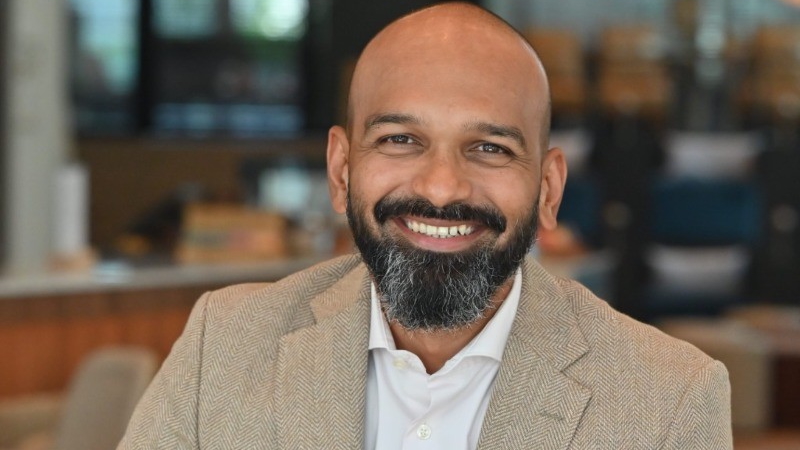
    INGAPORE: Mondelez International has handed the keys to its south-east Asian kingdom to Abhiroop Chuckarbutty, a battle-hardened consumer goods veteran who spent more than two decades navigating the treacherous waters of emerging markets from Mumbai’s bustling bazaars to Dubai’s gleaming malls.

    The 22-year industry stalwart, who orchestrated the messy separation of a $500m tea business from Unilever’s sprawling empire in 2024, will now steer the American snacking giant’s charge across a region where Oreos compete with local delicacies and Cadbury chocolate battles tropical heat.

    Chuckarbutty’s appointment as president comes after a year running Mondelez’s African operations from Johannesburg, where he cut his teeth on the company’s complex multi-market dynamics. Before that corporate musical chairs routine, he spent two turbulent years as president of ekaterra’s Africa, Middle East and Turkey tea business, shepherding the venture through its acrimonious divorce from Unilever in 2022.

    The executive’s résumé reads like a corporate fire-fighting courseware. At Unilever, where he spent 16 years climbing the ranks, Chuckarbutty wrestled with everything from sluggish west Asian markets to the herculean task of digitising India’s advertising landscape. He juggled profit-and-loss responsibility for a bewildering array of brands—from Lifebuoy soap bars to Kissan ketchup—across markets as diverse as Bangladesh and the United Arab Emirates.

    His new perch in Singapore puts him at the epicentre of Asia’s snacking revolution, where rising incomes and urbanisation are fuelling an insatiable appetite for packaged treats. The region’s young, mobile-savvy consumers present both opportunity and headache for western brands trying to crack local tastes whilst fending off nimble domestic rivals.

    Chuckarbutty’s knack for “business turnarounds and accelerating scale businesses”—as his corporate biography modestly puts it—will be tested against south-east Asia’s fragmented markets, where regulatory tangles and supply-chain snarls can derail even the slickest marketing campaigns.

    The appointment signals Mondelez’s intent to double down on a region that represents one of the fastest-growing snacking markets globally, even as trade tensions and economic uncertainty cloud the broader Asian outlook

  • Maheima Kapur takes charge as Kayura’s chief marketer

    Maheima Kapur takes charge as Kayura’s chief marketer

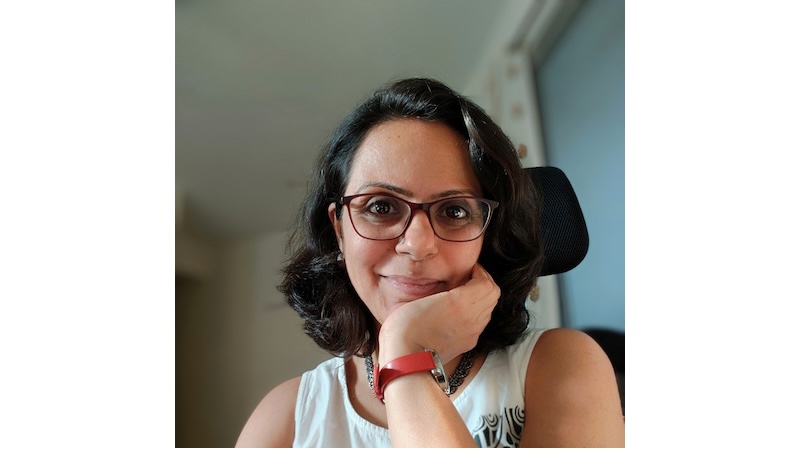
    BENGALURU:  Maheima Kapur has joined Kayura as chief marketing officer, adding heavyweight experience to the digital-first lifestyle brand’s leadership bench.

    Kapur is a marketing and product specialist with nearly 20 years in consumer goods and start-ups. She founded culinary-tourism platform Talking Street, scaled interior-design player Design Cafe as vice-president of marketing and customer experience, and has advised a clutch of health-tech and B2B firms on go-to-market strategy, product design and digital communication.

    Earlier, she drove innovation at Tata Global Beverages, relaunched Lifebuoy Hand Wash at Unilever with a 250 per cent growth spurt, and shaped Britannia’s dairy portfolio. Recent projects include Manam, a mental-wellness programme for Manipal Academy of Higher Education students, and digital-transformation mandates for Nutriwiz, Vectura Fertin Pharma and The Media Ant.

    At Kayura, Kapur will steer brand strategy, product marketing and growth, sharpening the company’s push to become a pan-India lifestyle name.

  • Reshmy Warrier returns to WPP Media to lead Unilever business planning

    Reshmy Warrier returns to WPP Media to lead Unilever business planning

    MUMBAI: Reshmy Warrier has rejoined WPP Media as head of business planning and operations for Mindshare’s Unilever account, marking a homecoming after more than 14 years shaping content strategy at Star and Zee5.

    Warrier will steer advanced planning, strategic insights, product development and automation for WPP’s Team Unilever, bringing a mix of media savvy and data-driven flair to one of the world’s most powerful brand portfolios.

    She spent nearly six years at Zee5 as senior vice-president of global content strategy and platform operations, driving a 30 per cent surge in SVOD conversions and an 8 per cent rise in viewership. Earlier, at Star, she led strategy and programming for the English entertainment business, keeping shows like MasterChef Australia and Koffee with Karan at the top of the ratings.

    This is Warrier’s third stint at WPP Media and her second at Mindshare Fulcrum, where she once handled Unilever’s beauty and haircare brands, managing a Rs 200-crore media budget and executing high-profile campaigns such as Dove’s “Hair Damage Meter” and India’s first logo-based augmented reality ad.

    Her career began in outdoor advertising with Cactus Imaging and Kinetic Worldwide before moving into client leadership at Mindshare. Warrier described the move as “a new chapter powered by AI, tech and data to deliver impact-driven solutions for Unilever.”

  • DDB Tribal ropes in Anusheela Saha as new creative head

    DDB Tribal ropes in Anusheela Saha as new creative head

    MUMBAI: Talk about a creative twist in the plot. DDB Tribal has brought on board Anusheela Saha as its new creative head, marking a fresh chapter for the Gurugram-based agency within the DDB Mudra Group.

    Saha moves from FCB India, where she was national creative director, spearheading campaigns that paired emotional resonance with cultural impact. With more than two decades of experience at agencies such as Cheil and FCB, she has built a portfolio spanning Unilever, KFC, Mahindra Automobiles, Uber, Google, Samsung, UN AIDS and the Times of India. Her work has earned recognition at Cannes Lions, D&AD, One Show, Clio Awards, Spikes Asia and Kyoorius.

    Notable among her projects is ‘Unbox Me’, which shines a light on gender identity in children and sparks conversations well beyond the advertising world. She marked a personal milestone when she stepped into her FCB role as a new mother.

    Saha will report to DDB Mudra Group, chief creative officer, Rahul Mathew, taking over from Iraj Fraz who transitions into a new role within the company.

    “Over the last few years, we’ve seen DDB Tribal grow stronger and more confident,” Mathew said. “Anusheela will help take this growth into its next phase. She shares many of the values we hold dear, especially when it comes to big ideas and craft.”

    Saha added, “For me DDB is the perfect alignment of culture, creative vision and leadership. I look forward to partnering with Rahul, Ashutosh and the team to take this legacy forward.”

  • ICC teams up with Google to turbocharge women’s cricket

    ICC teams up with Google to turbocharge women’s cricket

    LONDON: The International Cricket Council (ICC) has inked a landmark global partnership with Google to accelerate the growth of women’s cricket, betting that technology can turbocharge fan engagement at a moment when the sport is reaching critical mass.

    The tie-up, unveiled on Friday, comes just as the women’s game prepares for its two biggest stages: the ICC Women’s Cricket World Cup 2025, to be split between India and Sri Lanka, and the ICC Women’s T20 World Cup 2026 in England and Wales.

    For the ICC, the partnership signals a decisive push to make women’s cricket more visible, accessible and lucrative. Earlier this year, Unilever became the ICC’s first global partner for the women’s game. Now, Google’s entry adds the sheen of Silicon Valley to cricket’s most ambitious attempt yet at elevating women’s sport to parity with the men’s version.

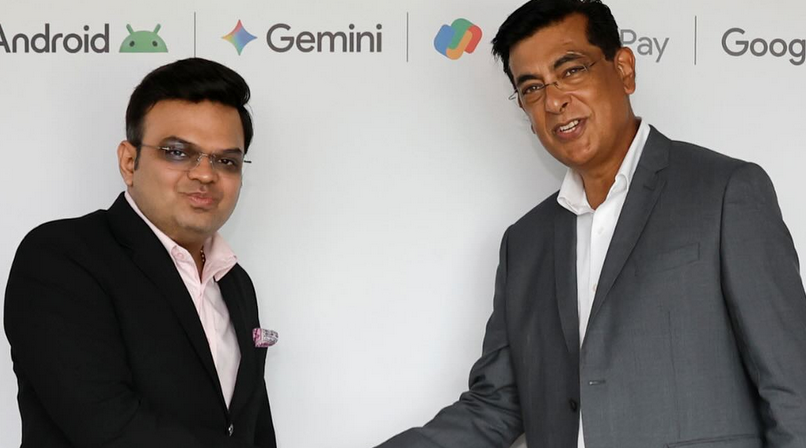
    ICC chairman Jay Shah called the deal “a landmark moment” that would help take women’s cricket “to even greater heights” by inspiring new generations and strengthening the sport’s global reach. “Together with Google, we aim to make women’s cricket a truly global force, resonating with fans in both established and emerging markets,” he said.

    Google’s arsenal of consumer products—Android, Google Pay, Gemini AI, and Pixel smartphones—will form the backbone of this strategy. The idea is to create an integrated ecosystem that enhances every stage of the fan journey: discovering match schedules, watching highlights, engaging with players’ stories, making seamless payments for tickets or merchandise, and celebrating wins online.

    “This alliance is not just about a single tournament; it’s about building deeper engagement,” said Google India vice-president of marketing Shekar Khosla. “We want to make the sport more accessible and enable fans to feel a stronger connection with what they care about.”

    The ICC hopes this “always-on” digital presence will not only expand the fan base but also attract new advertisers eager to reach younger, more digital-native audiences.

    Women’s cricket has been growing rapidly, buoyed by marquee tournaments like the Women’s Premier League (WPL) in India, the Big Bash in Australia, and increasing broadcast commitments. Audience numbers are rising, sponsorship is flowing in, and players such as Smriti Mandhana, Alyssa Healy, and Nat Sciver-Brunt are becoming household names.

    But the economics still lag far behind the men’s game. Rights packages, sponsorship valuations and player salaries remain a fraction of men’s cricket. By hitching the sport to Google’s technology stack, the ICC is signalling it wants to fast-track the commercialisation curve, making women’s cricket a product that broadcasters, advertisers and fans cannot ignore.

    The deal also reflects the growing entanglement of global tech platforms with sport. From Amazon streaming tennis to Apple bankrolling Major League Soccer, Silicon Valley is embedding itself in the sporting ecosystem. For Google, cricket is a natural fit: it is India’s most-followed sport and one of the most powerful cultural exports across the commonwealth. By associating with women’s cricket, Google also gets to position itself as a champion of inclusion and representation—values that resonate with global consumers.

    For the ICC, this is as much about geopolitics as sport. The women’s World Cup in 2025 will be staged in India and Sri Lanka, markets where Google dominates digital infrastructure but where competition from local players like Paytm, PhonePe and Jio is fierce. Embedding its brand through cricket is a way to reinforce dominance at a cultural level.

    For women’s cricket, the timing could not be better. With two World Cups in less than a year, unprecedented visibility is guaranteed. The challenge will be to convert eyeballs into habit, passion into loyalty, and novelty into permanence.

    Cricket’s men’s World Cups have long been billion-dollar properties. The women’s version has so far lived in their shadow, but that is changing. The 2022 Women’s World Cup drew record viewership globally, and the inaugural WPL auction stunned observers with player valuations that rivalled established men’s leagues. The ICC now wants to seize this momentum and institutionalise women’s cricket as a commercially viable product on its own terms.

    The Google alliance, then, is more than a sponsorship. It is an attempt to rewire how women’s cricket is consumed, blending sport with technology to create experiences that transcend stadiums and television screens. If successful, it could turn the women’s game into a global sporting phenomenon, not just a promising sideshow.

    If it fails, critics will dismiss it as another flashy announcement without structural change. But for now, women’s cricket has the wind at its back, the ICC has its boldest partner yet, and Google has found a new pitch to play on.

  • Diageo appoints Aanandita Datta as vp marketing and category head

    Diageo appoints Aanandita Datta as vp marketing and category head

    MUMBAI: Diageo India has named Aanandita Datta as its new vice president, marketing and category head. She moves from Pizza Hut, where she was chief marketing officer for India and the subcontinent, and before that spent nearly a decade at Unilever.

    A marketing veteran with 19 years of experience, Datta has worked across categories from oral care and foods to beverages. She launched and scaled brands such as Sensodyne and Lipton, built new categories like green tea and sensitive oral care, and led Horlicks’ major relaunch in 2010. At Pizza Hut, she drove campaigns to court young consumers and make the brand part of “young India’s daily life”.

    Datta described herself as a “storyteller with a curious mind”, saying her purpose lay in “exploring the unknown and inspiring others to do the same”. She has previously managed portfolios worth over €1.3bn, partnered with the UN and Indian government on sustainability projects, and steered both disruptive innovation and mature-brand growth.

    At Diageo, she takes charge of marketing strategy and category development in one of India’s most competitive consumer markets.

  • Swiss army knife brand lands Unilever pro as marketing chief

    Swiss army knife brand lands Unilever pro as marketing chief

    MUMBAI: Victorinox India has recruited Avirup Mukhopadhyay as its head of marketing, hiring  the seasoned marketer from wellness brand True Elements where he spent over three years. The appointment signals the Swiss army knife maker’s intent to sharpen its marketing edge in the competitive Indian consumer market.

    Mukhopadhyay joins Victorinox this month after a stellar run at True Elements, where he rose from category lead to assistant vice-president of marketing. During his tenure at the Mumbai-based health food company, he orchestrated brand strategy across multiple geographies, managed profit-and-loss responsibilities, and crafted go-to-market strategies for both traditional and alternative channels.

    His most visible achievement at True Elements was the Black Pack Anthem campaign featuring cricket star Rohit Sharma, which positioned the brand around its “100 per cent real, nothing artificial” promise. The campaign exemplified his knack for marrying celebrity endorsements with authentic brand messaging.

    The 15-year marketing veteran brings impressive credentials from blue-chip companies. He spent nearly three years at Unilever, where he cut his teeth on the iconic Kissan brand, developing everything from penetration packs priced at Rs 15 to comprehensive brand-building strategies. His Unilever stint included roles spanning brand management, trade marketing for modern retail, and territory sales across Kolkata.

    Between his Unilever chapters, Mukhopadhyay had a brief but notable six-month tenure at Dr Reddy’s Laboratories, where he was tasked with building the Rebalanz energy drink brand across key Indian markets. The “27 per cent less sugar” positioning he developed demonstrated his ability to navigate the increasingly health-conscious consumer landscape.

    His career began in financial services at Bajaj Allianz before pivoting to FMCG, with early roles at HCL Infosystems. A summer internship at Unilever during his MBA studies proved fortuitous, eventually opening doors to his full-time role at the Anglo-Dutch giant.

    For Victorinox, known globally for its multi-tool expertise but still building brand awareness in India’s crowded lifestyle market, Mukhopadhyay’s track record of scaling brands across price points and channels could prove invaluable. His experience spans everything from mass-market detergents to premium wellness products—precisely the range needed to navigate India’s bifurcated consumer market.

    The appointment reflects a broader trend of heritage European brands investing heavily in Indian marketing talent as they seek to crack the subcontinent’s complex consumer preferences.

  • BBDO India elevates Shruthi Subramaniam to executive creative director – Mumbai

    BBDO India elevates Shruthi Subramaniam to executive creative director – Mumbai

    MUMBAI: BBDO India has announced the elevation of Shruthi Subramaniam to the role of executive creative director – Mumbai. With over 14 years of experience, Shruthi brings a powerful combination of creative excellence and strategic acumen to her new leadership role.

    At BBDO India, Shruthi has been the creative force behind campaigns for iconic global brands such as WhatsApp, Bumble, Neutrogena. Her portfolio also includes work for industry giants like Unilever and Mercedes-Benz – projects that are as impactful as they are culturally meaningful. Most recently, she was honoured with a prestigious CLIO Music Award, earning recognition alongside international names like Harry Styles and Ozzy Osbourne – a testament to her ability to create work that resonates across borders and audiences.

    In her new role, Shruthi joins BBDO India’s core leadership team, where she will help shape the agency’s creative direction, lead key client partnerships, and mentor emerging talent. Her focus will be on driving innovation in both storytelling and “story-doing,” while pushing the boundaries of modern advertising.

    Commenting on Shruthi’s promotion, Josy Paul, Chairman & CCO, BBDO India, said, “Shruthi’s work is famous, her craft is brilliant, and her vision for the future of advertising is inspiring. She’s been an integral part of BBDO India’s growth story. With our vibrant, diverse talent pool, we’re confident she’ll bring even more value to our clients while moving the agency and industry forward.”

    Speaking on her new role, Shruthi Subramaniam, ECD, BBDO India shared, “The BBDO Ashram is my home – I want to decorate it with ideas, fill each room with the warmth of conversation, and have people over who never want to leave. Belonging is the start of everything. My wish is to make people belong, bloom and become.”