Tag: UNESCO

  • Discovery channel to air a programme on ‘Mumbai Railway’

    Discovery channel to air a programme on ‘Mumbai Railway’

    MUMBAI: Discovery Channel is all set to air a programme on the UNESCO’s world heritage site, Chhatrapati Shivaji Terminus (CST) in Mumbai. The programme titled as Mumbai Railway will show behind the scenes of CST’s super-sized transport operation to reveal how the station’s staff and technological systems cope as they are stretched to maintain Mumbai’s lifeline on a daily basis. The four part series will premiere on 7 December every Monday at 9 pm.


    The programme will take the viewers through the lives of the men and women who keep the Mumbai railways running; from the station managers, to the controllers in the operations room, the engine drivers, guards, policemen and porters amongst others. The show will offer due credence to the people behind the functioning of the railways and showcase how the team works on a stern time limit before the train resumes its journey. The programme will also offer the viewers to discover the locations around the city which contribute to the massive industrial kitchen which supplies the meals and the new, automated laundry which washes and presses bed sheets.


    Talking about the new programme, Discovery Networks Asia-Pacific EVP and GM-South Asia Rahul Johri asserted, “Discovery Channel has been entertaining and inspiring viewers in India for the last 20 years with the finest range of factual programmes. Mumbai Railway will bring forth compelling story of the megacity Mumbai – its station and its transport challenges. The series will showcase the diverse network and its amplified scale like never before.”


    The programme will explore the scientific, technological, historical, and human-interest stories from across Mumbai’s sprawling suburban network. The programme will showcase how Mumbai Railways has come to become the pulse of the Mumbai commuters irrespective of the heavy monsoons, the crazy rush and the cringing space constraints.


    Mumbai Railway will also showcase the future for CST and Indian railways including expanded capacity by making train and platforms longer, building new lines and bringing into server a new double decker train.

  • Entries invited for NFDC script lab and We Care Film Fest

    Entries invited for NFDC script lab and We Care Film Fest

    NEW DELHI: Entries have been invited by the National Film Development Corporation for its script lab and by several Indian film festivals for entries in their respective events being held both this year and the next year.


    In its second year, the National script Lab is a long-running script development lab for Indian writers wanting to build and develop screenplays with three residential workshops over five months supported by interim feedback and work via Skype.


    Internationally acclaimed mentors will help up to nine selected writers through carefully staged development to prepare their scripts for introduction to the market in India and the rest of the world for financing and co-production.


     This year the special focus is on children and youth films. However, the lab will offer places to all genres of film, not exclusively to just children and youth screenplays. Entries with an application fee of Rs 2000 have to be sent by 1 September. Complete applications are to be sent to labs@nfdcindia.com with the first 20 pages of the script along with the application form.


    Meanwhile, the country’s first film festival on disability recognized by the United Nations; the We Care Film Fest has invited entries of short films and documentaries in four categories: up to one minute, five minutes, 30 and 60 minutes respectively from across the globe on various disability issues.


     The festival is also organising a conference, which will be held from 24 to 26 November, at the Vigyan Bhavan in New Delhi.


    The event is being organised jointly by UNESCO, the UN Information Centre for India and Bhutan, the Department of Disability Affairs, the Social Justice and Empowerment Ministry, the National Trust, the NGO Brotherhood and the We Care film fest.


     The screening of short films and documentaries will follow panel discussion, sharing of success stories by using audio-visual as information, communication and advocacy tools.  Though, the last date of submission of short films and documentaries for the We Care Film Fest is 12 December, films received till 31 October on the theme of the conference and on other disability issues will be screened during the conference. The preview committee will select the short films and documentaries for screening.


     The third Delhi International Film Festival being held from 20 to 27 December has called for entries by 30 September for full length feature, short films, NRI films, green films (environmental and wild life), student films, animation films, and documentaries. The festival will be held in collaboration with the New Delhi Municipal Committee and Delhi Tourism in Delhi. Details are available on info@delhiinternationalfilmfestival.com and the website: www.delhiinternationalfilmfestival.com


    Meanwhile, the Centre for Media Studies Environment has called for entries to its annual eighth edition of CMS Vatavaran: Environment and Wildlife Film Festival and Forum. Films produced on or after 1 January 2015 are accepted in the CMS VATAVARAN 2015 film festival scheduled from 9 to 12 October 2015 at New Delhi. The entry form and guidelines can be downloaded from our website www.cmsvatavaran.org.

  • Net-Med youth project empowers young voices to help freedom of media

    Net-Med youth project empowers young voices to help freedom of media

    NEW DELHI: A network providing knowledge and tools to empower young women and men in the Western and Eastern Basins of the Mediterranean to be launched this week will among other things promote young people’s freedom of expression, representation in mainstream media and empowerment through media and information literacy, thus underpinning their participation in public dialogue.


    By facilitating their involvement in media production and reinforcing the capacities of young journalists, quality coverage relating to youth rights and perspectives will be fostered.


    The network will be launched at the UNESCO Headquarters in Paris on 5 June. The Networks of Mediterranean Youth Project is supported by UNESCO and the European Union, which has committed $12million to the project for the next three years.


    In addition, NET-MED Youth will provide national youth organisations with opportunities for supporting the review of policies and programmes focused on youth employment and transitions, for participating in the production and dissemination of prospective diagnosis findings about the national and regional skills challenges, as well as for reinforcing their capacity to influence the national dialogue with stakeholders.


    Eastern and western Mediterranean countries share common challenges related to the social inclusion of youth, such as high unemployment and weak labour market participation of young women, low representation in public and political spheres, disinterest in civic engagement, exclusion from mainstream media and economic marginalization. 


    NET-MED Youth is UNESCO’s interdisciplinary response to these issues, built on an analysis of aspirations and needs of youth in each country.


    The Network will help young women and men to develop their competencies, claim and exercise their rights and meaningfully engage as active citizens, particularly in decision-making relating to youth policies. The focus will be on the development and revision of public policies by young women and men, through reinforcing the capacities and participation of identified youth organisations and stakeholders working on youth-related issues (locally elected officials, decision-makers and civil servants).


    These activities will be conducted initially on a national level with transnational networking opportunities to be provided as a second step, in order to share experiences between two or more countries and support regional integration.


    NET-MED Youth is part of UNESCO’s Operational Strategy on Youth 2014-2021 and is fully in line with the UN System-wide Action Plan on Youth (SWAP). The Project also builds on former EU Programmes and will be carried out in collaboration with EU Delegations and UN entities on a national level. As part of the Paris launch, a Briefing and Training Workshop will be held at UNESCO Headquarters from 4 to 6 June, bringing together the project coordinators in the participating countries.

  • CNNGo explores the serene Sri Lanka

    CNNGo explores the serene Sri Lanka

    MUMBA: This month on CNN, CNN Go shakes it up in the island nation of Sri Lanka.

    In the capital city of Colombo, Chef Dharshan Munidasa gives CNNGo a taste of the world renowned Sri Lankan seafood. It starts with a visit tohis favorite place to get the freshest catch of the day, the Negombo fish market, and ends with a scrumptious meal at his restaurant- Ministry of Crab.

    Next Dilshan Michaels and Ishara, renowned media personalities, introduce the newer side of the city. They show The Colombo Racecourse that was built in the 1800s but is now renovated into an international rugby pitchand then the Sky Lounge of the Kingsbury Hotel,to view the classic Sri Lankan sunset.

    The founder of YAMU and the friendly city guide, Indi Samarajiva, shows his favorite spots and the architectural gems in the older parts of the city. The tour included Colombo’s old town hall, a tranquil cafe that also sells handmade goods and the famous Slave Island that offers plenty of cheap food and drinks.

    From Colombo, CNNGo heads to the South to meet spa consultant Rosamond Freeman-Attwoodfor a tour around Galle. It begins with a tranquil morning tea at the Wijaya Beach side restaurant and then to Galle Fort, a UNESCO heritage site and its popular shopping arena. It gets more adventurous when Thana Sritharanand Dee de Silva takes CNNGo on a whale watching tour to catch a breath takingglimpse of the blue whale.

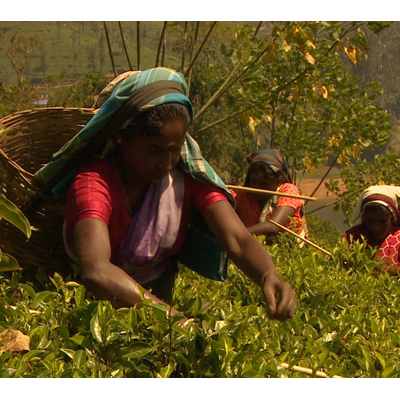
    Finally, CNNGo visits the Ceylon cafe, known to serve the best seafood in the country. The trip wraps up in mesmerizing tranquility of the tea country at thehills of the Ceylon Tea Trails with Dilmah tea founder Merrill J. Fernando and his son, Malik.

    CNNGo featuring Sri Lanka premiers on CNN International on Wednesday, March 12 at3.00 pm with a repeat telecast on and March 12 at 11.00 pm; Saturday, March 15at 10.00 am; Sunday, March 16at 06.00 pm and April 5 at 06.00 pm and April 6 at 10.00 am.


  • Ritesh Batra’s ‘Lunchbox’ awarded at APSA

    Ritesh Batra’s ‘Lunchbox’ awarded at APSA

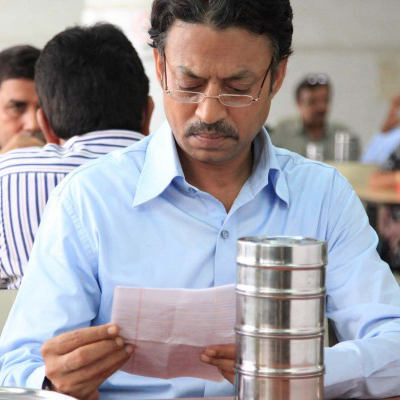
    NEW DELHI: Director Ritesh Batra won the best award for Screenplay in Lunchbox and also the Grand Jury Prize at the Asia Pacific Screen Awards in Brisbane recently.


    The film – which has already won a large number of laurels worldwide – had recently also won three awards at the 56th Asia-Pacific Film Festival award ceremony held in Macau.


    Renowned filmmaker Shyam Benegal was chairman of the jury for the annual Asia Pacific Screen Awards where Anurag Kashyap’s film Ugly had also been entered in competition. Other jury members were Korean screenwriter and director Kim Tae-yong, “Queen of Sri Lankan Cinema” actress of stage and screen Hon Dr Malani Fonseka, Turkish actor Tamer Levent, Swiss director Christoph Schaub and Hong Kong producer Albert Lee. The preview committee included film critic Meenakshi Shedde from India.


    The Asia Pacific Screen Awards (APSA) is an international cultural initiative of the State Government of Queensland, Australia, through Events Queensland, to honour and promote the films, actors, directors, and cultures of Asia-Pacific to a global audience and to realise the objectives of UNESCO to promote and preserve the respective cultures through the influential medium of film.


    Staged for the first time in 2007, APSA collaborates with UNESCO and FIAPF – the International Federation of Film Producers Associations, which is the body that recognises international film festivals. Winners are determined by an international jury and films are judged on cinematic excellence and the way in which they attest to their cultural origins. APSA takes the works of filmmakers across more than 70 countries and areas in the Asia-Pacific region to new international audiences.

    The FIAPF Award for Outstanding Achievement in Film was given to Korean film producer Lee Choon-yun by FIAPF Executive Member and Film Federation of India Secretary General Supran Sen. This award celebrates a filmmaker from the region whose career and actions strongly contribute to the development of the film industry.


    The awards are the Asia Pacific region’s highest accolade in film, recognising and promoting cinematic excellence and cultural diversity of the world’s fastest growing film region: comprising 70 countries and areas, 4.5 billion people, and responsible for half of the world’s film output.


    There were a total of over 230 films from 41 countries and areas, including Academy Award Best Foreign Language Film submissions from an unprecedented 19 countries.

  • Why the content king needs wise counsel

    Why the content king needs wise counsel

    As we mark the anniversary of the terrorist attacks in Mumbai on 26th November 2008 and the subsequent 60-hours of hostage-taking horror, with murders, mayhem and ensuing chaos unfolding live on national television, it is worth reflecting whether a more regulated news media might have shortened the misery and helped the security mission.

    There was much criticism of the way television networks covered the atrocity as a tacky round-the-clock Bollywood thriller – except that it was for real, claiming nearly 170 lives and many more injuries. Competing news networks vied with each other to provide the most sensational and dramatic reportage from India’s commercial capital. News footage such as live pictures of National Security Guard commandos being airdropped near the Nariman House, seemed highly irresponsible, potentially endangering both hostages and security forces.

    In a report just weeks after 26/11, a parliamentary panel called for greater regulation of real-time broadcasts during such emergencies, claiming that ‘the live footage shown by television channels was free intelligence for those allegedly guiding the attackers from afar through satellite/mobile phones‘. The government proposed 19 new amendments to the Cable TV Networks (Regulation) Act, including the suggestions that in the future there should be ‘delayed carriage of live feed‘ in such emergency situations.

    Partly in response, the News Broadcasters Association – a leading professional body of news organizations – set up a self-regulatory ‘emergency protocol‘ for covering terrorism. However, it is likely that commercial imperatives will still dictate what gets on air. In an excessively market-driven broadcasting ecology, the drive to be first with ‘breaking‘ news can lead journalists and news managers to compromise on content. There are numerous instances of this: one prime example is how television news has invented the sting story – sometimes slanderous, sometimes even fake. How should such content be regulated and by whom? What can we learn from other democracies?

    Until very recently, broadcasting content was tightly monitored within the European Union. Steeped in the tradition of public service, broadcasting was managed by governments as well as by self-monitoring by internal institutions within the broadcasters themselves. With the opening up of the airwaves to commercial – especially satellite and cable and later digital – broadcasting, this system has been considerably undermined by the forces of the market. As digitalization and technological convergence became a reality, it became difficult, if not impossible, to regulate content and as a result authorities opted for ‘soft touch regulation,‘ letting industry regulate itself in the public interest, while retaining control on broad policy outlines, as well as through judicial review.

    One reason that such an arrangement seems to generally work is that the regulators – such as Office of Communication (Ofcom) in Britain – are, and more importantly, are perceived to be, autonomous from government control, and therefore carry greater credibility both within the industry as well as among the general public. The content of such broadcasters as the BBC is also monitored by its Board of Governors and as a public broadcaster, it is also under parliamentary scrutiny, for periodic approval of the licence fee.

    What is more, the public have a greater say in terms of feedback on programme content – particularly on the public service television, unlike the commercial sector which is more often than not hostage to advertisers.

    Though the ratings-driven commercial model remains the dominant one in the United States and while the First Amendment ensures a high degree of independence to the media, the Federal Communications Commission requires broadcasters to follow certain restrictions in relations to content such as what is deemed as ‘harmful to minors‘.

    Though television in India was established in the European public broadcasting tradition, it has continued to veer towards a commercial model where Content is the King. As the world‘s largest and its most vibrant democracy, the notion of a free flow of information and freedom of expression is deeply entrenched in India. However, freedom of information and expression should come with a high dose of social responsibility, particularly relevant in a nation where more than 400 million people remain illiterate – despite huge progress in many areas including unprecedented growth in broadcasting industry – making India a country with the largest number of dedicated news channels (soon to touch three figures).

    As the Guidelines for Broadcast Regulations suggested by UNESCO state, the freedom of speech is ‘subject to such conditions and restrictions as are prescribed by law and necessary in a democratic society. The exclusions cover: the prevention of disorder or crime, the protection of health or morals, the protection of the reputation and rights of others (including the right to privacy), preventing the disclosure of information received in confidence, and maintaining the authority and impartiality of the judiciary.‘

    For a balanced dynamic to emerge between the freedom to report and social responsibility, there is a pressing need for an autonomous national regulator. The Indian government has been toying with such an idea for nearly two decades now and, despite promises, nothing concrete has been done. In the absence of a professional and credible content regulator, competitive commercial interests have pushed the envelope further and further in the process of creating television empires, while debasing public discourse. As we remember those who lost their lives on 26/11, it is high time that the king of content had some wise counsel.

    (Daya Thussu is Professor of International Communication and the Co-Director of the soon to be launched India Media Centre at the University of Westminster in London. Among his key recent publications are Internationalizing Media Studies (Routledge) and News as Entertainment: The Rise of Global Infotainment (Sage). He is founder and Managing Editor of the journal Global Media and Communication.)

    (Disclaimer: The views expressed here are those of the author and Indiantelevision.com need not necessarily subscribe to the same)

  • Petitions for release of kidnapped BBC Gaza journalist

    MUMBAI: More than 1,000 people from around the world have added their names to the petition calling for the release of kidnapped BBC Gaza correspondent Alan Johnston. 350 people have also posted messages of support on the BBC News website.

    The petition was opened on 2 April 2007 to anyone wishing to express their support for Johnston at: bbc.co.uk/haveyoursay.

    It was launched in Monday’s Guardian newspaper when 300 leading figures from the journalistic community called for Johnston’s immediate release.

    Johnston was last seen on the afternoon of 12 March 2007 and has worked in Gaza for three years. Meanwhile the head of the United Nations body mandated to protect press freedom called for the release of Johnston.

    When a journalist is abducted, the whole of society is taken hostage,” UN Educational, Scientific and Cultural Organisation (Unesco) DG Koïchiro Matsuura said in a statement.

    “In view of this increasingly disturbing situation, I call on the authorities to do their utmost to obtain his release as quickly as possible. I wish to commend the determination and courage of journalists who continue to do their work despite the growing frequency of such abductions”.

    “We must all mobilise to put an end to these heinous practices that constitute a serious threat to media professionals and also to freedom of expression. All too many abductions have taken place recently, in Iraq and Afghanistan as well as in Gaza. Not all these kidnappings have ended in bloodshed, but they remain intolerable and must not go unpunished.”

  • ‘B’cast pros will benefit from tec choices at Expo’ : AS Guin – Engineer-in-chief at AIR and president, BES

    ‘B’cast pros will benefit from tec choices at Expo’ : AS Guin – Engineer-in-chief at AIR and president, BES

    The NGO Broadcast Engineers Society is holding its 13th Expo this year from February 1 to February 3 at Delhi’s Pragati Maidan. It is a much larger exposition this year, and with the government setting the cut-off date for digitalisation, will showcase technology options. Possibly the most socially significant technology presented will be the low-band community radio system, supported by Unesco.


    Indiantelevision.com’s Sujit Chakraborty met AS Guin, engineer-in-chief at AIR and president, BES, to find out what’s on offer this year.


    Excerpts:

    The BES Expo is just a few days away. What are the new things expected this year?

    There are many changes in respect to last year. The participation has grown manifold and instead of the earlier venue of Hotel Taj Palace, as in 2006, this year we have to shift to a much larger arena, the Pragati Maidan, which gives us 20 per cent additional space.

    In terms of revenue, what is BES’ business model?

    Here too, there will be a 20 per cent rise in receipts. There will be 16 new companies who will take part for the first time. BES depends mainly on revenue from the exhibitions and membership. We have 1,600 members across the country, and we expect the number to grow further next year. We have to cut some of the costs, but then we also plan to start an educational programme, which will be no-loss, no-profit.

    What are the major technological windows that you wish to open this time?

    The biggest is of course the community radio solutions and mobile TV and radio. These would be most important in terms of both business and community service, with local NGOs being able to broadcast on their own radio, with all the support of AIR experts. Even our retired engineering staff is willing to offer their services free to persons willing to set up local channels.


    As I told you, we have 1,600 members across the country and they give us a tremendous outreach to help spread the low-band community radio movement. We are very excited about this programme, which will be a prime exhibit this year.

    Who all are supporting this event?

    The event is supported by the Ministry of Information and Broadcasting , Government of India, and endorsed by International Association of Broadcasting Manufacturers and also by Prasar Bharati, Asian Broadcasting Union, UNESCO, IGNOU and Department of Information Technology, Government of India.


    UNESCO is going to showcase its low-cost technological innovations and is with us at BES EXPO 2007, and will push forward the community radio programme. They are going to present suitcase radio, hand-wound sets (which need no battery or electricity to run) solar-powered FM transmitters, and other radio equipment compatible with Indian conditions.


    They will also set up in their stall a community multi-media centre, including radio, internet, and content networking programme, with live content programming.

    Many private sportscasters have announced their mobile programmes and one is running already, but these show snaps only. So how is your system going to be different?

    No, ours will be a full streaming. This will not be clips. In fact, this will completely shift prime time to office time, with people seeing DD or hearing AIR news and programmes on their way to office. These will not be clips, but as you see or hear news.

    New technology will always remain in the public domain, because of the sheer scale of operational costs, which the private sector would find very difficult to match

    Is this Prasar Bharati’s own technology?

    There is technology available in Europe and the US. The latter is using the MediaFlo. technology and Europe is using DVB-H. MediaFlo is a proprietary system, while DVB-H is an open system. An expert committee constituted by the Ministry of Information and Broadcasting has recommended DVB-H .With Secretary level approval a final decision is still awaited.

    What are the technical and operational differences in the two?

    DVB-H is IP-based and an open platform, where as MediaFlo has proprietary elements MediaFlo has less channel switching time than DVB-H. Both employ battery-saving techniques. They have different encoding and modulation schemes.

    What is the delay, and how long would it take?

    The proposal has been sent to the Planning Commission, which will study it and will have to sanction money. This could take eight to 10 months.

    What will be the outcome of the event?

    Broadcast professionals will be highly benefited in enhancing their knowledge about emerging broadcast technologies and also have a look and feel of new broadcast equipment systems in the exhibition. It will help the broadcast planners to choose viable and right technologies for their digitalisation plans.

    You have said that AIR and DD will turn digital during the 11th Plan. What is the cost you are looking at?

    For AIR, we have asked for something like Rs 5,900 crore and for DD another Rs 6,000 crore. But these are very large sums of money and chances are we might not get it all during the 11th Plan itself. But even if we get something like half of this, we could go digital and AIR could have seven digital channels. The output would be almost FM quality.

    Would these channels be available on the normal radio sets we use today?

    No, that technology is not available so far and even in the west, it is very costly, about $80 for a digital radio handset.New technology will always remain in the public domain, because of the sheer scale of operational costs, which the private sector would find very difficult to match.


    This will completely take away perhaps the only joy of millions of poor Indians who are totally dependent on AIR for news and entertainment, besides the public services as on health and agricultural advice. Well, the decision to go digital, across the world, has been taken, so this will have to happen. In any case the cut-off date set by the government for transition from analogue to digital is 2015. But then, as demand goes up, the prices will come down. A normal radio handset now costs Rs 200, and these sets will cost something like Rs 500, at the most, with cheaper technology coming in. But do remember that the audience will have a choice of seven channels.

    Any other benefits on offer for this costly technology?

    Interactive broadcasts and a number of value-added services will be possible. Well, one of the most important things will be the pro-active role AIR will get to play in disaster management. We will introduce a system all across the channels on the coastal belts, which will be integrated with the early warning systems. Thus, whenever an early warning is triggered off the computer linkage with the radio stations will ensure that the channel would automatically switch over to transmitting the warning, with the ongoing programme switched off. Once the warning has been issued, the radio station would switch over to the normal ongoing programme. This will give a huge lead time for people to evacuate.

    How do you see prices coming down?

    Take the example of DTH. When it started the companies were asking for Rs 5,000 per dish, but we are now giving our DTH, DD Direct Plus at Rs 1,200. So this depends on two things, content and demand.

    Who are you looking to as technical collaborators?

    You see, the US has HD radio, and Korea uses DMB but that’s mostly for TV. China uses DRM technology for external services. We have spoken with China about DRM .It has shown a keen interest and once the two countries collaborate, the prices of receivers would dramatically come down. China would have to collaborate to set up factories in India, because if we have to import, prices would be very high.

    What are the network plans?

    The digitalisation process would start with all the studios. It would be the Short Wave transmissions that would go digital first. Each state capital would have one Short Wave transmitter and there will be three transmission complexes with five transmitters per complex for national digital radio coverage. These complexes will be suitably located., Each complex will transmit five digital channels across the country, including regional language channels. This will mean that these channels will be accessible across the country. So, a Bengali in Mumbai would not have a problem if he wishes to hear All India Radio Kolkata.

    Being a public broadcaster, how do you think the private players would match your line of thinking?

    Interestingly, I think that introduction of new technology will always remain in the public domain, due to the sheer scale of operations and costs that private enterprise would find it difficult to match. This is a Plan expenditure with government support. Only after it is introduced in the country will public private participation happen. For example, the private players have invested a huge amount in Phase 1 and 2 of FM, which is in the analogue mode. AIR is proposing digital FM in the near future, using DRM+, or DAB or HD Radio technology. But forget replacing the existing transmitters, even initial investment will not be easy for the private entrepreneurs, unless the receivers for digital broadcasting become low cost and catch the imagination of the public.