Tag: UNESCO

  • ‘Mukti Bhawan’ wins UNESCO award at Venice International Filmfest

    ‘Mukti Bhawan’ wins UNESCO award at Venice International Filmfest

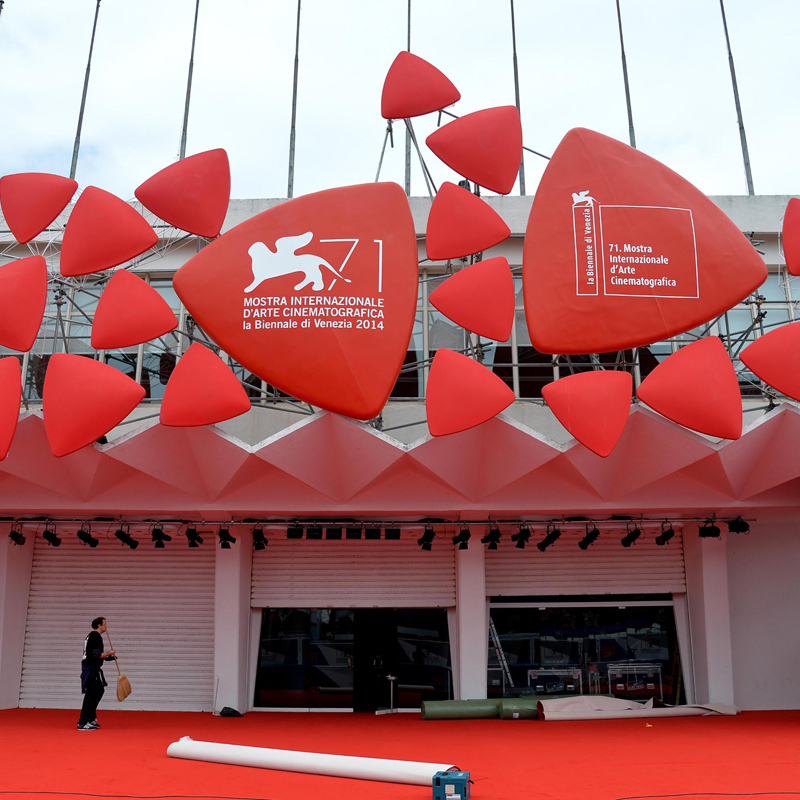
    NEW DELHI: Mukti Bhawan (called as Hotel Salvation) has bagged the UNESCO XXIIIrd Prix “Enrico Fulchignoni” at the Venice International Film Festival.

    The jury said: The award to the film by Shubhashish Bhutiani was being given “for the values finely expressed on the importance of family, time spent together in respect and with love, and those values of human rights which we all share. The maturity and depth of emotions and cinematic vocabulary used to display these belie the young age of the director, and we look forward to seeing many more of his films in the future.”

    The film – which received a 10-minute ovation after its screening at the festival — is a part of the Biennale College-Cinema program at the Venice Film Festival which gives support since 2012 to the young filmmakers to bring their vision to the big screen and, in this case, the effort has borne marvelous fruit.”

    CICT-Unesco Jury comprised Jasmina Boijc (founder and director UNAFF, Stanford University), Pierpaolo Saporito (President of OCCAM, the UN Observatory on Cultural Communication and v.president of CICT-UNESCO, Gabriel Griffin-Hall (Author and Poet), and Eliana Bantchev (CICT-UNESCO General Secretary Delegate).

    In the past, the Prix Enrico Fulchignoni was awarded to, among others: ‘Beasts of No Nation’ by Cary Fukunaga, ‘Miral’ by Julian Schnabel, ‘Land of Plenty’ by Wim Wenders, ‘Tsion, Auto-emancipatie’ by Amos Gitaï or ‘Porto da minha infancia’ by Manoel de Oliveira.

    Three years ago, Shubhashish Bhutiani’s short film Kush had won the Orizzonti Award for Best Short Film.

    The audience in Venice this time was carried away by this universal story of love, redemption and mourning.

    When Daya, a 77 year old man, wakes up from a strange nightmare, he knows his time is up and he must get to Varanasi immediately in the hope of dying there to attain salvation. His dutiful son, Rajiv, is left with no other choice but to drop everything and make the journey with his stubborn father, leaving behind his wife and daughter.

    The two of them check into Mukti Bhawan/Hotel Salvation, a hotel devoted to people hoping to spend their last days there. Rajiv finds himself having to live and take care of his father for the first time in his life.

    The festival which began on 31 August concluded today (10 September 2016) and this film was scheduled for three public and delegate screenings on 2 and 3 September apart from one web streaming.

    The 103-minute film stars Adil Hussain (Life of Pi), Lalit Behl, Geetanjali Kulkarni, Palomi Ghosh, Navnindra Behl and Anil K Rastogi.

    Also read:

    Huge ovation for Hindi film Mukti Bhawan after world premiere at Venice

    New Hindi film to have world premiere at Venice International Film Festival
  • ‘Mukti Bhawan’ wins UNESCO award at Venice International Filmfest

    ‘Mukti Bhawan’ wins UNESCO award at Venice International Filmfest

    NEW DELHI: Mukti Bhawan (called as Hotel Salvation) has bagged the UNESCO XXIIIrd Prix “Enrico Fulchignoni” at the Venice International Film Festival.

    The jury said: The award to the film by Shubhashish Bhutiani was being given “for the values finely expressed on the importance of family, time spent together in respect and with love, and those values of human rights which we all share. The maturity and depth of emotions and cinematic vocabulary used to display these belie the young age of the director, and we look forward to seeing many more of his films in the future.”

    The film – which received a 10-minute ovation after its screening at the festival — is a part of the Biennale College-Cinema program at the Venice Film Festival which gives support since 2012 to the young filmmakers to bring their vision to the big screen and, in this case, the effort has borne marvelous fruit.”

    CICT-Unesco Jury comprised Jasmina Boijc (founder and director UNAFF, Stanford University), Pierpaolo Saporito (President of OCCAM, the UN Observatory on Cultural Communication and v.president of CICT-UNESCO, Gabriel Griffin-Hall (Author and Poet), and Eliana Bantchev (CICT-UNESCO General Secretary Delegate).

    In the past, the Prix Enrico Fulchignoni was awarded to, among others: ‘Beasts of No Nation’ by Cary Fukunaga, ‘Miral’ by Julian Schnabel, ‘Land of Plenty’ by Wim Wenders, ‘Tsion, Auto-emancipatie’ by Amos Gitaï or ‘Porto da minha infancia’ by Manoel de Oliveira.

    Three years ago, Shubhashish Bhutiani’s short film Kush had won the Orizzonti Award for Best Short Film.

    The audience in Venice this time was carried away by this universal story of love, redemption and mourning.

    When Daya, a 77 year old man, wakes up from a strange nightmare, he knows his time is up and he must get to Varanasi immediately in the hope of dying there to attain salvation. His dutiful son, Rajiv, is left with no other choice but to drop everything and make the journey with his stubborn father, leaving behind his wife and daughter.

    The two of them check into Mukti Bhawan/Hotel Salvation, a hotel devoted to people hoping to spend their last days there. Rajiv finds himself having to live and take care of his father for the first time in his life.

    The festival which began on 31 August concluded today (10 September 2016) and this film was scheduled for three public and delegate screenings on 2 and 3 September apart from one web streaming.

    The 103-minute film stars Adil Hussain (Life of Pi), Lalit Behl, Geetanjali Kulkarni, Palomi Ghosh, Navnindra Behl and Anil K Rastogi.

    Also read:

    Huge ovation for Hindi film Mukti Bhawan after world premiere at Venice

    New Hindi film to have world premiere at Venice International Film Festival

  • UNESCO, Indian newspersons condemn killing of mediapersons

    UNESCO, Indian newspersons condemn killing of mediapersons

    NEW DELHI: UNESCO Director-General Irina Bokova today called for an investigation into the killing of journalists Akhilesh Pratap Singh and Rajdev Ranjan who died in separate attacks in northeastern and central India respectively.

    “I condemn the murders of Akhilesh Pratap Singh and Rajdev Ranjan,” the Director-General said. “I call on the authorities to investigate these killings to prevent impunity for crimes against freedom of expression and freedom of information from taking root.”

    On 12 May, unknown assailants shot Akhilesh Pratap Singh, a correspondent for Hindi-language broadcaster Taaza TV, who was also known as Indradev Yadav, in the Chatra district of the state of Jharkhand in the northeast of India.

    Senior reporter Rajdev Ranjan was shot on Friday 13 May in Siwan in the central Indian state of Bihar. He was the bureau chief of the Hindi-language national daily Hindustan.

    Earlier, the Press Council of India also held a meeting to condemn the killings and called upn the Government to ensure security of newspersons in their line of duty.

    The issuance of the UNESCO statements on the killing of media workers is in line with Resolution 29 adopted by UNESCO Member States at the Organization’s General Conference of 1997, entitled “Condemnation of Violence against Journalists.” These statements are posted on a dedicated webpage, UNESCO condemns the killing of journalists.
     

  • UNESCO, Indian newspersons condemn killing of mediapersons

    UNESCO, Indian newspersons condemn killing of mediapersons

    NEW DELHI: UNESCO Director-General Irina Bokova today called for an investigation into the killing of journalists Akhilesh Pratap Singh and Rajdev Ranjan who died in separate attacks in northeastern and central India respectively.

    “I condemn the murders of Akhilesh Pratap Singh and Rajdev Ranjan,” the Director-General said. “I call on the authorities to investigate these killings to prevent impunity for crimes against freedom of expression and freedom of information from taking root.”

    On 12 May, unknown assailants shot Akhilesh Pratap Singh, a correspondent for Hindi-language broadcaster Taaza TV, who was also known as Indradev Yadav, in the Chatra district of the state of Jharkhand in the northeast of India.

    Senior reporter Rajdev Ranjan was shot on Friday 13 May in Siwan in the central Indian state of Bihar. He was the bureau chief of the Hindi-language national daily Hindustan.

    Earlier, the Press Council of India also held a meeting to condemn the killings and called upn the Government to ensure security of newspersons in their line of duty.

    The issuance of the UNESCO statements on the killing of media workers is in line with Resolution 29 adopted by UNESCO Member States at the Organization’s General Conference of 1997, entitled “Condemnation of Violence against Journalists.” These statements are posted on a dedicated webpage, UNESCO condemns the killing of journalists.
     

  • Declaration on press freedom at meet on World Press Freedom Day

    Declaration on press freedom at meet on World Press Freedom Day

    New Delhi: A record-breaking number of participants from all parts of the world have adopted the Finlandia Declaration setting new challenges to ensure press freedom, access to information, safety of journalists and cultural diversity for all media practitioners everywhere.

    More than 1000 media practitioners and stake holders, including representatives of governments during a meeting on World Press Freedom Day on 3 May in Helsinki called on UNESCO’s 195 member states to “reaffirm that press freedom and the right to information are essential for a free, independent and pluralistic media and crucial to the advancement of human rights and sustainable development.”

    In keeping with the new sustainable development goals set by the United Nations for the next 15 years, the Finlandia Declaration stresses the importance of access to information and the responsibility of states in making public information available both on and off-line, and promoting universal access to the internet.

    It also calls on states to ensure the safety of journalists, whose vulnerability to violent attacks undermines press freedom and freedom of information in many parts of the world.

    The Declaration furthermore recognizes the pertinence of UNESCO’s 2005 Convention on the Protection of and Promotion of the Diversity of Cultural Expression, artistic freedom and cultural diversity to the exercise of the fundamental human right of freedom of expression.

    Participants at this year’s main World Press Freedom Day event, organized by UNESCO and Finland, lauded UNESCO’s Executive Board decision to celebrate an International Day for Universal Access to Information on 28 September every year.

    During the two-day conference, the director-general of UNESCO, Irina Bokova, the prime minister of Finland, Juha Sipilä and the host country’s president, Sauli Niinistö, highlighted the paramount importance of press freedom and freedom of information for sustainable development, good governance and a basis for all freedoms.

    The celebration of World Press Freedom Day 2016 drew the support of some 50 civil society and media organizations. Some 100 World Press Freedom Day events have been organized around the world this year.

  • Declaration on press freedom at meet on World Press Freedom Day

    Declaration on press freedom at meet on World Press Freedom Day

    New Delhi: A record-breaking number of participants from all parts of the world have adopted the Finlandia Declaration setting new challenges to ensure press freedom, access to information, safety of journalists and cultural diversity for all media practitioners everywhere.

    More than 1000 media practitioners and stake holders, including representatives of governments during a meeting on World Press Freedom Day on 3 May in Helsinki called on UNESCO’s 195 member states to “reaffirm that press freedom and the right to information are essential for a free, independent and pluralistic media and crucial to the advancement of human rights and sustainable development.”

    In keeping with the new sustainable development goals set by the United Nations for the next 15 years, the Finlandia Declaration stresses the importance of access to information and the responsibility of states in making public information available both on and off-line, and promoting universal access to the internet.

    It also calls on states to ensure the safety of journalists, whose vulnerability to violent attacks undermines press freedom and freedom of information in many parts of the world.

    The Declaration furthermore recognizes the pertinence of UNESCO’s 2005 Convention on the Protection of and Promotion of the Diversity of Cultural Expression, artistic freedom and cultural diversity to the exercise of the fundamental human right of freedom of expression.

    Participants at this year’s main World Press Freedom Day event, organized by UNESCO and Finland, lauded UNESCO’s Executive Board decision to celebrate an International Day for Universal Access to Information on 28 September every year.

    During the two-day conference, the director-general of UNESCO, Irina Bokova, the prime minister of Finland, Juha Sipilä and the host country’s president, Sauli Niinistö, highlighted the paramount importance of press freedom and freedom of information for sustainable development, good governance and a basis for all freedoms.

    The celebration of World Press Freedom Day 2016 drew the support of some 50 civil society and media organizations. Some 100 World Press Freedom Day events have been organized around the world this year.

  • Trade in music and movies shows decline in digital age, but India moves into top ten cultural exporters

    Trade in music and movies shows decline in digital age, but India moves into top ten cultural exporters

    New Delhi, 24 March: Although trade in cultural goods doubled during the period 2004-2013 despite a global recession, there was a decline in both music and movies because of the massive shift among consumers towards web-based services.

    Trade in recorded music products, for example, declined by 27 percent from 2004 to 2013, and trade in movies fell by 88 percent during the same period; however, audio-visual services as a whole steadily gained ground.

    Despite the downturn in the trade of print products, reflected by the decline in newspapers, books held their ground as an important cultural export in some regions, growing by 20 percent from 2004 to 2013.

    A new report from the UNESCO Institute for Statistics (UIS), The Globalisation of Cultural Trade: A Shift in Cultural Consumption–International flows of cultural goods and services 2004-2013, takes an in-depth look at the export and import of cultural goods and services around the world.

    “Trade in cultural goods totaled $US212.8 billion in 2013, nearly double the amount in 2004,” said UIS Director Silvia Montoya. “This is further evidence of the critical role cultural industries play in today’s global economy.”

    However, India and Turkey moved into the top ten countries among emerging markets and exporters of cultural goods.

    From 2004 to 2013 the “dematerialisation”, or the digitisation of products, such as music, movies and newspapers, had an enormous impact on these industries, as their products moved into the realm of cultural services, often sold as web-based subscriptions.

    As more and more cultural goods move from the tangible to the digital, the report notes that obtaining accurate data on the flow of these goods is becoming more challenging.  Finding new sources of data and cooperation between international organizations in the promotion and improvement of cultural trade statistics, especially in the developing world, will help improve the understanding of the real contribution of the trade in cultural goodsto the global economy.

    China is now the lead exporter of cultural goods, followed by the United States. In 2013, the total value of China’s cultural exports was US$60.1 billion; more than double that of the United States at US$27.9 billion.

    While the US has lost its position as the top exporter of cultural goods, it remains the top importer of these goods. In general, developed countries play a smaller role in cultural exports, but still dominate imports.

    Art and crafts have moved up in the ranking of the ten most traded cultural goods, fueled by gold jewelry — a safe harbour in uncertain times.Gold jewelry exports represented more than $US100 billion in 2013.

    Statues, statuettes and paintings also gained ground. Their share of the trade in art and crafts was worth US$19 billion in 2013.

  • Trade in music and movies shows decline in digital age, but India moves into top ten cultural exporters

    Trade in music and movies shows decline in digital age, but India moves into top ten cultural exporters

    New Delhi, 24 March: Although trade in cultural goods doubled during the period 2004-2013 despite a global recession, there was a decline in both music and movies because of the massive shift among consumers towards web-based services.

    Trade in recorded music products, for example, declined by 27 percent from 2004 to 2013, and trade in movies fell by 88 percent during the same period; however, audio-visual services as a whole steadily gained ground.

    Despite the downturn in the trade of print products, reflected by the decline in newspapers, books held their ground as an important cultural export in some regions, growing by 20 percent from 2004 to 2013.

    A new report from the UNESCO Institute for Statistics (UIS), The Globalisation of Cultural Trade: A Shift in Cultural Consumption–International flows of cultural goods and services 2004-2013, takes an in-depth look at the export and import of cultural goods and services around the world.

    “Trade in cultural goods totaled $US212.8 billion in 2013, nearly double the amount in 2004,” said UIS Director Silvia Montoya. “This is further evidence of the critical role cultural industries play in today’s global economy.”

    However, India and Turkey moved into the top ten countries among emerging markets and exporters of cultural goods.

    From 2004 to 2013 the “dematerialisation”, or the digitisation of products, such as music, movies and newspapers, had an enormous impact on these industries, as their products moved into the realm of cultural services, often sold as web-based subscriptions.

    As more and more cultural goods move from the tangible to the digital, the report notes that obtaining accurate data on the flow of these goods is becoming more challenging.  Finding new sources of data and cooperation between international organizations in the promotion and improvement of cultural trade statistics, especially in the developing world, will help improve the understanding of the real contribution of the trade in cultural goodsto the global economy.

    China is now the lead exporter of cultural goods, followed by the United States. In 2013, the total value of China’s cultural exports was US$60.1 billion; more than double that of the United States at US$27.9 billion.

    While the US has lost its position as the top exporter of cultural goods, it remains the top importer of these goods. In general, developed countries play a smaller role in cultural exports, but still dominate imports.

    Art and crafts have moved up in the ranking of the ten most traded cultural goods, fueled by gold jewelry — a safe harbour in uncertain times.Gold jewelry exports represented more than $US100 billion in 2013.

    Statues, statuettes and paintings also gained ground. Their share of the trade in art and crafts was worth US$19 billion in 2013.

  • INA & UNESCO to safeguard, digitise & make accessible 70 hrs of AV programming

    INA & UNESCO to safeguard, digitise & make accessible 70 hrs of AV programming

    NEW DELHI: UNESCO director general Irina Bokova and French National Audiovisual Institute CEO Laurent Vallet have signed an agreement to preserve 70 hours of audiovisual (AV) programming from UNESCO’s valuable collections and make them available to the public.


    Cooperation between UNESCO and INA, which is France’s repository of radio and television archives began 10 years ago on the occasion of the organisation’s 60th anniversary.


    To mark the 70th anniversary, INA and UNESCO decided to reinforce this partnership, undertaking both to preserve and make accessible to the general public a selection of 70 hours of audiovisual programming that includes film, video and audio material.


    UNESCO is in possession of exceptional audiovisual archives containing thousands of items, which bear testimony to 70 years of the world’s cultural history and to the organisation’s activities. As is the case with audiovisual heritage anywhere, these collections are vulnerable, perishable and at risk of being forgotten unless they are digitised and shared with the greatest number.


    INA is presently mobilising the range of its technical capacities to secure the preservation and enhancement of UNESCO’s audiovisual archives: digitisation of material, its organisation and the development of a multiple-use offer for different audiences.


    UNESCO’s material will be accessible to the public on INA’s websites and to professionals on inamediapro.com. It will also be made available to researchers, teachers and students at INA THEQUE centres and partner multimedia libraries across France. INA will also make this audio and video material available for cultural and educational purposes.


    “The agreement marks a new decisive step in raising awareness of the need to implement a safeguarding and digitisation plan for UNESCO’s audiovisual archives. Similarly, in order to safeguard audiovisual heritage, INA invites Member States to reinforce national policies and support safeguarding and enhancement measures for all of UNESCO’s collections,” declared Vallet.


    “This partnership reinforces the strong relationship that already exists between UNESCO and INA. It will help enhance the value of a shared memory, which also sheds light on the recent history of humanity. This is a very concrete way to preserve fragile documents and contribute to the dissemination and sharing of know-how at the service of peace,” said Bokova.

  • Turner commissions documentary on Singapore Botanic Gardens

    Turner commissions documentary on Singapore Botanic Gardens

    MUMBAI: Turner has commissioned a documentary called A World Icon: Singapore Botanic Gardens. The program will premiere on the recently launched World Heritage Channel in Asia. The documentary is expected to air in late 2015 or early 2016.


    The documentary is produced in 4K by Beach House Pictures and uses the state of the art drone technology to film an inspiring aerial cinematography. It also features epic time lapses coupled with slow motion sequences to paint a mesmerizing and unforgettable picture of this botanic masterpiece.


    The documentary will also feature expert historians, botanists and taxonomists who will be seen telling the story of the revered garden from its historical and cultural heritage to the oldest tree, largest orchid collection in the world, colonial buildings and new scientific breakthroughs, whilst shedding light on what future lies in store for this national treasure.


    “The Botanic Gardens of Singapore is not just a green oasis in the heart of one of Asia’s most cosmopolitan metropolis. This is a garden like no other with fascinating stories of history, heritage, culture and science, hidden in each petal, leaf and brick. The project is perfect for World Heritage Channel, which is home to some of the most awe-inspiring history, culture, travel and nature programming. And I cannot think of a more exciting start to the first in a series of original productions for our newest brand, World Heritage Channel, as well as a more fitting way to commemorate Singapore’s golden jubilee anniversary,” said Turner Asia Pacific president Ricky Ow.


    The 150-year-old Singapore botanic garden was inscribed in July 2015 as a UNESCO World Heritage Site at the 39 session of the World Heritage committee in Germany, Bonn. It is the first tropical botanic garden on the UNESCO’s World Heritage List and is the first in Asia. The 74 hectare garden holds a unique and significant place in the history of Singapore and the region.