Tag: UNESCO

  • Royal Enfield and Unesco rev up for Ladakh docuseries on Nat Geo

    Royal Enfield and Unesco rev up for Ladakh docuseries on Nat Geo

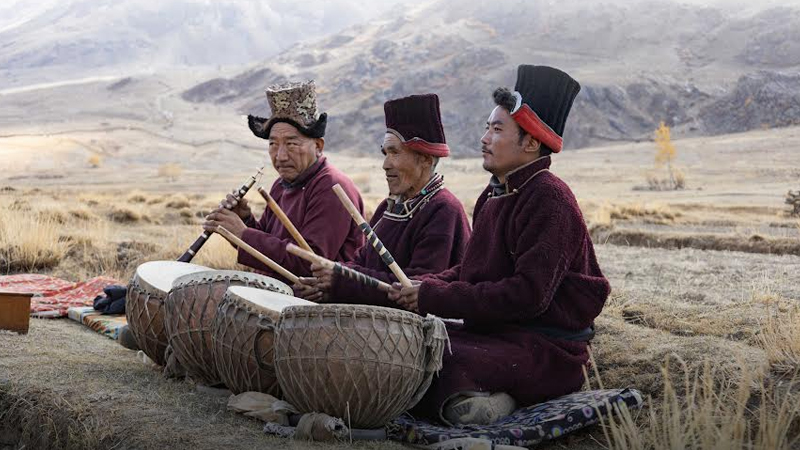
    MUMBAI — Royal Enfield and Unesco are shifting gears from adventure to archival with the third edition of ‘The Great Himalayan Exploration’—a four-part docuseries that captures the heartbeat of Ladakh’s Intangible Cultural Heritage. The series premieres on National Geographic and streams on JioHotstar from 8 PM, 21 June.

    Featuring 40 handpicked rider-researchers out of 1,500 applicants, the project blends motorcycling with meaningful discovery, traversing Ladakh’s remote valleys and high passes to document cultural practices that rarely make it to mainstream maps. From butter tea and Brokpa weaves to archery in Kargil and horse polo in Drass, the docuseries doesn’t just observe heritage—it lives it.

    Notable voices such as Gul Panag, Prateek Sadhu, Bandana Tewari, and Clifton Shipway join the journey, each episode peeling back a different cultural layer, ‘Food, Sports, Crafts, and Community’. Together, they chronicle stories that echo with centuries of tradition but are increasingly at risk in a world spinning faster than the Himalayas can handle.

    For Royal Enfield Social Mission, this marks a significant step forward in our long-term goal of partnering with the Himalayan communities to build resilience.”, said Eicher Group Foundation, executive director, the CSR arm of Royal Enfield, Bidisha Dey.

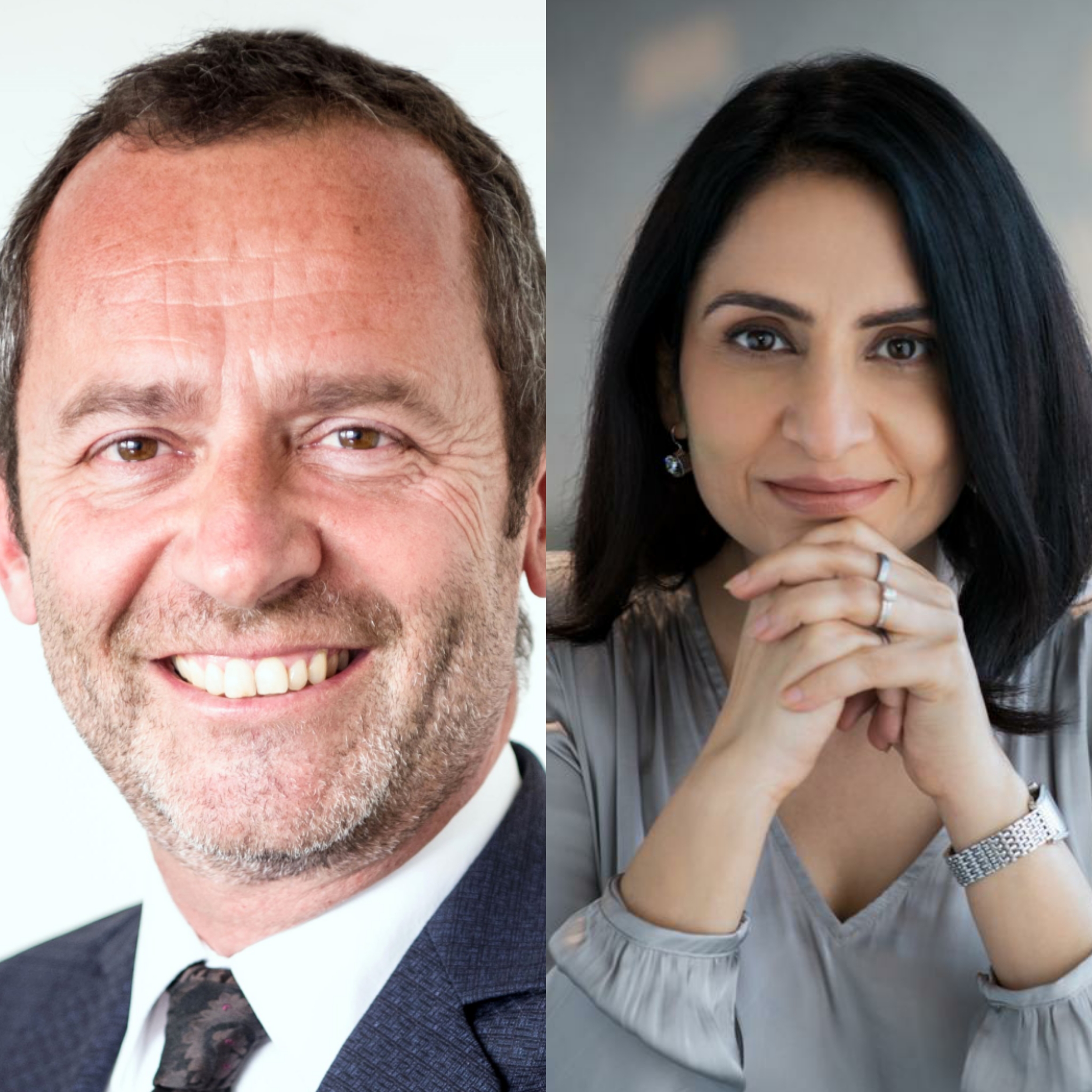
    “Ladakh’s fragile mountain ecosystems and increasing exposure to climate risks make it more urgent than ever to recognize and value the traditional knowledge embedded in its living heritage. These cultural practices—whether in sustainable land use, food systems, or collective rituals—offer not only a sense of identity and continuity, but also vital insights into how communities adapt and thrive in harmony with their environment. At UNESCO, we believe the goal must extend beyond safeguarding and transmission. This is about understanding heritage as a source of resilience, creativity, and social cohesion in the face of global challenges. Our partnership with Royal Enfield’s ‘The Great Himalayan Exploration’ reflects this spirit—showing how heritage is not confined to monuments, but lives in the way we eat, speak, and gather. It is, at its core, a celebration of our shared humanity,” said Unesco Regional Office for South Asia, director and representative, Tim Curtis.

    Launched in 2022, the project is part of a multi-year partnership between Royal Enfield’s Social Mission and Unesco to document 200 ICH practices across the Eastern and Western Himalayas. With Ladakh in focus this season, the series brings visual storytelling to the forefront—culturally immersive, environmentally urgent, and filmed with boots (and wheels) on the ground.

    Because sometimes, preserving the past takes a little petrol, a lot of purpose, and a camera on the move.

  • Digital content creators and their reliance on fictional facts

    Digital content creators and their reliance on fictional facts

    MUMBAI: We have known it for a long time. And many have cautioned us about it as well. 

    Now here’s some data to support the fact that digital content influencers and creators are pretty inventive about the so-called information that they tout as facts.

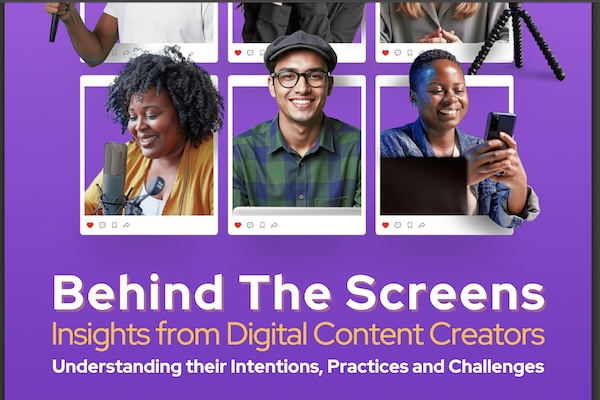
    A Unesco backed  Behind the Scenes survey  has revealed that 62 per cent of influencers do not carry out rigorous and systematic fact-checking of information prior to sharing it.  However,  73 per cent expressed the desire to be trained to do so. 

    The survey is the first global analysis of digital content creators’ motivations and practices, and of the challenges they face. It involved 500 influencers in 45 countries, with the expertise of a dedicated research team at US-based Bowling Green State University.

    The survey found that content creators have difficulty determining the best criteria for assessing the credibility of information they find online. 42 per cent of respondents said they used “the number of ‘likes’ and ‘shares’ a post had received” on social media as the main indicator. 21 per cent were happy to share content with their audiences if it had been shared with them “by friends they trusted,” and 19 per cent said they relied “on the reputation” of the original author or publisher of content. 

    Here’s more: mainstream news media is only the third most common source (36.9 per cent) for content creators, after their own experience and their own research and interviews.

    Clearly, a lot needs to be done to train digital content creators as well as followers who swallow any drivel  that’s dished out to them as a fact. Unesco has launched an online course to address this and educate them. More than 9,000 participants from 160 countries already registered to participate. 

    They will learn how to:
    * source information using a diverse range of sources
    * assess and verify the quality of information
    * be transparent about the sources which inspire their content
    * identify, debunk and report misinformation, disinformation and hate speech
    * collaborate with journalists and traditional media to amplify fact-based information.

    Can some more educational initiatives in India be instituted by educational institutes to educate the digital and social media crowd?

  • In partnership with Ideabrew Studios, Asian Paints brings special podcast ‘Madhur Smriti’

    In partnership with Ideabrew Studios, Asian Paints brings special podcast ‘Madhur Smriti’

    Mumbai: Paint and décor major Asian Paints on Thursday announced its association with Ideabrew Studios to launch ‘Madhur Smriti,’ a podcast series highlighting Durga Puja and commemorating the international recognition bestowed on the festival by Unesco as an intangible cultural heritage of humanity.  

    The series is part of the Sharad Shamman, the festive initiative by Asian Paints where they felicitate the best and most creative pandals across Kolkata. Sharad Shamman has been associated with Kolkata’s Puja festivities since 1985.

    With Madhur Smriti, Asian Paints collects and shares memorable stories and experiences of people surrounding Durga Puja and its festivities. It takes the listener on a journey through time and commemorates the colourful four decades in the history of Kolkata’s Durga Puja.  

    The podcast series of ‘Madhur Smriti’ will be available on Spotify, JioSaavn, Gaana, Apple Podcast, Amazon Music and BingePods.

    Speaking on the launch, Ideabrew Studios co-founder & CBO Agith G Kuruvilla said, “Madhur Smriti literally means Sweet Memories, and this podcast endeavours to take us through a trip down memory lane as we revisit the last 4 decades of the colourful festivities of Kolkata’s Durga Puja. Asian Paints Sharad Shamman is an institution and has contributed immensely in preserving and encouraging this festival, and it’s an honour to celebrate that.”

  • Netflix, UNESCO partner to celebrate India’s diverse cultural heritage

    Netflix, UNESCO partner to celebrate India’s diverse cultural heritage

    Mumbai: Netflix and UNESCO (United Nations Educational, Scientific and Cultural Organisation) have come together to celebrate India’s rich cultural heritage through the popular animated series “Mighty Little Bheem”. Produced by Green Gold Animation, the series was premiered on the streaming platform in 2019.

    Over the next year, Netflix and UNESCO will come up with a series of fun short videos themed ‘One Country, Incredible Diversity’ that will shine a light on India’s cultural journey, including monuments, living heritage, performing arts, social practices, rituals and festivals such as Dussehra, Diwali and Holi. 

    The short videos to be released on UNESCO New Delhi’s Facebook, Instagram, YouTube and Twitter pages, will demonstrate how cultural history enriches people’s everyday lives by covering everything from food and traditions to languages and storytelling. 

    The first video was released on 13 August to celebrate the 75th anniversary of India’s Independence (Azadi Ka Amrit Mahotsav), a day that brings the entire country together.

  • EPIC CHANNEL TO CELEBRATE DUSSEHRA WITH A DAY-LONG LINE-UP OF FESTIVE PROGRAMMING

    EPIC CHANNEL TO CELEBRATE DUSSEHRA WITH A DAY-LONG LINE-UP OF FESTIVE PROGRAMMING

    MUMBAI: As the country gears up to celebrate the symbolic victory of good over evil, EPIC makes the day special for their viewers by airing special programming for the festival of Vijayadashami. The programming aims at giving a varied perspective of the festival along with sharing some great stories and traditions passed down through generations.

     A must-watch in the line-up is the feature, ‘Rampath’, which is a narrative on the Ramleela art form performed in Jaswant Nagar; where the enactment is not on stage as is custom, but is performed across the streets and by-lanes of the town. The performance is recognized by UNESCO as the world's best field Ramleela and categorized as an UNESCO intangible heritage

     While in many parts of India, the festival marks the day of victory of Lord Rama over Ravana, in the EPIC Special Ekaant – Sarhad Paar, host Akul Tripathi travels to Sigiriya in Sri Lanka which many believe to have been the palace of Ravana! On the other hand, Sara Khan, in Kahi Suni, visits Orchha’s Raja Ram temple where Lord Rama is worshipped not as God, but as king of the town.

     The lineup for also includes episodes from Tyohaar Ki Thaali where TV actress Sakshi Tanwar will be seen celebrating Navratri Bathukamma, and Dussehra by cooking traditional recipes associated with these festivals; and Devlok With Devdutt Pattanaik,  where popular mythologist Devdutt Pattanaik will discuss Ravana, versions of Ramayana, Rama's ancestors and the women of Ramayana in his show.

  • Sustainable Development: WhiteBalance produces film for UNESCO Week

    MUMBAI: WhiteBalance, a New Delhi based film production company, has secured the digital campaign rights for the UNESCO MGIEP(Mahatma Gandhi Institute of Education for Peace and Sustainable Development) project that aims to transform education systems around the world. The non profit body was impressed with their strong graphics team, international quality standards and unique storyline depicting the goal of innovation of education systems.

    The film is aimed at developing innovative pedagogies that are aligned with technological advancements that equip the younger generation with 21st century skills that help create peaceful and sustainable societies and foster global citizenship. The organization wanted to put this objective across to the target audience through a compelling visual narrative.

    WhiteBalance came up with various storylines to effectively communicate the client’s message whilst ensuring the animation takes the viewer back to school, so as to act as a reminder of the importance of learning and the positive impact on children required to create global citizens.

    Speaking on securing the rights, Robert Godinho, Founder of WhiteBalance added “This film shines a light on our continuous endeavours at WhiteBalance to push for creative work that rivals global standards. We are extremely proud of the film and our association with a reputed global organization such as UNESCO MGIEP. The fact that the film is primed to be launched in Ottawa, at the UNESCO Week for Peace and Sustainable Development: The Role of Education Conference ,furthers our sense of achievement”.

    Eight animators put in a total of 3600 man hours to bring the film to life, a feat made possible because of the stringent checks and emphasis WhiteBalance places on quality and talent acquisition.

    “At WhiteBalance, we cultivate talent by encouraging our varied team of artists to continually push for innovation in the work that they do. As a team, we cherished working on this project for UNESCO MGIEP to create a film that is at par with international standards of animation work”, said John Paite, Head of the Graphics Team at WhiteBalance. The film is a superior work of animation using advanced 3D animation software such as Maya, Cinema 4D and Adobe After Effects.

    The film highlights UNESCO MGIEP’s effort to make education a joyous experience that can transform mindsets, societies and finally, the world. There has been important and strategic placement of UNESCO MGIEP’s policies and programs are highlighted with keywords that flash across the screen at appropriate moments – terms such as ‘Gandhi Neurons’, ‘sustainable development’ and ‘critical thinking’.

    Watch the film here:

    UNESCO MGIEP from WhiteBalance on Vimeo.

  • UN panel: Time for a ‘new deal’ if b’band is to reach everyone

    NEW DELHI: The Broadband Commission for Sustainable Development has committed to concrete actions that will spur the roll out of broadband around the world as around five billion people are without mobile broadband access, meaning that the paths to access digital services and applications are currently blocked for much of the world’s population – holding back progress towards the 2030 Agenda for Sustainable Development.

    In its 2017 Spring Meeting in Hong Kong, SAR China yesterday, participants at the Commission discussed the need to come up with a new deal between all players, with renewed commitment to work towards concrete actions that will effectively connect the unconnected with broadband – especially to support Least Developed Countries. In particular, emphasis was placed on remote and rural areas which represent the biggest challenge and where barriers to access need to be also viewed through the prism of affordability and content, notably local and multi-lingual content.

    Broadband Commission Co-Chair, President Paul Kagame underlined that “ICT and broadband are linking everyone and everything for the betterment of economies and societies. We are motivated by wanting to have the global community connected, especially the billions of unconnected. We will succeed when we work together: government, industry and civil society leaders.”

    International Telecommunications Union Secretary General Houlin Zhao, who is co-Vice Chair of the Broadband Commission, added, “Our central conviction is that broadband and ICTs are critical if we are to achieve the Sustainable Development Goals. ICTs underpin vital achievements and modern services in many sectors, and governments and industry must increasingly work together to create the conditions so badly needed to facilitate the growth of broadband for sustainable development.”

    The 2030 Agenda provided the context for discussion. UNESCO DG Irina Bokova, co-Vice Chair of the Broadband Commission, noted, “The framework for all our work is the 2030 Agenda for Sustainable Development and the 17 new Sustainable Development Goals. We must ensure the digital revolution is a revolution for human rights, in order to promote technological breakthroughs as development breakthroughs.”

    The importance of scaling efforts on digital education and mobile learning was a matter which received full support and agreement. In advance of UNESCO’s Mobile Learning Week, many Commissioners singled education out as one of the most fundamental areas for action where the Commission can fuel effective change.

    A recurrent issue under discussion was the need to strike a workable balance between investment and taxation, for the benefit of all members of society – to promote human development and sustainable growth, while spurring innovation. On top of this are issues associated with the cost of spectrum auctions, often in key markets where the digital divide is most prevalent.

    The Commission underlined the need to build an ecosystem with government, including all ministries, and private sector working together, for more efficient investment and taxation, to empower all. In this respect, it was recommended to work more closely with Ministries of Finance to better promote the development potential of broadband.

    In the run-up to the day-long meeting of the Commission there was a series of four Working Group meetings focused on a range of broadband-related issues, notably: education, outer space technologies, a new pilot initiative to index the pace of digitalisation at national level, and the digital gender divide.

    In addition, a number of broadband commission partners – the United Nations University and the Berkman Klein Center for Internet and Society and Harvard University – joined forces to launch a new data research group into the digital gender divide.

    Comprising leaders from government, industry, international organizations and academia, the Broadband Commission was established in 2010 as a top-level advocacy body promoting broadband as an accelerator of global development. The Commission is chaired by President Paul Kagame of Rwanda and Mexico’s Carlos Slim Helú. In September 2015 it was re-named the Broadband Commission for Sustainable Development with the specific purpose of working to help achieve, through the power of broadband connectivity, the Sustainable Development Goals.

    The Commission’s Spring Meeting 2017 was hosted by Huawei Technologies which also included a visit to Huawei headquarters in Shenzhen on 17 March 2017.

  • Govt committed to self-regulation on issues of freedom of press: Rathore

    NEW DELHI: Minister of State for Information and Broadcasting Rajyavardhan Rathore today said the Government believes in the philosophy of Self Regulation regarding to the issues related to freedom of Press.

    The Minister was speaking with a UNESCO delegation led by its Assistant Director General for Communication & Information today in New Delhi Frank La Rue.

    The delegation apprised the Minister about the varied activities of UNESCO in the field of Media and Communication. Possible areas of collaboration with the Government were also highlighted by the delegation.

    The Minister said Community Radio will address the information needs at the grassroot level, providing updates on different local and relevant issues in their own language and dialect.

    He said the Government stood committed in its objective to provide the last mile connectivity through various communication platforms including Community Radio which has been provided a big push through various initiatives.

    He said the Ministry has increased the subsidy for setting up CRS from 50 per cent to 90 per cent in the North Eastern States and 75 per cent in other states subject to a maximum limit of Rs 7,50,000. In order to make it more participatory, varied set of participants including Universities and NGOs have been permitted to set up CR stations in the country.

  • China, India world’s largest Internet markets

    China, India world’s largest Internet markets

    NEW DELHI: India has overtaken the United States to become the world’s second largest Internet market, with 333 million users, trailing China’s 721 million.

    A new report released by the UN Broadband Commission for Sustainable Development also confirms that just six nations – including China and India – together account for 55% of the total global population still offline.

    While Internet access is approaching saturation in richer nations, connectivity is still not advancing fast enough to help bridge development gaps in areas like education and health care for those in poorer parts of the world, according to the 2016 edition of The State of Broadband report.

    Globally, an estimated 3.9 billion people are not using the Internet. But, the report estimates that, between them, China, India, Indonesia, Pakistan, Bangladesh and Nigeria account for 55% of all unconnected people, while 20 countries – including the US – account for a full 75% of those not using the Internet.

    These findings suggest that targeted efforts in just a few key markets could help enormously in redressing the gaping ‘digital divide’ between those who are online and those still offline.

    India also recently overtook the US to become the world’s second-largest smartphone market, with an estimated 260 million mobile broadband subscriptions.165 countries have deployed ‘4G’ high-speed mobile networks. As smartphone penetration reaches near-saturation in the US, Europe and mature markets in Asia like Japan and Korea, India and Indonesia in particular are expected to drive future growth.

    According to latest ITU figures, by end 2016 3.5 billion people will be using the Internet, up from 3.2 billion last year and equating to 47% of the global population. The top ten developing countries for household Internet penetration are all located in Asia or the Middle East.

  • China, India world’s largest Internet markets

    China, India world’s largest Internet markets

    NEW DELHI: India has overtaken the United States to become the world’s second largest Internet market, with 333 million users, trailing China’s 721 million.

    A new report released by the UN Broadband Commission for Sustainable Development also confirms that just six nations – including China and India – together account for 55% of the total global population still offline.

    While Internet access is approaching saturation in richer nations, connectivity is still not advancing fast enough to help bridge development gaps in areas like education and health care for those in poorer parts of the world, according to the 2016 edition of The State of Broadband report.

    Globally, an estimated 3.9 billion people are not using the Internet. But, the report estimates that, between them, China, India, Indonesia, Pakistan, Bangladesh and Nigeria account for 55% of all unconnected people, while 20 countries – including the US – account for a full 75% of those not using the Internet.

    These findings suggest that targeted efforts in just a few key markets could help enormously in redressing the gaping ‘digital divide’ between those who are online and those still offline.

    India also recently overtook the US to become the world’s second-largest smartphone market, with an estimated 260 million mobile broadband subscriptions.165 countries have deployed ‘4G’ high-speed mobile networks. As smartphone penetration reaches near-saturation in the US, Europe and mature markets in Asia like Japan and Korea, India and Indonesia in particular are expected to drive future growth.

    According to latest ITU figures, by end 2016 3.5 billion people will be using the Internet, up from 3.2 billion last year and equating to 47% of the global population. The top ten developing countries for household Internet penetration are all located in Asia or the Middle East.