Tag: UK

  • Reliance Communications’ Falcon Cable System becomes operational

    Reliance Communications’ Falcon Cable System becomes operational

    MUMBAI: Reliance Communications owned Falcon Undersea Cable System has started its operational from today unleashing international bandwidth between India, Middle East and Europe.

    The Flag Telecom Global Network would be the world’s largest undersea cable system covering 65,000 route kms, with the launch of Falcon. The current bandwidth on India-Europe route is controlled by VSNL and Bharti.

    “Falcon will have an equally powerful impact on the economic front, driving higher levels of trade, commerce and global integration,” Reliance ADA chairman Anil Ambani said.

    The vision at Reliance ADA group is to ‘give millions of ordinary people across the world the means to realize their dreams, the power to shape their destiny, the chance to fulfill their true and diverse potential,” Ambani added.

    The Flag Global Network bridges the distance between 35 diverse developed and developing economies, connecting the global economic hubs in USA, UK, Germany, France, Middle East, India, Hong Kong, Singapore, China and Japan to name a few.

    The Company’s Flag is the first global network of this scale to provide integrated connectivity on one seamless network to the three highest growing regions; India, Middle East and China; in terms of international bandwidth demand.

  • BBC announces a wedding themed reality show in the UK

    BBC announces a wedding themed reality show in the UK

    MUMBAI: UK pubcaster BBC One has commissioned a new primetime series in which engaged couples volunteer to put all the plans for their wedding day into the hands of their nearest and dearest – only getting to see the results, including the wedding dress, on the big day itself.

    Whose Wedding Is It Anyway? is a five-part series being made by Lion TV. It will give both sides of the family a unique opportunity to genuinely get to know each other.

    The relatives will be given a helping hand by a team of experts led by Nick Knowles, stylist Hannah Sandling and wedding expert James Love. The experts will be there to ensure that the big day runs smoothly, on time and on budget, and be better than the happy couple could have imagined in their wildest dreams.

    Knowles said, “It is supposed to be the happiest day of your life but very often the stresses and strains of organisation and family feuds can make it one of the most trying. We remove the bride and groom from this stress and ramp up all the pressure on the two families by forcing them to make all the decisions with all the consequences you would expect.”

    At the start of the week, Nick will meet the bride and groom to learn about their hobbies, favourite food and colours, personal preferences and outlook. This crucial meeting will be the happy couple’s only input into the elements chosen by our team. From then on, the couple’s own wedding budget will be handed over to their friends and family who will be responsible for making things happen.

    With only five full days to make all the arrangements, Nick Knowles will pull out all the stops and, where necessary, bring in additional expertise to work alongside the family members to make the wedding day special – from top florists, cake makers, DJs, public speakers, bands, artists, to entertainers and jewellers.

    The show will build to the day of the wedding where each of the elements will be revealed to the couple for the first time – along with the odd surprise for both viewers and couple.

    The series producer and director Martin Bisiker said, “A wedding always contains a heady mix of emotion, drama, humour and ceremony but, with the entire process taking just five days to organise, it’s not just the wedding day that becomes the big moment in the film.

    “It’s interesting to see how different families and friends react to a range of tasks throughout the course of the week when there’s just one objective – a perfect wedding.”

  • Sky, Netgear in broadband partnership in the UK

    Sky, Netgear in broadband partnership in the UK

    MUMBAI: Netgear which provides branded networking products, and UK pay TV platform Sky have announced a deal.

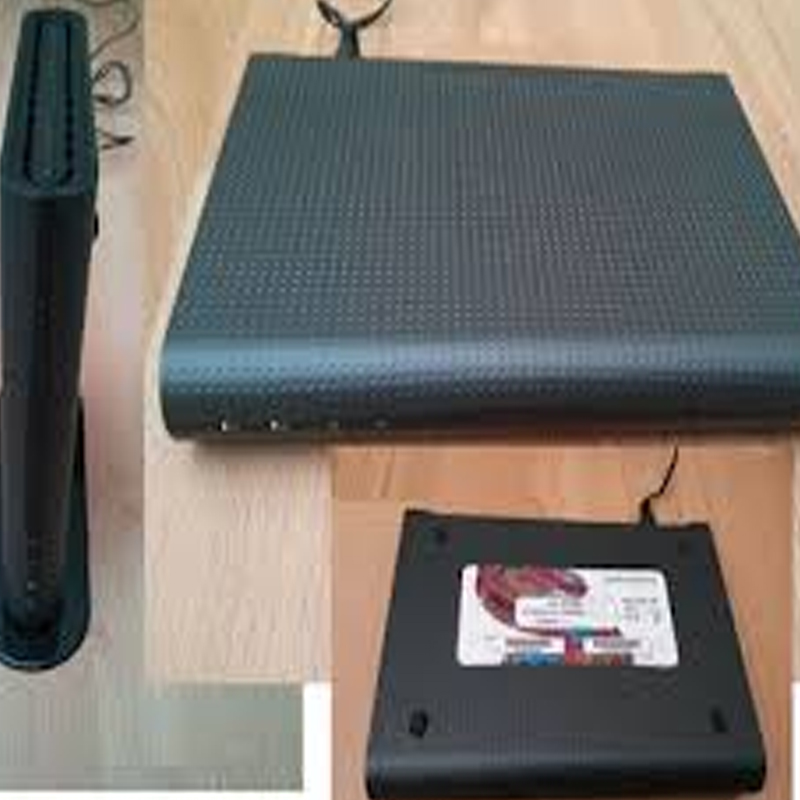
    Netgear’s wireless router technology provided free to all subscribers to Sky’s new broadband internet access service. Sky Broadband can cut household bills by hundreds of pounds a year whilst bringing customers the benefits of both super-fast broadband and wireless connectivity via a customised NETGEAR router, known as the Sky Broadband Box.

    Aiming to provide great-value, fast, easy broadband connectivity for millions of Sky customers, Sky Broadband is available immediately with a choice of products including up to 2Mb download speeds with no monthly subscription. Sky Broadband also offers a choice of other quality products with download speeds of up to 16Mb. Monthly download usage ranges from 2GB to unlimited.

    The launch of Sky Broadband comes as Sky seeks to take advantage of the UK’s accelerating demand for broadband connectivity, which, according to the Broadband Stakeholder Group, will double over next four years with household penetration exceeding 80% by 2010.

    Netgear UK and Ireland country manager Mark Power says, “Netgear too wants to be at the forefront of this growing opportunity. This collaboration with Sky – one of the UK’s highest-profile, premier content providers – should help secure exactly that.

    “With an existing base of more than eight million customers and an offering that clearly spells great flexibility, quality, and value, Sky promises to be a major force in future broadband adoption and integration. Adding free wireless connectivity to this mix makes it more compelling still.”

    Sky’s director of product strategy and management Brian Sullivan says, “Sky is committed to delivering the content that our customers want and they in turn trust us to deliver products and services that work at the touch of a button. Utilising some of the most reliable, cutting-edge wireless technology available today, our agreement with NETGEAR fits this strategy perfectly.”

    The launch of Sky Broadband was made possible by Sky’s network, which already covers 28 per cent of UK households. The network is rolling out fast across the UK and is expected to pass more homes than the entire cable industry by early next year, reaching 70% of all UK households by the end of 2007.

    Sky digital customers who are not covered by Sky’s broadband network can enjoy Sky Broadband Connect, which features all of the benefits of Sky Broadband Mid for a £17 monthly subscription. As the Sky network rolls out across the UK, newly covered Sky Connect customers will be offered the Base, Mid or Max products as their area gets

  • NBC to air Madonna tour in November

    NBC to air Madonna tour in November

    MUMBAI: NBC will airMadonna: The Confessions Tour Live.

    This is a two-hour special and will air in November 2006.The special will be taped this summer at Wembley Stadium in London, UK during the pop icon’s worldwide sold-out 25-city Confessions Tour and marks the first time that NBC will air a concert of Madonna.

    NBC Entertainment president Kevin Reilly says, “Madonna is one of the greatest artists of our time and never fails to generate excitement. We think this is going to be a big event for television.”

    The concert special will feature songs from the artist’s recent multi-platinum Warner Bros. Records release “Confessions On A Dance Floor,” which debuted at No. 1 in 29 countries and has sold over eight million copies around the globe. The broadcast will also include some of Madonna’s greatest hits from her career.

    The broadcaster has also struck a deal for the sitcom Nobody’s Watching. The pilot episode has been downloaded 600,000 times on youtube. The show’s concept centers on Derek and Will, two young television addicts from Ohio who are frustrated with the dreadful state of television programming.

    As a result, they decide to become the subjects of a reality show when a major network gives them the opportunity to create their own sitcom. Unaware that the network executives are manipulating and recording their every word and move, the two continue their crusade to develop what they hope will be great television.

    The pilot for the series had been lying virtually dormant since last eyar until it became available on www.youtube.com several weeks ago. It attracted a good fan base.

  • MTV to celebrate anniversary of Live8 concert globally

    MTV to celebrate anniversary of Live8 concert globally

    MUMBAI: One year on from the historic Live8 concert, MTV Networks International is celebrating the first anniversary of the momentous music event by airing a new special this month called Live8: What A Difference A Day Made. This is being done through a partnership with Network Live. An estimated three billion people all from all over the world watched Live8, billed as the greatest show on earth, where the crème of the world’s music artists came together to perform with one message – make poverty history.

    MTV will premiere the 90-minute special reaching 480 million households around the world in major markets including US, Japan, UK, France, Germany and Latin America. In addition to providing viewers the chance to relive the music spectacular of Live8, Bob Geldof will introduce the programme by giving a retrospective on how far we have travelled since the historic event and why it’s important to remember one year later.

    The programme is a selection of highlights from most inspirational performances and presentations that took place across 10 cities including London, Paris, Berlin, Rome, Ontario, Toyko, Johannesburg, Philadelphia, Moscow and Edinburgh. Live8: What A Difference A Day Made relives the moments when U2, Coldplay, Black Eyed Peas, Green Day, Madonna, Youssou N’Dour and Dido, Robbie Williams, Pink Floyd, R.E.M., Paul McCartney and others captured the hope and optimism of the world and rallied the crowds to fight against poverty in Africa and to lobby the G8 leaders to makes promises on debt relief, Aids drugs, trade tariffs and education.

    The special will air on MTV’s channels in the lead up the G8 Summit 2006 on 15 July in St Petersburg, Russia where G8 leaders are expected to discuss international issues such as global energy security, infectious diseases and education. Live8 was executive produced by Network Live CEO Kevin Wall.

    In 2005 in the week leading to the G8 Summit and Live8 concerts, UK Prime Minister and chair of the G8 summit Tony Blair and Live8’s leading force Bob Geldof took tough questions on African poverty, debt relief and US President George Bush’s policies on climate control from MTV viewers representing 24 countries around the world – including seven African nations.

  • Digital radio is where it’s at

    Digital radio is where it’s at

    SINGAPORE: Looks like it’s time for traditional radio stations in India to pull up their socks, as digital and internet radio is already being lapped up by about 50 million music lovers across the world.

    Not just that, but new ways of accessing music, (via wireless and Internet) has brought in a paradigm shift in the functioning of the traditional audio medium…

    Just a quick dekko at some facts and sweeping changes. With Podcasting gaining ground, interactive and savvy consumers are creating their own customized radio stations online. We already have have more than 40,000 radio stations podcasting live; which is a disturbing fact considering that there are only 30,000 traditional radio stations across the world. Also, the success of sites like myspace.com have gone on to show that social networking sites will become more important for selling music as compared to TV or Radio.

    Media futurist, & ThinkAndLink, CEO, Gerd Leonhard dwelled at length on the future of radio yesterday, the last day of Broadcst Asia. Addressing a packed audience of professionals from across the world, Leonhard said, “Digital & internet radio is now big in countries like UK, Japan, Korea, Scandinavia and very soon it’s going to catch on across the world. Traditional radio companies have to accept this and move ahead with the changes.”

    He further added, “The radio industry is touted to be roughly around $ 50 billion a year, constituting around 15 per cent of total advertising revenues. Now, this pie is going to be further fragmented and shared by mobile companies, and even companies like Apple, Google; even mobile companies as well as wireless companies. What has now emerged is that content owners will not hold distribution rights to their content anymore, so the only thing is to accept this and try to monetize from this. So, one will see a a new type of advertising which will be the revenue driver along with the content.

    Some relevant data which emerged from the session was that myspace.com, which currently has 28 billion page views, seems to be more important tpo advertisers than even a heavy rotation on MTV. Also, to listen to music, it’s the always with you/always on devices that are critical (2 billion mobile users, coupled with 50 million ipods). 
    When queried on his views on the Indian radio market, Leonhard said that, India along with China, and some untapped markets in Africa and Middle East will lead the rapid growth.

    Also, with the mobile and technology revolution sweeping India, the rates will fall further and people will access digital radio sooner than even other parts of the world.

  • Celcom and NSS launch SecretSMS

    Celcom and NSS launch SecretSMS

    BANGALORE: Celcom (Malaysia) Berhad and NSS MSC Sdn Bhd today launched a revolutionary product called SecretSMS. SecretSMS is a simple software that encrypts SMS messages thereby offering security and privacy.

    Starting today, over 2 million Celcom subscribers with smart phones will be able to enjoy a whole new SMS experience, especially those seeking to keep their text life private, states an official release.

    SecretSMS is derived from a backbone technology called XMS (Xecure Message Service) that was developed by NSS. NSS is proud to partner with Celcom to introduce the SecretSMS to the market. Research statistics reveal that this product will appeal to the youth population who use messaging as their primary means of communications, the release adds.

    Text messages that are stored in the phones are readily accessible. Anyone can have access to your phone if it is left unattended. Some personal or sensitive messages might even get read by the wrong person without prior permission, which could eventually lead to unnecessary misunderstandings or even mishaps.

    SecretSMS transmits and stores sensitive messages that are accessible with a password known only to the mobile owners. SecretSMS is powered by 128-bit encryption that encrypts incoming and outgoing SMS’s in the transmission process. To read the encrypted messages, users have to key in the valid password. Hence, mobile users have complete control over their privacy in the SMS communications.

    XMS technology is set to penetrate the global market particularly in the US, UK, Singapore, Indonesia, Philippines, Vietnam, Sri Lanka where NSS is already in talks with the local mobile operators and financial institutions, as per the official release.


  • ‘Key to successful radio programming is to know what territory you can own & defend against predators’ : Steve Martin – BBC World Service on-air editor

    ‘Key to successful radio programming is to know what territory you can own & defend against predators’ : Steve Martin – BBC World Service on-air editor

    BBC World Service on-air editor Steve Martin has been responsible for the present on-air image that BBC’s English Radio Network holds, be it the sound identity of the network or its on-air promotions. Radio, to Martin, is something that establishes a certain personal connection through what it offers.

    According to Martin, content should be strong enough to trigger emotional reactions among consumers. He emphasizes that the players should better know their audience, the better knowledge they have, more acceptable forms of presentation will be created.

    Martin has his own theory on the sales & promotion aspect, which goes beyond the commercial break. He says the content should be creating and raising awareness of the product or the service.

    On his way to London, BBC World Service on-air editor Martin spent two days in Mumbai, attending a seminar organized by FM channel Radio City.

    Indiantelevision.com’s Manisha Bhattacharjee caught up with Martin during his brief stay in the city, to get a perspective on the evolving business.

    Excerpts:

    Could you provide a brief of overview of the current radio status in UK?
    Today, it is an extremely mature and diverse radio market. BBC now operates 10 national networks some of which are only available on the digital platform, the rest of them on FM and AM in the traditional way. And we also operate a network of 38 local radio stations which is centered in all different cities and towns in England. We run two radio stations in Wales, two in Scotland, and two in Northern Ireland. So in any one place in Great Britain you are guaranteed to get at least five to six BBC radio stations. Plus you will get a similar number of commercial services in some places and in some places there are more. It’s a very developed market now.

    Now that is really diverse. Was there any kind of regulatory push, which also enhanced the market?
    In Britain, it is permissible for a radio group to own several radio stations in one market. This isn’t the case in India.

    When this happens you don’t find much similarities between two radio stations, because if you are going to own two radio stations in the same market, the last thing you want to be doing is exactly the same thing and cannibalizing the same audience. So you ensure that the two radio stations are broadly complementary. That makes good business sense and you ensure that on each radio station in a particular territory, which is not only hugely successful but it is also defensible against any other outside broadcaster. The key to successful radio programming is to know what territory you can own and defend against predators.

    That works for the public service as well. In BBC we are publicly funded and do not have a commercial imperative. We are all there to maximize revenues. However, because we are publicly funded, we have a duty to serve absolutely everybody of the UK population. So we have an obligation to ensure that our services are broadly complementary.

    For example: We run a national new music service, which specializes in breaking new music. It is a patronage in the arts in terms of supporting new talents in new music and it plays hits also of the popular culture.

    Please comment on BBC service radio networks’ programming strategy. How different is it from that of commercial radio stations?
    BBC service radio networks are distinctive from the commercial radio stations. It would be wrong to say that we solely do things that the market can’t support. Because we have an obligation to provide something to everybody, the services have to be popular. But these are absolutely distinctive.

    We would take creative risks with our programming such as of BBC Radio 2 – we will do a speech based consumer phone-in and discussion stations are doing that. On Radio 1 we will break great new music and we will take risks with that. We invest in social action programming, investigating issues that young people are facing in Britain today. And on BBC Radio 3 we support orchestras. So our patronage of the hour is not just something having on the plaque on the wall, it is actually real money going into supporting musicians creating music and support the cultural life of Britain today. So that some of the stuff that we do in music, commercial service radio stations don’t indulge in.

    In speech radio, we are the single biggest broadcast news gathering operation anywhere in the world. And in UK specifically, we run an intelligent speech radio station which is not just news and current affairs but includes drama, documentary and cultural programmes.

    Please comment on the competition between BBC and the commercial radio stations. How does it affect the market?
    Commercial radio is first and foremost a business and these radio stations will try to know the most profitable territories in programming terms. I think it is fair to say that because of the pressure of BBC, which is innovating in programming, the commercial radio stations have raised their game and are not going in for cutting the investment in programming and creating the cheapest programming possible.

    Because of the competition from BBC, we have got a healthy creative section within the commercial radio stations in the UK. Commercial radio stations invest heavily in research and keep us on our toes.

    Also, the regulatory framework ensures through the system of licensing that the stations are held to a particular format and have to comply with the terms of format licensing issues by the regulator. This ensures that there is a spread of different formats in any one market. But the commercial stations would want that in any case because they wouldn’t want two stations duplicating the same output.

    In the present scenario, how different is the US radio market from that of the UK radio market?
    They have a public radio network but that is quite different from what BBC is doing and it appeals to a particular niche audience. In recent years, the arrival of satellite radio through XM Satellite and Sirius Satellite Radio, which has made a huge number of formats available from coast to coast, which is great if you are driving. It allows one to listen to the same station through the journey.

    Last year, 25 % of UK radio revenues came from S&P activity

    The evolution of the radio industry, in particular it’s rapidly growing digital uptake, does that signify a threat posed by digital radio to terrestrial radio?
    More radio is good for the industry; it is good for the consumers, because, it gives more choice. You are more likely to hear what you want when you want it. That’s a positive force. BBC has been a pioneer in digital radio in UK, we have strongly welcomed it. It has enabled us to provide new services and are able to reach sections of the community which were otherwise being undeserved.

    It does mean that more communication radio stations will compete against us but that said that adds to the totality of choice available to UK radio listeners and that’s got to be healthy.

    I think where the challenge comes for the commercial stations is to manage the investment. You’ve got to invest in the new technology of rolling out the transmitter networks providing new radio services before getting enough listeners to turn a profit from those. So there is the issue of funding. That’s where the challenges lie from the business point of view.

    BBC has been leading the roll-out of digital radio infrastructure. So we have been an enabler for the commercial. Because every time you buy a digital radio set, not only do you have new BBC radio station but you have access to the new commercial stations as well.

    Radio is probably looking at greater fragmentation of its audience (like any other media). Is this an encouraging sign for the marketers or advertisers?
    If I was an advertiser and I knew there was a radio stations that supports on a functional and emotional level, with a clear voice to my target listeners. I know I will be able to buy just that station and eliminate waste on my ad spend. It is going to be good for advertisers as there is more choice on where to put spends.

    It may mean that in order to reach the audience you need more than one radio station but you can be selective in the stations you buy and eliminate waste.

    If you have only one station in the market, or all the stations sound the same, then you are guaranteeing to be wasting some of your advertisers’ spend. Because you will be talking to people who are not within your target audience or your advertising campaign. So, the more the fragmentation the easier it is to target the specific audience segment you are interested in.

    More relevant, from an advertisers’ point of view, is maximizing reach – the number of different people who listen in a week. But consumers generally hate advertisements as it is an interruption?
    Well, listeners don’t hate radio advertising. They primarily hate bad radio advertising. Secondly, the scene is changing, first there were advertising spots, and then came sponsorship. But now there’s S&P (sales and promotion) and its growing fast. Last year, 25 per cent of UK radio revenues came from S&P activity. It takes the client beyond the commercial break by creating and raising awareness of the product or the service.

    It can exploit the closeness and personal nature of radio for brands. It can also give brand endorsement from popular and trusted RJs and can create great radio entertainment for listeners. It can bring in new listeners for the radio station.

    Today, the Indian radio market is perceived as an industry which is booming. What’s your perception?
    At the moment of course, we have a situation where a lot of radio stations are broadcasting music, of course with a very similar play list. It is yet to be seen, if anybody has the guts or intelligent research in order to tone down or target their music specifically. That’s an inevitability. Whoever does that will be hugely successful in the market.

    Knowing that the radio FM market is at its nascent stage; doesn’t that give even more opportunities for the players to take risks as they are still craving a place for themselves?
    You have to be extremely brave indeed to say good-bye to a certain section of one audience. The industry is booming at the moment people are running successful businesses with this model. I believe the only question is as the radio market matures, how long the situation can continue before the audience will expect a degree of choice? But I think at the same time it would be wrong to suggest that there isn’t some choice there already.

    Though music is largely played, the individual stations have invested in individual personalities who will become listeners’ friends over time and they will be characterizing differently, between station A and station B. So it just doesn’t have to be just about music. It could be emotional qualities, personalities, attitude of the presenters or RJ’s on the air. There are a number of ways you can introduce to a radio station format something that is particular to your radio stations that is owned by you and over time you become famous for and that is about segmentation and building brands.

    Are players reluctant to experiment primarily due to lack of news and current affairs?
    In any market you have to accept the regulatory framework which is in place. And in India, that’s the regulation.

    In markets where it is allowed to broadcast different types of news on radio channels, it is a popular form of radio programming. And you will also find the people will have different news needs as the day continues.

    At breakfast time for example, people tend to want information, the kind of information they need to get into the day and through the day. Then, later in the day, people may want to think a little more about the issues and not just get information but come to their own conclusion about what it means for them. So, we talk about this journey through the day from information in the morning to an understanding in the evening and people have a need for or devote a lot of time to knowing in the morning and thinking in the evening.

    In the markets where we are producing speech programming through the day we produce a range of news programmes. We run a programme called World Today which is a fast moving double headed presentation programme by two presenters. Very high story counts and have live reports from correspondents from across the globe. It is fairly light in tone. Later in the day, News Hour is a longer broadcast with one or two big stories from the day so far with a range of perspectives from the other BBC correspondents and other figures who are involved in the news story.

    We produce news programmes in such a way that they are available to listeners at a time when they better satisfy their news needs.

    What is the strategy to have a successful station format and positioning of the radio channel?
    A key thing about radio is that it is an emotional medium. Radio is company, a complement for life, and so the key thing to be successful in radio, firstly you research in an audience. Know exactly whom you are talking too. What makes them tick. What their interests are. What kind of tone of voice you need to adapt and from there devising a radio format and delivering consistently. So that your audience knows exactly where to find the things that you are offering and you are rendering the whole thing up in a consistent tone of voice which becomes part of your brand identity.

    People around the world say what they love most about their favourite radio stations are personalities, the music, and the local information that helps get them through the day.

  • Discovery launches broadband channel in Germany

    Discovery launches broadband channel in Germany

    MUMBAI: US media firm Discovery has launched Discovery Broadband in Germany. It is now available at www.discoverybroadband.de.

    Discovery Broadband is a subscription service offering access to programming from Discovery via broadband. Focussed on core Discovery genres including animals, machines, engineering, science, history, real life and travel, a full range of content is available to view online.

    This includes shows such as American Chopper, Mythbusters, Deadliest Catch and Conspiracies on Trial. At launch, Discovery Broadband in Germany will offer more than 40 hours of fully languaged programming for broadband consumers to enjoy at their convenience.

    Approximately 10 hours of additional content will be added to the service each month in order to offer enhanced choice each month and build an extensive, wide-ranging library for subscribers to the service.

    Discovery Networks in Germany VP and country manager Dr. Patrick Hörl says, “The launch of Discovery Broadband in Germany underscores our commitment to extend the company’s quality content across multiple media platforms in order to provide increased flexibility, convenience and control to consumers”.

    Discovery Broadband is available to consumers on a monthly or annual subscription basis at a cost of €5 and €50 respectively. Consumers can also access individual programmes for 24 hours on a pay-per-view basis for a fee of €1 or €2 based on the duration of the content. A free one-week trial of the service will be available at launch.

    With a total of more than 12 million broadband subscribers, Germany is currently the largest broadband market in Europe and also one of the top five broadband markets in the world (Source: Organisation for Economic Co-operation and Development, June 2006).

    To access the range of programming available on the Discovery Broadband site, consumers simply register their details at www.discoverybroadband.de to open an online BT click and buy account and will then receive a username and password for continued account access.

    Discovery Broadband is also available in Europe in the UK, France, Italy and the Netherlands.

  • FremantleMedia appoints Dominic Burns as VP licensing, UK

    FremantleMedia appoints Dominic Burns as VP licensing, UK

    MUMBAI: FremantleMedia Licensing Worldwide (FLW) has appointed Dominic Burns as vice president of licensing for the UK market.

    Burns will be responsible for managing the brand licensing, sponsorship and interactive businesses in the UK. In addition to this, he will maximise the value of FremantleMedia’s portfolio of rights and sponsorship opportunities and the exploitation of new commercial opportunities.

    He will be based in London and will report to FLW senior vice president, licensing, UK and Germany Claire Tavernier. Burns replaces Dom Wheeler, who leaves FremantleMedia this month after six years with the company.

    Tavernier said, “Dominic has made a significant contribution to the growth of our sponsorship business in establishing global relationships with major advertisers such as Coca Cola, Nokia and Unilever. His leadership qualities, experience and relationships will be a great asset to our UK business.”

    Commenting on Wheeler’s departure Tavernier added, “Dom was one of the very first members of the FLW team and has contributed immensely to its success. We wish him every success for the future.”

    Burns joined FremantleMedia in 2003 as vice president, sponsorship and advertiser relationships, where he managed all worldwide agreements with advertisers and sponsors. Prior to this, he was head of commercial strategy for Eurosport TV where he was responsible for setting the commercial programming focus of the channel and providing support to the international sales team.

    Further to this appointment, Melissa Goodwin, currently vice president, licensing, EMEA, will be moving to the UK team as vice president, interactive and telephony, UK. In this position, Goodwin will assume day-to-day responsibility for the company’s interactive and telephony business, including voting on The X Factor, home viewer competitions across all of FremantleMedia’s entertainment formats, the commercialisation of the company’s websites and the development of mobile content and games around FremantleMedia and talkbackThames’ extensive TV properties in the UK.

    Also, Pindy O’Brien, currently head of brand licensing, UK, becomes head of brand licensing and retail, UK. The position will see O’Brien expand her role to take on the company’s relationships with the retail sector as well as continuing her work in the area of brand licenses around FremantleMedia and talkbackThames’ UK portfolio.

    Both Goodwin and O’Brien will be based in London and will report to Burns.

    Claire Baker, currently head of retail, UK, will take up Goodwin’s position as vice president, licensing, EMEA. In this capacity, Baker will be responsible for managing the brand licensing, sponsorship and interactive businesses in the Nordic countries, Southern Europe and the Middle East. She will be based in London and will report to FLW senior vice president licensing, Europe, Middle East, Africa and Asia Pacific Mark Newton.