Tag: UK

  • Bodyguard becomes first Bollywood film to collect Rs 1 bn in 1st week

    Bodyguard becomes first Bollywood film to collect Rs 1 bn in 1st week

    MUMBAI: Salman Khan’s Bodyguard has made the fastest run to the Rs 1 billion milestone in India’s box office history. The movie collected Rs 1.05 billion in its first week, bettering performances from other super hits like 3 Idiots and Dabaang.

    “The historic performance at the box office has been helped by the mass following of Salman Khan, the good pairing of Khan and Kareena Kapoor and the extended weekend,” Reliance Entertainment CEO Sanjeev Lamba told Indiantelevision.com.

    Reliance Entertainment carried out an aggressive campaign and chalked out a wide release of the film. “This is also the first film of Salman Khan that has got a bumper opening in the US and is doing exceedingly well in the UK, Australia and New Zealand,” added Lamba.

    In the overseas circuit, the film has grossed ?840,000 from UK and $1,051,132 from US during the extended weekend.

    Meanwhile, another film in which Reliance Entertainment is involved is doing well. The Ajay Devgn-starrer Singham has mopped up Rs 1 billion in its sixth week. The film grossed Rs 510 million in its first week.

    Said Lamba, “A hard-hitting story, the wonderful combination of director Rohit Shetty and star Ajay Devgn and some amazing action sequences have resulted in an extremely successful run for the film. Singham is the first mainstream film produced by Reliance Entertainment and we are very pleased with the results.”

  • Knightley to play Anna Karenina

    Knightley to play Anna Karenina

    MUMBAI: Keira Knightley, know for her films Pride & Prejudice and Atonement is set to star in Joe Wright‘s adaptation of the epic Leo Tolstoy novel Anna Karenina. She 26-year-old will be seen opposite Jude Law and Aaron Johnson in the film.
     
    “Joe Wright will direct the epic romance Anna Karenina, adapted from Leo Tolstoy‘s classic novel by Academy award winner Tom Stoppard. The film made under the banner of Working Title Films, will be filmed in the UK and Russia this month.
     
    Anna Karenina was published in 1873, the novel is considered one of the world‘s great pieces of literature and is the story of love within the Russian aristocracy.
     
    Knightley first came to national attention after starring in 2002 comedy drama Bend It Like Beckham and gained international recognition following her appearance opposite Johnny Depp in Pirates of the Caribbean.

  • Indian reporter wins hearts in the UK

    Indian reporter wins hearts in the UK

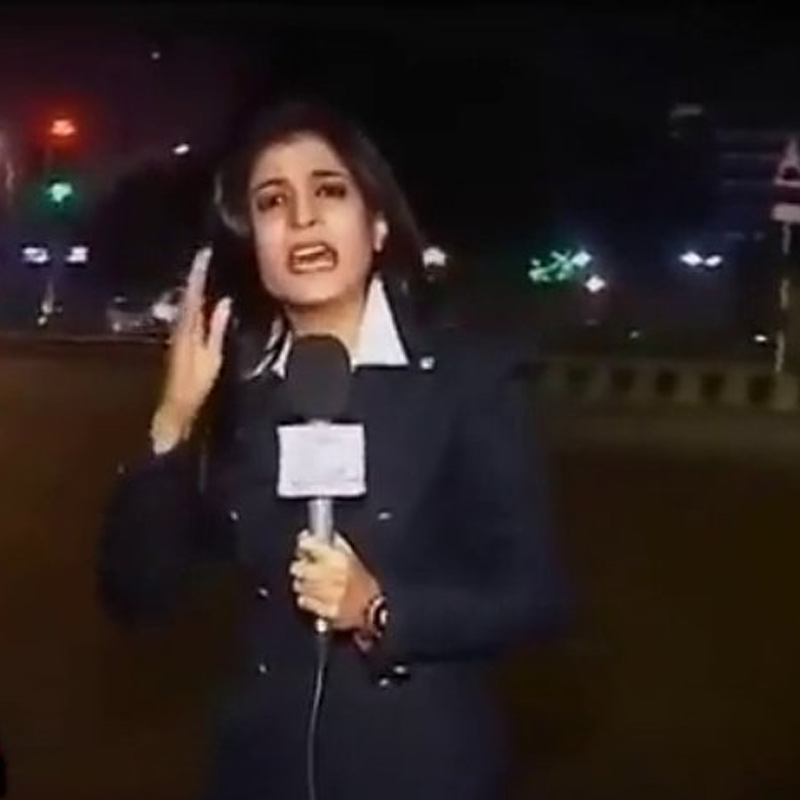
    MUMBAI: Birmingham-based Sangat TV is suddenly on everyone’s radar due to its reporter Upinder Randhawa’s distinctive and live style guerrilla journalism in action.

    Loaded with just a camera and microphone, Randhawa, moving around the city and broadcasting, has become a popular face during coverage of the riots and disorder in Birmingham this week. His emotional reporting over the city’s condition, in the grip of rioters and looters, has struck a chord with television and social network audience alike.

    “I don’t care if I lose my life because at the end of the day it’s about humanity,” he said to viewers in a broadcast, appearing to be visibly distressed. “It’s very emotional and ridiculous what I’m
    seeing.”

    The footage of his team giving cops a lift to chase a suspect has been shown by BBC, Sky and other outlets.

    A Facebook page has now been started in his honour – “Upinder Randhawa from Sangat TV is a Legend”. It is already liked by more than 5,500 people and admiration is pouring in from Indians across the globe.

    The station was started on 1 September last year. It is a religious channel showing news and community-based programmes which rely on donations for funding.

    The channel wanted to shift focus on news within two to five years, but now the station owners are expecting it to happen a lot sooner.

  • ‘Our top three international markets are the UK, Australia and India’ : Dixie Carter – TNA Entertainment president

    ‘Our top three international markets are the UK, Australia and India’ : Dixie Carter – TNA Entertainment president

    In 2002, TNA Entertainment found a gap in the marketplace to compete with WWE. TNA Wrestling was born and is now seen in 120 countries globally.

    TNA has carved out a separate positioning for itself. While WWE is entertainment, TNA is professional wrestling.

    Spending the first five years of its existence on establishing the brand in the US, the focus has been to expand TNA‘s global reach. And India is TNA‘s one of the top three markets outside the US.

    In order to complement its roster of events, ESPN Star Sports (ESS) signed a deal with TNA Wrestling a few years back to broadcast their programming. The sports broadcaster renewed its deal for TNA content last year.

    In an interview with Indiantelevision.com‘s Ashwin Pinto, TNA Entertainment president Dixie Carter elaborates on the company‘s plans to up its game in India.

    Excerpts:

    When TNA Wrestling started out in 2002, what were the key goals?
    In the late 1990s, World Championship Wrestling (WCW) and World Wrestling Federation (WWF) combined for approximate gross revenues of $800-$900 million per year. By the time TNA started in 2002, WWF had the only major international professional wrestling company in the world.

    So there was not only room, but a need for competition in the marketplace. Thus, our goal was to establish TNA as a premiere professional wrestling company worldwide.

    To what extent have these goals been accomplished?
    TNA just celebrated its seventh anniversary and we are now seen in more than 120 countries globally. For the last four years, we have had a tremendous relationship with our US cable TV partner Spike TV and we just signed a new three-year deal with them.

    During the second quarter of this year, more than 1.8 million viewers on an average tuned in to TNA: iMPACT! on Spike TV each week. Overall, TNA: iMPACT! saw a 31 per cent overall growth with double digit increases in the key demographics of M18-49 (+33 per cent) and P18-49 (+40 per cent). TNA now routinely exceeds those ratings of WWE‘s ECW brand and we are closing the gap with their Smackdown brand.

    Additionally, we have grown our international business exponentially in the last two years. By developing relationships with broadcasters in the UK, Australia and with ESPN Star Sports (ESS), TNA has become a global entity.

    We have also assembled a talent roster that can compete with any promotion out there. As far as challenges are concerned, I think that adequate capitalisation is the biggest challenge for any start up. We have had to be smart with our resources and prioritise them. The other main challenge was to convince people that we were going to be around for the long-term, and I think we‘ve done that.

    At the time of launch on one hand you had the success of the WWE. On the other hand, you had the failure of Turner‘s WCW. What were the learnings from this?
    We learned that the fan base will support two professional wrestling companies. Obviously, it is a sobering lesson when a company that generated the revenue and had the success that WCW had, could and would go out of business just a couple of years later. You have to learn from those mistakes made.

    How is TNA positioned vis-a-vis the WWE?
    A couple of years ago, I read a transcript of a Vince McMahon (WWE chairman) interview where he said that WWE is entertainment and TNA is professional wrestling, and I couldn‘t agree more. We want to emphasise our athletes and their athletic ability, and we don‘t run from what we are.

    Could you talk about the strategy TNA is following to grow its reach globally?
    TNA spent the first five years of its existence focussing on establishing the brand in the US. Once we felt that that we were on firm footing, we began to expand our reach. I think that the United Kingdom is a good case study for what we are trying to accomplish globally.

    First, we established a successful relationship with a top TV partner, and then built the brand through promotional appearances and then eventually live events and consumer products.
    ‘TNA needs to provide ESS with more content such as TNA Epics and regularly scheduled promotional appearances with TNA superstars in India‘

    How much of a challenge is it to grow fan loyalty for the brand given the competition from the WWE and an increasingly fragmented media environment?
    In four years, we have doubled our average audience on Spike TV in the US and are beating our competitors programming in key countries worldwide. By that alone, we are the fastest growing wrestling company in the world.

    WWE is the gold standard in the professional wrestling business, but a lot of people have stopped watching wrestling. And as the upstart company, we have the opportunity to offer something different.

    In how many homes is TNA seen globally and what new television deals were signed recently?
    TNA is seen in over 120 countries around the world with many millions of viewers tuning in each week. We recently signed new deals with Foxtel in Australia, Canal 9 in Denmark and W9 in France.

    Where does India fit in the scheme of things for TNA?
    India offers a tremendous opportunity for TNA. From a consumer index standpoint, if India continues its recent financial growth it will become the fifth largest consumer economy by 2025 and we want to be a part of that.

    Aside from television licensing revenues, we have to activate our strategy for live events and other commercial opportunities.

    What are the different shows that TNA offers and has this been increased over the past year?
    TNA‘s flagship show is the weekly two hour series TNA iMPACT! In addition, we produce 12 monthly three hour pay-per-views per year. TNA Xplosion is a one-hour edited version of iMPACT! airing outside the United States with some exclusive content added. We also recently launched a one-hour show in a ‘best of‘ format called TNA Epics. This show highlights the best matches, moments and superstars in TNA history.

    In the ratings sweepstakes TNA is behind the WWE in India. What is the game plan to close this gap?
    TNA needs to provide ESS with more content such as TNA Epics and regularly scheduled promotional appearances with TNA superstars in India. We currently are on a one week delay in terms of the content broadcasted in India versus the United States.

    We hope to close that gap and have our programmes airing within the same week. And obviously, planning live events in India is a major piece of our strategy.

    We are planning a promotional tour in India in conjunction with ESS. TNA superstars haven‘t visited since 2005, so we are long overdue to return. We are also creating customised station IDs and bumper breaks.

    In terms of revenues what growth do you see this year? How much of it comes from outside the US?
    We are looking for a 10 per cent growth this year. This year, approximately 15 per cent of our revenue will come from international markets. Our top three markets are the UK, Australia and India.

    Is new media playing a more important role in TNA‘s brand building strategy?
    TNA was an early adopter of YouTube, and subsequently we are now one of their most all-time viewed channels with close to 200 million views. We continue to strive to stay on the cutting edge of new media and social networking technologies such as Twitter, Facebook, MySpace and whatever forms of communication can best help TNA reach out to its fans.

    We also reward our die-hard fans with opportunities available exclusively online and not to the general public. For instance, if you follow TNA on Twitter, at live events we hide a backstage pass in the venue and then reveal its location exclusively on our Twitter account. The fan who finds it gets to go backstage during the show.

    What plans does TNA have in the licensing and merchandising space?
    We have learned to be patient and selective in choosing our licensing partners. Aligning with great companies is what will create successful licensing programmes, create great products for our fans and bring TNA the most revenue.

    Jakks Pacific is our new worldwide master toy licensee and we will launch our first action figures and play sets together starting in summer 2010. We are very excited about adding this to our licensing and merchandising mix. TNA has been out of the toy category for two years and our fans have been asking for these products. For this reason, we expect great success when we launch our toys next year.

    We released our first video game in September 2008 with Midway Games which to-date has sold close to 1.5 million units. We are currently evaluating our options for our next video game partner due to the Warner acquisition of Midway and expect to make an announcement soon.

    For our trading cards and sports memorabilia our partner is Tristar. In particular our trading cards have been a great success. We‘ve just launched our third series to retail this month.

    Internally, we create our own merchandise across several categories and sell it directly to our fans at live events and via shoptna.com. We specifically focus on designing and creating our own apparel. We also handle the creation of our replica belts, and specialty collectible merchandise like the Sting bats, Superstar programs and collectible TNA books.
    TNA has stars like Kevin Nash, Jeff Jarett who have wrestled for years in other organisations. Does this familiarity make it easier for fans to connect with the TNA brand?
    TNA tries to strike a balance between recognisable names from other companies and our own homegrown talent. We‘ve found that the combination of both seasoned veterans and the next great superstars of tomorrow elevates our entire brand.
     

    Have fans‘ attitudes towards sports entertainment changed over this decade as per research?
    There is an old saying — “for those who believe, no explanation is necessary; and for those who don‘t believe, no explanation is possible.” The mission for TNA in 2009 and beyond is to attract more people who believe that professional wrestling is a great form of entertainment, and that TNA is their preferred brand of professional wrestling.

    When WCW closed down, there was worry that wrestlers and fans would not have an alternative apart from the WWE. To what extent has TNA managed to emerge as a healthy option?
    After seven years we have emerged as the only healthy option for both talent and fans alike. Since TNA started, several people have tried and failed to develop an alternative or competition to WWE and TNA.

    One challenge is to cultivate new talent. What is TNA‘s strategy in this regard?
    Since we don‘t currently have a developmental territory, we have to keep a close eye on the best unsigned talent around the world.

    Recently, we signed Ayako Hamada from Japan and Sarah Stock from Mexico, both female talents who are going to do great things for our Knockouts division. We are actively looking for Indian talent as well.
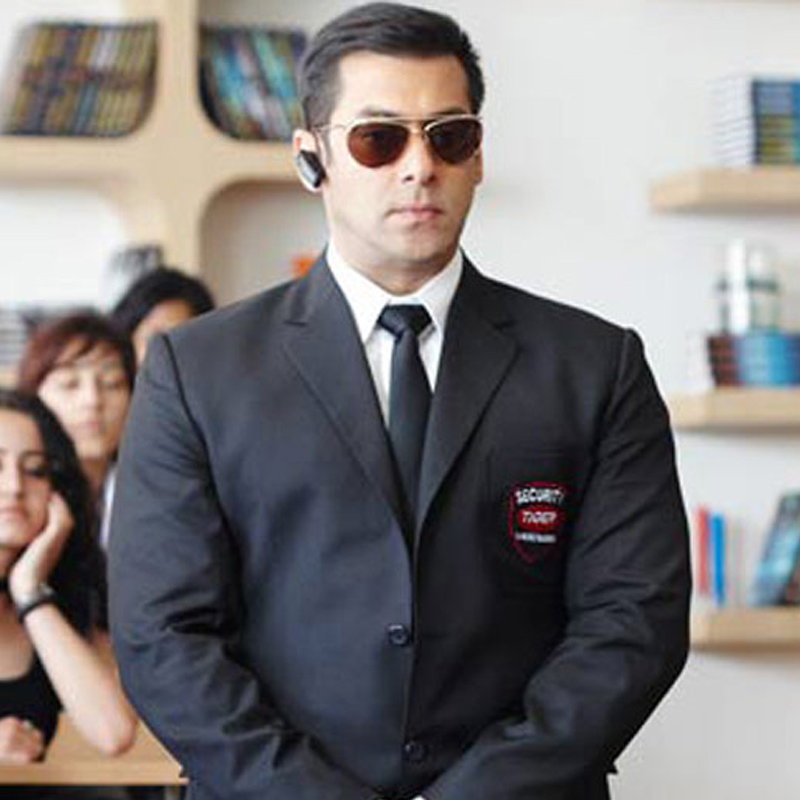

    Hamada from Japan and Sarah Stock from Mexico, both female talents who are going to do great things for our Knockouts division. We are actively looking for Indian talent as well.
    When WCW closed down, there was worry that wrestlers and fans would not have an alternative apart from the WWE. To what extent has TNA managed to emerge as a healthy option?
    After seven years we have emerged as the only healthy option for both talent and fans alike. Since TNA started, several people have tried and failed to develop an alternative or competition to WWE and TNA.

    One challenge is to cultivate new talent. What is TNA‘s strategy in this regard?
    Since we don‘t currently have a developmental territory, we have to keep a close eye on the best unsigned talent around the world.

    Recently, we signed Ayako Hamada from Japan and Sarah Stock from Mexico, both female talents who are going to do great things for our Knockouts division. We are actively looking for Indian talent as well.

  • ‘India is fast becoming one of WWE’s most important international markets’ : Andrew Whitaker- WWE president, International

    ‘India is fast becoming one of WWE’s most important international markets’ : Andrew Whitaker- WWE president, International

    World Wrestling Entertainment (WWE) has emerged as one of the strongest TV brands in India, providing sports broadcaster Ten Sports a daily diet of popular content.


    While US stays as its main revenue earner, WWE’s international revenues make up 26 per cent, or $135 million, of its total pie. UK, Australia and France are its top three markets in terms of size, but the fan base in India is growing. So is WWE’s efforts to market the property as it recently brought down one of its Superstars Kane for a promotional visit to Mumbai and Delhi.


    Despite the enormous proliferation of content in the market, WWE is a significant force within the entertainment and pop culture.


    In an interview with Indiantelevision.com’s Ashwin Pinto, WWE president, International Andrew Whitaker unveils the company’s growth plans in global markets.


    Excerpts:

    Why do you think WWE is so effective in connecting with audiences globally?
    One of WWE’s greatest strengths is that it offers quintessential American content that translates well across cultural boundaries. Developed over the last 25 years, our broad portfolio of specialised business units ranges from live and televised entertainment through to consumer products, digital media and our studios division. These business units, all marketed and distributed under the WWE brand, have made WWE into the recognised global leader in sports entertainment. The content is easy for audiences to relate to. So regardless of our fans’ culture or language, they can become enthralled in the drama, storylines and characters.

    In terms of revenue and business generated, how much comes from outside the US?
    In 2008, international revenues represented 26 per cent of total annual revenue for the WWE, equating to around $135 million. The top three markets in terms of size are currently the UK, Australia and France.

    Where does India fit in?
    Given how quickly the WWE’s fan base continues to grow in size, loyalty and passion, India is fast becoming one of WWE’s most important international markets.

    Ten Sports recently started airing WWE content in the same week as the US. Is this practice followed by most broadcasters globally?
    Yes, we aim to deliver WWE content to our international fans as soon as we can.

    Do you have a special relationship with Ten Sports?
    Ten Sports has been WWE’s television affiliate for over seven years. During this time, it has invested in successfully growing WWE’s profile across India. They are one of our most proactive and supportive television partners internationally.

    Our most important revenue generators are live and televised entertainment and consumer products. Our aim is to continue to grow in these areas, as well as in the digital and studios divisions

    The last time the WWE had a full tour here was back in 2002. How come there has not been more activity in this regard?
    WWE is broadcast in 145 countries globally. We are continuously assessing the right time to hold a live event tour in every market.


    Outside of the US, we deliver around 80 live events per year. While we do not have any confirmed tour dates for India at the moment, we hope to return in the near future.

    Has the number of tours in Asia gone up over the last couple of years?
    Yes, in line with WWE’s growth within Asia, we are also increasing our live events in the region.

    Which of your four divisions has grown the most over the past year?
    Our most important revenue generators are live and televised entertainment and consumer products. Our aim is to continue to grow in these areas, as well as in the digital and studios divisions.

    What increase has there been in revenues derived from television licensing fees over the last five years?
    Internationally, revenues generated from TV licensing fees have grown by well over 30 per cent in the last five years.

    Are you looking at other areas like licensing and merchandising to grow the WWE brand in India?
    Yes. The WWE has appointed an agency to solicit licensing opportunities on our behalf in India, allied to Mattel’s launch of WWE’s new toy line in 2010. The WWE is also exploring the opportunity to develop stand alone official merchandise stores in Mumbai and Delhi.

    WWE reported a drop in the first quarter revenues. By when do you expect to see a turn around?
    During the first quarter, WWE’s core businesses performed relatively well. It is important to note that WWE’s annual WrestleMania event (WrestleMania XXV) occurred on 5 April, 2009 and consequently will be included in our second fiscal quarter financial results.


    By comparison, WrestleMania XXIV in 2008 occurred on 31 March and was included as part of our first quarter results that same year, contributing approximately $31.3 million in revenues and 7.1 million in profit from across our various business lines.


    All in all, despite a challenging economy, WWE stock actually outperformed other entertainment companies on both stock price performance and total return basis for the first quarter of 2009. WWE was actually up 4.2 per cent on a stock price basis versus the likes of CBS, Dream Works and Walt Disney Company, who were all down.

    With the economic slowdown, how is WWE looking to manage costs more efficiently?
    Although WWE is performing relatively well in the current economic environment, as a company we are working to significantly reduce operating expenses. The changes we have made will allow us to deliver even stronger financial performance in a challenging economic climate.

    Could you shed light on how the WWE is using new media?
    WWE’s online presence is continuously growing and developing. We have more than 14 million unique visitors worldwide every month to our primary website, WWE.com, viewing approximately 22 million video streams.


    This makes us a larger site than those of professional sports leagues, such as the NFL and Major League Baseball, and in 2008 WWE was the second most searched term on Yahoo! after Britney Spears.


    We have also launched localised websites in a number of international markets including Spain, Italy, Portugal and, of course, India. In India, WWE has partnered with Sify to deliver a local Indian website. WWE content is also available to fans via on and off portal mobile platforms across the globe.

    In terms of getting in fans at on ground events and driving pay-per-view buys, who are your top three performers at the moment?
    The great thing about WWE Superstars and Divas is that they each hold a different appeal for different fans. While one fan will follow Rey Mysterio or John Cena, another will be a Jeff Hardy supporter. WWE offers something for everyone and that diversity comes to life at live events just by observing the amount of different WWE Superstar signs that are being held and merchandise worn by the fans.
    What have the learnings been from making movies through WWE Studios?
    The success proves that there is an immense appetite from our fans to see their favourite WWE Superstars undertaking movie roles for their enjoyment, either in cinemas or on DVD. It has also highlighted some exceptional talent among several WWE Superstars for applying their acting skills to the big screen.

    How do you view competition like TNA which airs on another sports channel?
    All forms of entertainment are competition for WWE as we compete for the public’s attention and entertainment dollar. For any sports or entertainment company, whether you are Manchester United, U2 or WWE, the biggest concern is the enormous proliferation of content in the market.


    However, WWE is a significant force within entertainment and pop culture. Within our specific entertainment genre, we clearly are the industry leader. While TNA is pro-wrestling, WWE is entertainment.

  • ‘US, Europe and Canada are growing markets for Indian content’ : Adris Chakraborty – Globosat Entertainment director

    ‘US, Europe and Canada are growing markets for Indian content’ : Adris Chakraborty – Globosat Entertainment director

    With the Indian television market booming and the NRI community becoming more affluent, platforms in the UK and US are looking to service this community better. Hoping to take advantage of this is ethnic content aggregator Globosat Entertainment. Formed three years back, the company hatched a deal with Sahara to distribute its channels in the US, UK and Europe. It also markets the religious channel Aastha and works with various platforms.


    Indiantelevision.com’s Ashwin Pinto caught up with Globosat Entertainment director Adris Chakraborty to find out more about the company’s future plans.


    Excerpts:

    What are the changing trends for demand of Indian content overseas?
    Bollywood and cricket are the dominant forms of entertainment. Soaps fare less well as the connect is not there; dubbing or subtitling is needed, or else language becomes an issue. News works but to a much lesser extent, as a lot of the diaspora gets that from the internet. To get people to pay for a news service is difficult. People are to an extent also interested in Indian subjects like alternative healing systems, the investment climate, etc.

    How is Globosat positioning itself to take advantage of this?
    We want to leverage the appeal of Bollywood through video-on-demand service offerings. We are talking with production houses to make their content available on VoD through DTH (direct-to-home) and cable platforms. There are entertainment and movie channels.


    We are also talking with recently launched Indian broadcasters who want to have a presence abroad. We are also talking with FM radio stations to figure out opportunities to distribute their content on a national scale in the US, UK and Europe, under a subscription-based service model.

    Which are the Indian and South Asian channels that Globosat is currently distributing?
    We distribute the Sahara channels in the US, UK and Europe. We also market NDTV News and promote Aastha channel in the US.


    Besides, we are looking at value-added services like ring tones. We are in discussions with a technology service provider to offer subscription-based Bollywood ringback tone services for the South Asian diaspora. We want to work with them to also offer an SMS-based revenue service. The SMS based-revenue, which is big in India, is not being exploited for the South Asian audience. So an NRI watching an Indian Idol on Sony cannot participate through the SMS route. We want to create these kinds of alternative revenue opportunities for our broadcast partners.

    Is interest in Indian content also spreading among mainstream TV viewers in the US and other countries?
    Bollywood is doing that. It is appealing not just to Indians but also to Bangladeshis, Pakistanis and the Hispanic population. They have subtitles or dubbed content.

    What are the services that Globosat offers?
    We work in the ethnic content aggregation and distribution business with focus markets in the US, Canada and UK. Since we understand the South Asian market, we started off in this space.


    With a full-fledged marketing team, we help content owners promote and distribute their offerings under different platforms on a subscription basis. We work with multiple platforms and with multiple markets to get the best possible distribution and revenue for broadcast partners. Content distribution could be in the form of VoD for Bollywood movies. We work with DTH platforms and cable networks to help aggregate their VoD content. We have a 60,000-square-foot playout and broadcast facility in New York with five studios. We also have studios in San Francisco and in Toronto.

    Demand overseas for Indian content is more dominant in the areas of Bollywood and cricket. Soaps fare less well as the connect is not there. News works but to a much lesser extent, as a lot of the South Asian diaspora gets that from the internet

    What are the platforms you have relationships with?
    Our partners include DirecTV, Dish, Rogers, Comcast, Time Warner Cable, and BSkyB in the UK. As the platforms deal with many genres, it is important for us to help them give a marketing push to our offerings. The platforms, after all, do not have the time and energy to market our channels. We offer a value add as we understand the community.

    What is the scene for Indian regional channels in the US, UK?
    They have their own viewing pockets. They are mostly a-la-carte offerings on different platforms. However, there are three Bengali channels which are offered as a package and as a la carte as well.

    Do you use Soundview Broadcasting to create innovative content for South Asian audience in the US?
    We have a couple of shows. There is a show called Green Card about the process of getting one. Then we have Astro Guide and we also do a community news programme Your Voice where we cover the US. We do all this for Sahara. We provide NGOs an opportunity to come and discuss issues on a show called Centrestage.


    We produce some content for Aastha in the US. This includes religious festivities. We do some local programming and plug it on the feed to build up better connection with the subscribers. We also shoot film premieres, interviews and give it to our partners.


    Viewers want to know the reaction to a latest film, for instance. We do this from the point of view of building the subscriber base for our partners. Local production helps build an emotional connect.

    What is the strategy Globosat follows in terms of marketing its offerings?
    Our marketing mechanism is such that we participate in the major media, cultural and trade events in the US, UK, Canada and Europe which are relevant for South Asians. Sometimes we are allowed to put up a booth and run promos of our broadcast partners. We do a lot of cross promotions with print publications. In addition, we do direct mails, dealer network promotions, etc. We also sponsor events like Miss India USA.


    We work with platforms to create new offerings. In Europe, in conjunction with a few channels, we created a DTH platform in partnership with a technology playout called GlobeCast. We partnered with Sony in the UK and created a bouquet to be a compelling subscription-based service. This caters to the Indian and Pakistani diaspora. We also have a major Pakistani channel in that bouquet.

    Do you also do ad sales for channels?
    We have started a full-fledged media agency called Media Morphosis. We help clients with media and print placements. It could be PR or cross- promotion strategies. We are connected with large advertisers, and this helps our broadcast partners. We also use this to market the Globosat channels.


    We are in the process of launching Media Morphosis in India. The aim is to offer our services to Indian channels that are abroad and want help attracting advertisers. We will also help companies who want to reach the South Asian community in the US, UK and Europe. We are talking with Star to do their ad sales in the US.


    Mainstream travel agencies, insurance and money transfer companies in the US and UK find us useful if they want to reach out to the affluent South Asian community. These advertisers also want to partner with broadcasters. We help them leverage relationships in the most cost-effective manner.


    We also organise below-the-line activities, road shows, etc. From a media-buying point of view, we work with a lot of channels. The agency is two years old and we did a gross billing of $2 million with a 30 per cent margin.

    Will you be expanding your footprint to Africa, Australia and Europe?
    We would like to. However, at the moment the bandwith in Australia and Africa is limited. We want to maximise our distribution in the US and Europe which is a large exercise. Canada is a growing market for Indian content.


    South America, unfortunately, is fragmented on the distribution front. Piracy is rampant and the Indian population is also too small to justify going there and marketing our offerings.

    New media platforms like mobile, net, etc. are growing through platforms like JumpTV. How is this impacting the channel distribution business?
    It is a good thing for us and our broadcast partners. We have room to do more effective deals. Earlier, it was mostly DTH. If a broadcaster comes to us, we can now take him to all the platforms. One thing, though, is that mobile technology is very primitive in the US. So it will take time to develop as a broadcast medium there.


    In terms of revenue, what targets does Globosat have?
    With a turnover of $9 million, we are experiencing steady growth.


    What plans do you have for other ethnic content?
    We have tied up with an IPTV platform. They have created a bouquet of Chinese channels. They want us to help them promote and distribute that bouquet in Europe. Our affiliate Soundview also has an Afro-French channel, a Caribbean channel and a Punjabi channel which we distribute in the US and Canada.

  • BBC invites pitches for youth shows in UK

    MUMBAI: Finding original drama for a younger audience remains an ambition for UK pubcaster the BBC. It has invited a range of in-house and independent production companies to pitch two series for young audiences to be broadcast on BBC Three and BBC Switch in the UK.

    The shows will air in 2009 and have a fully integrated multimedia campaign to run alongside the series.

    BBC Three controller Danny Cohen says, “Building loyalty with young viewers is crucial to BBC Three. Developing a slate of returnable, authentic and youthful drama can play a vital role in this.”

    BBC Switch controller Andy Parfit says, “BBC Switch is a distinctive offer for UK teenagers across BBC Radio, TV and on the web. Producing originated British drama for this audience is key for us and I welcome the opportunity to work with Danny on this important collaboration.”

    The series will follow in the footsteps of other recently-commissioned dramas which will include Spooks Liberty, P.A.s and Things I Haven’t Told You.

  • ‘We are keen on bringing in more channels’ : Deepak Shourie – Discovery Networks India MD

    ‘We are keen on bringing in more channels’ : Deepak Shourie – Discovery Networks India MD

    For Discovery Networks India, 2007 has been a year of growth. The company carried out a slew of local initiatives including celebrating 60 years of India’s Independence. It is also looking at airing more HD content from overseas, coming out with thematic week slots for Discovery Travel and Living, and doing local productions.


    In an interview with Indiantelevision.com’s Ashwin Pinto, Discovery Networks India MD Deepak Shourie talks about the company’s eagerness to bring in more channels, address different target segments, and prepare the ground for exploiting new media.


    Excerpts:

    Discovery globally has been undergoing major restructuring this year. Has India been impacted?
    There is more sharing of resources happening now. We see Discovery as one brand rather than saying, for instance, that what is happening in the UK is separate from other countries.


    India is an important part of this brand story. We take content from other parts of the world and what we produce in India travels abroad. With India today being the flavour of the world, this of course helps.

    As cable operators digitalise their networks, do you see this as an opportunity to bring in more channels from the Discovery stable?
    We are examining this possibility. We are keen on bringing in more channels even though we realise that there is no space on analogue cable networks and getting distribution is tough. Cable operators are in a position to demand higher carriage fees due to lack of space. Digitisation will not become a complete reality unless consolidation within the cable industry happens.

    Are you satisfied at the growth of digitisation in terms of Cas and DTH?
    With direct-to-home (DTH), we are happy to see Tata Sky and Dish TV spreading their reach. But with Cas (conditional access system), what we feared would happen has happened. We have been saying that Cas can’t be mandatory; it has to be voluntary. You can’t force it down people’s throats. That is why the uptake of set top boxes (STBs) in the Cas areas has been low.


    Broadcasters are suffering as they have no idea as to how many homes have taken their channels. The multi-system operators (MSOs) do not have a proper billing system in place.

    We are entering a phase when we will see the launch of more English channels. How do you view this scenario of fragmentation?
    We are happy to see more channels come in. Since Discovery is a well established brand, we are not worried about our share of viewership; we have grown to be the number one international channel in the country. We have achieved the aim of making Discovery mainstream as opposed to being niche. The new channels that come in will find it difficult to build viewership.

    Discovery has boosted its reach partly due to its Hindi feed. Are you looking at regional languages?
    No! We were evaluating this possibility. However, we decided that these two languages give us enough reach. In the South, English is well respected.

    For Discovery, we are seeing more male viewership. Discovery Travel and Living targets SEC A men and women. For Animal Planet, a global strategy is being worked out

    Has there been a change in terms of how viewers have consumed the channel over the last couple of years?
    For Discovery, we are seeing more male viewership. This is because of the kind of shows we air. We focus on things like engineering, science and cars which appeal more to men.


    Discovery Travel and Living targets SEC A men and women.


    For Animal Planet, a global strategy is being worked out. We are waiting for this.


    India is a young country with high aspirations. Over time we will see some movement away from entertainment television towards television that is informative. This is how growth will happen for us.

    One of Discovery’s major initiatives was celebrating 60 years of India’s independence. How has the experience been working with India’s scientific and technological community?
    Our aim was to showcase innovations at a grassroots level. It seemed a good way to show the progress India is making. We also want to encourage innovation. The technological community was very open and appreciative to what we did. Local shows play an important part in driving viewers to the channel.

    What has Discovery’s strategy been to lure in more viewership?
    Our main aim has been to ensure that the primetime is very strong. We start with the ‘Wild’ section, then move on to technology, trends and India hour.


    Our aim is to two-fold. Firstly during primetime, the content on our channel must be important and matter to our viewers. Our second aim is to ensure that viewers return to our channel even during non-primetime.

    What are the major properties coming up on the channel?ce?
    The biggest one is Atlas which will kick off towards the latter part of next month. This will look at different countries – India, Australia, Italy and South Africa. The show looks at different facets – be it culture, topography, etc. It has been filmed in high-definition. It looks to combine the quality of a blue-chip documentary with the detail and clarity of HD.


    Another property we are excited about is Into Alaska With Jeff Corwin. Alaska has America’s highest mountain; it has a great element of wilderness as well as fascinating animals. A population of less than that of New York City spreads out over an area three times the size of Texas. Jeff Corwin brings this wilderness to viewers.


    Race To Mars looks at the race to first reach the Red Planet by 2030. China is leading the way.


    Once again, America and its partners, including Canada, are thrust into a winner-take-all space race. Six individuals from Canada, the US, Russia, France and Japan are selected for this gruelling two-year mission. This crew sets out on humanity’s first expedition to another world; nothing can prepare them for the unexpected danger and staggering wonder of what they will experience.

    Abroad Discovery is focussing on the environment with its major eco green initiative. Are you looking to do something in India along these lines?
    We will air this in India. Discovery US has tied up with Leonardo DiCaprio for the eco green initiative. Once this content becomes available we will see what can be done in India to add value.

    Discovery Asia and Nokia teamed up for a filmmaker’s initiative. How has this worked out?
    It was a marketing relationship. This was for mobile filmmaking where the winner got the chance to work in Discovery Asia’s Singapore headquarters and learn about making documentaries. The initiative gave people the chance to innovate.

    How does Discovery Travel and Living reach its viewers?
    Viewers have found us. We have more SEC A viewers watching us than any other channel. Income levels are going up. Where will this money be spent? On lifestyle. That is why they will watch us for information and also entertainment.


    It is a difficult proposition for most channels to catch this audience. People in this segment do a lot of things during their leisure time.

    Has this helped you in roping in big advertisers?
    We have sold most of our inventory. Every lifestyle brand that launches a new product comes to Discovery Travel and Living. At the moment we are doing something for India Today Travel Plus. In the past we have done initiatives for companies like AmEx Platinum Card.


    Is the channel also looking at forging tie-ups with tourist resorts, tourist boards etc?
    In the past, we have done shows for states like Chattisgarh. We did a France Week recently and we did a press event at the French embassy. Sometimes, tourism boards advertise on our channel.

    Could you shed light on Discovery Travel and Living’s plans for the first quarter of next year?
    We have a couple of interesting shows lined up. There is a show called The Petra Nemcova Project; it is about this international supermodel who is grooming six other potential models. The show chronicles the real story of what it takes to be a model in New York City, without staged eliminations or contrived challenges.


    Six new models are brought to the biggest stage in modelling and viewers follow them from their first test shoot to the runways of New York Fashion Week.


    Nemcova serves as a mentor and friend to the prospective models, as they learn the trade of modelling and the business of fashion. Using her own life experiences, Petra advises the models on how to succeed and underscores the importance of having a well-rounded life.


    We will also premiere a show called Nigella Express. Nigella Lawson is a popular TV chef on our channel.


    She takes viewers on a quick and easy journey through the world of getting fabulous healthy food on the table fast. It is the sort of food viewers can cook fast around the clock, any day of the week, to fit whatever amount of time is available. Starting with everyone’s everyday nightmare of what to eat for dinner, to getting entire banquets on the table in less than 30 minutes, this is a series that will resonate with everyone struggling with hurried, time-squeezed, modern life.


    We are also looking at a couple of Indian productions.

    The channel is doing thematic weeks. Could you elaborate on this?
    These run from Monday to Friday at 9-10 pm. It allows us to showcase special programming for viewers. This also works for advertisers as they can sponsor a particular week’s programme. During this quarter, we are doing a lot of country-specific programmes, looking at the adventure spots and opportunities for tourism and travel.


    Abroad, Discovery has looked to expand through new media. What plans are there in India to tap into mobile and internet?
    Both of these are under review. Global strategies are being worked out for them. It will be a different ballgame as the mobile screen is small; it will complement traditional TV viewing as it is good for snippets of news, music and sports.

  • BBC’s show ‘Spooks’ to examine the relationship betweeen the US, UK and Iran

    MUMBAI: UK pubcaster the BBC has announced that its spy show Spooks will return later this year on BBC One. The complex relationship between the UK, Iran and the US is put under the spotlight … but who can really be trusted under this new world order? In India the show airs on BBC Entertainment which is carried on Tata Sky.

    Over the course of 10 hour-long episodes, Adam, Harry and the team are immersed in their most intricate operation to date. The broadcaster says that the distinction between friend and foe becomes ever more blurred. Rupert Penry-Jones, Hermione Norris and Peter Firth return as officers Adam, Ros and Harry of Section D, MI5.

    Raza Jaffrey, Miranda Raison and Hugh Simon also reprise their roles as Zaf, Jo and Malcolm, and welcome new arrival Connie played by Gemma Jones. In the drama, Iran’s covert scheme to become a nuclear power leads to growing mistrust between the British, American and Iranian governments, who all nurse their own agendas to help or hinder the Middle Eastern state in its efforts.

    The volatile climate culminates in a series of high risk operations both at home and abroad. The opening episode sees Zaf, undercover in Tehran, attempt to place a bomb on a civilian train in an effort to flush out a key Iranian spy, an act which could have dangerous ramifications not only for Zaf but for the whole team.

    Meanwhile, the electric atmosphere between Adam and Ros comes to a head, but things are complicated further by Adam’s dangerous ongoing affair with a key asset inside the Iranian embassy.

    Spooks producer Katie Swinden says, “For the first time ever, we’ve chosen to explore one theme throughout the series, and one which is an ongoing concern in today’s world affairs agenda. The relationship between Britain, Iran and the US is such a delicate and topical issue that it opens up a wealth of new storyline possibilities to us.

    “Audiences will be able to follow Adam, Harry, Ros and the team as they take on their most challenging operation to date, and will get to see them in a whole new range of dangerous and exciting situations.”

    The BBC executive producer Sarah Brandist says, “Spooks, one of the autumn highlights for both BBC Drama and BBC One and this year, takes on a more global feel by telling bigger, bolder stories across a wider landscape.

    “BBC One viewers, who are already eagerly awaiting the gang’s return, will be treated to an explosive opening two-parter and, from then on, the action flows from beginning to end. Spooks has returned in style.”

  • Aaj Tak expands to UK with Sony’s Max bouquet

    MUMBAI: TV Today Network has launched its flagship 24-hour Hindi news channel Aaj Tak in UK. This will be available as part of Max Mix bouquet along with ARY Digital, Pakistan’s leading entertainment channel.

    The Max Mix bouquet consists of Max, Sahara One, and Filmy channels.

    TV Today Network CEO and executive director G Krishnan said, “Over the last two years, we have been eyeing opportunities in markets with a sizeable Indian Diaspora. After US, the Middle East and continental Europe, UK is the next logical step for us. Launching Aaj Tak on the Max Mix platform will offer the viewers with live news and analysis from home right into their living room. We are delighted to be a part of the bouquet, which has popular channels representing a wide array of programming.”

    TV Today chairman and managing director Aroon Purie said, “Aaj Tak has been able to successfully widen the viewership base for news in India. Combined with our launch in the US and continental Europe, this step will further widen the base for Indian news internationally.”

    Sony Entertainment Television (SET) executive vice-president for international business Rajan Singh said, “We are absolutely thrilled to be bringing Aaj Tak and ARY Digital into the Max Mix bouquet. These fantastic channels represent a huge addition to Max Mix further enhancing its position as the leading provider of quality Asian entertainment across programming genres. Aaj Tak is India’s leading news channel whilst ARY Digital perfectly compliments Max Mix’s commitment to quality entertainment, choice and value. We look forward to bringing our viewers even more quality channels in the near future.”