Tag: UIDAI

  • ZEE ropes in Nitin Mittal as president – technology & data

    ZEE ropes in Nitin Mittal as president – technology & data

    Mumbai: Leading media conglomerate Zee Entertainment Enterprises Ltd. (ZEE) on Tuesday appointed Nitin Mittal as president – technology & data.

    Prior to joining ZEE, Mittal was the founder CEO & board member for SOLV, a company focused on creating an open platform for B2B commerce, credit, payment, logistics and skilled workforce for the SME segment in India. At Zee, he will lead strategic initiatives in Tech, Data, Artificial Intelligence (AI) & Machine Learning (ML) and Digital across the company to support the ZEE 4.0 transformation, said the company on Tuesday.

    The announcement is part of the media conglomerate’s strategic plans to support its digital pivot, drive exponential growth across digital platforms and fortify the broader transformation it has embarked on, in line with the ZEE 4.0 approach.

    “We have taken concerted efforts and reworked our digital strategy in order to build robust digital assets to enhance the user experience. We are taking concrete steps to further upgrade our technological capabilities, and I am sure with Nitin’s expertise, we will enhance the value proposition of our digital products to create consumer delight,” said ZEE Entertainment Enterprises Ltd, MD & CEO, Punit Goenka.

    The transformation process aims at creating a digitally adept, data first company that will be a leader, in all formats of content consumption, both linear and digital, across India and key international markets.

    Mittal will also lead the engineering team and work closely with president – digital businesses & platforms, Amit Goenka to enhance the customer experience across ZEE5 and support the growth plans of the OTT Platform in India and across the world.

    “The pace of technology-led innovation in the media and entertainment ecosystem is rapidly rising, and a strong blend of technology, data and talent are the critical determinants to succeed in this space. I am glad to welcome Nitin Mittal to our leadership team to drive the digital transformation journey of ZEE 4.0 forward,” said ZEE Entertainment Enterprises Ltd, president – digital businesses & platforms, Amit Goenka.

    Commenting on his new role, Mittal said, “My job at ZEE is to worry about technology in the future. If you want to have a great future you have to start thinking about it in the present, because when the future’s here, you won’t have the time. (Brockman 2003). I’m committed to helping our clients and various teams’ professional dreams come true. As an organization we aim to create an environment that sparks innovation. I will do my best to support and implement the great ideas the teams come up with.”

    Mittal has two decades of experience, during which he has worked with National Payments Corporation of India (NPCI) to build the Unified Payments Interface (UPI) framework for the country and with the Unique Identification Authority of India (UIDAI) on reframing the Aadhar platform to drive the exponential growth of its coverage in India. He was also associated with Standard Chartered, IBM, TESCO, BNY Mellon, Wipro and the Future Group in the past.

  • IAA World Congress 2019 – execs stress on customer centric approach

    IAA World Congress 2019 – execs stress on customer centric approach

    KOCHI: The International Advertising Association (IAA) – a global organisation inaugurated its first ever World Congress in India, in Kochi in grand style. The marquee event saw an eclectic mix of thought leaders, spiritual gurus, entertainers, domain experts and industry professionals discussing the future. Bollywood superstar Amitabh Bachchan, spiritual guru Shri Sri Sri Ravi Shankar, Srinivasan Swamy Chairman & World President, International Advertising Association, Punit Goenka , MD & CEO, Zee Entertainment Enterprises Limited and Kaushik Roy, Vice President/Area Director, Asia Pacific, IAA Global were present for the inauguration ceremony.

    Punit Goenka, in his opening address, stressed on the ‘Brand Dharma’ theme of the World congress, as the basic principle a brand should follow, to connect with its customers and society at large. He said “what matters at the end of the day is the deep connect a brand establishes with the audience and the language, dialects in which the brand speaks with the audience. Also, how purely and honestly does the brand believe in the culture and value system of the audience.”

    Excerpts from some of the key sessions:

    Bollywood super star Amitabh Bachchan also spoke passionately on the topic. He mentioned that –“Customer’s hard earned money is Dharma, and a brand should sell their products accordingly, that should become brand’s Dharma.  He internalised the theme and said that “My face is present on over 24 product's packaging. Not endorsing tobacco and alcohol products, that's my Dharma.”

    Spiritual guru Sri Sri Ravishankar said that If you believe in your product's quality, it is Dharma. He spoke about the dangers of the virtual world that had resulted in personality disorders in young children.  He said that “Video games per say encourages violence in children. Too much of screen exposure to kids impacts their central nervous system and hence the screen usage shall be controlled.”

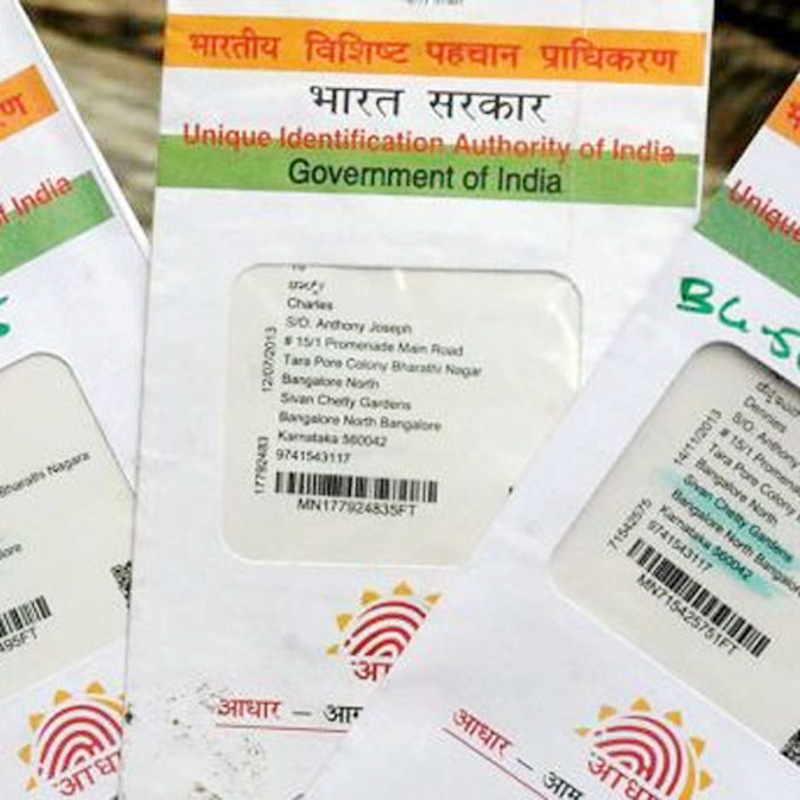
    Nandan Nilekeni, Ex Chairman, UIDAI and co-founder & Non-executive chairman Infosys during his session on “How India uses Digital technology” spoke about how Aadhar has been essential to provide everyone a digital ID.  He also asserted Aadhar was not a data gathering instrument and rather uses minimal data to fulfil two key requirements of providing a basic and unique identity document as well as to ensure welfare benefits reach the right person.

    HANS Paul Burkner, Chairman BCG on his topic Tech for Good talked about how personalisation is possible and doable and is absolute must for most companies as new consumers are really expecting personalisation of information and now companies have the tech to make it work. He indicated the fact that in today’s society, Privacy is dead but security is a big issue and both these are interlinked as there is need of respecting privacy and security needs of the customers. There is an issue of collecting data stealthily and utilising for the benefit of select enterprise. For true personalisation, there should be transparency in collecting data and consumers should control the data collected to bring a balance in personalization and privacy.

    Penny Baldwin, Senior VP and CMO, Qualcomm Technologies spoke about how Mobile is the world’s largest tech platform in the history of mankind and how Brand Dharma of Qualcomm is innovation.   According to Penny Mobile is the largest technology platform with 8 BN connections all over world and There's a huge opportunity for marketers and advertisers to reach their audience even in remotest areas with the rise in data consumption.

    Shivakumar Group Executive President-Strategy & Business Development, Aditya Birla Group, introduced the audience to the DUCA (Digitally unacceptable content and attitude) world. He mentioned that digital has become mainstream. Digital world consumers are more aware and more cynical and more distrusting. He said people trust people like them. In a digital world it is society not your stakeholder and not your board that matters. If you need to build trust you need to build that trust in society. He also shared nine  lessons for brands to survive in the digital age that include, Collective experience is a dominant force, Internal culture and speed of company matters , ethical vs legal (more ethical), heritage is a driver of trust, reliability is the foundation of trust, Data handling , what will you do with it as privacy is big issue and hence brands should self-regulate, should have same standards for transparency for you and partners, have clear social media guidelines, junior people should not handle the social handles of senior agreement.

    Jonas Kjellberg, lecturer, author, venture investor and co-creator Skype talked about three key gears building game changing companies and deploying capital. He spoke about customer acquisition, customer delight and zero cost innovation. Jonas said ,”what a customer loved before, today it has become commodity so there is need to spend time and energy on tomorrow ‘s delight through innovation and not only about today’s efficiency and functionality. Innovation in business model should be zero/ no cost innovation like Air B&B, Uber and Alibaba   as these businesses gained from innovating and not imitating.

  • UIDAI to monitor social media, media coverage of Aadhaar

    UIDAI to monitor social media, media coverage of Aadhaar

    MUMBAI: There have been endless controversies on social media, speculations on news media around Aadhaar’s relevance and constitutional validity. Now, the Unique Identification Authority of India (UIDAI) wants to monitor media coverage of Aadhaar as well as social media conversations, according to media reports. Based on the information, it will run campaigns to “neutralise” the “negative sentiments” on social media.

    UIDAI posted a bid on 18 July seeking to hire a social media agency that will employ “online reputation management” and “social listening” tools. Then another bid posted on 19 July was to hire a media monitoring agency to monitor Aadhaar-related post across print, electronic and digital media.

    The media monitoring agency shall conduct a comprehensive media search on daily basis and present an update report within prescribed time limits on appropriate news reports and content with regards to UIDAI, Aadhaar and other related issues as per the requirements of UIDAI, as per the proposal.

    On the other hand the social media agency has to segregate Aadhaar-related conversations into “problematic and non-problematic” categories and highlight the “incidences” that may have a “negative impact on the Aadhaar brand”.

    The agency will also provide weekly “online reputation management reports” to UIDAI, which will have details of “top detractors, top influencers and the net sentiment related to Aadhaar”.

    “This monitoring activity shall extend to social media platforms, websites (news and others), blogs/ forums, etc. so that issues related to Aadhaar can be understood,” the tender document states.

    “The tools shall be capable of doing a sentiment analysis of all such conversations and flag any discrepancy in sentiments’ trend. Additionally, the service provider will draft a plan to work out and neutralise negative sentiments,” it adds.

    However, the Supreme Court’s final verdict on the constitutional validity of Aadhaar is yet to come.

  • TRAI recommends e-KYC for outstation customers

    TRAI recommends e-KYC for outstation customers

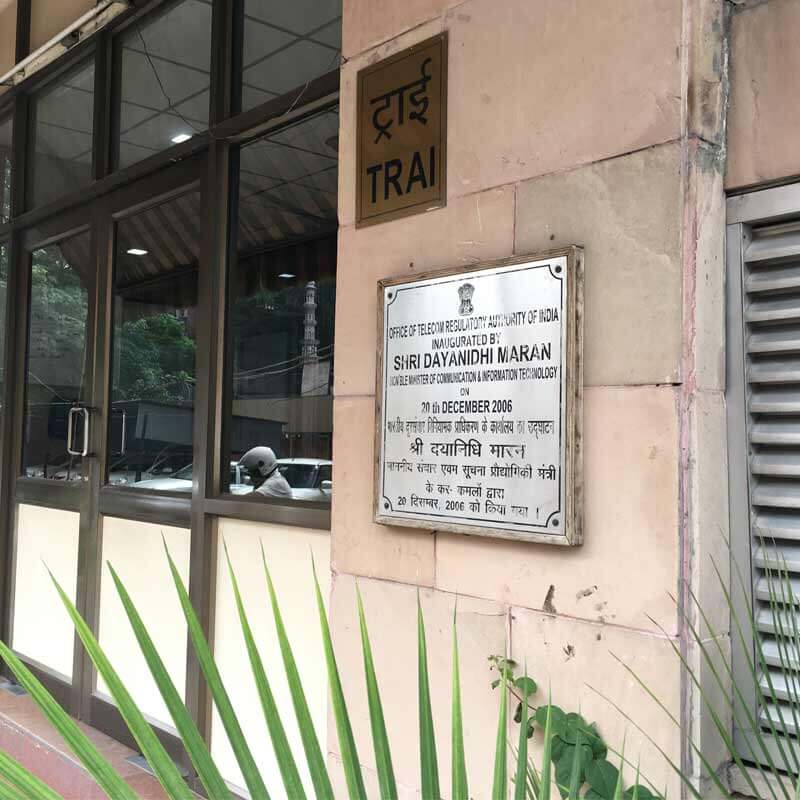
    MUMBAI: The Telecom Regulatory Authority of India (TRAI) has issued its Recommendations on
    (i) “Verification of existing mobile subscribers through Aadhaar based e-KYC services”
    and
    (ii) “Permitting outstation Aadhaar card holders for e-KYC of mobile subscribers.”

    2.Aadhaar linked e-KYC service provides a robust mechanism to verify the identity of the person electronically and instantaneously from the source itself, based on the biometrics of the person. Thus, it takes care of the issues relating to fake/forged identity proof, manual entry into the system etc.

    3. In this regard, TRAI on 6th January 2016 recommended acceptance and adoption of Aadhaar based e-KYC service alongwith Aadhaar based e-Sign as a valid alternative process. Subsequently, on 16 August 2016, DoT permitted the use of Aadhaar based e-KYC service of Unique Identity Authority of India (UIDAI) for issuing mobile connections to customers. These instructions are applicable only for issue of new SIM cards but excludes the huge existing mobile subscriber base from the ambit of e-KYC. Further, use of e-KYC process was not permitted for outstation customers by DoT.

    4. The existing paper-based KYC process is not robust enough and the possibility of significant number of working SIMs, which may have been acquired on fake/forged identity, cannot be fully ruled out. The owner of such fake identity would not even be aware that SIM(s) are working in his/ her name. The Authority has received several cases from State Police (crime branch) wherein it has been found that hundreds of SIM cards have been obtained on fake documents. The existence of such SIM cards poses a real security challenge. It is essential that not only the new subscribers are enrolled through e-KYC process, but the existing subscriber base should also be verified through e-KYC process in a phased manner within a defined timeframe. Further, barring the e-KYC process for outstation customers results in artificial restriction and avoidable inconvenience.

    5. To overcome these challenges, the Authority has submitted its recommendations to DoT and the same have also been placed on TRAI’s website www.trai.gov.in. The main recommendations are:

    (a) DoT may work with the TSPs, to evolve a framework to verify the existing mobile subscribers through Aadhaar based e-KYC services in a phased manner and within a defined timeframe. However, this process should be optional to the service providers as well as mobile subscribers. The subscribers may have to be given some sops in terms of free talk-time or data to encourage them to undergo the e-KYC process.

    (b) Aadhaar based e-KYC should be permitted for outstation customers also at any place within the service area.

  • TRAI recommends e-KYC for outstation customers

    TRAI recommends e-KYC for outstation customers

    MUMBAI: The Telecom Regulatory Authority of India (TRAI) has issued its Recommendations on
    (i) “Verification of existing mobile subscribers through Aadhaar based e-KYC services”
    and
    (ii) “Permitting outstation Aadhaar card holders for e-KYC of mobile subscribers.”

    2.Aadhaar linked e-KYC service provides a robust mechanism to verify the identity of the person electronically and instantaneously from the source itself, based on the biometrics of the person. Thus, it takes care of the issues relating to fake/forged identity proof, manual entry into the system etc.

    3. In this regard, TRAI on 6th January 2016 recommended acceptance and adoption of Aadhaar based e-KYC service alongwith Aadhaar based e-Sign as a valid alternative process. Subsequently, on 16 August 2016, DoT permitted the use of Aadhaar based e-KYC service of Unique Identity Authority of India (UIDAI) for issuing mobile connections to customers. These instructions are applicable only for issue of new SIM cards but excludes the huge existing mobile subscriber base from the ambit of e-KYC. Further, use of e-KYC process was not permitted for outstation customers by DoT.

    4. The existing paper-based KYC process is not robust enough and the possibility of significant number of working SIMs, which may have been acquired on fake/forged identity, cannot be fully ruled out. The owner of such fake identity would not even be aware that SIM(s) are working in his/ her name. The Authority has received several cases from State Police (crime branch) wherein it has been found that hundreds of SIM cards have been obtained on fake documents. The existence of such SIM cards poses a real security challenge. It is essential that not only the new subscribers are enrolled through e-KYC process, but the existing subscriber base should also be verified through e-KYC process in a phased manner within a defined timeframe. Further, barring the e-KYC process for outstation customers results in artificial restriction and avoidable inconvenience.

    5. To overcome these challenges, the Authority has submitted its recommendations to DoT and the same have also been placed on TRAI’s website www.trai.gov.in. The main recommendations are:

    (a) DoT may work with the TSPs, to evolve a framework to verify the existing mobile subscribers through Aadhaar based e-KYC services in a phased manner and within a defined timeframe. However, this process should be optional to the service providers as well as mobile subscribers. The subscribers may have to be given some sops in terms of free talk-time or data to encourage them to undergo the e-KYC process.

    (b) Aadhaar based e-KYC should be permitted for outstation customers also at any place within the service area.

  • TRAI: DAS-Bharatnet Digital India’s ‘Aadhaar’

    TRAI: DAS-Bharatnet Digital India’s ‘Aadhaar’

    NEW DELHI: Telecom Regulatory Authority of India chairman R S Sharma said that the country would gradually shift to a payment system using Aadhaar card instead of the various private pay systems or wallets.

    He also mentioned that the implementation of Bharatnet will be faster and effective with PPP model, and further combined with Digital Cable Television System, India will reach a new level of digital connectivity.

    At a seminar on “Demonetisation to Digital Remonetisation”, Sharma said that “Cost, Convenience, and Confidence are crucial factors for a successful Digital Payment System implementation in India.

    In the meet organzed by FICCI, he said 1.1 billion people already have Aadhaar cards and the number was going up everyday.

    Sharma said one of the nine pillars of TRAI in a report given early this year was to go cashless. This report which also refers to Unified Payment Interface (UPI) and Unstructured Supplementary Service Data (USSD) was already being implemented by banks.

    The regulator was now working on a system of Aadhaar KYC (Know Your Customer) whereby any consumer could directly be able to use his Aadhaar identification to make payments. Electronic KYC is also in place.

    He said that TRAI had given a paper about Aadhaar authentication system to UIDAI as early as October 2010 and said this is vital.

    This involved three elements: What I know (my finger print or Iris), what I have (Credit or Debit Cards) and What I am (Biometrics).

    Aadhaar interoperability was also suggested in 2010. Thus, the software for going cashless is in place but has to be implemented as both software and infrastructure are in place.

    It was important for the finance sector to get integrated into the telecom sector in this regard.

    Answering a question, he said that the systems have to be made simple so that everyone is able to understand and implement them.

    Sharma highlighted the pillars of Digital India and mentioned the need of an effective Digital Infrastructure, and how availability and affordability of digital solutions formulates the base of Digital Remonetisation. The TRAI chairman highlighted how JAM Trinity creates a robust system within India, which further creates a digital inclusion with Aadhaar users across India.

    Sharma recommended that in order to create a well operational and sustainable digital and cashless economy, it is vital to eliminate convenience charge by the banks. He firmly suggested that interoperable or interlinked digital wallets can additionally support the digital payment systems of India.

    The meet was part of an ICT policy dialogue with the agenda to discuss the challenges and opportunities that lie before the ICT sector, government and the regulators following the demonetisation move.

  • TRAI: DAS-Bharatnet Digital India’s ‘Aadhaar’

    TRAI: DAS-Bharatnet Digital India’s ‘Aadhaar’

    NEW DELHI: Telecom Regulatory Authority of India chairman R S Sharma said that the country would gradually shift to a payment system using Aadhaar card instead of the various private pay systems or wallets.

    He also mentioned that the implementation of Bharatnet will be faster and effective with PPP model, and further combined with Digital Cable Television System, India will reach a new level of digital connectivity.

    At a seminar on “Demonetisation to Digital Remonetisation”, Sharma said that “Cost, Convenience, and Confidence are crucial factors for a successful Digital Payment System implementation in India.

    In the meet organzed by FICCI, he said 1.1 billion people already have Aadhaar cards and the number was going up everyday.

    Sharma said one of the nine pillars of TRAI in a report given early this year was to go cashless. This report which also refers to Unified Payment Interface (UPI) and Unstructured Supplementary Service Data (USSD) was already being implemented by banks.

    The regulator was now working on a system of Aadhaar KYC (Know Your Customer) whereby any consumer could directly be able to use his Aadhaar identification to make payments. Electronic KYC is also in place.

    He said that TRAI had given a paper about Aadhaar authentication system to UIDAI as early as October 2010 and said this is vital.

    This involved three elements: What I know (my finger print or Iris), what I have (Credit or Debit Cards) and What I am (Biometrics).

    Aadhaar interoperability was also suggested in 2010. Thus, the software for going cashless is in place but has to be implemented as both software and infrastructure are in place.

    It was important for the finance sector to get integrated into the telecom sector in this regard.

    Answering a question, he said that the systems have to be made simple so that everyone is able to understand and implement them.

    Sharma highlighted the pillars of Digital India and mentioned the need of an effective Digital Infrastructure, and how availability and affordability of digital solutions formulates the base of Digital Remonetisation. The TRAI chairman highlighted how JAM Trinity creates a robust system within India, which further creates a digital inclusion with Aadhaar users across India.

    Sharma recommended that in order to create a well operational and sustainable digital and cashless economy, it is vital to eliminate convenience charge by the banks. He firmly suggested that interoperable or interlinked digital wallets can additionally support the digital payment systems of India.

    The meet was part of an ICT policy dialogue with the agenda to discuss the challenges and opportunities that lie before the ICT sector, government and the regulators following the demonetisation move.

  • Govindraj Ethiraj quits Bloomberg UTV

    Govindraj Ethiraj quits Bloomberg UTV

    MUMBAI: Bloomberg UTV Editor-in-Chief Govindraj Ethiraj has put in his papers at the business news channel. He will remain with the channel till the end of September,working with the business leadership team to ensure a smooth transition.

    Ethiraj will be joining Nandan Nilekani to be a part of the Unique Identification Authority of India (UIDAI) project being undertaken by the Government of India.

    Ethiraj was one of the founding members of Bloomberg UTV (then UTVi) and has played a crucial role in establishing Bloomberg UTV’s operations in the country and growing it from the pilot stage in 2006.

    UTV Group chairman and CEO Ronnie Screwvala said, “Since Bloomberg UTV’s inception, Govind has been one of the key catalysts in ensuring the genesis and birth of a new business entity and successfully navigating it though it’s pilot stage. His departure will be a loss for us, but we fully understand and support his decision to answer to a higher call of duty in being of service to our country. The strong leadership team that Govind has built on the editorial side will ensure that Bloomberg UTV is well set for its next stage of growth across television, internet and mobile.”

    Ethiraj added, “I have always wanted to work on a project that reflected ambition and scale and, at the same time, helped understand my country and its real issues better. The UIDAI project gives me the opportunity to do that and work with an exciting and committed team led by Nilekani.”