Tag: UHD

  • Doordarshan’s future roadmap hinges on new tech, content development & monetisation

    Doordarshan’s future roadmap hinges on new tech, content development & monetisation

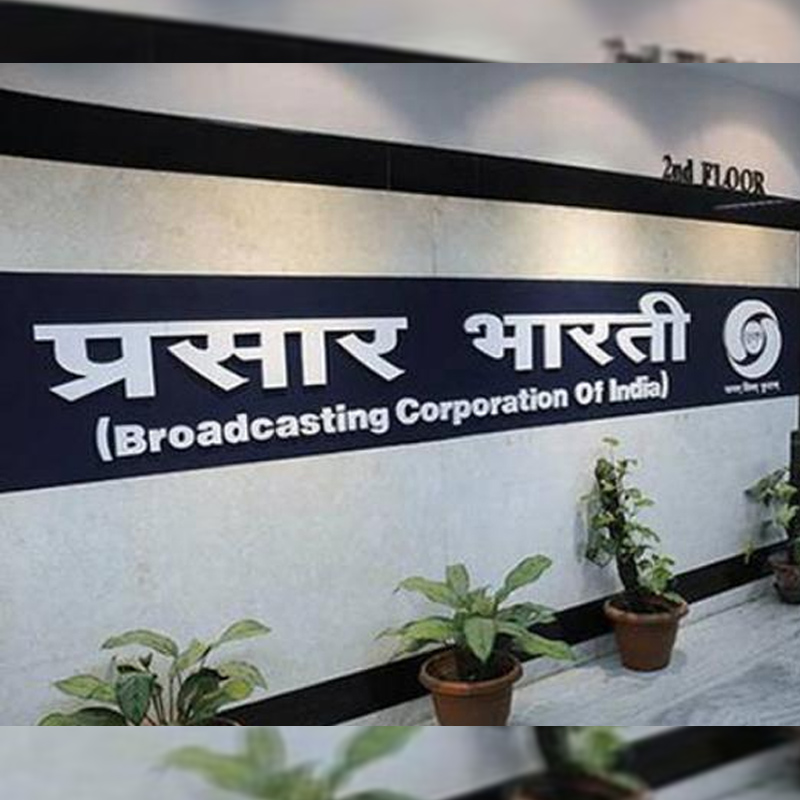
    MUMBAI: Public broadcaster Prasar Bharati is waking up from its slumber. With technology redesigning the media industry, the pubcaster has to quickly adapt to upgradations like ultra-high definition (UHD) along with focusing on over-the-top reach and tapping the huge digital base.

    Several recommendations to boost DD were discussed in the first ever India International Broadcast Conclave 2019 held at Hyderabad in March under the aegis of the Ministry of Information and Broadcasting (MIB). Experts across the media value chain shared their insights for further growth of DD and the industry.

    One of the important recommendations was the participation of DD and AIR in international forums like MIPCOM and other international festivals.  While PB has a huge repository of archival content, monetisation of this asset is the need of the hour. Along with helping in revenue augmentation, it would also ensure a wider reach of rich content to enthusiasts.

    DD also needs to quickly adopt HD and UHD technologies for better picture quality. It has also been suggested that DD should prepare a roadmap for moving towards HD completely. On the other hand, DD needs to tap the huge digital base of consumers nationally as well as globally and take necessary steps for digitising of content and infrastructure. While all the traditional broadcasters are taking the over-the-top (OTT) road, DD can either create its own platform or collaborate with third parties in a revenue sharing agreement.

    Technology is not only important for distribution but also needs to be implemented as a part of overall programming such as augmented reality and virtual reality (AR and VR) in order to innovate and present content tactically. The need to have a separate cell in DD for data analytics for better insights on content has been allowed.

    “DD needs to adopt a professional outsourcing model for content development and acquisition in view of a large number of vacancies of production staff and ageing manpower. DD needs to revamp its tariff rates, put in place a robust sales and marketing teams and monetisation of content to stay ahead in the competition,” the report read.

    To make the changes smoother, there should be a focus also on capacity-building initiatives. At the time of rapid changes, a well-designed skill upgradation programme is the need of the hour. Moreover, collaboration with private agencies to provide training on contemporary skills in areas covering the entire value chain has been suggested. 

    “Commercial activity of broadcast to be efficient to pay for the public service activity. Onus is to be self-sustaining so that it can sustain the organisation. DD Freedish is a good example of public service mandate and achieving commercial sustainability,” PB CEO Shashi Shekhar Vempati highlighted in his ‘Master Class’.

  • Tata Communication, European Tour show how VR can transform golf

    Tata Communication, European Tour show how VR can transform golf

    MUMBAI: The European Tour and Tata Communications have completed the world’s first test of live 360° video in 8K Ultra High Definition – the highest resolution in digital television on 16 October 2018.

    The ground-breaking technology test at Sky Sports British Masters shows how the most immersive 360° video and virtual reality (VR) applications could enable fans at home and at the course to engage with the action in new ways.

    Through a live 360° video in 8K feed, fans could use a VR headset to get a virtual tour of iconic European Tour venues like Walton Heath or Valderrama. The experience could be made even more immersive, enabling fans to step into Rory or Tommy’s shoes for a winning putt or perfect drive.

    European Tour chief technology officer Michael Cole said, “This proof-of-concept is part of our strategy to attract new fans to the sport by harnessing the latest digital technologies and introducing new, shorter and faster formats. With Shotclock Masters, for example, players have just 40 or 50 seconds to play a shot. We’re also using more and more shot data to bring fans more engaging insights. We look forward to leveraging live 360° video in 8K to make each tournament more immersive for golf newbies and our core fan base.”

    European Tour director of tour operations David Garland said, “Live 360° video could support the evolution of refereeing in golf. For example, by equipping key sections of the course with live 360°cameras, officials and referees could assess each shot and situation in real-time, without causing delays for players and fans. From a refereeing perspective, live 360° video in 8k could have potential in the future to allow European Tour referees to assess shots in specific locations, remotely and in real-time.”

    The world-first live 360° video feed in 8K was captured on the 18th hole of the Walton Heath Golf Club course, where fans were able to enjoy the action on a large screen, with VR headsets for a personalised viewing experience. The feed was live transcoded by Visbit, using the company’s View-Optimized Streaming (VVOS) technology. This solution saves up to 80 per cent of bandwidth, enabling the streaming of data-intensive UHD 8K video over a regular Internet connection. The 8K capturing and real-time stitching solution for the proof-of-concept was supplied by Kandao, whose Obsidian 8K VR camera uses six 4K lenses to capture the course from every angle.

    Tata Communication global head of marketing Mehul Kapadia said, “Today’s sports fans are savvier than ever – they have an insatiable appetite for data and content that gives them deeper and higher quality viewing experiences. The adoption of the Video Assistant Referee at the recent FIFA World Cup is just one example of the transformational potential of digital technologies in global sports – which benefits the players, the fans and the entire sports ecosystem. In the same way, apps with live 360° video in 8K would redefine fan engagement in golf, and even have the potential to change how the sport is refereed.”

    Tata Communications is the official global connectivity supplier of the European Tour, bringing video feeds from 47 European Tour tournaments in 30 countries worldwide to 40 broadcasters, reaching close to half a billion golf fans.

  • MEASAT to display Next Generation Compression for UHD channels distribution

    MEASAT to display Next Generation Compression for UHD channels distribution

    MUMBAI: MEASAT Global Berhad (“MEASAT”) announced today a showcase in collaboration with NovelSat and V-Nova to demonstrate cutting-edge compression for Ultra High Definition (UHD) primary distribution over satellite. The new technology provides up to three (3) times bandwidth savings and will be demonstrated live at MEASAT’s booth in CommunicAsia 2018 from 26 – 28 June.

    MEASAT has also partnered with some of Asia’s leading UHD content creators for this must-see showcase. Fashion One 4K, Fun Box UHD, Insight UHD, Love Nature 4K and TravelXP 4K will display their UHD content on a stunning 86 inch 4K UHD TV sponsored by LG.

    The content will be encoded using V-Nova’s PERSEUS Plus codec at 50 fps, 4:2:0 8- bit colour depth and broadcast with DVB-S2 at 8 Mbps. The NovelSat NS4 based solution can deliver more information bit rates per MHz and raises the total transmission capacity. The feed will then be delivered via MEASAT-3 satellite at the 91.5°E orbital slot to CommunicAsia. This solution makes distribution of UHD channels more cost effective without compromising video quality.

    “One reason MEASAT is Asia’s preferred UHD partner is because of our commitment and belief in working with leading technology partners to provide innovative solutions to the market,” said Raj Malik, Senior Vice President – Sales. “With NovelSat and V-Nova, MEASAT continues to be on the cutting edge of broadcast technology and provide significant cost savings for UHD distribution across the Asia Pacific.”

    “Driven by more channels and more high resolution content, MEASAT is constantly on the lookout for solutions that help them manage increasing demand for satellite capacity,” said Ronen Sadan, AVP Marketing, NovelSat. “NovelSat NS4 offers the world’s most efficient satellite transmission technology, which makes it easier for MEASAT to expand their offering using much less bandwidth compared with other solutions.”

    “We are delighted to partner with MEASAT and NovelSat to deliver this monumental step forward in UHD primary distribution,” commented Guido Meardi, Founder and CEO of V- Nova. “Delivering live UHD at the quality consumers demand at just 8 Mbps is simply impossible with any other video codec and is another great showcase of how PERSEUS Plus can transform the economics of video delivery throughout the industry.”

  • HD broadcast to propel switchers market to $ 2.47bn by ’24, A-Pac may surpass N. America

    MUMBAI: As the world transitions from analogue content to digital broadcasting, it is in dire need of broadcast switchers. This trend has created a remarkable demand for broadcast switchers in the developing countries of India, Japan, Africa, Ukraine, and Russia amongst others as they are working towards changing their content and conforming to ITU guidelines.

    According to a report published by Transparency Market Research, the opportunity in the global broadcast switchers market will be worth US$2.47 bn by 2024, rising from US$1.45 bn in 2015. The market is expected to expand at a strong CAGR of 6.1 per cent between 2015 and 2024.

    The complicated issues of broadcasting ultra-high definition (UHD) and high-definition (HD) is the foremost reason why users and service providers are adopting broadcast switchers. The growth this market is also being supplemented by the stiffening competition between production houses that has translated into a need for improved production automation technologies for broadcasting content on television. The broadcast switchers market is also being augmented by the rise in the number of sports events being streamed live that require excellent automation for transmitting seamless visuals. In the coming years, the insurmountable penetration high-definition televisions sets will also propel the use of these switchers.

    Sports Broadcasting to Surpass all Application Segments: The historical analysis of the market indicates that the studio production segment was the largest application segment in the overall market. As of 2015, this application segment held a share of 24.9 per cent. The unique ability of studio production segment with adapt to HD and SD content has made it a popular choice amongst business owners. In the forecast period, the new production segment and sports broadcasting are also likely to make their presence felt in the global market as viewers demand live broadcasts of important events.

    Asia Pacific Shows Promise of Remarkable Growth: As of 2014, North America held the largest share in the global market mainly being driven by upgradation of outdated switchers. During the forecast period, North America will continue its dominance in the overall market due to an influx of HD channels. Furthermore, remarkable growth in studio production and sports broadcasting is also anticipated to play a crucial role in the rise of this geographical segment. However, analysts predict that Asia Pacific will surpass the revenue share of North America in the foreseeable future as the region is on the threshold of a serious transition from analogue to digital broadcasting.

    The top players operating in the global broadcast switchers market are For-A, Ross Video, Ltd, Grass Valley USA LLC, Evertz Corporation, Sony Electronics Inc., Snell Ltd., Panasonic Corporation, New Tek Inc., Blackmagic Design, and others. According to research analysts, several companies in the market are looking at developing IP-based 4K resolution broadcast switchers to tap the unmet demand for high-quality content in the market. In addition to this, these players will also strive to cater to the varied and unique demands of developing countries to win bigger shares in the overall market dynamics.

  • India lucrative market for 4K UHD STBs: Grand View Research

    India lucrative market for 4K UHD STBs: Grand View Research

    MUMBAI: Here’s a view on the demand for 4K or ultra high definition (UHD) set-top boxes (STBs) in India.

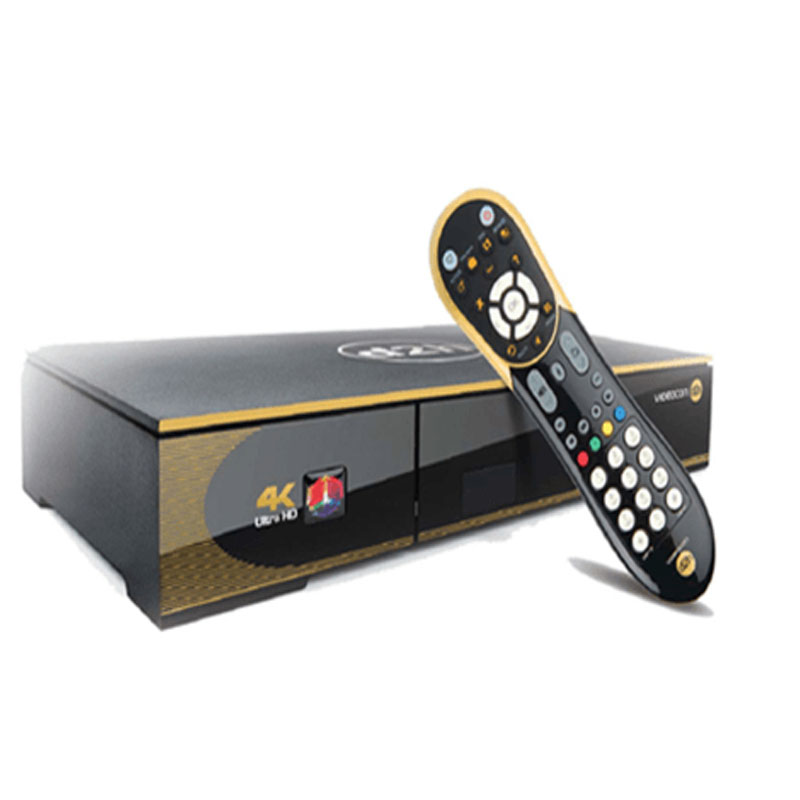
    American research firm Grand View Research Inc has forecast in a new report that India is “poised to emerge as a lucrative market for UHD STBs with the country expected to witness a CAGR substantially higher than the regional (Asia Pacific) average. Several DTH operators such as Tata Sky, Videocon, and Airtel have launched UHD STBs and are attempting to achieve a higher rural penetration with affordable regional packages.”

    The report says that the APAC 4K STB market was valued at just over $50 million in 2015 and will witness a high growth over the next eight years with India leading the charge.

    The Grand View Research Inc analysis states that the global 4K STB market size is projected to reach $7.18 billion by 2024. The growing inclination of the global public towards UHD video viewing can be attributed as the major reason for the 4K STB market growth.

    The demand for media-rich home entertainment services among consumers is increasing and is anticipated to fuel market growth. The growth is further fostered by favourable government initiatives, large-scale digitization programs, and mandatory installation of set-top boxes. Improved standard of living owing to increased purchasing power is positively impacting the industry growth.

    The initiatives undertaken by the Federal Communications Commission for supporting third-party STB manufacturers is paving the way for the expansion of the Ultra High-Definition (UHD) STB industry. The market is anticipated to gain traction in Asia Pacific owing to the strong presence of low-cost set-top box manufacturers, especially in countries such as Korea, Taiwan, and China.

    The increasing penetration of 3D and 4K TVs and escalating demand for large screen displays are fuelling the demand for UHD STBs. Smart features such as STB operability through voice commands given by remote control unit (RCU) is garnering high potential. The computational capabilities of STBs in combination with the advent of quality standards to satiate growing customer expectations have culminated in the STB market growth.

    Further key findings suggest:

    Internet Protocol Television (IPTV) 4K STBs accounted for over 20 per cent of the market share in 2015 and are expected to witness considerable growth over the forecast period. Increasing broadband penetration can be attributed as the major reason for the rise in the market share of IPTV 4K Set-top Box devices.

    The IPTV STB product segment is projected to gain traction owing to benefits such as integration of TV, PC, home phone, and wireless devices offering a high quality of viewing experience to the end-users.

    Key industry participants include ZTE Corporation, SAGEMCOM, Arion Technology, Roku, and Infomir. Manufacturers are emphasizing on UHD STBs incorporated with interactive 4K content to gain a competitive edge in the industry.

    Technology giants such as Apple have managed to make their mark in this competitive industry. The Apple TV device aids the streaming of (Over-The-Top) OTT content and other videos over the internet. The launch of advanced OTT devices such as Google Chromecast media streaming device and Amazon’s Fire TV STBs have opened up new avenues in the industry

  • India lucrative market for 4K UHD STBs: Grand View Research

    India lucrative market for 4K UHD STBs: Grand View Research

    MUMBAI: Here’s a view on the demand for 4K or ultra high definition (UHD) set-top boxes (STBs) in India.

    American research firm Grand View Research Inc has forecast in a new report that India is “poised to emerge as a lucrative market for UHD STBs with the country expected to witness a CAGR substantially higher than the regional (Asia Pacific) average. Several DTH operators such as Tata Sky, Videocon, and Airtel have launched UHD STBs and are attempting to achieve a higher rural penetration with affordable regional packages.”

    The report says that the APAC 4K STB market was valued at just over $50 million in 2015 and will witness a high growth over the next eight years with India leading the charge.

    The Grand View Research Inc analysis states that the global 4K STB market size is projected to reach $7.18 billion by 2024. The growing inclination of the global public towards UHD video viewing can be attributed as the major reason for the 4K STB market growth.

    The demand for media-rich home entertainment services among consumers is increasing and is anticipated to fuel market growth. The growth is further fostered by favourable government initiatives, large-scale digitization programs, and mandatory installation of set-top boxes. Improved standard of living owing to increased purchasing power is positively impacting the industry growth.

    The initiatives undertaken by the Federal Communications Commission for supporting third-party STB manufacturers is paving the way for the expansion of the Ultra High-Definition (UHD) STB industry. The market is anticipated to gain traction in Asia Pacific owing to the strong presence of low-cost set-top box manufacturers, especially in countries such as Korea, Taiwan, and China.

    The increasing penetration of 3D and 4K TVs and escalating demand for large screen displays are fuelling the demand for UHD STBs. Smart features such as STB operability through voice commands given by remote control unit (RCU) is garnering high potential. The computational capabilities of STBs in combination with the advent of quality standards to satiate growing customer expectations have culminated in the STB market growth.

    Further key findings suggest:

    Internet Protocol Television (IPTV) 4K STBs accounted for over 20 per cent of the market share in 2015 and are expected to witness considerable growth over the forecast period. Increasing broadband penetration can be attributed as the major reason for the rise in the market share of IPTV 4K Set-top Box devices.

    The IPTV STB product segment is projected to gain traction owing to benefits such as integration of TV, PC, home phone, and wireless devices offering a high quality of viewing experience to the end-users.

    Key industry participants include ZTE Corporation, SAGEMCOM, Arion Technology, Roku, and Infomir. Manufacturers are emphasizing on UHD STBs incorporated with interactive 4K content to gain a competitive edge in the industry.

    Technology giants such as Apple have managed to make their mark in this competitive industry. The Apple TV device aids the streaming of (Over-The-Top) OTT content and other videos over the internet. The launch of advanced OTT devices such as Google Chromecast media streaming device and Amazon’s Fire TV STBs have opened up new avenues in the industry

  • Travelxp and Prashant Chothani’s  4K drive

    Travelxp and Prashant Chothani’s 4K drive

    MUMBAI: Prashant Chothani is a man on a mission. The veteran cable TV professional-turned-Zee TV-associate-turned TV broadcaster has marked two dates in his calendar – October 2016 and February 2017. The founder and CEO of Travelxp- the Indian travel lifestyle channel  – has set his sights on launching his channel in 4K globally in order  to engage even international viewers by one of those two dates.

    Says Chothani:  “We have shot 100 hours of UHD (Ultra High Definition) 4K content and need another 50 hours of content to launch a full fledged 4K channel.”

    It’s almost as if a race is on. And it’s a race he has ventured into by himself. Ever since he started dabbling in filming travel and lifestyle shows in 4K  and got pole-vaulted into an elite group of 4K content pioneers thanks to MipTV and Mipcom  in Cannes, the format has been coursing through his veins and keeping him awake night and day.

    So much so that he has invested around $2 million in producing his shows in 4K over the past year or so.  That kind of investment – when the entire channel Travelxp is turning over an estimated $3 million in revenues (both advertising and subscription)  –  shows his commitment and optimism about the future of UHD  content and to be a pioneer.

    “The process of 4K is long and time consuming and one needs a lot of investment and patience for this transition. We were amongst the first to begin the shift from Standard Definition to High Definition. And now we are all up for new age of 4k. As an Indian production company, we are setting the standards for 4K. We are very proud of that,” says  Chothani excitedly.

    He and his Travelxp team have shot in about 10 countries including a series in India with a plan to produce more indigenous content.  4K TV productions cost about four times more than a HD shoot. Travel shows take about six to eight months to complete with a crew of six to eight once again.  

    Chothani has invested a few million dollars in the 4K production pipeline. Travelxp owns Sony F5S cameras with Canon lenses. Colour grading is done on DaVinci Resolve machines. 4K requires terabytes of storage and processing the content requires high speed machines  for rendering. The in-house production team at Travelxp is using Apple Pro modified machines to process the heavy raw footage.

    He reveals that he challenge lay in selecting the right equipment which would allow him to maintain image and video quality in natural light. He and his team have done what Indians are known for “juggad” or innovating to get things working in the Indian ecosystem.

    “We are the first ones to attempt this, so the learning was on the job. We made our mistakes, but learned as we went along,” says Chothani “The HD to 4K transformation is not easy for anyone. It will take undoing what is done and unlearning what production houses already know. Old infrastructure is not compatible for such a change.”

    The advantage of 4K is the color quality, picture depth and image sharpness it offers to viewers. The viewer feels like he is experiencing each frame live with his naked eyes. One can see every inch of detail from blossoming flowers to morning dew and each merging shade of rainbow on one’s screen. Sports and travel and lifestyle content come out best when viewed in 4K.

    Chothani has been filming keeping in mind the evolution of UHD standards set by the UHD Alliance recently. These state that for a production to be labeled as High Dynamic Range (HDR) 4K, it has to be shot at a 10 bit rate at 50 frames per second (fps) and 2100 REC with the pixel set at 3,840 X 2,160 and 16:9 format. But he and his team have filmed their 100 hours of content at 4K SDR (standard dynamic range) with the bitrate at 16 and at 50 fps. This Chothani states will allow all the content to be upgraded to 4K HDR rather easily. Says he: “We have kept the shooting quality with both the SDR and HDR options being open to us.”

    It’s not as if the 4K HDR road is going to be easy and paved with gold.  An estimated 30 million 4K TV sets or receivers have been purchased by TV viewers globally.  But these are SDR sets and most will have to be replaced or use Hybrid Log Gamma tech to allow viewers to enjoy the better picture quality that HDR yields. And brands like Sony and Videocon have started manufacturing TVs matching the new 4K HDR standards.

    Then there is the question of distribution via satellite. Each 4K channel requires 25 Mbps of bandwidth on a transponder. That means expenses. Chothani is in talks with satellite capacity providers such as with SES, Eutelsat, Measat and Hispasat. He says 20 distribution platforms worldwide have already agreed to carry Travel Xp 4K once it begins telecasting.

    According to Chothani, it took some time and tedium for the industry and viewers to shift from standard definition to high definition viewing.  Around 50 channels in India out of the 800 odd are beaming in HD, making it an eight to 10 per cent  ratio.  Chothani predicts that 8-10 per cent of HD channels will also likely transition to 4K in the short run.  “The challenge is truly big, but change indeed is the only constant,” he says with a shrug of his shoulders.  “And I indeed want to be ahead of the curve.”

    Spoken like a true pioneer.

  • Travelxp and Prashant Chothani’s  4K drive

    Travelxp and Prashant Chothani’s 4K drive

    MUMBAI: Prashant Chothani is a man on a mission. The veteran cable TV professional-turned-Zee TV-associate-turned TV broadcaster has marked two dates in his calendar – October 2016 and February 2017. The founder and CEO of Travelxp- the Indian travel lifestyle channel  – has set his sights on launching his channel in 4K globally in order  to engage even international viewers by one of those two dates.

    Says Chothani:  “We have shot 100 hours of UHD (Ultra High Definition) 4K content and need another 50 hours of content to launch a full fledged 4K channel.”

    It’s almost as if a race is on. And it’s a race he has ventured into by himself. Ever since he started dabbling in filming travel and lifestyle shows in 4K  and got pole-vaulted into an elite group of 4K content pioneers thanks to MipTV and Mipcom  in Cannes, the format has been coursing through his veins and keeping him awake night and day.

    So much so that he has invested around $2 million in producing his shows in 4K over the past year or so.  That kind of investment – when the entire channel Travelxp is turning over an estimated $3 million in revenues (both advertising and subscription)  –  shows his commitment and optimism about the future of UHD  content and to be a pioneer.

    “The process of 4K is long and time consuming and one needs a lot of investment and patience for this transition. We were amongst the first to begin the shift from Standard Definition to High Definition. And now we are all up for new age of 4k. As an Indian production company, we are setting the standards for 4K. We are very proud of that,” says  Chothani excitedly.

    He and his Travelxp team have shot in about 10 countries including a series in India with a plan to produce more indigenous content.  4K TV productions cost about four times more than a HD shoot. Travel shows take about six to eight months to complete with a crew of six to eight once again.  

    Chothani has invested a few million dollars in the 4K production pipeline. Travelxp owns Sony F5S cameras with Canon lenses. Colour grading is done on DaVinci Resolve machines. 4K requires terabytes of storage and processing the content requires high speed machines  for rendering. The in-house production team at Travelxp is using Apple Pro modified machines to process the heavy raw footage.

    He reveals that he challenge lay in selecting the right equipment which would allow him to maintain image and video quality in natural light. He and his team have done what Indians are known for “juggad” or innovating to get things working in the Indian ecosystem.

    “We are the first ones to attempt this, so the learning was on the job. We made our mistakes, but learned as we went along,” says Chothani “The HD to 4K transformation is not easy for anyone. It will take undoing what is done and unlearning what production houses already know. Old infrastructure is not compatible for such a change.”

    The advantage of 4K is the color quality, picture depth and image sharpness it offers to viewers. The viewer feels like he is experiencing each frame live with his naked eyes. One can see every inch of detail from blossoming flowers to morning dew and each merging shade of rainbow on one’s screen. Sports and travel and lifestyle content come out best when viewed in 4K.

    Chothani has been filming keeping in mind the evolution of UHD standards set by the UHD Alliance recently. These state that for a production to be labeled as High Dynamic Range (HDR) 4K, it has to be shot at a 10 bit rate at 50 frames per second (fps) and 2100 REC with the pixel set at 3,840 X 2,160 and 16:9 format. But he and his team have filmed their 100 hours of content at 4K SDR (standard dynamic range) with the bitrate at 16 and at 50 fps. This Chothani states will allow all the content to be upgraded to 4K HDR rather easily. Says he: “We have kept the shooting quality with both the SDR and HDR options being open to us.”

    It’s not as if the 4K HDR road is going to be easy and paved with gold.  An estimated 30 million 4K TV sets or receivers have been purchased by TV viewers globally.  But these are SDR sets and most will have to be replaced or use Hybrid Log Gamma tech to allow viewers to enjoy the better picture quality that HDR yields. And brands like Sony and Videocon have started manufacturing TVs matching the new 4K HDR standards.

    Then there is the question of distribution via satellite. Each 4K channel requires 25 Mbps of bandwidth on a transponder. That means expenses. Chothani is in talks with satellite capacity providers such as with SES, Eutelsat, Measat and Hispasat. He says 20 distribution platforms worldwide have already agreed to carry Travel Xp 4K once it begins telecasting.

    According to Chothani, it took some time and tedium for the industry and viewers to shift from standard definition to high definition viewing.  Around 50 channels in India out of the 800 odd are beaming in HD, making it an eight to 10 per cent  ratio.  Chothani predicts that 8-10 per cent of HD channels will also likely transition to 4K in the short run.  “The challenge is truly big, but change indeed is the only constant,” he says with a shrug of his shoulders.  “And I indeed want to be ahead of the curve.”

    Spoken like a true pioneer.

  • Digital signage market likely to reach $27.34 billion by 2022

    Digital signage market likely to reach $27.34 billion by 2022

    MUMBAI: A ‘Digital Signage Market by Product (Kiosks, Menu Boards, Billboards, Signboards), Offering (Hardware (Display Panels, Media Players, Projectors), Software, and Services), Application, and Geography – Global Forecast to 2022’, published by MarketsandMarkets says that the digital signage market was valued at $16.88 billion in 2015 and is expected to reach $27.34 billion by 2022, at a CAGR of 6.7 percent between 2016 and 2022. The base year considered for the study is 2015, and the market size forecast is provided for the period between 2016 and 202

    The demand for emerging technologies used in ultra-high definition (UHD), LED-LCD, OLED displays is likely to accelerate the growth of the digital signage market during the forecast period says the report. With the increasing demand for digital signage, improvements in technology offerings, and infrastructure expansion is likely to fuel the digital signage market to continue the positive outlook during the forecast period. In addition, the integration of real-time data management tools, big data analytics, and smart content with multiple presentations and dynamic interfaces would further drive the market for public commercial displays.

    The market for software offerings is expected to grow at the highest rate during the forecast period. The expected growth of the digital signage market for software offerings is higher than that for hardware offerings as hardware devices such as displays, media players, projectors, and mounts and other accessories do not require frequent purchases or replacements. The high growth of the market for software offerings is because software licenses need to be regularly updated.

    Kiosks held the largest market share of the global digital signage market for products in 2015 and are expected to dominate the market till 2022. Kiosks plays a significant role in the digital signage market for providing access to information and communication, commerce, entertainment, education, and other applications. Kiosks are quick and effective solutions which can be used virtually in all locations.

    North America is expected to hold the largest market share and dominate the Digital Signage Market between 2016 and 2022, owing to the large number of suppliers of digital signage technologies and services in the region. The digital signage market in APAC and Europe is expected to have a promising future with tremendous opportunities, especially in commercial and infrastructural sectors.

    The major players in the digital signage market include Samsung Electronics Co., Ltd. (South Korea), LG Display Co., Ltd. (South Korea), Sharp Corporation (Japan), Sony Corporation (Japan), and Panasonic Corporation (Japan) among others.

  • Digital signage market likely to reach $27.34 billion by 2022

    Digital signage market likely to reach $27.34 billion by 2022

    MUMBAI: A ‘Digital Signage Market by Product (Kiosks, Menu Boards, Billboards, Signboards), Offering (Hardware (Display Panels, Media Players, Projectors), Software, and Services), Application, and Geography – Global Forecast to 2022’, published by MarketsandMarkets says that the digital signage market was valued at $16.88 billion in 2015 and is expected to reach $27.34 billion by 2022, at a CAGR of 6.7 percent between 2016 and 2022. The base year considered for the study is 2015, and the market size forecast is provided for the period between 2016 and 202

    The demand for emerging technologies used in ultra-high definition (UHD), LED-LCD, OLED displays is likely to accelerate the growth of the digital signage market during the forecast period says the report. With the increasing demand for digital signage, improvements in technology offerings, and infrastructure expansion is likely to fuel the digital signage market to continue the positive outlook during the forecast period. In addition, the integration of real-time data management tools, big data analytics, and smart content with multiple presentations and dynamic interfaces would further drive the market for public commercial displays.

    The market for software offerings is expected to grow at the highest rate during the forecast period. The expected growth of the digital signage market for software offerings is higher than that for hardware offerings as hardware devices such as displays, media players, projectors, and mounts and other accessories do not require frequent purchases or replacements. The high growth of the market for software offerings is because software licenses need to be regularly updated.

    Kiosks held the largest market share of the global digital signage market for products in 2015 and are expected to dominate the market till 2022. Kiosks plays a significant role in the digital signage market for providing access to information and communication, commerce, entertainment, education, and other applications. Kiosks are quick and effective solutions which can be used virtually in all locations.

    North America is expected to hold the largest market share and dominate the Digital Signage Market between 2016 and 2022, owing to the large number of suppliers of digital signage technologies and services in the region. The digital signage market in APAC and Europe is expected to have a promising future with tremendous opportunities, especially in commercial and infrastructural sectors.

    The major players in the digital signage market include Samsung Electronics Co., Ltd. (South Korea), LG Display Co., Ltd. (South Korea), Sharp Corporation (Japan), Sony Corporation (Japan), and Panasonic Corporation (Japan) among others.