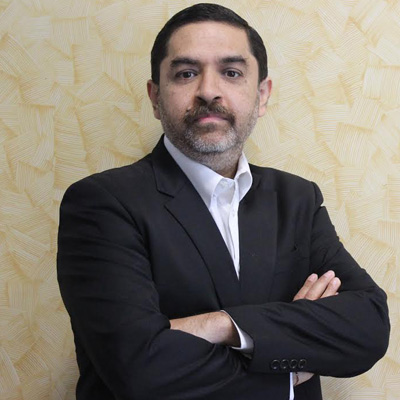
Tag: Uday Sodhi

  • SonyLIV partners Lionsgate to strengthen SVOD offering

    SonyLIV partners Lionsgate to strengthen SVOD offering

    MUMBAI: Everyone's going gaga over regional but there is also a section that's watching English content. To ensure this target stays connected, Sony Pictures Networks India (SPNI)’s digital arm started increasing focus on international premium content around six months back. As the experiment worked out well for the platform, it has taken one more step by inking a strategic partnership with Hollywood giant Lionsgate. Moreover, subscription play is going to be a key focus area going forward. The step has been taken in the direction to build a strong SVOD catalogue by working along with the American entertainment giant.

    “The idea of the deal is to strengthen our subscription product even more. What we currently have on our app today is centred around our TV shows, some of our originals and sports and mostly a large set of movies. We are seeing subscription as a growing category. High quality international shows are gradually being available in India, the awareness around the shows have increased significantly and the ability and desire to binge watch in India have also gone up,” SPNI digital business head Uday Sodhi said explaining the rationale of the move.

    Although SonyLIV is going to leverage this deal in large-scale, Lionsgate is also benefitting from it as well. “This is a very important milestone for us. We are very happy with the partnership as Sony has a tremendous legacy in India. Fortunately, the partnership came at a time when they were looking to strengthen their English offering. It’s a mutually beneficial partnership. This a very strategic partnership focused on expanding the customer base, creating consumption and creating a fan base and not a syndication thing only,” Lionsgate India managing director Rohit Jain said.

    It is working closely with Lionsgate, the latter being one of the largest producers for TV series and movies across the world. An embedded Lionsgate Play destination will be bundled within SonyLIV’s current slate of programming and it will be available as part of its premium product offering.

    Sodhi also added that English content genre has seen exponential growth in OTT thanks to a few factors. One is the increasing trend of smart TV usage and another is the easy availability of international shows. In addition to that, the hype in social media during a show launch also helps to create awareness.

    However, the initial focus will be on TV series or web series over movies. “At this point of time, what Lionsgate and SonyLIV have thought through is that the TV series space or web-series space is an exciting space to go after. We are more tuned to watch series and are familiar with the entire TV ecosystem. Therefore, we are comfortable there,” Sodhi said.

    There will be 500 hours of original content as a result of the partnership on the OTT platform. While the significant majority of the content will be exclusive, some of the content will also be repetitive which is already present on other platforms. IMDB 8.3-rated Power debuts in India on SonyLIV. Critically acclaimed series Sweetbitter and Vida also make way to the platform. Science fictions and thrillers like Con Man and Insomnia will be the part of the catalogue also.

    Sports and English content have been the way to attract SVOD consumers still now which has resulted in almost no growth beyond metro cities. However, Sodhi is optimistic that once regional and Hindi premium content is added, consumers from tier II and III cities will also look forward to premium packages.

    While two powerhouses in their respective fields are focusing on a new side of their business, time will say how the deal will help them in long run.

  • SonyLIV partners Planetcast to power live streaming service

    SonyLIV partners Planetcast to power live streaming service

    MUMBAI: Planetcast Media Services, a global player in digital broadcast technologies announced today that it has deployed its latest feed management and publishing platform to power live streaming of sports feed from its PMSL Facility at Mumbai.

    As a part of the partnership, Planetcast is using its hi-tech and intelligent feed management platform to receive / downlink around 30 feeds, which are then converted to the house formats (mainly audio shuffling & up-down-cross conversion) before being published in DRM enabled HLS format. A host of other VAS is also provided which include channel branding, SCTE insertion, Playout services with live studio including commentary insertion as well as Time delay & Upload for VoD consumption.

    Planetcast’s live streaming services have been successfully deployed on SonyLIV since FIFA 2018, one of the world’s largest sporting events.

    Commenting on the development Planetcast Media executive director MN Vyas said “Planetcast’s live streaming platform is instrumental for global sporting events like FIFA, Asian Games as there has been a paradigm shift in the viewing pattern of such events, this shift in viewing pattern has opened up new revenue streams for the broadcasters. Planetcast’s live streaming technology is aimed at helping the broadcasters to increase revenue by monetising their digital viewership”.

    Sony Pictures Networks (SPN) India business head- digital Uday Sodhi said, “There has been a paradigm shift in the viewing pattern of sporting events in India. For SonyLIV it is of paramount importance to deliver a premium video streaming experience to our audience and Planetcast has played a pivotal role in achieving that goal. Planetcast has not only provided the latest technology but also brought in their decades of expertise in the TV broadcast sector to keep us ahead in such a highly competitive space.”

    Planetcast’s streaming service is the professional-grade service for streaming media to audiences of any size on any device, reaching global audiences with high-quality, custom-branded videos— with no additional infrastructure. Our solutions are designed to support streaming needs for multi format (android, Windows, iOS etc.) and multi device (Tablets, PC or smartphones etc.) uni/multi-cast streams with multiple capabilities of formats and video players.

  • Esports on the path to be mainstream in India

    Esports on the path to be mainstream in India

    MUMBAI: The state of sports industry over the next three to five years is estimated to grow by 5.3 per cent in Asia and 9.4 per cent in Middle East and Africa (ME&A) according to PwC Sports Survey 2018. Despite the prediction in Asia and ME&A, globally the industry will witness a drop of 10.2 per cent. This is because the market conditions across the industry are stabilising as it progresses in the transition from traditional to digital media consumption, with sports leaders continuing to predict healthy growth in absolute terms.  

    Adding to this, PwC head-sports business advisory David Dellea said, “Overall, sports leaders foresee stable market growth driven by persistent media and sponsorship revenues as the business models behind them continue to shift towards digital.”

    The report mainly focuses on top 10 sports by growth potential globally; esports is leading the chart this year leaving behind the likes of football. The amount of people around the world who have watched some of the FIFA World Cup this year is 3.4 billion which is nearly half the total world population of 7.6 billion, according to research company GlobalWebIndex. The most watched and followed sports in India, cricket, takes the number 10 position. Overall viewership of Indian Premier League (IPL) across all platforms TV (in-home & out-of-home) and digital in urban + rural audiences was 11.3 billion gross impressions.

    Esports economy is estimated to reach $804.9 million in 2018, which is a 29.8 per cent jump y-o-y from 2017. The growth in terms of revenue is expected to reach $1.58 million by 2022, which is 18.4 per cent compound annual growth (CAGR) from 2018. The drivers of this growth are sponsorship ($500 million, 31.7 per cent of overall revenues), followed closely by media rights ($449 million, 28.4 per cent of overall revenue) and streaming advertisers ($316 million, 20 per cent of the overall revenue).

    An Indian gaming solutions company and creator of e-sports events, Nodwin gaming head Akshat Rathee said, “Esports is already growing in India. One of the biggest testimonies to a market growth of anything is measured by the number of investments done in it. Fundamentally esports is like a sports media marketing property, it’s like the IPL. It is not measured by the number of teams or by prize pool but by media rights auction.”

    The growth in esports economy is substantiated by developments such as publishers (Blizzard Entertainment and Riot Games) introducing franchise leagues, traditional sports (such as the NBA and F1) launching esports competitions and mainstream broadcasters (such as ESPN and Sky Sports) airing esports content over the past year.

    Esports federation of India (ESFI) director Lokesh Suji said, “Esports in India has massive potential, which is yet to be tapped. With improved internet speeds, smartphone penetration, government digital push and highest youth population, there is no reason why India will not be one of the superpowers for esports.”

    Esports for the first time became a part of a major sporting event in 2018 Asian Games Jakarta as a demonstration sports. This was announced by Asian Esports Federation (AESF). 10 Indian gamers qualified for the event.

    “We created history for Indian esports when Tirth Mehta won bronze (Hearthstone) and Karan Manganani was placed 4th (Clash Royale) in Asian Games this year, where esports was a demonstration sport. This is the fuel/trigger point which Indian esports was waiting for, it has boosted the confidence of many people who wanted to get involved in esports but were sitting on the fence (be it the brands, investors, gamers or parents). Gamers who were playing casually have started playing seriously as now they know that they can become esports athletes and build a career in esports,” he added.

    In January 2018, Nazara Technologies invested Rs 767.68 million for 55 per cent of equity share capital of Nodwin Gaming, a company engaged in activities pertaining to eSports in India. Nazara Technologies is a mobile games company headquartered in Mumbai, which is engaged in the acquisition of, value addition to and distribution, of mobile games across emerging markets such as India, Middle East, Africa, South East Asia and Latin America.

    “The viewership market for Indian esports market is 150 million people. We believe that India in 2022 will contribute close to 20 per cent of the overall revenue. India along with China, America and Germany would be the top four esports watching countries in the world. The drivers of growth will be publishers, better teams and better experience between teams,” Rathee added.

    “We need to make the Sachin/Virat of Indian Esports and only then will we have viewership numbers. For that to happen, a lot of work needs to be done at the grassroots level such as skill development and enough opportunities need to be created for an esports athlete to showcase his/her skill not only at the national but also at the international level. Mere participation will not help, we have to win. Any broadcaster who is willing to invest will have to invest in building this sport and if they are only looking at building an event they will eventually fail, which at least we don't want as it will create a wrong precedent,” Suji added.

    If we look at the growth rate by market segment over the next 3-5 years, digital media rights contribute 11.5 per cent to the overall pie. Sponsorship and advertising is the next big thing with 5.5 per cent share followed by licensing and merchandising with 4.8 per cent share.

    India’s first multi-platform, multi-game esports championship was launched by USports in the name of UCypher. The league tied up with MTV for the television broadcast. UCypher’s ambition is to present a platform to talented gamers that help them achieve their maximum potential as well as shape their career in e-sports leagues.

    Many advertisers were part of UCypher in its inaugural season like Amazon, Burger King, Fossil, Gillette, Idea Cellular, Mercedes Benz, Nestle, OPPO, Nivea, Netflix, Philips electronics, P&G, Seagram, United Breweries, Vodafone and Xiaomi technologies to name a few.

    Sony Pictures Network India head-digital business Uday Sodhi said, “Esports is an early stage development; it’s just getting popular with the younger TG. We covered Asian games in Jakarta in which esports was a part. This is an interesting category but still a small category as compared to other sports in Asian games. Yes, it is a developing, fast-growing category but will take some time to build a large following in India in the mainstream.”

    Another Indian esports company, CobX co-founder and CEO Mujahid Rupani said, “Esport already is in the visibility market considering the number of events, price pools that have come into play. Currently, we are six to seven years behind China, but we have the advantage of acceleration. The main thing is that industry support is lacking in India. Global sponsors, who generally fund esports throughout the world, in India have no budgets. The broadcasters in India are interested in esports and they are talking to people. Right now they are at a stage of doing market analysis. The content demand is so much for broadcasting which is not available.”

    “We are watching that space and participating in it. Till the time we don’t have Indian winners and heroes it is very unlikely that the sport will develop. We will continue to look at opportunities to showcase on SonyLiv,” Sodhi added.

    Talking about esports being broadcast on sports channels in India, “I think it’s dependent on them and us to go out and see what kind of IP is put in. We are already in conversation with Star and Sony Ten. We also believe there is some regional focus with someone like Sun TV who can pick up regional rights,” Rathee added. 

    The esports industry is only just picking up in India. Only when it amasses a good amount of fan following or if someone takes up the challenge of building its popularity will there be a speedy growth.

  • SonyLIV partners Amagi to grow OTT ad revenue

    SonyLIV partners Amagi to grow OTT ad revenue

    MUMBAI: Amagi, a media processing service that targets advertising for TV and OTT, today announced that SonyLIV is using its Thunderstorm cloud-based platform for targeted OTT dynamic ad insertion. As part of the deal, Amagi will monetise premium GEC and movie channels on SonyLIV OTT platform, generating additional ad revenues.

    Using Amagi Thunderstorm, SonyLIV will be able to insert targeted mid-roll ads without the need to change its existing broadcast workflows. The service leverages new-age machine learning techniques to detect ads in channel feeds and replace them with new, targeted ads on the server-side.

    Sony Pictures Network India business head-digital Uday Sodhi said, “SonyLIV is growing its subscriber-base at an impressive rate, making it an ideal digital platform for advertisers to target clearly defined audience segments. We are continuously looking to enhance value for our advertisers. Amagi is a pioneer in the targeted advertising space and this technology partnership provides additional options for advertisers to work with us.” 

    SonyLIV has integrated Amagi Thunderstorm with its in-house ad-decision system and partner ad networks. This allows SonyLIV to maximise ad revenue opportunities in real-time by serving ad spots to the highest bidder. Amagi CEO Deepakjit Singh said, “We are delighted to partner with SonyLIV, and deploy our next-generation ad tech solutions that create new revenue opportunities. The Thunderstorm platform is designed for high concurrency, and to deliver frame-accurate ad insertions at scale. These capabilities become vital for SonyLIV, especially since many of its premium channels have high number of concurrent users.”

  • SonyLIV’s amplified focus on English content portfolio

    SonyLIV’s amplified focus on English content portfolio

    MUMBAI: Sony Network India’s (SPNI) OTT platform Sony Liv recently extended its English content portfolio in the premium offering. It also has plans to add originals in regional languages.

    On the back of SPNI’s FIFA World Cup 2018 broadcasting right in India, SonyLIV attracted thousands of football fans across the country. The month-long sports event gave a major boost to the platform. Soon after it ended, it expanded the English content library to retain viewers. Three critically acclaimed and admired shows from Hollywood- Damages, Unforgettable and Timeless have also been added.

    “Understanding the need for quality international content, we have consistently focused on bringing shows that promise intrigue and entertainment. Post a successful tournament like FIFA 2018 that set new benchmarks in consumer engagement with over 70 million views, we wanted to add onto this momentum further. We expanded our English content portfolio to offer world’s most fascinating stories to our audience and keep them glued onto out platform,” SPNI digital business head Uday Sodhi said in an interaction with Indiantelevision.com.

    Sodhi, happy with the initial response, says other shows from the genre such as Underground, Outsiders and Line of Duty continue to garner good traction. However, the new shows which have been added recently span across genres to ensure they appeal to a wide section of the audience. Continuing the development, the platform is about to announce a string of 8-10 new launches.

    Meanwhile, the English entertainment channels AXN, Sony PIX, and Sony LePLEX HD from the network have recently made their digital debut. For traditional TV broadcasters, promoting catch-up TV through existing content catalogue is a common formula though.

    “Live TV continues to be a potential driver for us as its viewership is significantly large. There has been a natural on-boarding of viewers who like the content offered by these three channels,” Sodhi commented.

    Primarily, viewers aged between 18 to 24 is the target audience of the platform, while the 25-34 age group is targeted next. To create awareness of new content, SonyLIV is making the most use of social media and digital platforms. It is also optimising TV ads and outdoor marketing given the great reach of these two mediums among the audience.

    While sci-fi and crime thriller shows are trending in Hollywood right now, SonyLIV’s newly added English content bouquet includes both the genres being a definite option for making an engaging watch. “We have ensured that our current and upcoming shows have gripping content. Indians have a huge appetite for content that keeps them at the edge of their seat and I do not see a reason for these genres to not work in the Indian market. We are positive about the response these shows are going to get,” said Sodhi.

    The media veteran gave a witty answer to the question of competitors in this category. He said that as they operate across all three business models and various segregating buckets, every player in the market is a healthy competitor. The digital right of Game of Thrones gave a major boost to the subscriber base of Star India’s digital arm Hotstar. International players like Amazon Prime and Netflix already offer a huge chunk of popular international shows. Thus to woo the young urban audience, SonyLIV definitely has to add several other titles to make the library more lucrative.

  • 15-20% of total WC viewership for SonyLiv was female

    15-20% of total WC viewership for SonyLiv was female

    MUMBAI: FIFA World Cup (WC) 2018 has surpassed the expectation of Sony Pictures Networks India’s digital arm, SonyLiv, by miles in terms of viewership numbers and brand associations. It had just 15 brands on board in the first week but completed the event with a total of 36.

    The matches falling into India’s primetime slot may have worked well in its favour giving it 70 million online viewers. Surprisingly, 15-20 per cent of viewership was contributed by female fans and the remaining by male supporters.

    SPN head-digital business Uday Sodhi noticed some interesting things in this WC. “Firstly, India has become a big football nation globally on digital. Secondly, in the first couple of days of the tournament, we crossed the numbers of entire Euro 16. We have seen a huge growth in terms of advertiser and the approach of brands to digital advertising.” In Euro 16, Sony had just five to seven brands.

    Sodhi believes that football has finally arrived in India. The second big event after Olympics garnered eyeballs from Kerala, Bengal, Pune, Ahemdabad and Lucknow apart from the metro cities. “In terms of traffic and concurrency, we are among the top two platforms in Asia Pacific and Japan, according to Akamai,” he added.

    “The overall complexity that we were handling was very high because of six language feeds, two streams, paid and free feed (with five minutes delay). On an average, a viewer spent close to 15-16 minutes per match and the finals registered 1.5-2 million concurrent users on the digital platform.”

    There were a few hiccoughs. The first match of the WC didn’t go as planned. Instead of a five-minute delay on the ad-supported feed, there was a slightly longer delay of 10-15 minutes. But it picked and surged forward.

  • Next 250 M digital video users will be non-English speaking: Uday Sodhi

    Next 250 M digital video users will be non-English speaking: Uday Sodhi

    MUMBAI: These are exciting times at Sony Pictures Network (SPN) India. When it comes to scale in sports broadcasting, the FIFA World Cup ranks second only to the Olympics. It’s safe to assume that bringing world football’s showpiece event to audiences is hugely challenging yet satisfying. In a sense, the chatter and bustle on the fourth floor of SPN’s Malad headquarters highlights this. There is a distinct flavour and energy to the environment that points to one thing – it isn’t business as usual.

    However, Uday Sodhi, the big boss of SPN’s digital arm, appears relaxed. The veteran of many battles has a lot at stake at the moment. Having played an instrumental role in building SPN’s OTT SonyLIV, the onus is on Sodhi to guide his team through what many are describing as India’s first OTT video World Cup. Never before have as many Indians consumed digital video content at such high speeds and low costs.

    As the driving force behind SonyLIV, Sodhi is at the forefront of the changing face of India’s digital landscape. Indiantelevision.com caught up with the man of the moment to talk about week one of the World Cup, India’s OTT industry and the future of digital video consumption.

    Lionel Messi’s Argentina crashing out at the group stage is bad for business?

    Not really. I think teams like Spain and Portugal are very popular. Portugal because of Ronaldo and Spain due to the presence of a lot of La Liga club stars. Brazil is an evergreen team too. Germany remains a hot favourite.

    Tell us a bit about the viewership patterns on the SonyLIV app?

    I classify football viewers into three groups – fanatics, fans and flirts. The first week numbers point to a 85per cent contribution of male viewers as opposed to the 15per cent female fans. On digital, people tend to move back and fourth during live matches. The average viewing time in the first week comes to 16-18 minutes. If that’s the average, then a lot of people are watching 30-40 minutes. Like everything else in life, there is a pyramid. There are a lot of people who watch the full 30-40 minutes. However, we look at viewing times at a stretch. So they probably take a break during the interval and come back. So my guess is there are a lot of people who come, watch the score and go back. A lot of people do the under five minutes viewing. A lot of matches are during working hours, some people are traveling. The watch times increase when people get home. People tend to hit the scorecard and go back a lot.

    Can you give us a break up of the numbers you’ve done so far?

    There are about a five million users a day on the app and website. The Match Centre and Second Screen engagements are about 25 million in the first week. That’s been the key takeaway. We expect 40-45 millions users on SonyLIV through the course of this World Cup.  The Spain vs Portugal had 3x traffic as compared to any other game.

    The first match didn’t go as per plan?

    Instead of a five minute delay on the ad-supported feed, there was a slightly longer delay of 10-15 minutes. We had some blip, there was a heartbeat missing somewhere.

    How many advertisers have you signed up for the World Cup ?

    We have 15 (and counting) advertisers on the app. We have all the big brands like Patanjali, Red Bull, Nivea, Carlsberg, VIP, Swiggy to name a few.

    How crucial is sports content for an OTT platform? Can Indian broadcasters build a world-class product without sports?

    Absolutely, you can build a solid platform without sports. Does it become easier and faster with sports? Yes! Does it give you more traction? Yes! You have to spend less on marketing and you gain more organically with sports content. You have to work harder without sports. But your technology has to be far stronger in sports. Sport tests you far more, as consumers are more touchy. Two or three minutes here and there and the whole world comes to an end. With fiction you tend to get more chances to get things right.

    What has been your biggest learning in the last five years?

    The importance of technology is one key thing we have learnt. We realised that just the video is not enough. There needs to be data too – what’s happening in the match, what’s happening around the match. People want to come back and see the clips, highlights. A lot of surround stuff has to happen. The quality of the product, its availability across platforms, across devices. There has to be a seamless experience. That’s the challenge. Its very easy to put up an android app with video playing capabilities. That’s vanilla these days. That’s not a tough one to do.

    So, what’s a tough one to do?

    The real tough one is to do it across platforms, do it seamlessly, do it live, publish it live. We did 3000 live events last year. To be able to do that on a weekend is tough. At times we had 20 concurrent matches happening – Serie A football, tennis, MotoGP together. You need that kind of infrastructure to publish 20 live games. That takes real effort. That’s the real story. That’s the blood and sweat behind the business. Technology is the key. Content is easy vanilla. Everyone has it. Real challenge is to make sure the platform works day in and day out. Spikes in sport are phenomenal. Those are learning that don’t come in a text book. That’s something the team learns from experience.

    How much has the company invested in building SonyLIV?

    We don’t talk numbers. But there’s a technology layer at one end and is huge invest. Sports rights is another very, very expensive piece. We are making sure our digital investments and our digital business grows along with the sports investments we are making. So, this year we have FIFA, India vs England, then there is India vs Australia. So, there is tremendous investment that is happening back to back on sports. All of it is hard cash going out. Over and above that you are putting layers of content that you are acquiring, stuff that we are doing with various partners. We are building a huge repository of content. We service all the needs of the customer from high-end sports to travel and food.

    How big is the SonyLIV team?

    Internally and externally there are about 200-250 people working on the platform.

    Is there room for more OTT players in the market?

    We have just started this journey. There are close to 500 news sites in India, probably 800 TV channels. So why not more OTT platforms? Digital video advertising, and I’m not talking about subscriptions, is about Rs 2000 crore in India. Digital advertising business as a whole is about Rs 8000 crore. In China it is a Rs 60,000 crore market, with digital video advertising contributing to Rs 30,000 crore. That’s as big as our television advertising business. So, we too will get there in the next five to seven years. China has 650 million digital video users, we have 250. In the next 1000 days, we’ll be double our size. When the consumer base doubles, the advertising revenue doesn’t go up 2x. It goes higher.

    Do you see any particular trends for the future?

    The next wave of digital content consumers will be big on video, not text. Attention spans of users will continue to increase due to cheaper Internet data. The next 250 million digital video users will be non-English speaking. They’ll consume content in their local languages.

  • SPN’s digital play for the FIFA World Cup

    SPN’s digital play for the FIFA World Cup

    Mumbai: In a bid to offer consumers a world-class sporting experience, Sony Pictures Network India (SPN) has pulled out all stops for their coverage of the FIFA World Cup. After launching the ‘meri doosri country’ promotional campaign, the company has now planned a major digital push for the showpiece event.

    The strategy for the digital telecast on SonyLIV, SPN’s OTT platform, has been crafted around three key elements – language, data and consumer participation.

    “The football is an involved fan. We have designed our coverage keeping in mind dedicated football fans. So, stats and data are an important part of our offering.” SPN, EVP and head of digital business, Uday Sodhi tells Indiantelevision.com.

    The ‘Match Centre’ will offer viewers live scores, commentary, match information and stats alongside the live match telecast. This feature is aimed at engaging dedicated football fans. Four language options – English, Hindi, Bengali and Malayalam – will be available on SonyLIV, something that’s never been done before.

    SPN’s consumer participation will rely on a second screen experience. With guests in the studio, the plan is to marry  digital offerings with the TV coverage. This will enable fans to comment on the match and the experts’ opinions, make predictions and participate in polls and contests during and before the match.

    Ahead of the World Cup, SonyLIV launched a ‘Super Sports’ pack for Rs 199 for 6 months. Paid subscribers will have access to live matches behind a pay-wall, while free subscribers’ feed will be ad-supported with a five-minute delay.

    A recent PricewaterhouseCoopers (PwC) study deduced that India’s OTT video market will be among the world’s top ten by 2022. Star India’s OTT platform, Hotstar, breached the 10 million impressions mark during the Indian Premier League final. Given the high consumption of digital video and the formidable FIFA brand, all eyes will be on the numbers SonyLIV delivers.

    Sodhi expects between 4 to 5 crore consumers to use the platform during the quadrennial extravaganza.

    “Unlike 2014, this edition will be telecast at India prime time. In fact, I think it’s been eight years since the FIFA World Cup was telecast at timings that are convenient for Indian viewers,” he says.

    Sodhi has been instrumental in building the SonyLIV platform into a credible destination for sports fans. The experience of successfully working on big-ticket FIFA and UEFA events has helped prep the SPN team for the 2018 World Cup.

    Given the proliferation of digital video and scale of the event, does he have any concerns about robustness of the platform?

    “Football has steady viewership through the match unlike cricket, which peaks at crucial moments. We are not worried about the scale. We did big numbers during the India-South Africa cricket series. There is no problem on that front,” Sodhi says confidently.

    SonlyLIV’s digital coverage will also be available on its partner platforms like Apple TV, Android TV and Amazon Fire among others.

    In terms of size, scope and stage, the FIFA World Cup is the apex of global sporting competition. The 2018 edition could be seen as a test case for the potential of the OTT market in India. How the digital strategy of SPN plays out eventually and the response from the consumers will offer crucial insights and lessons to all the stakeholders going forward.

  • OTT players see subscription revenue as India’s future

    OTT players see subscription revenue as India’s future

    MUMBAI: Most Indian over the top (OTT) and even traditional mediums have assumed that Indian audiences aren’t willing to pay for content. But of late, discussions have shown that monetisation is happening at a slow pace. Though the return on investment (RoI) is not for the foreseeable future, the business minds are highly optimistic that the scenario will change in the next five years.

    Eros Digital COO Ali Hussein, SonyLIV EVP Uday Sodhi, Syntropic Systems managing partner Alap Ghosh, Atechnos founder Apurv Modi and Hungama Digital Media VP Soumini Shridhara Paul delved on the future of the industry at an OTTv Mumbai session.

    The session started with the age-old debate that Indian people don’t want to pay for content. The scenario hasn’t changed since last year’s panel.

    Hussein said the main challenge is not that people don’t want to pay but whether the platforms are able to grow a habit among consumers to return. “The question is to allow the whole ecosystem to pave the way for a feasible experience for the consumers to pay,” he said.

    Sodhi backed Hussein’s statement saying that everyone is paying for content in some way but it isn’t enough to allow evolution. 10 or 15 years ago, similar questions were thrown for traditional TV. He is optimistic in that next five years the scenario of the OTT industry will change too.

    “In the last two to three years, significant consumption appetite has been seen. Penetration of smartphone, easy access to 4g has activated this. Now some of us are encouraged to create content as we believe that some sort monetisation is coming through,” he said.

    Paul said, “When we come to down monetisation challenges, one has to look at how we can build something which is scalable.” She also thinks the quality of production makes a difference. Everybody cannot have $2 billion for content but ensuring the best product within budget is important. In spite of making some content similar, finding something different can really help.

    The reasons that make consumers hesitate to pay have never been found. Ghosh mentioned three reasons. One of the reasons is that people stop paying when they finish watching what they wanted to watch. The doubt on the validity of the expense also restricts them to pay again as the consumers are habituated to pay Rs 200 for 300 channels where they don’t have to think what to watch next.

    Whenever it comes to monetisation, everyone discusses subscription but it is advertising through which significant money can come through and that depends on good content. Going forward, revenue from both subscription and advertising will increase as the market will mature. As advertising is itself a complex ecosystem, there are bigger challenges for AVOD model to make money.

    While Modi said that there is enthusiasm from advertisers to engage in OTT platforms, Ghosh thinks that in the urge to be across platforms they choose to be on one or two select platforms like YouTube, Hotstar to create interest among viewers.

    Moreover, strategic partnerships for distribution also leave an impact to reach more consumers leading to better scaling as well as subscriptions.

    While monetisation has been the key challenge to Indian OTT industry, there are new avenues which can help to overcome the challenge. It’s important for the ecosystem to be able to allow growth of both advertising and subscription based models. The increased attention on statistics from optimising data can help the players to understand what is working and what needs to be changed to retain consumers.

  • Brightcove powers SonyLIV

    Brightcove powers SonyLIV

    MUMBAI: Cloud services provider for video Brightcove Inc has announced that it powers, Sony Pictures Networks India’s over-the-top (OTT) service SonyLIV. With several of the country’s top-tier media companies as customers, Brightcove has partnered a wide range of broadcasters, publishers and OTT services as they seek to launch and monetise their online video experiences.

    Brightcove has been a long-term partner of SonyLIV, powering OTT video delivery for various national and international sporting events such as La Liga, Serie A, WWE, NBA and the Australian Open.

    Monetised with a combination of advertising, subscription payments, and pay per view offerings, SonyLIV offers an array of movies, TV shows, sports, music and original content to more than 30 million viewers. The Brightcove video platform underpins the on-demand video experience on SonyLIV, ensuring a high-quality viewing experience for Indian audiences across devices including web, mobile, and connected TV screens, a release issued by the cloud services provider stated.

    Sony Pictures Networks India EVP and head (digital business) Uday Sodhi said, “The launch of a low-cost, high-speed mobile internet service in 2016 saw online video consumption surge up to five times in India, transforming the OTT landscape. For SonyLIV, the cornerstone of our strategy has always been to seamlessly deliver the best video streaming experience to our audience, and Brightcove is one of the key technology pillars in this strategy. Brightcove has not only provided a robust and highly scalable video platform to manage our OTT services, but has also brought deep video industry expertise to help us evolve our offering in a highly competitive Indian market.”

    “Internet users in India are predicted to cross the half a billion mark by mid-2018. With more users coming online, long and short form video consumption is likely to skyrocket, and force a shift in how media companies package, deliver, and monetise their content,” Brightcove’s Asia general manager Ben Morrell said.

    Also Read:

    SonyLIV and Republic World announce a strategic tie-up to expand digital presence

    SonyLIV aims to provide comprehensive CWG coverage

    The Quint India Selects Brightcove For Its Digital-First News Platform