Tag: Uday Singh

  • ‘Make piracy an economic offence, good cos ‘badvertise’ too’

    MUMBAI: Protection and enforcement of copyright continues to remain a challenge for the Media and Entertainment industry. According to estimates, rogue or pirate sites earned 35 per cent more revenues than the Indian Film Industry in 2016.

    The need of the hour is to form enforcement models and effective strategies to counter the underground pirate economy. Taking the war against online piracy in India one notch higher, A session called ‘Decoding the pirate economy in interconnected world: from Noise to Action’ on online copyright infringement that has facilitated the emergence of pirate economy, was held at FICCI Frames on the first day of the three day conference on the Media and Entertainment industry.

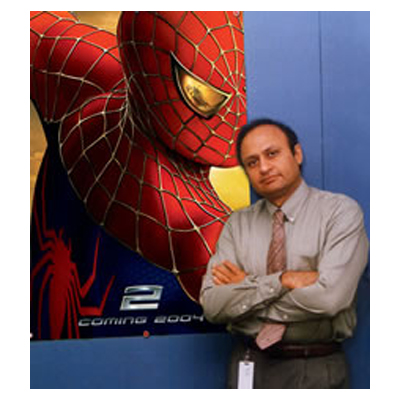
    The panel moderated by MPA India MD Uday Singh was attended by DIPP joint secretary Rajiv Aggarwal, IAS, Inspector General of Maharashtra Police (Cyber) Brijesh Singh, Telugu Film Chamber of Commerce Anti Video Piracy Cell chairman Raj Kumar Akella, Star India legal VP Surender Mann, Strategic IP Information CEO Bharat Dube, Viacom18 group general counsel Sujeet Jain, and The Film and Television Producers Guild of India CEO Kulmeet Makkar.

    According to Singh, the Indian film industry’s attitude about the seven days window to make money at box office should change and one should look at piracy as a threat in a longer run. Public and private partnership is needed to deal with intellectual property violations. Hence, to curb online piracy in India, Maharashtra state is all set to get Maharashtra Intellectual Property Crime Unit, which may be called MIPCU.

    Though, Dube believes that advertising revenue is the primary driver for the content theft industry. The best way to deter advertising revenue from going to pirate networks would be to build comprehensive risk management frameworks in ad agencies, ad networks and advertisers to address this risk proactively. ISPs need to proactively build block lists and adhere to site blocking orders issued by the courts to limit access to pirate sites.

    “The problem is also with mindset where people do not see immorality or illegality in pirating movies,” he added.

    In one of his studies, Dube tracked 1,143 popular pirate sites in India and found that 73 per cent of the sites were ad-supported and had the potential of generating millions of dollars for pirates. It is estimated that large pirate networks can generate between $2-4 million while medium and smaller sites can generate up to $2 million annually. The low levels of industry awareness have resulted in advertisements of legitimate businesses appearing on pirate sites. This study found 425 legitimate advertisers advertising on pirate sites.

    Pirate networks also attract advertising from several High-Risk Advertisers such as, adult dating, pornography, malware, gambling and other unregulated products. This study found 361 advertisers in the high-risk category.

    “Piracy should be made an economic offence. Search engines should take responsibilities and advertising on illegal websites should stop. We have coined a word called ‘Badvertising’ for advertisements on such websites,” added Dube.

    Resonating with Dube’s thoughts, Jain also stated that the search engines have to behave more responsibly an that the bad advertising on rogue websites has to reduce. “Trinity of legislative, executive and judicial authorities need to fight piracy together. We need court orders to block websites completely to curb online piracy,” said Jain. He also pointed out that piracy should be classified as an economical issue for which measures are essential to improve civic sense. According to the IT act, there are intermediary guidelines which have a greater role to play. The responsibility on intermediaries has to increase to win this war against online piracy.

    Sharing similar thoughts, Mann happily agreed to help and support Maharashtra government against online piracy. Jain too accepted the opportunity to become a unit with the Maharashtra state to curb piracy.

    Makkar expressed their support for MIPCU and hope to see the end of piracy in India very soon. He also stated the importance of an awarenesss program. “We are working on some campaigns to spread awareness about the odds that come with piracy across cinema halls, TV channels, etc. ”

    Akella also resonated with the idea of collaborating industry and the state government. “India needs to take responsibility. Piracy is just not the loss of revenues. It affects us in a much larger way,” concluded Akella.

  • FICCI Frames ’17: Maharashtra to form IP crime unit to fight online piracy

    MUMBAI: Well, well. The Indian media industry and the government are finally getting serious about content piracy. After Telangana Intellectual Property Crime Unit (TIPCU), Copyright Force and the government-mandated Copyright Board, Maharashtra state is all set to get Maharashtra Intellectual Property Crime Unit, which may be called MIPCU.

    Announcing the go-ahead for MIPCU, a body that would be a joint endeavor of the entertainment industry and the state government, Inspector General of Maharashtra Police (Cyber) Brijesh Singh (in the picture) said, however, the initiative would have to be backed by the industry players too in terms of resources to effectively fight cyber crime and online piracy.

    “I would want it to be set up under a public-private partnership model and want the industry to come forward and help me achieve this. I want the industry to come and tell me that this is what we need and we will then help them. There is a commitment from our side,” Singh said while delivering an address at FICCI Frames 2017 session themed `Decoding the Pirate Economy in Interconnected World: From Noise to Action.’

    Though Singh, who was also slightly skeptical of the losses in terms of revenue that were often quoted by the entertainment industry, said that if the industry was serious, so were the law enforcement agencies. Pointing out that it’s often seen that the film industry’s piracy concerns were “limited” to the first seven days of a film’s release, he added, “I think this issue needs us to be more serious. I want the industry to come to us to build this sustainable and long-term partnership.”

    Motion Pictures Association of America’s Indian unit (MPA) and the Film and Television Producers Guild of India have joined hands to fight the menace of online piracy. After discussing the idea of MIPCU with the chief minister of Maharashtra and MPA last month, the state government formally okayed formation of a unit to fight cyber crimes, especially online piracy. Offline offences regarding this issue will be dealt by the regular police units.
    The budget of this new proposed unit will depend on what kind of technology it plans to offer for a solution. The entire idea is to co-create a global facility, Singh later elaborated and added that the unit’s launch was dependent on the industry’s long-term commitment in terms of negotiating that space.

    Commenting on the proposal to form MIPCU, Viacom18 group general counsel Sujeet Jain said the entertainment and TV industry would back any such move as long as results were delivered irrespective of structures and modalities.
    Incidentally, some months back, as reported by indisntelevision.com, MPA, broadcasters and FICCI had joined hands to announce formation of Copyright Force to set agendas for effective safeguarding of Intellectual Property Rights (IPR) policy and engage with the government.

    To give an international perspective, TIPCU, Copyright Force and the proposed MIPCU have been seemingly inspired by the Police Intellectual Property Crime Unit (PIPCU) of the UK , which is a specialist national police unit dedicated to protecting the UK industries that produce legitimate, high quality, physical goods and online and digital content from intellectual property crime.

    PIPCU is operationally independent and launched in September 2013 with £2.56million funding from the Intellectual Property Office (IPO) of the UK government until June 2015. It was announced in October 2014 that PIPCU will receive a further £3 million from the IPO to fund the unit up to 2017. The unit is dedicated to tackling serious and organised intellectual property crime (counterfeit and piracy) affecting physical and digital goods (with the exception of pharmaceutical goods) with a focus on offences committed using an online platform.

    Also Read:

    Online pirates beware, Copyright Force on way

    Internet included in broadcasting for purpose of Copyright

    Telangana leads fight against online piracy in partnership with film industry

    FICCI keen on IPR awareness & enforcement to encourage innovation

    Internet included in broadcasting for purpose of Copyright


  • Copyright owners call for competitive pricing over TRAI regulation

    Copyright owners call for competitive pricing over TRAI regulation

    NEW DELHI: The Film and Television Producers Guild of India has expressed its voice against any mandated tariff as far as television channels are concerned.

    In a reaction to the recent Draft Telecommunication (Broadcasting And Cable Services) (Eighth) (Addressable Systems) Tariff Order 2016 drawn up by the Telecom Regulatory Authority of India, Guild President Siddharth Roy Kapoor said: “As India continues to develop its thriving creative industry, a transparent, market-based environment free from mandated tariffs, is essential to build investor confidence and to foster the creation of quality content benefiting India’s consumers and its economy.”

    Guild secretary-general Kulmeet Makkar said: “We believe that price controls should only be considered when the market lacks competition which harms consumers or where there is clear systemic market failure. It would be advantageous to abolish any restrictions on price and thereby encourage FDI investments in India– as is the case in countries such as Australia, Hong Kong, Indonesia, Japan, Malaysia, Philippines, Singapore, and South Korea, where the retail and wholesale rates are not subject to restrictions. A more economically efficient model would be to allow the market to determine prices while encouraging investment in quality content.”

    Fox Star Studios CEO Vijay Singh said, “Since the availability of content is not an issue in the context of the Indian market, restricting numbers/genres/mix tantamount to predetermination and therefore, pre-empts creativity. There can never be an exhaustive list of genres for governments to determine any mix and TRAI’s intervention will have cataclysmic effect on the creative community as a whole as TRAI effectively has price capped creativity.”

    “Under the Copyright Act 1957, a content owner has the freedom to monetize copyright works and enter into contracts to monetize content in a manner he deems fit. However the price restrictions imposed by TRAI interferes with this basic freedom. It risks stifling creativity and may force smaller companies out of the market – resulting in less choice for consumers,” according to Motion Picture Distributors Association (India) Pvt. Ltd MD Uday Singh.

    Sectoral regulations have seriously impeded the growth of the film sector. Despite active participation by global studios and broadcasters, investments in the sector have trickled down in the past few years. Indian studios and independent producers are also facing similar challenges. An open market environment can best guarantee that the film sector will not be distorted to the detriment of consumers, creators and providers, the Guild said in its reaction.

    The Guild says that the Tariff Order is likely to take effect from 1 April 2017. It says that the current draft order prescribes maximum retail price caps for pay channels, by genre, Rs 10 (USD 0.15) for movie channels (a-la-carte), excluding taxes] and further caps channels into seven genres.

  • Copyright owners call for competitive pricing over TRAI regulation

    Copyright owners call for competitive pricing over TRAI regulation

    NEW DELHI: The Film and Television Producers Guild of India has expressed its voice against any mandated tariff as far as television channels are concerned.

    In a reaction to the recent Draft Telecommunication (Broadcasting And Cable Services) (Eighth) (Addressable Systems) Tariff Order 2016 drawn up by the Telecom Regulatory Authority of India, Guild President Siddharth Roy Kapoor said: “As India continues to develop its thriving creative industry, a transparent, market-based environment free from mandated tariffs, is essential to build investor confidence and to foster the creation of quality content benefiting India’s consumers and its economy.”

    Guild secretary-general Kulmeet Makkar said: “We believe that price controls should only be considered when the market lacks competition which harms consumers or where there is clear systemic market failure. It would be advantageous to abolish any restrictions on price and thereby encourage FDI investments in India– as is the case in countries such as Australia, Hong Kong, Indonesia, Japan, Malaysia, Philippines, Singapore, and South Korea, where the retail and wholesale rates are not subject to restrictions. A more economically efficient model would be to allow the market to determine prices while encouraging investment in quality content.”

    Fox Star Studios CEO Vijay Singh said, “Since the availability of content is not an issue in the context of the Indian market, restricting numbers/genres/mix tantamount to predetermination and therefore, pre-empts creativity. There can never be an exhaustive list of genres for governments to determine any mix and TRAI’s intervention will have cataclysmic effect on the creative community as a whole as TRAI effectively has price capped creativity.”

    “Under the Copyright Act 1957, a content owner has the freedom to monetize copyright works and enter into contracts to monetize content in a manner he deems fit. However the price restrictions imposed by TRAI interferes with this basic freedom. It risks stifling creativity and may force smaller companies out of the market – resulting in less choice for consumers,” according to Motion Picture Distributors Association (India) Pvt. Ltd MD Uday Singh.

    Sectoral regulations have seriously impeded the growth of the film sector. Despite active participation by global studios and broadcasters, investments in the sector have trickled down in the past few years. Indian studios and independent producers are also facing similar challenges. An open market environment can best guarantee that the film sector will not be distorted to the detriment of consumers, creators and providers, the Guild said in its reaction.

    The Guild says that the Tariff Order is likely to take effect from 1 April 2017. It says that the current draft order prescribes maximum retail price caps for pay channels, by genre, Rs 10 (USD 0.15) for movie channels (a-la-carte), excluding taxes] and further caps channels into seven genres.

  • Online pirates beware, Copyright Force on way

    Online pirates beware, Copyright Force on way

    MUMBAI: Red alert for online pirates of TV content and movies. Copyright Force is on its way.

    In a move to fight online piracy, major broadcasters, studios and the recently set-up Telangana  Intellectual Property Crime Unit (TIPCU) are joining hands with Motion Pictures Association of America (MPA)’s Indian chapter for strengthening and effective implementation of regulations.  
    Tentatively named Copyright Force, the industry alliance’s main aim is to set an agenda on Intellectual Property Rights (IPR) policy and engage with the government.

    “When you talk about Digital India, the government will have to put out a strong message on curbing online piracy. There are just not enough teeth in existing laws to tackle online piracy. Hence, the industry is exploring an industry alliance to sensitise the government and judiciary of the issue,” Viacom18 general counsel Sujeet Jain explained to indiantelevision.com.

    Confirming the move Uday Singh, Managing Director-India, MPA, however, clarified the move was a positive one but needed more deliberations.

    The alliance is looking at getting broadcasting companies, studios and other industry organisations like MPA under one roof.

    “There are many organizations with larger objectives. The Copyright Force’s (or its formal version) sole purpose would be to push copyright issues,” Jain added.
    According to industry sources, initial exploratory meetings on the issue were attended by the likes of Viacom18, Star India, Walt Disney, Zee, Turner, Sony Pictures Networks, Sun TV Network, Eros International, Reliance and TIPCU.

    Earlier, speaking on the issue of Digital Content Economy and Robust Enforcement Model at an event organised by FICCI here today, Jain said, “You cannot fight online crime with offline measures. Online enforcement has to happen.”

    According to him, the Copyright Act and IT Act have to be updated so the issue of online piracy is addressed directly and helps the judiciary to properly interpret relevant laws to pass judgements on cases relating to online piracy.

    In recent time, the issue of piracy has gained currency in India with mostly film-makers taking John Doe orders in an effort to safeguard against online leaks of films before formal theatrical releases.

    However, the content industry feels such cases don’t properly address the growing menace of online piracy.

    But taking a leaf out of the UK’s PIPCU (Police Intellectual Property Crime Unit), run by City of London Police, the Telangana government has set up country’s first anti-piracy unit called Telangana Intellectual Property Crime Unit (TIPCU).

    The reason for TIPCU formation was effective lobbying by the Telugu Film Chamber of Commerce with the state government on behalf of the local film industry that is reported to have suffered losses in excess of Rs 361 crore because of online piracy.

    Telugu Film Chamber of Commerce honorary chairman, governing council, anti video piracy cell, Rajkumar Akella said, “As we have been witnessing in recent days, the problem of online piracy is most urgent. The greatest threat now has become the pre-movie release leakages. Without real time interventions from the government and the industry, it will go out of control.”

    According to him, TIPCU, an initiative brought to life by the Telangana government, the Telugu film industry and MPA India, was a very significant step. “The unit will be making optimum use of technology besides policy enforcement and outreach,” Akella added.

    MPA regional director, online content protection, Oliver Walsh said, “The Indian film and TV industry supports 1.8 million jobs which are at risk because of rising online content theft. The future of legitimate content delivery platforms depends on effective enforcement measures supported by Indian State governments.”

    Pointing out that TIPCU was a great example of a dedicated law enforcement unit to tackle organized online film piracy, Walsh said such an approach will go a long way in significantly reducing online infringement of films and television content. 

    Jain also pointed out that there is a need to develop dedicated digital courts in the country where the issue of online piracy is addressed exclusively.

  • Online pirates beware, Copyright Force on way

    Online pirates beware, Copyright Force on way

    MUMBAI: Red alert for online pirates of TV content and movies. Copyright Force is on its way.

    In a move to fight online piracy, major broadcasters, studios and the recently set-up Telangana  Intellectual Property Crime Unit (TIPCU) are joining hands with Motion Pictures Association of America (MPA)’s Indian chapter for strengthening and effective implementation of regulations.  
    Tentatively named Copyright Force, the industry alliance’s main aim is to set an agenda on Intellectual Property Rights (IPR) policy and engage with the government.

    “When you talk about Digital India, the government will have to put out a strong message on curbing online piracy. There are just not enough teeth in existing laws to tackle online piracy. Hence, the industry is exploring an industry alliance to sensitise the government and judiciary of the issue,” Viacom18 general counsel Sujeet Jain explained to indiantelevision.com.

    Confirming the move Uday Singh, Managing Director-India, MPA, however, clarified the move was a positive one but needed more deliberations.

    The alliance is looking at getting broadcasting companies, studios and other industry organisations like MPA under one roof.

    “There are many organizations with larger objectives. The Copyright Force’s (or its formal version) sole purpose would be to push copyright issues,” Jain added.
    According to industry sources, initial exploratory meetings on the issue were attended by the likes of Viacom18, Star India, Walt Disney, Zee, Turner, Sony Pictures Networks, Sun TV Network, Eros International, Reliance and TIPCU.

    Earlier, speaking on the issue of Digital Content Economy and Robust Enforcement Model at an event organised by FICCI here today, Jain said, “You cannot fight online crime with offline measures. Online enforcement has to happen.”

    According to him, the Copyright Act and IT Act have to be updated so the issue of online piracy is addressed directly and helps the judiciary to properly interpret relevant laws to pass judgements on cases relating to online piracy.

    In recent time, the issue of piracy has gained currency in India with mostly film-makers taking John Doe orders in an effort to safeguard against online leaks of films before formal theatrical releases.

    However, the content industry feels such cases don’t properly address the growing menace of online piracy.

    But taking a leaf out of the UK’s PIPCU (Police Intellectual Property Crime Unit), run by City of London Police, the Telangana government has set up country’s first anti-piracy unit called Telangana Intellectual Property Crime Unit (TIPCU).

    The reason for TIPCU formation was effective lobbying by the Telugu Film Chamber of Commerce with the state government on behalf of the local film industry that is reported to have suffered losses in excess of Rs 361 crore because of online piracy.

    Telugu Film Chamber of Commerce honorary chairman, governing council, anti video piracy cell, Rajkumar Akella said, “As we have been witnessing in recent days, the problem of online piracy is most urgent. The greatest threat now has become the pre-movie release leakages. Without real time interventions from the government and the industry, it will go out of control.”

    According to him, TIPCU, an initiative brought to life by the Telangana government, the Telugu film industry and MPA India, was a very significant step. “The unit will be making optimum use of technology besides policy enforcement and outreach,” Akella added.

    MPA regional director, online content protection, Oliver Walsh said, “The Indian film and TV industry supports 1.8 million jobs which are at risk because of rising online content theft. The future of legitimate content delivery platforms depends on effective enforcement measures supported by Indian State governments.”

    Pointing out that TIPCU was a great example of a dedicated law enforcement unit to tackle organized online film piracy, Walsh said such an approach will go a long way in significantly reducing online infringement of films and television content. 

    Jain also pointed out that there is a need to develop dedicated digital courts in the country where the issue of online piracy is addressed exclusively.

  • Content theft negatively impacts profitability, thus resulting in less investment capital: Uday Singh

    Content theft negatively impacts profitability, thus resulting in less investment capital: Uday Singh

    For every one individual, Indian theaters lose 100 because of cheaply available pirated DVDs and illegal streaming. While creative minds are traveling that extra mile to exhibit quality, illegal infiltration of camcorders and hall prints are creating holes in creators’ pocket. Descending footfalls, and shutting down of theatres are not good signs for the film industry and experts don’t see the phenomenon changing unless and until piracy is strictly addressed, the abysmally low growth rate poses enormous challenges in front Indian Film Industry.


    Motion Pictures Distribution Association (MPDA) India under the leadership of managing director Uday Singh is associating with various organization of national and international magnitude to come up with a solution and create a scenario that helps creator getting his due recognition.


    From educative measures to penalizations in a conversation with Indiantelevision.com’s Anirban Roy Choudhury, Singh discusses the strategies and plans MPDA is roping in to counter serious issues like piracy and content theft.


    Excerpts:


    Do you feel it is important to change the behavior of consumer and make them understand the value of content, which may result in them saying no to piracy? If yes, then how can it be executed?


    Our goal is to help and support industry growth through the creation of a sustainable ecosystem for creative industries and educating consumers on the need to protect creative industries is therefore very important through industry initiatives.


    One such initiative was our launch of a website: www.findanymovie.in, in association with the Film and Television Producers Guild of India (FTPGI), which serves as a resource for online audiences to access movies and television shows legally. The launch of Comicorner at the 2014 Comic Con held in Hyderabad was amongst the others. Comicorner presented us with an opportunity promote copyright and content protection through interactive activities.


    The FICCI report indicates very low rate of growth in the cinema industry. Do think piracy is one of the major reasons behind that?


    Content theft negatively impacts profitability, thereby resulting in less investment capital. Less capital pegs down the number of films that can be financed, thereby creating fewer jobs, and reducing the range of film and television productions made for audiences to enjoy.


    In 2014, the MPDA partnered with FTPGI, the Film Federation of India (FFI) and the Federation of Indian Chambers of Commerce and Industry (FICCI) to launch a report entitled ‘Economic Contribution of the Indian Motion Picture and Television Industry’ by leading financial services firm Deloitte Touche Tohmatsu India. The report estimated that the Indian Motion Picture and Television industry contributes $8.1 billion (Rs50,000 crores) to India’s economy and supports 1.8 million jobs. Through this report, it is evident that the industry has the potential to contribute on a much larger scale if content was better protected and the complex taxation of the industry is reviewed.


    What is the main source of piracy in India?


    Piracy in the film industry originates from ‘camcording’ in cinema halls. Over 90 per cent of new release titles originate from cinemas. These infringing copies appear online within few hours of a film’s release. This affects the performance of the film, the distribution cycle and jobs.


    The rising threat of Internet piracy via Illegal or “rogue websites” contribute to, facilitate, and induce the illegal distribution of copyrighted works, such as movies and television programming. In 2014 alone, 30 camcords from India were synced to 54 additional audio resources in 15 different languages.


    What in your opinion should be the strategy to counter piracy?


    We need to recognize that in the next two years, India will have the fastest Internet traffic growth (348 million Internet users) and is already the second largest mobile user base in the world, after China, which has over a billion users. The growth in mobile penetration and more users having access to faster Internet speeds, signal the growing need for adequate legal protection and enforcement measures to combat piracy through cyberlocker, BitTorrent, web based file hosting, wireless access control (WAP), blogs and online radio sites services, which stunt India’s creative industries.


    Illegal camcording of feature films in theatres remains a major threat to the sustainability of the movie industry. Once an illegal camcord copy of a film is uploaded to the Internet, it can significantly impact on the amount of revenue the producers can recoup from the theatrical release. We therefore encourage the Government to implement specific anti-camcording provisions in the upcoming Draft Cinematograph Bill, 2013 and make adequate provisions for ‘Technology Protection Measures’ in India’s IT Act, in light of the roll out of the Digital India initiative and the upcoming National IPR Policy, which will help in protecting IP across creative industries including films as a category.


    Do you think proper credentials of intellectual property can help the industry to grow further?


    Promoting and protecting Intellectual Property in creative industries will enable India’s creative industries to enforce their IP rights and achieve their full potential in a rapidly changing marketplace. We applaud the Government of India (Department of Industrial Policy and Promotion, Ministry of Commerce and Industry) for pushing forward the much-needed National IPR Policy that envisages IP as an integral part of India’s overall development policy.


    What are the initiatives that MPDA is taking for IPR in India?


    MPDA India works closely with the local industry, Government, law enforcement authorities and educational institutions to promote and protect the film and television industry in India. The MPDA over the years has formed strategic alliances with the local film industry in India to launch campaigns to promote legitimate access to content, prevent content theft, share global best practices and promote industry growth.


    Initiatives include, our strategic alliance in 2012 with the Andhra Pradesh Film Chamber of Commerce (APFCC) to pool resources and jointly tackle issues such as camcording, cable theft and to promote public awareness and education campaigns on the importance of content protection.


    Since2012, the MPDA and the APFCC have carried out four successful enforcement operations that resulted in the arrest of members of criminal camcording syndicates and taking down of infringing websites. We’ve launched a mobile application – Indian Movie Cop – that serves as an online and mobile copyright information and awareness tool in eight Indian languages to reach out to wider audiences and industry stakeholders across India. The app was also designed as an interactive tool to help educate law enforcement officers about relevant laws that are applicable during ‘an arrest’.


    Through our partnership with FICCI and the U.S. Patent and Trademark Office (USPTO), we have conducted several training programs for multiplex operators across the country, especially in regions where content theft/ piracy is rampant. Further, we have supported several sensitization programs for law enforcement officers and the Judiciary across major cities in India. Through co-operation from our member studios producing local language films, we launched outreach initiatives targeting online audiences through ‘content protection’ messaging from over 30 Indian celebrities. The cumulative reach of these videos has been over 50,000 over the past two years.


    MPDA’s multi-pronged approach to increase public education on the value of the local screencommunity provides an insight into the industry and benefits that come from accessing only legal content has been well received by local screen communities in India.


    What technological protective measures need to be taken in order to create safe ecosystems for content to be distributed freely?


    With the arrival of the digital age, it is possible for consumers to make numerous copies ofcopyrighted materials, without a discernable loss of quality, unlike analog. This leads to the possibility that copyright protection could be overridden by uncontrolled copying, especially since such illegal actions are often difficult to trace.


    Technological Protection Measures, or TPMs, are defined as being any technology, component or device designed to prevent or restrict acts with respect to works or other subject matter that are not authorized by the rights holder of any copyright-related right.


    Today, technology enables copyright owners to control access to and the duplication of copyrighted works through encryption software and copy-controlling mechanisms, which are relevant to copyright holders in the digital age. TPMs maybe software or hardware based and can be implemented for broadcast content, packaged media content and interoperability.


    What are the policing mechanisms that we can see going forward to prevent piracy or breach of intellectual property act?


    Enforcement of copyright continues to remain a challenge as ‘IP Issues’ remain low priority amongst law enforcement officials. Further,law enforcement officialsacross various levels need a deeper understanding of the Internet, advances in technologyand how online content theft and the widespread distribution of infringing content is facilitated.


    Currently, while enforcement of IP is considered as low priority, there is also no systematic and active coordination and collaboration between enforcement agencies to tackle organized copyright or content theft.


    We therefore recommend the setup of a National IP Enforcement Task Force, which will work in a coordinated, systematic and efficient manner not restricted by jurisdictional issues, have a clear view of inter-state operations of organized crime units engaged in piracy and will ensure protection of intellectual property rights – both at source and online.


    There is also a need to establish clear guidelines/standard operating procedures for enforcement of IP related issues at a national level and adequately train enforcement agencies to carry out their responsibilities through systematic processes and sharing of international best practices and developments through timely sensitization programs. Training programs should address offences relating to IP laws including online and off-line piracy through statutes such as the Copyright Act, 1957/ IT Act, 2000 for IP violations.


    What are the penalties and penalizations shortlisted, which will be imposed in case of a breach?


    Penalties for copyright infringement include:


    ·Section 63 of the Copyright Act, 1957 which mandates copyright infringement as a criminal offence implicating prison terms, on conviction, of up to three years with a minimum terms of six months and or a fine of Rs50,000 up to Rs2,00,000.


    ·Penalty for second conviction- According to Section 63A of the Copyright Act, 1957, a second conviction for copyright infringement implicates prison terms of not less than one year and up to three years and fine not less than Rs 1,00,000 and up to Rs2,00,000.


    ·Penalty for possession of plates for purpose of making infringing copies:Section 65 of the Copyright Act, 1957 mandates the possession of plates for the purpose of making infringing copies as an offence and also implicates prison term of up to two years and a fine. Thus even the possession of duplicating equipment for the purposes of making infringing copies of works is an offence under the Copyright Act, 1957.


    ·Penalty for circumvention of DRMs:Section 65A of the Copyright Act mandates prison terms of up to two years in case of the circumvention of technological protection measures, that isDRMs, with the intention of infringing copyrights.

  • Our aim is to roll up all the taxes under one GST: Uday Singh

    Our aim is to roll up all the taxes under one GST: Uday Singh

    The word piracy sends shivers down the spines of all content owners, but there is one man who has made it his mission to eradicate piracy from the media and entertainment space. That man is none other than Motion Picture Distribution Association (India) managing director Uday Singh.


    With over 28 years of sales, marketing and general management experience in scaling up operations and building business from start up for MNCs in India and attaining a leadership position in the market and business with significant turnaround and change management; Singh has done it all.


    He has key experience in media entertainment, consumer electronics, domestic appliances and multimedia industries. He has had stints at Philips, Sony Pictures Entertainment (India) and PVR Pictures earlier.


    Being a creative and result driven executive with expertise in setting up new markets developing and delivering strong results; Singh has been ensuring in getting the various industry stakeholders together to fight against piracy.


    Speaking to indiantelevision.com’s Sidharth Iyer, Singh dwells on various perennial issues like piracy, high taxation, specific copyright laws and the difficulties that MPDA faces in propagating anti-piracy in the country.     


    It’s been five years since MPDA India has been present in the industry, how has the journey been? Highlight your roles and responsibilities.


    There are three aspects: first there is the legislative side where we look into getting a specific legal framework into place which can protect copyright. Next we take care of the enforcement, which is basically keeping a check on people who steal content and monetise from the same by redistributing it across the globe and finally the outreach, how do we best reach out to our first line of defense – which is the cinema staff and theatre owners – educating them on piracy and how it works, so that they can recognise it and nip it at the bud.


    On the legislative side we have carried out a lot of initiatives. 90 per cent of all pirated copies are camcorded in cinema halls, and an Ernst & Young 2008 report claims that as much as Rs 16,000 crore is lost every year due to piracy and as many as 577,000 direct jobs are also lost as a result of theft and piracy, afflicting India’s entertainment industry.

    We have been working with local bodies and try and implement the global best practices out here. We have also observed that many jurisdictions like in US, Philippines and other regions in the Asia Pacific as well, specific camcording legislations have made a big difference in getting piracy down and we intend to bring that practice to India as well.


    Is there a set guideline for understanding the copyright laws in the country? Have you managed to reduce the taxation on films?


    We have been lobbying with the government to have provisions made for the same, and the cinematography bill does carry some provisions because only very specific provisions can make a difference, as our copyright laws tend to be very broad and its only best to have specifics in place to better understand and implement the copyright law in the country.


    The other major hurdle for films is the taxation levied on them, and being one of the highest taxed industries it does take a toll on the budget and revenue scale. We have been working with other industries and the government to rationalise those taxes and eliminate some of them if possible and hopefully roll them all into a single goods and services tax (GST).


    However there is a service tax on the input side, so some of the studios that are producing the movie domestically have to face it by increasing its production costs. Currently there are three levels of taxes; the service tax, the entertainment tax and the local body tax. Thus, our recommendation and appeal to the government and the authorities is to roll it all into one single GST to avoid any duplication.


    What are the challenges faced by MPDA and how do you overcome the same?


    There have been issues in the television side of things, where we have been talking to the government and making our submissions on issues such as, liberating the pricing, the must provide and must carry provisions, among others.


    It was also heartening to see that the foreign direct investment (FDI) in the television and broadcast sector also witnessed a hike. So, we look at very generic issues and how the government can better regulate the media and entertainment sector, primarily focused on where our studios feel where we should get involved on the legislative side.


    We also have the Los Angles Film Council, where we have been lobbying for the ease of shooting and working with the government for getting to a single window clearance, there are 70 clearances otherwise required before even shooting a single frame.


    Our efforts and initiatives will be again presented in an E&Y report, which talks about how to simplify, incentivize and further how to promote film tourism. The plan is to promote film tourism in a big way and we have some great examples of how it has been done in other places like Canada and Thailand. Keeping in mind that we have some great technicians and production crews here, India can become an important destination for films as well in the near future.


    On the enforcement side, we are no longer chasing the guys on the streets as it has all moved online and it’s now gotten into camcording. We have managed to eliminate quite a few significant release groups, who have been copying and redistributing a lot of the films. 


    MPDA has played a big role in ensuring that piracy is looked at as a serious offence, how do you intend to put an end to this evil?


    Our intention is not to catch a kid who’s taking a trophy shot in front of the screen, but the people who actually steal the content and make a living out of it. After 2012, there have been almost 67 incidents where we have apprehended pirates who used to capture the video and slap on a different audio and export it to other neighbouring countries.


    We also work with cinema staff and have educated nearly 1,400 of them on what are the best practices to propagate anti-piracy, by putting up signs in the surroundings of the theatre. They have also been educated on how best to deal with incidents of camcording. We have also tried to sensitise various law enforcement authorities on the various issues and problems due to piracy and how they can help in preventing such occurrences.


    I believe, unlike ever before, we have been able to work hand-in-hand with the local film industry and really come together as stakeholders of the industry and really put an end to this evil.


    In the recent past you have associated with the Anti-Video Piracy Cell of Andhra Pradesh, and also carried out various initiatives on the ground, your thoughts on the same…


    The Anti-Video Piracy Cell (AVPC) of Andhra Pradesh has been one of our brightest spots in the fight against piracy. It’s been a very proactive cell and very aware of the changing trends in the space of piracy. They have an in-house team for the mapping of sights, and we found a great ally in them for our fight against piracy.


    With AVPC, we only thought that the need is to contemporize the way we catch hold of the pirates and with the ‘Indian Movie Cop’ and other such applications we have tried to keep a check on digital piracy.


    The app really helps in educating everyone on piracy and the laws of the land, and to keep it interactive we also put up trailers of upcoming releases just to give the user that extra bit to help serve a larger cause among other reward schemes.


    It is a known fact that there have been leakages on the cable TV front, how do you plan to overcome the issue?


    Digitisation has really helped on this front and it has certainly not been an easy process, but a large step by the government to clearly make this decisive move to get to know who the subscribers are and get to know where they are.


    Over a period of time, the broadcast industry has taken interest to resolve the problems relating to cable leakages. It used to be very robust in the analogue world, and still continues to happen, but like the film industry, the broadcast industry too needs to come together to address this perennial issue.


    With a lot of Hollywood studios currently operating in the country, does it help in better promotion of their interests among local production houses?


    Largely, these are decisions taken by the individual studios and it’s for them to be able to decide with whom they want to tie-up. There have been instances in the past three to four years where a lot of studios have taken an active part in the local productions.


    But, again it’s their own strategy on how they best want to enter the market. And once we address larger issues like taxation, ease of operation or piracy, we would be able to provide a substantially better climate for them to come in here.


    Is the regulation in India strong enough to support your initiatives? If not, what is lacking?


    There is a combination of issues; the laws are very generic in nature – while they may have served their purpose – increasingly we have seen that when there are specific laws for specific issues there are better results.


    When we talk about the copyright amendment, we are talking about the technological protection measures. There is an access control and a copy control and barring of hacker tools. In our current legislature, we are talking about copy protection and not about the access; so with the evolving technology, it took almost 10 years to pass that bill.


    So legislation is always going to be a long time consuming process and what we have to do is ensure in bringing to the government’s notice how other jurisdictions have handled these issues and what have been some of the best practices.


    The second aspect of it is enforcement; in terms of the police force they are certainly overburdened and we all recongnise that, with copyright figuring in the lower priority offences. But wherever we have gone and educated them about the issues relating to piracy, they have responded well.


    There are cases where we find the judiciary more proactive in a particular area like Delhi, but in recent history we have had judgments from Mumbai, Chennai and Kolkata as well.  So almost all the high courts are getting up to speed on all the copyright issues.


    And with the piracy now moving online, there is a need for a lot of hand holding to make content distributers and owners aware of how rapidly the landscape is changing. And we can’t ignore the fact that a lot of these offenders are linked to other organised crimes too, thus becoming difficult to track them down.


    Can there be a stop to piracy globally? What preventive measures can be taken?


    There can’t be a total bullet proof plan for this; it’s very similar to other crimes. But, what we can clearly do is to create a favourable environment where if not eradicate then at least we can apprehend the criminals.


    Eventually you will find that there are only a few people who are causing most of the damage and they are part of much more organised syndicates. There also needs to be an updation of the loss due to piracy report as there has been a huge increase in the number of internet connections since 2008.


    The need of the hour is to also educate the film industry on how things work, with most films being made available online just hours after its release. There have been attempts made to resolve this issue, but to no avail.


    There are two ways by which this has been kept under check internationally, one to have an administrative relief and the other a judicial relief. We have noticed that these work in blocking content from getting leaked outside the authorised personals’ hands.    


    Recently there has been a rampant emergence of rogue sites like Torrentz, what is MPDA’s take on them? Also, your thoughts on user generated content sites like YouTube.


    These rogue sites are primarily designed to steal content and monetise by making it available online. Mostly they make money through advertising and in certain cases even through subscriptions. It’s surprising to find that a lot of advertisers who are associating their brands with these rogue sites are only creating a bad impression of themselves on people who then associate them with supporting piracy. They may be having subscriptions, because they may have a camcorded print and they put it up very quickly and start building a premium subscription revenue model.


    To counter these sites, what we have done is listed out the legitimate and licensed sites from where movies can either be streamed or downloaded with a cost attached to give the people the option of viewing legitimate content and also getting the content owner his rightful due.


    Coming to the user generated content sites commonly known as UGCs have brought in a lot of mechanisms to deal with piracy among other issues, but still it’s not been enough. Lot of them have their filters and they have been trying to work with the industry on how best it can work. But in many cases we find that without the permission of the user, any site that puts up that content is something that we are not comfortable about.


    Eventually what I believe is, with more and more filters coming in and more and more legitimate sites coming up the whole content distribution and exhibition will undergo an evolution.


    In the past, physical copies of pirated VCDs and DVDs were available on streets. You don’t find many of these pirates nowadays, what has MPDA done to eradicate this problem?


    Actually in the past few years, we have not really focused much on that front. In the 1990s we were really going after each and every pirate on sight and almost 5,000 to 6,000 cases were being registered, but without a single conviction.


    We realised that the source was through camcording and three major areas where it was taking place was Ahmedabad, Indore and Ghaziabad. As we started making inroads and worked with the police and the theatre owners to eradicate these rogues from the streets, they went deeper into the heartlands.  


    The DVD is practically dead… so what is the way forward for moviemakers to monetise their content?


    The consumption of movies has not gone down, but the way the movie is being consumed has evolved. And technology is allowing us to give legitimate content. For example with Apple TV the user can simply just click on the movie that he wants to watch and buy it or rent it.


    So the consumer is looking at all kind of content, for the big screen, mobile screen, content on the go, and something wherever he can watch. Thus, to cater to the user’s interests we too are changing our business models to accommodate the demands and supplement those demands with supplies.


    In India the video market never really took off like in other parts of the globe. The time when we were looking at buying VCDs, DVDs came into play and now Blu-Rays are in the market, so with constant evolution taking place, the best thing is to move along with the choice of the user and it also helps as we can directly skip to the digital era.


    What is MPDA’s plan for the year 2014?


    In FICCI Frames 2014 we launched a report with Deloitte on the economic contribution of the motion pictures business in India. We have seen that the media and entertainment sector contributed substantially, almost Rs 50,000 crore in 2013 and generates almost 1.8 million jobs.


    It is very important that when we talk to the government they realise the potential of this sector and given the right inputs, it has the potential of proving more employment and also contribute handsomely to the GDP growth of the country.


    Currently, it’s at a growth rate of 12 per cent, which is almost two and a half times our GDP growth and it can grow at a faster rate if given the proper impetus.


    During the year we will continue to simplify the process for films by getting in the single window clearance. So our next step will be to closely look at it and incentivising and finally promoting the initiative. And we would help the industry flourish and get to its optimum potential.

  • Ram Gopal Varma to recreate lobby of Taj Mahal Hotel for film based on 26/11 terror attacks

    Ram Gopal Varma to recreate lobby of Taj Mahal Hotel for film based on 26/11 terror attacks

    MUMBAI: After being granted limited access to the CST railway station to shoot his ambitious project based on the 26/11 terror attacks in Mumbai, Ram Gopal Varma‘s request to film at the Taj Mahal Palace and Tower Hotel, Colaba has been turned down.

    The reason behind the non-clearance of the filmmaker‘s request is the fact that the authorities are not willing to revisit the unfortunate incident, even through a film. The hotel became the venue for a lot of bloodbath during the terrorists‘ siege on the city.

    The disappointed director has revealed that after shooting some sequences at CST, he will shoot the rest of the gory and firing scenes on another set. 

    It may be interesting to know that Varma has instead recreated the entire lobby of the Colaba hotel at another suburban hotel in Juhu, which is currently being rented for shootings. The entire set has been created by art director Uday Singh and has cost the filmmaker Rs 2.5 crore.

    “It could be traumatic for many to see the recreation of that horrible tragedy. For me, in the context of the attacks, a five-star hotel is the symbol of human achievement in terms of splendour. To see blood flowing on its polished floors and its pristine walls and artifacts there to be riddled with bullets are living testimony of the ultimate barbarism Man is capable of doing,” said Mr Varma.

  • Bond shakes up the Indian box-office with nearly Rs 150 mn take

    Bond shakes up the Indian box-office with nearly Rs 150 mn take

    MUMBAI: Shaken but not stirred! Casino Royale the new bond film made Rs. 149 million in the first three days of release.

    The film opened across 452 screens on 427 prints. Sony pictures releasing of India says that this marks the best opening weekend performance for a foreign film in India surpassing Spider-Man 2 which had made Rs. 78 million. On the first day alone Casino Royale made Rs. 47 million. It has also been the fastest foreign film to cross the Rs. 100 million mark.

    Sony Pictures Releasing India MD Uday Singh, says, “Casino Royale has exceeded our expectations at the box-office. This unprecedented opening is the largest for a foreign film in India. Backed by a 360 degree marketing campaign, synergy partnerships from the Sony Group Companies and our brand alliances, we took this franchise to a wider audience base. Critical acclaim from the media further helped in building the buzz”.