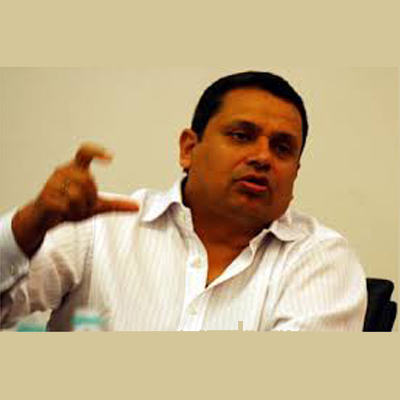
Tag: Uday Shankar

  • Disney+ launch in India stalled due to IPL delay

    Disney+ launch in India stalled due to IPL delay

    MUMBAI: COVID-19 pandemic has stalled the entry of Disney+ in India. The scheduled launch of the streaming service has been paused and the new date is yet to be revealed.  

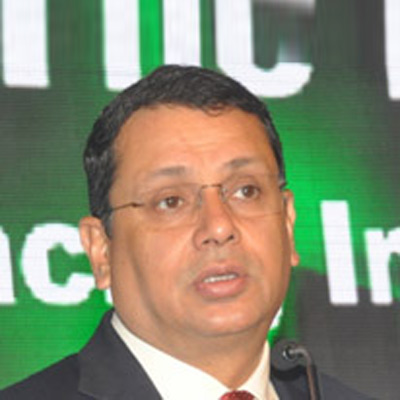
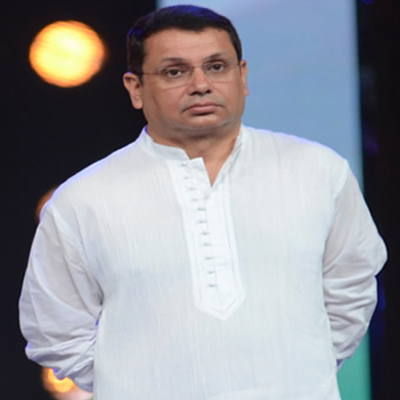
    “We recently announced that Disney+ would launch in India through the Hotstar service in conjunction with beginning of the Indian Premier League cricket season. Given the delay of the season, we have made the decision to briefly pause the roll-out of Disney+ and will announce a new revised premiere date for the service soon,” the Walt Disney Company APAC President, Star and Disney India Chairman Uday Shankar said.

    Former Disney CEO Bob Iger said in an earnings call after Q1 result that it would be launching the service in India through Hotstar on 29 March at the beginning of the Indian Premier League. After a successful first few months of its domestic launch, Disney+ is now gearing up for its international expansion. Iger wanted Disney+ to leverage the success of Hotstar in India by bundling the two services. During IPL 2019 , Hotstar registered more than 300 million users.

  • IBF questions need for new tariff order revisions

    IBF questions need for new tariff order revisions

    MUMBAI: The last six months have been rather unsettling for the television sector what with the regulator the Telecom Regulatory Authority of India revising tariff regulations for pay TV at least a couple of times. Indian broadcasting CEOs hence came together under the umbrella of the Indian Broadcasting Foundation (IBF) on 10 January to air their concerns about the latest amendments in the new tariff order.  They were more than clear that the latest revision is going to adversly affect their toplines and bottomlines and hence that may leave them no recourse but to consider legal options.

    While the new price regime implemented in the last year did not have enough time to settle, the Telecom Regulatory Authority of India (TRAI) once again revised the order recently including reducing the pricing cap to Rs 12 per channel to be included in a bouquet, down from Rs 19 per channel.

    “Even as the new regime was settling down, on 1 January 2020, TRAI notified certain amendments to the New Tariff Order and Interconnection Regulations for the broadcast sector. These amendments attempt to make further disruptive changes in an industry already grappling with the paradigm shift to an MRP based pricing regime,” IBF president and  Sony Pictures Networks MD & CEO N P Singh expressed.

    He also mentioned that while the broadcasting industry is apprehensive about the magnitude of changes, they support bringing in order into the system.

    Singh also noted that the collective cost to the broadcasters was well over Rs 1,000 crore in just communicating the changes to the consumers. Moreover, there was an overall loss of 12-15 million subscribers in the process.

    Walt Disney Company Asia Pacific president, Star  Disney India chairman Uday Shankar also raised the question that if a comprehensive exercise was done last year, then what is the need for the current revision. He also added that if TRAI is so concerned with bringing down the price for the consumer then why, in the name of NCF (network capacity fee), distributors are being allowed to charge as much as Rs 160 for something that DD FreeDish is giving for free.

    “The objective of NTO 1 was first – to give choice to consumers, second – to bring transparency and third – to reduce litigation. While only the first two have happened, it's too early to talk about the third. Statistically, overall 94 per cent of Indians are aware of the NTO and the choices they have because of the efforts made by the broadcast industry collectively. The month on month churn in industry shows that people are continuously fine-tuning their choices. The other objective of NTO was transparencey which it has also brought in. The question therefore, is ‘what is the fundamental need to change again?,’" posed Viacom18 Group CEO & MD & IBF vice president Sudhanshu Vats.

    "India is a heterogenous country with different choices and abilities to pay. In every sector there is a wide spectrum and that needs to play out more in Indian media as well. This push for consistency shouldn’t come in the way of the industry's and the economy's growth. In the M&E industry there is a lot of dynamism and flux and hence the broadcast sector needs to be able to settle down. If there has to be any change we need to allow for enough time for its implementation and also changes shouldn't be suggested so frequently," he added.

    Shankar also emphasised on the problems that long-tail channels will face. He commented that the latest revisions will seriously threaten the existence of smaller channels. He also raised concerns about the quantum of investment in content, which broadcasters have been making. 

    Zee Entertainment Enterprises Ltd (ZEEL) CEO & MD Punit Goenka also questioned if these changes are in line with the government’s stated intent of improving the ease of doing business. According to him, whether it will really benefit end consumers is also arguable. 


  • TV & video people who made an impact in 2019

    TV & video people who made an impact in 2019

    MUMBAI: Even as the curtains have gone down on 2019, Indiantelevision.com is happy to reveal its list of senior executives from the business of TV and video, who were constantly under the arc light throughout the year or made waves on account of something they did. We have put in our best efforts to cover as many of the noteworthy professionals of 2019 as we could, taking into consideration the importance of their roles in the organisation and industry as well as the significant contributions they made in the year. We do not say the list is comprehensive, and any omissions are unintended.  We hope you will find the first part of this list interesting read. More will follow in the coming days.

    Sanjay Gupta

    His departure from Star India – a company which he helped steer along with Uday Shankar for around a decade- came as a shocker for many in industry. But he was leaving for the digital world – that of Alphabet or Google – and he would be heading the India operations for the global juggernaut.

    From close friends and associates, Shankar and Gupta will be on two different sides of the spectrum. There will be many areas that Star Disney-Google will be able to work on together; in some maybe not.  Clearly, the digital and entertainment world is going to be an exciting one with them at the top of their respective companies.

    Uday Shankar

    For long, the boss of Star India has been seen as the mover and shaker of the broadcast industry. But for the last two years, he’s had an additional responsibility: overseeing the merger across Asia-Pacific of Twenty First Century Fox with Disney, including its biggest and most prized territory, India. And he came out with flying colors: the transition was relatively smooth, not too much bad press emerged, and overall the merged company, now looks forward to bearing the fruits of the union.  Morale at the two companies – or should we say the merged company – is high as Shankar continues to organise, shuffle reshuffle, hire, rejig executive portfolios to build an organisation for the future.

    Star India notched up losses, but those were for costs of prized but expensive cricket rights and these were planned. Hotstar continued to set record after viewing record, Star India retained its position as a top Indian TV network and he even managed the departure of his deputy Sanjay Gupta by looking for talent in-house and appointing the successful regional TV boss K Madhavan as his head of all television, while he took on the responsibility for the network’s streaming service. He along with Bob Iger and the Disney Plus team will have to take calls on how they will launch Disney Plus in India in 2020

    K Madhavan

    He is the shy and not-so-used-to-the-public-eye professional with the midas touch who ran and helped built the southern business for the Star India network from nothing over the years. Of course, under the direct steerage of Uday Shankar.

    It began with the acquisition of the Tamil channel Vijay from UTV’s Ronnie Screwvala nearly all of 19 years ago. Madhavan came on board Star India in 2008 when Star India purchased a majority stake in Asianet. He had the credentials – he had helped turn around the struggling Malayalam network after he took over in 1999, and giving it an indomitable position in Kerala very soon thereafter. With it came three Malayalam channels and two Kannada ones. Star completed its southern footprint by acquiring the Telugu service, MAA Television Network in 2015. As head of the southern business of Star India, he grew it further until it contributed a significant sum to its topline business.

    And for that, he has been rewarded now with oversight of the overall TV business of the now Disney owned network. Madhavan’s immediate focus will be on the Hindi GEC business of Star India, which is perceptibly under threat from streamers who are dishing out edgy content, which is appealing to younger mobile audiences.  Additionally, he will have to find ways of monetising the network’s TV cricket rights better. He has the pedigree and 2020 will see his imprint being left on what is now his charge. 

    Punit Goenka & Subhash Chandra

    What do we say about Punit Goenka but that 2019 was the year when he showed what stuff excellent CEOs can be made of. No other executive comes even close to the plaudits that Punit has got for managing the tough situation that the promoter family of Zee Entertainment got itself into. Along with his father, they convinced existing investors to buy equity in the company to pay off lenders. Yes, it meant lowering the promoter family holding to around five per cent. But even that was acceptable to both Goenka and Chandra. The company was above family holding. Zeel for its part is a very well run media outfit with a bunch of excellent senior professionals that Goenka has brought in place and whose respect he has earned courtesy of the fact that he is so approachable. The company is now en route to monetise more than any other broadcaster in the regional language space by launching channels in Kannada, Punjabi etc.

    That aside, along with his brother Amit, and Zee5 CEO Tarun Katiyal, he helped hyper-activate the group’s streaming service Zee5 – launching originals like there was no tomorrow. Today, Zee5 looks like one of the more promising OTT platforms with SVOD, AVOD, and adtech plays.

    Hiren Gada

    When Hiren Gada was nominated as CEO of Shemaroo, he was relatively unknown to most in industry. From being a content rights owner, which licensed its library to everybody, Shemaroo has now become a platform owner in streaming service ShemarooMe, which has an interesting offering. A wide array of content, gamification, special offerings, licensing and merchandising, Gada has transformed Shemaroo by bringing in young professionals and giving them wings to fly. In fact, his singular focus has been to transform the once family-run but now publicly listed Shemaroo into a professional organisation. To that accord, he has hired from mainline entertainment and media firms and upped the ante on distributing his OTT service in as many countries as possible. He has been attentive to monetise the content library as well, by continuing to provide value-added services to other platforms as well.

    NP Singh

    NP Singh was at his customary best: staying out of the limelight. But even behind the scenes, he was hard at work. First, along with his Culver city management, he got into deep conversation with the Zeel promoter family for a buyout. The price Sony Pictures put on the table was chunky, but Chandra and Goenka wanted to retain control, they were okay with investment bankers and institutions reducing their stake to a minority, but not a rival media and entertainment firm. Hence, a deal which was looking hot suddenly became cold.

    Singh played a big role in the parleys with Mukesh Ambani to merge his media assets TV18 with Sony for a large period of the second half of the year. The deal had not materialised at the time of writing, but it well could in the new year.

    The quiet-and-polite-to-a-T  executive had a good year on the TV front with his Sony Entertainment Network, SAB, Max group of channels and kids channel Sony Yay all doing well. Sony Entertainment Network, which was lagging for long, finally got its act right under Danish Khan with a mix of good reality, talent, talk and celebrity stand up offerings in 2019.

    Harit Nagpal

    If there’s one platform that has come out with shining colours in 2019, it is the Harit Nagpal-run Tata Sky. The professional who keeps a razor-sharp eye on consumer experience was quick off the blocks in stitching equitable win-win deals with broadcasters, and then followed that quickly with a campaign educating Tata Sky subscribers on the TRAI mandated New Tariff Order. The DTH platform offered packages and also had its call centre employees well equipped to answer queries. Net result: Tata Sky signed up 3 million active subscribers at a time when other platforms added less than one-third its adds, giving it a 32 per cent market share.   

    Nagpal also came up with new packages serving HD channels then introduced Binge – an Amazon firestick service innovation – delivering OTT apps and special programming to its consumers on one device. It pushed its broadband offering as well, offering competitively priced plans.

    Reed Hastings

    He is not Indian but has big ambitions on Indians. And it’s his pronouncements and actions which have been excited the creative and production community in India, like elsewhere in the world. For long Netflix big boss Reed Hastings has avowed that the next 100 million customers for the streamer are going to come from India. And he has been putting his money where his mouth is, promising to invest Rs 3,000 crore in India in his latest announcement as the year was ending. Continuing with the localisation drive he lured local creative professionals like Monika Shergill and Aashish Singh in early 2019 to lead digital and film originals respectively. And since then Netflix has commissioned filmmakers of the calibre of Karan Johar and Shah Rukh Khan to produce digital series for the streaming service. A host of filmmakers too are being signed on as it battles competition from the likes of Amazon Prime, and a string of local players. Concerned by the sluggish uptake of subscriptions since it launched three years ago in India, Hastings and team Netflix put in place a mobile-only plan priced at Rs 199 a month. Deals have also been struck with almost every platform to make sure Netflix is easily accessible to those interested in it. 

    Attractive pricing and cutting edge content are the two planks Hastings has put in place. 2020 will decide how much that translates into results and his envisioned goal for India.

  • K Madhavan to head all Star TV businesses; Uday takes charge of Hotstar

    K Madhavan to head all Star TV businesses; Uday takes charge of Hotstar

    MUMBAI: Ten years ago when Uday Shankar was looking for a professional to be his deputy in Star India, he looked outside and roped in Sanjay Gupta a long term Hindustan Lever professional.

    Circa 2019,  Shankar did not look for an external executive to replace Gupta who is slated to move onto Google as its country head close to the end of this month.

    Rather, Shankar has gone in for an internal resource in the shape of K Madhavan who has successfully built up the regional language network for Star India. Apparently, Shankar in an email to staffers today announced – in a move which we suspected would happen – that Madhavan would be given oversight of the entire Star TV channel bouquet. Shankar said that all those previously reporting to Gupta would now report to Madhavan.

    Shankar on his part will temporarily take on complete oversight of the rapidly growing streamer Hotstar. How long this will continue is not clear.

    Hotstar has been headless since last year when Ajit Mohan decided to move to Facebook India as its India head.  The chief product head Varun Narang had temporarily taken on its responsibility since then.

  • Hotstar decodes the online video consumer, unveils India Watch Report 2019

    Hotstar decodes the online video consumer, unveils India Watch Report 2019

    MUMBAI: Technology changes swiftly. However, sometimes, the market receptiveness for these changes is even faster. Take for instance some of the revelatory insights thrown by the latest ‘India Watch’ report by Hotstar. Consider the fact that Technology changes swiftly. However, sometimes, the market receptiveness for these changes is even faster. Take for instance some of the revelatory insights thrown by the latest ‘India Watch’ report by Hotstar. Consider the fact that Lucknow, Pune and Patna consume more video data than Hyderabad, Bengaluru and Kolkata., Pune and Patna consume more video data than Hyderabad, Bengaluru and Kolkata. Or the fact that OTT is no longer a men’s club, as much as 45 per cent of total entertainment consumption at Hotstarcomes from women.

    Similarly, Bihar and Bengal, two of India’s most poor states in per capita income, are leading the country when it comes to per capita data consumption and are much ahead of more industrialised and urban states like Maharashtra and Delhi. And, Kanpur and Kochi are ahead of Mumbai and Bengaluru when it comes to binge watching during late hours. The India Watch 2019 by Hotstarreport busts many such assumptions about the OTT market in India.

    “Video entertainment ecosystems have rarely evolved fasterthan what we are witnessing in India. With affordable
    smartphones and abundant access to data, the small screen isbecoming the preferred medium of entertainment for newconsumers. Thefuture is exciting – for consumers, for marketers, and forcontent platforms,” The Walt Disney Company APAC Chairman, Star & Disney India, Uday Shankar said in a foreword to the report. 

    The report also chronicles Hotstar’s amazing journey to becoming India’s largest premium streaming platform by viewership.Launched in 2015, Hotstar, with 400 Mn+ downloads, is already one of the most downloaded apps in India, registering 2X installs and 3X growth in consumption this year as compared to 2018. This growth catalyses from Hotstar's endeavors in taking digital video consumption to new frontiers, where non-metros are outstripping metros in terms of video consumption and regional content has grown to account for 40 per cent of overall content consumption.

    The big Cricketgamble.

    In September 2017, Star India (Hotstar’s erstwhile parent company) trumped Facebook, Reliance Jio, Sony and Bharti Airtel, and won broadcast rights for IPL for whopping Rs 16,347.50 crore for the next five years. That bet has largely paid off.

    How sports streaming in general, and IPL in particular, have helped Hotstar in achieving subscriber growth not even imagined by other OTT platforms, is clear by live streaming viewership growth on Hotstar.

    During IPL 2017, Hotstar recorded 4.5 million concurrent viewers. For IPL 2018, this number was 10.3 million. In 2019, Hotstar recorded 18.6 million concurrent viewers during IPL and 25.3 million concurrent viewers during ICC 2019 Cricket World Cup.

    Live streaming sporting events like IPL has not only helped Hotstargrow its subscriber base, but such events also provide better advertising options on the platform. Brands like Swiggy and Coca Cola ran integrated ad campaigns on Cricketing and IPL themes during this IPL season and the report talks in detail about how these brands were able to leverage IPL popularity for their brand marketing. 

    Talking about advertising oppurtunities during live events, Shankar said: “Sharp customer insights and deeper customerengagement, when powered by enhanced technologicalcapabilities, will open new possibilities for marketers, whocan now run targeted marketing campaigns at scale duringlive events.”

    During VIVO IPL 2019, 64 million viewers also participated in Watch ‘N Play, twice as many as last year.

    The contribution of live streaming sporting events on Hotstar can be gauged from the fact that in 2019, as much as 42 % of all content consumed on Hotstar was sports related while 58 per cent was in the genres of entertainment and news (despite the surge during general elections).

    Outdated gender stereotypes

    any OTT audience measurement reports have underlined how the platform is heavily skewed towards male audience. The Ormax Media report, released last month in November, found that as much as 66 per cent OTT viewers are male. The India Watch report, however, throws interesting figures.

    Not only are female viewers growing, at least on Hotstar, but there is a growing overlap of content choices among males and females on OTT space. In 2019, as much as 45 per cent of Hotstar viewership were women.

    Besides, the report finds that video consumption by women on Hotstar increased by 3.2 X timesin 2019, outpacing the growth in video consumption among men.

    Further, 40 per cent viewers of family drama shows on Hotstar are women. And men are more interested in mythology than women and 41 per cent of Game of Thrones viewers also watched Hindi family dramas.

    Hotstar EVP & Chief Product Officer Varun Narang said, “The accelerated growth of the Indian video entertainment ecosystem has had an unprecedented impact on the consumer. Today, the Indian consumer enjoys a plethora of content to choose from, has moved beyond metro cities, and isn’t limited by gender or language. More importantly, this growing accessibility has opened doors to new thoughts and ideas that are shaping a stereotype-defying consumer.”

    Regional leads the way

    The report finds that more than 40 per cent video consumption came from regional content. Tamil, Telugu and Bengali are the top regional languages. In fact, Bigg Boss Tamil is the highest watched entertainment show having beaten all the Hindi TV Shows.

    New ways to news

    Another genre witnessing huge growth in video consumption is news. 2019, being the general election year. Hotstar recorded 10 times more video consumption in news genres in 2019 compared to last year. Further, 65 per cent of news consumption comes from people in the age group of 15-34.

    The report is an important addition to the existing knowledge gap about OTT audience in India and will certainly provide new insights to marketers and content creators. 
     

  • The journey of Star India’s Uday Shankar through his eyes

    The journey of Star India’s Uday Shankar through his eyes

    MUMBAI: He came. He spoke. They listened. He conquered.  That, in summation, defines how the Walt Disney Company Asia Pacific president, and Star & Disney India chairman Uday Shankar’s tryst with members and invitees of the Advertising Agencies Association of India’s Subhas Ghosal Memorial lecture “Why I have been in Media for 30 years” on 11 October 2019 went. The audience – consisting of a slew of senior advertising and marketing professionals – listened in awe, smiled, laughed throughout the Shankarspeak, which commenced around 9:30 pm in the Four Seasons Hotel in Worli, Mumbai. He spoke extempore, no teleprompters in sight, and his speech was fluency at its best, delivered with the confidence of a professional who knows what he has achieved and what he is setting out to achieve.

    Throughout his 34-minute speech, Uday constantly referred to the risks he has taken during his entire career. Like the time when he was grappling with being called upon by the Murdochs to head Star India as CEO and he asked his family whether he was taking a chance as he had had no exposure to entertainment or business having been a news man all of his life. To which his daughter quipped: “What risk? If anything, weren’t the Murdochs the ones who were taking the risk?”

    He went on to join the organisation, and the rest, of course, is history. Uday spoke about the time when – on being urged by his wife – he chucked his secure job at the publication Down to Earth and relied on his wife’s income for six months before securing a lower paying position at Zee TV. “I took a 50 per cent pay cut,” he revealed. “But I so wanted to do news television that I was willing to go that distance.”

    Uday then revealed how he switched to the Star Network when he was called upon by the Murdochs to clean up the mess that was Star News from his comfortable position at Aroon Purie’s Aaj Tak.

    “On the face of it, it was a bad career move,” he revealed. “Star News was as messed as it could ever be. All the success and equity I had created for myself at Aaj Tak and before was at risk. The sensible course was to run for my life. But instead I dived headlong into it and doubled down. Within a month I was both editor and CEO. Everyone thought I was going to break all records of disastrous stints as a media CEO. I knew nothing about running a business. But as a journalist I had learned one thing: when you do not know something, you go to people who understand it better than you. That’s what I did. I focused on bringing in good talent and content. And slowly the tide turned. Star News went from bottom to the top of the pile.”

    That’s when the Mudrochs spotted him as a potential leader of Star India. While at Star News he, at least, had command over news content, he did not have any experience of entertainment when he walked into Star India. There was an exodus in the organisation as two top-notch executives had left to launch their own channels, taking experienced professionals with them. He once again relied on his journalistic instinct which told him that a crisis could be tremendous opportunity.

    Once there, he concentrated on playing the long form of the game of cricket – test match vs the IPL, Uday revealed. His first focus was on hiring good talent. Deciding to discount experience, he emphasised on intelligence and youthfulness and irreverance. The leadership under him did not have previous media experience unleashing a really powerful force in the company. Simultaneously, he focused on getting rid of the slacker culture in Star.

    He then went about chipping away at edifices that had made Star Plus a success until then. He dropped all Ekta Kapoor and Balaji shows and dropped the successful Kaun Banega Crorepati and called in new producers to churn out differentiated content like Satyameva Jayate hosted by Aamir Khan to the annoyance of established ones. “Everyone thought we were crazy. Who would put a show like that on entertainment television on Sunday? It was a great decision. It made an impact on society. And it had an even bigger impact on the thinking at Star. Everyone thought that it was going to be my nemesis. But I survived Satyamev Jayate,” he highlighted.

    “We are in the business of content. It may surprise you to know how few companies have content at their core. The biggest contribution I have made at Star is that I have tried to push content closer and closer to the centre of the core so much so that the core of Star today is content,” he further explained.

    “If no one believes that it can be done, we will take a shot at it. This is a culture we have built at Star,” he says.

    The greater risk taken by Uday was the decision to take Star into sports – the graveyard of many media companies. He was not satisfied with the ICC rights, BCCI rights but acquired the IPL rights at aggressive prices as well. “No other media company invested in cricket like Star India did. In contrast to other networks which usually have commentaries in one or two languages, Star expanded it in seven languages which paid off as 86 per cent of their cricket sports viewership come from languages, only 14 per cent comes from English.”

    He spoke about Star’s move towards promoting kabaddi as a sport, wherein everyone thought his goose was cooked. “A friend told me the Murdochs had trusted me too much and that the company had too much money. With the best of intentions, he cautioned that both of these are going to end very badly,” said Uday. “However, we are making some money and I have kept my job. Our sports business is a work in progress as is the sports consciousness in this country. We are slowly building one of the most exciting franchises in the world.”

    Uday then went on the speak about Star’s next  foray with Hotstar wherein he launched the app in a data-dark market where the mobile handset was a device for talking. What gave him the confidence was India’s surprising ability to leapfrog. Once again, he hired the best talent.  He spoke about the risk he took during the Hotstar launch campaign, which ran across the Star network saying “TV is passe. Get over TV. Get Hotstar.”

    He further revealed:  “When we were launching Hotstar, a very senior executive at one of the global tech and video giants warned us that if you try, you will lose a lot of money, effort and time and then you will come begging to us to host your content on our platform. He said that we would still be kind to you. Now, it seems they can’t tire of hiring my talent. Not just one company that is hiring our talent as if it is going out of supply but every media and tech company that’s active in India seems to have one destination to pick up talent  –  Star India. I would make a lot more money if I ran a talent agency. It is annoying but it is also a tribute to our incredibly talented team that’s even more audacious than it is talented. A team that is committed to changing Indian media and content – making a difference to the lives of people. That’s why I am in media for 30 years. And it feels like I am just getting started. Over the years, we have become change agents for India. At Star, we don’t just believe in a better India, we believe in our duty to participate and shape that India. Of course, when a company like Walt Disney values and embraces the businesses we have built, it is extremely gratifying.”

  • Star India’s Sanjay Gupta: The King maker who is now King

    Star India’s Sanjay Gupta: The King maker who is now King

    MUMBAI: For years, the spotlight has been on former journalist-turned-media executive Uday Shankar at Star India (now Disney Star India). Reams of copy have been written about how Uday has supercharged the formerly Rupert Murdoch-now-Disney owned media organisation with his dash of entrepreneurship. However, much less has been written about his maanging director Sanjay Gupta who has been relatively in the shadows.

    Yes, he has addressed public gatherings such as Ficci Frames, and has represented Star India in forums, but on most occasions, Uday’s larger than life personality has overshadowed Sanjay’s.

    Enough conversations had happened between keen Star India observers on whether something would give in the top management of the company now that Disney was the owner and processes very different from what executives had been used to were being put in place. So when news broke that Sanjay had put in his papers and was joining Google India as country manager and VP, sales and operations – stepping in the big shoes of Rajan Anandan – for most it was surprising and not a rude shock.

    Ten years at the top in an organisation is a long time, and Sanjay rightfully earned his stripes. A former Hindustan Lever and Bharti Airtel professional he brought in a sharp rigour as far as  brand and consumer focus is concerned into a media company. He helped in the transformation of Star India from being just a broadcaster to one which thought consumer – in almost every situation. Similar to what Pradeep Guha did at the The Times of India in the eighties and nineties. 

    Sanjay also showed he has the ability to take an idea, make it a reality and scale it up into a money making machine. He proved the perfect foil to Uday who thought big, bigger than any one in the India media firmament had hitherto done. Uday could do so because Rupert and James had the utmost confidence in him and backed him at every stage.

    No one knows this about Sanjay more than Uday. In an email to the Star India team on his deputy’s announcement to leave the organisation, Uday has labeled him “his friend and partner” saying he helped him build Star India for over a decade.

    He further confesses in the email:  “I have never had to share the news of a departure that would have so much impact on our lives. Sanjay has been the person who has taken charge of my craziest ideas and audacious ambitions of this company and has made them real and successful…every time. He leaves a void in my life that would be impossible to fill.…”

    Theories are manifold why Sanjay chose to part ways. Among them: there is not enough room at the top for two fabulous executives in the new Disney-Star India structure. Yes Uday has a larger remit of all of Asia. And Sanjay was in charge of the India operations. However, India is too close to Uday’s heart, hence it was difficult for him to let Sanjay run the ship independently.

    Both Uday and Sanjay will rubbish this as sheer balderdash. Which it probably is.

    More likely is the conjecture that Sanjay got an opportunity that he could not let go. Leading the Indian operations of one of the world’s largest media and technology companies is something that is extremely appealing to a professional. And that too at Google India – which is part of Alphabet. Google India is a leader in the digital space accounting more than a billion dollars in revenue in the country and its operations encompass almost every part of Indians’ lives. The company has been helping – and has further  plans to help –  in the digitisation of India in every way possible which immediately expands the kind of exciting opportunities and challenges that Sanjay will have to deal with. And being a consumer focused executive who honed his skills at Hindustan Lever, the Google assignment got him smacking his chops.

    If one goes by the praise that Uday has heaped upon Sanjay, then he appears to be perfect for the job. Says he in the email: “…there is no one quite gifted as Sanjay in the entire Indian M&E sector. Based on my experience, I can say that there are few like him in the Indian corporate sector as a whole.”

    For Star India, however, Uday says it is time to step up because  “the great company that Sanjay built must continue to scale greater heights."

    One will have to wait and watch whether Uday will continue to pilot  Star India along with his Asian responsibilities or whether he will bring in another executive to replace Sanjay from outside or promote from within. Whatever direction it takes, Sanjay’s act will be a challenging one to follow.

  • Media maven Uday Shankar to speak at AAAI’s Subhas Ghosal Memorial Lecture 2019

    Media maven Uday Shankar to speak at AAAI’s Subhas Ghosal Memorial Lecture 2019

    MUMBAI: The Advertising Agencies Association of India (AAAI) and Subhas Ghosal Foundation (SGF) are pleased to announce the Subhas Ghosal Memorial Lecture which will see The Walt Disney Company Asia Pacific president, and Star and Disney India chairman Uday Shankar on Monday, 11 November 2019 at 7 pm at The Great Room, Four Seasons, Worli, Mumbai.

    Shankar will speak on “Why have I been in media for 30 years” and walk us through his journey in the media and entertainment industry over the past three decades.

    AAAI president Ashish Bhasin says, “We are very happy that Uday Shankar will be delivering the AAAI Subhas Ghosal Memorial Lecture 2019. As a captain of the industry, Uday perhaps has the best visibility to all the facets of the broadcast and OTT industry and we look forward to hearing his views. I must also compliment Sam Balsara on behalf of the AAAI for driving this initiative with great gusto”.

    Says Sam Balsara, on behalf of SGF, “In a rapidly changing advertising world, TV continues to dominate ADEX and grow at a double-digit rate. It will be interesting to hear Uday Shankar’s views on how the TV Industry has carved out a dominant share for itself in the advertising market and plays a very major role in the lives of the majority of Indians, through the absorbing stories, that it puts out every day, 24 X 7.”

    All members of advertising, marketing, media and digital community are welcome. However, entry is only by invitation. Please send an email to Sudesh Kapoor at AAAI on his email id aaai@aaai.in to receive an invitation.

  • Star and Disney India commit to reduce usage of single-use plastics across their offices

    Star and Disney India commit to reduce usage of single-use plastics across their offices

    MUMBAI: Star and Disney India has announced their commitment to cut-down on the use of single-use plastics across their offices. As a part of this decision, the company has introduced alternatives to single-use plastics in their office premises.

    The company has always been extremely conscious of its carbon footprint and the impact it has on the environment. They have already replaced plastic teacups with paper cups, plastic stirrers with wooden stirrers, tea and coffee sachets with paper sachets, and added biodegradable plastic wrappers for umbrellas. Additionally, plastic bottles have been replaced with glass jars with immediate effect.

    “At Star and Disney India, we have always believed in being a responsible corporate citizen and with this small step we want to inspire a more sustainable lifestyle. Today, plastic waste is at epidemic proportions in the world's oceans with over 9 million tons of plastic waste being dumped every year with 40% of this being used only once and disposed,” said The Walt Disney Company APAC President and Star & Disney India Chairman Uday Shankar. “It’s about time for us as corporates to make the change for a better tomorrow,” he added.

    On October 2, 2019, National Geographic channel, part of the Star Network launched the Planet or Plastic? Pledge, an initiative aimed at addressing the pressing problem of single-use plastics by raising awareness and encouraging people around the country to take a pledge.

    The initiative received an overwhelming response with 47,000 tweets and 881 million impressions on social media. The pledges generated a commitment to reduce 25 million items of plastic in the first 24 hours. In 2012, Star pioneered the digital broadcast ecosystem by moving its content from tape to cloud, dramatically reducing its carbon footprint.

  • Sanjay Gupta is India country manager in The Walt Disney APAC rejig

    Sanjay Gupta is India country manager in The Walt Disney APAC rejig

    MUMBAI: The Walt Disney Co announced a major reshuffle of its leadership team for the APAC (Asia Pacific) and Middle East region on Monday. Sanjay Gupta will be country manager of India and will also have direct responsibility for the studio business in the country while K Madhavan will lead Star India’s regional language media networks.

    Star India chairman and CEO and 21st Century Fox Asia president Uday Shankar said, “It is a momentous opportunity to be able to chart the course of The Walt Disney Co. in Asia Pacific and Middle East. While our region is experiencing tremendous change, the common thread that binds it together is the exciting opportunity it presents to build on the great businesses that we have today and create transformational businesses of tomorrow. My endeavour is to build an organisation that enables us to take full advantage of this unique opportunity and capitalise on the potential of the great leadership talent that we have in the region.”

    Sanjay Jain and Amita Maheshwari will lead finance and human resource respectively. Anju Jain Kumar will be the chief regional counsel for North Asia and ANZ while Deepak Jacob will be the chief regional counsel for India, South East Asia and Middle East. Amit Malhotra will lead emerging markets and content sales for APAC (except North Asia).

    “We recognise the need for a sharp focus on building deeply local businesses. To achieve this, we are making some changes to the current market structure. This will allow us to serve the strategic agenda in each market and enable our exceptional leaders to build even greater and more successful businesses. Above all, this will facilitate our transformation into a direct-to-consumer company that rests on deep local foundations,” Shankar added.  

    North Asia will be led by Luke Kang who will look after business including direct country management of Mainland China and Japan. Chafic Najia will be country manager of Middle East media cluster while Kylie Watson-Wheeler will continue to serve as country manager of Australian and New Zealand (ANZ) business with direct responsibility for media networks and direct-to-consumer. Kurt Rieder will lead the studio business for APAC (except India).