Tag: Uday Shankar

  • Life OK’s mythological saga ‘Devon Ke Dev Mahadev’ launches on DVD

    Life OK’s mythological saga ‘Devon Ke Dev Mahadev’ launches on DVD

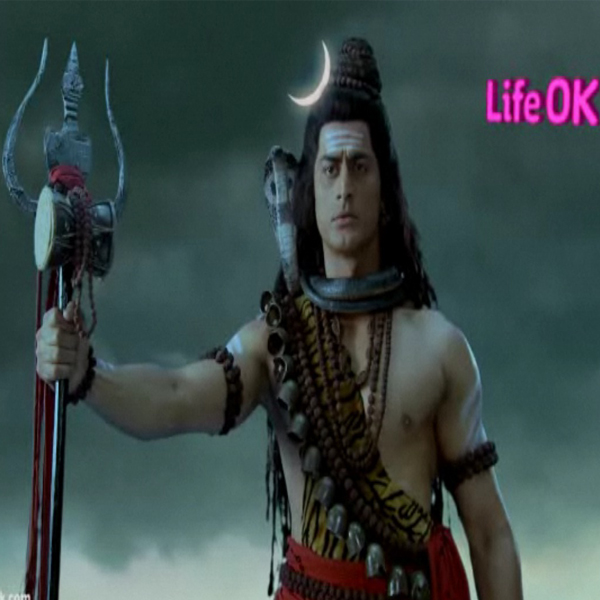
    MUMBAI: In order to expand its reach and brand beyond television, Star India has released its Life OK’s mythological saga ‘Devon Ke Dev… Mahadev’ on DVD.

    The company has tied up with Ultra for this purpose.

    Star India CEO Uday Shankar said, “A nation and its people derive their collective identity and pride from stories passed on to it from earlier generations. It is our job not only to keep those stories alive but to tell them well in order to inspire a future generation. Like OK had its task cut out from the very first day and it has lived up to that challenge remarkably well by weaving gripping and inspirational stories with new approaches in production and technology.”


    While 300 episodes was a big achievement for show, it is just the beginning of the story for the mythological saga and for Life OK. “30 years ago you had Ramayana and Mahabharata which were fantastic. They fostered creativity. However later on, mythological shows were done the same way. They became old fashioned in look. That is why they did not have much success. When we started on ‘Devon Ke Dev Mahadev’, we knew that the way in which the story was told would have to change. We wanted to take the show beyond the Amar Chita Katha level. We have created new parameter of creativity. At the same time we did not compromise on the quality of entertainment,” Shankar said.

    Life OK, which completed one year in December 2012, is among the top five channels, Shankar added. “The aim is to make it a top three player.”

    Life OK GM Ajit Thakur said that the success of Life OK went beyond ratings. “While we have done well in terms of ratings, we have also dwelt on issues including crime, domestic violence, terror and religion. We have done things both on the air and on the ground. We want to be the home of big. new stories. While our show has finished 300 episodes, we still have lots of stories to tell within that show. We made an earnest attempt to make it as contemporary as possible by highliting Lord Shiva’s views on pertinent issues such as pollution and gender equality. This distinction has been pivotal to the resounding success of the show. At the same time while mythology is a platform that will be showcased on Life OK, it is not the only thing”.

    Life OK is doing a social awareness campaign to clean up the Ganga. “We did 15 days of activity last month. In this manner Life OK has gone beyond just being a TV brand,” Thakur said.

    Ultra Group CMD Sushilkumar Agrawal said that his company aims to bring content that blends entertainment with cultural and educational values. “This philosophy drew us to join hands with Life OK and launch ‘Devon Ke Dev Mahadev’ on DVD. This show is not just an epic but an amalgamation of Indian culture, tradition and values that will continue to be passed on to forthcoming generations.”

  • Uday Shankar honours Sachin with Star Sports Believe trophy

    Uday Shankar honours Sachin with Star Sports Believe trophy

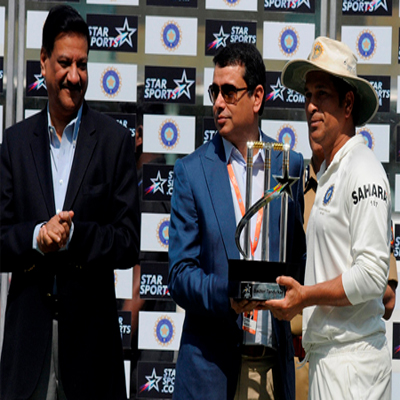
    MUMBAI: Star India CEO Uday Shankar presented the first Star Sports ‘Believe’ trophy to master blaster Sachin Tendulkar at the post presentation ceremony of India’s second test against West Indies in Mumbai.

    ee Coin’ on the top of stumps alongside bails. This is inspired by the real childhood story of Sachin Tendulkar who sparkled under the tutelage of coach Ramakant Achrekar. It is common knowledge that Achrekar used an interesting strategy to inspire Sachin- he would put a one-rupee coin on the top of the stumps when Sachin used to bat in the nets. Any bowler who dismissed him would be rewarded with the coin; however the coach would hand over this coin to Sachin himself if he passed the whole session without getting dismissed. This remarkable way of rewarding ensured that Sachin kept a very high prize on his wicket throughout his career.


    Uday Shankar presenting the first Star Sports Believe Trophy to Sachin Tendulkar


    Star Sports’ new network’s campaign urges India to ‘Believe’ with an aim to inspire the hero in each and every Indian.

  • Star India’s Rs 20,000 crore sports gamble

    Star India’s Rs 20,000 crore sports gamble

    MUMBAI: That Star India is betting big on sports is well-known. How big the bet it is placing is now becoming clear.

    The News Corp-owned media and entertainment leader in India today announced that it is committed to invest Rs 20,000 crore in building the sports business in India. The investment will be used to fuel the expansion of sports coverage in the country as well as in building exciting new leagues including the Indian Super League in football, the Hockey India League and the Indian Badminton League over the next few years, it stated.

    Simultaneous with this announcement, the network today unveiled a new brand for Star Sports across six TV channels – Star Sports 1,2,3,4, HD1 and HD2 and its online portal starsports.com.

    The new logo is a metallic silver star with an incandescent swoosh of colours symbolising the authority and passion of sports with the powerful slugline – “Believe.”

    Uday Shankar is investing big in building a sports ecosystem in India

     “Cricket is too big to be confined to just one channel. Today, we are redoubling our efforts to showcase the best of Indian and international cricket to the sports fan. We will cover more of it, have wider coverage, go deeper, use multiple languages and take it beyond television,” says Star India CEO Uday Shankar in a press release. “The new brand is also about showcasing our commitment to other sports. While cricket will be central to our approach, we will also be faithful to our role as a sports broadcaster and bring in the best of local and world sports to India, whether in soccer, hockey, badminton, tennis, F1 or the many other sports that fans in India are deeply passionate about.”

    He adds: “For us, this is not just about being the country’s leading sports broadcaster. We want to build a platform that will help nurture heroes out of the millions of passionate, young sports fans across India. We want sports to be the trigger for creating and nurturing outstanding new opportunities for India’s youth. And today, we are signalling that we are deeply committed to making this transformation happen, through our investments, our ideas and our efforts.”

    As of midnight 6 November, the six channels under the erstwile ESPN-Star Sports umbrella will give way to new brands. Star Sports will be called Star Sports 1, Star Sports 2 remains Star Spots 2, Star Cricket will become Star Sports 3, ESPN will be rebranded as Star Sports 4, Star Cricket HD will become Star Sports HD1 and ESPN HD will be renamed as Star Sports HD2.

    The big change really is with Star Sports 3, India’s first 24×7 Hindi sports channel with content, graphics and shows in Hindi.  It hopes that this push into Hindi will dramatically increase the reach of sports in India where it says less than 10 per cent of the populace understands English and a much smaller number are native speakers. Star Sports has seen success in Hindi commentary with Hindi now accounting for 70 per cent share of all viewership in the recently concluded CLT20 series.

     
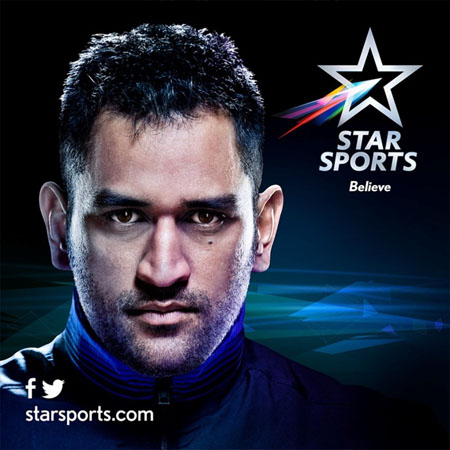
    A high decibel promotional campaign has been drawn up featuring MS Dhoni as its first brand ambassador

    In addition to this, the Star Sports network said that it will be showcasing new non-live programming and new shows and formats which will run into more than 5,000 hours of content, including around 200 days of live cricket annually.  Amongst these is a half hour show called Star Power which will give comprehensive updates, insight and analysis and will be telecast twice a day at 8:00 pm and 10:30 pm on Star Sports 3 all seven days of the week.

    On the digital front, Star India is aggressively reaching out to young, ardent sports fans who want to access sports across screens. The digital service offers a variety of sports including cricket, soccer and F1, in HD quality streaming. The service has received exceptionally positive consumer feedback for its revolutionary timeline (a first for cricket anywhere in the world) that gives the fan complete control of how he wants to view his favourite games, whether for live or catch-up.

    A high decibel promotional campaign has been drawn up featuring MS Dhoni as its first brand ambassador. The campaign, says the network, urges India to “Believe” and it outlines the beliefs that have made M S Dhoni one of the most iconic heroes of our time. It will run on the Star network’s 33 channels and rolls out on 6 November when India tunes into watch Sachin Tendulkar play the last series of his career.

    Star has the right pedigree to pull off healthy returns for the huge investments it is putting into sports says Ashish Bhasin

    Star’s sports gamble is getting praise from senior media professionals.

    “It is a very professional and calculated move to get deeper into sports and into developing niche sports.  The channels are already established with viewers as they have been around for a long time and the rebranding and promotion will only deepen the connect with them,” says Aegis Group chairman India & CEO south east Asia Ashish Bhasin.  “Star is putting its money where its mouth is and it has the right pedigree to pull off healthy returns for the huge investments it is putting into sports.”

  • Reliance, Star India, IMG brings Indian Super League for football to India

    Reliance, Star India, IMG brings Indian Super League for football to India

    MUMBAI: Reliance Industries, Star India and IMG are set to launch the “Indian Super League”, an unrivalled football championship that will foster local talent and feature international stars with the aim of making the game one of the country’s flagship sport and India – a name to reckon with in the global arena.


    The league promises to revolutionise the sport from the very get-go, leveraging the strengths of all three partners who are focused on growing the game to national prominence, offer Indian football greater global exposure and eventually help India qualify for the 2026 World Cup.


    Reliance, India’s largest business enterprise, Star India, the nation’s biggest TV network and entertainment conglomerate, and IMG, a leader in sports management, have a storied tradition of innovation, competitiveness and institutional commitment that will propel the venture, in which the partners will have proportionate stakes.


    The “Indian Super League” will feature eight city specific teams to start with and will tap the burgeoning interest among the country’s young population that’s increasingly seen taking interest in the sport globally. The League will kick-off in January 2014 and will run through March 2014, with plans for a second window in the same year.


    Annual global revenue for football globally is estimated at USD 28 billion,according to a study by AT Kearney. Star India,which also holds telecast rights to BCCI cricket matches in India,will use its superior content creation,packaging and presentation expertise to whet and retain viewer interest.


    “Football, with its largely untapped potential in the country, has the opportunity to grow to an unrivalled commercial success quite unlike any other sport. We hope the growing football footprint will pave the way for the nation’s sporting renaissance”, said IMG-Reliance chairperson Nita M. Ambani.


    “India is hungry for its second sport. Combined with our expertise in sports production, our attempt is to bring an unparalleled football experience to our viewers”, said Star India CEO Uday Shankar. “For far too long, the Indian sports fan has quietly waited for this revolution on the cusp of which we stand today. Our objective is nothing short of creating a movement around football in India. We want to put India on the global map.”


    “The ‘Indian Super League’ will feature international football stars combined with good football facilities, rivalry between India’s biggest cities and the roar of a billion passionate fans,” said IMG Worldwide chairman and CEO Mike Dolan. “It envisions creating new football powerhouses in this part of the world, which will rise to global prominence as the country and the sport further develop.”


    The League will have world-class international players play with the best from India. Each team will have one marquee player, international players and the best of Indian talent. Given India’s burgeoning interest in football and the country’s long association with the sport, the ‘Indian Super League’ is on the threshold of launching a revolutionary new football culture in the country.


    The ‘Indian Super League’ will also implement various football development projects aimed at holistic development of the sport in the country, including engaging with the masses to get them excited about football, encouraging families to regularly involve their children in football, creating an infrastructure to identify talented footballers at a young age and groom them into elite professionals and creating a critical mass of highly talented coaches to work at all levels of football in India.


  • Absence of regulation is as bad as over regulation :Uday Shankar CEO Star India

    Absence of regulation is as bad as over regulation :Uday Shankar CEO Star India

    All of us took stewardship of our companies in the last two decades, when robust economic growth created an air of optimism and confidence in the country, and about India in the world. We gather today in the midst of an extremely turbulent time for the Indian economy. Beyond shrinking GDP growth and falling currency, what is truly remarkable is that the spirit of optimism seems to have been replaced by one of apprehension and despondency.

    It is therefore appropriate that this industry forum has as its theme, renewal and innovation. In my mind, the forces that unleashed our exciting growth story are the very same as those that can inspire innovation and renewal in our industry. And at its heart is our willingness to be resolutely open to the world, to new capital and to new talent. But no renewal can happen, either in our economy or in our industry, if we are not brazenly open to new ideas.

    It is in this context that I had made the point a few months ago that there is no media industry without free expression. If anything, the last few months have proven to us that there is no Indian growth story without free enterprise. Because free expression and free enterprise go together. Our ability to improve the lives of millions of Indians is firmly tied to our ability to unshackle businesses; in allowing them the space and the imagination to create new products and services.

    Every time we have made it a bit easier for entrepreneurs to conduct business, we have generated enormous dividends through growth and new jobs. Every time we have made it easier for investors to bring in capital, we have created new markets and services.
    _____****_____

    In many ways, the dramatic economic reforms of 1991 were accidental. It did not emerge from a strong national consensus that we needed to change the direction of our post-independence path. It came from a shocked polity that opened the country for business only when there was no other conceivable option left on the table. And, yet, that accidental moment created the space for a new generation of Indian entrepreneurs whose enterprise and initiative not only created wealth but resulted in millions of new jobs. It also helped India achieve a near double digit annual growth triggering a social transformation the pace of which, if sustained, was capable of lifting India out of poverty in a generation. Today, there is a vociferous debate in play on whether India can afford a $22 billion food program. 

    What is truly remarkable is it is evidence of how much distance we have moved. Two decades ago, the topic would not even have come up!

    Of course, business cycles can ebb and flow. But, what stalled India’s growth and employment creation was our remarkable ability as a country to create a web of processes, regulations and norms that make it extremely difficult for entrepreneurs to conduct business. And in a hyper competitive global economy, where countries actively nurture promising sectors and constantly renew themselves to attract new investments, we really run the risk of being left behind.

    While skepticism about reforms could have been justified 20 years ago, what is surprising is that we are still debating the value of reforms and unshackling businesses when our own recent history is the most compelling testimonial to the power of entrepreneurship. Every time we have made it a bit easier for entrepreneurs to conduct business, we have generated enormous dividends through growth and new jobs. Every time we have made it easier for investors to bring in capital, we have created new markets and services.

    Nowhere is this dichotomy more prevalent than in the media and entertainment industry. Twenty years ago, the real face of liberalisation for most Indians was the appearance of dish antennas on roofs. It was a compelling signal to the world outside that India was open for business. We were ready to embrace new ideas, wherever they originated. And we were confident enough in our own identity to be open to new worlds.

    (L-R) Walt Disney India MD Ronnie Screwvala, Star India CEO Uday Shankar, I&B Minister Manish Tewari, CII Director General Chandrajit Banerjee

    And in that period, the industry saw a remarkable transformation in its size and in its scale. From one state run broadcaster with limited reach and less than five hours of daily content, we now have over 800 channels telecasting more than half a million hours of original content to 700 million viewers. From around 3,000 newspapers in 1991, we have grown to more than 80,000 newspapers today, with most of the growth coming in the vernacular languages. Our movie industry has grown 20 times. The industry has evolved from a disorganised community dominated by a few players to a highly competitive sector that is increasingly better organised and better run. From 750 million in 1991, it is now an industry worth 15 billion dollars. It supports six million jobs directly and probably twice more indirectly. It has both facilitated and absorbed new technologies. And, it has created a compelling platform to showcase India to the world. So much so that last year we set ourselves an ambitious target of $100 billion for the sector.  And, yet, this spectacular success in serving the Indian consumer and in creating employment has not been met with more reforms and more openness. Surprisingly and frighteningly, we seem to have regressed in many ways. Successive governments have created a web of policies and regulations which while they may have had the honorable intent of protecting the consumer has had exactly the opposite effect.

    Today, I would like to call out two big challenges the combination of which have had stifling impacts on innovation in the industry.

    Our television viewers today have easy access to global content, whether through online portals, through network broadcasters who are airing shows closer and closer to global launch dates, or simply through piracy. This has brought about a burning need for innovative, original content. However, for an industry that boasts of over half a million hours of original programming every year, how much of it is innovative content that we are proud of having brought on to the screen?

    The reason is simple. Our ability to charge for content has nothing to do with the scale of our investments in it. If a bold producer does decide to risk capital on cutting-edge, new idea, today he has no liberty to price his creative work. Why then should he take a risk when he stands no chance of getting a decent return on his investment even if his production becomes a blockbuster success? The result is tired, stagnated, insipid content for the consumer. No policy has done more damage to this industry than that of price controls on television content.

    What is amazing is that we have compelling evidence in the same industry that shows that abolishing price controls can dramatically improve consumer choice. Freeing up ticket pricing in cinemas created the foundation for a dramatic improvement in the quality and diversity of movies that came to the market. Without raising costs substantially for the price conscious consumer, it has financed a generation of content that has appealed to both niche and mass audiences.

    It is difficult today to avoid the persistent debate about the quality and health of news channels. But, there is no question at all that it is the restrictive tariff regime that has prevented news broadcasters from producing high quality content for an audience that is much smaller than that available for general entertainment or sports. Ironically, a regime that was brought to protect the consumer has ended up doing the most damage to consumer choice and quality.

    Even more frightening than price control is the creeping controls on free speech. For a country that prides itself on its deep democratic ethos, the last decade has been characterised by a creeping inclination to impose controls on speech and expression. It may have started with opposition to a book but controls on expression seem to mark new grounds every year. Small film makers who decide to invest in off-beat movies are plagued by having to defend their movies in litigation because a minority is offended by it. Films cleared by the censor board are banned by state governments, and often blocked by non-state actors under the threat of violence. TV shows attempting to break through the clutter find their characters’ voices beeped out. Even the titling of a movie as the Dirty Picture seems to be an open invitation to trouble. The result is work that is so mundane that it sparks no questions, elicits no debate and pushes no creative boundaries.

    This month, Star will launch Mahabharat on television. It is a show that we have made with a lot of passion and on a scale and grandeur that has never been seen on television to date. And, yet, a few days before the launch, what worries me the most is not the quality of the series. What keeps me awake is that some lunatic fringe somewhere in the country would raise some absurd objection to the show.

    It is no surprise then that this tyranny of the minority has now reached the central halls of Parliament. Today, a small but vocal group can claim both the moral high ground and have the political legitimacy to hold to random India’s legislature for a session, a day and sometimes more. This should not come as a shock at all. For, behind this practice, is the very same culture that we have nurtured and indulged for too long. The culture that grants legitimacy, cover and sometimes state protection to the very few who are offended or bothered by the expression of another group, and who can take to the streets and can vandalise private and public property with impudence. It should not be surprising that when we start putting limits on new ideas and free expression in our cultural space, they will find their way into our political and economic spaces too.

    It is difficult today to avoid the persistent debate about the quality and health of news channels. But, there is no question at all that it is the restrictive tariff regime that has prevented news broadcasters from producing high quality content for an audience that is much smaller than that available for general entertainment or sports.
    _____****_____

    The collective impact of regulation and the creeping tyranny of the minority have stifled innovation in our industry and, dare I say, in the economy as whole. At 15 per cent, we may grow at thrice the rate of the GDP but that is more a reflection of our topline economic growth than the health of our industry. At this rate, it will take us another 15 years to hit $100 billion in value and by then, we will be just three per cent of the world media market. This is just unacceptable.

    Make no mistake. I am definitely not arguing for a world without regulation. History has taught us that free enterprise is well served by clear rules and policies. Absence of regulation is as bad as over regulation.

    But what is desperately needed is a consensus on what to regulate and how much. It is this lack of consistency in regulation that is impacting multiple industries. At exactly the moment when our economy is poised for the next big leap, we have found a way to make it harder and harder for our companies to innovate, to create new products and services, and to find new markets.

    Ladies and gentlemen, I do hope that over the next two days, as we explore new ways to grow our sector, the resounding message from this Summit is that, as a sector and as a country, we will remain stubbornly open to new ideas and committed to expanding the spaces for free expression.

  • Uday Shankar’s take on social responsibility

    Uday Shankar’s take on social responsibility

    MUMBAI: This Independence Day saw the who’s who of the film and television fraternity come together in a unique initiative by Star India to support the victims of the Uttarakhand tragedy.


    Christened Saath Hain Hum Uttarakhand, the seven-hour-long event held at the NSCI grounds in Mumbai was telecast live across the entire Star India network.


    In an exclusive interaction with indiantelevision.com, Star India CEO Uday Shankar spoke at length about the conviction behind this noble cause and Star India’s philosophy.


    “When such a tragedy occurs, there is a need to do something different. At Star, we have a very deep emotional connect with the audiences at large,” expresses Shankar. “Whether it is through our programming or by connecting with the film and television industry for this cause, we feel it is our duty to help people who are in pain there.”

    Star’s Uday Shankar says the network is not only number one in terms of content but it also has a very strong social conscience


    Shankar points out that the initiative helped reinforce another point that Star is not only number one in terms of content but it also has a very strong social conscience. “The endeavour was also born out of his sense of responsibility toward the large number of people that have made all the channels of the Star network successful,” he highlights. “People’s belief brings with it a huge responsibility, which we are continually aware of, and try and live up to. Doing this for the rebuilding of Uttarakhand is yet another acknowledgement of our responsibility.”


    So why I-Day? According to Shankar, Star India had wanted to do something big at the time the tragedy occurred but the logistics were daunting. That’s when he and his team started taking the creative community into confidence.


    “Obviously, an event on such a big scale takes time, as you have all the top stars from the industry and you need some time to bring all of them together. So, 15 August was very appropriate because both its symbolic and philosophical values were in sync with our objective,” explains Shankar.


    What was the idea of airing the event live? “Live has an element of intensity, immediacy and urgency. We wanted to share with the people how the creative community, comprising media, television and film has responded spontaneously to the disaster. We wanted to capture that intensity,” gushes Shankar.


    Are he and his team happy with the response the event garnered? “I was overwhelmed by the positive response from all the top stars and everybody from the film and television industry. Bringing together so many people is a challenge, but everybody was more than willing the moment we said it is for Uttarakhand victims. While some of them could not make it because of their own commitments, it was very satisfying to see them all so willing to lend their support to the cause,” exults Shankar.

    Star India has decided to encourage viewers from across the globe to donate generously toward the victims of the tragedy


    Have the network’s expectations been fulfilled, at least to some extent? According to Shankar, the immediate and material consideration was “to raise as much contribution as we can so we can play a more effective role in rebuilding Uttarakhand.”


    In fact, as a natural next step, Star India has decided to encourage viewers from across the globe to donate generously toward the victims of the tragedy.


    Donation lines will be open from 15 August to 7 September and the funds collected will be channeled to the People’s Science Institute (PSI) and Himmotthan society NGOs partners. How the funds are used will be overseen by a team of independent auditors.


    A large part of undertaking the initiative was about replying to the perennial question faced by the media as to whether it is living up to its social responsibilities or not.


    “Whether it is the political class or the rest of the country, this question is being put to journalists, people in the field of entertainment, TV, print, all of us, every day. To which we wanted to say, ‘Look, we are more alive! Doesn’t matter whether we are news or entertainment, we are there when society needs us’,” said Shankar.


    Before concluding the interview, Shankar bared his heart on what the country should do in such situations.


     “Within the creative community, there is a strong desire to be socially more relevant, more meaningful and contribute more effectively. Everybody – whether they are actors, directors, producers, technicians and many more – has that kind of desire. What we require is the leadership, and I think that is why we all came together so we could provide that leadership to channelise that urge and those emotions. If we can do that, I think the country can do a lot more.”

  • Star ropes in stars to raise funds for Uttarakhand rehabilitation

    Star ropes in stars to raise funds for Uttarakhand rehabilitation

    MUMBAI: When Star India CEO Uday Shankar watched hundreds of innocent tourists and locals being swept away and buildings being flattened by the rising waters of the Mandakani river in June this year, he was at first horrified by the magnitude of the tragedy and then moved to action. He vowed to himself, that he would put in his best to help in the rebuilding efforts in the affected areas. He made a call to the two Bhatts of Bollywood- Mahesh and Mukesh and sought their support in putting together a fund-raising initiative which would involve the film and television fraternity.
    This is an opportunity for the entire Hindi film industry to stand by people who have showered them with unconditional love, says Star’s Uday Shankar
    He also connected with Wizcraft’s Sabbas Joseph, asking him to pitch in this with his mite. And he deputed Star India senior VP marketing Yogesh Manwani to go down to Uttarakhand to study and assess the situation and gauge the funds required to rehabilitate the afflicted areas with major NGOs working there.
    Come 15 August 2013, and Uday’s initiative will see the light of day at the National Sports Club of India (NSCI)’s spanking new stadium in Central Mumbai. On stage will be the biggest names from Bollywood, the Bachchan family – it’s quite likely that the Bachchan bahu Aishwarya will get on stage after a long hiatus, Salman Khan, Madhuri Dixit, AR Rahman, Lata Mangeshkar, Ayushmann Khurana, Akshay Kumar, Pritam, Shankar Ehsaan Loy, Ajay Devgn, Kajol and Prasoon Joshi, among many others.
    The event titled Saath Hain Hum Uttarakhand will be telecast live on a clutch of channels of the Star India network – Life OK, Star Plus, Star Jalsa, Star World, Star Utsav, Star Movies, Star Gold, Star Pravah, Movies OK, Channel V and Star Plus.
    So what’s so great about doing another multi-starrer event with film and TV performers? Have we not seen many of them and felt like going ho-hum? The difference this time is that this one has very noble intentions. Every paisa that Star India earns courtesy ad revenues and sponsorship during the telecast will be donated to NGOs working in the Uttarakhand. The telecast is slated to run for seven hours from 12 noon to 7pm. Estimates are that Star is likely to give away Rs 20-30 crore which it will rake in courtesy the telecast.
    The biggest names from Bollywood have been roped in for the event titled Saath Hain Hum Uttarakhand
    Amitabh will lend his mesmerising voice to recite couplets from Prasoon’s magical poetry that’ll be set to Shankar-Ehsaan-Loy’s music. The enthralling musical act will weave Prasoon’s event anthem – Mera Desh- into an enchanting song performance by acclaimed classical singer Shankar Mahadevan and a spellbinding poetic rendition by Amitabh. At the time of writing, several other stars like Rani Mukerji and Karan Johar were also approached.
    Says Star India CEO Uday Shankar, “Mera Desh is an invocation by India’s most revered artists with a simple and clear message to fellow citizens — to look at tragedy squarely in the eye and overcome it by joining hands. Star India is humbled to receive support from Hindi cinema’s biggest icons.”
    “The noble initiative is an opportunity for the entire Hindi film industry to stand by the very people who have showered us with unconditional love and have made us who we are,” says Bachchan. “We have come together to ease the pain of fellow men who suffered the agonising pain that this unprecedented calamity brought with itself.”
    All the anchors and stars will be urging audiences at home to open their wallets and donate funds for Uttarakhand
    This apart, anchors will be rotated every hour. Among some of the names from the TV industry which are being talked about include: Deepika Singh (Sandhya), Anas Rashid (Sooraj), Karan Mehra (Naitik), Mahadev fame Mohit Raina and Pooja Bose. “The show will be loaded with entertainment,” says a source close to the production. Wizcraft has had the experience of raising funds through greenathons and long-format events. But they have left the fund-raising to Star which is setting up payment gateways online. All the anchors and stars will be urging audiences at home to open their wallets and donate funds for Uttarakhand.”
    The main choreographer for the event is Sanjay Shetty who has become the darling of most live event organisers in recent times. The creative inputs will come courtesy Star India senior vice president programming Anil Jha. Wizcraft TV head Namit Sharma is the creative head and Asim Sen has been roped in as the TV director, Anurag Dingra will be the director of photography, while sets are being done by designer Varshai Desai. Wizcraft sound firm Performance Audio has been signed on for the sound while Atul Sonpal is responsible for the lights design with the help of lights from SFX and Ulhas will look after lights. Tech gear, cameras are being supplied by Real Impact.
    Technical and production crew disclosed that they were either working free of cost or at concessional rates for the event. “We are doing it for a cause,” says one of them. “Star has been reaching out to all who have been working with it on shows in the past to come in at really discounted rates.”
    Star India has emerged as one of the front runners on the corporate social responsibility (CSR) front amongst media firms ever since Shankar took over as CEO four years ago. This initiative should take the network even further still.

  • Star ropes in stars to raise funds for Uttarakhand rehabilitation

    Star ropes in stars to raise funds for Uttarakhand rehabilitation

    MUMBAI: When Star India CEO Uday Shankar watched hundreds of innocent tourists and locals being swept away and buildings being flattened by the rising waters of the Mandakani river in June this year, he was at first horrified by the magnitude of the tragedy and then moved to action. He vowed to himself, that he would put in his best to help in the rebuilding efforts in the affected areas. He made a call to the two Bhatts of Bollywood- Mahesh and Mukesh and sought their support in putting together a fund-raising initiative which would involve the film and television fraternity.

    He also connected with Wizcraft’s Sabbas Joseph, asking him to pitch in this with his mite. And he deputed Star India senior VP marketing Yogesh Manwani to go down to Uttarakhand to study and assess the situation and gauge the funds required to rehabilitate the afflicted areas with major NGOs working there.

    Come 15 August 2013, and Uday’s initiative will see the light of day at the National Sports Club of India (NSCI)’s spanking new stadium in Central Mumbai. On stage will be the biggest names from Bollywood, the Bachchan family – it’s quite likely that the Bachchan bahu Aishwarya will get on stage after a long hiatus, Salman Khan, Madhuri Dixit, AR Rahman, Lata Mangeshkar, Ayushmann Khurana, Akshay Kumar, Pritam, Shankar Ehsaan Loy, Ajay Devgn, Kajol and Prasoon Joshi, among many others.

    The event titled Saath Hain Hum Uttarakhand will be telecast live on a clutch of channels of the Star India network – Star Plus, Life OK, Star Pravah, Channel V, Star Utsav, Star Plus HD and Life OK HD.

    So what’s so great about doing another multi-starrer event with film and TV performers? Have we not seen many of them and felt like going ho-hum? The difference this time is that this one has very noble intentions. Every paisa that Star India earns courtesy ad revenues and sponsorship during the telecast will be donated to NGOs working in the Uttarakhand. The telecast is slated to run for seven hours from 12 noon to 7pm. Estimates are that Star is likely to give away Rs 20-30 crore which it will rake in courtesy the telecast.

    The biggest names from Bollywood have been roped in for the event titled Saath Hain Hum Uttarakhand

    Amitabh will lend his mesmerising voice to recite couplets from Prasoon’s magical poetry that’ll be set to Shankar-Ehsaan-Loy’s music. The enthralling musical act will weave Prasoon’s event anthem – Mera Desh- into an enchanting song performance by acclaimed classical singer Shankar Mahadevan and a spellbinding poetic rendition by Amitabh. At the time of writing, several other stars like Rani Mukerji and Karan Johar were also approached.

    Says Star India CEO Uday Shankar, “Mera Desh is an invocation by India’s most revered artists with a simple and clear message to fellow citizens — to look at tragedy squarely in the eye and overcome it by joining hands. Star India is humbled to receive support from Hindi cinema’s biggest icons.”

    “The noble initiative is an opportunity for the entire Hindi film industry to stand by the very people who have showered us with unconditional love and have made us who we are,” says Bachchan. “We have come together to ease the pain of fellow men who suffered the agonising pain that this unprecedented calamity brought with itself.”

    All the anchors and stars will be urging audiences at home to open their wallets and donate funds for Uttarakhand

    This apart, anchors will be rotated every hour. Among some of the names from the TV industry which are being talked about include: Deepika Singh (Sandhya), Anas Rashid (Sooraj), Karan Mehra (Naitik), Mahadev fame Mohit Raina and Pooja Bose. “The show will be loaded with entertainment,” says a source close to the production. Wizcraft has had the experience of raising funds through greenathons and long-format events. But they have left the fund-raising to Star which is setting up payment gateways online. All the anchors and stars will be urging audiences at home to open their wallets and donate funds for Uttarakhand.”

    The main choreographer for the event is Sanjay Shetty who has become the darling of most live event organisers in recent times. The creative inputs will come courtesy Star India senior vice president programming Anil Jha. Wizcraft TV head Namit Sharma is the creative head and Asim Sen has been roped in as the TV director, Anurag Dingra will be the director of photography, while sets are being done by designer Varshai Desai. Wizcraft sound firm Performance Audio has been signed on for the sound while Atul Sonpal is responsible for the lights design with the help of lights from SFX and Ulhas will look after lights. Tech gear, cameras are being supplied by Real Impact.

    Technical and production crew disclosed that they were either working free of cost or at concessional rates for the event. “We are doing it for a cause,” says one of them. “Star has been reaching out to all who have been working with it on shows in the past to come in at really discounted rates.”

    Star India has emerged as one of the front runners on the corporate social responsibility (CSR) front amongst media firms ever since Shankar took over as CEO four years ago. This initiative should take the network even further still.

  • Advertisers vs Broadcasters: The battle for weekly TV ratings

    Advertisers vs Broadcasters: The battle for weekly TV ratings

    Aegis Group plc chairman India & CEO South East Asia Ashish Bhasin does not mince his words when he says. "In the next 24 to 48 hours many broadcasters are going to be getting cancellation notices from advertisers for spots booked with them. I have been getting SMSes from some of my key advertisers to move ahead with pulling off ads from TV."

    Adds Group M South Asia CEO & Advertising Agencies Association of India (AAAI) executive committee member C.V.L Srinivas: "Starting yesterday, cancellation notices have been going to broadcasters from advertising clients across the board."

    "Earlier broadcasters took the decision and now advertisers are doing so," adds IPG Media Brands CEO Shashi Sinha.

    The CEO of a channel confirmed that his network had received emails concerning 10-11 clients. "They have given us 72 hours to resolve the issue. If we fail to revert to weekly ratings all release orders for TV spots will stand cancelled," he says.

    That is the state of Indian media today. A battle royale is brewing – some call it the mother of all battles. The two warring parties – on one side of the battle line are the advertisers, and on the other are the seven broadcast TV networks.

    Group M's CVL Srinivas says advertisers will stay away from TV until they get proper weekly viewership data

    The decision Sinha is referring to relates to these broadcasters unilaterally ordering TV ratings agency TAM Media to change the frequency of reporting on their viewership from a weekly routine to a monthly routine. And to also report those details in absolute numbers, not in percentages.

    The seven broadcast networks have more than 100 channels under their umbrella, accounting for almost 50 per cent of daily TV viewing in India.

    Advertisers on the other hand have a war chest of Rs 14,000 crore which they pump into TV channels annually to promote their products and services to TV viewers who are their consumers. And almost 60-70 per cent of that goes into those seven broadcast networks.

    "I don‘t know see why there should be a need for anyone to have a confrontation at this time," expresses Bhasin.

    Aegis Group‘s Ashish Bhasin says advertisers would prefer to put money in the bank then advertise in this situation

    In fact, the broadcast industry has been increasingly flexing its muscles in recent times. While they are competing for viewership with each other daily, they have over the past four or five years increasingly bonded together, finding common cause on issues which are plaguing them. Whether it was on the cable TV carriage fee burden or self-regulation or digitisation, the broadcasters have stood united and lobbied hard to get their views heard and get decisions taken in their favour.

    One of the issues with the ad industry was the gross billing issue. This had been a practice for decades followed by ad agencies, and broadcasters for TV spots carried on them. The broadcasters – led by their association the Indian Broadcasting Foundation (IBF)- wanted the practice to be changed to net bills when the income tax department got after them to pay tax for ad agency commission (which was not being paid by them actually but was only mentioned in the bill). Ad agencies – AAAI – resisted this change even though the IBF continually urged them to do so.

    IPG Media CEO Shashi Sinha says advertisers are now taking their decision

    The IBF then put its foot down and said its broadcaster members would pull out all TV spots from TV channels. Ad agency resistance continued for a couple of days before it melted and agencies, the Indian Society of Advertisers (ISA) and the IBF hammered out a solution, which saw net billings becoming the practice, albeit with a legend of 15 per cent commission attached. To media observers, it clearly showed who had the power – broadcasters.

    "Agreed that broadcasters had their way in the net billings case because it related to a routine mechanical exercise which did not impact advertisers. It only concerned agencies and broadcasters," explains Bhasin. "But this time it is the advertisers themselves who are being impacted."

    Adds Srinivas: "And advertisers are saying, we will not advertise on those channels for which we don‘t have data. We as their agencies cannot plan on a monthly basis without data and hence are complying with our clients."

    Madison Media COO Karthik Laxminarayan cautions that aggression is not a solution

    "The key thing is that these days advertising comes in bursts of four to six weeks," points out Bhasin. "And if reporting is going to come after the period is over, how will advertisers monitor how their communication is faring with TV viewers? The world is moving to real time reporting of viewing habits. The advertiser has a right to know how the money he is spending is faring and whether it is getting him results. With the monthly reporting, it will not be efficient."

    "India and Vietnam are the only two nations which don‘t have a daily ratings system," adds Srinivas. "And now we are talking about going monthly. It is a retrograde step and it has been pushed through without any logic."

    Bhasin points out this time the broadcasters are a divided lot too. "While these seven broadcast networks are demanding monthly reporting and monitoring, the others are still going with weekly reports," he says. "How can you have two sets of practices in the same sector?"

    Vivkai Exchange CEO Mona Jain: Advertisers will blink first

    But the fact that the broadcasting industry is divided is going to work in the advertisers favour. "I don‘t know why there is this misconception that we cannot do without these 100 channels," says Srinivas. "This is a myth. We can do good media plans and reach our customers even without these channels. There are another 200 channels we can use. And they have said they are more than willing to do deals with us. DD could be a good option."

    He also believes that advertisers are going to start putting their money into other media outlets like below the line, print, and digital. "The floodgates are going to open for digital advertising. We have seen so many clients talking about using digital media over the past month ever since the TAM issue has broken out. And over the past 24 hours two clients have totally shifted from TV – one to a print plan and the other to a digital one. Agreed one of them is a niche player, but the advertising mindset is changing."

    Agrees Sinha: " What are the alternatives left for advertisers? Some might go to print, some might stay away or some might even come back to TV, no one knows what will happen until and unless both parties talk it out."

    Havas Media MD Mohit Joshi says it is a lose-lose situation for all

    Bhasin believes advertisers might also choose to totally do without advertising and straightaway add the money saved to their bottom lines "And in this tough economic times, it is better to have cash in the bank then spend it," he says.

    "It‘s true," points out Srinivas. "Advertisers would rather not advertise than advertise without any data. One or two months without advertising is not going to break any brands. There are even more efficient ways to reach customers than TV."

    What has left most media professionals confused is the hard stance taken by broadcasters. "I agree there could be genuine problems with TAM. But how is 30 days for reporting ratings better than weekly ratings when the data is not trusted by them? There is no logic to the broadcasters‘ stance. This is not a banana republic where you turn things on and off as it suits you," says Srinivas.

    ISA media committe head Hemant Bakshi will be playing a key role

    The question on the top of everyone‘s minds is: who is going to blink first and how long will the difference of opinion continue between broadcasters and advertisers? According to Bhasin, the basics of any business is "the client is always right. I think, within a week, better sense should prevail and things should get sorted out."

    Srinivas is not willing to speculate on the time period but says advertisers will stay off the TV channels until they start getting the weekly data they seek.

    "Obviously advertisers will blink first. Where will they get such a mass reaching medium," says a TV channel CEO. "They came running back to us on the third day during the net billings crisis when we blocked them out for two days."

    Vivaki Exchange CEO Mona Jain believes that "there will be some kind of a push back wherein it will be the advertisers who will have to compromise."

    Lulla says it is a private matter between broadcasters and advertisers

    Others highlight that the combative attitude should give way to finding solutions. "We, as an industry, should not think aggressively but progressively; and try to resolve it by having a healthy discussion," expresses Madison Media COO Karthik Laxminarayan.

    Havas Media India MD Mohit Joshi says that on a personal level, "I am sad that all of us together are not able to find a solution. All such issues are in a lose-lose domain. Nobody is actually going to gain. Broadcasters could end up losing revenue."

    Indiantelevision.com got in touch with ISA media committee chairman Hemant Bakshi to get the advertiser perspective and he said he would prefer not to at this stage.

    Ditto with broadcasters. Indiantelevision.com got in touch with Star India CEO Uday Shankar, Viacom18‘s Sudanshu Vats, Times Television Network CEO Sunil Lulla for their views. All of them refused to get into any discussion. "This is not a matter for public scrutiny. It is a private matter which has to be resolved between broadcasters and advertisers," says Lulla.

    For their individual sakes, hopefully they will do so soon.
  • Star India, Hindi film industry join hands in efforts to help flood-ravaged Uttarakhand

    Star India, Hindi film industry join hands in efforts to help flood-ravaged Uttarakhand

    MUMBAI: Star India, one of the leading media and entertainment conglomerate, will strengthen the on-going efforts at rehabilitation in flood-ravaged Uttarakhand by raising funds to help bring comfort to victims of the tragedy.

    Leading actors from Bollywood will join Star’s fund-raiser – a seven-hour marathon event on the occasion of Independence Day – the company claims in that this is a first such effort by the entertainment industry to ease the sufferings of people impacted by the floods.

    Star India CEO Uday Shankar

    The entire advertising revenue generated through the event will be channelled to not-for-profit organisations that are working diligently to restore normalcy in Uttarakhand.

    “The tragedy in Uttarakhand is a solemn opportunity for every Indian to lend a helping hand,” Star India CEO Uday Shankar said. “This occasion demands that people join forces to support those in need. It’s heartening that people are coming together and our role is only that of a catalyst.”

    Early confirmation of stars supporting the initiative include Indian cinema’s icons Amitabh Bachchan, Lata Mangeshkar, Ajay Devgn, Kajol, Anil Kapoor, AR Rahman, Boman Irani, Shankar-Ehsaan-Loy, Pritam, Prasoon Joshi, Mukesh Bhatt, Ayushmann Khurana and celebrities from top television shows of the Star network such as ‘Diya Aur Baati Hum’, ‘Pyaar Ka Dard Hai Meetha Meetha Pyaara Pyaara’, ‘Saraswatichandra’, ‘Savdhaan India’, ‘Devon Ke Dev Mahadev’ and ‘India’s Dancing Superstars’ among others.

    Ogilvy & Mather has partnered Star India as the creative agency for the on-ground event that’ll be managed by Wizcraft.

    Film Producers Guild, Federation of Western India Cine Employees (FWICE), TV Artists Forum, Corporate Charity Trusts and several independent industrialists and donors will partner Star India’s Independence Day marathon fund-raiser that will be attended by senior leaders from the state and central governments.

    “I am delighted that the Indian film industry has embraced our outreach plan and is partnering with us in this initiative to spread hope,” Shankar added.

    “Both television and the Hindi film industry consider it as their primary responsibility to do their bit for the very same people who have showered us with unconditional love and affection. We hope that our efforts will sensitise millions of viewers and inspire them to contribute whole heartedly towards the daunting task of rebuilding the state,” president of the Film & Television Producers Guild Mukesh Bhatt said.

    The gala event will be telecast live on key channels of the Star India network including flagship Star Plus, Life OK, Star Jalsha, Star Pravah, Star Utsav and Channel V.

    Viewers would also be encouraged to aid the mammoth task of rebuilding the hill-state.

    FWICE president Dharmesh Tiwari and general secretary Dinesh Chaturvedi said that they are happy to partner Star India in this joint initiative to raise awareness and funds.

    “We are delighted to express our support and join hands with Star India and the film industry to celebrate the Independence Day, dedicated to the people of Uttarakhand”, said Wizcraft International Entertainment director Wiz Sabbas Joseph.

    Star India had, earlier this month, started focused campaigns featuring renowned artistes from the network’s popular shows, urging its viewers to support Uttarakhand’s cause by making generous donations. The network had partnered renowned NGO Goonj for this initiative.

    In addition, the employees of Star India also pitched in to the relief efforts and made generous donations. Star will match the contribution made by its employees and will closely monitor the proper utilisation of these funds.