Tag: Uday Shankar

  • Uday Shankar becomes the first Indian media CEO to address the Paley Media Council

    Uday Shankar becomes the first Indian media CEO to address the Paley Media Council

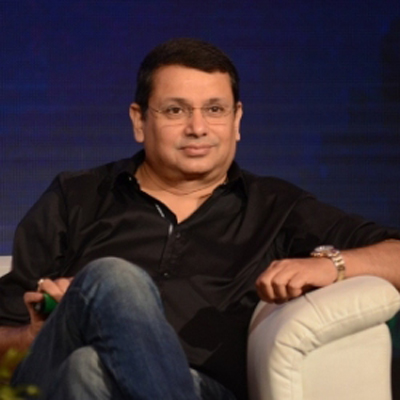
    MUMBAI: India will witness a significant milestone in the history of media industry as Star India CEO Uday Shankar becomes the first Indian CEO from the media and entertainment (M&E) industry to speak at the Paley Center for media, the premier institution dedicated to advancing the understanding of media and its role across cultures and societies.


    Shankar will be addressing a breakfast session, which will be moderated by Time International editor Bobby Ghosh at Paley Dialogue on 30 May in New York. He will be introduced to the distinguished guests by 21st Century Fox Co-COO James Murdoch.


    The Paley Media Council is an exclusive, invitation-only membership community for entertainment, media, and technology industry executives and provides an independent forum for top industry leaders. Featuring candid conversations with the best minds in the industry, this year’s Paley Media Council will see an exclusive gathering in presence of the most distinguished guests from major American business organisations, foreign press organisations and leading social organisations.


    At this global media platform, Star India CEO Uday Shankar will discuss the journey of Star India and how the company has become India’s leading media business by using its programming to spark national discussions on a range of social and political issues.


    Most notably, the series Satyamev Jayate, Star’s hit talk show about India’s pressing social concerns, has become the premier platform through which Indians can discuss social issues. This achievement, combined with Star’s track record of cultivating forward-thinking programming, casts Star as a model for what a 21st century media business should look like – one that harnesses the power and reach of television to touch lives and create meaningful change.


    Since 1995, the Paley International Council Summit has provided an independent forum that brings together chief executives of the world’s most important media, entertainment, and technology companies to advance the exchange of ideas and to foster community among them. Informal and organized discussions cover a wide range of critical issues that define the media industry and its role in society for generations to come.

  • Media Pro: The unwinding of a joint venture

    Media Pro: The unwinding of a joint venture

    MUMBAI: When the Telecom Regulatory Authority of India (TRAI) came out with its regulation on the role of aggregators, everyone in the industry was sure that this would herald the death of content aggregators, at least in their current form. Industry insiders revealed that the leading and strongest content aggregator Media Pro would be among the first to break up, but it would take time, probably by mid-2014 or probably a little later.


    So when the announcement came last week that the Zee Turner and Star Den joint venture had decided to go their separate ways, it sent shock waves through the industry.  Some said it was premature and that the joint venture could have run a little longer. But sources indicate that the decision was taken at the very top between Subhash Chandra, Punit Goenka and Star India head Uday Shankar directly with only a handful of executives being informed. Industry insiders say that the joint venture had hired a consulting firm to give guidance on what should be done and when.


    The breakup will see the two partners setting up independent cable TV affiliate distribution teams. Exactly as it was like almost three years ago when both decided to get together to extract more revenues out of India’s reluctant cable TV operators and multi system operators (MSOs).


    Questions are being raised as to where will Media Pro India CEO Arun Kapoor – an old Essel group hand – be placed?  Will he head the Zee Entertainment distribution initiative or will he go the Star way? He was earlier group CEO distribution businesses at Essel Group (he also headed the joint venture which had been set up to distribute the Zee TV and Turner channels in India).


    Sources indicate that the Turner channels will continue to be distributed by Zee Entertainment at least for now without any cross network bundling. So does that mean that the Zee and Turner joint venture arrangement will in effect not be revived?


    Most observers expect COO Gurjeev Singh Kapoor to move onto the Star distribution team. Gurjeev began his media career with Zee and then went to Discovery before moving on to The OneAlliance as its business head. He was finally lured to lead Star Den Media services when it was set up as a joint venture between Sameer Manchanda’s DEN and Star India.


    The bets are out whether the Star Sports bouquet will be distributed by the Star India team or whether an independent team will be given that responsibility.  Most expect the former proposition to be realised.


    Industry observers state the Media Pro office in north Mumbai is a hub of activity with senior management working on splitting up the teams and also drawing up plans for recruitment wherever needed.


    “There is a lot of movement which is taking place currently, with some of the executives already going the Star India way,” says a source from the industry.


    MSOs and cable TV operators expect the two new teams to start approaching them soon with new packages and offerings. Others however indicate that this could be a month or two away, until Star and Zee draw up their individual teams. Gurjeev had told indiantelevision.com around a month ago that most of the MediaPro contracts with both cable TV and DTH operators are slated to come up for renewal by sometime in April.


    If that is true then Zee Entertainment and Star India don’t have much time on their hands. And the teams have their task cut out for them.   

  • MediaPro breaks up

    MediaPro breaks up

    MUMBAI: In one of the biggest announcements after the Telecom Regulatory Authority of India (TRAI) came out with its regulation, two months ago, that prevented aggregators from bundling channels of different broadcasters, Star Den Media services and Zee Turner have decided to part ways with distribution JV MediaPro coming to an end.


    The networks will be setting up their independent affiliate sales team for their respective channels. The networks are also banking on the recent tariff hike given by TRAI as a positive boost to subscription revenues.


    Zee Entertainment MD Punit Goenka said,  “We  had  created  this  Joint  Venture  to  address  various  anomalies  in  the  analog market, curb  piracy  and introduce  transparency for the benefit  of all stakeholders.  I must say that we have been very satisfied with the outcome  of the partnership.  In the last three years, with  DAS getting  implemented, India  is truly on  the path  to digitization. First  two phases of DAS have already been implemented. Given the new regulation, Uday and I have taken a call to continue the business at an independent  level. I wish our JV partners all the very best in their future endeavors.”


    Star India CEO Uday Shankar  added,  “MediaPro  has been  a truly delightful and path breaking  partnership.   Punit  and I created MediaPro with the objective of accelerating  digitization, promoting transparency and introducing best practices  in distribution.  Thanks to the commitment  of both parties the JV has delivered exceptionally well on each of these.   I am proud  to say that MediaPro also led the industry consensus for the most efficient way of moving to a digital domain.  This in turn allowed  us to offer better content to our viewers.  In the light of new regulation, both partners have decided  to build independent affiliate sales. I take this opportunity to compliment the entire MediaPro team lead by Arun Kapoor for creating  a best-in-class organization  that  helped  pioneer  digital transformation of cable.”

  • “Write down your goals and give deadlines. This is the roadmap to success”

    “Write down your goals and give deadlines. This is the roadmap to success”

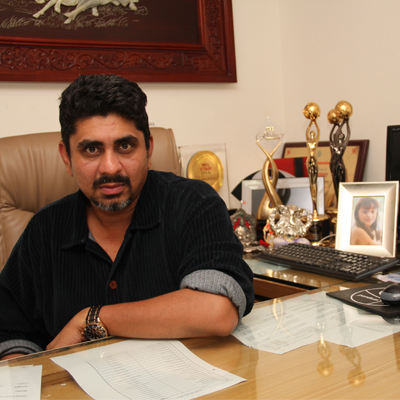
    MUMBAI: The newest addition to his portfolio is Aur Pyaar Ho Gaya, which premiered on Zee TV last month. Known to have a keen eye for talent, director-turned-producer Rajan Shahi’s latest venture too serves as a launch pad for debutants Mishkat Varma and Kaanchi Singh who play the show’s lead pair.

    Since making his directorial debut in 1999 with Dil Hai Ki Manta Nahi through launching his own production house Director’s Kut Productions in 2007 and till date, Shahi has seen a meteoric rise in the television industry.

    Having directed clutter-breaking shows like Jassi Jaisi Koi Nahi, Hamare Tumhare, Ghar Ki Laxmi Betiyaan and Maayaka and gone on to produce a couple more such as Sapna Babul Ka… Bidaai and Yeh Rishta Kya Kehlata Hai, Shahi is a much sought after figure in the industry.

    Ask him his success mantra and he says: “In the hustle and bustle of our everyday lives, we often forget what it is we are working so hard for! Write down your goals and give yourself deadlines. This is the roadmap to your success.”

    Directorial dreams

    The influence of his maternal grandfather and veteran actor P Jairaj led to Shahi’s fascination with the entertainment industry from an early age.

    After graduating in English Literature from Hindu College, New Delhi, he moved to Mumbai, by which time, he was sure he wanted to become a director. Eventually, he landed up in the production department under Ravi Rai. Two years into production designing, Shahi got the opportunity to prove his mettle when asked to chip in for an absentee assistant director. Soon after, he graduated to assisting Rai in Thoda Hai Thode Ki Zaroorat Hai and Teacher.

    Sometime in between, he met and fell in love with writer Pearl Grey, whom he later married. With her script of Dil Hai Ki Maanta Nahin finding a willing producer in Hemant Seth, Shahi too bagged his first project which propelled him into the big league. He then shot pilots of two other serials, Mera Ek Sapna and Ansh, following which, there was no looking back. Shahi proceeded to direct hit series including Jassi Jaisi Koi Nahi, Hamare Tumhare, Rishtey, Kareena Kareena, Reth, Mamtaa, Millee, Virasaat and Saathi Re and got to work as series director on Ghar Ki Laxmi Betiyaan and Maayaka on Zee TV.

    Shahi believes that “a director is like the captain of the ship and more than anything else, needs to be extremely patient with all his crew members.”

    Turning producer

    Twelve years into direction and Shahi started his own production house which he christened Director’s Kut Productions (DKP).

    Ask him why he decided to turn producer and he has several reasons to give. Firstly, in television, one needs to reinvent oneself every five years. “In films, you can say you are a director for 15-20 years, a producer for 15-20 years or a writer for 30 years. But in television, you need to rejuvenate yourself,” says he.

    Secondly, production was the logical next step after directing for so many years. “While I learnt a lot under all the production houses and producers with whom I collaborated, personally, I wanted to have more control. Especially when there is creativity, I didn’t want to be restricted by the production part of it,” he explains.

    So when Bidaai came along on Star Plus, Shahi took the plunge as producer. “I owe my becoming producer largely to Uday Shankar who gave me the chance. Not that I did not express my desire to other big channel heads but he was the only one who had faith in me at a time when no other person would back me as a producer,” recalls Shahi, adding, “I was very happy that with Bidaai, a technician was given the opportunity to produce a show.” At the time, big production houses ruled the roost and creativity wasn’t exactly the first priority.

    Lastly, with so many layers in television i.e. scripting, concept, shooting, editing and post production, Shahi wanted to minimise the chaos by being that one person in every department who is answerable for everything. “I wanted to multi-task. So in that area I scored where even today, I am personally answerable for everything in my company. They know there is just one person to be called instead of talking to 50 other people. With serials such as Bidaai and Yeh Rishta, these things got consolidated,” he elaborates.

    Ask him about the name DKP and he says: “I have been in this industry for 21 years, but I have directed properly for 12 years. People used to identify me as a director and wanted to give a name which could identify with my character and the reason people know me for.”

    About DKP                                         

    Shahi believes DKP is what it is today because of his team which is hungry for work and strives to deliver the best product. “Since DKP’s inception, we have done some very good shows and there is a certain reputation it enjoys. You may be the face of a company but it cannot run properly if you don’t have a good team,” he says.

    The DKP office at Lakshmi Industrial Estate in Mumbai houses around 30 to 40 staff while the core team is about 100-strong constituted by creative and technical personnel at different levels. 

    “There is a definite core team in the company and DKP is synonymous with the excellent people working for it. Fortunately, the majority of them are the same since its inception; be it creative directors, creative people, editors and so on. Fact is in my 12 years as director, I have seen some of the best talent which I have retained while letting the rest go by,” he exults. 

    For Shahi, DKP is all about the goodwill and blessings and good wishes of all its actors, technicians and workers. He sincerely believes it is the workers’ support and hard work that has taken the production house to such dizzying heights.

    “The biggest award or achievement you can say is my workers. Again, I have seen a lot of people who project a high-flying image by travelling in luxury cars and chartering private planes but keep workers’ money inside their own pockets. While I cannot keep everyone happy, each one of my workers knows that if there is a problem, I will be there to solve it. I don’t want DKP to be big if I don’t stay connected to my workers. My work exudes quality and it is straight from the heart. I might not have eight or nine shows with me today, I might not have the biggest cars with me today, but I have the goodwill of all my actors, technicians and creative people, most importantly, my workers,” he explains.

    Having realised earlier on in his career that television is essentially about what happens on the sets, Shahi has set up office on the sets itself with most of his team concentrated there.

    A bumpy ride

    With dynamics changing from day to day, it is next to impossible to keep tab on the highs and lows of producing television shows but “it’s all part of the learning process,” says Shahi. Yet, when Bidaai and Yeh Rishta were number one or two across channels, it was a real high. “We were on a very big platform like Star Plus and it was a huge responsibility. For a technician who didn’t have crore in his bank, entering an arena where the big players were was a big thing,” he adds.

    Bidaai had a successful run for more than two years till Yeh Rishta Kya Kehlata Hai took over variously as number one and number two across channels. For two years, these two shows were ruling the roost and in one particular week, both were number one across all channels and garnered TRP of 7.1. That was a big moment for the entire team; informs Shahi, pointing out that his highs come from people placing their faith in him which is what inspires him to give his 100 per cent to any project. 

    Speaking of the lows, Shahi recalls the time when Bidaai went off air in 2010. “We thought we were back to ground zero and anything is possible in this industry. But it was a conscious decision to end the show on a high. At the time, the actors… the entire unit… had tears in their eyes and were wondering why we were pulling the plug on the show when it was in the top five across channels. The moment was such when I knew I didn’t have an answer…” he says.

    Lessons learnt

    Shahi considers himself lucky to have interacted with some of the best producers in the industry and learnt so much from them. Even today, he doesn’t shy away from calling them whenever in need of advice. He has always believed in the adage: “Learn from the leaders, learn from the people you admire and learn from the people around you!”

    Another key takeaway has been that audiences cannot be taken for granted any more, what with social media bringing producers and viewers closer to each other than ever before.

    “Today, we get instant feedback and don’t have to rely on the channel or probably the research team. Instantly, I get to know whether people have liked the track or not. Viewers are very vocal about what they like and what they don’t so you can’t take them for granted anymore,” he says. “This connect the media has brought about between me as a maker and my audience is the biggest thing that has happened.”

    Road ahead

    Shahi wants to be known as a producer who is creatively involved. “I have done a few shows, but each show is different from the other. I always look into scripts where I have a creative say. It’s not just about quantity but also quality in whatever we do,” he says.

    With a handful of scripts lined up this year; some are in the scripting stage, others in the casting stage, and still others evolving.

    The company plans to foray into other genres as well, comedy being one. Getting into films is also on the cards though TV is a priority. “Right now, my whole attention is towards consolidating Aur Pyaar Ho gaya which is our latest launch. And even consolidating Yeh Rishta, which now is showing six days a week,” he says.

    Don’t daily soaps make for a very erratic shooting schedule? “Daily soaps are always hectic. In the past when Bidaai was on, shows were aired for one hour every day, five days a week. There have also been occasions when they have extended to six or seven days for one or two weeks. I look at it as a challenge to not only make them but also maintain the quality. We are used to such volume of work,” he signs off.

    MediaSpeak

    Former programming head at Zee TV Ajay Bhalwankar who is now chief creative officer at Sony Entertainment Television believes that it is always a great experience working with Shahi. “He is a very dedicated, passionate and gifted producer. It is somebody who is very sincere also and somebody who is extremely open to listen to your ideas and incorporate them. It has been wonderful working with him and is extremely talented.”

    Shahi who has worked with cross section of producers and from each producer, he believes has learnt a lot. Whether it’s Deeya and Tony Singh from DJ’s Creative Unit or Sunjoy Waddhwa from Sphere Origins, all have been there for him always. They say:

    DJ’s Creative Unit producer Deeya Singh opines: “My association with him has been extremely good. It is so nice to see when good talented people grow, it feels good. He understands the medium very well. The industry needs more such people and feels really nice when one sees so much success that comes to him. I have known him as a director and watched him as a producer and he is good at both. I think that is the special talent, because not everybody can do both. He has managed to do the impossible and be both.”

    “With him, it’s been a very good association. I know him from the time we did Saath Phere and I know him more now as a Producer. He is a very easy-going and good guy. I feel very good for him because he has also come up from an independent director to a very good producer who has given some excellent shows to the industry. He is one of the very good producer’s who has a good thinking head,” expresses Sphere Origins producer Sunjoy Waddhwa.

  • “Broadcasters still haven’t got the benefit of digitisation”

    “Broadcasters still haven’t got the benefit of digitisation”

    MUMBAI: It’s been a chaotic couple of years for the media and entertainment industry marked by a lack of clarity – be it digitisation, ad cap or other regulations.


    Not surprisingly, this was the subject of a panel discussion on day one of FICCI FRAMES 2014, the 15th chapter of the annual convention.


    The panel – comprising Star India CEO Uday Shankar; Viacom18 Group CEO Sudhanshu Vats; FCC commissioner Ajit Pai; MIB secretary Bimal Julka; and Discovery Networks Asia-Pacific senior VP and general manager South Asia and head of revenue, pan-regional ad sales and South East Asia Rahul Johri and moderated by NDTV Group CEO Vikram Chandra – discussed ways and means by which the industry can overcome regulatory hurdles.


    The panel felt there should be clarity as to why regulations are needed in the first place and stressed on long-term solutions vis-a-vis short-term remedies. “The regulators need to know that there are certain ailments but immediate fixing is not a solution without knowing what the consequences will be,” said Shankar.


    Adding to this, Vats spoke about finding the purpose of regulations. “Media is in the consumer business and needs to run by what the consumer wants. Apart from this, there has to be transparency of data, accountability as well,” he said.


    Julka expressed the view that the media has come a long way from ‘license raj’ and is now moving towards partnerships and collaborations. “We must not forget that for us, our core target group is our viewers and listeners and we have to keep them in mind. So, whatever regulations we come up with, they have to benefit them. We don’t want to get into the revenue model or the business model. That’s TRAI’s jurisdiction and I think it is doing a fair job,” he said.


    Completing phases I and II of digitisation was a huge challenge considering the country’s demographics, he informed. “Thirty million set top boxes (STBs) have been installed and 110 million are yet to be seeded. It is a huge challenge for the industry as a whole. The government is just a facilitator.”


    However, Shankar countered Julka and said, “What is the objective of digitisation? When we started with the process, we all thought that it will increase the bandwidth, giving more space for channels and increase transparency as well. The only thing that has happened is that MSOs have placed boxes in certain households. The broadcasters still haven’t got the benefit of it.”


    Pointing out that the carriage fee is too high and the subscription rate too low, Shankar recalled the time he was heading Aaj Tak, “When I was heading AajTak, the carriage fee was zero but today, to run a channel, especially a news channel, one has to pay a huge carriage fee, which in turn harms the content on television.”


    Vats seconded Shankar and said, “The fundamental reason is addressability and that is far from over.”


    Johri drew attention to the fact that several developments were taking place, all at the same time, which should not be the case. “Digitisation needs to be completed first before other things are looked into,” he said. Readers may recall that indiantelevision.com had earlier reported how several people from the industry had said that matters like ad cap needed to be looked into after completion of the digitisation process by December 2014.


    While complimenting the government for pushing hard on finishing phases I and II of digitisation, moderator Chandra asked the panel for suggestions on how the industry can better overcome regulatory hurdles.


    To this, Vats suggested looking into the licensing issue first that would help get newer and better content players into the market. Secondly, he said digitisation needs to be completed at the earliest to settle the issue of addressability. Thirdly, he said the industry needs to give a second look to carriage fee. “There has to be transparency regarding the carriage fee and the amount needs to be open,” he said.


    Johri highlighted the need for an ecosystem that will nurture innovation. “Once digitisation is over, everything will fall in place,” he assured.

  • ‘New government should lay foundation for improving relationship with media industry’

    ‘New government should lay foundation for improving relationship with media industry’

    MUMBAI: The relationship between the media and entertainment industry and the government has “broken”. The industry and the new government that would be formed after the general elections should lay a new foundation for improving the relationship.


    That was the clarion call by Star India CEO and FICCI Media and Entertainment Committee Chairman Uday Shankar in his opening remarks at the 15th FICCI-Frames in Mumbai.


    Unless all the stakeholders get together for the betterment of the industry, the vibrancy of the media and entertainment sector will be at stake and the biggest victim will be free expression, said Shankar.


    He asked, “Why not nourish an industry that has huge potential? Why not support an industry that needs policy support and nor resources support?”


    The media and entertainment industry needs recognition that it is a potential economic growth engine and a force multiplier, he stated.


    He said the media and entertainment industry grew by 12 per cent in 2013 despite economic headwinds and added “it is a testament to the tenacity of the industry.”


    There is now tension between the media and entertainment industry and the government with the successive governments limiting free speech, he said.


    Surprisingly, irrespective of the party, the media has been at the receiving end. “Whether you trumpet youth leaders or the state leaders, media is asked to be accountable,” Shankar said.


    He also pointed out that the media created a political party out of thin air and put it in power, but eventually the same outfit has started making accusations against the media the moment accountability was sought.


    The government has not been able to harness the potential of the media and before the elections kick starts there needs to be a new “contract” between the media industry and the government, Shankar said.

  • Satyamev Jayate campaign pays off

    Satyamev Jayate campaign pays off

    MUMBAI: When it aired on Star Plus two years ago, it took the nation by storm even as it brought home uncomfortable realities for not one but 13 weeks. At the time, Satyamev Jayate was the most talked about television show; its title the most searched phrase on Google. The channel claimed that the Aamir Khan-hosted show, simulcast in seven languages, reached a staggering 600 million viewers in its first season.


    Two years later, the show is back by popular demand, with even more hard-hitting content – pertinent social issues that a majority of Indians are cut off from. And while it’s too early to predict how season two will fare, judging by viewer response to the first couple of episodes, one can safely say that Star Plus’ 360-degree promotional campaign is working well for the show, and the channel.


    The Campaign


    Launched on 26 January this year, the marketing campaign for season two of Satyamev Jayate was conceptualised around the thought, “Jinhe Desh Ki Fikr Hai” (Those who care for their country).


    Spread across platforms including TV, print, digital, radio and outdoor, a series of on-ground activations with ambient touch-points called ‘Fikr touch points’ were held across the country. To drive greater affinity in the south, actors Mohanlal and Suriya were roped in as cultural ambassadors. A special people’s version of the Satyamev Jayate anthem was created on Radio Mirchi that had ordinary people singing the original anthem and making it their own. What’s more, the show promo garnered 4.4 million views on YouTube before its launch, which is a massive number.


    On social media, on the day of the launch of season two, #SatyamevJayate trended as the number one topic across both Twitter and Facebook and together, resulted in 54.2 million impressions. On Yahoo, the show owned it for a day across each Yahoo webpage, resulting in more than 108 million impressions per day and more than four lakh clicks.


    To top it all, out-bound calls in Khan’s voice went out to people across the country, resulting in a total 23 million impressions in a day.


    The Launch


    The opening episode, focused on rape, received an overwhelming response from viewers. The show urged Indians to ‘Vote for change’ and one of Star Plus’ leading protagonists took the cause forward by urging viewers to give a missed call on a toll-free number to help create One stop rape crisis centres across the country. Over 57 lakh missed calls were registered, of which 40 lakh calls were made within the first 72 hours of telecast of the show.


    Among the seven hash tags created around the first episode, #FightingRape became the top trending hash tag in India on the day of the launch.


    Four weeks before the launch, Satyamev Jayate‘s facebook page had nearly 10,000 PTAT (people talking about this). Today, the number is 7.5 lakh and counting.


    At the end of season one of the show, the fan base was 1.4 million fans on facebook, which has now more than doubled to 3.4 million.


    The Strategy


    Satyamev Jayate is very important for the network at every level; be it content, marketing or any other.


    “It’s a unique show like no other. It’s a show that leverages the power of a celebrity and the Star platform to create social impact. The reason it works is because it resonates with the citizen and the viewer who cares for the country and is concerned about these issues. Because these are issues that impact every family,” says Star India EVP marketing and communications Gayatri Yadav.


    The theme of the entire first season was “Dil pe lagegi, tab hi baat banegi”. True to its theme, the show talked about issues that touched everybody’s heart. The second season takes it a notch higher.


    “The second season takes the whole promise forward. Because it taps into a sense of commitment and concerns that the average citizen has for the country,” she says.


    As for the theme of season two, the germ of the idea came from Star India CEO Uday Shankar. “We were thinking about what should be the theme of season two. From the season one, some complained that the show was too heavy and too difficult to watch on a Sunday morning. And we felt that is the nature of the show. The show is intense, it is going to be dealing with issues that are important to address,” she says.


    While it may not be the kind of stuff you’d want to see on a Sunday morning, people still do watch it because of the deep love they have for the country. Tapping into the love and concern every citizen has for the country is the promise of season two. “We don’t really see as the episode is over, the cause is over,” says Yadav. “This year, you will see a lot more engagement with the causes, even after the episode airs. As there are only five episodes this month, there will be a real focus on driving a very strong season finale which is the fifth day.”

  • “SMJ truly reflects the aspirations and concerns of the country”

    “SMJ truly reflects the aspirations and concerns of the country”

    MUMBAI: After a successful season one ‘Satyamev Jayate’, the makers are back with its second season. Star India and Aamir Khan are returning with the intense, spell-binding show that redefined television entertainment in 2012.

    The television show broke all records, where it touched over 500 million Indians households in 843 cities and 1.5 impressions online. To top it all, it also collected more than Rs 22 crore in donations.

    The season two which will hit the TV screens on 2 March 11am on Star Plus will make Sunday mornings more educational and inspirational. It will be simulcast in six languages across Star Plus, Star World, Star Pravah, Star Vijay, Asianet, Star Utsav, Doordarshan and a deferred telecast at 1.00 pm on ETV Telegu. The first tranche in March will see five episodes being aired, giving viewers the time to soak in and help create a larger emphasis for the cause.

    Airtel has come on-board as the title sponsor and Axis bank as the powered by sponsor for the new season of Satyamev Jayate. Reliance Foundation is the philanthropic partner on the show. All three sponsors are renewing the association started in season one.

    Talking about the second season, Star India CEO Uday Shankar opines: “When we look back at season 1 and the response it evinced, you can see a new culture of hope for change emerge. Satyamev Jayate truly reflects the aspirations and concerns of the country. In that it has the strength of a nation behind it. We look forward to the support of our audience to take the message of the show far and wide.”

    Host of the show Aamir Khan exults: “I am excited about the new season of Satyamev Jayate, a show that is extremely close to my heart. It was a journey of learning and revelation, a tough one for me to tread on but I am extremely happy with what we have managed to do this season, in bringing forward relevant and key social issues that matter to the people of this country.  With a partner like STAR India, we look forward to taking forward the cause of Satyamev Jayate and enabling more participative and action oriented change this season across India.”

    On the marketing side, the new season of Satyamev Jayate as the marketing campaign declares is for all those who care for their country “Jinhe Desh Ki Fikr Hai”. It will educate, engage and empower audiences to participate in an action-oriented change, and will be seen running through the year with an innovative programming approach that includes episodes in tranches.

     The issues that the show will address this season are those that concern and impact every citizen of India whether they are from Mumbai, Delhi, Cochin or Kolkata. South Indian Superstar Mohanlal comes on board as a brand ambassador for the show in the south. His association will help carry the show’s message to a larger audience segment.

    The show is supported by a compelling and visible marketing campaign with Star network taking the lead and press, outdoor, digital and radio providing the immersive surround. Another key element integral to the campaign are the series of on-ground activation with ambient touch-points called “Fikr Touch points” created across the country to take forward the campaign message.

    The first season of Satyamev Jayate broke all records in the digital space and was the most talked about show online. The upcoming season will see greater emphasis on digital media using an integrated approach through various digital touch points – mobile, social media, website etc being amplified throughout the year. There is a special Satyamev Jayate website www.satyamevjayate.in with the goal of engaging and empowering a community of Satyamev Jayate change agents.

  • Broadband not at loggerheads with broadcasting

    Broadband not at loggerheads with broadcasting

    MUMBAI: Star India CEO Uday Shankar today spoke on the rise of the digital media and the role of advertising in the business of content at the Pitch Madison Media Advertising Outlook 2014.


    Excerpts:


    We consider the advertising fraternity of fundamental value to us. There is no one who believes that business of content creation can exist without advertising support. Also television is critical to advertising. As a medium, television in India reaches out to 600 million viewers for three hours every day, 365 days a year.


    When we started cable and satellite, television had a strong urban reach. But today, according to the C&S report, the rural reach is marginally higher than urban reach.  And as the rural urban continues to evolve, this will only get better.


    We, at Star Network, don’t see ourselves as broadcasters. Lately, a lot of discussion has been taking place around digital and television or print and digital, but for me digital is just another mode of delivery of content, with both content and consumer being the same.


    Digital is just another pipe that has come in to deliver content. I do not understand when satellite and cable transmission is not considered a business of broadcast, why do you want to call broadband as a completely different digital business, which is positioned as being at loggerheads with broadcasters.


    Earlier, often the business got named on the technology.  But over a period of time, the enigma around technology has reduced, and the service and value that the technology delivers has become more important.


    Digital will also go through that phase. No one today refers to television as a plasma screen business, because they no longer are enigmatic. Similarly, the next generation will not refer to digital as digital business. And that is where I see the fundamental role we play.


    The way I see it, we are in the business of telling stories. And this is what we do day after day. And when you do that for such a long time, you do not wither away just because the technology has changed.


    The nature of the delivery pipe changes. We are here to stay and stay till the society has an interest in the story that we tell.


    A new medium like digital will get added and it’s a reality. Just as print even today continues to exist despite television becoming so huge, we as storytellers are very much a part of this reality, because this reality cannot exist  without the power of content and storytelling. We will continue to be fully relevant, no matter how the technologies evolve.


    Whether it is YouTube, Netflix or Hulu, it is the power of high quality, intense stories, content and narrative that has not changed so far and will not change.


    In India, YouTube is being consumed, but it is the one-year old content of Star, along with catch-up content of Colors, Sony and Zee Network, which constitutes not less than 30 per cent of the entire content consumption on YouTube.


    So, we are relevant and central to the business, regardless of the pipe through which content is delivered.


    When we launched Satyamev Jayate, we became popular not only on TV, but got a whooping 1.2 billion online impressions, 40 million views on digital and it was also the content that shook the entire nation on TV, it was also a content that was most written about, than any other piece of content. So the point is that the power of content will drive the industry.


    The new media will arrive, then something else will come, which will be very relevant. It is good for all of us, because it challenges us to re-invent ourselves. It makes sure that we do not lapse into a slumber. But the centrality of creativity does not shift.


    The problem is that this debate is happening today, primarily because, we as content creators have become broadcasters. We have been regulating our business to old structures and statues, but those structures were designed to do business in a very different world and that world has changed and that is why, last year, the standoffs that we saw, were the manifestations of old ways of doing business and that’s what we need to change, or else we will continue to see those tensions.


    While we as a network at Star have acquired the skill to hold the attention of 600 million viewers for over 3.5 hours every week, hardly does any advertiser come to us to ask for solution in figuring out a deeper strategy for the same 600 million viewers whom we hold for 23 minutes for every content. The perception is that there is a completely different genotype that is required to hold the audience for 10 seconds. That is the mindset of the old world and this mindset will not hold for future.


    Through digital medium, through reduction in advertising inventory, through different generation of consumers and above all the changing landscape of economic growth, we need to find ways of creating constructive relationship between advertiser and content creator that will be relevant, robust and constructive to both parties.


    If this doesn’t happen, the standoffs will continue. The world around us has changed, we have one common goal, we both need to give message about our products. If we can work together, we can create a huge value for both the parties and continue to do that regardless of the shift in technology.

  • Uday Shankar receives award for contribution to Bengali Television

    Uday Shankar receives award for contribution to Bengali Television

    MUMBAI: Star India has received the 2014 West Bengal Tele Academy Award that celebrates the group’s significant contribution to Bengali television, making it the first broadcaster to win the coveted recognition. 


    The network’s CEO Uday Shankar was conferred the award by West Bengal Chief Minister Mamata Banerjee. The award recognises Star’s special contribution to Bengali television through two successful TV channels – Star Jalsha and Star Ananda (currently known as ABP Ananda).

    “As a group, we are delighted to receive the West Bengal Tele Academy Award, as it clearly shows the society has embraced our focus on quality content,” Shankar said.  “I really believe socially sensitive content is the way forward for the future of a healthy society. The plaudits go to the entire team.”


    Star Jalsha, the entertainment channel, has set new benchmarks in regional programming through innovative content and compelling storytelling. It enjoys an undisputed leadership position in the Bengali general entertainment space in terms of viewership, surpassing immediate competition by over 200 GRPs, according to recent TAM data.


    Star Ananda (now known as ABP Ananda) is a Bengali TV news channel that was launched under the stewardship of Shankar when he was the CEO of MCCS India. The channel was an erstwhile joint venture between STAR and ABP TV.


    The West Bengal Tele Academy Awards 2014 covers the entire gamut of film and TV, rewarding excellence in production, programming, photography and technology, among others. Headed by the Ministry of Information & Broadcasting, with Aroop Biswas as the chairman, the awards have been constituted as a token of respect and gratitude to the entire industry in West Bengal.