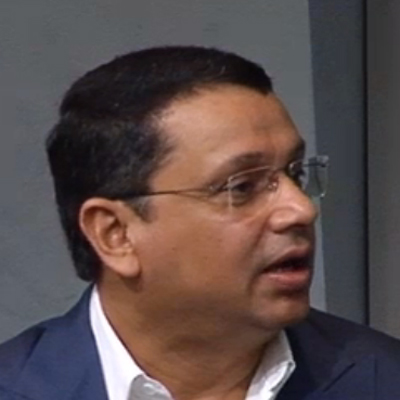
Tag: Uday Shankar

  • IDOS 2014: A must, say industry stalwarts

    IDOS 2014: A must, say industry stalwarts

    MUMBAI: The broadcast, cable, DTH industry and the regulatory body is all set for the biggest confab of the year.  To be held in Goa, starting 25 September with a big bang opening night party organised by HBO Hits and Defined, all the heads of India’s pay TV market, distribution, broadcast, cable and DTH industry are gathering to brainstorm and suggest the way forward for the already delayed digitisation at the Indian Digital Operators Summit (IDOS) 2014. 


    The extension in the deadline as announced by the Information and Broadcasting Minister Prakash Javadekar has somewhat delayed the plans of many in the pay TV circuit. While the biggest concern currently is smooth rollout of the phase III and phase IV of digitisation, industry biggies will also ideate on how, with consumers moving to other screens apart of television, can be monetised.


    The tenth edition of IDOS, is themed around, ‘Digitisation: The Next Big Push.’ Organised by Indian Television Dot Com and Media Partners Asia, the conference unites stakeholders across the value chain to drive meaningful dialogue and facilitate practical solutions to drive the content and distribution markets forward.


    “The forum provides opportunity for interaction with all key people involved in the broadcasting sector, not only digital operators but others as well,” says Dish TV CEO RC Venkateish.


    According to Venkateish, the theme is very relevant given digitisation is an ongoing process. “That process is something we all hope will take the industry to the next level,” he adds.  The Dish CEO expects the conclave to be a platform for exchange of news, information and opportunity to share some of their view points with the regulator.


    For Maharashtra Cable Operators Foundation president Arvind Prabhoo, IDOS’ concept is most pertinent in today’s market scenario. “Once digitisation was announced, all the players in the ecosystem needed to come together and voice their opinion to benefit from it,” says Prabhoo adding that Indiantelevision.com was the first to identify this need and organise such a conference.


    “It is a really good one and is only going to get bigger,” he opines.


    On the theme for this year’s IDOS, Prabhoo says, “Everyone needs a push, after all the struggle that happened in phase I and phase II. There had to be some kind of out-of-the-box thinking. And this is what will come out in the next two days of the conference.”


    Prabhoo is looking forward to Telecom Regulatory Authority of India chairman Rahul Khullar, Hathway director Viren Raheja and Tata Sky MD and CEO Harit Nagpal amongst others to come up with the kind of impetus that can be given by large corporate houses.


    BBC Global News India COO Naveen Jhunjhunwala is another industry stalwart who is looking forward to some meaningful sessions and interactions at IDOS, this year. “The TV industry is progressing rapidly and the theme for this year’s conference is a positive step towards bringing together the stakeholders and tapping into opportunities that exist in digitisation,” he concludes.   

  • IBF appoints Uday Shankar as the new president

    IBF appoints Uday Shankar as the new president

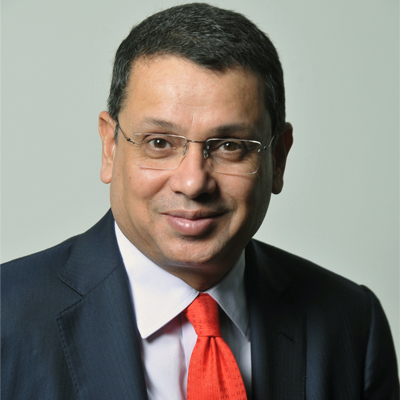
    MUMBAI: At the just concluded Indian Broadcasting Foundation (IBF) 15th annual general meeting (AGM), Star India CEO Uday Shankar has been appointed as the new president of the organisation.


    The position was earlier held by MSM non executive chairman Man Jit Singh.


    This is a comeback for Shankar who held on to the position from 2010 to 2012.


    Confirming the news to indiantelevision.com, Shankar said that he was happy to take charge. “I am privileged to be trusted by the members of IBF to lead the industry body at a critical juncture when the industry needs to leap to the next level by working collaboratively with the Government and other stake holders,”said Shankar and added, “Punit Goenka would have been my personal preference for the president’s role since I have already done a stint as IBF president.  However, in view of Punit’s existing commitment to BARC, he proposed that I hold the reigns at IBF”.


    The IBF Board also elected Punit Goenka as vice president – Measurement, N P Singh as vice president – Distribution, Rajat Sharma as vice president – Strategic Affairs and Rahul Johri as treasurer.

  • Star Plus’ Satyamev Jayate to see a few changes, this season

    Star Plus’ Satyamev Jayate to see a few changes, this season

    MUMBAI: It was in 2012 when TV audiences woke up to Sunday morning slot once again. Star Plus with Satyamev Jayate at 11 am, tried to bring about a change in our society by bringing the ills gripping our society to the forefront.

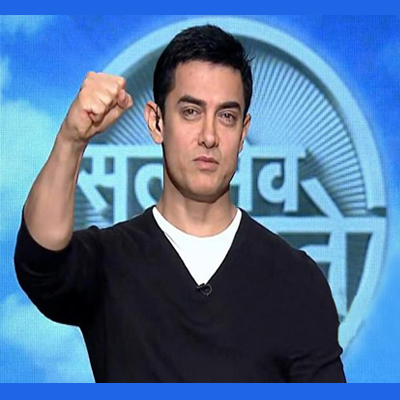
    The promos of the upcoming season have already gone live and each tells a story of a person who after watching a heart-wrenching episode has gone out to make a change in whatever manner he/she could. One of the promo tells a story of Nazia, who found a sexually-abused girl and went on to help her through Childline – a NGO working for kids. “Nazia is like one of us but through her one action she proved that it is we who can bring about a change,” says the host of the show Aamir Khan while highlighting that this time the focus on promos was not him but on heroes who made a difference. “It is all about possibilities.”

    He highlights that the research team never went out to hunt for people like Nazia but while doing their study they met or were told about people who after watching SMJ went out of their way to help others.

    In its third installment now, the show, which will go live on 21 September and consists of six episodes, will see a few new elements. The biggest change will be letting the common man talk to Khan. After the one and a half hour show, people can talk ‘live’ to Khan through social media – Facebook and Twitter -, phone or the show’s official website to share their issues on the topic discussed earlier.

    “SMJ is about people and we want people to tell their views and issues so that together as a society we can bring about a change,” says Khan who will be travelling across various cities to connect with the people.

    He believes that the show has changed him a lot. “I have become more patient and less judgmental,” he says while recalling that years ago when Star India CEO Uday Shankar had approached him for a game show he had made a correct decision by denying that and suggesting a show on social issues.

    This time around, for the first time, other actors too will be seen on the show. “It is not for publicity. But only the actors who have done something for a particular issue or feel for it will be on the talk show,” clarifies Khan.

    Believing that the change needs to be brought about from the grassroot level to revolutionise people’s mindset, Khan wants people, administrations and governments to make a note of the things. Stating the example of how after the female foeticide episode was aired, the sex ratio between girls and boys has risen, Khan says, “Earlier there were 890 girls per 1000 boys, but today it is 940 which is remarkable. A small step can make a huge difference.”

    On a personal level, Khan wants four basic fundamental benefits given to each and every citizen of the country, namely, public health services, education, a quick and fair justice system and security through a strict law and order.

    Click here to watch the video


  • Star Sports’ Pro Kabaddi League rakes in ratings

    Star Sports’ Pro Kabaddi League rakes in ratings

    MUMBAI: Introducing India and the world to an ancient Indian game of Kabaddi is Star Sports with its Pro Kabaddi League (PKL). The eight city franchise based league that began on 26 July seems to have created quite a buzz around it.

    According to latest TAM data provided by the channel, the opening night received 22 million TV viewers, on both Star Sports and Star Gold. This data, when extrapolated to All India Universe, according to standard industry conversions, show that over 66 million Indians have watched the game, claims the channel.

    “This is 10 times higher than that witnessed in India during the opening match between Brazil and Croatia of the recently concluded FIFA World Cup which reached 2.1 million viewers (extrapolated 6.6 million viewers),” says the channel.

    On Twitter, Star says that it had generated such an extensive conversation line that it was trending for nearly two days. Within 12 hours of the commencement of the League, PKL had received nearly 140 million impressions on Twitter and a significant number on Facebook activity. This was driven by celebrities/owners of teams including Aamir Khan, Amitabh Bachchan, Shahrukh Khan, Sachin Tendulkar etc.

    The Kabaddi mania even spread to the Amul girl by her positive take on PKL. Over 90 per cent of the reactions regarding PKL were positive, says the broadcaster. Star India CEO Uday Shankar said, “We are very excited about Kabaddi but these are early days. At Star we believe in building content on a long term basis and our positions and moods don’t swing based on day one ratings! We strongly believe in the potential of Kabaddi and that is the reason we are working so hard to build it.”


  • Star India gets AdSharp; targets regional advertisers

    Star India gets AdSharp; targets regional advertisers

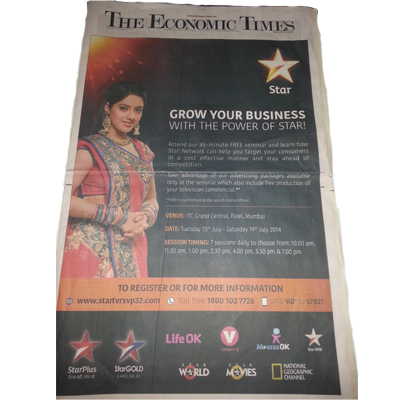
    MUMBAI: The Modi sarkar promised acche din aane wale hai. If one saw the full page advertisement by India’s leading TV network Star India in The Economic Times on 3 July then it looks like good days could be coming the way of regional, small and medium advertisers which have been looking at advertising on the mainline GEC but have found the sticker price too high.


    The who’s who of the advertising industry took notice of the path-breaking step initiated by Star network CEO Uday Shankar.


    The network’s advertisement says, “Grow your business with the power of Star!” and invites marketers, planners and advertisers to attend  free  45-minute seminars through which they can get familiarised with the art of targeting their customers in a cost-effective manner to stay ahead of the competition.


    The target advertiser is  those businesses which are still not advertising on television. Media observers believe that India is a land of opportunity and various small and medium sized businesses have an opportunity to grow by advertising their products on TV, but have been loath to do so because they don’t have agencies, TVCs and also find the cost exorbitant. They cite the example of CavinKare’s Chik shampoo which began as a small regional player, but went on to challenge even the MNCs successfully. 


    The Star India seminars are likely to give more details for its, soon-to-be launched offering, AdSharp, which marks the network’s plunge into geo-targeted advertising in an organised manner. Through it, advertisers can target customers region specifically, as the ads will be local.


    The network which has advertising revenues of around Rs 5,000 crore annually is hoping to increase those top line numbers by luring the small and medium advertiser.


    The first of such seminars will start from Mumbai (15-19 July), followed by Pune (24-26 July), Delhi (5-9 August) and the last will be in Ahmedabad (21-23 August). Registration began almost a month back.


    The invitees can choose from the seven sessions offered in each day-long seminar. The day will not be just about selling and buying of geo-targeted air time by its ad sales team; attending advertisers will also get a chance to get a TV commercial produced free for them by Star India on taking up a package.


    HDFC Life senior executive vice president – head marketing, product, digital & e-commerce Sanjay Tripathy believes that Star India’s first of its kind initiative is laudatory and “will help the network increase its client base.”


    Rivals also expressed appreciation.  Zee’s chief sales officer Ashish Sehgal believes that Star’s seminar campaign  will educate advertisers who have been sitting on the periphery on how to market locally and eventually help expand the overall TV ad market.


     “We have been offering geo-targeted advertising for more than a year now with Amagi. We are part of almost every geo-targeted advertising plan that Amagi does for smaller regional advertisers, and this has worked well for us,” says Sehgal while highlighting that technology plays an important role here. “Broadcasters can choose to outsource geo-targeting to a third party or do it in-house; we have chosen the former so far.”


    Similarly, Amagi’s co-founder KA Srinivasan says that if the largest Indian broadcast network starts pushing geo-targeted advertising then it validates what he and some others have been doing for years now. “It is a good move for the industry and geo-targeting will only pick up in the coming years.”


    Star’s Adsharp which was scheduled to launch by June end, will now be launched by next week or so. It has opted for Cisco as its technical partner for the geo-targeting service.

  • Watch the last of SMJ 2 this September

    Watch the last of SMJ 2 this September

    MUMBAI: The most talked about social show Satyamev Jayate (SMJ) would never had happened, had James Murdoch not given a go ahead for the same.

    “When I told my CFO that I was planning to do a show such as SMJ, he looked at me as though I was going totally out of line,” Star India CEO Uday Shankar had said during the recently held Paley Media Council in New York. Shankar then called up Murdoch and told him about the risk associated with SMJ because of the investment. “He told me ‘we would live.’ I needed his blessings to go ahead with it,” Shankar had expressed then.

    A show which didn’t pass the litmus test in the first go is one of the most successful shows for the channel today. SMJ has truly taken the nation by a storm even as it brings home harsh realities. “India was ready, our viewers were ready and internally Star as a company was ready to take the leap and that’s how came SMJ where we decided that sharply we will, in each episode, focus on some of the things that must change in the country while all other kinds of economic and social changes keep happening,” Shankar had said.

    The series first went on air in 2012, with episodes being aired at a stretch for 13 weeks. But, when it returned with its second season this March, it decided to be a little different.

    This time around, the series was presented in installments. With the first bunch of five episodes aired in March, the show is all set to go on-floor again in the month of July, with telecast plans for September.

    “We will air six episodes to end the second season,” says director of the show Satyajit Bhatkal when quizzed if the season will see another installment. The second season was supposed to have three installments as said earlier.   

    As per Indiantelevision.com’s earlier report, season one of the series garnered an overall rating of 4.27 TVRs (including DD) across the six metropolitan cities: Delhi, Mumbai, Kolkata, Chennai, Bangalore and Hyderabad, upon its premiere telecast on 6 May 2012. According to TAM TV Ratings, the show reached out to 89.6 lakh people in the age group of 4+.

    The popularity of the show grew and it was evident from the opening episode of SMJ 2 which premiered on 2 March with historic numbers. As per TAM data for week 10, Satyamev Jayate’s launch episode was watched by a massive 2.6 crore Indians. This when extrapolated to All India Universe, as per standard industry conversions, means that the launch episode was watched by 7.9 crore Indians.

    Moreover, the show recorded 7,429 TVTs in All India (All 4+, All India) and a HSM TVT of 6,770 (All 4+, HSM). These were simulcast ratings of the original episode aired on Sunday morning 11 am across seven channels (Star Plus, Star Pravah, Star World, Star Utsav, Star Vijay, Asianet and Doordarshan) along with the 1 pm original airing on ETV Telugu.

    The overwhelming response by the audience was backed by the advertisers as well.  According to sources, while each episode of SMJ costs close to Rs 5 crore, the channel charges approximately Rs 10 lakh for a 10-second advertising slot.

    Hosted by actor Aamir Khan, the response to Satyamev Jayate has changed popular perceptions of what people want to watch. That apart, it has also helped generate enormous discussion points in the public sphere on issues many Indians were so long cutoff from. The show also instills in people the feeling of being agents of social change.

    With the show going on floor next month, Bhatkal believes that the four-month break has given them time to research on topics which will be based on what a citizen can do to change his life and the world around.

    Star Plus is leaving no stone unturned to ensure that viewers are engaged by the conversations triggered around the message given by SMJ. Keeping that in mind, Facebook and Twitter is abuzz with activity every hour.

    A total of 8.7 million “Votes for Change” were received from viewers in support of the issues raised during the show.

    Bhatkal is happy with the feedback. “When we aired the first installment of the second season, we were worried if we would get the desired numbers, as elections, exams etc kept people busy.  But, despite that, people have loved the show. Also, our ‘Vote for Change’ campaign also garnered huge amount of support from people.”

    The SMJ team believes that everything is going in the right direction. “Government is also showing a lot of interest in the issues we raise and has promised to work on them,” concludes Bhatkal.

  • Indian Super League signs partnership with English Premier League

    Indian Super League signs partnership with English Premier League

    MUMBAI: The Indian Super League (ISL) has entered into a strategic partnership with the English Premier League (EPL) – the world’s most popular and successful football league, to bring its best practices to India under the exchange programme.


    The Co-operation Agreement between the Indian Super League, co-promoted by IMG-Reliance, the joint venture between IMG and Reliance Industries, Star India with support from All India Football Federation (AIFF) – and the English Premier League will allow ISL to leverage the league’s expertise in nurturing and growing a high quality football competition.


    The recently appointed Board of Director at RIL Nita M. Ambani said, “Partnering with Premier League brings credence to Indian Super League and to our vision of popularising the sport in India. I am confident that the tie-up will immensely help in nurturing and establishing Indian Super League with good governance and best practices. The alliance also presents a great opportunity of partnership and cross promotions between the ISL League Partners and Premier League Clubs.” 


    England’s Premier League is the most watched continuous annual global sporting event in the world. Last season, 13.9 million fans attended matches with record average stadium occupancy of 95.9 per cent. Across nine months, 380 matches are viewed in 175 countries with coverage available in more than 650 million homes.


    Star India CEO Uday Shankar added, “The partnership puts belief in Stars Sports philosophy of `Believe’. From a game that hobbled about on the fringes of Indian sports, there’s promise that this partnership will lift and reinvigorate football. Star strongly believes in creating local heroes, inspiring Indians to believe greatness is possible through sport and together we can create a world where sports comes first. The partnership with PL is going to help us achieve just that. Through this tie-up Star India will cross promote coverage of the Indian Super League and the Premier League to the growing base of Indian football followers.”
     

    The Indian Super League, set to kick off in September 2014, will receive strategic support, advice and assistance from the Premier League to further the development of the league and its clubs. The EPL will also assist in establishing club governance, shaping the brand, fan engagement, defining anti-corruption and anti-doping policies for the ISL, as well as joint promotion of the ISL and Premier League football in India.


    EPL chief executive officer Richard Scudamore said, “Having earlier this year signed a mutual co-operation agreement with the Asian Football Confederation (AFC), we are very pleased to also enter into this partnership with the ISL. This will see both organisations work together and share knowledge in several key areas including player development, refereeing, marketing and promotion.”


    He added, “We know from our broadcast partner Star India, and our work with the AIFF on our long-established grassroots football project Premier Skills that we run in several locations across India, that the popularity of football, and the Premier League, is growing. There is a further opportunity to develop the sport as a result of that increased interest and we hope to continue to make a real contribution to all levels of Indian football.”
     

    The co-operation between the Indian Super League and the Premier League lends credence to the Indian Super League’s mission to engage the 200 million-plus Indian football fan base by showcasing a quality football offering with international standards of governance and an unparalleled viewing experience.


    ISL is an unrivalled football championship, aiming to foster local talent and feature international stars, making the game one of the country’s flagship sports and India, a name to reckon within the global arena. ISL will feature eight franchises from Bangalore, Delhi, Goa, Guwahati, Kochi, Kolkata, Mumbai and Pune.
    India is the Premier League’s number one market in terms of social media engagement, with an average reach of 1.48m Indian fans every week.


    IMG, Global Football Development senior vice president Jeff Slack informed, “Pairing the Premier League, an established best-in-class football organisation, with the Indian Super League is a dream arrangement for football fans in India.  The ability to leverage the Premier League’s experience in creating a successful league model for both players and fans will be a tremendous value to the Indian Super League as it continues to grow the sport in India.”
     

    Through the alliance, Indian Super League will help Premier League and its clubs in staging football matches and assist in other business development initiatives in India. This will encourage exchange programmes and partnership building between clubs of the two leagues. Indian Super League and the Premier League will also cross-promote football coverage on Star India’s platform to the growing Indian fan base.


    “The AIFF is extremely pleased to be a part of the strategic partnership between the English Premier League and the Indian Super League. This is an outstanding opportunity for the Indian Super League to build from the very best in the business when it comes to running a highly successful league. The EPL is revered around the world and by learning from the practitioners who have made it so successful; the Indian Super League will develop and grow in the right way, ensuring benefits not only for the league itself but also for the wider Indian football ecosystem in the longer term,” concluded AIFF president Praful Patel.

  • Senior journalists scrutinise media at RedInk Awards 2014

    Senior journalists scrutinise media at RedInk Awards 2014

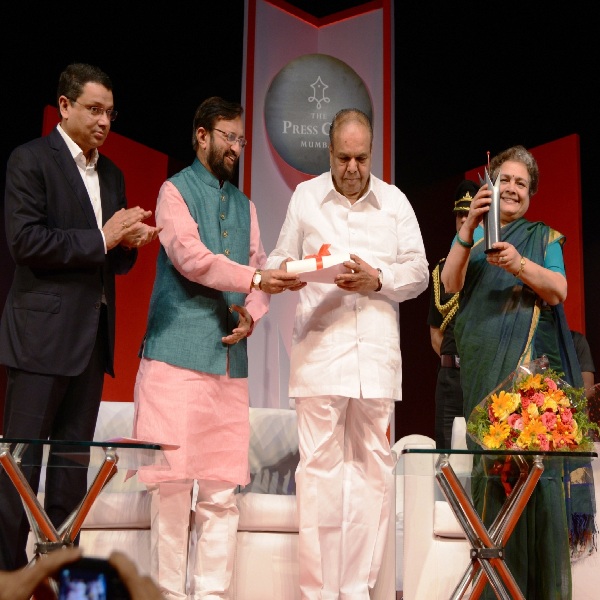
    MUMBAI: It was an awards night, albeit not for celebrities, but for the hard working journalists aka the fourth estate of the country. The fourth edition of the RedInk Awards organised by the Press Club of Mumbai saw 30 journalists from print, broadcast and online media receiving awards in various categories for their outstanding writing and research.


    Press Club of Mumbai president Gurbir Singh opened the ceremony with a few thoughts on the state of media in the country today. “Media today is in crisis. Retrenchments are happening, companies are closing, new ones are starting. There is something wrong with the way media is conducting itself. Is it a shortage of funds or the way the business is being done,” he questioned.


    His voice was not alone. A discussion followed on ‘Elections 2014: Were we fair or did we stoke the NaMo wave’ which involved IBN18 editor-in-chief Rajdeep Sardesai, Times Now editor-in-chief Arnab Goswami and Divya Marathi chief editor Kumar Ketkar alongside O&M creative director Piyush Pandey and moderated by former journalist and current Star India CEO Uday Shankar. While Sardesai and Ketkar remained critical of the role of media today, Shankar and Goswami agree that the future is very bright.


    Maharashtra governor K Sankaranarayanan and new Information and Broadcasting Minister Prakash Javadekar were the guests of honour for the evening. While Javadekar said that he would look into establishing a law to prevent attacks on press, the governor had some personal anecdotes to share regarding the media.


    “Today, as a politician, just serving the people isn’t enough. You have to be friends with journalists,” he said in what appeared to be an answer to Goswami’s earlier comment that journalists should not be emotionally connected with politicians. “Paid news is much talked off. I ask the media why do they show it and they say they don’t have money. If you ask a thief why are you stealing he says ‘I don’t have money’,” he said.


    Sankaranarayanan said that the media world in India is so competitive that if one person isn’t there another will come in his place. “I watch Arnab’s debates sometimes. Today at 9:00 pm I don’t know what has happened. He is not there. It is a great loss to the people,” he added amidst loud applause.


    Mrinal Pande who was the first woman editor of the Hindi daily Hindustan and who retired recently as the chairperson of the Prasar Bharati was honoured with the RedInk lifetime achievement award. 

  • Rajdeep Sardesai and Arnab Goswami poles apart on future of journalism

    Rajdeep Sardesai and Arnab Goswami poles apart on future of journalism

    MUMBAI: The venue: the National Centre of Performing Arts auditorium in south Mumbai. The occasion: a panel discussion that preceded the Press Club of India’s Red Ink Awards. On stage were IBN18 editor-in-chief  Rajdeep Sardesai, Times Now editor-in-chief Arnab Goswami, and Dainik Divya Marathi chief editor Kumar Ketkar, O&M national creative director and chairman Piyush Pandey. And for a change it was they who were grilled by Star India CEO Uday Shankar, a former journalist himself. The topic: Elections 2014: were we fair or did we stoke the NaMo wave?’

    Shankar set the pace for the panel when he spoke first, stating that it is he who would be asking the questions and no one would be allowed to answer – in all probability taking a jab at Arnab. As the audience burst into laughter,  he then told Rajdeep to open the debate by speaking his mind.

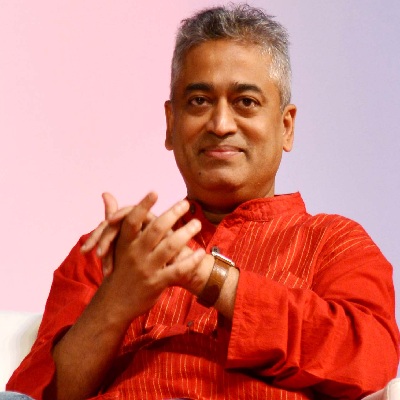
    Dressed as casually as one can get, in a red kurta, simple trousers and chappals, Sardesai delivered a hard hitting monologue on Modi and the kind of journalism that exists in India now.

    “Modi had the most  innovative and sustained campaign that we have ever seen in an Indian election,” he said, while pointing out that Congress president Rahul Gandhi was like a kid in kindergarten in front of Modi. But he also said that it was unfair to blame the media for creating the NaMo wave.

    “Some channels have abandoned the basic role of media. They are now doing cheerleading or supari journalism to get more viewers and ratings. Modi was not subject to the intense scrutiny in the last two years that the others were subject to. While he was brilliant with his social media strategy and communication he was spared the ignominy that others were subject to. Some channels elevated Narendra Modi to God. He is a good politician and communicator but not a messiah. Some journalists need to ask themselves if they want to do journalism or hagiography,” he added.

    On the other hand, Arnab instantly put himself and his channel in the spotlight by stating that one of the positives of being located in Mumbai, far away from the hub of channels (Noida) was that it keeps him disassociated with politicians.

    “I am not romantically involved with any political party so I don’t end up having a bitter break up with them. My distance with politicians is both physical and psychological. We in India are overawed by them. Modi was the focus because there was no competition. We are not dependent on politicians for ratings. There is no scientific evidence that Modi gets ratings,” he said while also stating that he wasn’t aware of this supari journalism that Rajdeep referred to.

    “The next 10 years of journalism to me are very bright,” said Arnab. A view that Shankar totally endorsed. Said he: “The future of journalism is bright because we do something that is essential to the society. We should not be cynical about the media, without them the country would not have been what it is.”

    However, Arnab’s view seemed to have irked Rajdeep who in the latter part of the discussion said, “We can state that in 10 years things will be great and things are going to change, but arrogance is the downfall of every journalist! At our time, it was never that what the anchor said would matter more than what the guests said.”

    Ketkar who comes from the print side of the media and was the senior most scribe on the panel let loose his spleen as he lambasted the electronic media for sidetracking and sideswiping print publications.

    “It is the electronic media that sets the tone for the next day’s morning headlines in the paper by these discussions. The people don’t set the agenda, the media does. The media has covered how miserable Bihar is but no mention of the Gujarat floods when Modi was campaigning at the height of his campaign trail. So, it is not just that you have to speak more about something, but by also not showing something you can stoke the fire,” he said.

    While the three editors did not refrain from taking digs and potshots at each other for the kind of journalism that is being resorted to, it was Piyush Pandey – the man behind the Narendra Modi election campaign –  who gave his insights on what led to NaMo wave. He pointed out that no matter what Modi did, he never gave the media a chance to ignore him; he made sure he was in the public eye, consistently giving out the right message that the public wanted to hear. “The media rode the Modi wave. It did not create it,” he said.

    While the very topic was sidelined, the editors were deeply engaged in pontificating on the state of journalism in the country with Goswami being the most optimistic about it.

    Having recently taken a month long break from his editorial duties, Rajdeep was the most vocal about the fact that news television needs to find its bearings quickly.

    “The idea that the television makes or breaks will not hold anymore. I really think that we have lost the capacity to go beyond the dramatic headline. We have lost our nerve. We need to introspect and ask ourselves : are we willing to do a serious interrogation of the Gujarat model, positive and negative?” he questioned. The fact that the BJP did well in places where cable TV did not reach efficiently was also brought out by Shankar and Sardesai.

    While the discussion didn’t see any real conclusion, it did end with a valuable point to ponder: whether journalists were getting too emotionally involved with politicians?

    Shankar had the last word on this. Said he:  “I think there is too much reverence even now in Indian media and on the other hand, there is too much emotional attachment. Either we are just cynical or when we go there we get sucked in. There has to be a balance in between. Overall, I think we shouldn’t be cynical about media. We have lots to capture and improve but without the media, this place, this country would be much worse.”

  • Star India’s Uday Shankar’s  Paley parley with Bobby Ghosh

    Star India’s Uday Shankar’s Paley parley with Bobby Ghosh

    MUMBAI: Did you know that Star Plus’ most talked about social show Satyamev Jayate (SMJ) may have never happened?


    Well, Star India CEO Uday Shankar shared nuggets such as these during his one-on-one with Time International editor Aparisim Bobby Ghosh in front of the Paley Media Council – an exclusive, invitation-only membership community for entertainment, media and technology industry executives and provides an independent forum for top industry leaders – at its media centre in New York on 30 May.


    Shankar addressed various topics like – the Star India Network’s – led by Star Plus – focus on women, the journey of its social cause show Satyamev Jayate and the evolution of Star India.


    He began by saying, “We were not okay with bringing the American culture concept into India and so decided to create Indian content for Indian people.”


    “Even though our pedigree is News Corporation and 21st Century Fox now, it was very clear that we were not bringing in American culture into India,” he added. Star India completely indigenised the content, because according to them, it was the only way. “Somebody had to own and so it was owned by the parent company, while we were told to go and create a business that was the right business for the Indian people and Indian society,” he said.


    Shankar further went on to say that his bosses always encouraged him to pursue the agenda of challenging the status quo. “We address whatever is not right in the country, whatever needs to change for people in the country. We at Star have never thought of going and telling people what they should be doing next. Our job is to focus the spotlight on what we believe needs to be questioned and what needs to be observed closely and questioned. And that’s where we leave it. That’s exactly what we have done with our content. Whether it’s our entertainment content, dramas, reality shows or finally SMJ.”


    “When I told my CFO that I was planning to do a show such as SMJ, he looked at me as though I was going totally out of line,” Shankar told the French bearded-bald-headed Ghosh. “I called up James Murdoch and told him about the risk associated with SMJ because of the investment and he told me ‘we would live.’ I needed his blessings to go ahead with it.”


    Shankar informed Ghosh that he had met up with Aamir Khan to understand how they could use the power of television and work together to improve society after he did 3 Idiots. “It took two years of his team and our team working together to come up with Satyamev Jayate,” he said. “We thought of taking all the challenging issues like female feticide, and so on a Sunday morning. That was a challenge – to get viewers on-board to watch the show at that time slot. It was of a duration of an hour and a half to do a very, very deep dive into some of the very unpleasant parts of Indian life. Everything about the show suggests that it shouldn’t work. Aamir and I spent a lot of time discussing this and finally we concluded that we are not going to pull our punches neither in the creative expression nor in the format.”


    Shankar thought the brand had to mature and take a big leap. And that big leap came with SMJ.


    Satyamev Jayate was the beginning of a journey. In the journey of our purpose we wanted the brand to carry, it had matured to a level where we wanted to make that one big leap and tell people that ok we have been looking intently to implementing stories and characters and we have been giving you messages, subtle messages. India was ready, our viewers were ready and internally Star as a company was ready to take the leap and that’s how came SMJ where we decided that sharply we will, in each episode, focus on some of the things that must change in the country while all other kinds of economic and social changes keep happening. I wouldn’t say that we have taken our corporate social responsibility seriously. At Star, we have now gone a step ahead and we believe that all content that we create is corporate social responsibility,” he said.


    Shankar narrated that he had had a meeting with the Minister for Corporate Affairs when the new Companies Act in India was being drafted. “They needed inputs. They were saying that a certain fix percentage of profits should go towards CSR and I said well I am fine to do that, but you must make a note that all media content if it goes on-air is towards corporate social responsibility. If it’s not, then we as media community have failed.”


    Shankar told Ghosh that SMJ has had its impact on Indian society. “The sex ratio in India has been under pressure and declining. The gap between female and male kids has been rising. For the first time in 40 years, in the state of Maharashtra, where Mumbai is, it was reversed by a factor of 24 for each thousand. The state health minister publicly went and acknowledged that every single policy and intervention remained the same. The only external stimulus that had come in was SMJ’s episode on female foeticide and he said his officers felt that it was SMJ that gave women the confidence to resist abortion.”


    Shankar opined that the SMJ episode on drugs led to three or four governments passing legislations and orders to make sure government hospitals only supply generic drugs. “We are still fighting with the pharmaceutical industry on that episode where we said that labeling of drugs was just an exercise to raise drug prices. If generic drugs were sold and encouraged by governments then prices would come down substantially,” he said.


    Then he disclosed that four states have gone and set up fast track courts for rape victims following an episode which highlighted and demanded the need for this. “We wanted fast track courts,” said Shankar, “because the Indian judicial system can sometimes be very slow and rape victims were struggling with the time it took to get justice. And we got a response from some state governments.”


    He pointed out that it was strange that while initially there was a lot of interest in the region for SMJ after it was aired, its format has so far been licensed to a production house in China.


    On the programming front Shankar revealed that Star does do a lot of market research, but it is not a market research driven company, he explained to Ghosh.  “I see Star as a company which is very focused on observing society and whatever is happening. So if a political movement is going on, if there are concerns that are being expressed informally, then often times the research insights do not really capture them. But we also try and anticipate. We are at a level where we try and stay ahead of those concerns, so meaning that when you are in the business of media, you should be shaping the concerns, you should be voicing and helping people connect their dots to themselves and whether these are dots of aspirations or these are dots of concerns that are holding their aspirations.”


    He further stated that, television, print, and media in general are heavily encouraging, motivating and proselytizing agencies. He believes that the new Modi-led government is very focused and has the highest representation of women ministers, compared to any government since independence and that is a good thing. “30 per cent of the cabinet ministers are women, so we think this by itself should give an impetus to the whole process of change. Television I think can do a great deal, more than it is doing even now,” he ended.