Tag: Uday Shankar

  • Hindi GECs 2014: The year of experimentation

    Hindi GECs 2014: The year of experimentation

    MUMBAI:  Experimentation, experimentation and experimentation. 2014 was the year when India’s Hindi general entertainment channels (GECs) went to the lab and tested out many new programming concoctions for the Indian viewer.

    Whether it was in the form of new channels or new programmes or new time slots or episode budgets, channel and creative heads played the quintessential scientist.

    Three new channels emerged in the specialised Hindi GEC space: Sony Pal, Zindagi and Epic TV. They had yet to make a mark on Indian viewing habits, though Zindagi was the only one that got the thumbs up from TV critics. 

    Star Plus continued to lord it over all in the ratings space for most of the year, but the second, third, and fourth spots witnessed a see-saw battle between Zee TV, Life OK and Colors. Sony, which once ranked second amongst GECs sank to a lowly sixth position during 2014 even as it’s flanking laughter channel Sab, stayed steady through 2014 at the fifth spot.  The year also saw the near demise of what was once the No. 4 GEC – Sahara from the troubled Subrata Roy-run Sahara Group.

    Star Plus: The year started on a good note for Hindi GEC market leader, Star Plus.  An extra dose of fiction entertainment was on offer to the audiences. It made a strategic move of extending its prime-time (6 pm – 11.30 pm) weekday fiction band to Saturdays too. The move worked wonders for the channel and helped further to maintain its Numero Uno position on the ratings chart.

    Taking a cue from the runaway success that Colors’ Comedy Nights with Kapil had raked in, the channel launched Mad in India, placing it head to head with it. But sadly, Gutthi (Sunil Grover) failed to connect with the audiences. 

    In a bid to attract the younger Indian demographic to the channel, it decided to focus on real urban stories, rather than melodrama based on the heartlands. It took the big budget, limited episode route, streamlined its programming and made the channel look peppy.

    On offer for traditional Star Plus viewers was the YoYo Honey Singh- backed India’s Raw Star (IRS), the more current and urban-based Airlines and film-maker Ashutosh Gowariker’s Everest – a story about a girl wanting to clamber on to the world’s largest peak and the city-focused Nisha Aur Uske Cousins.

    Just as 2014 was ending, it unveiled, the spell-binding Private Investigator (PI) and Tu Mera Hero.

    Aamir Khan’s much talked-about Satyamev Jayate (SMJ) made a comeback in two seasonal parts in keeping with CEO Uday Shankar’s commitment to do socially-relevant programming. Estimates are that while IRS entailed an investment of Rs 55 – 60 crore, SMJ cost Rs 4 crore an episode and Everest about Rs 50 lakh an episode. These are the budgets that TV producers have been dreaming of.                                                                                                                                                                                       The heavy investment was worth it as the network’s sales folks managed to make advertisers fork out Rs 3.5 – 4 lakh per 10 seconds spot and Rs 6 – 12 crore per sponsor for SMJ (Airtel was the presenting sponsor with Aquaguard being the co-sponsor and Coca-Cola, Johnson & Johnson, Skoda Auto, Axis Bank, Berger Paints and Dixcy Scott, the associate sponsors) and Rs 3.3 – 4 lakh per 10 second spot for IRS. Almost all the inventory for the shows was sold out, making it a win-win year for Star Plus.

    With many launches to its kitty, the channel executives had to bring the curtains down on some earlier shows: finite mythological series Mahabharat and drama Saraswatrichandra.  The former helped Star Plus get a tremendous connect with mythological show lovers, and its producer Swastik Productions walked away with many awards.

    The Sanjay Leela Bhansali produced Saraswatrichandra, which was handed over to the Sanjoy Wadhwa run Sphere Origins, too ran its course and was shut down in 2014.

    On the other hand, existing fiction shows have always been great contributors to Star Plus’ ratings. To connect with the youth a lot more, storylines changed to have a progressive outlook. Diya Aur Baati Hum continued to grab eyeballs as it turned out to be the highest-rated No. 1 fiction show across all channels, followed by series like Yeh Hai Mohabbatein and Yeh Rishta Kya Kehlata Hai. Shows like Veera and Saath Nibhana Saathiya too continued to win over audiences this year.

    Colors: The year saw a tug of war between Colors and Zee TV for the second position. Colors finally won the battle and stood steadfast at No. 2. What created the magic for the Channel in 2014?

    Colors this year created a league of its own with its strong non-fiction portfolio. From the fifth edition of Fear Factor: Khatron Ke Khiladi with the tagline ‘Dar Ka Blockbuster’ to India’s Got Talent, from Jhalak Dikhlaja to Bigg Boss 8, it has kept viewers on the edge of their seats and given them a dose of entertainment 365 days of the year. Comedy Nights with Kapil too contiued to make people laugh and stood strong at the ratings chart.

    The fact of the matter is that advertisers have never shied away from investing in these brand properties. For Jhalak, the channel had increased its ad rates by 15 – 18 per cent over last year whereas for Bigg Boss it hiked them by a whopping 30 per cent.

    Apart from a different theme, the 2014 season of Bigg Boss observed a lot of brand integrations on the show. To go beyond the 10 sec to 30 sec TVC, it had brands from TVS Scooty Zest to Britannia; from Garnier Men’s Products posters to using Oppo Smartphones for any task.

    Another highlight was that after five long years, the channel changed its title sponsor with Vodafone dropping out and Snapdeal coming in.

    Further strengthening its non-fiction band, for the very first time the channel launched a celebrity talk show – The Anupam Kher Show Kuchch Bhi Ho Sakta Hai. The finite series was hosted by actor-producer Anupam Kher.

    On the fiction front, with new shows failing to deliver good numbers, old programmes continued to shine and the longest-running series Balika Vadhu is a case in point. Madhubala too won the hearts of many until mid-year and sadly had to end its three-year sojourn with the channel.

    To encourage appointment viewing, it got on-board new and riveting shows like Udaan, Shastri Sisters and Meri Aashiqui Tumse Hi.

    Star Plus’ loss was Colors gain as it went about cherry picking most of the prime events:  Sansui Colors Stardust Awards; from the sixth edition of Mirchi Music Awards to Indian Television Academy Awards, to the 13th Indian Telly Awards.

    It also announced its association with RFS Entertainment to captivate Indian audiences with Got Talent World Stage Live. Hosted by the badshaah of Bollywood, Shah Rukh Khan, it is a first-of-its-kind global on-ground extension of Simon Cowell’s Got Talent franchise.

    Zee TV: It was a year of back-to-back launches for Zee TV. The channel which takes pride in creating original non-fiction formats has had many firsts to its name.  Be it Sa Re Ga Ma Pa, Dance India Dance (DID) or Antakshari, it has consistently tasted success with its non-fiction originals in a market dominated by internationally-acquired formats like Bigg Boss and Kaun Banega Crorepati (KBC).

    Zee’s first attempt with Cinestars ki Khoj, an acting-based reality show in 2004, did not work out. After almost a decade, this year it was miraculously brought back which in its first edition gave recognition to actors like Ankita Lokhande (Archana Deshmukh on Zee TV’s Pavitra Rishta). But once again it did not really set the ratings chart on fire.

    After a year of non-fiction shows on weekends, Zee TV decided to give DID a break. With an aim to strengthen its weekend slot with fresh content, the channel got on-board for the first time a superhero trilogy called Maharakshak Aryan simply to engage with the family a lot more. 

    The channel felt that an original superhero series was a fresh theme. From its slick production values to innovative visual effects and ingenious cinematography, the show has definitely raised the bar for action thrillers and the fantasy genre on Indian television. To further strengthen its weekend slot, it also launched a light-hearted show titled – Neeli Chhatri Wale.

    For Zee TV, India’s first private Hindi GEC channel, launching a number of new shows in a year is nothing new. What is noteworthy is the fact that the channel has produced the top four weekday fiction launches of 2014. That’s quite an achievement.

    If one takes a look at the opening week averages of all the fiction launches across GECs for the year, it is very clear from the numbers as to who has ruled the ratings charts.

    Jamai Raja leads the pack with 5,488 TVTs, Satrangi Sasural that opened in week 49 with 4,970 TVTs, stands at number two,  Bandhan with 4,366 TVTs and Aur Pyar Ho Gaya with 4,044 TVTs followed at number three and four respectively.

    Its other prize property, Kumkum Bhagya, too has done well. After a six-year stint, the channel’s longest running and most popular series – Pavitra Rishta sadly had wound up.

    On 23 June, the Zee TV network launched Zindagi to break free from the stereotype framework and melodrama with shows never before seen on the Indian small screen. True to its philosophy and tagline Vasudhaiva Kutumbakam, shows like Humsafar, Maat, Kitni Gir hain Baaki Hain were handpicked from across the border.

    Life OK: The channel, which is not your run-of-the-mill type catering to the entire family, has played a different game in 2014. This year’s highlights include its first big-ticket Bollywood event, The 20th Annual Life OK Screen Awards. The show registered a whopping 9 million TVTs, three per cent more than the 6.9 million TVTs (ratings provided by Life OK itself) garnered by Colors from its last year’s edition.

    Riding high on the success of Screen Awards, the channel decided to get more Bollywood stars on-board and launched Life OK Now Awards which celebrates excellence in the field of film, television and music every month.  The popcorn generation was its target over a successful three-months run.

    Its belief was in narrating a variety of stories from different walks of life. It thus launched an action-packed serial – Pukaar – Call for the Hero. With a different perspective, Pukaar had men as the main protagonists. Based on a story with an army background, it saw well-known film producer-director Vipul A Shah making his debut on television. Close to Rs 13 lakh has been spent per episode on production.

    Life OK too took the comedy route with Comedy Classes – but the show quickly fizzled out.

    Not only did big film producers make their way to the network, but the channel attracted a lot of film celebrities too. To make the content line-up bolder and stronger, it got an action reality series – Dare 2 Dance with celebrity Akshay Kumar as its host.

    On the fiction front, viewers saw gorgeous actress Sonali Bendre making her debut on television with the series christened – Ajeeb Daastan Hai Yeh. Actress Bhagyashree too made her debut on television with a gutsy series – Laut Aao Trisha.

    Moreover, after a successful three-year run, the channel’s flagship property Mahadev saw its shutters come down and this paved the way for a new show Mahakumbh- Ek Rahasya, EkKahani. The channel’s crime properties – Savdhaan India and Shapath continued to fly high on the ratings chart.

    Sab TV: This family channel from the Multi Screen Media (MSM) stable, can be credited for the rise in the comedy genre with its popular shows Tarak Mehta Ka Ooltah Chashmah, Lapataganj and Chidiya Ghar, by experimenting with a new format based on live audience participation titled Tu Mere Agal Bagal Hai.

    The sitcom was like no other. The cast acted in front of a live audience which the channel believed was the USP of the show. Launched as a daily soap, it was penned as a finite one. Again, a first of its kind, the channel launched India’s only alien comedy TV serial – Badi Door Se Aaye Hai.

    Tarak Mehta Ka Ooltah Chashmah continues to win the hearts of many and is the chart leader. Not only that, but the team was also invited by our country’s PM Narendra Modi to help him with Swachh Bharat Abhiyan campaign.

    F.I.R continued to be very gripping. In between for a month (July – August), the show tried a stint of stand-up comedy with live audience but failed to capture viewers.

    Sony Entertainment Television (SET): It was a year of struggle for Sony and it ended the year at the bottom rung of the TAM TV ratings ladder. This despite the fact that it experimented with concepts, shows, formats and even programme and marketing spends.

    The channel’s hopes were riding high on Amitabh Bachchan’s fiction debut Yudh, but the dark content was unpalatable. The 20-episode drama launched in July dashed all hopes as it only made around 1,199 TVTs in its opening week. The buzz generated around Big B failed to translate into ratings.

    What clicked this year was its only famous property – Kaun Banega Crorepati 8, giving some respectable numbers to the channel to barely survive. This time around, it moved out of its comfort zone, set in Film City with the launch and mid-season episode being shot like events in Surat and Raipur with live audiences. It also went on a big bang 360 degree promotional exercise with 100 on-ground events. The channel spent an outrageous 30 per cent of the total budget on marketing.

    Sony is pinning its hopes high on yet another launch, another high-investment property – Box Cricket League (BCL), a sports reality show. Played with a soft ball and filmed in a studio it will have 19 matches with around 120 celebrities playing the game.

    Fiction turned out to be a near disaster for the channel. Its biggest fiction launch of the year – Itna Karo Na Mujhe Pyaar with Ronit Roy, did not do as well as it was expected. But both, Balaji Telefilms, the producer and the channel’s management think it will build on its viewers over time.

    Other fiction series like Humsafars, Hum Hai Na and Tum Aise Hi Rehna have only a glimmer of hope. The only silver linings are the channel’s crime and investigation properties – CID, Crime Patrol and Adalat and the historical Maharana Pratap.

    MSM launched a new channel – Sony Pal on 1 September aimed at women and housewives with stories about the fairer sex and family. With the ‘Yeh Pal Hamara Hai’ tagline, it was meant to compliment its sister channels Sony Entertainment and Sab. It launched with nine new shows and Juhi Chawla as its face. Pal like the network’s other GEC initiatives did not make much headway with viewers.

    As the year came to a close, another big experiment saw the light of day with the launch of Epic TV. After a wait of almost a year or more. Headed by former Disney executive Mahesh Samat, Epic is India’s first genre-specific Hindi entertainment channel.

    Covering genres ranging from action, drama, comedy to narrative non-fiction, it seeks to celebrate India’s heritage by creating unique and original content within Indian history, folklore and mythology, using a contemporary story-telling format.

    Discovery Communications India too entered the Hindi enertianment space, with the launch of its Investigation Discovery (ID) channel.

    Hopefully, India’s demanding TV viewers will lap it up. And hopefully, India’s GEC executives will continue to experiment in 2015 and possibly continue with their efforts to redefine India TV audience’s entertainment tastes.
  • Hero ISL reports viewership of 429 million across the nation

    Hero ISL reports viewership of 429 million across the nation

    MUMBAI: Hero Indian Super League (ISL), a joint venture by IMG-Reliance and Star India has created history in India with a record- breaking reach on television, in stadia and digital.  

    As per the TAM data, an aggregate of 429 million viewers from across the nation tuned in to watch the inaugural season of Hero ISL live on their televisions screens, making it the second most-watched sport in the country after cricket. Over 1.5 million fans watched it on ground, in-stadia, making it the fourth most attended football league in the world. Stadia were packed close to full capacity with attendance averaging about 26,000 fans per match. 

    The league cut across demographic boundaries and captured the imagination of a diverse fanbase, with women and children accounting for 57 per cent of the 429 million viewers.

    The Hero ISL was telecast live on eight channels in five different languages cross the Star India network. The league was also aired on starsports.com which had more than 32 million visits recorded during the tournament, surpassing the online audience even for the FIFA World Cup 2014. Across web, mobile and app, starsports.com recorded over 17 million online video views through the course of the tournament. The final match played between Kerala Blasters FC & Atletico de Kolkata recorded 1.6 million online visits. 

    Talking about the league’s success, Star India CEO Uday Shankar said, “Launched with the aim of helping football take root among the country’s masses, the Hero ISL was backed by an aggressive broadcast plan to bring an unparalleled football experience to the viewers. Our intent was to awaken the passion of football and create the birth of a footballing nation. The resultant success of the Hero ISL justifies it as the right platform for tapping the passion for the sport that exists in India. As we gear for a bigger and better second edition, I would like to thank our partners IMG- Reliance, AIFF, all the club owners and more than 400 million fans for making this dream a reality.”

    On 20 December 2014, the Hero ISL finale, held at DY Patil Stadium in Mumbai, had about 37,000 fans in attendance. The crowning of the first Hero ISL league champion was also watched by 57 million viewers, 2.4x of the reach of 2014 FIFA World Cup final, culminating the over two months long league. The final, with an average TVT of 1418 among M 15+ ABC, registered as the highest rated match of the tournament, 11 per cent higher than the opening match of the tournament. In the social media front, Hero ISL created a total of 2.2 million conversations with more than 275,000 unique authors, generating 11 billion potential impressions. #ISLfinal trended at #2 worldwide on Twitter, and Atletico de Kolkata at #1 in India on Facebook on the day of the finale.


    According to IMG-Reliance Chairperson Nita M Ambani, the success of Hero ISL is a realisation of the dream of a billion including Indians to experience and embrace the beauty of football. She said, “The beautiful game has successfully captured the imagination of people of India and we have experienced the joy of watching the birth of a footballing nation. Hero ISL has been geared towards one overarching objective— to develop football across the country in a systematic and holistic manner, and its success will spur the development of Indian football. I extend my gratitude to the people of India for their love and support.”


  • Sumantra ‘Sumo’  Dutta moves on from Star

    Sumantra ‘Sumo’ Dutta moves on from Star

    MUMBAI: A score of years of relationship with a company is not something that many a senior executive in media can boast of. But Sumantra Dutta (or Sumo as he is fondly called) had that with the News Corp owned Star India. And in his twentieth year of employment with India’s leading broadcast network, Sumo has said sayonara. He was Star Middle East, Pakistan and Africa country head, at the time of leaving.


    Star India CEO Uday Shankar said, “Sumantra has had a long and fruitful career marked by strong performance across diverse portfolios at STAR. His leadership has helped STAR establish itself as a leading network in the Middle East, Pakistan and Africa. Sumantra has always demonstrated sound judgement and a willingness to take on risk in everything he did, and has contributed significantly to Star’s success.”


    Dutta said, “I have spent most of my professional life so far at Star, and it has been  a truly enriching and fulfilling experience. I am grateful to Uday and the great team at Star for the belief, passion and support, and I wish them all the very best. I shall always remain a brand ambassador of this great network.”


    Dutta joined Star India as ad sales manager in Kolkata in 1994, after which he moved to Delhi  in 1996 and Mumbai in 1999, where he grew to finally head ad sales and marketing as EVP in 2000. A year later, as Radio City COO, he was part of the team that successfully launched the FM network, which he went on to head as CEO in 2003. In October 2008, Dutta moved to Dubai to spearhead STAR’s expansion in the Middle East, Pakistan and Africa as Country Manager.


    Prior to joining Star India, Dutta worked with brands like Nestle, Times of India and Mudra.

  • Ajit Thakur resigns from Star India

    Ajit Thakur resigns from Star India

    MUMBAI: The man credited for Life OK’s success story, Ajit Thakur, has decided to move on.

    The channel completed three years on 18 December and is gearing up for a revamp early next year.

    It was in July this year that he, who has led Life OK to soar on the ratings chart, was given an additional charge of managing the network’s youth entertainment channel, Channel V.

    But in a shocking development, Thakur has ended his three-year stint with the network. According to sources, he put down his papers on 15 December and is currently serving his notice period. His last day in the organisation will be February 2015.

    Sources from the channel confirmed the news and said that he is interested in making films and hence, has decided to take such a drastic step.

    The buzz is that he is joining Sunil Lulla’s Eros.

    Thakur could not be reached at the time of filing this report.


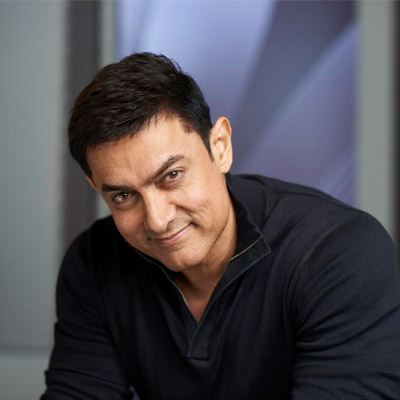
  • Aamir Khan all praise for Star India CEO Uday Shankar

    Aamir Khan all praise for Star India CEO Uday Shankar

    MUMBAI: Film star Aamir Khan has been passionate about Satyamev Jayate, and it was thanks to his passion and the great platform and tremendous support he received from Star India, that today, his show has turned out to be India’s most meaningful and impactful TV show for positive social change.

    So it was understandable that Aamir Khan was delighted when Star India CEO Uday Shankar was named the Impact Person of The Decade – an award he received from the Governor of Maharashtra, C V Rao, in Mumbai.

    The prestigious award recognizes the one individual who has made maximum and far-reaching impact on and influenced and helped shape the media, marketing and advertising industry tremendously over the last 10 years. And obviously, amongst the many initiatives that Star India leader Uday Shankar has rolled out over the past decade, one of the most significant, with tremendous positive social impact, has been Satyamev Jayate with Aamir Khan.

    “I’ve known Uday for about five years now — his razor-sharp mind, his intelligence, his courage, his boldness to take difficult decisions…” Aamir Khan told a galaxy of top professionals through a recorded message at the award ceremony, adding, “Uday believes in the impossible! That is why he achieves the impossible!”

    An initiative of the scale of Satyamev Jayate could never have been executed to perfection unless both leaders of the show – Aamir Khan and Uday Shankar – did not have the same kind of passionate belief in and commitment to working for social good through the show.

    This shared passion and commitment was obvious when Uday Shankar, who believes strongly in collaboration,  told the audience in his acceptance speech, that “The willingness to collaborate has been built on solid conviction to do the right thing – not just for Star but for the entire industry and society.  The conviction to not do regressive content, the conviction to not compromise the larger interest of community and the conviction to be not bogged down by fear of failure.”

    Referring to three other top, acclaimed Bollywood film directors whom Star India brought to television, Uday Shankar said, “If at Star we have been able to change the content landscape, that’s happened largely because Star has shown a better ability to attract and work with an eclectic spectrum of talent – be it the likes of Aamir Khan or Karan Johar or Ashutosh Gowarikar or Sanjay Leela Bhansali.  Together we have all raised the bar for content at Star.”

  • Star India CEO Uday Shankar is ‘Person of the Decade’

    Star India CEO Uday Shankar is ‘Person of the Decade’

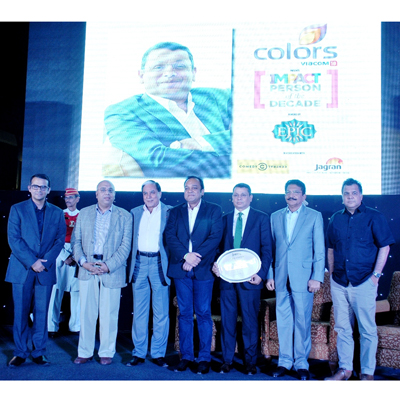
    Mumbai: Uday Shankar, CEO of Star India, received a significant industry award, The Impact Person of the Decade – 2014. Maharashtra Governor Chennamaneni Vidyasagar Rao gave the prestigious award to Shankar late last evening in the presence of media visionary Subhash Chandra, Chairman of Esselworld and Zee, and Annurag Batra, Chairman of the exchange4media Group.


    The award recognises the one individual who has made maximum and far-reaching impact on and influenced and helped shape the media, marketing and advertising industry tremendously over the last ten years.


    Maharashtra Governor C Vidyasagar Rao, addressing an audience packed with leaders and professionals of Indian media, marketing and advertising, said, “Shri Uday Shankar’s journey from being a journalist to head a large media organization has been spectacular. His agenda of driving a social change through programs like Satyamev Jayate has had a huge impact. In a country where cricket is a religion, he has brought to the fore games like Hockey and Kabaddi and demonstrated how these games could also be popularized in a changing world.”


    Accepting the award, Shankar said, “This is overwhelming – there is nothing more special than peer recognition.  I consider myself a creation of this industry, and for this industry to recognize that I might have made some impact on the last decade fills me with a sense of both — pride and gratitude.”


    Introspecting on winning the Impact Person of the Decade, Shankar said, “When I was informed by Impact that I am the person of the decade, I couldn’t help but reflect on my journey and what led me here…  I can say it in one word – collaboration.  That seems to be the one thing that I have done better and better and better over the last 10 years.” However, he added that “the willingness to collaborate has always been built on a solid conviction to do the right thing – not just for Star but for the entire industry and society. The conviction to not do regressive content, the conviction to not compromise the larger interest of community.”


    Shankar attributed his success at Star to his excellent team. “I think my success at Star and the success of Star India are results of not just an extremely talented team that I could put together but that this team collaborates with and compliments one another extremely well… my amazing team at Star has always rallied around to die for every single ridiculous plan that I have come up with,” he said. “This recognition is yours!”


    James Murdoch, Co-Chief Operating Officer, 21st Century Fox, said in a recorded message, “Uday Shankar is really driven by a belief in communications, and a belief that media and storytelling can make a positive difference. We’re enormously proud of Uday for being named the Impact Person of the Decade. It’s a great honour for him — one that he richly deserves. Star has always been a great innovator, and under Uday’s leadership, it has taken that to new levels.”


    Superstar Aamir Khan, in a recorded message, said, “I’ve known Uday for about five years now — his razor-sharp mind, his intelligence, his courage, his boldness to take difficult decisions… He believes in the impossible, and that’s why he achieves the impossible.”


    Media captain Aroon Purie, Chairman, India Today Group, said of Mr Shankar in a message, “He is a good thinker; obviously a great leader… I am delighted that he is getting this award. He has made a great impact on the industry, and I am sure that his leadership in Star, and also as part of the industry, will have a great impact in the years to come.”


    Annurag Batra, Chairman – exchange4media Group, said, “Across the years, Mr Shankar’s contributions to the entire space have been remarkable – whether through his mission for innovative and socially responsible content that is based on great storytelling, or the investments in and support of sports genres across Kabaddi, Football and Hockey and Cricket, and his remarkable efforts in aligning industry stakeholders for issues of industry and social significance. These, with several other reasons, are why the Impact editorial team selected Mr Shankar from a solid list of respected industry professionals for having impacted the industry and society in such a positive and significant way through his vision for both Star  and the industry. He is indeed a truly deserving winner of the top honour in the space of Media, Marketing and Advertising.”


    Click here to read Uday Shankar’s acceptance speech

  • Shailesh Shah moves on from IBF

    Shailesh Shah moves on from IBF

    MUMBAI: After more than two years as Indian Broadcasting Foundation general secretary, Shailesh Shah has decided to move on.


    Shah, who had taken charge in February 2013, ended his relationship with the Foundation in November, this year. With over 28 years of experience in a variety of industries, Shah pushed IBF’s efforts in building a robust and profitable broadcasting industry in India.


    Currently, the Foundation’s deputy director Radhakrishnan Nair is looking after the responsibilities left vacant by Shah.


    Nair, who has over 33 years of experience in publications and television, has been associated with IBF since 2001. A post-graduate in public administration, Nair manages the Foundation’s day-to-day functioning, orchestrate several issues in various forums and committees, help in advocacy with the government and in particular, weigh in on legal and regulatory issues with deft counsel.


    No formal decision has yet been taken on who will take charge as the next general secretary of IBF.


    In September, at the 15th annual general meeting (AGM), Star India CEO Uday Shankar was appointed as the new president of the Foundation.


    The IBF board also elected Punit Goenka as vice president – measurement, N P Singh as vice president – distribution, Rajat Sharma as vice president – strategic affairs and Rahul Johri as treasurer.

  • We are introducing the concept of packaging: Star India

    We are introducing the concept of packaging: Star India

    KOLKATA: Commending the decision of the Telecom Disputes Settlement Appellate Tribunal’s (TDSAT) to put Star India channels on a la carte, the network said with this it is likely to introduce the concept of packaging.


    Star India legal & regulatory senior vice president Pulak Bagchi and distribution strategy & marketing senior vice president Vivek Takalkar were in the city to explain the benefits of packaging.


    The officials from the network highlighted that even though a number of cable TV homes in phase I and II are digitised, the addressability of digitisation has not yet been completed.


    They further said that since the main aim of digitisation was to offer choice to the customers in terms of channels they want to subscribe, Star India would offer the bouquet of channels via different packs and thus, offer true benefits of digitisation.


    “Customers would get the real choice,” the star official said.


    Multi system operators (MSOs) have already met Star India representatives two or three times and are waiting for an “amicable solution”, and if they don’t hear from the Star in next 24 hours, the MSO are most likely to move to the RIO rates options, said Siticable Kolkata director Suresh Sethiya.


    “We met with Star India people to find a way out for the RIO rates. The rates should be fashioned in such a way that the broadcaster does not lose revenue and at the same time, consumers do not have to shell out huge amount to watch cable TV,” Sethiya said.


    When asked to comment on the TDSAT order which directs the MSOs to put Star channels on RIO from 10 November, Sethiya said the MSOs will have to sign the contract with Star. “MSO would do it in next couple of days and we will run campaign in every media and our channels so that the consumers are well informed,” he concluded.

  • “Star’s new RIO: The way forward for DAS”

    “Star’s new RIO: The way forward for DAS”

    The industry, even after the digitisation in phase I and phase II areas has not yet moved to complete addressability. Channels today are still being offered as a single bundle and negotiations have happened on one aspect only, and that is price. There is differential treatment of small and big operators. The concept of packaging has not been implemented yet and as a result of which the true benefits of digitisation have remained unlocked.

    In this scenario now, Star India has come up with a plan which has got everyone thinking. The new Star RIO promises flexibility to the operator to choose channels, and enables them to showcase channels as per consumer demand.  The offer for the distribution fraternity nationwide, is a single, transparent, non-discriminatory one – a standard offer that is open to all cable operators.

    The new RIO allows tiering of customers through a structure that does not push all channels in the base pack. Instead, it encourages operators to create packaging tiers based on consumer profile

    The network in order to align both the operators’ goal and its own aim has now come up with incentives, which allows discounts on all Star channels. The multi system operator (MSO), if agrees to take the incentives can get extremely high discounts on the base price of the channel.

    The incentive could also give benefits to the end-consumers. While currently, a consumer has to pay for all the channels, Star’s modified RIO enables the cable operator to offer his subscribers as per the customer profile / demand. This places the power in the hands of the consumers – they choose their required channel packages and pay only for those channel packages.

    The incentives, which vary for each channel, are non-discriminatory, pre-stated and available to all DAS cable operators. Operators are free to opt for incentives as per their discretion.

    The scenario now is that many MSOs have said they want to go with the old RIO and on an a la carte basis only.

    Indiantelevision.com speaks to Star India EVP distribution Krishnan Kutty on the whole Star RIO deal, the incentives and the reaction from the MSOs and distribution community on the new RIO deal.

    Excerpts:

    What are the salient points of the TDSAT order for your new RIO and MSOs? Are you happy with the order? Will you disconnect any MSO if it does not sign the new RIO?

    We are taking an unequivocal stand before the industry that we will behave in a completely transparent manner, which is why we filed the affidavit.

    Going forward, we will sign only the new RIO with all MSOs.

    We are attempting to create a structure which will lead to better choice for consumers, healthier overall industry economics and this a positive step towards the same.

    We believe the true value of digitisation will get unlocked for stakeholders including consumers, with this structure.

    In line with the TDSAT order, MSOs will have to sign the new RIO before 10 November, failing which we will be left with no choice but to switch them off. 

    Why do you think some MSOs are saying they will go with the old RIO?

    With anything new there will be a time of adjustment. A lot of the issues that have been raised is I think driven by a worry about the change. The change will need all stakeholders to make adjustments and readjust their business models moving forward.  We genuinely believe that this will lead to a far healthier digital ecosystem over a medium term.

    What are the issues Star India is facing in making the MSOs understand the incentive scheme? Why do you think they are facing issues with implementing the RIO?

    We have had positive discussions with a lot of operators and have been signing contracts at a steady pace.  I think the discussions that we have had in the context of this model have been the richest ones we have had for the longest time. It has been a genuine discussion about what is the best consumer offering to be created, what do consumers value and what should be the business design moving forward. There are of course concerns about the transition. Which we should all work towards solving.

    During a recent meeting of the MSOs, three crucial points were raised, that the incentives are unachievable and that there are technical challenges in meeting the RIO deal. What’s your reaction to all this?

    The scheme has been modelled on basis of the consumer demand for various Star channels; consumer profiling for each of the channels and the current economics of the cable industry. We believe the scheme is extremely realistic and achievable.

    As for the technical issues, one of the mandatory conditions of DAS implementation is that each individual consumer should be addressable – in essence, every MSO should be capable of administering changes in consumer account, including package/ channel addition or removal as required.

    DAS has been implemented two years ago, and we see no reason why there should be technical problems in implementing something which was to be done at the on-set of DAS itself. 

    MSOs are saying that the viewer’s cable bill will go up as now the MSOs will have to pay 100 per cent more to the broadcaster. Is this correct?

     We have already communicated to viewers that each of our entertainment channels are available like almost in the range of 30 paise per day, our sports channels are available like at around 50 – 60 paise per day. With the new incentives in place , these are likely to go down even lower. Compare this with the price that one has to pay for newspapers, or for a movie ticket or for attending a stadium for a live match.

    Then, why would the MSOs have to pay 100 per cent more to Star? Why would the cable viewer’s cable bill go up?

    Can you elaborate ways of creating packages, how your new RIO is platform-friendly, and how it will help MSOs to create viewer-needs-based offerings?

    It all depends upon the kind of packaging that the operator chooses to do.

    Typical Consumer Packaging Pyramid:

    Also in all this, how does a LCO benefit from the incentives that are being given to the MSO? Will there be talks between the broadcaster, MSO and LCO to ensure that the discounts are being passed at the LCO level as well?

    Star, as a broadcaster, has no direct role in the MSO- LCO deal/agreement. We believe that the key for both MSOs and LCOs is to establish the right value proposition for the consumers. This will be the key to the long term success of their business and we believe they will jointly drive towards the same.

    As a key stakeholder of the industry, we would be more than happy to help partner with both for truly unlocking the value of digitisation for all the stakeholders, including the end consumer.

    Do you think that if MSOs do not implement your new RIO fairly and do not inform their subscribers of the possibilities, it will cause viewers to move to DTH?

    We truly believe that ‘Consumer is the Queen.’ If not offered an appropriate value proposition (content & relevant pricing in this case) the consumer will opt for other service providers .

    We also feel that our new RIO will benefit all stakeholders, if  implemented fairly and in the true spirit of the offering.

    Why do you think are the MSOs opting for selling channels on a la carte basis only?

    We believe that many of the concerns are driven by the worry about change and how does it impact them and how will they transition into a consumer oriented model. We are confident that platforms when they give themselves time will come around and understand that this is for the long term health of the industry.

    While the leading MSOs have said that they would put all Star channels on a la carte, how have the independent MSOs and the newly formed cooperatives have reacted to the incentive scheme?

    We are happy to share that the independent MSOs have applauded the new RIO for its transparent and non-discriminatory offering sign-ups have already begun.

    How many deals have you signed from the time the TDSAT came up with its order? How many of these have opted for scheme?
    We have signed almost 33 per cent of the operators. About 10 per cent had already signed prior to the TDSAT order and will continue on those deals. Of the balance, all have opted for the new RIO incentive offering as it provides them with level playing field as well as flexibility to address their consumer’s needs.

    Star India CEO Uday Shankar had said that meetings will be held with MSOs in various cities to make them understand the whole system, is that happening? Which cities have you covered? Which is the next stop?

    We have had meetings with almost all the MSOs in the DAS markets, except the city of Vizag where we have had telephonic discussions with our customers. We have had one-on-one meetings to explain the new RIO incentive offering and its workings to all our MSOs.

    Star has said that the incentive system will be very transparent. But will the system be transparent to the extent of one MSO knowing the discounts the other MSO is getting by meeting all the criteria?

    This indeed and truly is a transparent system and Yes, one MSO can find out the discount that the other MSO will get by meeting all the criteria – A point to be noted is that, it’s uniform and non-discriminatory and hence the same yardstick applies to all MSOs, making it easy for them to establish and leverage their advantages by meeting all the criterias.


  • “Govt needs to look at broadcast as an important sector”: Uday Shankar

    “Govt needs to look at broadcast as an important sector”: Uday Shankar

    MUMBAI: It was in September that Star India’s Uday Shankar was once again handed over the reins of Indian Broadcasting Foundation (IBF), and since then, he has been working on a three-point agenda.


    Says the man who has been very vocal about his views on digitisation in India, “When you are heading an organisation like IBF, there are three things that we all need to look at. First and foremost is digitisation. It is the most fundamental thing that the industry requires and so we need to ensure that we engage with government and put the digitisation road map back on track.”


    The second is the carriage fees for both big and small channels, particularly for niche channels which are dying under the weight of this. He points out that the investment done by niche channels on content is totally destroyed because they don’t have the money. “Most of them are going bankrupt and carriage fee is the single biggest destructive influence on the industry. The key objective of digitisation was that it would expand carriage capacity and the carriage fees will get substantially reduced or would go away. That has not happened. We need to work on that,” he says.


    Thirdly, the foundation needs to make sure that the new government looks at broadcast as an important sector. “The government is genuinely reviewing it also,” he adds.


    The view at the IBF , currently, is that broadcast will play a huge role in the Narendra Modi government’s agenda of creating more jobs, creating more opportunities, entrepreneurship and wealth for people. “We as IBF want to take the plan to the government and tell them the way we can carry forward the government’s agenda,” says Shankar.


     With a view to benefit the industry and the customer, the foundation aims to work closely with all its synergies as well as other bodies like BARC India.