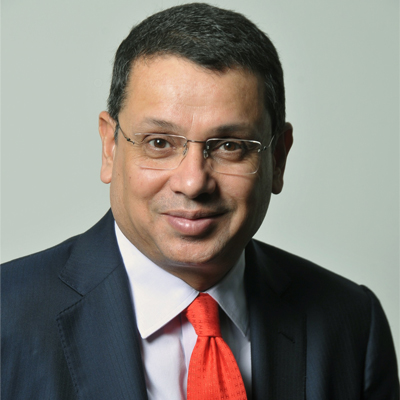
Tag: Uday Shankar

  • Fox Star Studios inks nine film production & distribution deal with Karan Johar

    Fox Star Studios inks nine film production & distribution deal with Karan Johar

    MUMBAI: In one of the biggest deals in recent times, Fox Star Studios has inked a nine-film deal with Karan Johar’s Dharma Productions.


    As per the deal, which will run over the next three years, the two companies will jointly produce and distribute films, which will be helmed by directors like Johar, Ayan Mukerji and Karan Malhotra amongst others. The films are also likely to stars names like Ranbir Kapoor, Aishwarya Rai Bachchan, Shahid Kapoor and Alia Bhatt to name a few.


    Under the terms of this deal, while some films will be co-produced by the two companies, others will be for distribution only.


    Star India CEO Uday Shankar said, “The Indian film industry is an important market for us and this strategic partnership offers us an excellent opportunity to fundamentally change the content quality paradigm. This venture is the natural step in our progression to create entertaining and eclectic content for a global audience and to grow the business through game-changing innovation in content, marketing and distribution.”


    Johar added, “Movies for me have always been a blend of artistic and commercial resources. Dharma Productions has always endeavored to attain the highest form of celluloid excellence and entertain simultaneously. I am glad we have found a partner in Star India and Fox Star Studios for a visionary nine films alliance. This partnership will not only be the coming together of two forces who understand the need of the cinematic hour but also work as a unit to increase the footfall strength at the movies and empower other verticals. It’s a new age of cinema and this association is a glorious reflection of the times.”


    Fox Star Studios CEO Vijay Singh said, “This strategic alliance is path-breaking as it envisages the stakeholders pooling in their collective strengths and thereby chalking a new path for Bollywood, specifically in the way in which films are marketed and distributed. Consolidation through strategic alliances is the way forward in the film industry.”


    Dharma Productions CEO Apoorva Mehta added, “It is by far the biggest collaboration that the Indian film Industry has ever seen. With this strategic deal, Dharma has entered into a new phase of movie business, which will provide a disruptive growth model for all the parties involved. This landmark decision will bring on board the most visionary and astute leaders together who will drive the overall strategy for making, promoting and distributing movies. I am happy to say that Dharma is excited and geared up for these new opportunities in the coming years and it definitely looks like the beginning of a game-changing era for the industry.”

  • Pro Kabaddi League season 2 to kick-start on 18 July

    Pro Kabaddi League season 2 to kick-start on 18 July

    MUMBAI: Pro Kabaddi League, which was a grand success in 2014, will be back with its second season on 18 July, 2015 with the opening leg to be held at National Sports Club of India (NSCI) in Mumbai.


    The season opener will pit the two finalists of last year, as host team U Mumba take on reigning Champions Jaipur Pink Panthers.


    The league promoted by Mashal Sports and Star India with the backing of the Amateur Kabaddi Federation of India and International Kabaddi Federation, will feature 60 games played across 37 days in eight cities.


    Following the same ‘caravan style’ format like in the first season, the league will be played at each franchise city for a duration of four days, where the home team will play four of the visiting franchises. All seven visiting franchises will play a set of away games in each city.


    After the opening leg in Mumbai, the league will move on to the Netaji Indoor Stadium, Kolkata, followed by the home of current champions, Jaipur Pink Panthers at Sawai Mangsingh Stadium in Jaipur. The Indoor Stadium at the Patliputra Sports Complex, Patna will be the venue for the culmination to the first half of PKL season 2.


    Hyderabad, the new home of the Telugu Titans, will play host to the second half of the league with the caravan arriving at the Gachibowli Indoor Stadium on 4 August. Moving on from Hyderabad, the league will be played in at Thyagaraj Indoor Stadium in the capital city and move onto the Kanteerava Indoor Stadium in Bangalore before culminating at the Balewadi Sports Complex in Pune.


    For the grand finale, the play offs will return to NSCI Mumbai, with the semi-finals scheduled for 21 August and the finals and play-offs scheduled for 23 August.


    For the entire schedule click here

  • ‘Bombay Velvet’ exclusive preview unveiled on Hotstar

    ‘Bombay Velvet’ exclusive preview unveiled on Hotstar

    MUMBAI: Stepping up on its film marketing initiatives by setting new precedents, Fox Star India has rolled out its third digital-first initiative on Hotstar in less than a month for its upcoming movie Bombay Velvet.


    The studio unveiled an exclusive preview of the film to Hotstar’s 15-million-strong audience base on 10 May.


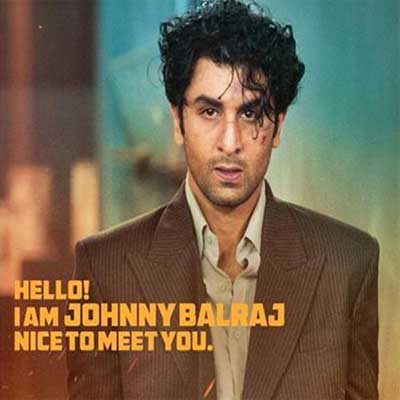
    The Hotstar movie preview of Bombay Velvet comprises four minutes of handpicked scenes from the soon-to-be-released film. The preview was packaged with a specially shot sequence, which had Karan Johar introducing the movie’s stars Ranbir Kapoor and Anushka Sharma with their on-screen names of Johnny Balraj and Rosie Noronha, and inviting the audience to watch the exclusive footage that followed. It ended with the trio reminding the audience of the film’s release date, and inviting them to watch it in theatres on 15 May.


    Fox Star Studios India CMO Shikha Kapur said, “We are delighted to be the first studio in India to introduce a series of Digital-first initiatives for film marketing on mobile, and that too with a huge multi-starrer like Bombay Velvet. While initially it was all about creating buzz, with the film now getting closer to its release date, we thought the audience would be excited to preview some of Bombay Velvet’s high-quality content, and hence the Movie Preview. This is a part of the build-up strategy which has worked very well so far.  Hotstar is poised as the go to destination for digital content platform on mobile today, and we believe it will help us effectively fill the market gaps for movie promotions on digital, and through the innovations, set a precedent for film marketing not only in our country, but also in other world markets.”


    This promotional activity came on the heels of a one-hour talk show featuring Ranbir Kapoor, Anushka Sharma, Karan Johar and Anurag Kashyap, which was shot for and premiered exclusively on Hotstar. This was preceded by yet another world-first initiative, the video premiere on Hotstar of the popular song, Mohabbat Buri Bimari, from Bombay Velvet.

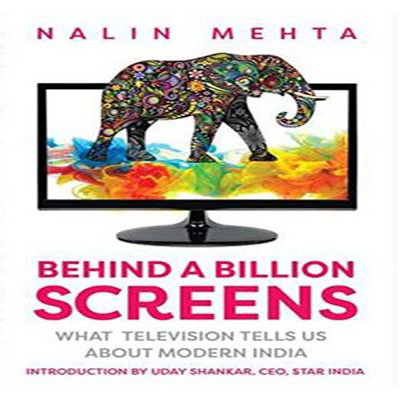
  • Nalin Mehta’s ‘Behind a Billion Screens’ examines Indian TV industry

    Nalin Mehta’s ‘Behind a Billion Screens’ examines Indian TV industry

    MUMBAI: India is a country where television forms the most important part of one’s life. Everybody watches television, everybody has an opinion on it and everybody thinks they know exactly what is wrong with it. 


    It’s a topic that often raises a lot of heat and smoke but too little light. Throwing some light on this trend of television is author and journalist Nalin Mehta’s new book ‘Behind a Billion Screens.’


    The book closely examines how television works in India, how TV channels make their money or not, how this is changing and what this means for the cacophony that appears on our screens.


    The book, which was initially going to be a joint effort by Star India CEO Uday Shankar and Mehta, was later written independently by the latter.
    The book answers key questions like:


    • Who owns Indian television? Just how much is it controlled by politicians, corporations and real estate companies? What are the patterns of control nationally and across regional languages? How does India compare with other countries and why does this matter?


    • What explains television’s terrible crisis of content? Is there really no market for intelligence in India and is dumped down content the only thing that audiences want? Why do channels keep behaving like Bollywood producers of the 1980s who kept churning out the same old tired formula films till a new multiplex-savvy breed of film-makers started challenging old orthodoxies? Is there a talent problem or management problem or a crisis of business models?


    • What is wrong with current government controlling system on television and why this ‘terrible-backend’ needs to change? Indian television continues to be controlled by outdated regulations, even as it is mired in public battles for greater regulation, as called for by Justice Katju. Studying the role of the Ministry of Information and Broadcasting, Telecom Regulatory Authority of India (TRAI), state governments and the judiciary, this book answers just how much control the state still has on broadcasting, why its jugaad nature of regulation is now unsustainable and why a major change is needed.


    • Does self-regulation work? How did self-regulatory bodies governing television come into being and what has been their factual record? Has self-regulation made any difference to programming or is it simply a chimera only designed to keep government out?How does India compare to other countries?
    • Does public broadcasting still matter, what exactly is wrong with Prasar Bharti and how can it be fixed?


    • Is television becoming irrelevant in the digital age? How is television shape-shifting in response to mobiles and the net, how are companies changing their businesses and programming, where is India going and how different is India from the rest of the world.


    The book highlights how India’s $15 billion media and entertainment industry – including television, print, radio, digital media – is growing at roughly 14 per cent a year. This, by some accounts, is impressive, benefitting immensely from the tailwinds of GDP growth of the last decade. But the stark fact is that even at $15 billion, India’s entire media taken together is just about one fourth the size of Google ($59 billion in revenues) – a fourteen-year-old company that is younger than most major Indian TV channels.


    “Let us not even go that far. If the entire Indian media was a company, it would rank seventh or eighth in India! Media is a globally growing industry but our participation in that ecosystem is zero and India is hardly factored into the global thought process of technology or content,” the book points out.


    Mehta, in the book, highlights how India is drunk on its own volumes: the largest number of newspapers in circulation, the second largest number of television viewers and millions of digital consumers. Digital, in particular, is an indictment of our creative and strategic limitations.


    “We have over 700 million mobile screens and yet we do not have a relatively unique content proposition for the medium. So, our ability to convert that into corresponding value is disappointing. Both in business and creative terms, the Indian media and entertainment sector still remains much smaller than it should be in a country of 1.2 billion people,” the book says.


    Even at these volumes, the reach as a percentage of population is not spectacular. India has 100 million households with no television, their time spent on it is abysmally low when compared to global standards; some 350 million people read the newspaper – but that tells us how many do not read!


    Mehta points out that in television, India needs a lot more content and this will come not only by scaling up production but through a fundamental transformation of the ecosystem. Resources, talent and every related facet have to evolve dramatically. For example, the production infrastructure in Mumbai, studio space, access to talent is creaking and unable to keep pace with the demand.


    Despite all the gloom and doom, India’s media and entertainment sector has consistently delivered impressive growth rates for the past few years. But, this is not a sector whose value is measured just by the size of its financial contribution. Media and entertainment remains central to defining the direction of India’s social and economic path; its work remains key to the imagination and inspiration of a billion Indians every day; and its health will be central to the ethos and values of the society we collectively shape.


    Mehta, through the book, says that with Narendra Modi’s new government in place, since May 2014, there is a renewed focus on reassessing things and trying to improve them. 

    “We need to make the case, for example, digitisation is not just about putting boxes and laying cables. It entails a fundamental transformation of the way we look at media and there is an opportunity for Indian media and content to move from just being a provider of entertainment content to being a creative industry, like the IT sector, for example, that plays a much larger role in the overall economic vision for the country,” Mehta opines in the book.


    He further writes that the media has been more than just a silent victim. Too often, the news media has focused on what is sensational rather than what is important. Too often, the point of news seems to be to reduce the extraordinary diversity of the country to the most banal, a contest between extremes that canonly be resolved through a shouting match on live television. With singular dominant narratives, the trend seems to be to create heroes on a particular day only to label them as thugs and crooks the next.


    Until recently, for a long time the media–government equation seemed like a broken relationship, and one that has had dire consequences for both the industry as well as the government. The failure to establish credibility and importance meant the industry perennially stayed on the back foot, defending itself against every new wave of regulation aimed only at curtailing its wings further. In return, governments were not able to leverage either the impact that mass media can have in India or harness the power of media as an economic engine that can create jobs and wealth.


    The book, in order to put things in perspective, says, “As a $15 billion industry, we employ over six million people. This can be so much more significant and meaningful. According to official estimates, about fifteen million people are entering the job market every year while the country is generating only about three million new jobs a year. This means that we are adding, as filmmaker Shekhar Kapur eloquently put it, a city of unemployed people as big as Delhi every year. And yet, the lens often used to look at this industry is largely one of glamour and propaganda and the biggest debate is on how to control and contain it.”


    There are 161 million cable and satellite homes but the measured universe so far is much smaller. “I do not know how many subscribers I have with a particular MSO and the MSO doesn’t know how many households his LCO delivers the signals to. The same is true in advertising too. The country’s premier media agencies can’t even seem to agree on a fact as basic as the size of the advertising market. One leading agency recently estimated the total market size to be Rs 35,000 crore, while the other, equally illustrious, estimated it to be Rs 29,000 crore. A variance of no less than 20 per cent! The ambiguity in data for other sectors of the media and entertainment industry is no less. Numbers are supposed to be the foundations of rational business decisions but how can we make decisions when professionals in the business of numbers can’t get their numbers straight?”


    Reacting on the book, Shankar said, “Nalin is probably the best media academic in India…this book is a seminal contribution to the evolving debate about the role of the Indian media.”


    Author and India Today Group consulting editor Rajdeep Sardesai added, “Excellent… an incisive and much needed study of how television is changing in India.”
    Times Now editor in chief Arnab Goswami said, “Fantastic… Nalin has beautifully pieced together the real, untold story behind the sound bytes.


  • “In Prannoy’s legacy lives a hope:” Uday Shankar

    “In Prannoy’s legacy lives a hope:” Uday Shankar

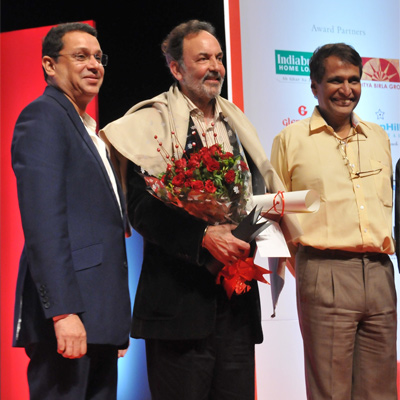
    MUMBAI: NDTV executive co-chairman Dr Prannoy Roy was honoured with the Lifetime Achievement Award at the recently held Red Ink Awards 2015.


    Star India CEO Uday Shankar presented the award to Roy and thanked him for giving the country and the media community “not just a legacy, but a whole category of intellect, industry, business and communication’ through ‘professional television journalism.”


    Shankar said, “Let me tell you a story. This is from when people like us had just gone to college and television had just come in. It was a device for occasional viewing. And suddenly one night, when I was looking for something interesting to do — something a little more interesting than watch Krishi Darshan on TV – there popped a show, which was talking about what was happening in the US, UK and China, and there was a young man with a beard who was presenting the show. That show was called The World This Week, and that was my first interaction with what TV was meant to be.”


    Talking more about Roy and the show, Shankar added, “Here we were, fed on a diet of what came out of Mandi House, and suddenly, we saw this show, which was about information, production, technology, graphics, and credibility of presentation. That was the day I decided that television was a viable and exciting career option. And when I say this here tonight, I don’t think I’m the only one who feels so.” 


    Shankar, during his opening remarks, said that a large number of people who came to television were drawn by the personality, charisma and opportunity or potential to contribute because of what they saw through the eyes of Prannoy Roy. 


    “There are a very few people who can retire — at some stage I hope he will — but there are very few people who can retire with the satisfaction that they created not just a legacy, but a whole category of intellect, an industry, business and communication,” he added.


    Describing the work done by Roy, Shankar said, “This country had only Doordarshan and nothing else… this country had no reference to what modern, professional television communication could be… and in came Prannoy with his vision, content, production and everything, and set these standards and thereby saved us almost two-to-two-and-a-half decades of the growth curve, the learning curve that all of us would have necessarily had to go through in order to get to a level of professional television journalism and communication.” 


    Roy became the reference point for Shankar, when he came to try his hand at TV. “We had The World This Week, NDTV, Prannoy Roy and his brand of journalism. And the sheen of that brand of journalism has never been dull. His legacy lives on, and in that legacy lives on a hope,” he concluded.

  • Star launches campaign with celebs to drive donations for Nepal & N. India

    Star launches campaign with celebs to drive donations for Nepal & N. India

    MUMBAI: Star India has launched a nationwide public service campaign ‘Ek Padosi Hi Padosi Ke Kaam Aata Hai’ with the NGO CARE India to mobilise relief for the natural disaster that struck Nepal and parts of northern India claiming more than 5,000 lives.


    A massive earthquake of 7.8 magnitude struck Nepal on 25 April, 2015, the worst to hit the Himalayan Kingdom in 80 years. In India, states of Bihar, West Bengal and Uttar Pradesh have also suffered the wrath of the earthquake.


    The Star India campaign will involve Bollywood celebrities like Ranbir Kapoor, Karan Johar, Anushka Sharma, Preity Zinta and a host of Star network’s icons, who will appeal to Indians for donations, which will be channeled directly to CARE India. Viewers will have an option to donate online, or through cheques or demand drafts. The campaign will work along the lines of Operation Maitri, initiated by the Indian government.


    “A tragedy has struck our neighbouring country resulting in a devastating loss of life, infrastructure and resources. We believe it is our responsibility to leverage the power of television as a force for good to help mobilise relief and provide immediate life-saving assistance to those affected. We are happy to associate with CARE India, an NGO highly respected for its humanitarian and development work in India and extremely humbled to see that our initiative has been embraced by some of the leading lights of the entertainment industry to appeal for relief,” said Star India CEO Uday Shankar.


    CARE India is assessing the situation on the ground in all the affected areas of Nepal and moving relief material where it is needed most. CARE has begun distribution in some of the areas and hopes to reach out to more than 50,000 people in the coming days.


    “We would appeal to all Indians for funds to ramp up the emergency response and provide immediate life-saving assistance to those affected. We are thankful to Star India for helping us raise funds for Nepal where millions are awaiting humanitarian relief. The country is running out of food, water and shelter and the onus is now on us to help them,” added CARE India board chair Dr. Nachiket Mor.


  • “Creating sporting events more important than acquiring expensive rights”: Sanjay Gupta

    “Creating sporting events more important than acquiring expensive rights”: Sanjay Gupta

    MUMBAI: Star India is in major over drive mode. The network has picked up a 74 per cent stake in Mashal Sports, which is the owner of Pro Kabaddi League.


    While delivering a keynote at the 2015 edition of Asia Pacific Video Operators Summit (APOS) Star India chief operating officer (COO) Sanjay Gupta spoke about the company’s aim to spawn a multi-sport culture in the country by promoting local content with events like Indian Super League (ISL) and Pro-Kabaddi League.


    “People are queuing up to buy an English Premier League (EPL), a LaLiga or a Bundesliga, but the question here is how much engagement do these games actually offer as compared to relevant local content. We tried this with ISL and Kabaddi and the initial response has been very encouraging,” Gupta informed.


    “Sports is a long haul business and it takes sustained investment to build something ground up. We need to have a long term commitment to build a sport… a 10 to 20 years approach to build it ground up. Take the example of EPL, which has been around for decades and has built an extremely strong consumer franchise, which advertisers are eager to associate with. The three year view of buying sporting rights has to change, which disallows most of the partners to make money and disincentives anyone trying to build a sport,” he further added.


    Talking about lack of innovation in stifling sports business economics, Gupta said, “When there’s a big sporting event, people congregate to watch in huge numbers. The only question is if there are enough of these happening and how much innovation has been happening.”


    Speaking about mushrooming ventures like ISL and Pro Kabaddi League, Gupta added, “Better engagement in sports will drive greater consumption. People don’t look happy when they win a sports bid. Practices in the sports business have become quite toxic. Instead of a content creation business this has been run as a rent a cab business. If I am league owner, chances are I’ll squeeze more money from you than you can ever hope to earn. One of the challenges that we are seeing is that almost all of the investment in sports is going into rights cost. We are trying to change that by investing in basic sports infrastructure apart from rights, whether it was grooming the players for an on screen experience in Kabaddi or partnering to get the stadiums ready for ISL.”


    Speaking about the stake acquisition in Mashal Sports, Star India CEO Uday Shankar said, “Star has acquired a majority stake in Mashal Sports with a vision to create an even more favourable ecosystem for the great Indian sport of Kabaddi and build on its successful launch. The investment, completely in sync with Star’s aim to spawn a multi-sport culture in the country, will further help in nurturing India’s sporting talent. We are totally committed to abiding with the vision of Mashal management and all stakeholders of Pro-Kabaddi and will further develop the league in the upcoming season 2.”

  • James Murdoch bets big on Star India; expects $1 billion EBIDTA  by 2020

    James Murdoch bets big on Star India; expects $1 billion EBIDTA by 2020

    MUMBAI: The country’s leading broadcaster – Star India is betting big on the future. Star India, which has made a mark in the general entertainment as well as the sports broadcasting space, is looking at turning the company into a billion dollar entity by the turn of the decade, said 21st Century Fox co-chief operating officer James Rupert Murdoch.


     “We love the India business. It has now evolved enormously from Hindi entertainment to regional language broadcasting and now we are a national platform. The sports business for us is a new pillar and we are looking at the business in a long-term time frame. And if we keep innovating and investing in putting more creative and innovative content on screen, Star India will become a billion dollar EBIDTA by the turn of the decade,” said Murdoch at the just concluded Asia Pacific Pay-TV Operators Summit 2015 held in Bali.


    Addressing the gathering at APOS, Star India CEO Uday Shankar said, “Media content has a huge role in shaping the sensibilities of the society and this role should not be underestimated.”


    Stressing on the role of sports, Shankar added, “I am prejudiced towards aspirational content and cynical about cynical content. This is something we have always kept in mind while creating all of our content and it is the same philosophy that we are bringing to sports as well. Sports has a huge role to play in empowerment, especially in a country like India, where we need to make the society believe that even an uneducated person can aspire to something greater if he is talented in a sport. This is what has worked with Kabaddi in a big way.”


    Star has applied the same entertainment business philosophy into sports. “We are creating content with deep local affinity using the audience aggregation power that cricket gave you. Sports broadcasting has been plagued by laziness and lack of innovation, treated merely as a distribution agent of acquired rights, which is what we have tried to change with multiple local leagues. If it is your team that’s playing, even if it is not the best team, you would be deeply passionate about it. Creating a hierarchy of leagues across the country can be huge empowering phenomenon,” opined Shankar.


    Speaking about content creation and regionalization, he said, “India is a giant country with varied cultures and tastes. We used Asianet as a beach head for the south and elevated the quality of content dramatically with sharper storytelling, involving the best of the creative fraternity and breaking the caste divide between film and TV. For logistic reasons outsourcing production might make sense, but unless you internalize the core creative skill, you will not be able to sustain success, which is why we have build a robust internal creative team to ensure this.”


    Star India’s recently launched video on demand (VOD) platform Hotstar has become a talking point of sorts. “Our objective behind Hotstar was quite simple actually – a lot of audiences were consuming our content on other screens, but we were unhappy with the inability to control their viewing experience. We realised we own all of this IP and so came Hotstar. I do not think that this is a ‘free model.’ We need to keep the consumer at the center while thinking about this and in a market like India, where data costs are still pretty high, the consumer is still paying a lot for the data – so it’s not particularly consumer friendly to have them pay twice, especially at such a nascent stage.”


    Shankar is also buoyed by the over-the-top (OTT) services space as it allows for democratisation of creativity. “However this is not the same as saying that anyone can create content,” he said.


    He also stressed on the use of big data and analytics by the network. “At Star, we use a lot of data and we value it deeply. However, let’s not become data monkeys. Data helps understands patterns but to understand these patterns and take a leap to what should be created next, will still require creativity. No matter how much data we have, I don’t believe we will be able to automate the definition of the next blockbuster,” concluded Shankar.

  • Star India partners Accenture for Hotstar

    Star India partners Accenture for Hotstar

    MUMBAI: Intending to spark a billion imaginations, Star India roped in Accenture to help develop, launch and deliver its over-the-air programming through Hotstar. 


    The video on demand (VOD) platform, built on the Accenture Video Solution (AVS) software platform, is funded primarily through advertising, using the platform’s new digital advertising functions. Taking advantage of a fully cloud-based infrastructure, Hotstar is serving the entire country with a catalogue of more than 45,000 movies and television series.


    Accenture helped Star India develop and launch the online video service to establish an online entertainment destination by building on a “mobile first” strategy. Leveraging AVS, Star can deliver broadcast-quality content to consumers on a wide variety of devices over Wi-Fi, 4G, 3G and 2G networks, including those with limited bandwidth resources such as 2G feature phones.


    “With Hotstar, our ambition is nothing less than the establishment of a whole new model for on demand video consumption in the world,” said Star India COO Sanjay Gupta. 


    “We will drive dramatic innovation on this platform with benefits for both users and advertisers. Accenture has been a valuable partner in this effort. They are walking side by side with us in creating this compelling platform, bringing the best of their product and technology expertise to the table. Together, we will establish compelling new benchmarks in the Over the Top space,” he added.


    In addition to service delivery, Accenture is managing the Hotstar operations round the clock utilising the client’s on-site team in Hyderabad and Accenture’s Global Video Operations Center in the Philippines. The service supports more than 7,000 different digital devices with its mobile-friendly platform, which delivers video streaming and downloads in any of India’s urban and suburban areas. The powerful AVS analytics engine will also provide Star with the capability to predict and help drive user behaviors with personalized content recommendations.


    In February, Hotstaralong with starsports.com, its digital platform counterpart, served more than 25 million video views during an Indian-Pakistan cricket match to make it the most watched sports event online of all time.


    “By creating a digital video service available on multiple screens, Star has secured its status as India’s most advanced next-generation content provider,” said Accenture communications, media & technology managing director Ashish Khanna.


    “It is one of the first services globally to offer entertainment, movies and sports on a single platform for free while enabling new consumption models. This provides consumers access to a rich catalogue of content delivered online with interactive advertising formats that provide multiple opportunities for content monetization by Star’s advertisers and we’re excited to be Star’s delivery partner,” he added.

  • Five Reasons Why Hotstar is Hot

    Five Reasons Why Hotstar is Hot

    With 10 million users in just 40 days, it set a benchmark in the digital space. In a record time span, Hotstar the new app from the Star India network, catapulted the audience’s attention and is showing continued signs of growth.

    While VOD platforms are being selective in drawing up their content map, Hotstar has opened its large library for users, that too in regional languages. With smartphones increasingly altering the consumption landscape in the country, Indiantelevision.com gives you five reasons why this is a must have app for your phones.

    A rich video experience

    Gone are the days when enthusiasm levels of experiencing a video would be marred by buffering issues. Through almost zero buffering, the app claims that it can change the pixel value of the content depending on the bandwidth so that users witness uninterrupted services. In layman’s terms, when the bandwidth decreases, the video will continue playing but there will be a decline in the HD pixilation value. Video is downward optimized to playback continuously in as little as 64 kbps.  

    Want IPL, download Hotstar!

    With the eighth season of India Kya Tyohar returning, the Indian Premier League (IPL) is one of the biggest event on the sports calendar this year. Therefore, it is imperative that you download the app so that you don’t miss out on your favourite Kolkata Knight Riders or Chennai Super Kings scoring some brilliant wins on the palm of your hands. 

    Novi Digital Entertainment, a unit of Star India, which owns the digital rights of the Indian Premier League, will stream this glitzy event on the VOD platform in its first such endeavour. Plus, in this cricket event, India has no fears of losing in the semi finals. Everyone is a winner here including Stuart Binny!

    India’s content hub 

    Where will you find 20,000 hours of content, across languages including 12 plus full length TV shows, 500 plus movies and live screening of popular sports like cricket, football, tennis and kabaddi on a single platform? The answer is – Hotstar! 

    In a first for India, Indya Interactive Services (which runs Hotstar.com) earlier premiered the Star Guild Awards 2015 on the video on demand service on 17 January. The award function was aired on Star Plus a day later on 18 January.  It recently also premiered Bollywood movies like Baby and Roy first on the platform, much before the world TV premieres. Star India also recently acquired the weekly film and entertainment broadsheet Screen from the Express Group. Content from here will now move to digital as the print edition gets closed. Hotstar is definitely turning hotter! 

    Marketers, catch up with your digital audiences

    Marketers and brands dread when audiences click on the tiny yet powerful option Skip This Ad Now. Weeks of ideation and production of a costly advertisement that is invested on digital mediums, goes down the drain. But fret not, Hotstar does not allow this potent option as audiences have to witness the ads. Besides, consumers wouldn’t mind the same as fresh as well as nostalgic content like Sarabhai versus Sarabhai too is up for grabs. With the India-Pakistan match during the World Cup receiving 25 million views on digital, there is a large chunk of young audiences that can’t be missed by marketers and brands alike. 

    Personalization and availability across devices

    The app allows users to create their own playlists with content they curate for at leisure viewing. Individual episodes, movies, full collections of even movies can be curated. It has also managed to do the impossible as it unites a diverse range of mobile phone users. It doesn’t matter if you own a Samsung or an iPhone, it is compatible for Android, iOS and Nokia ASHA users too.