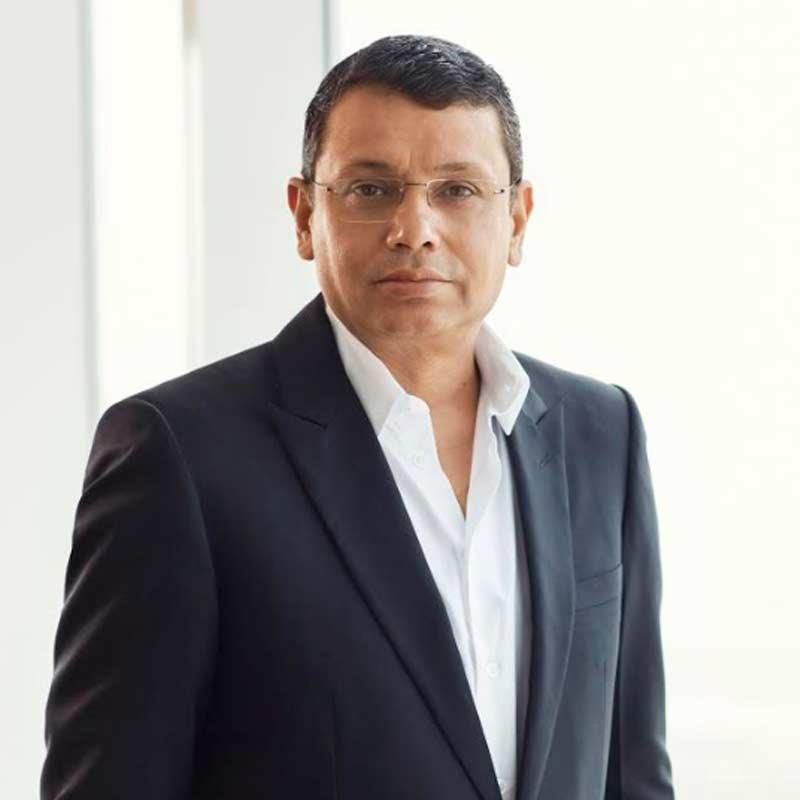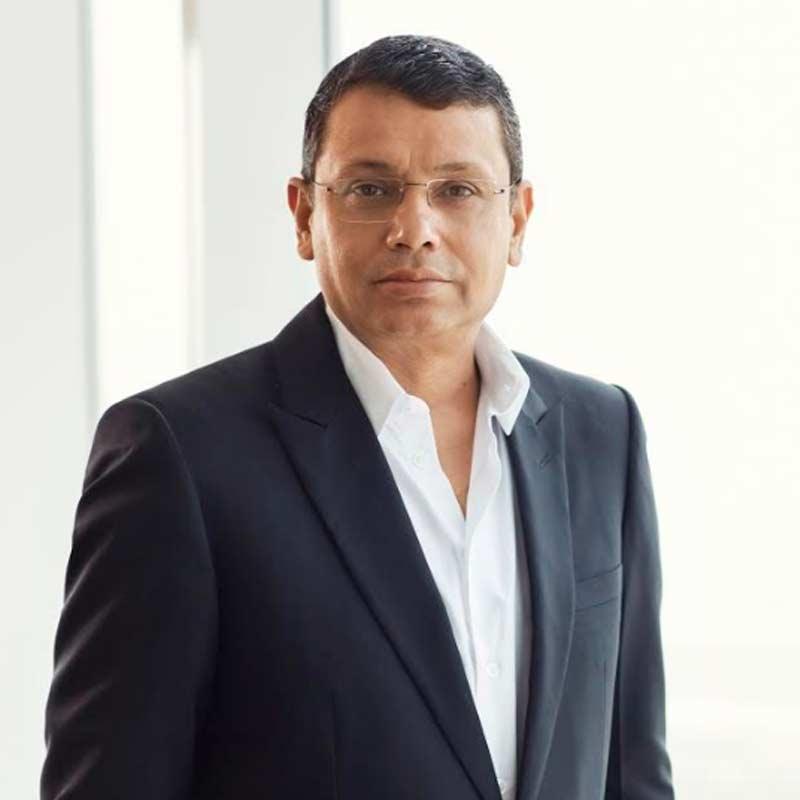
Tag: Uday Shankar

  • Kevin Vaz urges lighter regulation as India’s media story hits new high

    Kevin Vaz urges lighter regulation as India’s media story hits new high

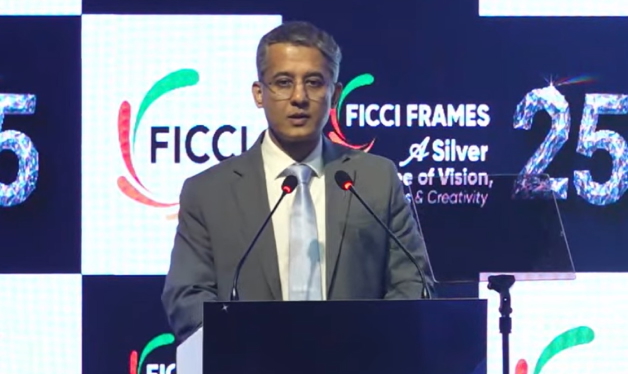
    MUMBAI: When the lights came up at Ficci Frames’ silver jubilee edition, JioStar Entertainment CEO and president of the Indian Digital Media Industry Foundation Kevin Vaz, took the stage with a rallying cry: “Rise Together.” The theme Reimagine, Innovate, Strengthen, Empower set the tone for a morning that was equal parts reflection and call to action.

    Marking 25 years of one of India’s most influential media and entertainment (M&E) gatherings, Vaz reminded the audience how far the industry has travelled since 2001, when Ficci Frames coincided with the government formally granting industry status to M&E. “It opened the doors to institutional finance, enabling capital flows, investments, and risk-taking in content and technology,” he noted, a turning point that defined India’s creative economy.

    Vaz saluted industry stalwarts like Yash Chopra, Karan Johar, and Uday Shankar for steering FRAMES through the years, while welcoming dignitaries including Maharashtra’s Cultural Affairs minister Ashish Shelar, MIB Secretary Sanjay Jaju, and actor Ayushmann Khurrana. “A quarter century of dialogue, discovery, and doing,” he said, “and yet the best is still ahead.”

    From satellite TV to OTT, from animation and VFX to gaming, the sector has evolved at lightning speed. India’s “AND” market, Vaz said, stands out globally for how television and digital coexist each expanding the other. “Unlike Western markets, India’s consumers haven’t chosen between TV and digital. They’ve embraced both,” he quipped, adding that the combined strength of PayTV, FreeTV, and Connected TV continues to grow the overall M&E pie.

    Sports, too, has emerged as India’s cultural engine. “Cricket may rule, but football, kabaddi and esports are fast catching up,” Vaz observed, calling for ease-of-doing-business reforms to boost live broadcasting from India.

    On cinema, he celebrated how regional and independent voices have made global waves from RRR and The Elephant Whisperers at the Oscars to Indian films shining at Cannes and Berlin. “Our stories aren’t just travelling,” Vaz declared, “they’re leading.”

    He spotlighted the rise of the AVGC sector, now moving from outsourcing to creating original IP, with 500 plus million gamers and the National Centre of Excellence in Mumbai giving India global creative heft. With MeitY’s support, gaming startups are scaling worldwide proof that technology and storytelling are increasingly entwined.

    But amid the applause, Vaz urged urgency. “The pace of change is accelerating,” he warned, “and this calls for stronger collaboration between business and policy-makers.” His sharpest message was reserved for regulators: “The heavy-handed regulation of linear broadcasting has stifled innovation. We need forbearance, a light-touch regime that allows creativity and competition to flourish.”

    Broadcasting, contributing nearly 40 per cent of the Indian M&E industry, he emphasised, remains central to the prime minister’s vision of making India the world’s content hub. “We’re in a golden era,” he said, “but to truly lead, quality must match ambition and innovation must be inclusive.”

    As Frames 25 concluded its opening key notes Vaz’s address resonated as both celebration and manifesto, a reminder that India’s creative economy, employing millions and inspiring billions, is ready for its next act.

    “Together,” he said, “we will Rise reimagining the next 25 years of storytelling, policy, and purpose.”

  • India’s M&E story set to double: Uday Shankar urges industry to back storytellers, not just screens

    India’s M&E story set to double: Uday Shankar urges industry to back storytellers, not just screens

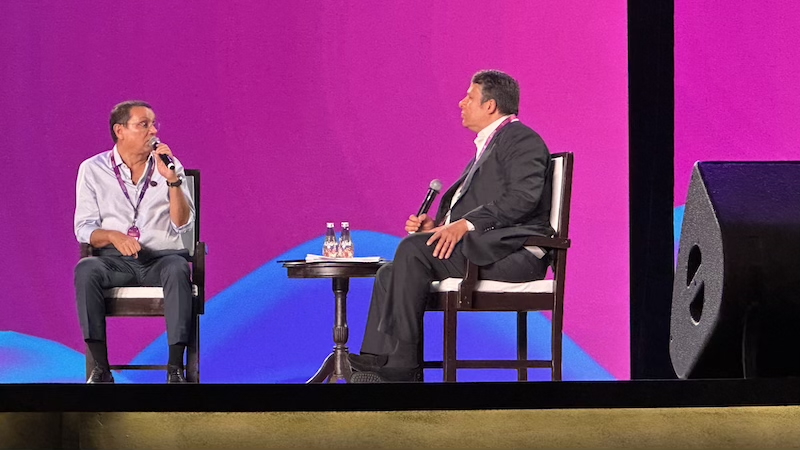
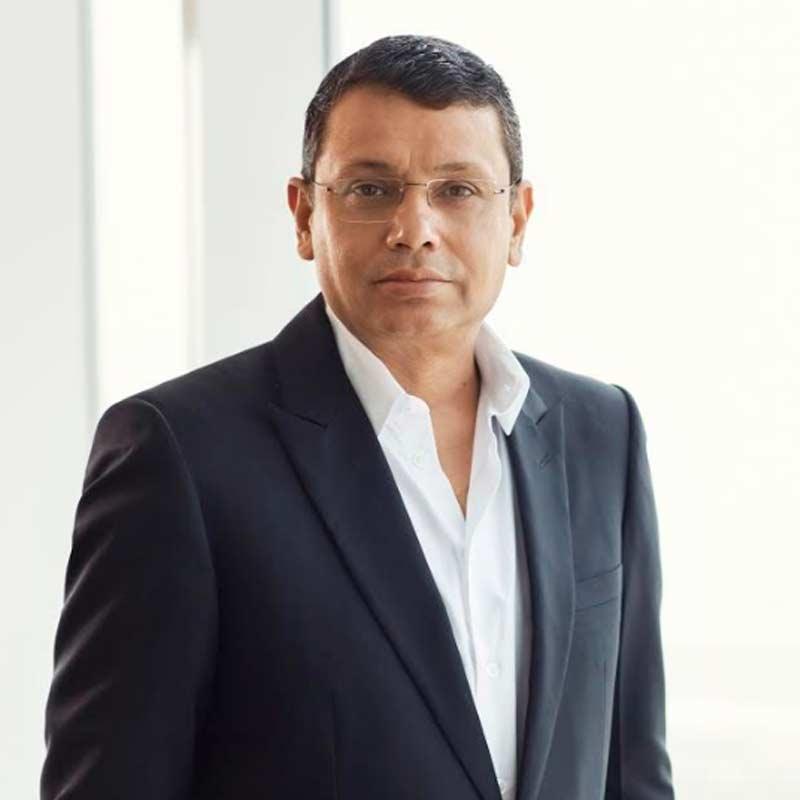
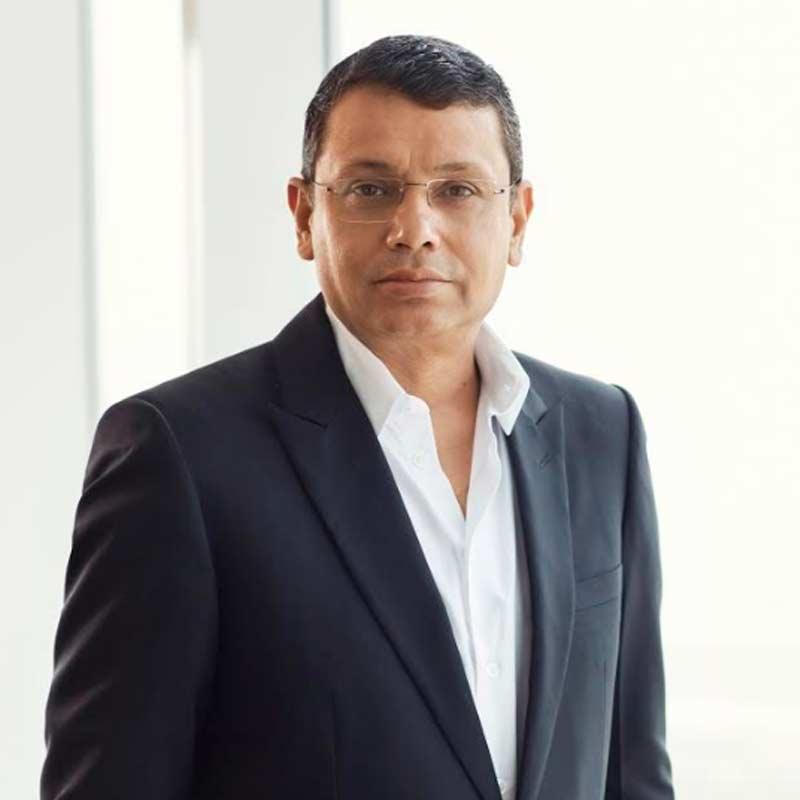
    MUMBAI:  India’s media and entertainment industry is sitting on the edge of a blockbuster sequel—if it can get the script right. That was the central message from Uday Shankar, vice chairman of JioStar and co-founder of Bodhi Tree Systems, at the Waves 2025 Summit. His session—“Media in India: Past 25 Years & Journey Ahead – to 2047”—with Media Partners Asia’s Vivek Couto was a masterclass in both history and prophecy.

    “From a country with barely a few state-run channels, we’ve become one of the world’s most voracious consumers of video,” Shankar said. “But what got us here won’t get us there.”

    Shankar began with a rewind to the early 1990s when, as he put it, “Satellite TV sneaked into India while the regulators were looking the other way.” This accidental revolution unleashed a tidal wave of demand, innovation, and ultimately, ubiquity. By the 2000s, television had wormed its way into the remotest villages.

    “India’s success wasn’t scripted by policymakers or global giants,” he pointed out. “It was local grit, local creativity, and Indian capital.”

    Today, he said, the transformation is even more dramatic. With over 700 million video consumers and platforms like JioStar commanding 500 million users—many of them paid subscribers—India has gone from media laggard to streaming juggernaut.

    While western media circles love predicting the death of linear TV, Shankar shut down that eulogy. “TV is not dying in India. In fact, we’ve added pay-TV subscribers,” he noted. “The reason? We backed the medium with the right kind of content. Content that understands India.”

    Streaming, too, is thriving—especially when priced with precision. “People said Indians wouldn’t pay for content. Wrong. They will, if it’s priced right and respects their time.”

    But not all is well on the content front. Despite world-class distribution, India’s storytelling muscle, Shankar warned, is underdeveloped. “We’re importing formats that worked elsewhere and force-fitting them into our own culture,” he said. “We need more content—and more local content.”

    He championed a full-fledged push into Tier II and III markets, and beyond the usual suspects of Hindi, Tamil and Telugu. “Bhojpuri, Haryanvi, Kumaoni—these audiences are starved for stories in their own language,” he said. “Let’s not give them leftovers.”

    While billions flow into content investment, Shankar identified a severe talent bottleneck. “You can’t serve 750 million viewers with 6,000 content creators. It’s absurd,” he said. “We need an army of new-age writers, directors, showrunners—young blood with their ears to the ground.”

    He pulled no punches on Hindi cinema saying it had “fallen out of touch” and was “creatively stuck in a loop.” The south Indian industries, by contrast, were lionised for their energy, risk-taking, and affordability. “Look at Tamil Nadu or Telangana or Karnataka —affordable tickets, packed theatres, and movies that connect. That’s the model,” he said.

    If there was any doubt about the depth of domestic commitment, Shankar squashed it with numbers. The merged JioStar entity, he revealed, spent Rs 25,000 crore on content in 2024, expected to rise to Rs 30,000 crore this year, Rs 32,000 -Rs 33,000 crore in 2026—roughly $10 billion over three years.

    “This isn’t speculative cash chasing vanity metrics,” he said. “It’s focused investment meant for Indian consumers, with returns from Indian markets.”

    Despite all the growth, Shankar acknowledged a glaring weakness: outdated monetisation models. “The industry is still stuck between advertising and subscriptions—meanwhile, new players are eating into revenues with creator content, commerce, and gamification.”

    His prescription? Rethink what it means to monetise a viewer. “Should a subscription just be access? Or can it be bundled with loyalty programmes, micropayments, creator communities? There’s a whole universe we haven’t touched.”

    Shankar also fired a warning shot at policymakers. “India’s regulatory framework still treats TV and digital like twins,” he said. “They’re not. They’re cousins at best—raised differently, with different needs.”

    He urged the creation of a sandbox-like regulatory structure—one that encourages innovation and gives breathing space for Indian platforms to grow, rather than mimicking Western regimes.

    In conclusion, Shankar set his sights high. “We’re at $30 billion today. The US is at $200 billion. China is pushing $75 billion. Why should we settle for less?”

    With 65 per cent of Indians under the age of 35, he argued, India has the youngest, hungriest audience on the planet. “If we invest in our people, our platforms, and—most importantly—our stories, we won’t just match the world. We’ll lead it.”

    From satellite smuggling to streaming scale, the Indian M&E journey has been wild. Now, says Shankar, it’s time to script Act II—with more voices, sharper ideas, and fewer borrowed templates.

  • JioHotstar hits 200 million paying subscribers as Uday Shankar eyes domestic growth

    JioHotstar hits 200 million paying subscribers as Uday Shankar eyes domestic growth

    MUMBAI: JioStar India’s JioHotstar  has reached a milestone of 200 million paying subscribers, making it “one of the biggest streaming services anywhere in the world,” according to vice-chairman Uday Shankar. The rapid subscriber growth since JioStar’s merger validates the company’s belief that “Indians are willing to pay” for content, albeit at “very aggressive” pricing.

    “Our challenge is not to compete with someone. Our challenge is to create a much bigger market,” Shankar said on an interview with BloombergTV’s  Haslinda Amin. “We want to get into every household. We want to be if there is a connected device, we want our content to surface there. We want to be the destination for every Indian who has access to connectivity and data to come in every day for all their requirements of premium content.  “

    The streaming service, backed by billionaire Mukesh Ambani, appears well-positioned to weather global trade tensions. As tariffs roil international markets, JioStar’s “heavily domestic focused” business provides shelter from the storm. “Our consumers are largely Indian. Our content and the driver content, most of it is Indian,” Shankar explained.

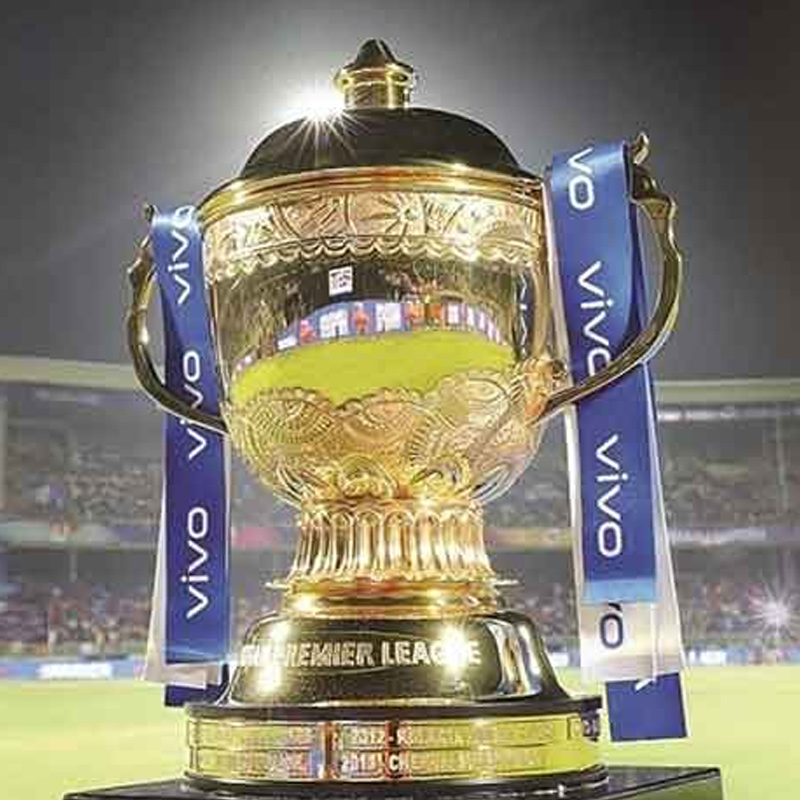
    The Indian Premier League (IPL) remains JioStar’s crown jewel, with viewership expected to cross 400-450 million by tournament’s end on  JioHotstar and Star Sports TV channels. However, Shankar views IPL as a “tactical asset” due to its seasonal nature, emphasising the need for year-round content in Indian languages supplemented by Hollywood partnerships.

    While acknowledging potential interest from international investors (read Chelsea club owner Todd Boehly) in IPL teams, Shankar remained coy about JioStar’s future bidding strategy: “We would be very committed to IPL… But then there is a lot of cricket going around, and it finally comes down to the price.”

    Looking ahead, JioStar aims to “consolidate” over the next 12 months by deepening user engagement for its JioHotstar service. “Now that we have got to a sizable number of subscribers, we definitely want to make sure that we get their attention more and more,” said Shankar, though he declined to provide specific subscriber targets beyond the current 200 million. ”Our focus is can we create JioHotstar as an alternative to television as a bouquet, and make sure that we have the attention of everyone every day?”

    With India facing lighter tariff impacts than other nations—26 per cent on some goods, temporarily suspended for 90 days—Shankar expressed optimism about bilateral arrangements between India and the US. Nevertheless, he cautioned that if “global turmoil” continues, “there’ll be impact on consumption, and all of us will be impacted.”

  • JioStar vice-chairman Uday Shankar  slams ICC as “East India Company of Cricket”

    JioStar vice-chairman Uday Shankar slams ICC as “East India Company of Cricket”

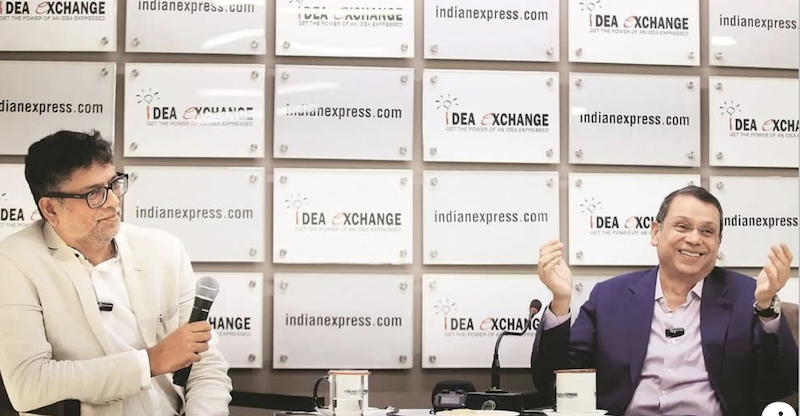
    MUMBAI: In a candid conversation during Indian Express’ Idea Exchange earlier  week that laid bare the tensions between broadcasters and cricket administrators, JioStar vice-chairman Uday Shankar has described the International Cricket Council  (ICC) as “the East India Company of Cricket,” accusing the sport’s global governing body of exploiting India’s cricket economy.

    Uday pulled no punches when comparing cricket’s global and domestic governance structures. “Contrary to the general perception, I find BCCI to be a far more alive body to engage with its stakeholders compared to the ICC,” said Shankar. “The ICC is just here to take the wealth of this country.”

    Shankar’s critique cuts to the heart of cricket’s financial ecosystem, where India generates the overwhelming majority of global revenue. “After taking this money, the ICC decides that India must play a country that no Indian is interested in watching India play because they want to develop cricket globally. So it’s their agenda and my money,” he stated.

    The comments come at a pivotal moment for sports broadcasting, with astronomical sums being paid for rights packages. The IPL rights alone cost approximately Rs 48,000 crore, raising questions about sustainability.

    Shankar acknowledged the strategic value of major sporting properties while being realistic about their financial burden. “You don’t necessarily make money on these big acquisitions,” he admitted. “The size of the economy and what the advertising market is like, those things come into play.”

    He emphasised that cricket has become “one of the most expensive sporting assets in the world” on a unit value basis, with the eight-week IPL tournament costing “more than a billion dollars” – comparable to year-round properties like the NFL or NBA.

    This financial pressure has consequences beyond cricket, with Shankar acknowledging that investment in other sports often suffers. Indian fans miss out on events like Formula 1 “because nobody has the money left to buy those rights.”

    Despite his passion for cricket, Shankar was clear that commercial imperatives would ultimately guide JioStar’s bidding strategy. “At the end of the day, we are running a business and if the financials don’t make sense, we’ll have to walk away,” he said.

    He pointed out a fundamental challenge: “All the money that you put in is primarily for India and you have to recover it from India. Despite all the talk, it’s just the Indian media companies who do that.”

    In his most pointed comments, Shankar suggested radical reform of cricket’s global governance. “The best service that someone like the new chairman of the ICC can do is to ensure that he is its last chairman,” he said.
    “A disproportionate share of talent comes from India. An overwhelming share of revenue comes from India. And all of it is going everywhere else,” Shankar argued, citing the push to include cricket in the Olympics as another example of initiatives that “don’t help Indian cricket” but represent “leakage for the money that could have stayed in the Indian cricket ecosystem.”

    As head of the newly merged Viacom and Star entity valued at $8.5 billion, Shankar recognises the influence his company wields. “Given our reach and platform size, what we do will be followed by everybody else,” he said. “As a leader, it is our responsibility to make sure that we take charge of the industry and get it to a good place.”

    This responsibility extends to content regulation, where Shankar advocates for self-discipline rather than government control. “I don’t like the word censorship, but not being responsible towards the people you serve is not an option,” he stated, adding that government regulation “stifles creativity” while warning that irresponsible content creators risk external authorities stepping in.

    For the former journalist who witnessed the birth of India’s 24-hour news cycle and helped launch Aaj Tak, the responsibility of reaching 750 million viewers weighs heavily. “I’ll entertain,” he said, “but I shall never do anything that I will be embarrassed by myself.”

    (Picture courtesy: Indian Express. Article content courtesy: Indian Express)

  • In partnership with AAAI, SGF has hosted the lecture series, featuring top speakers for years.

    In partnership with AAAI, SGF has hosted the lecture series, featuring top speakers for years.

    Mumbai: The Advertising Agencies Association of India (AAAI) and the Subhas Ghosal Foundation (SGF) have announced that award-winning independent digital journalist Faye D’Souza will deliver the AAAI Subhas Ghosal memorial lecture 2025 on 5 March at St. Regis, Mumbai.

    Established in memory of Subhas Ghosal, a towering figure in the advertising industry, the Subhas Ghosal Foundation promotes the professional values he upheld. In collaboration with AAAI, the Foundation has hosted the lecture series for several years, featuring distinguished speakers such as Rajan Anandan, Uday Shankar, Ronnie Screwvala, Aroon Purie, and Sudhir Sitapati.

    Speaking on behalf of SGF, Sam Balsara stated, “We live in an era where news and views shape our daily lives. Faye D’Souza, with her fearless journalism, will discuss the challenges and opportunities for independent journalists and the implications for democracy and public discourse. It promises to be an insightful session.”

    This year’s event also welcomes a new sponsor, Amazon MX Player.

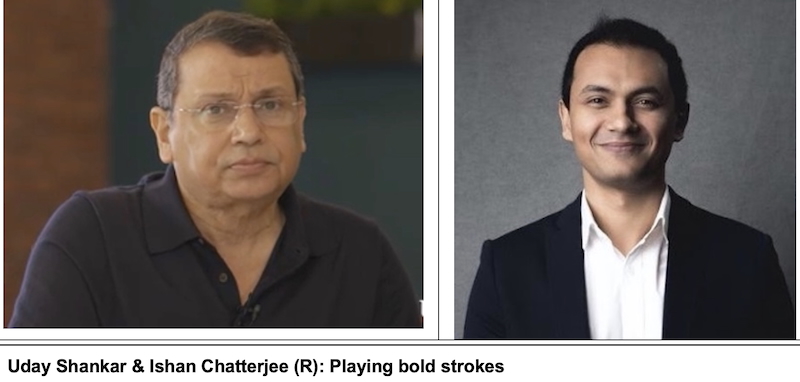
  • Uday Shankar & Ishan Chatterjee’s masterplan to disrupt the sports ecosystem

    Uday Shankar & Ishan Chatterjee’s masterplan to disrupt the sports ecosystem

    MUMBAI: By partnering with Nielsen, Uday Shankar and Ishan Chatterjee have revolutionised the way advertising revenue is allocated in media. With all relevant consumption metrics now accessible, brands and managers can accurately measure the return on investment for ads on the JioHotstar platform.     

    Previously, advertisers relied on distributor and retailer feedback to gauge the impact of TV or OTT ad campaigns or simply trusted platform-provided figures on watch times and engagement. This lack of transparency led many senior marketing executives to lament that half their advertising budget was wasted—without knowing which half.     

    Now, with JioHotstar exposing detailed consumer engagement data, transparency is paramount. Competitors such as Sony, Zee5, and MX Player will face pressure to disclose their own engagement metrics, which are likely to fall far short of JioHotstar’s. With 50 million subscribers, JioHotstar’s numbers will set a new benchmark, challenging the credibility of figures previously reported by other streaming services.     

    Will Nielsen’s dashboards validate or debunk existing industry claims? Will this new transparency drive up unit pricing for OTT ad spots or cause a market correction?

    sports watcher     

    Some believe smaller OTT platforms could benefit from JioHotstar’s initiative, as advertisers gain confidence in exploring alternative options.     

    “The battle for advertising video revenue is primarily between Alphabet, Meta, and other players, while retail commerce giants such as Amazon, Flipkart, and Swiggy are evolving into media powerhouses, attracting thousands of crores in ad spending. The first two dominate 70 per cent of India’s digital ad spend. Transparency measures like JioStar’s could shift investment from Alphabet and Meta to other video platforms as the ad market expands,” observes an industry expert.     

    To capitalise on this shift, Uday Shankar has launched sports channels in multiple languages in both standard and high definition. The true impact of JioStar’s transformation of the sports vertical will likely become evident later this year, as marketers, agencies, cable operators, aggregators, and DTH platforms assess the platform’s potential. Subscription and advertising revenue are expected to surge.

    Digital advertising has long been a black box, with advertisers investing heavily in Meta and Alphabet despite knowing there’s wastage—largely because of the strength of their data, even though it’s self-reported.

    In an effort to bring more transparency, Google has been encouraging third-party tech solution providers outside its ecosystem through programs like YTMP, where Channel Factory plays a role, particularly for YouTube advertisers.

    The recent Jio-Hotstar collaboration with Nielsen aims to shed light on consumption data, providing advertisers with third-party insights. However, since the study is commissioned by the media company itself, its credibility will be met with some skepticism—much like the trust advertisers place in Meta and Alphabet’s data. That said, it still offers a level of validation that could make investment decisions more confident.

    More importantly, this move could push other players to enhance transparency in their own data reporting, ultimately fostering a more accountable digital ecosystem

    Yesudas Pillai   
    Founder Y&A Transformation and Strategic Advisor, Channel Factory

    The BCCI has thrived on the IPL’s ever-increasing media rights value, pocketing Rs 48,000 crore in the 2022–27 cycle. However, the IPL has been a loss leader for JioStar, with revenue projections of Rs 4,000–4,500 crore for the 2025 season, meaning profitability remains elusive.     

    The recent merger aims to stabilise rights acquisition costs. Previously, Disney Star and Viacom18 engaged in aggressive bidding wars, inflating prices. With one less competitor, prices may better reflect market realities—unless Netflix, Eurosport, Prime Video, YouTube, Zee, or Sony enter the fray, not just for the IPL but for other sports properties, as India’s sporting interests expand beyond cricket.     

    (Sources suggest sports administrators are privately expressing concerns about the impending disruption, while smaller sports associations are eager for new opportunities.)     

    If rights prices fall to more realistic levels, the entire ecosystem will feel the effects. BCCI and ICC will have less revenue from central media and broadcast rights pools, reducing payouts to team owners. Consequently, player salaries will also decline as team owners rationalise spending. The days of cricketers commanding double-digit crore salaries, as Virat Kohli, Rohit Sharma, and Hardik Pandya have, may be numbered.     

    The sports sector is on the brink of a transformation. On the infrastructure side, on the broadcast side, on the talent side – it is all waiting to explode. Production quality, engagement, and interactivity will reach unprecedented levels. It only took a nudge from the likes of Uday Shankar, Akash Ambani, and Nita Ambani. As the saying goes, the match isn’t over until it’s won—or lost.

  • JioHotstar ticks all the boxes for a world class service

    JioHotstar ticks all the boxes for a world class service

    MUMBAI: It’s a winner! All we can do is doff our hats to Uday Shankar and his band of JioStar men. The vice-chairman of JioStar and his team,  early this morning, unveiled a new streaming service JioHotstar which simply blew you away.  

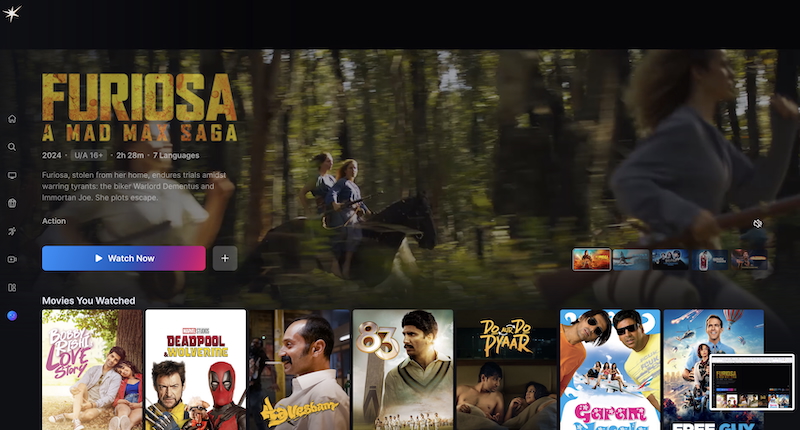
    The logo – reminding of you of a distant  rising star – the colours, the tiles, the ease of navigation, the interactivity, the sheer breadth, the depth, and width of content (a lot has been spoken about the Disney, WBD, et al library, the top sports in the country) –  it’s all there, all one can expect from a best in class service.

    Congratulatory messages from a  host of top  Hindi and regional cinema icons – led by Salman Khan –  on the launch of JioHotstar keep you watching, even the promo.

    Netflix, and team Sarandos, you’d  better wake up, and smell the coffee, you will have a battle of perception on your hands of an Indian company being able to create a global gold standard streamer.

    What should also worry the rest of the streamers is the spawning of Sparks – an area reserved for creator-led content. There’s shows from  Zakir Khan, Fukra insaan, there’s Munawar Faruqui, Urfi Javed, Harsh  Gujral, Ranveer Braar, and Rahul Dua. And mind you unlike in the past, the content is good with game shows, dating shows etc.

    Hey, before anyone thinks we are being paid to be euphoric about JioHotstar, here’s a confession: we are not.

    Our review of the new JioHotstar is based on genuine pride that a streamer of this quality can emerge from India. One that can rival global players, in terms of design, tech, ease of use, and of course that most important element content!

    In fact, if there’s one hassle with the new JioHotstar it is that there’s  a problem of plenty, there’s too much too much content. But India is a land of diversity and the attempt is to cater to that. Good search and recommendation engines can really make the surfeit of content not appear like a problem at all!
     

  • Aditya Narayan transitions from Disney Star India to JioStar as regional sales head

    Aditya Narayan transitions from Disney Star India to JioStar as regional sales head

    MUMBAI: He’s got a premium job at JioStar. Aditya Narayan has just transitioned from Disney Star India  to the Uday Shankar-headed behemoth continuing with his earlier designation as regional sales head.

    At Disney Star India,  Aditya  spearheaded sales strategies for over three and a half years. His tenure there was marked by remarkable success in developing key partnerships and driving sales across multiple domains. At JioStar he has been charged with  integrated selling and raising revenue for premium sports  from the south. 

    Aditya’s professional journey also includes significant contributions at ByteDance India, where he led monetisation efforts, and Rajasthan Patrika, where he helmed business operations for Patrika TV. Notably, he  played a pivotal role in launching the Magicbricks Now channel during his time at the Times Network, showcasing his ability to lead large-scale projects with finesse. Following Times Network, he did short stints with Network18 and BTVI. 

    Throughout his career, Aditya has built a reputation for strategic thinking, interpersonal communication, and his ability to adapt to dynamic market conditions. His hands-on approach and visionary mindset have consistently delivered exceptional results, making him a trusted leader in the sales domain.

    In the early part of his career, Aditya spent almost four years working  in sales for FM radio stations beginning with Radio Mirchi (a year), followed by  Radio City (a  year nine months)  and then with RadiOne (a year and five months).

    As he steps into his new role at JioStar, Aditya is poised to bring his experience to the table, leveraging his deep understanding of the premium sports market to drive regional sales growth.

  • Indian DTH subscriber base drops further to 59.9 million in June-Sept ’24 quarter

    Indian DTH subscriber base drops further to 59.9 million in June-Sept ’24 quarter

    MUMBAI: Almost every leading TV executive – whether Uday Shankar or Punit Goenka or Gaurav Banerjee – has spoken about his or her belief that television  in India has legs. No doubt they have to speak optimistically. Linear television revenues are what are currently funding their hard-pressed-for-earnings streaming businesses.

    That television is under further duress has become even clearer from the latest Telecom Regulatory Authority of India (TRAI) quarterly report of telecom performence indicators for the period Jul y 2024 to September 2024.

    The continued drop in DTH  active subscriptions is alarming: the figure for end September 2024 is 59.9 million. The comparative figure for June 2024 was 62.17 million subscribers. In September 2023, there were 64.18 million active subs

    With four DTH operators in operation,  it’s not as if they are doing nothing to retain customers. They have been giving customers the freedom to create their own packs, they have slashed prices for their set top boxes, they have been offering easier payment terms and HD services, they have been doling out value-added services for cheap, and they have started OTT aggregator services,  broadband is being offered by them  at reasonable prices.

    But lo and behold, nada, nothing seems to be halting the slide of consumers dumping their satellite TV dishes.

    A few thoughts to ponder  for DTH operators:  

    When will the law of diminishing returns come into play as subscribers drop off? 

    At what level will the business become unviable? 40 million subs, 30 million, to service the well-spread-out India? 

    When will there be a major shakeup? 

    And what will lead to one or two players falling off the treadmill?

    Already, reports keep popping up that talks are continuing between Tata Play and Airtel for the latter to acquire the former. When and if it does happen, we’ll be down to three DTH operators.

    Also, solutions need to be evolved to stop the slide –   complaining about the gold rush towards DD Free Dish is not the best answer.

    2025 is a new year.

    A chance to relook at the business.

    A chance to see if Tata Play’s white-label-service model can be replicated and monetised by licensing it to other  players  in less developed markets to keep revenues coming in.

    A chance to experiment on how customers can be retained..

    Is customer service of the platinum class a good bait?  

    This has been talked about ad nauseum for quite some time; service can be the big differentiator.

    Convenience  be brought in and, if possible, local programming which can be picked up from the more advanced cable TV MSOs and retransmitted.

    There will come a time when subscribing to a nice plateful of streamers will become too expensive. Already some complaints are being voiced about the OTT bundles in the US. The commonly heard plaint is that they are  as – if not more – expensive than the pay TV bundles

    In India, we don’t have to wait for that to happen – Indian pay TV is cheap – very cheap. More than 400 linear channels are available in India for as low as Rs 300-350  on DTH and cable TV. An OTT aggregator will have to struggle to offer as much content at that price.

    The reality is both free TV and OTTs are here to stay. The question is: is India’s pay TV?

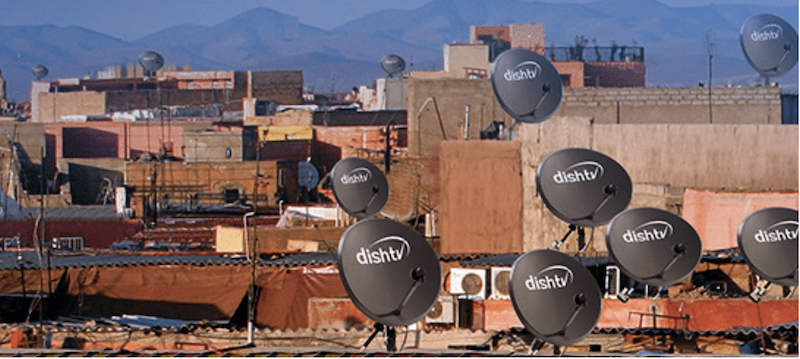
    (Picture of Dishes atop house courtesy Dish TV India) 

  • Changemakers 2024: Culver Max’s Gaurav Banerjee’s emergence from the shadows

    Changemakers 2024: Culver Max’s Gaurav Banerjee’s emergence from the shadows

    MUMBAI: Gaurav Banerjee does not come across as CEO nor as MD material when you meet him the first time. The bespectacled unassuming 47-year-old actually reminds you of a writer or a director or a journalist or a scholarly researcher. But today he sits atop Culver Max Entertainment as the chief executive officer & managing director, a handpicked successor to the quiet and unassuming number-crunching CEO NP Singh who built a profitable broadcast network and retired earlier this year.

    Not for GB, as he is known, are all the pomp and flash that others in the business were vaunt to opt for in earlier times when pay TV was a fat man’s business oozing money like there was no tomorrow. Today, pay TV is shrinking, cord-cutting is rampant cord-nevers are growing and the coming generation will probably not know what cable TV and satellite dishes were.

    GB – a history graduate from St Stephen’s College and a masters-degree holder in film making and TV production from Jamia Milia Islamia,  Delhi – belongs to a group of young executives like Arjun Nohwar who leads Warner Bros Discovery for India and south Asia.

    GAURAV BANERJEE

    These folks know they are leading legacy media companies in rapidly-changing times and they have to ensure that their charges stay relevant even in the midst of rapid churn and chaos.  Their response lies in putting their heads down and focusing on the task they have been assigned: protect and build legacy business and ensure they continue to generate cash which –  like in the past – continues fueling their existence and growth and money-gobbling streaming platforms.

    They also have to make the right moves on the streaming side on content, tech, distribution and business models. And they have to do all this profitably, without breaking the bank. For ranging against them are big players in the media and tech ecosystem: Google, Meta, Netflix, Amazon Prime and the potent combo of JioStar – all having deep pockets and a hunger to invest big and dominate the market. Plus there are others such as Zee5 and Sun Nxt and a string of other OTT players which are being spawned by the hour.

    No one in his or her right mind expected GB to be a candidate for the prized position of Culver Max Entertainment MD & CEO. For long the boyish-looking  executive was known to be a close ally, actually protégé, of current JioStar vice-chairman Uday Shankar and every one expected him to follow him to the joint venture that was in the making. (Danish Khan would succeed NP was most media observers’ guess; we at indiantelevision.com did not speculate about this)

    But GB probably knew otherwise; that it would be Kevin Vaz who would be chosen over him. Hence, when the offer to lead Sony came, he accepted it.

    Of course, he was deserving. A very strong content professional (he began his career as an anchor and producer with news channel Aaj Tak and later at Star News) with an uncanny knowledge of audience preferences, he knows how to weave stories into shows that generate high viewership.

    He did that very successfully both on Star Plus and Hotstar when he was president content at Disney Star India, retaining the network’s numero uno status for more than half a decade. It led others – who struggled to come even close – by a mile. To top it all he had the reputation of being a good manager and leader – earning the loyalty of his colleagues and subordinates.

    LA-based chair of global television studios and Sony Pictures Entertainment president & CEO Ravi Ahuja had expressed total confidence in GB’s visionary approach at the time of his appointment. “ Gaurav’s expertise in content creation and strategic leadership will undoubtedly lead SPNI (read Culver Max) into an exciting new chapter of growth and achievement. We are thrilled to have him at the helm and look forward to the continued success of SPNI under his leadership,” he had said.  

    GB has been playing low key ever since he took over in end-August 2024. He has been building up his A team bit by bit. Most old-timers have been retained, though some like Neerja Vyas chose to quit.

    Danish Khan who was EVP & business head Sony Entertainment Television, Studio Next and SonyLiv was recast to head -digital business, Studio Next, and networks channel licensing.   Ajay Bhalwankar, who  led Sony Marathi successfully,  was handed over Sony Sab to manage along with his existing charge.

    Nachiket Pantvaidya, general manager of Sony Pictures International Productions, was additionally made business head of Hindi general entertainment channel Sony Entertainment Television, marking his third stint with the network.

    Tushar Shah who led English, Bengali, and infotainment channels and  was the chief marketing officer (CMO) at the network was additionally asked to oversee Sony MAX, Sony MAX HD, Sony MAX 2, Sony WAH and Sony PAL.  

    Manu Wadhwa who was chief human resources officer was handed additional responsibility of information technology

    Ambesh Tiwari is currently being groomed to take over as kids channel Sony Yay’s business head when Leena Lele Dutta departs at the end of this fiscal year.

    Ritesh Khosla was brought in as general counsel.

    Veteran Rajesh Kaul, continued in his chief revenue officer, distribution and sports business head.  Aditya Mehta who headed corporate strategy, business monetization, and data analytics’ centre of excellence continues in his position.  Sandeep Mehrotra, continued in his position as EVP -sales.

    A new CFO Sibaji Biswas is slated to join come the first week of January 2025.

    The new leaders, in turn, have been building, their respective A teams.

    GAURAV BANERJEE

    In the meanwhile, GB has been working on getting to know  Culver Max Entertainment, its processes, its people, its neurology, its innards  better. He starting rerunning  episodes of old shows (Beyhadh, Bade Achche Lagate Hain, among others) on Sony excepting for  non-fiction shows Kaun Banega Crorepati and Indian Idol. The two were tweaked with better production quality and selection of participants. Each contestant had a dramatic back story or extremely good talent. Or even both.

    Without incurring any great additional programming costs, the ratings of SET  started rising.

    The teams in the meanwhile strategised on what kind of programming audiences would like to see on the network. The answer was classics like CID and Tenali Rama which would be modernised, have better casting, fabulous production values and improved storytelling. The first is being produced by Banijay Asia and the second by Contiloe Films and have already starting airing on their respective channels Sony Entertainment and Sony Sab. The focus in on gauging audience reactions to these two, before launching new shows which are currently being developed with other producers. Shark Tank, which has been drawing eyeballs and attention ever since it launched three seasons ago is slated to launch on 6 January.

    The second strong plank of content at Culver Max is its sports programming under the Sony Sports Network umbrella. Recently, rights to the Asian Cricket Council covering men’s, women’s, under19’s, and men’s and women’s emerging Asia cup tournaments from 2024 to 2031 were  acquired. The network already has rights to  cricket matches in New Zealand, England, Sri Lanka. Formule E race broadcast rights have been inked for the next three years. 

    For football fans, close to 1,600 matches from the 2024-2025, 2025-2026 and the 2026-27 seasons of the UEFA Champions League, UEFA Europa League, UEFA Conference League, UEFA super cup and UEFA Youth League havbeen be been signed up earlier this year. Ultimate Fighting Championship matches till 2028 should continue attracting its loyal audiences, even though it’s quite possible it will lose the WWE (its staple)  programming to Netflix which has paid top dollar for it as part of a global acquisition deal.  Rights to local Hockey India League championships for three years have also been acquired,. Sony has also been a partner to three of the Grand Slam tennis tournaments. Therefore it has enough heft to keep viewers engaged throughout 2025 with their TV and handphones, says GB.

    SonyLiv is the least of GB’s worries. Led by old-timer Danish Khan and content commissioner Saugata Mukherjee, the streamer has been churning out shows which have attained cult status: The Scam, Rocket Boys, Freedom at Midnight, Gullak, Tanaav, Cubicles, Undekhi, among many others. It has loyal subscribers who know what they are going to get on the platform, and they come there to get it. Sources indicate that it has the lowest churn among all the streamers, though its subscriber base is in the 15-20 million range.

    Four months into his job, and GB has begun to make his presence felt on the Indian entertainment landscape. He has just begun emerging from the shadows as a corporate leader. 2025 will see his influence spreading even further.

    Media mavens had better not be surprised if he makes some sharp moves, especially acquisitive ones. For as his boss Ravi Ahuja expressed to him on his December visit to India: “Exceed expectations, take on new challenges, and build your skills and network – that’s the path to leadership!”

    To his advantage, to many in the industry, he is a mystery, known more for his content savviness, not for his managerial or strategic skills. 

    And that is his trump card. 

    (We asked an AI pic generator to re-imagine Gauarav Banerjee through its tool, and the main picture on our home page is what it came up with. No malice is intended toward Culver Max, Gaurav Banerjee or anyone else asociated with personally or professionally. No copyright infringement is intended either.)