Tag: Uday Kumar Varma

  • Govt firm on Phase 2 deadline, claims 60% digitisation in 38 cities

    Govt firm on Phase 2 deadline, claims 60% digitisation in 38 cities

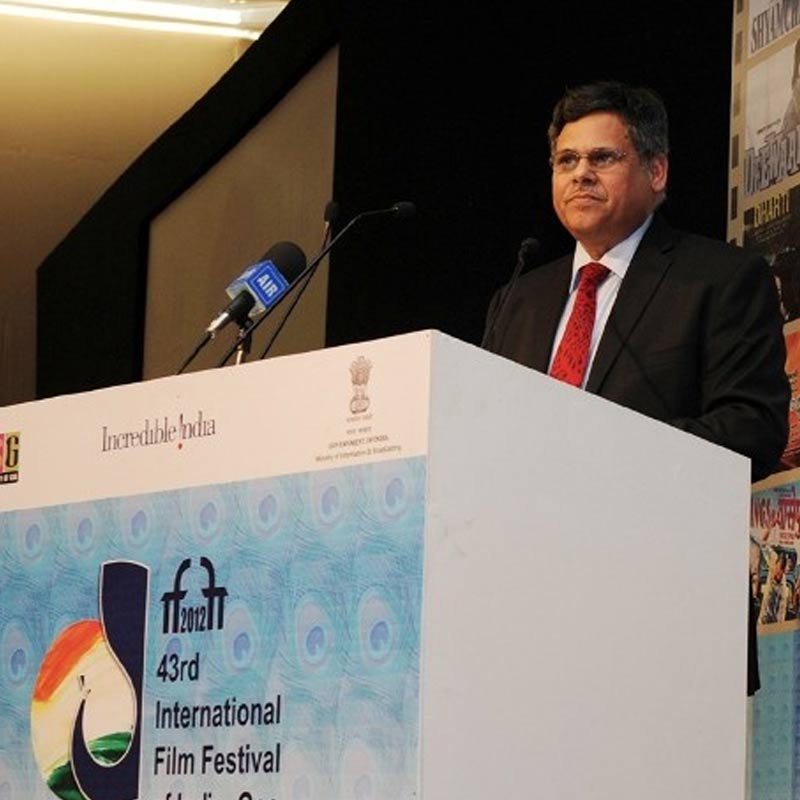
    MUMBAI: The Information & Broadcasting secretary Uday Kumar Varma has asserted that the government is firm on 31 March deadline.

    Giving a keynote at the Valedictory session of Ficci Frames, Varma said that the second phase of digitisation is on track with 60 per cent of households already going digital.

    "Digitisation is happening smoothly. We have achieved 60 per cent digitisation in the second phase. Subsequent to 31 March, the process will be irreversible," Varma said.

    Out of the 38 cities that are going digital in the second phase, as many as 10 cities have achieved 75 per cent digitisation.

    Four cities have been slow in implementing digitisation, Varma added. These include Ranchi, Srinagar and one in Tamil Nadu, where the state government is vehemently opposed to digitisation.

    "Out of 16 million STBs that are to be installed, 10 million have already been installed while six million are yet to be installed. However, we are confident that these will be installed within the deadline period," Varma asserted.

    Varma also said that the industry needs to keep the spirit of alignment to take the digitisation to its logical conclusion. However, he hastened to add that digitisation is still an incomplete task as even in phase 1 only set-top box (STB) has been installed and other aspects like Subscriber Management System (SMS) and billing are yet to be put in place.

    Digitisation, Varma said, will correct the aberrations of business model in the broadcasting industry and usher in an era of transparency.

    He also said that the role of state government is important for effective implementation of digitisation.

    He reiterated that the government can step in to provide guidelines for an independent television audience measurement system should the industry ask for it.

    "We need a robust and healthy ratings measurement agency," he said.

  • No relaxation on DAS Phase II; analogue switch-off in stages

    No relaxation on DAS Phase II; analogue switch-off in stages

    NEW DELHI: Information and Broadcasting Ministry Secretary Uday Kumar Varma today said that the cable television sector would gain much more in the long run from switchover to digital access system than direct-to-home (DTH) television.

    Speaking on the sidelines of the India Forum of the Cable and Satellite Broadcasters Association of India which he earlier inaugurated, Varma said that cable TV would be able to provide more value added services than being provided by DTH. He also said there was greater spectrum available to cable TV than DTH.

    Earlier while inaugurating the one-day meet on the theme of ‘Digital Visions and Dividends’, he said that there would be no extension of deadline of the second phase of switching off analogue signals on 31 March covering 38 cities.

    He claimed that the first phase covering the four metros had been launched successfully despite the court case in Chennai and the initial reluctance in Kolkata.

    Varma also claimed that 55 per cent of the Phase II cities had already been digitised and the multi-system operators (MSOs) had just over two million set top boxes in stock and another two million under procurement.

    The government was keen that indigenous production of STBs should be encouraged so that the country did not have to depend on countries like Korea and China and the boxes would be BIS compliant.

    Referring to Phase III of FM Radio, Varma said that the empowered Group of Ministers chaired by Finance Minister P Chidambaram had cleared the auctioning of 839 channels.

    He expressed confidence that all the auctions would be completed within one year and the government will earn revenue of Rs 15 billion.

    Casbaa CEO Christopher Slaughter also spoke on the occasion.

    Analogue switch off in stages

    Supriya Sahu, Joint Secretary in the I and B Ministry in charge of Broadcasting Policy, said at a session later that the government was contemplating an amendment to the DAS rules to go in for switch off of analogue signals in stages after Phase II commences.

    She said that some service providers had not given the access forms to the subscribers and this was causing concern, but the Telecom Regulatory Authority of India was examining the issue. It had issued show cause notices to many service providers and was holding a dialogue to ensure smooth switchover.

    She said teams of the Ministry were also visiting service providers who had failed to meet deadlines and were helping in creating subscriber awareness. At present, she admitted that revenue flow and consumer bills were still a problem but she was confident that Trai would soon sort this out.

    The biggest challenge, she said, was to reach out to every stakeholder and also convince the last mile operator of the benefits of digitisation. The availability of STBs at affordable prizes was another challenge.

    But she claimed that the progress in Phase II was smoother than in Phase I. Data was being collected every week and meetings were held regularly with MSOs on the progress.

    Answering a question, he wondered why the industry itself did not take the initiative to go digital and the government had to make it mandatory. She denied the claim that the government stood to gain through entertainment tax, as she said this was minimal as against the benefits to the industry. DAS protects the right of every user, she said.

    More Niche channels and VAS under DAS

    Trai’s Principal Adviser on Broadcasting N Parameshwaran said that one main benefit would be the growth of niche television channels.

    He admitted that subscriber forms had not been distributed and this was leading to problems relating to revenue sharing, but Trai was actively looking into this issue.

    Answering a question, he said there was enough place in the country for both DTH and cable TV.

    Doubling of Customs Duty unwise

    IndusInd Media & Communications Ltd managing director Ravi Mansukhani wondered why the government had doubled the customs duty on imported STBs at a time when an adequate number of indigenous boxes were not available. This would also complicate the issue since the imported boxes have to first get the BIS certification.

    DEN Networks Chairman and MD Sameer Manchanda said India had overtaken many other countries in undertaking DAS in a smooth manner despite complexities. Digitisation was irreversible and therefore all stakeholders had to get together to resolve the issues involved.

    Indian Broadcasting Foundation President and Multi Screen Media CEO Man Jit Singh said that the most crucial achievement was transparency in financial deals. He said it was necessary that MSOs are helped in putting up STBs as the average revenue per user (ARPU) was bound to go up. He also felt that the TV industry which was heavily dependent on advertising may also see a change in its revenue models.

    CSG International Vice President (Product management) Chad Dunavant said that the process had taken much longer in the United States. He also said that India had an advantage as it would be able to offer more VAS and already had more variety of channels.

    Raising of FDI Negated

    Star India President and General Counsel Deepak Jacob said the raising of foreign direct investment sector on the one hand and then coming down heavily on cross media ownership would create a major problem for growth.

    IndiaCast Group CEO Anuj Gandhi said the biggest challenge was to involve the last mile operator, while Essel Group President (legal affairs) Avnindra Mohan said the biggest advantage had been the change in mindset of the consumer. He also said that cable TV had greater bandwidth than DTH.

    He said that MSOs would work harder to make Phase II a success, while learning from the mistakes of Phase I.

  • I&B secretary calls for creating indigenous TV ratings system

    MUMBAI: Information and Broadcasting (I&B) Secretary Uday Kumar Varma has called for development of an indigenous television ratings system for the India broadcasting sector.

    During the keynote speech at BES Expo in New Delhi, Varma said the current ratings system lacks accuracy and is inadequate for a huge country like India.

    TAM Media Research, a joint-venture between Nielsen and Kantar Media, is India‘s sole TV audience measurement agency. It has been under fire from broadcasters who have called for a more corrective, accurate and transparent ratings system under the aegis of Broadcasters Audience Research Council (Barc).

    “Why is it that we have to import a system which each one of us know is far from accurate and perfect,” Varma told the gathering at BES Expo in the presence of I&B minister Manish Tewari and National Knowledge Commission chairman Sam Pitroda.

    Varma added, “I do know that since it is not a direct concern of the government we are not paying attention to this but it is time that we pay attention to this particular dimension — why is it that in a country like ours with a population of billion plus, we are not able to develop our own indigenous and unique system of TV viewing system.”

    Varma is having the support of Multi Screen Media CEO and Indian Broadcasting Foundation (IBF) president Man Jit Singh. Speaking to Indiantelevision.com, Singh expressed concurrence with Varma’s views of the need to have an indigenous ratings system.

    “I agree with Mr Varma’s observation that we should have an indigenous ratings system. In fact, Barc is an indigenous ratings system. The sampling, equipments, and technology will be indigenous. The measurement meters can be sourced from any country,” says Singh.

    It is pertinent to note here that Broadcasters Audience Research Council (Barc), a joint venture of IBF, Advertising Agencies Association of India (AAAI), and Indian Society of Advertisers (ISA), has started the process of creating a new measurement system. It issued a global Request for Information (RFI) on state-of-the-art ratings systems last month and would be following it up with a Request for Proposal.

    Making a case for government intervention in TV viewership measurement, Varma said TRP impacts the government since it has a presence in television broadcasting through public broadcaster Doordarshan which is not getting a fair deal from the existing set-up.

    “Ordinarily, the government should not be concerned about it (TV viewership measurement) because it is a service for which there is a demand and there is somebody who is supplying it,” he said.

    “So if the broadcasting was only in the private sector, we need not be worried except on the ground of public interest. If TRP becomes a reason for deterioration of content I think there is a legitimate ground for the government to intervene.”

    He also said that government intervention becomes inevitable if the ratings system becomes a cause for degradation in content that comes on television.

    “In this case we not only have this ground but also the fact that we have a substantial public broadcaster who may not be getting a fair deal from the existing measurement system of television viewing It is certainly a concern where the government has to intervene,” Varma averred.

    Varma also wondered how 8,000 homes can capture viewership trends for a country of the size of India with a billion plus population and close to 150 million television homes.

    “The issue is that how is it that the whole measurement system is being created by just a set of 8,000 or 9,000 peoplemeters. As a lay man, I am quite concerned about it. Is this really the only possible technology to measure the TV viewing of the people?” he questioned.

    Varma said the issue of TV viewership measurement requires urgent attention and it was imperative to look for alternative.

    “I really do not know whether there have been any discussions on this count anywhere but this extremely important issue needs our attention. Is peoplemeters the instrument to measure TV viewing or are there alternatives available.”

  • Renowned Polish filmmaker Zanussi gets Lifetime Achievement Award as 43rd IFFI commences

    Renowned Polish filmmaker Zanussi gets Lifetime Achievement Award as 43rd IFFI commences

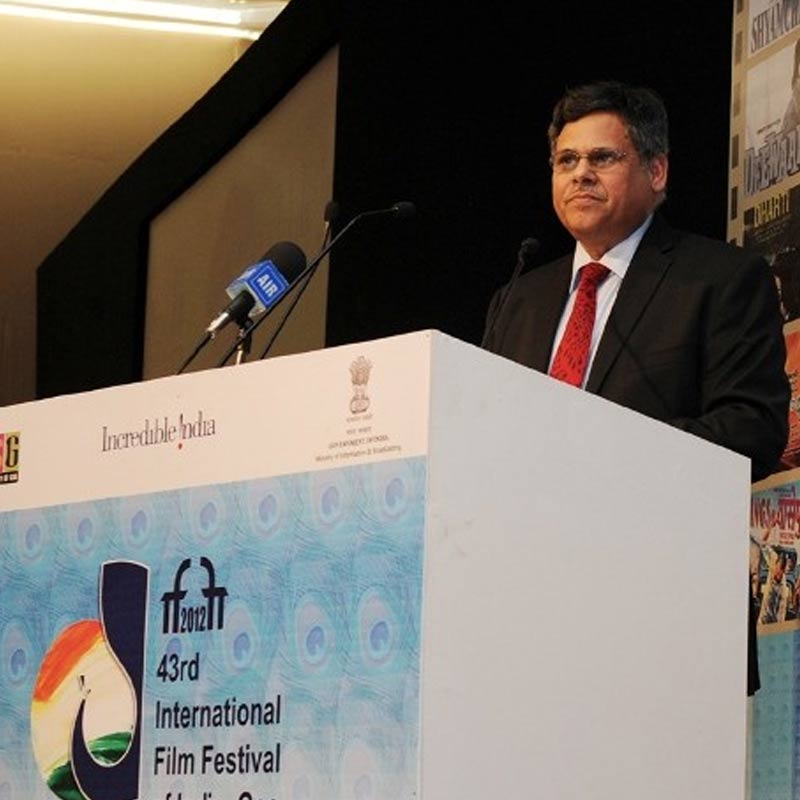
    PANAJI: The 43rd International Film Festival of India commenced today with a promise by Information and Broadcasting Minister Manish Tewari to make India an international destination of good cinema.

    Tewari said the Government was taking a number of steps to nurture the Indian film industry and to promote India as a destination for film shooting. He said that the Government was embarking on an ambitious National Film Heritage Mission during the 12th five year plan to preserve India’s film heritage. Moreover, India has entered into co-production agreements with various countries with a view towards encouraging co-production between India and other countries.

    Goa Chief Minister Manohar Parrikar said the journey started by him 8 years ago had yielded positive results and Goa had been awarded the best film destination in India. He, however, added that a collective endeavour will be made to take this festival to newer heights and to make it truly international.

    Uday Kumar Varma, Secretary in the Ministry, said IFFI had grown from strength to strength incorporating new themes and all efforts will be made to imbibe the spirit of Vasudhaiva Kutumbakam (the whole world is one family) through IFFI.

    The Chief Guest of the event and the Bollywood heartthrob Akshay Kumar said that cinema is very important not only for him but for his entire family. Pitching for good and wholesome cinema, he felt proud that the festival is happening in the centenary year of Indian Cinema.

    Renowned Polish filmmaker Krzysztof Zanussi was conferred the prestigious Lifetime Achievement Award on the occasion by Tewari. The award carries an amount of Rs one million, a scroll, a shawl and a certificate. Known for producing acclaimed films like Camouflage, Family life, and The Silent Touch, Zanussi said amidst standing ovation that this is the most moving moment of his life that he is being awarded for some achievement and promised to make more films in future. He said 21st century will be Asia’s Century and it is his deep belief that it will be India’s Century.

    Goutam Ghose, Chairman of the International Jury and all the Jury members were felicitated by the IFFI. Ghosh said IFFI has gone through many ups and downs but it’s still glowing. He also called for more autonomy for the film body to function in an efficient way.

    Hosted by Kabir Bedi and Perizaad Zorabian, the event showcased the evolution of 100 years of Indian Cinema through a brilliant combo of music, dance and videos conceived and directed by Jahnu Barua, Saroj Khan and Sajjad Ali. Nearly two-hour cultural extravaganza came to a close with the spell-bound renditions of Kailash Kher.

    With the galaxy of stars like Akshay Kumar, Irrfan Khan, Tabu, Om Puri, Jackie Shroff, Vinay Pathak, the opening ceremony was a bit different from the previous festivals. As a part of the international presence, the cine lovers were treated to the company of renowned film personalities like Kim Ki-duk, Michael Winterbottom, Susanne Bier amongst others.

    Academy Award winning Director Ang Lee’s much acclaimed 3D film “Life of Pi” is being screened this evening as the opening film of the 43rd International Film Festival of India (IFFI-2012). The cast and crew of the film including Irrfan Khan and Tabu were present on the occasion.

    In the 43rd edition of IFFI, over a hundred movies will be screened as a part of the Indian Cinema and the World Cinema segments. The Indian Section will bring to the audience movies from across the country in the Indian Panorama (Feature and Non-Feature Section) which is selected by a core jury headed by Buddhadeb Dasgupta for the Feature and M R Rajan for the Non-Feature section. The Indian Panorama will screen twenty feature films with ‘Baandhon’ director by Jahnu Barua as the Opening film, and nineteen films in the non-feature section with ‘Celluloid Man’ directed by Shivendra Singh Dungarpur as the Opening film.

    Apart from the International Competition, the cine lovers at the 43rd IFFI will be treated to a varied line-up of world cinema which will be showcased in sections like ‘Cinema of the World’ which will have fifty-one films from forty-two countries with Ang Lee’s 3D film ‘Life of Pi’ as its Opening Film and Mira Nair’s ‘The Reluctant Fundamentalist’ as its Closing Film. Other sections in the International section include ‘A Cut Above’, ‘Masterstrokes’, ‘Festival Kaleidoscope’, ‘Turkish Currents’, ‘Sketches on Screen’, ‘Retrospective: Susanne Bier’, ‘Special Tribute: Ashok Amritraj’, ‘In Focus: Kim Ki-duk’, ‘Soul of Asia’, ‘Documentaries’ and ‘Homages’.

  • Six films on 1971 liberation war in Bangladesh film fest

    Six films on 1971 liberation war in Bangladesh film fest

    NEW DELHI: Six films based around the war for Bangladesh with Pakistan rule are to be screened in a special festival being held here to mark 40 years of liberation.

    The ‘Bangladesh War of Liberation in Celluloid’ Festival will be inaugurated tomorrow by Bangladesh High Commissioner Tariq A Karim and Information and Broadcasting Secretary Uday Kumar Varma. The opening film is ‘Matir Moina’ by Tareque Massud which won the Critics Award in Cannes in 2002.

    Morshedul Islam, who has directed the films ‘Khelaghar’ (Dolls House) and ‘Amar Bondhu Rashed’ (My Friend Rashed) which are being screened, will be here along with Joya Ahsan, actress of the award-winning film ‘Guerrilla’ by Nasiruddin Yousuff which will close the three-day Festival on 25 March.

    The other films are: ‘Joyjatra’ by Tauquir Ahmed, and ‘Khondo Golpo – 1971’ )1971 – A few Shattered Tales’).

    Addressing a press meet here, Deputy Bangladesh High Commissioner Mahbub Hassen Saleh said a review committee had selected the six films which were also shown earlier in Kolkata and Agartala. He said those cities had been chosen because of their proximity to Bangladesh and mentioned that Tripura which had a population of 1.2 million in 1971 had received fleeing Bangladeshi population of 1.6 million, which is something that has never happened anywhere else. India had given refuge to ten million refugees.

    Answering a question, he said attempts would be made to take the films to other parts of India.He recalled that the last Bangladesh film festival held in April 2010 had played to full houses.Answering another question, he said several Indians who had contributed to the liberation effort were being honoured in Dhaka on 27 March.

    Film Festivals director Rajiv Kumar Jain said the festival was being as part of the Cultural Exchange Programme aimed at increasing people to people contacts.

  • Government committed to preserve cinematic heritage: I&B Secy

    Government committed to preserve cinematic heritage: I&B Secy

    PANAJI: Information and Broadcasting Secretary Uday Kumar Varma has said film posters and ancillaries are a treasure of the country‘s film heritage and the government is committed to preserve this heritage for the future generations to appreciate.


    Speaking to mediapersons after inaugurating an exhibition on ‘Music & Songs in Indian Cinema‘ by the National Film Archives of India, he said today‘s generation which is used to e-posters finds it difficult to believe that people were crazy about posters of films released in yesteryears.


    Goa Chief Secretary of Goa Sanjay Srivastava, Goa Information Secretary Rajiv Verma, and I&B Joint Secretary DP Reddy were present on the occasion.


    Goa Chief Minister Digamber Kamat also visited after the inauguration of the exhibition being held to coincide with the International Film Festival of India.


    Music and Songs are integral to Indian cinema since sound came in 1931. Technological developments in sound across the years have been highlighted in this exhibition. The contribution of music directors, singers and lyricists has been discussed. All the exhibits are accompanied with bilingual captions.


    Meanwhile, Bollywood actor Jackie Shroff inaugurated the ‘Actors Lounge‘ and the ‘Director‘s Lounge‘ at the IFFI Campus.


    A special addition to this year‘s cinematic journey of IFFI, the lounges will act as the comfort point for the cinematic luminaries and will provide a venue to relax, meet and network with industry colleagues.


    Entertainment Society of Goa CEO Manoj Srivastava said “The Director‘s and Actor‘s Lounge act as a relax zone for our distinguished guests and provide comfort to the stalwarts while they are at IFFI. A platform where creative minds connect and network, the lounges act as the artistic zone of the festival and thus are counted amongst the main attractions in this 42nd IFFI.”

  • Intl children’s film fest kicks off at Hyderabad

    Intl children’s film fest kicks off at Hyderabad

    HYDERABAD/MUMBAI: The 17th International Children‘s Film Festival (ICFF), offering a mix of movies for the tiny tots, kicked off at Hyderabad yesterday,


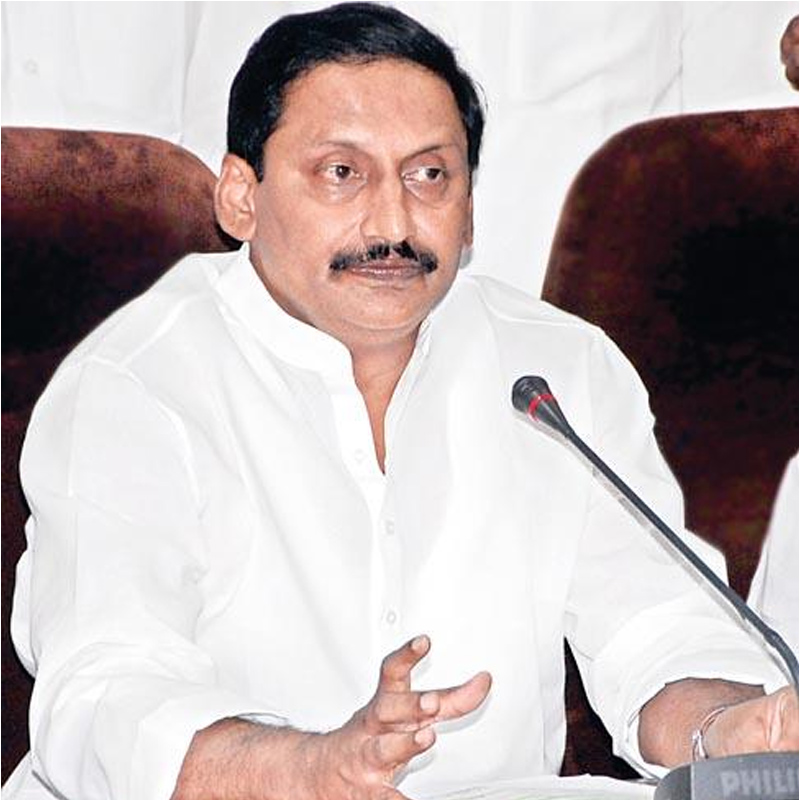
    Organised jointly by the Children‘s Film Society of India (CFSI) and the Andhra Pradesh government, the festival was inaugurated by the state Chief Minister N Kiran Kumar Reddy.


    In his inaugural speech, Minister of State for Information and Broadcasting CM Jatua said children are the future in a country and have to be taken care of.


    Andhra Pradesh Chief Minister M Kiran Kumar Reddy said this was the ninth ICFF in this city of the Char Minar. He said in a country which has 54 per cent below 25 years of age and 41 per cent below 18 years of age, it is important to make cinema that appeal to the young. He said the goals should be clear since children today were competing in a global village. He said films should make children think, even as they get entertained.


    Reiterating that the CFSI had been allotted ten acres of land for a children film complex and promising that it would be ready by the next festival, he said Andhra Pradesh is the only state where children’s films were tax-free and a subsidy of Rs 3 million is given for makers of children’s films. This is because children’s films needed support because of competition from television and the internet.


    “The festival will have special features for short films, films made by children, age-wise screening of films, workshops and an open form to deliberate on the movies,” CFSI chairperson Nandita Das said.


    She said the curators have taken painstaking efforts to select the rest of the films from around the world for screening during the festival.


    The festival, which will conclude on 20 November, will see the screening of 152 children‘s films from 37 countries.


    Also present were CFSI Chief Executive Officer Sushovan Banerjee, and B Venkateshan of the Andhra Pradesh State Film, Television and Theatre Development Corporation. Also present were Mr Uday Kumar Varma and Mr D P Reddy, Secretary and Joint Secretary respectively in the Information and Broadcasting Ministry.


    The programme, which concluded with the screening of ‘Gattu’ by Rajan Khosa, also had performances by over a hundred children, the percussion legend Sivamani who was accompanied by a child prodigy, and the award-winning Prince Dance Troupe.