Tag: Uday Kumar Varma

  • I&B Ministry-bashing unwarranted, says NDTV’s Narayan Rao

    I&B Ministry-bashing unwarranted, says NDTV’s Narayan Rao

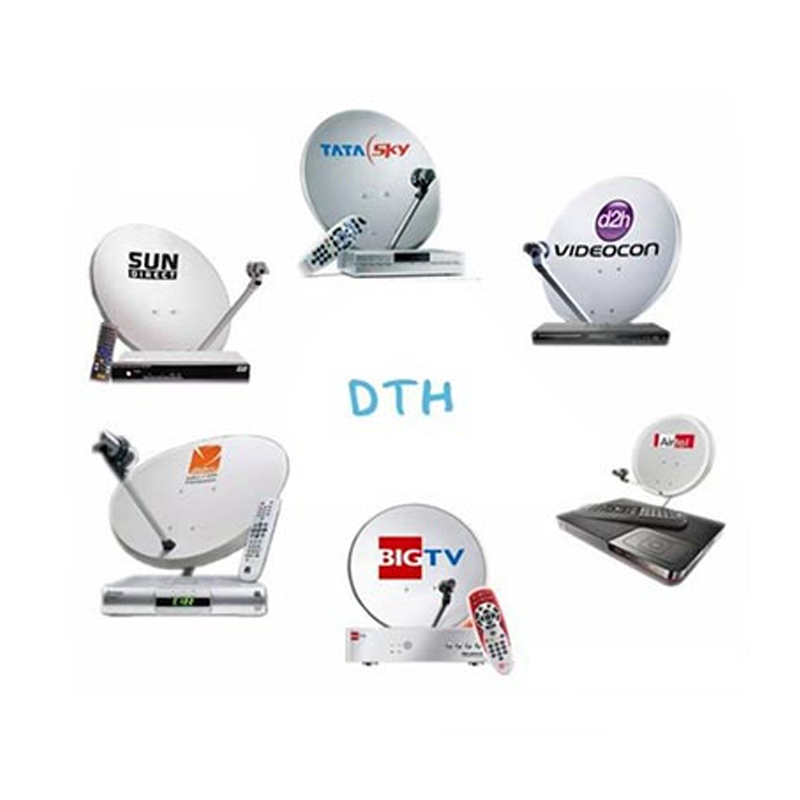
    MUMBAI:  For the past one and a half years, India has been undergoing stomach churning change in the television industry thanks to the government mandated rollout of digitisation. With the due date to complete digitisation nationwide getting closer (31 December), much needs to be done. Now, with a new government in place and new Information and Broadcasting (I&B) Minister Prakash Javadekar assuring the industry that digitisation will be implemented, expectations are only rising.


    The recent CII meeting that took place with Javadekar saw industry stalwarts express their woes and wish-lists to the minister. They also expressed their displeasure at the inefficiency of the I&B bureaucracy.


    I&B joint secretary of broadcasting Supriya Sahu and I&B secretary Bimal Julka were targets of accusations of delays in clearances and permissions.


    Some other industry leaders – while appreciating the fact that the I&B Ministry  pushed through DAS, whereas CAS in 2006-2007 just fell through –  have lambasted even the TRAI – along with the I&B Ministry – at industry  gatherings over the past six months for not moving fast and determinedly enough on many issues that have impacted their businesses.


     NDTV vice chairperson and News Broadcasters Association president KVL Narayan Rao thinks that industry needs to keep a cool head and not resort to bureaucracy bashing. Narayan Rao has nearly 30 years work experience; half of that was spent in the bureaucracy with the Indian Revenue Service (1979-1994); the other half has been with the news network NDTV.


    Says he: “I think the attack on the bureaucracy, particularly that on the I&B Ministry, was quite unfair. We currently have some highly efficient officials at the I&B Ministry who have shown a lot of understanding of our issues and have tried to do all they can to solve them. Supriya Sahu and Bimal Julka come immediately to mind.”


    At the CASBAA India 2014 conference in New Delhi earlier this year, Sahu made a detailed presentation on the progress and benefits of digitisation stating that only 10 broadcasters had shared data with the Ministry. She appealed to other broadcasters to share revenue data with them so that the government could ascertain whether the digitisation dividend was really coming the way of industry.


    If one harks back to 2012 almost everyone was cynical that the government mandated digital addressable system (DAS) rollout would ever become a reality. Almost everyone scoffed at even the suggestion. But it was a determined ministerial secretariat led by the then secretary Uday Kumar Varma and his team which consisted of Supriya Sahu and her directors Reijemon who pushed it through – along with the TRAI. Julka who replaced Varma has been following the same narrow strait.


    Hence Rao feels that constant hurling of barbs at ministry officials is unpalatable. Says he:  “Please remember that this is virtually the same lot of officials who ensured the implementation of the first two phases of digitisation which isn’t an easy task at all, who also issued the notification on ratings agencies, a long pending demand of the industry, and issued over 400 permissions for channels and who have allowed self/independent regulation to prevail. Yes there have been delays now and then but how much of that can be attributed to the bureaucrats is debatable.”


    Indeed, several initiatives were taken by the I&B mandarins. Officials regularly met (at one time it was almost weekly) with industry executives – whether from broadcasting, MSOs, or LCOs – to asses digitisation’s progress. The security clearance check that directors of various channels were subject to – which pained many a broadcaster – came at the behest of the Ministry of Home Affairs.


    When a large grouping from the broadcasting industry  rose against the only TV ratings agency TAM, it was the I&B Ministry that took note of it and came up with policy guidelines for TV viewership monitoring. It was the Ministry which also pushed the institution of Broadcasting Audience Research Council, which the industry had kept in cold storage for almost half a decade.


    After the Saradha chit fund scam, the Ministry quickly stepped in and did a check of the shareholding pattern of various channels to prevent repeats of a similar nature.


    When TRAI came out with the 10+2 ad cap regulation, the Ministry supported the broadcasters’ view in keeping it at bay till digitisation pans out, though nothing concrete has come out of it as yet.


    Additionally, while the Ministry did use the stick, it also doled out carrots by extending DAS deadlines on more than a few occasions – keeping in mind the realities on the ground – to give it a reasonable chance at success. Despite the long rope extended by both TRAI and the I&B Ministry, industry at the cable TV and MSO level has yet to begun physical billing for DAS subscribers even in some phase I cities. Forget about phase II.


    Says a media observer: “Agreed for the last three or four months of the UPA regime the Ministry’s focus was on the election; industry issues were not a high priority. It was not a fault of the civil servants alone; the Ministry itself and the government on the whole could not move, thanks to the losses in the New Delhi state elections, and the stigma of corruption which kept hitting the Congress I in its face. I can understand some sections of the industry getting edgy, nervous and agitated for many a broadcaster’s, DTH operator’s business plans are linked to digitisation’s success and the fact that bureaucrats and ministries don’t throw a spanner in the works.”


    She adds: “But we have to remember we have a new government led by Narendra Kumar Modi who has a lot more freedom than the previous regime. There’s a lot of positivity around, even though there are economic challenges on hand. The industry should look ahead, and not back. Things can only get better, and with experienced officials in the Ministry at helm, it will be easier to push through things. New ones could end up taking longer as they will have to come to grips with the sector – and that takes time.”


    That’s a piece of advice which the irate members of the industry can ponder upon.

  • Single Window clearance for filmmakers in three to six months: Varma

    Single Window clearance for filmmakers in three to six months: Varma

    NEW DELHI: A single window clearance structure for filmmakers would be in place within the next three to six months.

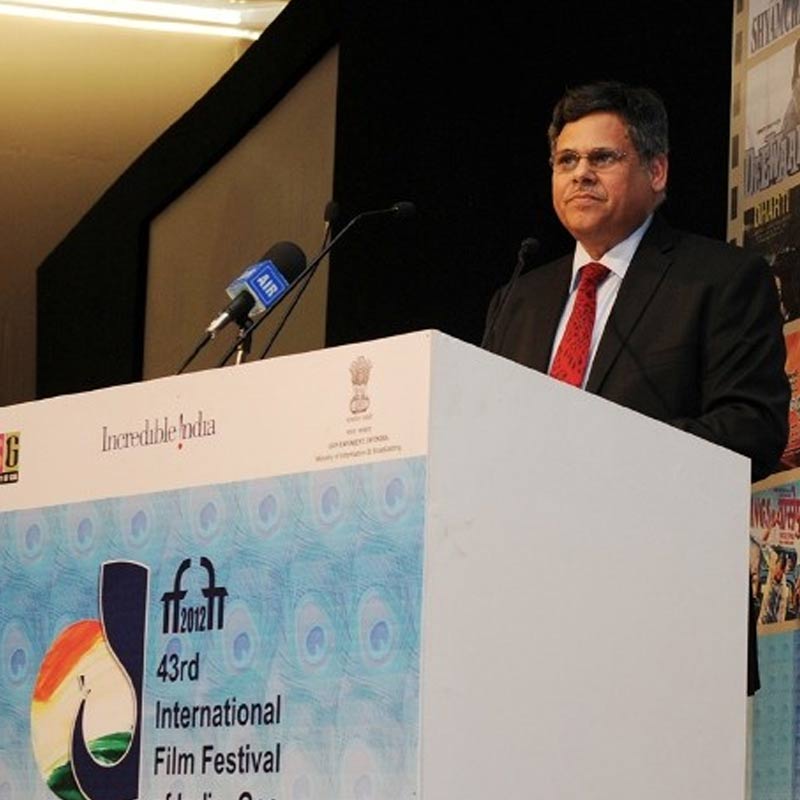
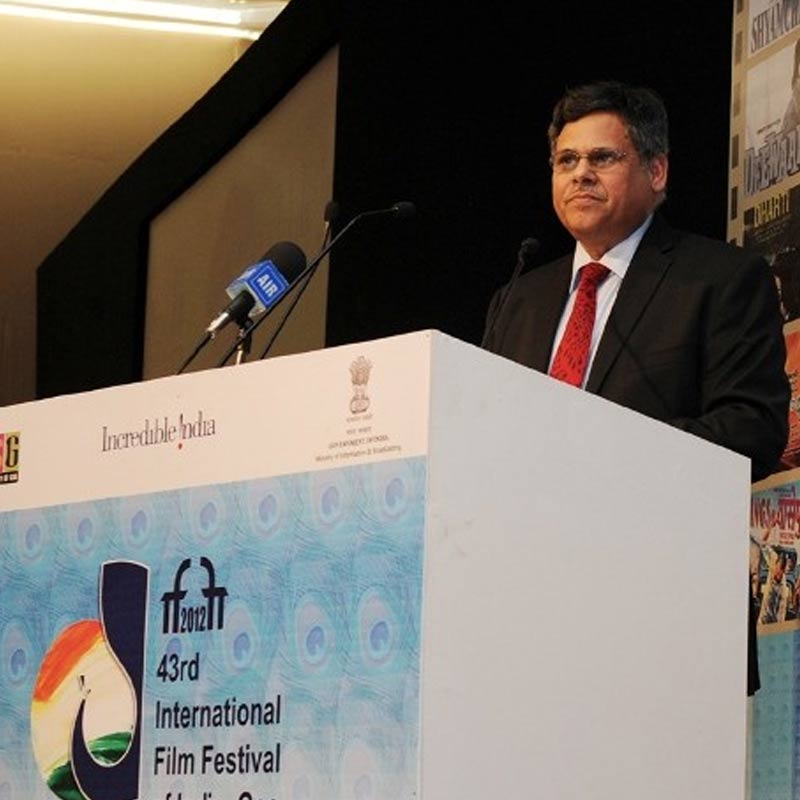
    This was stated by information and broadcasting ministry secretary Uday Kumar Varma during a round table event at Cannes over the weekend.

    He said the government was working on four priority areas relating to the Indian film industry, which is celebrating one hundred years of cinema this year. He identified film finance, film industry promotion, production facilitation and human resource development, and said that changes to promotion and facilitation systems would happen first.

    Though he did not use the words ‘single window clearance’, he said his department is moving in that direction. "This is not coming from a recommendatory body, this is from government itself," he said. "The state governments are on board. I have written to the executive heads of each state."

    "We have looked at the film commission model in France, the UK and New Zealand," he said, but said that government is making a "very, very sincere effort" and could make a definitive announcement in three to six months.

    He indicated that the National Film Development Corporation (Nfdc) would play a major role in film funding. He said that Nfdc could be the conduit for the launch of state funding initiatives. "The Nfdc is fully funded by the government of India and is able to fund and be involved in co-productions," he said.

    He said that Canada and Australia are the two countries with which India is closest to agreeing on co-production treaties.

    Varma said that Indian cinema’s success lay not in its acceptance among a larger global audience but in its unique cinematic approach.

    He also added that in order to enable young independent filmmakers to showcase their work, the ministry was intending to create special screening facilities to promote cinematic hubs.

    Producer Guneet Monga regretted that films which are considered as Indian national productions are subject to a different tax regime, but the Indian government ‘penalises co-production films’ compared with imported films.

    The India pavilion at the Cannes film festival in France has organised a series of panel discussions on contemporary topics related to Indian cinema to create a global footprint for Indian cinema in its centenary year. The objective has been to enable the collaboration and partnerships for promoting India as a filming destination for films and documentaries.

    Key events include celebrating significant projects which were a part of Film Bazaar 2011, The Lunchbox, and Monsoon Shootout. There are panel discussions on contemporary topics related to Indian cinema.

    Acclaimed film critic and TV presenter Rajeev Masand engaged filmmakers on sessions which included breaking barriers in filmmaking and the current scenario of Indian cinema. The participants in these sessions include Karan Johar, Anurag Kashyap, Dibakar Banerjee, Zoya Akhtar, Ritesh Batra, and Amit Kumar.

    Special sessions and discussions also seek to highlight recent successful Indian co-productions with international producers. The interactions and discussions at India pavilion bring to the fore, the films scenario in India and aim at giving the films their due credit not only in India but at a global level.

    With India celebrating 100 years of cinema, there has been a significant rise in the number of delegates to the festival from the previous years, to celebrate this great occasion amongst the global film fraternity. This year, the Cannes film festival is celebrating the centenary of Indian cinema where India has been accorded the status of ‘Special Guest Country’. The Indian pavilion has witnessed the participation of key stakeholders who are keen to know about Indian Cinema. This year is seeing five Indian films in diverse sections at Cannes. These are Anurag Kashyap‘s Ugly, Ritesh Batra’s debut feature film The Lunchbox , Bombay Talkies, Amit Kumar’s Monsoon Shootout , and veteran filmmaker Satyajit Ray’s Charulata.

    The 66th Cannes festival this year was inaugurated by megastar Amitabh Bachchan with actor Leonardo DiCaprio.

    Baz Luhrmann’s "The Great Gatsby" was the opening film of the festival. Bachchan features in what he calls "a blink and miss role" in "The Great Gatsby" which marks his Hollywood debut.

    Bachchan used the opportunity to speak in Hindi and later said in a tweet that this was necessary in view of the centenary of Indian cinema.

    Vidya Balan, who is on the jury this year, said later: "Personally, for me to have shared the stage with him and on an international platform where the talk is about India celebrating 100 glorious years, it felt really special. These are the times when you have to pinch yourself and say ‘oh my god, this is for real."

    Bachchan also appears in Bombay Talkies which will have a gala screening to mark the 100 years of Indian cinema. Anurag Kashyap‘s segment in the portmanteau film is about a Bachchan fan.

  • Triumphant I&B sec Varma says Phase II digitisation 99% complete

    Triumphant I&B sec Varma says Phase II digitisation 99% complete

    NEW DELHI: Information & braodcasting ministry secretary Uday Kumar Varma – along with his ministerial team – has almost singlehandedly been working on aggregating and consolidating India‘s fragmented cable TV sector by pressing the digitisation accelerator and pushing the members of the ecosystem to forge ahead no matter what.

    His touch stance seems to be working if one goes by the numbers that he announced today. Speaking to indiantelevision.com, Varma stated that almost 99 per cent digitisation had been achieved in the 38 cities that were part of Phase II of Digital Addressable System (DAS) for cable television.

    Addressing a meeting of nodal officers from different states yesterday, Varma expressed satisfaction at the work being done by the additional secretary C Viswanath, joint secretary (broadcasting) Supriya Sahu and other senior officials.

    Varma also asked the nodal officers to send show cause notices to all MSOs who had still not switched off analogue signals.

    The nodal officers generally expressed satisfaction with the cooperation they received from stakeholders.

  • Digitisation penetration reaches 90 per cent, says Varma

    Digitisation penetration reaches 90 per cent, says Varma

    NEW DELHI: Three weeks after the switch-off of analogue signals in a majority of the 38 cities covered under Phase II, the level of digitisation has touched ninety per cent, according to information& broadcasting ministry secretary Uday Kumar Varma.

    The I&B ministry secretary told Indiantelevision.com that a total of fifteen cities have crossed 100 per cent digitisation, while one more city has crossed 98 per cent digitisation mark. Another three cities have crossed a level of 90 per cent, he added.

    He also asserted that there is no shortage of set top boxes (STBs) in the Phase II cities.

    The government, he said, was still in the process of collating all the figures from the nodal officers and would bring a detailed report after its review.

    He also clarified that while announcing the switch-off of analogue on 31 March, the government had said that it would watch the situation for around two weeks and was now reviewing the reports coming in on the achievement so far.

    The ministry had announced earlier this month that analogue signals has been completely switched-off in the five states of Maharashtra, Punjab, Rajasthan, West Bengal, Haryana, and the Union Territory of Chandigarh.

    Meanwhile stays continued to be in force in the cities of Bhopal, Indore, Jabalpur, Hyderabad, and Visakhapatnam. The Karnataka and Gujarat high courts had last week quashed petitions seeking extension of DAS thereby paving way for the analogue signals to be switched-off.

    Meanwhile, the Supreme Court is expected to hear tomorrow a special leave petition by the Indian Broadcasting Foundation seeking to quash all pending cases in various high courts and also ensure there is no postponement of the date of digitization.

  • 88 per cent digitisation achieved in Phase II, says Varma

    88 per cent digitisation achieved in Phase II, says Varma

    NEW DELHI: The level of digitisation has reached around 88 per cent in the 38 cities covered in fourteen states and one union territory for Phase II of Digital Addressable System (DAS), a top Information & Broadcasting ministry official tells Indiantelevision.com.

    This includes seeding of set top boxes (STBs) done by direct-to-home (DTH) operators.

    I&B ministry secretary Uday Kumar Varma reveals that fifteen to sixteen cities have achieved total digitisation.

    However, he cautions that the government was still in the process of collating all the figures and would bring a detailed report after its review. The Secretary said he is personally in constant touch with the Nodal Officers and MSOs to ensure that the cities in remaining states also speed up the process of digitisation.

    He clarified that while announcing the switch-off of analogue on 31 March, the Government said it would watch the situation for around two weeks and was now reviewing the reports coming being receiving on the achievement so far.

    The Ministry had announced last week that analogue signals had been completely switched-off in the five states of Maharashtra, Punjab, Rajasthan, West Bengal, Haryana, and the Union Territory of Chandigarh.

    Stay continues to be in force in the cities of Bhopal, Indore, Jabalpur, Hyderabad, and Visakhapatnam. The metropolis of Chennai which was part of Phase I also has a stay order in force.

    The Karnataka and Gujarat High Courts had yesterday quashed petitions seeking extension of DAS thereby paving way for the analogue signals to be switched-off.

  • DAS extension pleas quashed in Karnataka and Gujarat

    DAS extension pleas quashed in Karnataka and Gujarat

    NEW DELHI/BENGALURU: The information & broadcasting ministry can heave a sigh of relief as the the high courts in Karnataka and Gujarat today dismissed petitions filed by cable operators seeking extension of digitisation.

    The court orders mean that the government can go about systematically switching-off analogue signals in the cities that are covered in the Phase II of the rollout of cable TV digitisation in the two states.

    The Karnataka high court today dismissed a petition filed by Karnataka State Cable TV Operators Association (KSCOA) seeking extension of deadline for implementing digital addressable system (DAS). The KSCOA petition was trashed as the HC found no merits in the case.

    Similarly, the Gujarat high court also dismissed two petitions seeking postponement of digitisation in the four cities in the state. The court also vacated the stay ordered on 28 March in the cities of Ahmedabad, Rajkot, Surat, and Vadodara.

    The decision by the high courts paves the way for switch-off analogue signals in the cities that are covered in Phase II of DAS.

    Expressing satisfaction, Information & Broadcasting ministry secretary Uday Kumar Varma told Indiantelevision.com that the judgements vindicated the government‘s stand that the advent of new technology could not be stopped. He also said that there was no truth in reports about the shortage of set top boxes (STBs).

    KSCOA president Patrick Raju said that he and his legal team would look at a copy of the court order before commenting about further action that his association would take in the matter.

    Among the contentions of the cable operators association in Karnataka was that a large number of cable homes in Bengaluru and Mysore would go dark if DAS is implemented since there isn’t enough supply of STBs.

    The KSCOA and MCOA (Mysore Cable TV Operators Association) had filed separate petitions, which were later clubbed together, seeking relief in the digitisation deadline due to shortage of STBs and lack of clarity on box ownership and many other issues.

    The Cable Operators Association of Gujarat (COAG) in its petition had contended that there was a shortage of STBs and no clarity on acquisition of these boxes. COAG president Pramod Pandya said STBs ordered from China had failed to arrive because of internal problems in that country and therefore the local cable operators could not be penalised for this.

    Also read:

    Gujarat HC dismisses petitions seeking DAS extension

    Karnataka HC dismisses KSCOA petition, paves way for analogue cable switch-off

  • Govt gives 15 days grace for phase II cable TV digitisation

    Govt gives 15 days grace for phase II cable TV digitisation

    NEW DELHI: Ever since the ministry of information and broadcasting ministry announced that it was enforcing 31 March 2013 for Phase II cable TV digitization and switch-ff of analogue signals in 38 cities in 14 states, there have been yelps from state government chief ministers and cable TV operators, and MSOs all over.

    Media reports were that a large number of viewers in these cities are grappling with blank TV screens as cable TV operators have not been able to speedily provide the set top boxes (STBs) needed to digitize. Some state governments went so far as to ask for a six-month extension to the digitization deadline. A couple of high courts – in Karnataka and Gujarat – had already agreed to a week long postponement in late March and on 1 April

    Late last night, according to a PTI report, the government heard the protesters’ pleas and said it would go slow on enforcing the black out of analogue signals. While categorically stating that the deadline was not being extended, information & broadcasting secretary Uday Kumar Varma, said that the industry was being given “a transition time of 10 to 15 days depending on the ground level situation so that there is no inconvenience to the people.”

    Reports are that almost 25 per cent of the 16 million households in these cities missed the deadline to switchover to digitized cable TV. The ministry has hence told MSOs and cable TV operators “to switch off the signals in a phased manner and depending on the situation in various cities.”

    Says the head of a leading MSO: “It’s good to hear that the government has given us this grace period. During the day there were ghastly reports that nodal officers and SDMs in various cities were threatening cable TV operators and MSOs with arrests if they did not switch off analogue TV signals. This should come as a relief to all of them. As it is we have not been able to sign digital agreements with a majority of broadcasters for these cities. Hopefully we will be able to do something soon.”

    Sources indicate that the ground situation in various cities is varied and that the I&B ministry officials would coordinate with the local nodal officers in order to decide the timing and extent of analogue TV switch offs in order to avoid blank TV screens.

    Data available with the I&B ministry has revealed that towns which are facing a problem include: Vishakapatnam with 12.8 per cent digitization (out of 500,000 TV homes); Srinagar with 20 per cent, Coimbatore with 28.89 per cent, Jababalpur with 34.87 per cent and Kalyan Dombivili (38.59 per cent). Seven of the 38 cities had achieved 100 per cent plus digitization: Ludhiana, Hyderabad, Faridabad, Allahabad, Amritsar, Chandigarh and Jodhpur — reported 100 per cent digitisation while three others — Thane, Meerut and Jaipur — had 90 per cent plus.

    Varma’s announcement came a little after indiantelevision.com reported that cable TV operators had got a reprieve in the Andhra Pradesh high court too. Justice M V Ramanna had directed DAS to be stayed for two weeks and the case is expected to be heard on 15 April. The order came on a petition by the Greater Hyderabad Cable TV Operators Association which took the position that there was no clarity regarding the availability of STBs.

  • I&B sec Varma: “DAS Phase II roll-out smooth”

    I&B sec Varma: “DAS Phase II roll-out smooth”

    NEW DELHI: India‘s historical march towards cable television digitisation has taken a giant leap forward with the government expressing satisfaction over the implementation of Digital Addressable System (DAS) that covered 38 cities and towns in phase II.

    Speaking to Indiantelevision.com, Information & Broadcasting (I&B) ministry Secretary Uday Kumar Varma said that analogue signals had been switched off in 33 of the 38 towns at the stroke of midnight of 31 March.

    A confident Varma expressed that the success of the first and second phase of digitisation has strengthened his resolve that government‘s digitisation initiative was on track to be completed before the 31 December 2014 deadline.

    Five cities in Gujarat and Karnataka have been left out since there was a stay by Gujarat and Karnataka High Courts on DAS. Overall 75 per cent of the television homes in these 38 cities have been digitised, said Varma.

    In Gujarat, digitisation in Ahmedabad, Surat, Vadodara and Rajkot has reached 50 per cent with Vadodara leading the pack with 70 per cent digitisation.

    Varma also asserted that seven cities including Hyderabad, Amritsar, Chandigarh and Allahabad out of the 38 had 100 per cent digitisation, while another nine had achieved over 75 per cent.

    However, he did confess that towns like Srinagar, Vishakhapatnam and Coimbatore were slow in seeding of STBs. Around 12 million of the 16 million TV households had been digitised, he said.

    He said the Ministry was keeping a watch on the situation with regard to STBs and said his information was that there were enough STBs at present for all the 38 cities in fourteen states and one union territory.

    “It was a mammoth task and I am happy that the switch-over had been smooth, without any law and order problems,” he said in a candid conversation.

    Asked about the 48-hour cable TV blackout in Delhi, Varma brushed it aside by saying that it has been an abject failure. He, however added that the Telecom Regulatory Authority of India (Trai) will look into the grievances of the LCOs.

  • Stage set for News TV Summit and NT Awards on 25 March

    Stage set for News TV Summit and NT Awards on 25 March

    MUMBAI: A large part of the Indian news television fraternity is expected to be huddled in New Delhi’s Taj Palace Hotel come 25 March. The occasion: the sixth Indiantelevision.com News Television Summit which is expected to commence at 11 am and which will be followed by Indiantelevision.com’s NT Awards in the evening.


    “Getting out of the Squeeze – Learning to live in a digitised India” is the theme of this year’s summit. A keynote opening address by Ministry of Information & Broadcasting Secretary Uday Kumar Varma has been lined up and will be followed by three panel discussions covering the business and regulatory framework in a digitising India, innovative use of technology in the news broadcast space and the emerging trends in prime time news and the importance of TV news anchors.


    The News Television Summit 2013 is endorsed by the Ministry of Information & Broadcasting and is supported by ABP News and ABP Majha. The NT Awards are presented by LR Active Oil while Saakshi TV, TV9, CNBC TV18, CNBC Awaaz, and Aaj Tak have also pitched in as partners.


    “The news TV industry has been grappling with an uber-competitive environment with limited revenue streams in almost every language segment,” says Indiantelevision.com Group CEO and Editor-in-Chief Anil Wanvari. “DAS and DTH can potentially help specific segments of the news TV industry generate new revenue streams in terms of subscription and premium niche news channels in the medium to long term. Of course the transition will throw up its own challenges.”

        
    Amongst those slated to attend and speak include: MIB Joint-Secretary Supriya Sahu, ABP News India CEO Ashok Venkatramani, BAG Media Network chairperson Anuradha Prasad, DEN CEO S.N. Sharma, Puthiya Thalaimurai TV news director S. Srinivasan, Legal expert Anish Dayal, India TV advisor Paritosh Joshi, Castle Media Director Vynsley Fernandes, Ericsson content and media head Supriyo Mookherjee, Quantel Q-Tube expert Chrisophe Messe, NDTV CTO Dinesh Singh, Cellcast Asia founder & CEO Pankaj Thakar, BBC Global News COO India Preet Dhupar, NDTV Group Editor Barkha Dutt, CNN-IBN host and veteran newscaster and analyst Karan Thapar, Bloomberg India Editor Vivek Law, Headlines Today Managing Editor Rahul Kanwal, DD’s Sanjeev Srivastava and finally India News Editor-in-Chief Deepak Chaurasia.


    The conference is to be followed by Indiantelevision.com’s The NT Awards, which received more than 1,000 entries for 43 categories from 45 TV news channels operating in English, Hindi, Telugu and Marathi. More than 110 jury members from news TV practitioners to print and magazine journalists to costume designers to marketers to agency professionals to former police officials to entrepreneurs helped judge the entries over two weeks of judging in Mumbai, Hyderabad and Delhi. Ernst & Young had the responsibility of being the official tabulator of the jury results.


    Information & Broadcasting minister Manish Tewari has consented to be the chief guest for The NT Awards. CEOs of media companies and TV channels, Editors, Reporters, Technicians, Celebrities and Sportsmen are expected to attend the function, which is being anchored by TV anchor and political satirist Cyrus Broacha and TV actor Kavita Kaushik.


    The print partners include Cable Quest, Satellite@Internet India, and Aavishkar Dish Antenna while Tellychakkar.com and Radioandmusic.com are online partners. The event has been executed and produced by Indiantelevision.com’s ITV 2.0 Productions.

  • Govt  firm  on Phase 2 deadline, claims 60% digitisation in 38 cities

    Govt firm on Phase 2 deadline, claims 60% digitisation in 38 cities

    MUMBAI: The Information & Broadcasting secretary Uday Kumar Varma has asserted that the government is firm on 31 March deadline.

    Giving a keynote at the Valedictory session of Ficci Frames, Varma said that the second phase of digitisation is on track with 60 per cent of households already going digital.

    "Digitisation is happening smoothly. We have achieved 60 per cent digitisation in the second phase. Subsequent to 31 March, the process will be irreversible," Varma said.

    Out of the 38 cities that are going digital in the second phase, as many as 10 cities have achieved 75 per cent digitisation.

    Four cities have been slow in implementing digitisation, Varma added. These include Ranchi, Srinagar and one in Tamil Nadu, where the state government is vehemently opposed to digitisation.

    "Out of 16 million STBs that are to be installed, 10 million have already been installed while six million are yet to be installed. However, we are confident that these will be installed within the deadline period," Varma asserted.

    Varma also said that the industry needs to keep the spirit of alignment to take the digitisation to its logical conclusion. However, he hastened to add that digitisation is still an incomplete task as even in phase 1 only set-top box (STB) has been installed and other aspects like Subscriber Management System (SMS) and billing are yet to be put in place.

    Digitisation, Varma said, will correct the aberrations of business model in the broadcasting industry and usher in an era of transparency.

    He also said that the role of state government is important for effective implementation of digitisation.

    He reiterated that the government can step in to provide guidelines for an independent television audience measurement system should the industry ask for it.

    "We need a robust and healthy ratings measurement agency," he said.