Tag: Uber

  • TOI  app launches virtual assistant service

    TOI app launches virtual assistant service

    MUMBAI: Times Internet, which already has a 51 per cent market share in user engagement has gone a step further to inform, engage and enable its users by incorporating a virtual personal assistant service in the Times of India App.

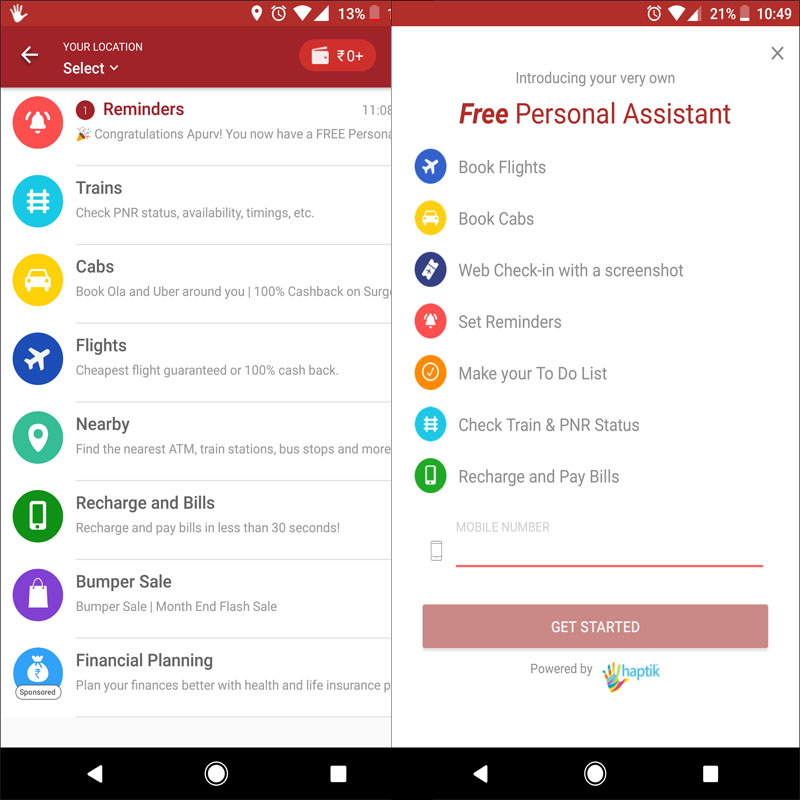
    Powered by Haptik, India’s leading artificial intelligence based personal assistant and chatbot platform, the virtual assistant enables users to set reminders, recharge their mobile, book flights, do web check-ins, make to-do lists, and much more through the Times of India Android News app. Sprite is the exclusive brand partner for this launch integrating the brand very closely with the service.

    This first-of-its-kind innovation in a news app also allows users to book cabs (Uber & Ola), make bill payments (DTH and electricity), and pay through the app via credit card, debit card, netbanking and wallets. For the launch period, where users can get 50 per cent cash back on Recharges, Bill Payments, & more via Amazon Pay.

    To access the Personal Assistant, users need to tap the hand icon at the top right of the home screen, validate the mobile number and then choose one of the many services that the virtual assistant provides. Users can expect many more features to be enabled on this platform in the coming days.

    Commenting on the launch of this new feature in TOI app, Puneet Gupt, COO & Business Head, The Times of India, said, “We are excited with the launch of Virtual Assistant inside the Times of India app. The launch enables us to empower our users with both news-and-information & virtual assistant led productivity within the app that they love.”

    Aakrit Vaish, Founder & CEO, Haptik, said, “Over the last few years, the Haptik virtual assistant chat platform has grown to millions of users and is one of the highest rated apps in India. Our vision is that the service should be accessible from anywhere people want, and not just be restricted to a single app. Integrating into a news app is a natural fit, and the audience of TOI is exactly the type who will appreciate the service,”

    To download the Times of India app on their smartphone or to upgrade to the latest version with the virtual assistant, users can use the link below
    https://play.google.com/store/apps/details?id=com.toi.reader.activities&hl=en

    The Economic Times Power of Ideas, India’s biggest entrepreneurial platform for aspiring and budding entrepreneurs, is back. Presented by Facebook in partnership with DST (Govt. of India) and CIIE. Sign up at www.etpowerofideas.com. Entries accepted till Monday, 13 November 2017

  • Uber launches premier and Delhi UberEATS

    Uber launches premier and Delhi UberEATS

    MUMBAI: Uber has made two moves — launched premier service in Mumbai and Pune, and started UberEATS in Delhi.

    Uber, an on-demand ride-sharing company, announced the launch of Premier, a superior ride option at everyday, affordable fares. With a pilot rollout in Mumbai and Pune, select riders will be offered Premier as an in-app product option that serves as an upgrade to their current uberX experience.

    Uber India GM – west Shailesh Sawlani said, “As we work towards reducing private car ownership in India, Uber is focused on building products that will go further in replacing the need for personal mobility options.

    UberEATS meantime has expanded its operations to Delhi, bringing food to consumers in a convenient manner. Partnering with over 200 restaurants in South Delhi, Delhiites can now order their local favorites from restaurants like Barista, Moti Mahal, Pita Pit, and Dimcha.

    UberEATS Delhi GM Faiz Abdulla said, “Hitting the ground gives us a chance to experience the magic we want to deliver firsthand.”

    UberEATS will now be available in South Extension, Defence Colony, Kalkaji, Nehru Place, East of Kailash, GK I & II, Safdarjung, Green Park, Hauz Khas, Gulmohar Park, Asiad Village, Malviya Nagar, Saket and Mehrauli.

  • India’s 400 mn smartphones generate 80% data traffic: FB’s Umang Bedi

    MUMBAI: India has 400 million smart phones that account for 80 per cent of internet data traffic at present and when many non-feature phones will start getting replaced or include features facilitating internet access, it will change the way how data is accessed, according to Facebook managing director, India & South Asia, Umang Bedi.

    Speaking at the IAMAI event here on Tuesday, Bedi, while highlighting how over a decade back (united) Reliance brought in revolution in India by introducing cheap mobile handsets and competitive plans for consumers, said the launch of Jio service by Mukesh Ambani-promoted Reliance Industries earlier this year is bringing about a similar revolution by employing disruptive marketing tactics and pricing that is again changing the way India consumes data.

    Bedi, who was speaking extempore at the event, said there are three Indias that needs watching and from where growth likely to come.

    The first India, he mentioned, is the one that subscribes to books on e-retailers like Amazon, shops on Flipkart and rides on Ola cabs rides, which is similar to what is happening in the West. According to Bedi, India today is a growing digital market registering a 35 per cent growth worth USD 1.8-2.8 billion.

    The second India, according to Bedi, is the mass India that lives in tier 2 and 3 cities /towns where people have money and aspirations but no access to affordable Internet. And, the third India comprises about 25 million people living in rural areas for whom new solutions and methods to reach them are needed. Reason: It’s this huge mass that will become a big consuming market in near future.

    As disruption seemed to be the underlying theme of the digital economy, Bedi dwelt on the disrupters theory, fathered by Clayton Christensen, saying disruption is happening in the digital sector and it’s being done by the likes of Amazon (from selling books to etailing electronics appliances, smart phones, etc) and Uber.

    Pointing out that Amazon and Uber were the “biggest disrupters” in today’s world, Bedi also issued a warning to all marketers saying that unless business people remained “humble”, they themselves may find disrupted.

  • Jet-Uber tie up for smart travel

    MUMBAI: With a clear focus to continuously enhance guest experience, Jet Airways has announced a strategic association with ride-hailing major Uber.

    With this first-of-its kind initiative in the Indian aviation space, the airline will partner with Uber to offer its guests greater choice by facilitating their travel to/from the airport once they have booked a ticket on the Jet Airways app. This path-breaking initiative from the airline will help guests by offering a seamless solution from doorstep to doorstep, with the benefit of two leading players in the travel space – Jet Airways and Uber.

    Guests booking their flights on the app and using Uber for the first time will be also benefit from a discount of Rs 150 across their first three rides by using the promo code JETUBER.

    Jet chief commercial officer Jayaraj Shanmugam said, “Our partnership with Uber for a comfortable and seamless travel experience between their homes or offices and the airport, reflects our ambition to leverage technology for enhancing our guest experience. More importantly, it is also a meeting of minds, where two leading, technology savvy and innovation-driven organisations have joined hands with an objective to create and promote new and fulfilling travel experiences for their guests in the long term. The association is especially meaningful since both Jet Airways and Uber have substantially similar guest profiles and needs, which will facilitate greater collaboration.”

    Uber India & emerging markets chief business officer Madhu Kannan said, “We are excited to partner with Jet Airways to make traveling in India even more seamless. Through this partnership, Jet Airways’ guests across 29 cities will be able to request their Uber when they book their flight. That removes any last-minute hassles when heading to the airport and makes for a smooth arrival in your destination city. Uber is all about making travel easy and convenient, and this partnership exemplifies that.”

    The cab booking feature will be available to all Jet Airways’ guests in the cities where Uber currently operates in India while booking their travel itinerary with the airline on the Jet Airways app.

  • Jio & Uber partner to enhance digital experience

    MUMBAI: Reliance Jio and Uber have announced a strategic partnership aimed at bringing the benefits of Jio Digital Life ecosystem to their users.

    As part of the partnership, Jio and Uber will work together and explore various opportunities to progressively enrich and enhance the digital life experience of their users through complementary programmes.

    Today JioMoney, the PPI wallet offered by Reliance Payment Solutions Ltd, and Uber announced an agreement that will enable Uber riders to pay for their rides using JioMoney and thereby enhance the digital transaction ecosystem in India. Similarly, JioMoney users will soon be able to request and pay for Uber rides from within the JioMoney app. The partnership will give a major boost to cash-free payments in India and provide mobility options to millions of Jio users.

    Starting today, Uber will gradually rollout the JioMoney payment option for its users across the country. This integration provides a hassle-free payment experience to Uber riders and will be an added avenue for digital transactions for JioMoney’s rapidly growing user-base across India.

    JioMoney business head Anirban S Mukherjee said, “Jio aims to bring the benefits of evolving digital technologies to every Indian through an entire ecosystem that will allow Indians to live Digital Life to the fullest. JioMoney is an integral part of the Jio ecosystem and is fast emerging as a preferred option for digital transactions due to its ease of use, intuitive interface and growing acceptability. JioMoney’s integration with Uber will power the rapid migration of many more Uber transactions to the digital platform.”

    Uber India and emerging markets chief business officer Madhu Kannan said that “We are delighted to partner with Reliance Jio to unlock synergies across two of the largest user bases in India. Digital payments have become part of our everyday lives and by integrating JioMoney as a payment option, our riders will have the ability to use a familiar and consistent payment experience. Through this strategic partnership we are looking to fast forward to digital solutions at scale for the Indian users.”

    To celebrate the association, JioMoney and Uber will offer exclusive incentives to every user paying for Uber rides through JioMoney. The users of JioMoney will enjoy the hassle free payment experience of JioMoney at multiple avenues along with attractive offers and coupons available through JioMoney app.

  • AXN campaign for ‘Sherlock’ with Social & Uber succeeds

    AXN campaign for ‘Sherlock’ with Social & Uber succeeds

    MUMBAI: He came, we saw and he conquered. That is how Sherlock S4 in India can be summed up. AXN premiered the BBC drama in India with an integrated 360-degree marketing campaign. Taking cues from the global campaign, AXN India adapted the international thought ‘It’s not a game anymore’ and created an India-specific, clutter-breaking campaign.

    The fans loved the concept which in turn garnered quality social media conversations around the campaign tagline and the show.

    Sony Pictures Networks India EVP and business head – English cluster Saurabh Yagnik said, “AXN is an aspirational brand for the youth so we strategically partnered with other aspirational youth brands – Social and Uber. We were able to engage with our target audience more efficiently and effectively creating a win-win proposition for all. The response from viewers has been phenomenal. We trended on Twitter for over 110 hours during the campaign period. AXN is home to Sherlock and we reinforced our position as the best destination for iconic shows and characters.”

    With an aim to further the Sherlock craze, all marketing elements like on-air promotions, social media buzz, on-ground association, outdoor campaigns, radio spots and PR tools were strategically used to make the premiere a huge success.

    The integrated activities began with a month long on-air campaign that included one-of-a-kind association with India’s leading app Uber and buzziest youth hangout joint Social. The first step was for Uber travelers to unlock the Sherlock code on the Uber app. This resulted in top 100 winners of the activity to watch exclusive screening of Sherlock season 4 episode before the India premiere.

    Uber GM Mumbai and West Shailesh Sawlani added, “We tied up with AXN to give our riders across Mumbai, Delhi and Bangalore a first-hand flavour of Sherlock, this season. The campaign saw a great response across the three cities and it was a phenomenal experience for the ardent fans to simply enter a promo code to attend the exclusive screening.”

    The three-week long collaboration with Social enabled fans to experience Sherlock’s eccentric lifestyle by being part of an exciting treasure hunt across key Social outlets in India. The fans also got photographs clicked at the Sherlock zone created at the venue, which was equipped with Sherlock props, and win exclusive AXN hampers.

    AXN got on board stand-up comedian of EIC fame, Azeem Banatwalla to take viewers through the Sherlock voyage. A 5-minute crash course to all the previous episodes coupled with his wacky humour, got the more than one million views creating tremendous buzz online.

    Impresario (parent company of Social) director – marketing and strategy Shobita Kadan added, “We were delighted to partner with AXN and provide a platform for the first ever screening of Sherlock for which we share a common audience. Our patrons; true Sherlockians got the opportunity to enjoy the screening well before anyone else in the country. A 360-degree brand experience was curated through various touch points such as a fun treasure hunt, an interactive photo booth and fun giveaways to reinstating the culture-defining Social experience.”

  • ‘India needs 80 lakh hotspots; metros’ spectrum 1/10th of U.S’

    ‘India needs 80 lakh hotspots; metros’ spectrum 1/10th of U.S’

    MUMBAI: India needs over 80 lakhs hotspots as against the availability of about 31,000 hotspots with a view to reach the global level of one Wi-Fi hotspot penetration for every 150 people, according to ASSOCHAM-Deloitte joint study.

    There are currently over 31,000 public Wi-Fi hotspots installed in India. However, for India to match the current global average of one public Wi-Fi hotspot per 150 people, an additional 80 lakhs hotspots need to be deployed, noted the study titled ‘Digital India: Unlocking the Trillion Dollar opportunity,’ jointly conducted by ASSOCHAM and research firm Deloitte.

    The biggest challenge faced by the Digital India programme is the slow/delayed infrastructure development. Spectrum availability in Indian metros is about a tenth of the same in cities in developed countries (such as the U.S, U.K, Russia, etc). This has put a major roadblock in providing high speed data services (such as OTT and VOD).

    For Digital India to have a large scale impact on citizens across the nation, the digital divide needs to be addressed through last mile connectivity in remote rural areas. Currently, over 55,000 villages remain deprived of mobile connectivity. This is largely due to the fact that providing mobile connectivity in such locations is not commercially viable for service providers, adds the joint study.

    “For digital technology to be accessible to every citizen significant efforts are needed to customise apps and services to cater to local needs. Finding vendors who can provide such applications has become a challenge”.

    Policy framework for Digital India: Challenges in policy, such as taxation, right of way, restrictive regulations etc. are major roadblocks in realizing the vision of Digital India.

    Some of the common policy hurdles includes lack of clarity in FDI policies, for instance, have impacted the growth of e-commerce. Transport services like Uber have had frequent run-ins with the local government due to legacy policy frameworks which have not become attuned to the changing business landscape.

    Implementation of the Digital India programme has been hampered by contracting challenges such as several projects assigned to PSUs are delayed given challenges related to skills, experience and technical capabilities. Several RFPs issued by the government are not picked up by competent private sector organizations since they are not commercially feasible.

    The reports suggest that, as recently as 2014, nearly 70 per cent of Indian consumers indicated that lack of awareness was the main reason for not using internet services. Non-availability of digital services in local languages is also a major concern, noted the study.

    With the proliferation of cloud-based services like DigiLocker, data security has emerged as a major challenge. The recent data breach in August 2016, in which debit card data for more than 3.2 million subscribers was stolen highlights the importance of implementing foolproof security systems, adds the study.

    Development of digital infrastructure is a critical component of Digital India. To further enable development of digital infrastructure, the following measures should be considered as uniform policies for deploying telecom and optic fibre infrastructure.

    A uniform RoW policy across all states with a reasonable cost structure is required along with a single window mechanism for granting RoW permissions. PPP models need to be explored for sustainable development of digital infrastructure, as has been the case for civic infrastructure projects like roads and metro project. In addition, the government should make efforts to make additional spectrum available to telecom service providers for deployment of high speed data networks.

    Encourage collaboration with the private sector; Effective collaboration with the private sector is critical to the development of the digital infrastructure. Innovative engagement models that ensure commercial viability needs to developed jointly through consultation with industry bodies. This will encourage private sector participation and ensure a better response to infrastructure RFPs. In addition, startups need to be incentivised for the development of the last mile infrastructure and localized services and applications.

    Existing government infrastructure assets (e.g., post offices, government buildings, CSCs) should be further leveraged for provision of digital services. In rural and remote areas, private sector players should be incentivised to provide last mile connectivity. USOF can be effectively used to incentivise and create a viable business model. The deployment of funds so far has been erratic and not been used to effectively to fund the cost of infrastructure creation in rural areas. Currently, the fund has over Rs 451 billion in reserves which can be used to finance rural digital infrastructure growth in India through direct investment or subsidies.

    Satellite communication solutions could be used to speed up broadband access in rural and remote areas. For instance, banks can use VSAT technology to connect remote ATMs, remote branches that need instant access to customer data. It could be used as a last mile connectivity solution in rural areas which lack telecom networks. Another example could be of the navigational system NAVIC (Navigation with Indian Constellation), which can have applications in terrestrial, aerial and marine navigation, disaster management, vehicle tracking and fleet management, integration with mobile phones, precise timing, mapping and geodetic data capture, terrestrial navigation aid for hikers and travellers and visual/ voice navigation for drivers.

  • ‘India needs 80 lakh hotspots; metros’ spectrum 1/10th of U.S’

    ‘India needs 80 lakh hotspots; metros’ spectrum 1/10th of U.S’

    MUMBAI: India needs over 80 lakhs hotspots as against the availability of about 31,000 hotspots with a view to reach the global level of one Wi-Fi hotspot penetration for every 150 people, according to ASSOCHAM-Deloitte joint study.

    There are currently over 31,000 public Wi-Fi hotspots installed in India. However, for India to match the current global average of one public Wi-Fi hotspot per 150 people, an additional 80 lakhs hotspots need to be deployed, noted the study titled ‘Digital India: Unlocking the Trillion Dollar opportunity,’ jointly conducted by ASSOCHAM and research firm Deloitte.

    The biggest challenge faced by the Digital India programme is the slow/delayed infrastructure development. Spectrum availability in Indian metros is about a tenth of the same in cities in developed countries (such as the U.S, U.K, Russia, etc). This has put a major roadblock in providing high speed data services (such as OTT and VOD).

    For Digital India to have a large scale impact on citizens across the nation, the digital divide needs to be addressed through last mile connectivity in remote rural areas. Currently, over 55,000 villages remain deprived of mobile connectivity. This is largely due to the fact that providing mobile connectivity in such locations is not commercially viable for service providers, adds the joint study.

    “For digital technology to be accessible to every citizen significant efforts are needed to customise apps and services to cater to local needs. Finding vendors who can provide such applications has become a challenge”.

    Policy framework for Digital India: Challenges in policy, such as taxation, right of way, restrictive regulations etc. are major roadblocks in realizing the vision of Digital India.

    Some of the common policy hurdles includes lack of clarity in FDI policies, for instance, have impacted the growth of e-commerce. Transport services like Uber have had frequent run-ins with the local government due to legacy policy frameworks which have not become attuned to the changing business landscape.

    Implementation of the Digital India programme has been hampered by contracting challenges such as several projects assigned to PSUs are delayed given challenges related to skills, experience and technical capabilities. Several RFPs issued by the government are not picked up by competent private sector organizations since they are not commercially feasible.

    The reports suggest that, as recently as 2014, nearly 70 per cent of Indian consumers indicated that lack of awareness was the main reason for not using internet services. Non-availability of digital services in local languages is also a major concern, noted the study.

    With the proliferation of cloud-based services like DigiLocker, data security has emerged as a major challenge. The recent data breach in August 2016, in which debit card data for more than 3.2 million subscribers was stolen highlights the importance of implementing foolproof security systems, adds the study.

    Development of digital infrastructure is a critical component of Digital India. To further enable development of digital infrastructure, the following measures should be considered as uniform policies for deploying telecom and optic fibre infrastructure.

    A uniform RoW policy across all states with a reasonable cost structure is required along with a single window mechanism for granting RoW permissions. PPP models need to be explored for sustainable development of digital infrastructure, as has been the case for civic infrastructure projects like roads and metro project. In addition, the government should make efforts to make additional spectrum available to telecom service providers for deployment of high speed data networks.

    Encourage collaboration with the private sector; Effective collaboration with the private sector is critical to the development of the digital infrastructure. Innovative engagement models that ensure commercial viability needs to developed jointly through consultation with industry bodies. This will encourage private sector participation and ensure a better response to infrastructure RFPs. In addition, startups need to be incentivised for the development of the last mile infrastructure and localized services and applications.

    Existing government infrastructure assets (e.g., post offices, government buildings, CSCs) should be further leveraged for provision of digital services. In rural and remote areas, private sector players should be incentivised to provide last mile connectivity. USOF can be effectively used to incentivise and create a viable business model. The deployment of funds so far has been erratic and not been used to effectively to fund the cost of infrastructure creation in rural areas. Currently, the fund has over Rs 451 billion in reserves which can be used to finance rural digital infrastructure growth in India through direct investment or subsidies.

    Satellite communication solutions could be used to speed up broadband access in rural and remote areas. For instance, banks can use VSAT technology to connect remote ATMs, remote branches that need instant access to customer data. It could be used as a last mile connectivity solution in rural areas which lack telecom networks. Another example could be of the navigational system NAVIC (Navigation with Indian Constellation), which can have applications in terrestrial, aerial and marine navigation, disaster management, vehicle tracking and fleet management, integration with mobile phones, precise timing, mapping and geodetic data capture, terrestrial navigation aid for hikers and travellers and visual/ voice navigation for drivers.

  • Sherlock s4 to premiere on AXN; partners Uber for campaign

    Sherlock s4 to premiere on AXN; partners Uber for campaign

    MUMBAI: This is the best way to begin the new year for all the Sherlock fans. Benedict Cumberbatch and Martin Freeman have come together one more time for a brand new season of BBC drama Sherlock that will air exclusively on AXN India from 7 January every Saturday at 8 pm.

    After three successful seasons, the latest addition to the most loved thriller series will showcase new faces and bigger hurdles for Sherlock Holmes.

    Returning from his forced exile, Sherlock reunites with Dr. Watson to figure out how his nemesis Moriarty, could be back from the dead. Adding to this intensity is another murky villain Culverton Smith played by Toby Jones.

    “AXN is home to some of the best shows and characters in the English entertainment space. AXN has been home to Sherlock ever since the show launched and grew tremendously in popularity. We have been keenly waiting for the launch of the new season. It is the most awaited show of 2017 and we wanted to air it around the same time as its world premiere for our viewers. There is a strong line up of more such exciting shows and new seasons in 2017,” said Sony Pictures Networks India EVP and business head English cluster Saurabh Yagnik.

    The channel has rolled out a robust marketing plan across on-air, outdoor, radio, social media and on-ground to make this the most celebrated Sherlock season. AXN, in association with Uber, will run a three-weeklong on-air campaign across Mumbai, Delhi and Bangalore starting with a pre-screening buzz.

    In the pre-launch week, fans need to unlock the Sherlock code on the Uber app and a lucky few will get a chance to attend the exclusive Sherlock season 4 premiere, thus gifting themselves a chance to watch the show before the rest of India does.

    In the following weeks, Sherlock viewers will have the amazing opportunity to get special discounts on their Uber rides by using the code that flashes on AXN during the show.

    To ensure maximum eyeballs for the premiere, AXN has also initiated a two-week interactive experience across the three cities at Social Cafésto make people think, feel and live, Sherlock. Wearing the Sherlock hat, guests have to seek some clues in order to become eligible to win an iPad or exclusive AXN hampers.

    To intensify the Sherlock fever, AXN has signed on East India comedy artist, Azeem Banatwalla, to take the viewers through the Sherlock journey. Coupled with Banatwalla’s wacky humour, this especially designed video will summarize all the last seasons of Sherlock.