Tag: Uber

  • Brands with most integrated marketing plans to win as cricket season heats up

    Brands with most integrated marketing plans to win as cricket season heats up

    MUMBAI: Franchises, brands, broadcaster and most importantly the fans were left delighted on Tuesday as news trickled in that the Indian Premier League 2019 will be played entirely in India. The Board of Control for Cricket in India (BCCI) also announced that the 12th edition of the cash-rich league will commence from 23 March 2019.

    This is the first time since the inception of the IPL that all its matches will be played in India during a general election year. In a sense, this is a testament to the humongous popularity of the cash-rich league. It must be noted that the entire 2009 edition was moved to South Africa, while in 2014, some matches were played in the UAE.

    Season 11 of the IPL was a runaway success on every front. Broadcaster Star India leveraged 17 of its channels, including Star Plus and Star Gold, to make the finals a smash hit. It was aired in eight languages including Hindi, English, Tamil, Telugu, Bengali, Kannada, Marathi and Malayalam.

    Last year, the IPL was broadcast in six different languages – Hindi, English, Tamil, Telugu, Kannada, and Bengali. While Star was unable to get full-fledged Telugu, Kannada and Bengali channels up and running at that time, it ensured that viewers from these regions didn’t miss out on the experience. It aired the matches on Suvarna Plus (Kannada), Maa Movies (Telugu) and Jalsha Movies (Bengali).

    The thrilling final powered the network’s growth by 34 per cent with 52.9 million average impressions. The final between Chennai Super Kings and SunRisers Hyderabad was produced with 11 live feeds across the TV network and Hotstar.

    Brands have long recognised the power and popularity of cricket in India.  However, with video proliferation and regional language market expansion, more avenues seem to have opened up for the marketers to position their products.

    With India kicking off the year with a historic 2-1 Test series win against Australia, 2019 could be the year the nation is hooked on to cricket like never before.

    PwC India partner- media, entertainment and sports Raman Kalra says, “India is always a cricket hungry nation and will always continue to be cricket loving nation. A lot of diversified brands will be seen participating. The important thing is how they weave this story into a much more deeply integrated marketing plan. It is not just about running one campaign or two campaigns, can they really integrate the storyline throughout the ATL and BTL and do something beyond what is being done.”

    Barring series (ongoing Australia versus India and West Indies versus India in the month of July and August) Star is bound to be the home of cricket for India’s cricket-loving public.

    The broadcaster’s offering in 2019 commences with New Zealand versus India series followed by Australia’s visit to India, followed by the IPL and the all-important 50-over ICC Cricket World Cup among others.

    Sports advertising expenditure is largely driven by cricket with other sports contributing a minor share. According to India Sports Sponsorship report 2018 by ESP properties and SportzPower, media spending in sports as a whole grew 15.8 per cent from Rs 3511 crore ($ 516 million) to Rs 4065 crore ($ 616 million), driven even more strongly in 2017 by Television On Air, which grew an incredible 42.7 per cent from Rs 2376 crore ($ 348 million) to Rs 3379 crore ($ 512 million). The other reason for sports adex increase is the annual increase in ad rates, especially on IPL.

    “The crux would be which brand has the most integrated marketing plan and go beyond the TV, digital campaign to engage with the audience and convert them into fans,” Kalra adds.

    The marquee cricket season is also an opportunity for new brands to tap into a wider audience and amplify their reach and communication.

    Some of new brands that associated with the IPL last season were AMFI, Asian Paints, Berger Paints, Blue Star, Ceat Tyres, Crompton, Dollar, Ford, Haier, Luminous, Pidilite, Sleep Well, Vanessa, Vimal Pan Masala and Voltas joined the existing ones like Vivo, Colgate, Amul, Dream11, Elcia, Kent, Parle Agro, Polycab to name a few.

    When it comes to the big ICC events, the likes of Oppo, Nissan, MRF Tyres, Emirates, Uber, Bira, Dream11, and Royal Stag do not miss a chance to grab the audiences’ attention.

    Some industry experts believe that advertisers could be looking at an option that includes featuring both during the IPL and the World Cup as part of a combo deal.
  • Pavan Vaish appointed Uber’s head of central operations

    Pavan Vaish appointed Uber’s head of central operations

    MUMBAI: Ride-sharing company Uber has announced the appointment of Pavan Vaish as its new head of central operations. Pavan joins Uber with over 25 years of experience in building and leading global technology businesses.

    In his earlier experience, Vaish has been the co-founder and CEO of Daksh e-services, the geographical footprint of which has been expanded across Latam, Europe, and Asia. The company is popular as recognised as one of the most successful service's acquisitions in IBM’s history. Vaish spearheaded its integration with IBM.

    Vaish was also amongst the co-founders of Quadrant Infotech, an offshore data capturing business focused on the US market. A visionary among BPO industry leaders, he has been guiding the industry toward achieving competitive advantages beyond labour arbitrage long before the onset of commoditsation of BPO services.

    He had also been the global chief operating officer at UnitedLex, where he was responsible for overseeing daily business operations and managing its business objectives across various geographies. He was also responsible for the transformation of IBM Global Process Services from an emerging enterprise into one of the largest and most respected companies in the Global BPO industry.

    An alumnus of the prestigious Indian Institute of Technology (IIT), Kharagpur, he holds a Master's degree in Mechanical Engineering from Stanford University. He is also a Graduate of the Advanced Management Program of the Harvard Business School.

  • Uber India sees massive revenue growth in 2017-18

    Uber India sees massive revenue growth in 2017-18

    MUMBAI: US-based cab-hailing platform, which competes with brands like Ola, Uber has shown an impressive revenue growth from its India business in the fiscal-ended March 2018. As per its filings with the ministry of corporate affairs, Uber has recorded revenue of Rs 21.5 crore in the fiscal a massive rise from Rs 1.04 crore in 2016-17.

    According to filings accessed via business intelligence platform Tofler, Uber India Technology also witnessed a manifold rise in its net profit, recorded at Rs 19.6 lakh in 2017-18 as compared to Rs 3.22 lakh in 2016-17.

    Though the company accumulated losses of $1.07 billion in September 2018 quarter, it is still willing to invest in Uber Eats and electric bikes & scooters businesses as well as in high-potential markets such as India and the Middle East.

  • Uber appoints Satinder Bindra as first director of comm for India, SA

    Uber appoints Satinder Bindra as first director of comm for India, SA

    MUMBAI: Uber India has appointed Satinder Bindra as its first director of communications for India and South Asia.
    As a key member of Uber’s regional leadership team, Bindra will be responsible for driving Uber’s reputation forward and delivering against the mission of providing reliable transportation everywhere, for everyone; encompassing internal and external communications, stakeholder relations and community outreach efforts.
    Announcing his appointment, Uber SVP for policy and communications Jill Hazelbaker said, “I am thrilled for Sat to join Uber and lead our communications efforts across India and South Asia. Sat brings a truly exceptional collection of experiences encompassing more than two decades and spanning over 70 countries. He is a thought leader, a respected development advocate, humanitarian and campaigner; he is also an author, an award winning journalist, documentarian, and a talented brand ambassador. His appointment reinforces our commitment and continued investment to India, as an absolutely critical global market for Uber.”
    Bindra joins from Seabed 2030 where, as its founding project director, he led a first-of-its-kind global movement in collaboration with Japan’s Nippon Foundation, international sea floor mapping experts, governments and the maritime community to map the entire ocean floor in support of the UN’s Sustainable Development Goal #14
    Previously, Bindra was the principal director of external relations at the Manila-based Asian Development Bank, the communications director for the United Nation’s Development Program in New York City and the United Nations Environment Programme in Nairobi, Kenya. In addition, he has worked in a variety of senior on air and editorial roles for some of the world’s leading news organisations such as CBS, CNN, CTV, the Canadian Broadcasting Corporation (CBC) and The Canadian Press.
    Commenting on his appointment, Bindra said, “I’m honoured to work for Uber, a company that is reshaping technology, changing consumer behaviour and promoting sustainability at an unprecedented scale. In India and South Asia, Uber has a formidable track record of creating economic opportunities, improving social mobility, reducing traffic congestion and improving air quality. I look forward to sharing its exciting story with 1.9 billion South Asians.”

  • Tiger Global invest $6 million in TVF

    Tiger Global invest $6 million in TVF

    MUMBAI: The Viral Fever (TVF), an over-the-top (OTT) platform, has raised an additional $6 million (around Rs 41 crore at current exchange rates) from existing investor Tiger Global, according to VCCircle.

    Tiger Global is one of the most active venture capital investors, with around 50 firms in its portfolio. It has backed unicorns including e-commerce major Flipkart, classifieds platform Quikr and ride-sharing firms Ola and Uber.

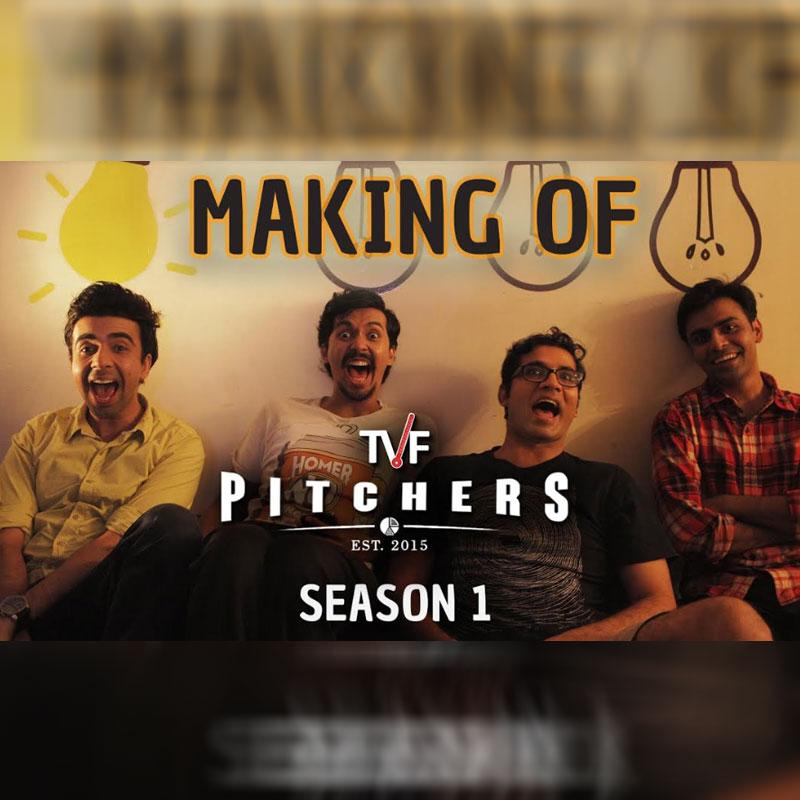
    TVF started out as a YouTube channel that produced premium content targeted at a young demographic. Besides YouTube, its website and Android and iOS apps also serve as digital OTT content distribution platforms.

    TVF which is operated by Contagious Online Media Network, raised the fresh capital at an estimated post-money valuation of around $40 million (around Rs 270 crore). TVF has also raised more than $20 million in external funding, which includes a $4.97 million investment from Tiger Global in July.

    The platform was founded in 2010 by Arunabh Kumar and incorporated in August 2015. It is backed by well-known individual investors that include Flipkart co-founder Binny Bansal, Ola co-founders Bhavish Aggarwal and Ankit Bhati, Freecharge founder Kunal Shah and Toppr founder Zishaan Hayath, among others.

    TVF generates its revenues through marketing and advertising streams associated with its content viewership. It is yet to charge audiences for its content.

    The company had a tumultuous 2017 after founder and CEO Kumar stepped down as chief executive officer following accusations of sexual harassment by a former employee.

    He was replaced by TVF’s chief operating officer Dhawal Gusain.

  • Uber appoints Pradeep Parameswaran as its new India head

    Uber appoints Pradeep Parameswaran as its new India head

    MUMBAI: Ride-sharing app Uber on Tuesday appointed Pradeep Parameshwaran as its new India and Asia head. The company’s move is in line with its aim to double down on its investment in the country, as it looks to grab market share from home-grown rival Ola (ANI Technologies Pvt Ltd).

    Parameshwaran will replace Amit Jain, who has been tasked with heading Uber’s entire Asia Pacific business, including countries such as Australia, New Zealand and North Asia. Jain’s appointment was part of the broader strategy that indicated Uber’s intentions to grab the market as Ola has taken in Australia, which also recently launched its service n that country. 

    Earlier in an Interview with Livemint, Uber’s chief operating officer Barney Harford said, “The company was considering both internal and external candidates for the role of India head.  Uber would continue to invest heavily in India, the ride-hailing company’s most important market outside the US, for an indefinite period rather than focus on cutting the company’s massive losses in India” 

    Commenting on his new role, Pradeep Parmeashwaran said, “Uber is one of the most exciting, innovative and mission-driven companies in the world, and I’m thrilled to lead our business in this critical global market as we work to bring the benefits of ride-sharing to even more riders, drivers, and cities. After twenty years building businesses and leading through change across Asia and the US, I am excited to shape how the region moves over the next twenty”

    Prior to joining  Uber, Parmeshwaran was working with Den Network Limited as CEO. He brings with him 20 years of experience, having worked in the US, Asia Pacific and Africa. He has also been associated with companies across the technology value chain including Internet companies, telecom service providers, ISPs, cable/DTH providers, handset manufacturers, network OEMs, IT service providers, software companies and fiber players on multiple functions including strategy, business building, sales acceleration, operations, organization and finance. 

    Parameswaran’s appointment comes at a time when Uber is engaged in market share battles in the Asia Pacific region against local rivals such as Ola, which is backed by Japan’s SoftBank Group Corp, a common investor in both taxi start-ups. 

    Rumours of a potential Ola-Uber merger in India have been doing the rounds for the past few months, but both companies have repeatedly denied any such reports.

  • Uber Lite launched in India & other developing nations

    Uber Lite launched in India & other developing nations

    MUMBAI: India is Uber’s most crucial market in Asia! Earlier this year, Uber sold its business in Southeast Asia to local rival Grab.

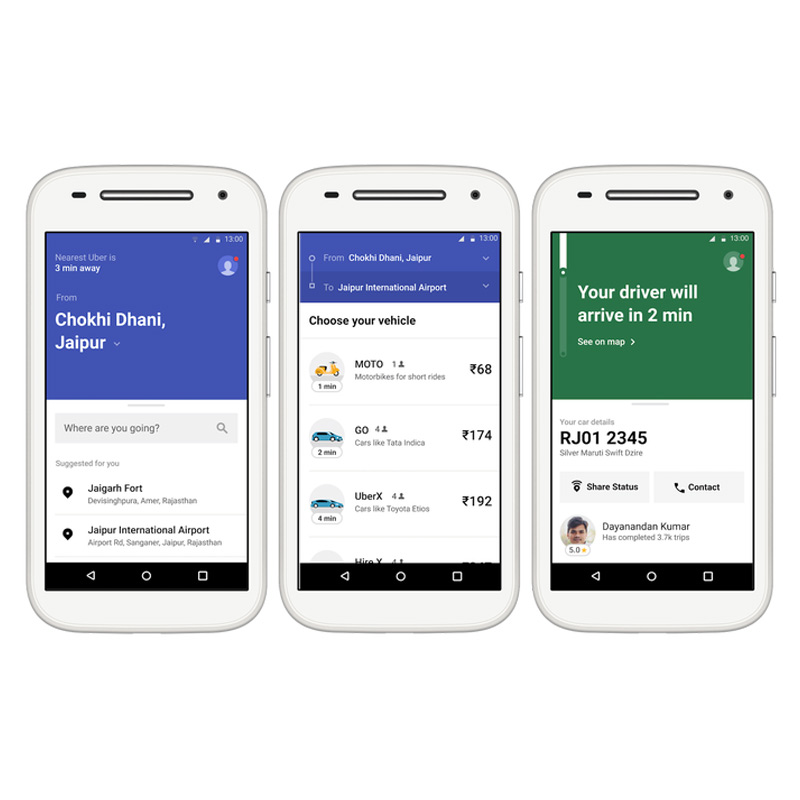
    Now, to tap the consumers in India and other ‘developing’ nations, the ride-sharing app has announced the launch of a lighter version of its app, Uber Lite. Lite will be a simple version of the rider app that saves space, works on any network. Currently, it is only compatible with Android phones, which the majority of the app’s target audience uses.

    The app will feature only entry-level specifications and low internet speeds. 

    Uber Lite is launching first in India, but the company will roll it out in other emerging markets in the future.The app will be initially available in Delhi, Jaipur, and Hyderabad. 

    Uber Lite is less than 5MB to download, as compared to the regular Uber app’s 181.4MB size and will come with a 300-millisecond response time, where the booking process is fast even in low connectivity.

    Uber Lite will also have in-built existing features like in-app support and the ability to share  trip with friends and family.

    Uber Lite was designed to make booking rides easier and quicker in spotty connectivity and slower than average internet speeds, on basic Android phones, and for people with limited data plans. Uber Lite guides users through the request experience by detecting their current location, so minimal typing is required. If it can’t detect your location because of GPS or network issues, it will surface popular pickup points nearby from you to choose from.

    To keep the app light and fast, maps in Uber Lite are optional, but available with just a tap if you want them. Going forward Uber will also include the option to request a ride even when offline. 

    The lite app looks like a great add-on for users who still have a smartphone with 2G or slow speed connections. In January this year, Ola launched its Lite app that takes only 1MB of download space and offers a stripped down version of its designs and features.

  • Uber India launches new campaign with Virat Kohli

    Uber India launches new campaign with Virat Kohli

    MUMBAI: Uber, the ride-sharing app that is redefining urban mobility across the world, has unveiled its new brand campaign, with brand ambassador Virat Kohli. The baseline, ‘Badhte Chalein’, is built around the brand’s new positioning that is intended to build Uber as an enabler of movement, that is culturally progressive.

    Uber India head of marketing Sanjay Gupta says, “This is not just a brand idea – it’s happening on the ground, across India, everyday. This brand position is as intrinsically human as the millions of people who ride with us each week, and each of their pursuits. The communication has been designed to be progressive in thought, aspirational in spirit, widely-relatable in manner. And with Virat – perhaps India’s most inspiring model of personal progress. The breadth of communication built around this idea across ATL, digital and owned media, will cement our positioning and bring it to life.”

    In this campaign, Virat plays the role of the brand’s voice to help build Uber’s narrative in India. Set against Virat’s narrative, the commercial showcases four real life inspired examples of riders using Uber in different contexts, to pursue what gives them purpose. The ad features a visually impaired rider, an expectant couple rushing to the hospital, a young female doctor commuting to work and an independent mother taking her daughter to an early morning judo class.

    Uber’s brand ambassador and cricketer Virat Kohli mentions, “I am looking forward to be a part of Uber’s campaign, and moreover being a partner to a company, that in all its capacity, is committed to empowering cities and its people. I appreciate the service that Uber provides to its riders to travel comfortably anytime, anywhere. Being part of this campaign also gave me the opportunity to interact with the driver partners at a personal level and understand how the company has helped them to chase their dreams.”

    The campaign conceptualised by Ogilvy, aims to reiterate its effort to make Uber an everyday, aspirational brand for millions of riders and drivers in India. It positions Uber as a brand that is beyond transportation from point A to point B, reinforcing Uber’s role as an enabler of opportunities for hundreds of thousands of driver partners and riders in India.

    Uber’s relationship with Madison continues through to 2018, to build and execute the media strategy for this intervention. A six month multi-platform campaign, will span ATL (TV, Radio, OOH, Print) as well as Digital (Youtube, Facebook, Twitter and Content publishers) as well as Uber owned CRM Channels and locations. Given the scale and geographic footprint that the business has achieved, the TVC and radio campaigns will be aired in six languages Hindi, Kannada, Marathi, Telegu, Tamil and Bengali.

  • India’s taxi war may be headed for a truce

    India’s taxi war may be headed for a truce

    MUMBAI: Gone are the days when we had to book a cab by calling a local can agency, and that’s because cab aggregators in India have completely changed the way we book a cab.

    Back in the day, while Mumbai had its distinguished kaali-peelis, Delhi had its metro whereas Bengaluru didn’t have a great public transport system. Cabs were never a mode of transport in India until a few years ago.

    India’s first official cab service began in Mumbai in 2007 with Meru cabs, who were extremely high priced but came in handy during airport and long-distance travels. It was in 2011, when cab service provider TaxiForSure eased the booking process by starting an online portal, aggregating multiple cab agencies. They grew in popularity by including an Android-based GPS system, which helped customers track their ride.

    ONLINE-TAXI-MARKET-INDIA_1.jpg

    Meanwhile, Ola, which started in 2010, was following a different model by associating directly with cab drivers, thereby eliminating the need for cab agencies. The company gained popularity only in 2013 as in the initial years, people couldn’t relate with the idea of talking to the driver directly on booking a cab and questioned the model’s authenticity. It was around the same time that global taxi market leader Uber entered the Indian market but failed to connect with the audience as it only allowed credit cards as a mode of payment.

    Over the years, a lot has changed in the Indian cab aggregator sector, where some had to shut shop or were bought over due to bankruptcy and increasing losses. In March 2015, OlaCabs acquired TaxiForSure for approximately US $200 million and Geotagg, a trip-planning applications company, for an undisclosed sum. The company also acquired Foodpanda’s business in India in 2017. 

    The segment has gained a lot of attention due to huge funding, highly competitive pricing (Ola-Uber on-going price war), security issues of women passengers and tussle with the government for license and permits.

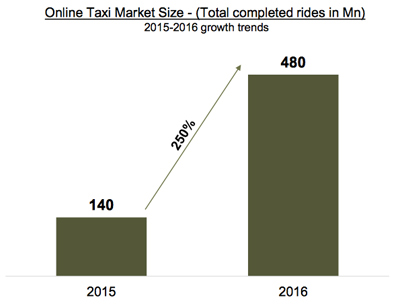
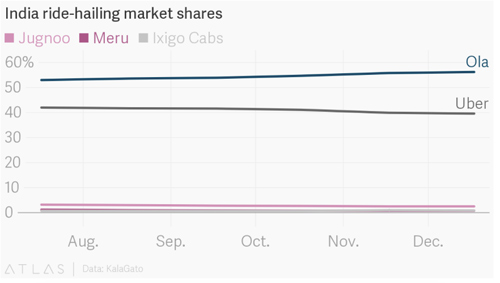
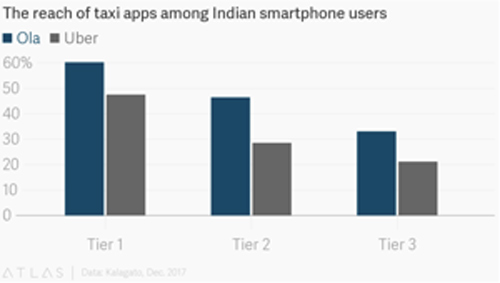
    Today, Ola clocks an average of more than 150,000 bookings per day and commands 60 per cent of the market share in India, while Uber’s shares have slipped from 42 per cent in July 2017 to 40 per cent in December 2017.  According to Japanese multinational conglomerate, SoftBank, the organised taxi sector in India may be worth $7 billion by 2020.

    In 2016, Uber made a deal with its Chinese rival Didi Chuxing to exit the Chinese market, after the duo fought hard for the country’s huge customer base Uber also exited Russia and Eastern European markets last year after reaching a similar deal with Yandex, giving Uber 36.6 percent of the entity formed by the two companies. 

    SoftBank has made major investment in Ola and Uber who has also invested in Grab, which is Uber’s rival in South East Asian countries. Ever since Uber inked the deal with SoftBank, there have been speculations that Uber would pull out of those markets and it turned into a reality earlier this year where Uber sold its business in SEA to Grab.

    Now, news is doing the rounds in market that a possible merger between Ola and Uber may be on its way in India. Since the Ola-TaxiForSure acquisition, the Indian market has essentially been a two-horse race and now, were the Uber-Ola deal to work out, we'd witness a monopoly situation like never before as Uber and Ola, together hold nearly 95 per cent of the market today. 

    public://INDIAN-CAB-MARKET-OVERALL.jpg

    If the merger does happen, we may see increase in advertising and marketing for the new merged entity as Ola and Uber are India’s two major cab aggregators with pockets filled. Ola has a robust advertising budget for television and print whereas Uber has an upper hand at digital and social media marketing. The combined entity would indicate 360-degree advertising including print, out of home, television and digital. 

    While Uber has always had an elite and urban vibe to it, Ola has a stronger presence across smaller towns and segments. The Indian firm operates in 110 cities, far more than Uber’s 31. The merged entity would ensure a better penetration in rural as well as urban markets as the customer base for both the apps would be aligned together. 

    public://TIER-2,-TIER-3-MARKET-SHARE.jpg

    This would also mean the prices would be kept in check as currently, Ola is assumed to be comparatively cheaper and affordable than Uber. But this could also go the other way, as a monopoly could lead to price tampering and exorbitant charges.

    But the merger will also open the field for newer players to enter in the segment which will only help in competitive prices and all of them striving to serve better in order to acquire and retain customers. 

    All said and done, when and how the merger will unfold is a story for another day but if there’s one thing, it will definitely be an interesting tale to tell.

    Also Read :

    2018 will be a year of video campaigns: WATConsult's Rajiv Dhingra

    Going from clicks to bricks

    Kohli brand driving on the up

    Competing with consumer activities not brands: Kingfisher's Sheikhawat

    Cinema advertising begins to take centre stage

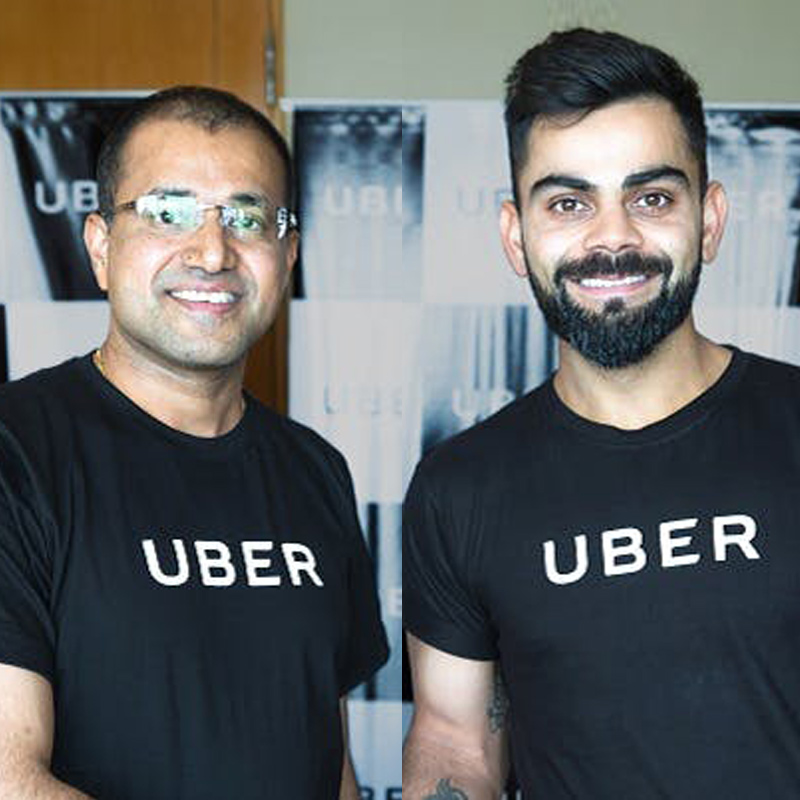
  • Virat Kohli becomes Uber India’s first brand ambassador

    Virat Kohli becomes Uber India’s first brand ambassador

    MUMBAI: Indian cricket team captain Virat Kohli has now become the face of Uber, the ridesharing app.

    Kohli is the brand’s first brand ambassador in India. This is a first of its kind initiative across the Asia Pacific region for the brand.

    Uber India and South Asia president Amit Jain said, “We are extremely delighted to sign on Virat Kohli to bat as the brand ambassador for Uber India. His commitment to India on and off the field is commendable—from bagging world titles for the country to advocating positive change-he is invested in making a difference to the community at large. In Virat, we’ve found a partner who reflects the drive we share with everyday India while embodying our commitment to serving the country. Today, we are the most-preferred ride-hailing service in this market and we will continue to invest and innovate in ways that will benefit our driver partners and riders.”

    Commenting on his association with Uber, Kohli said, “As a cricketer, I travel a lot and I have personally enjoyed the seamless experience of booking an Uber. It’s great to see how the company is using technology to revolutionise the way people move around cities and is empowering millions by creating economic opportunities. I am very excited to join hands with a company that is so committed to the people and cities that it operates in.”

    Besides being the face of the brand, Kohli will be actively involved in a series of marketing and customer-experience initiatives to be rolled out by Uber India.

    Uber India and South Asia head of marketing Sanjay Gupta added, “Virat is the embodiment of India’s ambitions on the world’s stage; he anchors the aspirations of billions and it’s the little things he does that bring joy to their lives. It’s this balance of purpose with a larger responsibility to citizens of the world that makes him the perfect partner to realising Uber’s commitment to India.”