Tag: Twitter

  • Random House awards social media duties to Creativa India

    MUMBAI: Random House India, the Indian arm of English language general trade book publisher Random House Inc, has entrusted its social media mandate to Delhi-based Creativa India.

    The agency will handle their social media as well as digital banners across various sites and will be responsible for online promotion for the publishing house’s book on social networking sites like Facebook, Twitter and Pintrest.

    Creative India founder Himanshu Bhalla said, “We’re pretty excited about working with such a big name in the publishing industry and teaming up with them to establish a digital footprint.”

    Creativa India co-founder Dinesh Juneja said, “With the publishing industry booming in India, we have a great potential to do good work across social platforms.”

    Creativa India is a content generation firm that specialises in social media marketing and creative advertising. It was launched in 2010 and since then has worked with clients across segments like airlines, publishing, mobility, education and e-commerce portals. The agency provides service like social media management, online reputation management, real-time video production and online media buying.

    Random House India was started in July 2005 and publishes work by writers like Rujuta Diwekar, Anita Desai, Namita Devidayal, Mohammed Hanif, Jhumpa Lahiri, Manju Kapur, Daniyal Mueenuddin and Basharat Peer.

  • Creativeland Asia only Indian entry shortlisted in Creative Effectiveness Lions

    MUMBAI: Creativeland Asia Mumbai is the only creative agency that has got its entry shortlisted in the Creative Effectiveness category of Cannes Lions 2012.

    The agency has been shortlisted for its work done for Parle Agro’s Hippo Baked Munchies, titled Plan-T.

    Hippo Baked Munchies was launched by Parle Agro in the Indian Snacks Market in January 2009, and was followed by a communication launch in January 2010.

    According to the brief, Hippo’s unconventional packaging and universal philosophy of ‘Fight Hunger, Fight Evil’ made it a runaway success. Hippo’s growth hit a roadblock when consumers’ demand for it far exceeded the supply of the brand as consumers were being greeted by empty shelves in 400,000 retail stores, across India. This overwhelmed the nascent sales and distribution team as they found it challenging to track and replenish stocks quickly.

    The company needed an alternative inventory tracking system that was quick and cost-effective and found the answer in the platform of Twitter and invented ‘Plan-T’.

    Through Hippo’s twitter account, Creativeland Asia Mumbai made him interact with his followers, urging them to tweet to him in case they found empty racks in stores. A core cell was set up to monitor, analyse and pass on information collected from the tweets to local distributors in respective areas, who then replenished the stocks in 24 hours. In a country dominated by traditional media, connecting with Hippo’s supporters through Twitter made the impact.

    Plan-T drove consumers to report empty shelves on-the-go, across 400,000 stores, in about 53 cities and towns across 18 Indian states, all this within a span of six months. Plan-T, along with the existing sales and distribution team, helped Hippo post a 76 per cent increase in sales within six months.

  • Intercontinental gets Cogmat to handle its social media duties

    MUMBAI: Digital agency Cogmat has been roped in by luxury hotel InterContinental Marine Drive to handle its social media mandate. This is a first for the Mumbai-based luxury hotel and the spends on social media are estimated to be 10 per cent of the total marketing budget for the digital medium.

    The core idea of the campaign will be to drive the brand message on the social media platform. No pitch was called for the account.

    Cogmat’s duties on the mandate include reviving the existent properties that Intercontinental Marine Drive on the social media platforms like Facebook and Twitter. It will also be involved in enhancing the brand’s online reputation using social media and industry relevant websites such as Tripadvisor, Zomato, Burrp and Lonely Planet by answering guest queries and calling for customer feedback.

    Earlier this month, Neemrana Hotels hired Internet Moguls for search engine optimsation.

    Cogmat is a digital media agency based in Mumbai and Hong Kong. It works with companies from industry verticals like education, luxury hospitality, financial services, FMCG and retail. Its clients include Oxemberg, Eurokids, Welingkar Group of Institutes and Mufti.

  • Indigo Consulting to handle Loop’s social media mandate

    MUMBAI: Telecom company Loop Mobile has roped in digital marketing agency Indigo Consulting to handle its social media initiatives.

    The mandate includes tapping social media platforms to engage the relevant audience as well as online reputation management for the brand. This is an extension of the agency‘s current website management duties for the telecom service provider.

    Indigo Consulting was recently acquired by Publicis Groupe‘s Leo Burnett.

    The agency will be responsible for exploiting platforms such as Facebook and Twitter, along with other applications and new technology to help connect the online and offline activities of the brand. The agency‘s focus will be to create online buzz about Loop Mobil‘s positioning as Mumbai‘s Nonstop Network. It will also be involved in managing expectations effectively and build engagement apart from creating buzz on brand.

    Indigo Consulting MD Vikas Tandon said, “Social media with its capabilities of creating engagement, conversations and activation allows brands a perfect opportunity to connect with their customers. Keeping this in mind, our social media strategy shall leverage creating a unique brand experience for the Loop Mobile customer or non-user while converging the brand’s online and offline efforts.”

    Loop Mobile (India) Limited head – corporate affairs and PR Arif Ali added, “With the growing opportunities that social media provides, we felt the need for an integrated approach for maximizing our digital and mobile communication needs. We have had a great working relationship with Indigo Consulting and we respect their experience in handling leading brands. Thus we welcome them as a strategic partner who with their deep understanding of online consumer behavior, shall help ensure a high level of social and digital interaction, provide creative ideas and strategy to boost the overall brand presence driving our core thought of Mumbai‘s Nonstop Network.”

    Indigo Consulting is a full-service interactive marketing and technology agency. Its services include online marketing, website design and development, search engine optimization and social media marketing. Indigo Consulting boasts of clients like Hindustan Unilever, Asian Paints, HDFC Bank, Kolkata Knight Riders, Abu Dhabi Commercial Bank, Thomas Cook, South Australia Tourism Board, Makemytrip and Cathay Pacific.

  • Cogmat wins Benzer’s digital mandate

    Cogmat wins Benzer’s digital mandate

    MUMBAI: Mumbai-based high street fashion brand Benzer has entrusted its digital duties Cogmat.

    The digital media agency will service the account out of its Mumbai office.

    The mandate includes creating a stronger digital presence for Benzer through social media and other digital tools.

    A source from the agency confirmed the news to indiantelevision.com.

    Cogmat will work to build a large online community of users interested in high-street ethnic Indian wear with the help of social media marketing and online reputation management for Benzer and its e-commerce portal, www.benzerworld.com. It will also try and leverage social media platforms such as Facebook and Twitter to drive the brand‘s e-commerce portal.

    The YouTube page of the brand has undergone a makeover as a part of the digital branding exercise.

    Cogmat is based in Mumbai and Hong Kong. Its clients are spread across sectors like education, luxury hospitality, financial services, FMCG and retail and include the likes of Oxemberg, Eurokids, Welingkar Group of Institutes and Mufti.

  • Majority of Indians interconnected with the world through email, social media: Ipsos poll

    Majority of Indians interconnected with the world through email, social media: Ipsos poll

    MUMBAI: The majority of Indians are interconnected with the world due to email and social networking sites such as Facebook and Twitter, according to a new poll by Ipsos.

    68 per cent of people across India who are connected online send and receive emails and 60 per cent communicate through social networking sites, and a quarter (25 per cent) of them use voice-over IP (VOIP) for audio conversations conducted via an Internet connection.

    Ipsos India Head of marketing and communications Biswarup Banerjee said, “Internet penetration in India has been very good in recent years, however, relative to country like China, India still does lack behind. According to Industry estimates 103.6 million people will go online in 2012, and the number of users is expected to more than double to 221.6 million by 2015. This along with proliferation of internet access through smart phone will further increase the usage of email, social networking sites and other online communication tools”.

    Incidentally according to another Ipsos survey, around 40 million Indians access the Internet through their smart phones, 56 per cent of smartphone users in the country access the Internet multiple times a day, nearly 40 per cent surf the Net at least once a day and only 6 per cent never use their phone for connecting to the Web.

    A strong majority (85 per cent) of online-connected global citizens in 24 countries use the Internet for emails while six in ten (62 per cent) use it for social networking, and little over one in ten (14 per cent) use the Internet for connecting with people through voice-over IP.

    Globally Email is King…but social media is close behind: Most (85 per cent) global respondents who are connected online report they use the Internet for sending and receiving emails, including a majority of those in each country surveyed except for Saudi Arabia where only half (46%) say so. Those in Hungary (94 per cent) are most likely to say they use the Internet for emailing, followed by nine in ten of those in Sweden (92 per cent), Belgium (91 per cent), Indonesia (91 per cent), Argentina (90 per cent) and Poland (90 per cent).

    Social media popularity is high among global citizens using the Internet. A majority of them (62%) say they visit social networking sites, forums or blogs including eight in ten of those in Indonesia (83 per cent), Argentina (76 per cent) and Russia (75 per cent) and seven in ten of those in South Africa (73 per cent), Sweden (72 per cent), Spain (71 per cent) and Hungary (70 per cent). Even in countries where social media surfing is less popular, a sizable minority of those connected online still report using the Internet in this way: 35 per cent in Japan, 42 per cent in Saudi Arabia and 50 per cent in France.

    “Although Facebook and other popular social networking sites, blogs and forums, were founded in the United States the percentage of users was lower at six in 10, and in Japan it fell to 35%, the lowest of the 24 countries in the global survey. The fact that more than six in 10 people worldwide use social networks and forums, suggests a transformation in how people communicate with each other,” said Banerjee.

    Although Americans and Japanese are thought to be very tech savvy, voice-over IP (VOIP), audio conversations conducted via an Internet connection, were not very popular in both countries with less than 10 per cent of people using the relatively new technology, compared to 36 per cent in Russia, 32 per cent in Turkey and 25 per cent in India.

    Ipsos interviewed a total of 19,216 adults in the month of February in an online survey across 24 countries like Argentina, Australia, Belgium, Brazil, Canada, China, France, Germany, Britain, Hungary, India, Indonesia, Italy, Japan, Mexico, Poland, Russia, Saudi Arabia, South Africa, South Korea, Spain, Sweden, Turkey and the US.

  • Production house launches online poll to select logo

    Production house launches online poll to select logo

    MUMBAI: Going by the immense success a handful of filmmakers have had in terms of crowd funding for their films, a Kolkata-based production house, in its move to reach the young audience, has launched an online poll to select a logo.

    The poll has been initiated by Mojo Productions for the Mainak Bhowmik-directed film Maach, Misti and More. “The poll will continue for a month on the Internet for the Facebook and Twitter generation,” executive director of Mojo Productions Joy B Ganguly has reportedly said. “The poll will continue for a month on the Internet for the Facebook and Twitter generation,” he added.

    The company intends to reach its target through SMS, email, as well as through Twitter and Facebook where a link will be given. The link will enable people to reach the Maach Misti site from where they will choose from different logos.

    “The selected logo will be unveiled after 17 March and used in posters and title credits and the winner announced,” Ganguly added.

    Director Bhowmik said that the film‘s title Maach Misti and More suggests that there is much more to contemporary urban Bengalis than stock images like maach aar misti (fish and sweets).

    “We have sought to explore how the urban Bengali is changing. Wherever there is any talk on Bengalis outside the state, fish and sweets become a point of discussion; people relate us with these two elements. But when you interact with the urban Bengali, you understand there is more to it than just maach and misti,” Bhowmik added.

  • Rahul Avasthy reveals secrets of marketing to Generation Y

    Rahul Avasthy reveals secrets of marketing to Generation Y

    MUMBAI: Getting the attention of the youth segment is important as they are the opinion makers today, said Focus Circle Brands director-client servicing and digital strategy Rahul Avasthy, while speaking at the Youth Marketing Forum.

    Avasthy talked about the secrets to marketing to generation Y (youth). He said, “Brands today need to understand that content is dead without context. Content is what company makes but context is what you make for the consumers; content is what generation Y buys but context is why they buy; content starts from buying the product and end when the product ends but context starts before the purchase and stays far beyond the consumption of the product.” I

    If the youth won’t find context in the brand, he won’t go for it, he added.

    According to him, generation Y have access to more tools like mobile and technology; they have more capacity to release ideas. They can go against the government and start a Facebook page. They have more tools and, hence, they have more conviction. It’s about knowing how generation Y is changing into ‘o’ (optimisers). Marketers can help the people in transition. When you look at the long term, consumers of previous generation are not much different than that of current generation. It’s just that youth wants change.

    Generation Y is using social tool in an optimised way and they want a better social experience. “Before planning the mediums to be used, marketers should see what social tool their target group is using. This generation is not buying the design, and layouts. What matters to them is what design and retail layout is doing for them. Generation Y does not only consist of rebels;they are responsible citizens,” he said.

    A strategy called ‘secret’ is also a secret to marketing to generation Y. Youth today wants to know things before others come to know about it and they want to know everything that is popluar without being left out. Being the first one to share something on Facebook is cool for them. It becomes a measure of one’s cultural power and popularity. Kolavari Di was an opinion that others related to and made spoofs which was again watched by many.

    ‘Market your best customer first, prospect second, rest of the world later’, noted Avasthy. “If you want to catch hold of youth, you need to be on web, mobile, wherever they are. You cannot bore generation Y into buying. Fasso’s is using a secret strategy in a good way. You can tweet on their home page on Twitter and place an order. Also, they have an offer like write ‘I hate you’ on Fasso’s twitter page and get 20 per cent off. These things help brands in a way that the audience will discuss about the brand and virally it will be passed on to others. Generation Y acts as a medium and as a media as well,” he concluded.

  • Kotler is dead and marketing mantras need to be rewritten: Murthy

    Kotler is dead and marketing mantras need to be rewritten: Murthy

    MUMBAI: Several generations of marketing and management students have been brought up on the mantra of 4Ps framework: Product, Price, Placement and Promotion. But Pinstorm founder Mahesh Murthy feels that this framework doesn’t serve the 21st century market.


    Murthy said, “When it comes to the 4Ps of marketing, things have changed with time. Out of them, Placement has undergone through the biggest change. Today, anyone through Internet is getting in touch with millions of people worldwide. In today’s world it’s not about how much you spend, but it’s about how less you have to spend. Red Bull, eBay, Twitter are fantastic examples where they have never spent on advertising but have achieved a lot. Marketing IQ is inversely proportional to marketing budget.”


    Murthy was speaking at Click Asia Summit 2012 here. Addressing on the theme- ‘Kotler is dead: The new principles and process of marketing‘, he suggested a new way to look at creating, managing and measuring the success of brands.


    Murthy felt that there are a new set of rules that should be followed by the marketers and not the one that were laid by Kotler.


    According to him, there are two new ways to look at the future: blue sky or extend key part of the present. He said that the future is already here, it’s just not evenly distributed.


    “Digital is not niche anymore. It is the mainstream medium, even in India. Star Plus, the No. 1 GEC in India has 25 million viewers. In India, there are 90 million desktop net users, 85 million mobile net users, and in total there are 140 million Internet users. There are 110 million Indian cable and satellite (C&S) homes and Times of India’s (TOI) national circulation is 7 million. So, this is an evident of the reach and use of digital medium in India. Critically, Indian Internet users have already crossed C&S TV household and soon social media user will too.”


    Murthy noted that arguably digital medium has the largest reach in India. He foresees that by 2014, there will be 150 million desktop Internet users in India while there will be 225 million mobile Internet users. The total Internet user base will increase up to 300 million while C&S viewership will rise to 140 million. Also, social media is the fastest growing medium. And you don‘t need to spend as much as you do in the broadcast medium.”


    The digital medium lets you side-step publishers and be one yourself. So, competing on digital doesn’t need large budgets. “No longer have media budgets made any difference,” he added.


    Murthy observed that media is vacating editorial for marketing. He emphasised on building engagement on fan page. Citing an example of changing times, he said that the campaigns which used to take months to get ready now are being made within minutes.


    He believed that the whole process needs to change and all the operations should work in sync. It starts with research where one is suggested to absorb all one can and hence solve the existing problems. Then after listening and reaction comes into analysis, the planning stage should come. In the later stage creativity comes wherein one needs to invent. It should be followed by an integrated media plan to radiate the message out. It’s hard to succeed till the work is done in co-ordination.


    “It’s easy to get it wrong on digital. Short term thinking and non-integrated work contributes to this. Brands if not handled properly on digital medium, can be killed,” he cautioned. “Also, digital is increasingly not about specialisation, but it’s about multi-specailisation. One needs to speak to people and not take use of scripts for the same. Digital should not be treated as call-centre,” Murthy stated.

  • Anupam Kher in a triple role in revamped Chashme Buddoor

    Anupam Kher in a triple role in revamped Chashme Buddoor

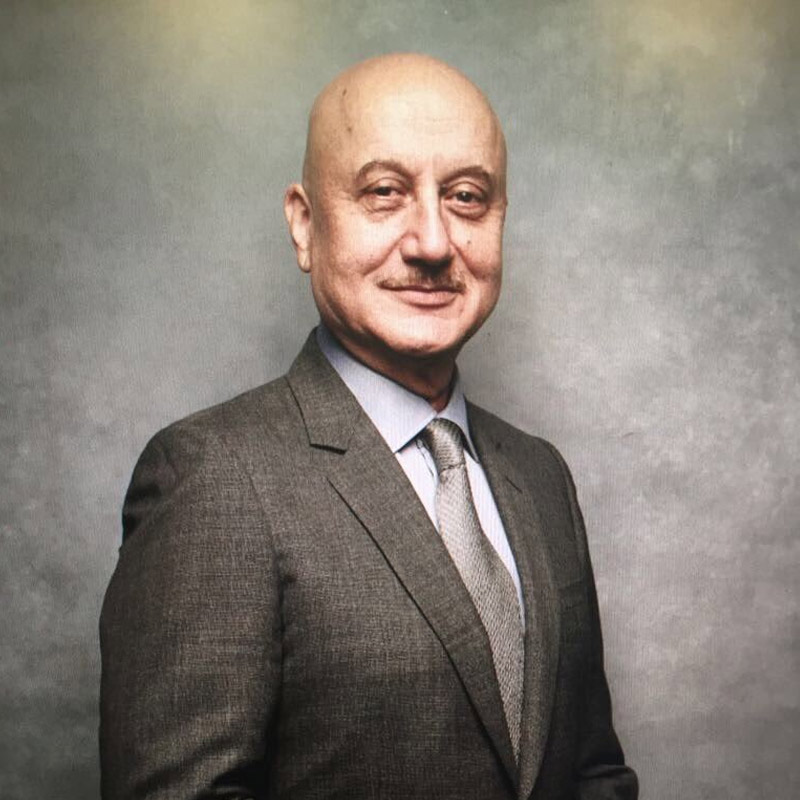
    MUMBAI: After a total image revamp of its title, director David Dhawan has revealed that Anupam Kher would play a triple role in Chashme Buddoor.

    “Anupam‘s character is completely new to my Chashme Buddoor. He plays three brothers namely Suryakant, Chandrakant and Prabhakant,” Dhawan said.

    The idea of taking Kher for a triple role apparently materialised when the unit descended to Goa.

    According to a source, Kher was meant to be a character who keeps showing up everywhere at the most inopportune time. Everyone in the team thought it would make more sense to have three of Kher around.

    It may be noted that the director had asked for suggestions for an alternative title for Chashme Buddoor on Twitter and other public forums.

    “The titles being suggested are incredible. From Buree Nazar Waala Tera Mooh Lal to Khatte Angoor to Nazarbattu…I‘m very confused,” he said.