Tag: Twitter

  • Peace TV saga & absence of rule of law

    Peace TV saga & absence of rule of law

    The Peace TV saga after the Dhaka terrorist attack just before Eid and the brouhaha created over availability of an unlicensed channel in Indian television homes highlights yet again rules and regulations have to be applied uniformly and stringently.

    The Indian government woke up suddenly issuing gag orders on distribution platforms when the general media in the country went to town regarding Peace TV. The media alleged Peace TV and the Mumbai-based Islamic tele-evangelist Zakir Naik’s sermons aired on the channel could have instigated the Bangladeshi terrorists. All these allegations were based on some interpretation of a report in a Bangladeshi newspaper.

    That the Bangla newspaper subsequently clarified its report stating categorically that it had never said the terrorists were `inspired’ by Naik’s sermons is a completely another story because the Indian media, by and large news channels, ignored the clarification.

    However, the fact stands that Peace TV is not licensed to air in India and had been denied landing rights by the Indian government several times in the past. Still, the channel was available on Indian networks and the sermons online.

    Similarly, several Pakistani TV channels too are available in some parts of the country (crackdown on illegal retransmissions do happen from time to time, government officials insist) as also Chinese radio stations in border areas.

    So, the question is: how come an unlicensed TV channel officially denied permission to broadcast in India was still reaching Indian TV homes?

    The answer lies in apparent laxity in implementing and upholding existing regulations on the part of Indian policy-makers, regulators and law enforcing agencies. In some cases it may also be local-level indulgences despite knowing that a certain regulation had been breached.

    Because in India most such issues boil down to majority vs. minority yardstick with the victimisation syndrome kicking in — all in the name of certain democratic rights — regulatory breaches are overlooked or rule of the law not enforced. Until one such breach kicks up crap all round; like the Peace TV affair recently did.

    Historically speaking, as India opened up to satellite TV revolution from early 1990s and rules were lax (downlink licence or landing rights were terms not known to Indian policy-makers then) many TV channels invaded the Indian skies and homes. Some of them were bad (read propagandist), some indifferent, but largely most were entertaining.

    As successive Indian governments woke up to the power of TV propaganda in whipping up unpalatable frenzy and jingoism, Ministry of Information and Broadcasting (MIB) started formulating rules and regulations to isolate TV channels, mostly uplinked from outside India, from entering Indian homes via cable or other distribution platforms, which were perceived as not conducive for India.

    One such historic policy drafting also saw a Broadcast Bill being introduced in Parliament in 1996 where the draft stated that certain categories of organisations (like political parties, NGOs, religious bodies, advertising agencies, etc) would be barred from owning and running TV channels.

    The Bill never got enacted into a law and since then half-hearted attempts by other governments to bring similar Bills in Parliament failed to get necessary traction; mostly owing to a superstitious belief that whichever government tries to regulate the broadcast sector went out of power in New Delhi.

    Historical incidents, notwithstanding, it has also been observed in India that any proposed regulation relating to cable and broadcast sector having the potential to affect powerful lobbies like political parties or religious bodies or their proxies get swept under the carpet.

    Take, for example, broadcast carriage regulator TRAI’s two recommendations on media ownership, made after wide consultations with stakeholders. I am told both the reports are gathering dust in some corner of MIB.

    Apart from suggesting many other things on the ownership issue, TRAI said in a set of recommendations in 2014, “…given that about six years have elapsed without any concrete action being taken by the Government, the Authority strongly recommends that its Recommendations of 12 November 2008 and 28 December 2012 may be implemented forthwith.”

    The regulator’s recommendations came after issues relating to media ownership issue and vertical monopoly were referred to it by MIB.

    Emboldened by the fact that MIB had put its weight behind it, TRAI (again) recommended in 2014 that political bodies, religious bodies, urban, local, panchayati raj, and other publicly funded bodies, Central and State government ministries, departments, companies, undertakings, joint ventures, and government-funded entities and affiliates be barred from entry into broadcasting and TV channel distribution sectors.

    The regulator suggested exit routes for existing entities already into business, adding such a debarment could be implemented through an executive decision by incorporating the disqualifications into rules, regulations and guidelines as necessary.

    But by 2014, MIB had already licensed many news and religious/spiritual TV channels and distribution platforms owned/managed by political parties, religious bodies (in one case a temple’s management committee) and/or their proxies for operation at pan-India and State levels.

    And so, even the 2014 TRAI recommendations remain ignored, while at another level technology has outpaced or threatens to make obsolete the Indian process of policy making.

    A colleague, while outlining the potential of Facebook Live (and other such techs like Twitter’s Periscope), recently commented it’s matter of time when Facebook Live will kick into India, dipping into the country’s smart-phone user base (250 million on last count) to give birth to the possibility of “hundreds of news channels on FB dishing out unadulterated, independent updates of developments.” Very few in Indian government would be tracking developments like FB Live.

    In an age when technology is moving faster than policy-making, flat-footedness of Indian policy-makers and our general apathy towards rule of the law will hasten policy chaos resulting in arbitrary decisions being implemented.

  • RIL innovates; to live stream Q1-2016-17 results on FB, Youtube, Periscope

    RIL innovates; to live stream Q1-2016-17 results on FB, Youtube, Periscope

    MUMBAI: When you are a company that generates Rs 1,000 crore a day in revenue, you have to do things in style right? We are referring to the Mukesh Ambani group company Reliance Industries Ltd (RIL).

    It is touting a first for a global company as it gets ready to stream live its CFO’s Alok Agarwal’s analysis of its Q1-2016-17 results from a single axis (read a camera) over Youtube, Twitter’s Periscope and Facebook Live today. In most cases in the past, companies have streamed an event live on one of the three platforms but using different cameras.

    Says a company official: “Three cameras means three different angles for three different platforms. And an individual can look at only one camera at a time which means that somewhere or the other it appears as though he is not addressing people.”

    Apparently, RIL has technically innovated to have one video out from a single camera and distributing it to the three outlets with the help of a switcher.

    The test signal of the feed was seen on the verified Facebook page of RIL president and media director Umesh Upadhyay, the company’s Twitter feed called @FlameOfTruth and its YouTube landing, @flameoftruth2014.

    The company had streamed its results announcement live on Facebook in January 2016 with Agarwal holding forth on its Q3 2015-16 results. It then added Periscope to communicate its Q4 2015-2016 results.

    Now it has taken the step to simulcast the live stream on all the three digital platforms for its Q1 2016-2017 financials.

    “We are where the sophisticated consumer of media and stakeholders are, spread across different geographies and time zones ” an RIL official confirmed, requesting not to be named.

    A promo announcing this LIVE feed has already attracted 4.14 lakh reach, 1.03 lakh views, 2,300 likes on Facebook alone.

    RIL has more than 3 million shareholders. Even if 10 per cent of them log onto the live stream, that will be equal to the audiences that some TV shows get.

    Now if cable TV operators choose to stream this to their subscribers that could mean even more reach for RIL.

    YouTube: https://www.youtube.com/user/flameoftruth2014

    Facebook: https://www.facebook.com/RelianceIndustriesLimited/

    Twitter: https://twitter.com/flameoftruth

  • RIL innovates; to live stream Q1-2016-17 results on FB, Youtube, Periscope

    RIL innovates; to live stream Q1-2016-17 results on FB, Youtube, Periscope

    MUMBAI: When you are a company that generates Rs 1,000 crore a day in revenue, you have to do things in style right? We are referring to the Mukesh Ambani group company Reliance Industries Ltd (RIL).

    It is touting a first for a global company as it gets ready to stream live its CFO’s Alok Agarwal’s analysis of its Q1-2016-17 results from a single axis (read a camera) over Youtube, Twitter’s Periscope and Facebook Live today. In most cases in the past, companies have streamed an event live on one of the three platforms but using different cameras.

    Says a company official: “Three cameras means three different angles for three different platforms. And an individual can look at only one camera at a time which means that somewhere or the other it appears as though he is not addressing people.”

    Apparently, RIL has technically innovated to have one video out from a single camera and distributing it to the three outlets with the help of a switcher.

    The test signal of the feed was seen on the verified Facebook page of RIL president and media director Umesh Upadhyay, the company’s Twitter feed called @FlameOfTruth and its YouTube landing, @flameoftruth2014.

    The company had streamed its results announcement live on Facebook in January 2016 with Agarwal holding forth on its Q3 2015-16 results. It then added Periscope to communicate its Q4 2015-2016 results.

    Now it has taken the step to simulcast the live stream on all the three digital platforms for its Q1 2016-2017 financials.

    “We are where the sophisticated consumer of media and stakeholders are, spread across different geographies and time zones ” an RIL official confirmed, requesting not to be named.

    A promo announcing this LIVE feed has already attracted 4.14 lakh reach, 1.03 lakh views, 2,300 likes on Facebook alone.

    RIL has more than 3 million shareholders. Even if 10 per cent of them log onto the live stream, that will be equal to the audiences that some TV shows get.

    Now if cable TV operators choose to stream this to their subscribers that could mean even more reach for RIL.

    YouTube: https://www.youtube.com/user/flameoftruth2014

    Facebook: https://www.facebook.com/RelianceIndustriesLimited/

    Twitter: https://twitter.com/flameoftruth

  • Fork Media’s Buzzerati to gain access to readers of Twitter’s enterprise API platform Gnip

    Fork Media’s Buzzerati to gain access to readers of Twitter’s enterprise API platform Gnip

    Mumbai: Fork Media’s social media influencer marketing platform Buzzerati is to get access to Twitter audience and content performance metrics for deeper business intelligence and richer analytics.

    This follows a deal between Fork Media and Twitter’s enterprise API platform Gnip.

    Buzzerati launched earlier this year at the Digital Marketing & Advertising Conference Adtech in New Delhi. The influencer recommendation platform helps brands strengthen their engagement with target customers on Twitter and other social media sources.

    With this agreement, Buzzerati will have access to first-party Twitter data around aggregate audience demographics, brand intelligence, trend analysis, consumer interests and keyword associations. The data, along with Buzzerati’s own proprietary data processing algorithms, provides stronger recommendations to brands on choosing the right influencers for their campaigns. Brands can choose various influencer filters including the location, gender, mobile network and interests of their followers. In addition, Buzzerati will provide discovery to the absolute following, active followers, engagement of an influencer and their followers.

    The data agreement also delivers more accurate measurement of impression and reaches data for influencer campaigns. Brands will now be able to view actual impressions of their influencer posts and better analyze the ROI of a campaign across paid and organic mediums. Brands can use the platform to drive brand-led advocacy campaigns or create viral distribution for their existing content.

    Fork Media CEO and founder Samar Verma said, “We are excited about the opportunity to leverage Gnip data from Twitter, as we continue to evolve our offering. It will help us go to market even more rapidly and efficiently with solutions that will keep brands and agencies on top of their game. The agreement will also help us offer the most relevant and advanced influencer marketing platform. With the integration of this data, our clients will now have access to better influencer recommendations, which in turn will effectively enhance their campaign planning, execution and success. It will provide us access to the leading global source of real-time social media data, Twitter, allowing us to pursue new marketing opportunities, and offer the best analytics to more brands and agencies.”

    Brad Bokal, who leads Gnip’s Twitter data partnerships and sales efforts in APAC, said: “We are committed to helping our global customers build lasting, value driven relationships with their clients.

    “We are excited to work with Fork Media as they continue to integrate Twitter data into solutions that help their clients better understand user audiences and content performance on our platform” Bokal added.

  • Fork Media’s Buzzerati to gain access to readers of Twitter’s enterprise API platform Gnip

    Fork Media’s Buzzerati to gain access to readers of Twitter’s enterprise API platform Gnip

    Mumbai: Fork Media’s social media influencer marketing platform Buzzerati is to get access to Twitter audience and content performance metrics for deeper business intelligence and richer analytics.

    This follows a deal between Fork Media and Twitter’s enterprise API platform Gnip.

    Buzzerati launched earlier this year at the Digital Marketing & Advertising Conference Adtech in New Delhi. The influencer recommendation platform helps brands strengthen their engagement with target customers on Twitter and other social media sources.

    With this agreement, Buzzerati will have access to first-party Twitter data around aggregate audience demographics, brand intelligence, trend analysis, consumer interests and keyword associations. The data, along with Buzzerati’s own proprietary data processing algorithms, provides stronger recommendations to brands on choosing the right influencers for their campaigns. Brands can choose various influencer filters including the location, gender, mobile network and interests of their followers. In addition, Buzzerati will provide discovery to the absolute following, active followers, engagement of an influencer and their followers.

    The data agreement also delivers more accurate measurement of impression and reaches data for influencer campaigns. Brands will now be able to view actual impressions of their influencer posts and better analyze the ROI of a campaign across paid and organic mediums. Brands can use the platform to drive brand-led advocacy campaigns or create viral distribution for their existing content.

    Fork Media CEO and founder Samar Verma said, “We are excited about the opportunity to leverage Gnip data from Twitter, as we continue to evolve our offering. It will help us go to market even more rapidly and efficiently with solutions that will keep brands and agencies on top of their game. The agreement will also help us offer the most relevant and advanced influencer marketing platform. With the integration of this data, our clients will now have access to better influencer recommendations, which in turn will effectively enhance their campaign planning, execution and success. It will provide us access to the leading global source of real-time social media data, Twitter, allowing us to pursue new marketing opportunities, and offer the best analytics to more brands and agencies.”

    Brad Bokal, who leads Gnip’s Twitter data partnerships and sales efforts in APAC, said: “We are committed to helping our global customers build lasting, value driven relationships with their clients.

    “We are excited to work with Fork Media as they continue to integrate Twitter data into solutions that help their clients better understand user audiences and content performance on our platform” Bokal added.

  • Twitter launches #Stickers as visual hashtags connecting photos

    Twitter launches #Stickers as visual hashtags connecting photos

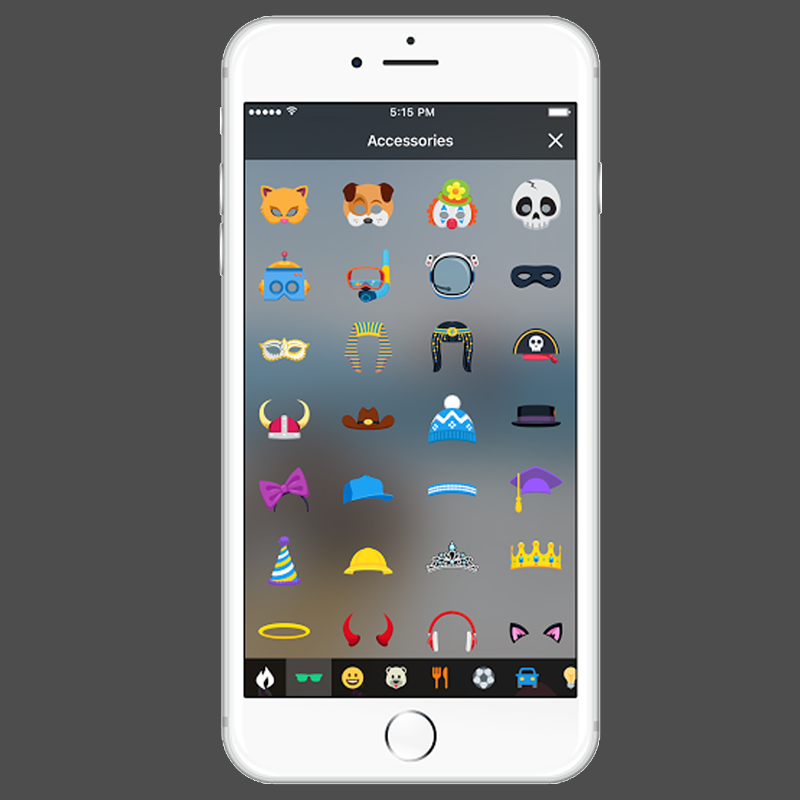
    MUMBAI: Twitter has announced fun photo editing tool #Stickers. Users can choose from hundreds of accessories, emojis, and props and stick them anywhere on photos they upload to Twitter.

    When editing a photo, a library of stickers will be available across several categories, including accessories, animals, food, technology, flags, etc. Like hashtags on Twitter, the stickers will make tweeting easy for people to explore a topic they’re interested in, and join in on the public, global conversation.

    The stickers can be resized, rotated and placed anywhere on a photo.

    “Millions of Tweets with photos are sent every day on Twitter, capturing the moments that the world is talking about,” said Twitter CMOLeslie Berland. “#Stickers give people a fun way to add their own unique style to their photos, and connect them with others around the world. By making stickers searchable like hashtags, we’re enabling the best of Twitter: making it easy for people to create conversations around events and experiences that are happening right now.”

    Any public Tweet containing a sticker will now be easily searchable and discoverable, creating a new visual spin on the hashtag; simply tapping on a sticker brings up a new timeline of Tweets from people around the world using that same sticker.

    The featured category will highlight live stickers tied to world events, holidays or other themes, making it easy for people to join in on timely conversations. A timeline of Tweets using a specific sticker is easily accessible by tapping on that sticker within any photo on Twitter.

    The feature is rolling out over the coming weeks on Twitter for iOS and Android.

  • Twitter launches #Stickers as visual hashtags connecting photos

    Twitter launches #Stickers as visual hashtags connecting photos

    MUMBAI: Twitter has announced fun photo editing tool #Stickers. Users can choose from hundreds of accessories, emojis, and props and stick them anywhere on photos they upload to Twitter.

    When editing a photo, a library of stickers will be available across several categories, including accessories, animals, food, technology, flags, etc. Like hashtags on Twitter, the stickers will make tweeting easy for people to explore a topic they’re interested in, and join in on the public, global conversation.

    The stickers can be resized, rotated and placed anywhere on a photo.

    “Millions of Tweets with photos are sent every day on Twitter, capturing the moments that the world is talking about,” said Twitter CMOLeslie Berland. “#Stickers give people a fun way to add their own unique style to their photos, and connect them with others around the world. By making stickers searchable like hashtags, we’re enabling the best of Twitter: making it easy for people to create conversations around events and experiences that are happening right now.”

    Any public Tweet containing a sticker will now be easily searchable and discoverable, creating a new visual spin on the hashtag; simply tapping on a sticker brings up a new timeline of Tweets from people around the world using that same sticker.

    The featured category will highlight live stickers tied to world events, holidays or other themes, making it easy for people to join in on timely conversations. A timeline of Tweets using a specific sticker is easily accessible by tapping on that sticker within any photo on Twitter.

    The feature is rolling out over the coming weeks on Twitter for iOS and Android.

  • Netflix unveils brand new icon; even as YouTube stutters

    Netflix unveils brand new icon; even as YouTube stutters

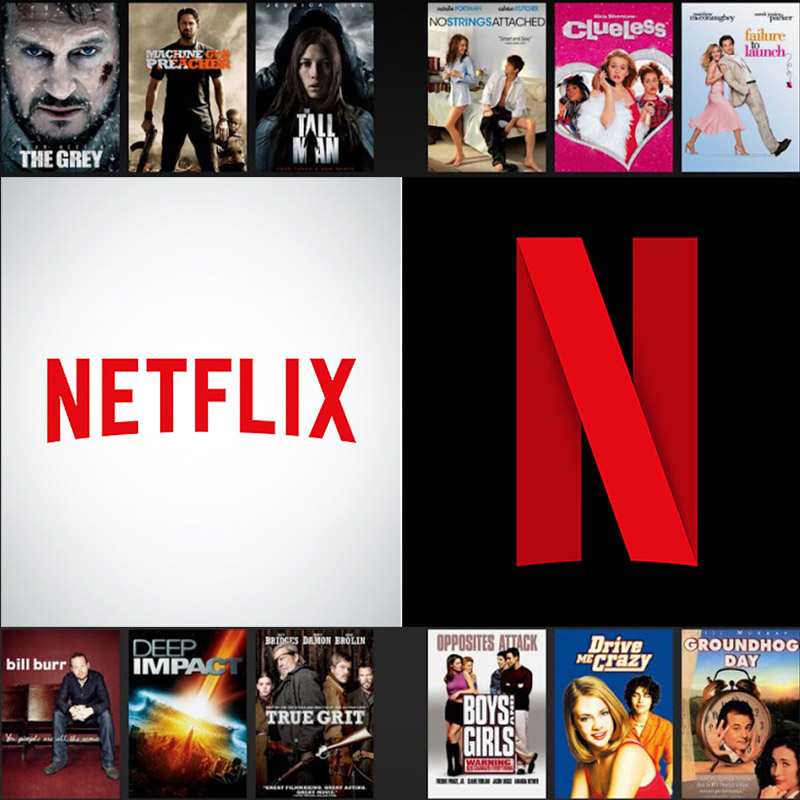
    MUMBAI: Netflix bingers and observers have all been used to the Netflix logo appearing every where, even in icons online. Now the global streaming content leader has decided to do away with the whole name of the service in the icon and replaced with a bright N only.

    It revealed this transition on its facebook and Twitter accounts. The icon features the N red letter flowing like a ribbon against a black background and stands more vertically instead of horizontally fitting inside an app icon box.

    The player made it clear on its Twitter account that it’s not a new logo. “The N is an icon and a new creative element to live with our logo. The current Netflix logo is here to stay :)”, reads the tweet.

    “We are introducing a new element into our branding with an N icon. The current Netflix logo will still remain, and the icon will start to be incorporated into our mobile apps along with other product integrations in the near future,” said a Netflix spokesperson.

    The new icon will be seen on most places, including smartphone apps, social media and other product integrations making it lot easier to identify the Netflix app.

    Back in 2014, Netflix had made the first change to its logo when it opted a flatter, more minimal design, switching from its DVD-era logo with a red background, and old-school typeface.

    Even as Netflix introduced its new icon, online video guzzlers in certain countries and ares got a bit of a heart burn when leading streaming media site YouTube went down for a few minutes around 5 pm. Visitors were surprised to see a http 502 error, which mean the site was not available. The outage led to howls and funnies being posted on social media. Users wailed that they thought the end of the world was at hand, that they were frightened. A major howler was one which stated ” that a bunch of highly trained has been dispatched to deal with this situation.”

    Nonetheless, close to a billion YouTubers the world over heaved a sigh of relief when it came back on again

  • Netflix unveils brand new icon; even as YouTube stutters

    Netflix unveils brand new icon; even as YouTube stutters

    MUMBAI: Netflix bingers and observers have all been used to the Netflix logo appearing every where, even in icons online. Now the global streaming content leader has decided to do away with the whole name of the service in the icon and replaced with a bright N only.

    It revealed this transition on its facebook and Twitter accounts. The icon features the N red letter flowing like a ribbon against a black background and stands more vertically instead of horizontally fitting inside an app icon box.

    The player made it clear on its Twitter account that it’s not a new logo. “The N is an icon and a new creative element to live with our logo. The current Netflix logo is here to stay :)”, reads the tweet.

    “We are introducing a new element into our branding with an N icon. The current Netflix logo will still remain, and the icon will start to be incorporated into our mobile apps along with other product integrations in the near future,” said a Netflix spokesperson.

    The new icon will be seen on most places, including smartphone apps, social media and other product integrations making it lot easier to identify the Netflix app.

    Back in 2014, Netflix had made the first change to its logo when it opted a flatter, more minimal design, switching from its DVD-era logo with a red background, and old-school typeface.

    Even as Netflix introduced its new icon, online video guzzlers in certain countries and ares got a bit of a heart burn when leading streaming media site YouTube went down for a few minutes around 5 pm. Visitors were surprised to see a http 502 error, which mean the site was not available. The outage led to howls and funnies being posted on social media. Users wailed that they thought the end of the world was at hand, that they were frightened. A major howler was one which stated ” that a bunch of highly trained has been dispatched to deal with this situation.”

    Nonetheless, close to a billion YouTubers the world over heaved a sigh of relief when it came back on again

  • Instagram crosses 500 million members

    Instagram crosses 500 million members

    MUMBAI: Facebook announced yesterday at Cannes that its Instagram community has grown to more than 500 million (50 crore), of which more than 300 million use Instagram every single day. Facebook claimed that Instagram’s community continued to become even more global, with more than 80 percent living outside of the United States.

    While thanking its community, an Instagram blog message said, “As you’ve captured and shared the moments happening around you, you’ve formed incredibly varied and diverse communities. Whether you’re an illustrator, a sneakerhead or an astronaut on the International Space Station, every photo and video you share helps bring people closer to friends and interests, broadens perspectives and inspires a sense of wonder. You’ve made Instagram a place where the everyday and the epic are always within reach.”

    “Thank you for your creativity, your openness and your passion for sharing your worlds with one another. We can’t wait to see what you create next”.

    Instagram was created by Kevin Systrom and Mike Krieger, and launched in October 2010 as a free mobile app. Instagram is an online mobile photo-sharing, video-sharing, and social networking service that enables its users to take pictures and videos, and share them either publicly or privately on the app, as well as through a variety of other social networking platforms, such as Facebook, Twitter, Tumblr, and Flickr. It was acquired by Facebook in April 2012 for approximately $1 billion in cash and stock.