Tag: Twitter

  • PepsiCo is exclusive global launch partner for Twitter’s promoted #Stickers

    PepsiCo is exclusive global launch partner for Twitter’s promoted #Stickers

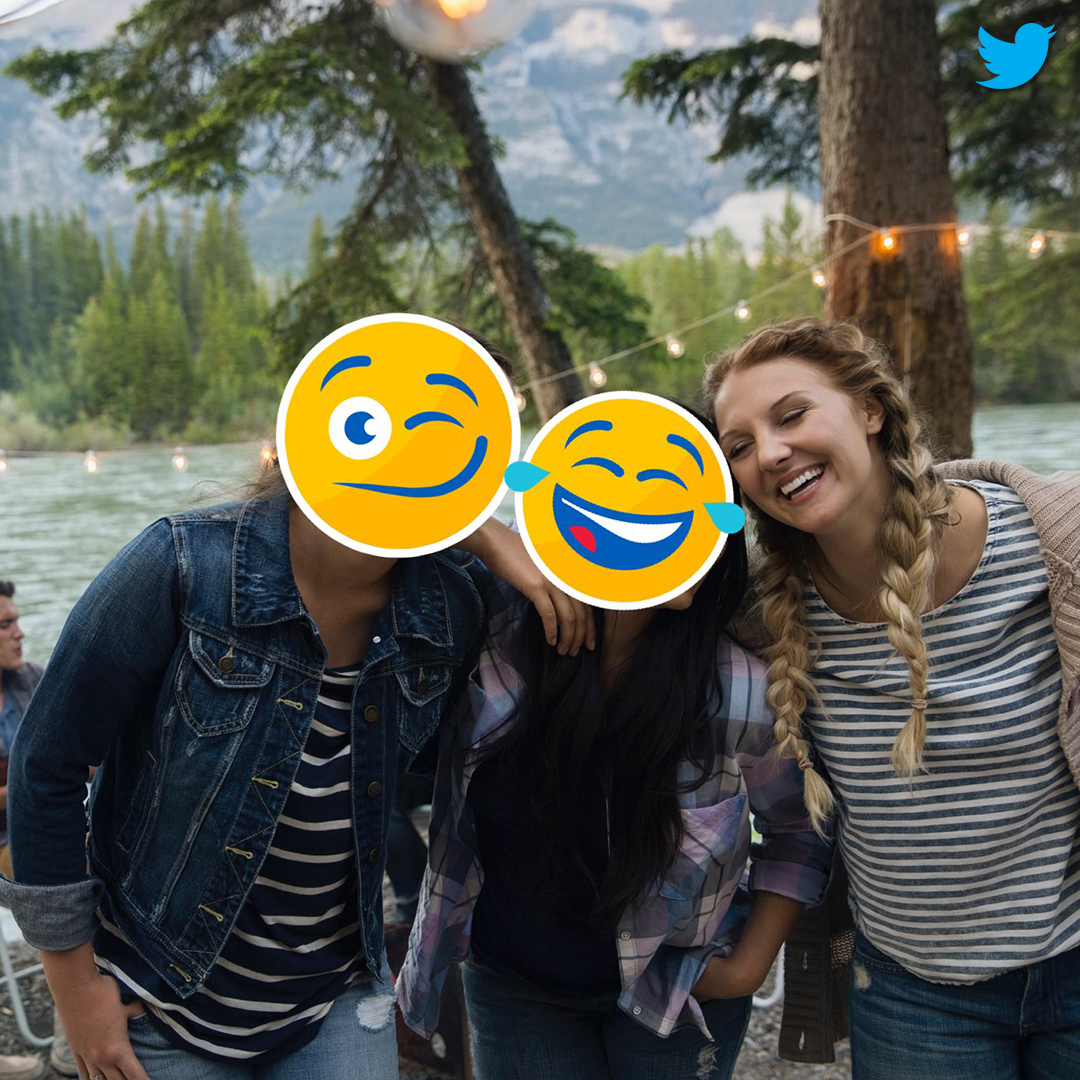
    MUMBAI: Twitter has launched creative expression tools, #Stickers to help marketers revive their brands. Using this, users can add a prop of creativity to photos and connect them to the world on the platform. Various GIFs, polls and emojis are being launched to help brands drive deeper customer engagement.

    Starting today, brands can also create and promote custom stickers for anyone on Twitter to use. A brand’s stickers will be featured in the #Stickers library and offer a form of creative expression that makes a person’s photos more fun and engaging. This represents a huge opportunity for brands to drive brand affinity and raise awareness of their message at scale.

    Embeddable Tweet: 

    Brands can design four or eight stickers like accessories and other props for users to add to their own photos. Photos with a brand’s stickers are shared with all of a user’s followers, allowing brands to be featured by their fans in a truly authentic way. #Stickers act as a visual hashtag, meaning photos with the brand’s sticker will be connected and discoverable to anyone who taps the brand’s sticker. This allows a brand to see and engage with the people who are using their stickers in creative ways.

    http://www.indiantelevision.com/sites/drupal7.indiantelevision.co.in/files/styles/large/public/image008_0.jpg?itok=G5CTWRwC

    Pepsi is the exclusive launch partner of promoted #Stickers, and will share nearly 50 custom stickers across 10 markets, including India, for fans to use as part of their global PepsiMoji campaign. The partnership also includes a custom niche creator campaign showing consumers how to use their #Stickers, as well as a branded Pepsi emoji and a promoted trend. This campaign marks the largest partnership between Twitter and Pepsi to date.

    Promoted #Stickers are available globally to select marketers with a managed account.
     

  • Twitter, broadcasters & brands: Building a win-win partnership

    Twitter, broadcasters & brands: Building a win-win partnership

    MUMBAI: For some time now, the popularity of Facebook and Twitter has majorly concerned broadcasters and other industry stakeholders for its impact on the viewership ratings. The second screen can distract its audience easily and chip away at the already reduced attention span of this attention deficit hyperactivity disorder  (ADHD)  generation.

    Naturally companies like Twitter are mostly seen as competition, especially now that it is equipped with its own video arm. But if we were to say TV audience’s exposure to social media, and the digital chatter over Twitter is actually a plus for the broadcasters, would anyone agree?

    A fine example is the reception that the singing reality show Sa Re Ga Ma Pa got for its  finale episode. It notched  up record ratings for Zee TV, and the latter says it owes a good part of the success to the role Twitter played.

    “We were pleased to partner with Twitter India and set new benchmarks in terms of digital engagement. Twitter’s real-time, conversational capabilities helped audiences connect with the show and experience its world like nothing else can. This collaboration has also helped our contestants and mentors engage better with our viewers,” a Zee Tv spokesperson had earlier shared.

    The show had gained over 25 million tweet impressions, establishing itself as the biggest singing reality TV show on the platform in India and Zee Tv’s twitter handle, @ZeeTV gained more than 100K followers in just three months.

    “#SaReGaMaPa is a great example of how a TV show can leverage a platform like Twitter to celebrate the talent of a reality show, and to foster collaboration between a TV channel, talent and fans. For the first time, a multitude of voices in the TV ecosystem (TV channel, contestants, judges and fans) came together to provide a complementary experience to the reality TV show. Twitter lit up with more than 300,000 Tweets during this iconic social TV moment, and it brought viewers closer to the show via Tweets, behind-the-scenes and highlight videos,” said Twitter India head of TV partnerships Viral Jani.

    In fact the 12 final contestants were given special attention from Twitter team as part of this partnership with Zee TV. “We got them on board the platform and gave them individual training sessions on how to use twitter better, and leverage their stardom with it. We also gave them an idea of how international singing reality stars use twitter both when live and behind the scenes,” Jani explained.

    The result was phenomenal. Contestants tweeted twice the times of  videos than the @ZeeTV handle

    And added 115 per cent more Tweet impressions to @ZeeTV handle through the season (@ZeeTV  with 9.5 million impressions), as per the data shared by Twitter India.

    Zee TV and Sa Re Ga Ma Pa aren’t the only examples of a successful twitter + TV partnership in India in the recent past.

    In July 2015, EPIC TV  and Twitter launched a unique innovation for the channel’s new campaign – #EPICat10, where in the broadcaster used the Twitter Alarm letting followers set a reminder for the 10pm shows for the first time. ColorsTV and BiggBoss created massive engagement with #BB9 viewers using native video uploads on Twitter powered by SnappyTV – including sneak peeks, uncensored videos and live tweeting with fun videos, with Twitter being the only external platform showcasing Bigg Boss videos. India Today Television has joined hands with Twitter in an exclusive partnership to conduct Twitter Town Halls that gives an opportunity to followers on Twitter to engage with newsmakers, opinion makers and other eminent personalities. Apart from  this Twitter also works in regional markets with other partners such as the Sun Network in the south and ZEEL’s  certain regional channels.

    Apart from this Star Plus, CNN IBN and IBN7 have regularly used Twitter’s live-streaming app Periscope to engage with audiences. SPNI’s SAB has also collaborated with Twitter for  brand as well as several show promotions.

    “In fact, for our recent show launches like Khidki and Y.A.R.O Ka Tashan we had collaborated with Twitter at a more comprehensive level. For Khidki, we actively scouted comic content from consumers. We partnered with the micro-blogging site to run a contest titled ‘#Tweetyourfunnystory’ and also did a live Q&A session with the producers of the show JD Majethia and Umesh Shukla on Twitter’s video-streaming app Periscope. This initiative sure got the viewers excited enough to share some of their funniest stories. We received over 12000 plus stories,” shared SAB TV EVP & business head Anooj Kapoor.

    For its show, Y.A.R.O Ka Tashan, SAB  created a unique Twitter BOT representing the Humanoid – Y.A.R.O, a lead character in its new show. The BOT replicated the characteristics of Y.A.R.O by answering all kind of question thrown at it.

    “Adding to this online campaign, we also had live outdoor hoardings in several high-traffic vantage points. Wherein, if someone was around the vicinity and happen to ask a question on Twitter with #SABKaYaro, his/her tweet and the response got displayed on this outdoor medium,” Kapoor said, adding that the broadcaster has attempted several other Twitter centric promotions in the recent past.

    The natural question is: did it have any significant impact in the channel or the shows’ popularity?

    “While we would be unable to directly measure the growth in ratings or viewership being driven from Twitter or any social medium for that matter, we can certainly say one thing that such collaborations and engagement with viewers on the online platform does drives home more youth and newer audiences for our shows. It also helps us gauge their interest levels for our concepts, opinions, feedback and these insights together help us deliver better,” Kapoor states frankly.

    When it comes finding a direct correlation between twitter engagement and a channel’s viewership ratings global info measurement leader Nielsen and  its TV and social media measurement output SocialGuide has the industry covered. In 2013, a study released by data scientists identified Twitter as one of three statistically significant variables (in addition to prior-year rating and advertising spend) to align with TV ratings.

    “Increases in Twitter volume correlate to increases in TV ratings for varying age groups, revealing a stronger correlation for younger audiences. Specifically, the study found that for 18-34 year olds, an 8.5% increase in Twitter volume corresponds to a 1% increase in TV ratings for premiere episodes, and a 4.2% increase in Twitter volume corresponds with a 1% increase in ratings for mid-season episodes,” the study read.

    Albeit the observation was sampled from 32 million unique people in the US, but similar inferences can be drawn from the study for the Indian market as well, as youth in India aren’t a world removed from the global youth when it comes to their online behaviour especially since the explosion in smartphone penetration in the country in the past three years.

    If Tweeting frequently, in greater volume and gaining traction is all there is to it, what advantages does a partnership with Twitter India give any broadcaster that its social management team can’t master on its own?

    “It’s true that being an open platform, anyone can launch their own handle and tweet. When we partner a broadcaster for a brand or show promotion, there are a bunch of advantages that come with it. Firstly we invest time with our partners to create creative strategies that they can follow on Twitter, which includes sharing data and global case studies that help them get a better idea. Secondly, we also give our partners access to certain tools and accessories that are helpful in creating inherently viral content,” answers Jani.

    This includes access to the Twitter India Blue Room that is a great platform for brands, TV personalities  to come and interact live with the twitterati. Twitter Challenger app, the Twitter Q & A app, Twitter Challenger App, Vine and the Twitter Mirror app are some of the other accessories that could be a part of the deal with each broadcaster/ brand.

    “Preferred partners are also given access to tool called Snappytv specially created for broadcasters  to allow them to beam short videos through its handles picked up from its broadcast feed in real time,” adds Jani. Twitter also gives access to its co-monetised product Amplify available to only select partners, that helps them monetise broadcasters/brands its premium content on Twitter.

    Interestingly, not all of these partnerships are commercial contracts per say, but ‘relationship building’ on the social media platform’s part. Most often Twitter only plays the role of a consultant explaining to the broadcaster on how it can use the platform better and more efficiently, without any promised monetary deal. “We work with our partners with the aim of audience growth,” Jani quips.

    So is there anything there for Twitter in these ‘philanthropic’ endeavours?

    “Globally we have seen the TV viewers tweet while watching TV, and carry the conversation online way after the show is over by following their favourite shows, or stars online. We have identified it as one of the verticals that is good to invest in. it is a mutually beneficial initiative as the broadcasters get to grow their audiences, and we get more traction and our users get good content on the platform,” Jani explains.

    And how can broadcasters leverage this to  their commercial benefit? A media planner says that the TV-Twitter metrics can be incorporated in the media planning and buying presence to identify shows with high audience engagement.

    Brands and advertisers either sponsoring or taking up FCT on a show on television can also work with the broadcasters social teams  to forge deeper conversations and engagements about the brand with the series’ audience on Twitter and vice-versa to further build buzz.

    “Collaborations such as this can build brand or show love,” says the planner.  “And it is this love of a brand which drives transactions and engagement with it.”

    Now isn’t that a win-win situation?

    (With inputs from Sonam Saini )
  • Twitter, broadcasters & brands: Building a win-win partnership

    Twitter, broadcasters & brands: Building a win-win partnership

    MUMBAI: For some time now, the popularity of Facebook and Twitter has majorly concerned broadcasters and other industry stakeholders for its impact on the viewership ratings. The second screen can distract its audience easily and chip away at the already reduced attention span of this attention deficit hyperactivity disorder  (ADHD)  generation.

    Naturally companies like Twitter are mostly seen as competition, especially now that it is equipped with its own video arm. But if we were to say TV audience’s exposure to social media, and the digital chatter over Twitter is actually a plus for the broadcasters, would anyone agree?

    A fine example is the reception that the singing reality show Sa Re Ga Ma Pa got for its  finale episode. It notched  up record ratings for Zee TV, and the latter says it owes a good part of the success to the role Twitter played.

    “We were pleased to partner with Twitter India and set new benchmarks in terms of digital engagement. Twitter’s real-time, conversational capabilities helped audiences connect with the show and experience its world like nothing else can. This collaboration has also helped our contestants and mentors engage better with our viewers,” a Zee Tv spokesperson had earlier shared.

    The show had gained over 25 million tweet impressions, establishing itself as the biggest singing reality TV show on the platform in India and Zee Tv’s twitter handle, @ZeeTV gained more than 100K followers in just three months.

    “#SaReGaMaPa is a great example of how a TV show can leverage a platform like Twitter to celebrate the talent of a reality show, and to foster collaboration between a TV channel, talent and fans. For the first time, a multitude of voices in the TV ecosystem (TV channel, contestants, judges and fans) came together to provide a complementary experience to the reality TV show. Twitter lit up with more than 300,000 Tweets during this iconic social TV moment, and it brought viewers closer to the show via Tweets, behind-the-scenes and highlight videos,” said Twitter India head of TV partnerships Viral Jani.

    In fact the 12 final contestants were given special attention from Twitter team as part of this partnership with Zee TV. “We got them on board the platform and gave them individual training sessions on how to use twitter better, and leverage their stardom with it. We also gave them an idea of how international singing reality stars use twitter both when live and behind the scenes,” Jani explained.

    The result was phenomenal. Contestants tweeted twice the times of  videos than the @ZeeTV handle

    And added 115 per cent more Tweet impressions to @ZeeTV handle through the season (@ZeeTV  with 9.5 million impressions), as per the data shared by Twitter India.

    Zee TV and Sa Re Ga Ma Pa aren’t the only examples of a successful twitter + TV partnership in India in the recent past.

    In July 2015, EPIC TV  and Twitter launched a unique innovation for the channel’s new campaign – #EPICat10, where in the broadcaster used the Twitter Alarm letting followers set a reminder for the 10pm shows for the first time. ColorsTV and BiggBoss created massive engagement with #BB9 viewers using native video uploads on Twitter powered by SnappyTV – including sneak peeks, uncensored videos and live tweeting with fun videos, with Twitter being the only external platform showcasing Bigg Boss videos. India Today Television has joined hands with Twitter in an exclusive partnership to conduct Twitter Town Halls that gives an opportunity to followers on Twitter to engage with newsmakers, opinion makers and other eminent personalities. Apart from  this Twitter also works in regional markets with other partners such as the Sun Network in the south and ZEEL’s  certain regional channels.

    Apart from this Star Plus, CNN IBN and IBN7 have regularly used Twitter’s live-streaming app Periscope to engage with audiences. SPNI’s SAB has also collaborated with Twitter for  brand as well as several show promotions.

    “In fact, for our recent show launches like Khidki and Y.A.R.O Ka Tashan we had collaborated with Twitter at a more comprehensive level. For Khidki, we actively scouted comic content from consumers. We partnered with the micro-blogging site to run a contest titled ‘#Tweetyourfunnystory’ and also did a live Q&A session with the producers of the show JD Majethia and Umesh Shukla on Twitter’s video-streaming app Periscope. This initiative sure got the viewers excited enough to share some of their funniest stories. We received over 12000 plus stories,” shared SAB TV EVP & business head Anooj Kapoor.

    For its show, Y.A.R.O Ka Tashan, SAB  created a unique Twitter BOT representing the Humanoid – Y.A.R.O, a lead character in its new show. The BOT replicated the characteristics of Y.A.R.O by answering all kind of question thrown at it.

    “Adding to this online campaign, we also had live outdoor hoardings in several high-traffic vantage points. Wherein, if someone was around the vicinity and happen to ask a question on Twitter with #SABKaYaro, his/her tweet and the response got displayed on this outdoor medium,” Kapoor said, adding that the broadcaster has attempted several other Twitter centric promotions in the recent past.

    The natural question is: did it have any significant impact in the channel or the shows’ popularity?

    “While we would be unable to directly measure the growth in ratings or viewership being driven from Twitter or any social medium for that matter, we can certainly say one thing that such collaborations and engagement with viewers on the online platform does drives home more youth and newer audiences for our shows. It also helps us gauge their interest levels for our concepts, opinions, feedback and these insights together help us deliver better,” Kapoor states frankly.

    When it comes finding a direct correlation between twitter engagement and a channel’s viewership ratings global info measurement leader Nielsen and  its TV and social media measurement output SocialGuide has the industry covered. In 2013, a study released by data scientists identified Twitter as one of three statistically significant variables (in addition to prior-year rating and advertising spend) to align with TV ratings.

    “Increases in Twitter volume correlate to increases in TV ratings for varying age groups, revealing a stronger correlation for younger audiences. Specifically, the study found that for 18-34 year olds, an 8.5% increase in Twitter volume corresponds to a 1% increase in TV ratings for premiere episodes, and a 4.2% increase in Twitter volume corresponds with a 1% increase in ratings for mid-season episodes,” the study read.

    Albeit the observation was sampled from 32 million unique people in the US, but similar inferences can be drawn from the study for the Indian market as well, as youth in India aren’t a world removed from the global youth when it comes to their online behaviour especially since the explosion in smartphone penetration in the country in the past three years.

    If Tweeting frequently, in greater volume and gaining traction is all there is to it, what advantages does a partnership with Twitter India give any broadcaster that its social management team can’t master on its own?

    “It’s true that being an open platform, anyone can launch their own handle and tweet. When we partner a broadcaster for a brand or show promotion, there are a bunch of advantages that come with it. Firstly we invest time with our partners to create creative strategies that they can follow on Twitter, which includes sharing data and global case studies that help them get a better idea. Secondly, we also give our partners access to certain tools and accessories that are helpful in creating inherently viral content,” answers Jani.

    This includes access to the Twitter India Blue Room that is a great platform for brands, TV personalities  to come and interact live with the twitterati. Twitter Challenger app, the Twitter Q & A app, Twitter Challenger App, Vine and the Twitter Mirror app are some of the other accessories that could be a part of the deal with each broadcaster/ brand.

    “Preferred partners are also given access to tool called Snappytv specially created for broadcasters  to allow them to beam short videos through its handles picked up from its broadcast feed in real time,” adds Jani. Twitter also gives access to its co-monetised product Amplify available to only select partners, that helps them monetise broadcasters/brands its premium content on Twitter.

    Interestingly, not all of these partnerships are commercial contracts per say, but ‘relationship building’ on the social media platform’s part. Most often Twitter only plays the role of a consultant explaining to the broadcaster on how it can use the platform better and more efficiently, without any promised monetary deal. “We work with our partners with the aim of audience growth,” Jani quips.

    So is there anything there for Twitter in these ‘philanthropic’ endeavours?

    “Globally we have seen the TV viewers tweet while watching TV, and carry the conversation online way after the show is over by following their favourite shows, or stars online. We have identified it as one of the verticals that is good to invest in. it is a mutually beneficial initiative as the broadcasters get to grow their audiences, and we get more traction and our users get good content on the platform,” Jani explains.

    And how can broadcasters leverage this to  their commercial benefit? A media planner says that the TV-Twitter metrics can be incorporated in the media planning and buying presence to identify shows with high audience engagement.

    Brands and advertisers either sponsoring or taking up FCT on a show on television can also work with the broadcasters social teams  to forge deeper conversations and engagements about the brand with the series’ audience on Twitter and vice-versa to further build buzz.

    “Collaborations such as this can build brand or show love,” says the planner.  “And it is this love of a brand which drives transactions and engagement with it.”

    Now isn’t that a win-win situation?

    (With inputs from Sonam Saini )

  • Communications Minister launches Twitter service for complaints

    Communications Minister launches Twitter service for complaints

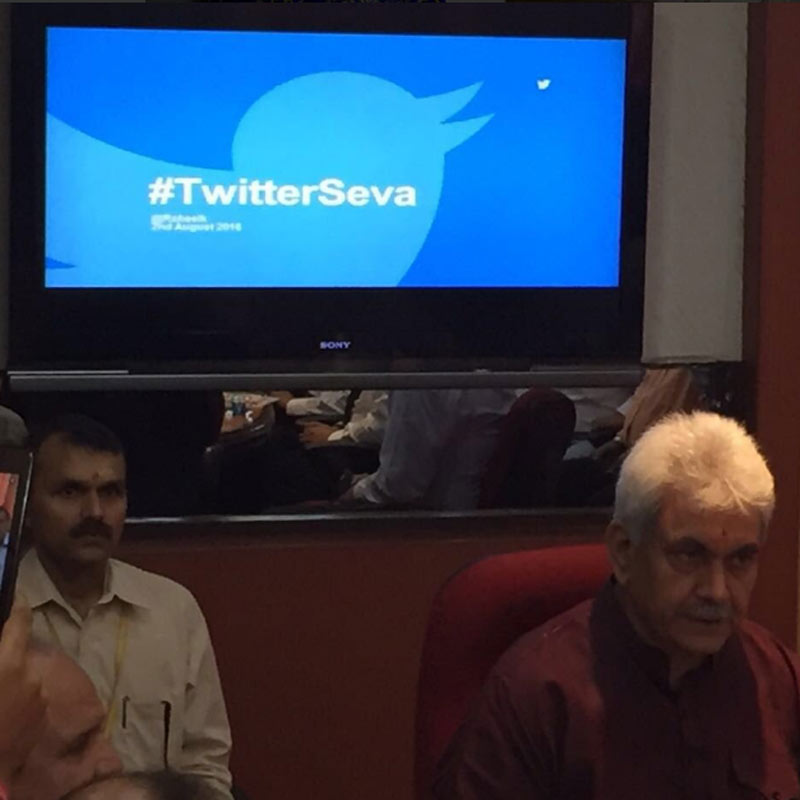
    NEW DELHI: Trying to digitally enable the common man, Ministry of Communications (MoC) today launched a “Twitter Sewa” or a Twitter-based service for addressing complaints and grievances of the common man and other stakeholders in the telecoms and postal sectors.

    The Twitter handle for this service will be Minister of Communications Manoj Sinha’s personal handle, @manojsinhabjp.

    Launching the service, Sinha said that this is in tune with Prime Minister Narendra Modi’s vision of “minimum government, maximum governance” as various ministries are connecting with Indian citizens through live communications platform to provide a transparent, responsive and accountable administration.

    The Minister said that the Telecoms Ministry and Department of Post will compile a list of complaints based on the Twitter Sewa to categorize them into immediate, mid-term and long-term complaints for redressal.

    Sinha said that the challenge is gigantic as India has the biggest postal network in the world and the number of mobile-phone subscribers had already crossed one billion in January this year. “Therefore, we are aware that complaints are going to pour in from across the country and in great numbers. But I would like to assure you that my Ministry will rise to this challenge,” he added.

    A graduate of an Indian Institute of Technology, the Minister cautioned there are chances that this Twitter service may be “misused by rogue elements” but expressed the hope that Twitter authorities will take care of such transgressions.

    Communications Secretary J.S.Deepak, Secretary Posts B.V.Sudhakar and other senior government officials were present on the occasion.

  • Communications Minister launches Twitter service for complaints

    Communications Minister launches Twitter service for complaints

    NEW DELHI: Trying to digitally enable the common man, Ministry of Communications (MoC) today launched a “Twitter Sewa” or a Twitter-based service for addressing complaints and grievances of the common man and other stakeholders in the telecoms and postal sectors.

    The Twitter handle for this service will be Minister of Communications Manoj Sinha’s personal handle, @manojsinhabjp.

    Launching the service, Sinha said that this is in tune with Prime Minister Narendra Modi’s vision of “minimum government, maximum governance” as various ministries are connecting with Indian citizens through live communications platform to provide a transparent, responsive and accountable administration.

    The Minister said that the Telecoms Ministry and Department of Post will compile a list of complaints based on the Twitter Sewa to categorize them into immediate, mid-term and long-term complaints for redressal.

    Sinha said that the challenge is gigantic as India has the biggest postal network in the world and the number of mobile-phone subscribers had already crossed one billion in January this year. “Therefore, we are aware that complaints are going to pour in from across the country and in great numbers. But I would like to assure you that my Ministry will rise to this challenge,” he added.

    A graduate of an Indian Institute of Technology, the Minister cautioned there are chances that this Twitter service may be “misused by rogue elements” but expressed the hope that Twitter authorities will take care of such transgressions.

    Communications Secretary J.S.Deepak, Secretary Posts B.V.Sudhakar and other senior government officials were present on the occasion.

  • Netflix steps up marketing drive in India, finally

    Netflix steps up marketing drive in India, finally

    MUMBAI:  There are finally some ripples in sight in the otherwise still surface of Netflix’s marketing efforts in India. From carefully curated short videos hashtagged #LifeWithoutNetflix that are doing the rounds on social media, to meme wars with market rival Hotstar on Twitter, we are seeing more of the American over-the-top video giant’s activity recently — a change from its initial presence in the market.

    https://www.facebook.com/NetflixIN/videos/1008915785888828/

    “The #LifeWithoutNetflix social campaign was created primarily to share with our users the things we love about Netflix and the great stories they can find on our service. We want to build communities within the Indian audience to help them discover content they will love, and also to understand what they want in an entertainment experience,” shared a spokesperson from Netflix team based in Singapore.

    On the recent Twitter spat with Hotstar over an internet meme and its omnipresent rivalry with the Star India owned OTT platform Hotstar, Netflix shared, “Because the entertainment market is so broad, there is an opportunity for multiple brands to be successful. Many people will subscribe to several services (including Netflix) since we have different, exclusive content.”

    For more details on this, please read

    Apart from its quick rise to be a market leader in the digital video space, what makes Netflix stand out is its effervescent marketing campaigns.  Believe it or not, its trademark ads are part of the reason it is a brand to be reckoned with, in several mature markets. And there are no rewards for guessing which media it’s best at. Netflix is known to be bullish with its social media campaigns, with each new market it enters. And yet, its touchdown on Indian soil earlier this year was marked with limited fanfare on the company’s part. No gala launch events, no press conferences with big names, no over the top PR drive. It was left to the overzealous media and enthusiastic netizens to spread the word organically.

    Therefore, industry couldn’t help ponder if this was a strategy of some sort, or Netflix simply wasn’t ready enough to take on the Indian market head on. Or maybe it is not on its priority list, given the fact that Indian audience still hasn’t fully accepted the SVOD way.

    Studying the market and spotting the real problems that is native to the audience was part of the reason for keeping a low profile before taking a plunge, a Netflix official pointed out. After all, a campaign gone wrong is probably worse than no campaign at all.

    “It’s early days in India and there’s still much to learn and discover so that we can keep making the Netflix experience better. We are pleased with how consumers in India are discovering Netflix. They like the fact that we are a flat-fee unlimited viewing commercial-free experience, can cancel anytime without commitments. They can watch as much as they want, anytime, anywhere, on nearly any Internet-connected screen,” Netflix shared. Therefore, to start with, building awareness is Netflix India’s primary task when it comes to marketing.

    Netflix has also somewhat caught the nerve of the Indian audience’s watching taste. “For now, we very quickly see that the shows Indians love are very much similar to what we see in other markets and the top ones are Netflix Originals like Master of None, Narcos, Marvel’s Daredevil and Marvel’s Jessica Jones,” the spokesperson pointed out.

    Analysts and brand consultants have time and again cited Netflix’s ads as the perfect blend of problem solving and brilliant storytelling. A good example is when Netflix coined a whole new term – ‘Netflix Cheating’ to address couples who watch shows together.

    Thus, building that niche in every market is an essential part of the brand’s communication strategy. Building a culture around  local content, of course, is the key to that.

    “On the local front, we are pursuing recent Bollywood titles, notable indie films, memorable classic Bollywood titles and the best of regional cinema (Tamil, Gujarati, Punjabi, Marathi). Our goal is to bring Indian cinema to not only all regions of India but to the world so you’ll find Indian film titles in all countries in which Netflix exists, accessible to all our over 81 million members. For example, Brahman Naman, a coming-of-age comedy by celebrated Indian director Q, is now available globally only on Netflix. Coming up, Raman Raghav 2.0 is also among the titles that we picked up at Cannes this year as an exclusive on Netflix. Sacred Games is Netflix first original series from India, which will be produced in partnership with Phantom Films,” the Netflix official added in parting.

    With so much on the way for Netflix audiences in India, one can anticipate the company to maintain a consistence interaction with streamers online through more engaging and snaky videos, and memes. Although the market has yet to see a high decibel campaign from digital media giant.
     

  • Netflix steps up marketing drive in India, finally

    Netflix steps up marketing drive in India, finally

    MUMBAI:  There are finally some ripples in sight in the otherwise still surface of Netflix’s marketing efforts in India. From carefully curated short videos hashtagged #LifeWithoutNetflix that are doing the rounds on social media, to meme wars with market rival Hotstar on Twitter, we are seeing more of the American over-the-top video giant’s activity recently — a change from its initial presence in the market.

    https://www.facebook.com/NetflixIN/videos/1008915785888828/

    “The #LifeWithoutNetflix social campaign was created primarily to share with our users the things we love about Netflix and the great stories they can find on our service. We want to build communities within the Indian audience to help them discover content they will love, and also to understand what they want in an entertainment experience,” shared a spokesperson from Netflix team based in Singapore.

    On the recent Twitter spat with Hotstar over an internet meme and its omnipresent rivalry with the Star India owned OTT platform Hotstar, Netflix shared, “Because the entertainment market is so broad, there is an opportunity for multiple brands to be successful. Many people will subscribe to several services (including Netflix) since we have different, exclusive content.”

    For more details on this, please read

    Apart from its quick rise to be a market leader in the digital video space, what makes Netflix stand out is its effervescent marketing campaigns.  Believe it or not, its trademark ads are part of the reason it is a brand to be reckoned with, in several mature markets. And there are no rewards for guessing which media it’s best at. Netflix is known to be bullish with its social media campaigns, with each new market it enters. And yet, its touchdown on Indian soil earlier this year was marked with limited fanfare on the company’s part. No gala launch events, no press conferences with big names, no over the top PR drive. It was left to the overzealous media and enthusiastic netizens to spread the word organically.

    Therefore, industry couldn’t help ponder if this was a strategy of some sort, or Netflix simply wasn’t ready enough to take on the Indian market head on. Or maybe it is not on its priority list, given the fact that Indian audience still hasn’t fully accepted the SVOD way.

    Studying the market and spotting the real problems that is native to the audience was part of the reason for keeping a low profile before taking a plunge, a Netflix official pointed out. After all, a campaign gone wrong is probably worse than no campaign at all.

    “It’s early days in India and there’s still much to learn and discover so that we can keep making the Netflix experience better. We are pleased with how consumers in India are discovering Netflix. They like the fact that we are a flat-fee unlimited viewing commercial-free experience, can cancel anytime without commitments. They can watch as much as they want, anytime, anywhere, on nearly any Internet-connected screen,” Netflix shared. Therefore, to start with, building awareness is Netflix India’s primary task when it comes to marketing.

    Netflix has also somewhat caught the nerve of the Indian audience’s watching taste. “For now, we very quickly see that the shows Indians love are very much similar to what we see in other markets and the top ones are Netflix Originals like Master of None, Narcos, Marvel’s Daredevil and Marvel’s Jessica Jones,” the spokesperson pointed out.

    Analysts and brand consultants have time and again cited Netflix’s ads as the perfect blend of problem solving and brilliant storytelling. A good example is when Netflix coined a whole new term – ‘Netflix Cheating’ to address couples who watch shows together.

    Thus, building that niche in every market is an essential part of the brand’s communication strategy. Building a culture around  local content, of course, is the key to that.

    “On the local front, we are pursuing recent Bollywood titles, notable indie films, memorable classic Bollywood titles and the best of regional cinema (Tamil, Gujarati, Punjabi, Marathi). Our goal is to bring Indian cinema to not only all regions of India but to the world so you’ll find Indian film titles in all countries in which Netflix exists, accessible to all our over 81 million members. For example, Brahman Naman, a coming-of-age comedy by celebrated Indian director Q, is now available globally only on Netflix. Coming up, Raman Raghav 2.0 is also among the titles that we picked up at Cannes this year as an exclusive on Netflix. Sacred Games is Netflix first original series from India, which will be produced in partnership with Phantom Films,” the Netflix official added in parting.

    With so much on the way for Netflix audiences in India, one can anticipate the company to maintain a consistence interaction with streamers online through more engaging and snaky videos, and memes. Although the market has yet to see a high decibel campaign from digital media giant.
     

  • Kinetic India creates live Twitter on streets for Sony SabTV

    Kinetic India creates live Twitter on streets for Sony SabTV

    MUMBAI: With the launch of new show ‘Y.A.R.O’ on SAB TV about h has extraordinary powers including Wikipedia-like capacity to answers all the questions. We as a Creative thinking agency brought Live this character and its unique characteristics on a Billboard very innovatively. This unique initiative is such that anyone on Twitter can tweet any question on their mind with hashtag #SABKaYaro and they will get a response in just a second. One can ask any generic question they like and they will get a response from Y.A.R.O almost instantly. To showcase we created a Live Twitter App which operates similar to Siri further managed through a Live Micro-site which automatically replies an answer to the question. The initiative is displayed live on few high-traffic vantage outdoor sits in Mumbai.

    On the association, Kinetic India Head – west region, Yusuf Merchant commented, “We are very thrilled about our partnership with Sab TV for executing this very unique and exciting “Live Tweet” innovation. The idea is in sync with the thought and concept of Y.A.R.O. When it comes to billboards in India we see very few digital integration and we at Kinetic firmly believe that a mix of Digital with regular OOH provides a right interactive & engaging platform for the TG”.

    If you are around the vicinity and happen to ask a question on Twitter with #SABKaYaro, your tweet and the response will also be displayed on the outdoor medium. h

  • Kinetic India creates live Twitter on streets for Sony SabTV

    Kinetic India creates live Twitter on streets for Sony SabTV

    MUMBAI: With the launch of new show ‘Y.A.R.O’ on SAB TV about h has extraordinary powers including Wikipedia-like capacity to answers all the questions. We as a Creative thinking agency brought Live this character and its unique characteristics on a Billboard very innovatively. This unique initiative is such that anyone on Twitter can tweet any question on their mind with hashtag #SABKaYaro and they will get a response in just a second. One can ask any generic question they like and they will get a response from Y.A.R.O almost instantly. To showcase we created a Live Twitter App which operates similar to Siri further managed through a Live Micro-site which automatically replies an answer to the question. The initiative is displayed live on few high-traffic vantage outdoor sits in Mumbai.

    On the association, Kinetic India Head – west region, Yusuf Merchant commented, “We are very thrilled about our partnership with Sab TV for executing this very unique and exciting “Live Tweet” innovation. The idea is in sync with the thought and concept of Y.A.R.O. When it comes to billboards in India we see very few digital integration and we at Kinetic firmly believe that a mix of Digital with regular OOH provides a right interactive & engaging platform for the TG”.

    If you are around the vicinity and happen to ask a question on Twitter with #SABKaYaro, your tweet and the response will also be displayed on the outdoor medium. h

  • Peace TV saga & absence of rule of law

    Peace TV saga & absence of rule of law

    The Peace TV saga after the Dhaka terrorist attack just before Eid and the brouhaha created over availability of an unlicensed channel in Indian television homes highlights yet again rules and regulations have to be applied uniformly and stringently.

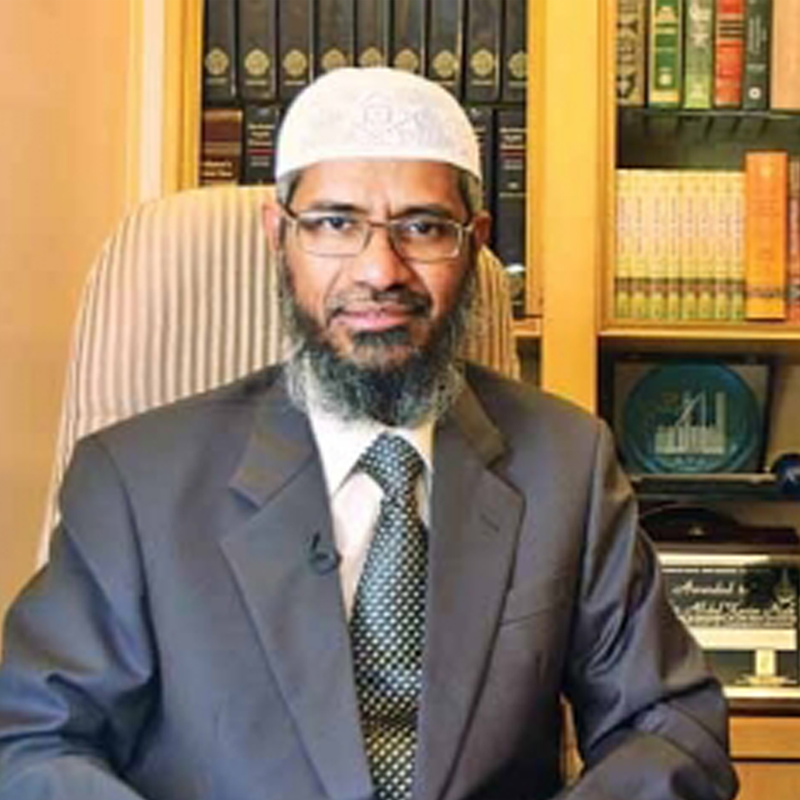
    The Indian government woke up suddenly issuing gag orders on distribution platforms when the general media in the country went to town regarding Peace TV. The media alleged Peace TV and the Mumbai-based Islamic tele-evangelist Zakir Naik’s sermons aired on the channel could have instigated the Bangladeshi terrorists. All these allegations were based on some interpretation of a report in a Bangladeshi newspaper.

    That the Bangla newspaper subsequently clarified its report stating categorically that it had never said the terrorists were `inspired’ by Naik’s sermons is a completely another story because the Indian media, by and large news channels, ignored the clarification.

    However, the fact stands that Peace TV is not licensed to air in India and had been denied landing rights by the Indian government several times in the past. Still, the channel was available on Indian networks and the sermons online.

    Similarly, several Pakistani TV channels too are available in some parts of the country (crackdown on illegal retransmissions do happen from time to time, government officials insist) as also Chinese radio stations in border areas.

    So, the question is: how come an unlicensed TV channel officially denied permission to broadcast in India was still reaching Indian TV homes?

    The answer lies in apparent laxity in implementing and upholding existing regulations on the part of Indian policy-makers, regulators and law enforcing agencies. In some cases it may also be local-level indulgences despite knowing that a certain regulation had been breached.

    Because in India most such issues boil down to majority vs. minority yardstick with the victimisation syndrome kicking in — all in the name of certain democratic rights — regulatory breaches are overlooked or rule of the law not enforced. Until one such breach kicks up crap all round; like the Peace TV affair recently did.

    Historically speaking, as India opened up to satellite TV revolution from early 1990s and rules were lax (downlink licence or landing rights were terms not known to Indian policy-makers then) many TV channels invaded the Indian skies and homes. Some of them were bad (read propagandist), some indifferent, but largely most were entertaining.

    As successive Indian governments woke up to the power of TV propaganda in whipping up unpalatable frenzy and jingoism, Ministry of Information and Broadcasting (MIB) started formulating rules and regulations to isolate TV channels, mostly uplinked from outside India, from entering Indian homes via cable or other distribution platforms, which were perceived as not conducive for India.

    One such historic policy drafting also saw a Broadcast Bill being introduced in Parliament in 1996 where the draft stated that certain categories of organisations (like political parties, NGOs, religious bodies, advertising agencies, etc) would be barred from owning and running TV channels.

    The Bill never got enacted into a law and since then half-hearted attempts by other governments to bring similar Bills in Parliament failed to get necessary traction; mostly owing to a superstitious belief that whichever government tries to regulate the broadcast sector went out of power in New Delhi.

    Historical incidents, notwithstanding, it has also been observed in India that any proposed regulation relating to cable and broadcast sector having the potential to affect powerful lobbies like political parties or religious bodies or their proxies get swept under the carpet.

    Take, for example, broadcast carriage regulator TRAI’s two recommendations on media ownership, made after wide consultations with stakeholders. I am told both the reports are gathering dust in some corner of MIB.

    Apart from suggesting many other things on the ownership issue, TRAI said in a set of recommendations in 2014, “…given that about six years have elapsed without any concrete action being taken by the Government, the Authority strongly recommends that its Recommendations of 12 November 2008 and 28 December 2012 may be implemented forthwith.”

    The regulator’s recommendations came after issues relating to media ownership issue and vertical monopoly were referred to it by MIB.

    Emboldened by the fact that MIB had put its weight behind it, TRAI (again) recommended in 2014 that political bodies, religious bodies, urban, local, panchayati raj, and other publicly funded bodies, Central and State government ministries, departments, companies, undertakings, joint ventures, and government-funded entities and affiliates be barred from entry into broadcasting and TV channel distribution sectors.

    The regulator suggested exit routes for existing entities already into business, adding such a debarment could be implemented through an executive decision by incorporating the disqualifications into rules, regulations and guidelines as necessary.

    But by 2014, MIB had already licensed many news and religious/spiritual TV channels and distribution platforms owned/managed by political parties, religious bodies (in one case a temple’s management committee) and/or their proxies for operation at pan-India and State levels.

    And so, even the 2014 TRAI recommendations remain ignored, while at another level technology has outpaced or threatens to make obsolete the Indian process of policy making.

    A colleague, while outlining the potential of Facebook Live (and other such techs like Twitter’s Periscope), recently commented it’s matter of time when Facebook Live will kick into India, dipping into the country’s smart-phone user base (250 million on last count) to give birth to the possibility of “hundreds of news channels on FB dishing out unadulterated, independent updates of developments.” Very few in Indian government would be tracking developments like FB Live.

    In an age when technology is moving faster than policy-making, flat-footedness of Indian policy-makers and our general apathy towards rule of the law will hasten policy chaos resulting in arbitrary decisions being implemented.