Tag: Twitter

  • Applause’s Sameer Nair spills the secret sauce for hit storytelling

    Applause’s Sameer Nair spills the secret sauce for hit storytelling

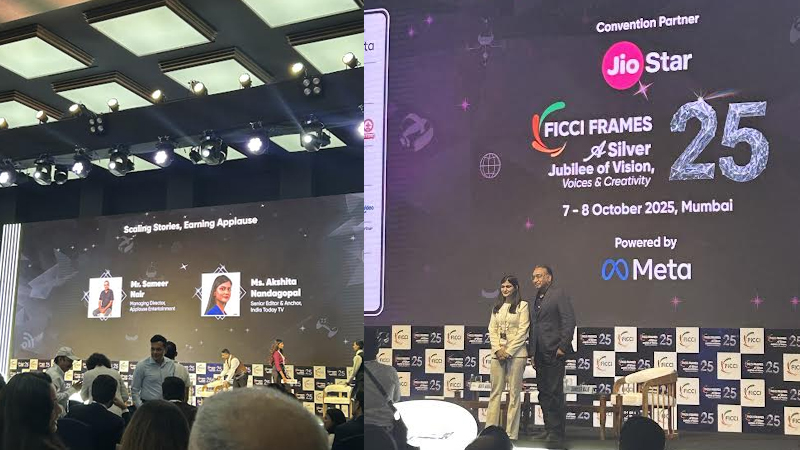
    MUMBAI: At Ficci Frames’ silver jubilee edition, a candid panel discussion between Applause Entertainment managing director Sameer Nair and India Today senior editor and anchor Akshita Nandagopal, brought the house down with humour, insight and a healthy dose of industry nostalgia.

    Moderating the fireside chat ‘Scaling stories, earning applause,’ Nandagopal kicked off by asking if Applause Entertainment had cracked the “OTT code,” given its slate of acclaimed shows like Criminal Justice (2019-present), The Hunt (2025) and Black Warrant (2025).

    Nair brushed off the idea of any secret formula. “Storytelling is a difficult enterprise,” he said. “You put in all the hard work and finally show it to an audience, sometimes they love it, sometimes they don’t. What we try to do is tell stories that feel real, even if they entertain first.”

    Citing his fondness for contemporary history, Nair explained how Applause often draws inspiration from real people and events, and banks on the entertainment factor. Black Warrant, he pointed out, isn’t about the dark underbelly of the Tihar Jail and the inmates as much as it is about “three young people on their first day at work; only, their workplace happens to be the Tihar Jail.” The company’s celebrated Criminal Justice series, meanwhile, has gone far beyond its British and American counterparts. “By the fourth season, we weren’t adapting anymore. We were living in the world of Madhav Mishra,” he said with a grin.

    Continuing the conversation on creativity in Indian storytelling, Nandagopal asked Nair, “Creativity is always a buzzword, but sometimes it feels boxed in a certain way. You can’t talk about uncomfortable topics; you have to be mindful of controversy and what entertains an Indian audience. Do you think creativity is constrained like that?”

    Amusedly, Nair interjected, noting that this isn’t unique to India. “In the eight years we’ve been doing this, we haven’t really got into much trouble, so we must be doing something right. We don’t have an agenda; we’re telling stories that make you think, but not what to think. We find compelling characters, research their worlds, and present their stories as balanced and entertaining as possible. They are people like you and me.”

    He brought up The Hunt as an example, which begins with the assassination of Rajiv Gandhi but quickly transitions into a police procedural. “It’s not about politics; it’s about crime and justice… In the process, you get to know the characters. There’s one scene where Sivarasan, the one-eyed LTTE mastermind, sits in a theater watching a Rajnikanth film. We loved putting that in, it humanises him without glorifying anything.”

    When Nandagopal brought up the theme of change, both broadly and through the lens of content, Nair noted how some formats have stood the test of time. “KBC is a classic because it has a great format and Mr. Bachchan,” he said, crediting both star power and familiarity for its relic appeal. “Audiences talk about change all the time, but they also love familiarity. Sometimes you don’t want a murder mystery; you just want to relax.” To which, Nandagopal nodded and said, ‘It’s a comfort watch. A lot of us do that. We’ve been watching a lot of the classics that we’ve seen before. Knowing that that’s something that’s predictable. We know what we’re expecting there. And yet we love to watch it.

    Looking back at the first Ficci Frames two decades ago, Nair painted a vivid picture of how dramatically the industry had evolved. “In 2005, television ruled everything. There was no Facebook, Twitter or Youtube, even the iphone didn’t exist. By 2015, digital platforms had become the barbarians at the gate. Now, in 2025, we’re minor players compared to Netflix, Youtube and social media. And just as we adjusted to that, AI arrived.”

    The conversation soon turned to the elephant in every creator’s room: will AI replace creativity or enhance it? Nair’s reply was measured. “AI will be a great tool if it can create that suspension of disbelief,” he said. “When you see a dinosaur chasing you in Jurassic Park, you believe it. If AI can make you believe without breaking the illusion, it’s magic. But if it looks fake, we might as well be watching animation.”

    He added that AI, much like earlier leaps in filmmaking, from special effects to computer graphics, would revolutionise the process but not erase human creativity. “Even an AI actor needs direction, a script and a story,” he said. “If machines create everything end to end, without human emotion, we’ll just be watching something intelligent but soulless. We must use it wisely.”

    As the conversation veered back to Applause’s future, Nair revealed that the company has recently acquired the rights to Jeffrey Archer’s books and has a robust slate of upcoming projects. Upcoming projects include new seasons of Criminal Justice and Black Warrant, the next installment of the Scam franchise, and a Tamil feature Bison directed by Tamil director and screenwriter Mari Selvaraj. He also teased Gandhi, a three-season epic inspired by Indian historian and author Ramachandra Guha’s books. “It’s not about Gandhi,” Nair chuckled and said, “it’s about Mohandas before he became the Mahatma: an 18-year-old who goes to college in London, and does all the standard things that rebellious teenagers do.”

    For Nair, storytelling remains deeply human: an approach that has shaped Applause Entertainment’s diverse slate, from thrillers rooted in true events to expansive biographical dramas.

    In a world where algorithms and art are learning to coexist, it’s a fitting reminder that great storytelling, no matter the medium, will always find its audience.

  • Oneplus launches ‘light a light, plant a plant’ with Jackie Shroff this Diwali

    Oneplus launches ‘light a light, plant a plant’ with Jackie Shroff this Diwali

    MUMBAI: This Diwali, Oneplus is lighting up homes and green spaces alike. The brand has unveiled a heartfelt campaign titled “light a light, plant a plant”, collaborating with actor Jackie Shroff and his NGO, JK Foundation, with a commitment to plant 1 lakh trees across India.

    The campaign encourages communities to celebrate the festival of lights while contributing to a greener future. The hero film delivers a simple yet powerful message: as we illuminate our homes, we can also plant a plant. It reflects Oneplus’s belief that technology and sustainability can go hand in hand: mirroring the clean and fast experience of Oxygenos with the brand’s commitment to cleaner air and healthier cities.

    This initiative continues Oneplus’s eco-conscious journey, building on its 2019 campaign that saw 20,000 trees planted. Plantations under this campaign will prioritise native species and ongoing care, with periodic updates shared with the Oneplus community.

    Commenting on the campaign, Oneplus India director of marketing Ishita Grover said, “Our campaign is a heartfelt celebration of joy and a brighter, hopeful future. By sharing the spirit of giving and togetherness, we hope to spark a movement where celebration and a greener future go hand in hand.”

    Conceptualised in-house and directed by OML (Only Much Louder), the ad film is live across Youtube, Instagram, Twitter, and Facebook, bringing the festive spirit and a message of sustainability directly to audiences nationwide.

  • Flipkart bags a trip as Marriott Bonvoy turns carts into passports

    Flipkart bags a trip as Marriott Bonvoy turns carts into passports

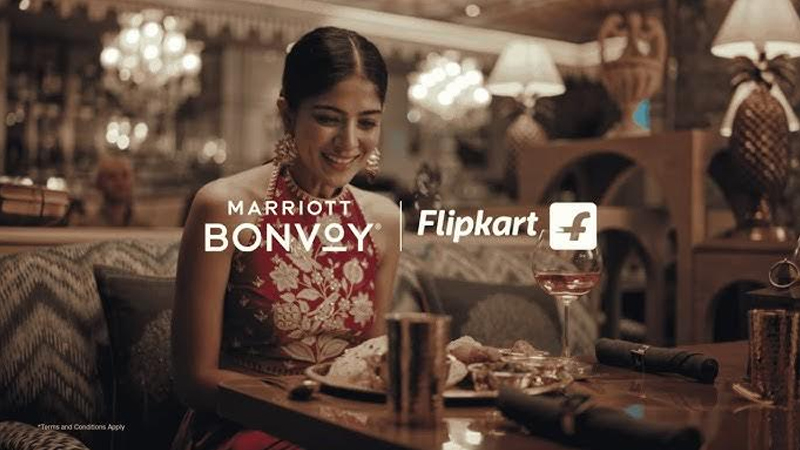
    MUMBAI: Who knew a pair of “Bali earrings” could land you in Bali? Or that “Korean skincare” could be your boarding pass to Seoul? Flipkart and Marriott Bonvoy have pulled off India’s first dual loyalty integration, proving that sometimes your cart really can take you places.

    The campaign, cheekily titled “Your Cart Takes You Places” by 22Feet Tribal Worldwide, hijacks Flipkart’s own search bar. The agency crunched through 300-plus keywords and cherry-picked the top 10 that doubled up as travel destinations. For two weeks, when users typed in searches like “Bali” or “Korean skincare,” the dropdown offered not just products but also Marriott Bonvoy stays in Bali or South Korea.

    It’s a neat twist on loyalty turning points and purchases into serendipitous upgrades. And the films that accompany the campaign pile on the humour, showing shoppers obliviously browsing their way closer to dream getaways.

    “Our partnership with Flipkart is a first-of-its-kind move that connects two different worlds everyday shopping and global travel through a shared loyalty currency,” said a Marriott International spokesperson. “We’re making rewards interchangeable and aspirational while still being local and accessible.”

    A Flipkart Travel spokesperson agreed, “This partnership bridges shopping and travel. Integrating Marriott Bonvoy into Flipkart search makes discovery delightful, and connecting Flipkart Supercoins with Marriott Bonvoy creates a more meaningful rewards ecosystem.”

    The creative spark came from simple human envy, according to 22Feet Tribal Worldwide national creative head Vishnu Srivatsav, “A unique partnership needed a unique experience. We didn’t just treat it as advertising but built on the experience itself. It drew from search habits on Flipkart, and when we told the story, we leaned on envy.”

    The campaign didn’t stop at Flipkart’s app. It spilled over to X (formerly Twitter) with chatter around “happy accidents,” rolled out influencer collaborations on social media, and nudged users to link accounts for a seamless shop-to-stay journey.

    At its heart, the campaign makes one point clear: every click on Flipkart could be a step closer to a Marriott Bonvoy check-in. Suddenly, loyalty feels less like points and more like postcards.

  • ‘Road Trippin With Rocky’ S14: Rocky Singh explores Gujarat with HistoryTV18

    ‘Road Trippin With Rocky’ S14: Rocky Singh explores Gujarat with HistoryTV18

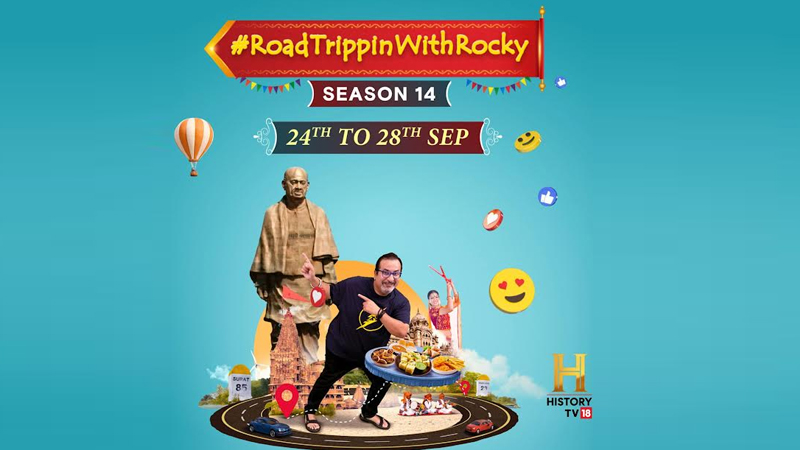
    MUMBAI: History TV18’s hit travel-food social series ‘Road trippin with Rocky’ is back with Season 14, and this time all roads lead to Gujarat. As the state gears up for Navratri with colour, music, and celebration, Rocky Singh sets off on a five-day journey to explore its irresistible flavours and vibrant culture.

    Starting 24 September, Rocky’s road trip will take him through Ahmedabad, Vadodara, and Surat: each city serving up a feast of stories and tastes. From fluffy khaman-dhokla and crispy theplas to piping-hot sev usal and the indulgent Surati ghari, the season promises a plateful of Gujarat’s legendary vegetarian delights. Expect impromptu stops at bustling bazaars, late-night food stalls, and street corners where Rocky chats with locals over khakhra, locho, ponk vada, and chai.

    Rocky’s trademark spontaneity, humour, and curiosity ensure that each meal goes beyond food, bringing alive the culture, warmth, and festive energy of Gujarat during its most celebrated season.

    Over the past 13 seasons, ‘Road Trippin With Rocky’ has built a loyal following by blending irresistible food, local culture, and Rocky’s unique storytelling into a format that feels as real as an unscripted road trip. From Tamil Nadu’s coastal trails to Coorg’s misty hills, Rocky has taken viewers across India, amassing over 2 billion impressions and nearly 540 million video views.

    Fans can catch every moment of the Gujarat adventure on Rocky’s and History TV18’s social media handles across Youtube, Instagram, Facebook, and Twitter. Expect behind-the-scenes glimpses, quick bites, and conversations that make food the perfect bridge between people and places.

    With Gujarat’s festive season as the backdrop, Rocky’s latest journey promises to prove once again that the best meals and the best memories are the ones you don’t over-plan.

  • Akshay Mathur’s new venture promises to turn platform ambition into cold, hard cash across Asia

    Akshay Mathur’s new venture promises to turn platform ambition into cold, hard cash across Asia

    MUMBAI: After two decades of making other people’s platforms profitable, Akshay Mathur has decided it’s time to build his own money-making machine. The adtech veteran has launched Unpromptd, a revenue infrastructure firm targeting digital platforms across Asia’s most lucrative—and complex—markets.

    Mathur, who recently departed his role as chief revenue officer at Tyroo after six years, believes platforms have had quite enough strategy presentations, thank you very much. What they need, he argues, is someone who can actually turn their grand ambitions into recurring revenue streams.

    “Platforms don’t need more strategy decks,” Mathur declared while announcing t the launch. “They need real execution, revenue accountability, and a partner who understands the complexity of scaling in markets like India, southeast Asia, and the Middle East.”

    The timing is hardly accidental. Asia’s digital advertising market has been on a tear, with platforms scrambling to monetise everything from social commerce to gaming. But many stumble when it comes to the nitty-gritty of revenue generation—precisely where Mathur sees opportunity.

    His pedigree suggests he knows whereof he speaks. At Komli Media, Mathur was part of the managing board that engineered a 10-fold jump in net profits before the company’s eventual acquisition by Dentsu Aegis Network in 2017 for an undisclosed sum. At Tyroo, he built monetisation partnerships with the likes of Meta, Twitter, Snapchat, Outbrain and Criteo, helping these global giants crack complex Asian markets.

    The 22-year industry veteran has witnessed first hand how the right operating model can unlock value that often sits tantalizingly out of reach. His new venture promises to be the bridge between platform potential and profit realisation.

    Unpromptd’s mission is straightforward: become the monetisation partner of choice for every digital platform serious about growth in Asia. It’s an ambitious target in a region where local nuance can make or break even the most sophisticated global strategies.

    Mathur’s approach combines hard-won experience with what he calls “precision execution”—a recognition that Asia’s next growth wave will belong to those who move first and move smart. With platforms increasingly desperate to prove their business models beyond user acquisition, Unpromptd arrives at a moment when such expertise commands premium prices.

    The venture launches from Gurugram, positioning itself at the heart of India’s digital economy while eyeing expansion across the broader Asian market. For platforms tired of beautiful presentations that fail to move the revenue needle, Mathur’s promise of accountability over aspiration may prove irresistible.

    Whether Unpromptd can deliver on its bold promises remains to be seen. But with Asian digital advertising spend continuing its relentless march upward, the demand for Mathur’s particular brand of monetisation magic has never been stronger.

  • SEBI cracks down on finfluencers, ensures integrity in financial advice

    SEBI cracks down on finfluencers, ensures integrity in financial advice

    Mumbai:  The Securities and Exchange Board of India (SEBI) has taken a decisive step by banning regulated entities from associating with unregistered influencers. This crackdown targets anyone who provides financial advice or makes claims about securities without Sebi’s registration.

    In today’s accessible digital world, to regulate the affairs in the financial sector finfluencers use platforms such as Instagram, YouTube, Twitter, and several mobile and gaming apps to spread their financial advisers, and investment ideas and even promote specific stocks or shares of certain companies for their (finfluencers’s) marketing and revenue point of view. These affect stock prices and investment choices of people by finfluencers but the problem is that often their data is basically unreliable information and actions are unaccountable because they are not licensed and not qualified.

    Since the finfluencers are not licensed and not qualified, they mislead investors and put their money at risk, and involve themselves in stock manipulation by elevating prices of certain stocks by convincing their followers to buy them which increase the value of those stocks and in a ripple effects decrease the prices of stocks of rival companies thus degrading the integrity the status of the Indian financial markets.

    Previously, The Advertising Standards Council of India (ASCI) has developed criteria for influencers who might affect people’s purchasing and investing decisions. They further said that Influencers must offer clear and visible disclaimers in their text or video material if they accept any kind of remuneration from a business or product they recommend.

    Indiantelevision.com reached out to industry experts for their opinion regarding this massive step.

    Whoppl founder Ramya Ramachandran stated, “For any industry, giving half-baked information or having limited knowledge and claiming expertise is always incorrect because people trust that the information provided is well-researched and accurate. Influencers giving advice on health, finance, or food without the right qualifications is especially problematic. While some influencers take extra steps to thoroughly understand the brands they promote, many do not. This issue extends beyond influencers to celebrities who often endorse products they do not use. Media outlets also sometimes fail to perform proper due diligence.

    It is particularly risky when influencers give advice without due diligence, as their followers might make significant financial or health decisions based on this advice. This is why there’s a call for better monitoring and perhaps certification to ensure influencers are qualified to give such advice. Product reviews and testimonials should be clearly marked as personal opinions of the individual influencer.

    To ensure transparency and quality, there should be protocols requiring only qualified individuals to discuss certain topics. This should apply across industries, including media houses, celebrity endorsements, and influencers. The entire ecosystem needs to be revised to maintain a high level of transparency and clarity.”

    According to Media Care Brand Solutions director Yasin Hamidani, “The SEBI crackdown on finfluencers, prohibiting SEBI-registered entities from associating with unregistered financial influencers, is a necessary and timely measure aimed at safeguarding market integrity and protecting retail investors.

    The rise of social media has given birth to a new breed of influencers who provide financial advice and investment recommendations. While many finfluencers are knowledgeable and ethical, the industry is also rife with misinformation and unqualified advice, leading to potential financial losses for uninformed investors. SEBI’s stringent regulations are designed to curb these risks by ensuring that only qualified and registered individuals provide financial guidance.

    This crackdown will have significant implications for the finfluencer community. Unregistered finfluencers will face challenges in monetizing their content through partnerships with SEBI-registered entities. This move may lead to a decline in the number of finfluencers who lack formal qualifications or registration, thereby raising the overall quality and reliability of financial advice available to the public.”

    He sheds some light for the retail investors, “For retail investors, this regulation brings a layer of protection. They can now be more confident that the advice they receive from SEBI-registered entities is credible and compliant with regulatory standards. This will help in making more informed investment decisions and reducing the risk of financial missteps caused by unverified recommendations.”

    He further continues, “Finfluencers need to adapt to this new regulatory landscape by seeking SEBI registration, if eligible, to continue offering investment advice. Alternatively, they can pivot their content strategy towards financial education, general market analysis, and personal finance tips that do not constitute direct financial advice.

    SEBI’s crackdown is a step in the right direction for ensuring the integrity of financial markets and protecting retail investors. While it imposes new challenges on the finfluencer community, it ultimately promotes a more trustworthy and reliable financial advisory ecosystem. Finfluencers who adapt to these regulations will likely emerge stronger and more credible, benefiting both themselves and their audience.”

    Pulp Strategy founder & MD Ambika Sharma highlighted, “The recent semi-crackdown on finance influencers is a commendable move towards protecting consumer rights and ensuring a responsible digital ecosystem. In an era where digital platforms wield immense influence over financial decisions, it is imperative to address the misinformation that can mislead consumers and cause significant financial harm.

    The finance influencer space has grown exponentially, with many individuals gaining substantial followings by sharing financial advice and investment tips. While some influencers provide valuable insights, there is a growing concern about the accuracy and reliability of the information being disseminated. The allure of quick profits and sensationalist claims often overshadows sound financial advice, leading many unsuspecting consumers astray.”

    From the brands and agencies perspective, she said, “Agencies and brands must exercise due diligence in selecting influencers to partner with, ensuring that these individuals have the requisite expertise and credibility. The onus is on agencies to conduct thorough background checks and verify qualifications before endorsements. Brands must prioritize consumer safety over promotional gains by aligning with influencers who uphold ethical standards and provide truthful information.”

    She continues further, “Social media platforms and digital content platforms must implement stringent policies to monitor and regulate content shared by finance influencers. This includes flagging and removing misleading information, promoting content from verified sources, and providing tools for consumers to report suspicious or false information. Platforms can play a crucial role in protecting consumers from financial misinformation.

    Government intervention is crucial. Regulatory bodies must establish clear guidelines and regulations governing the dissemination of financial information by influencers, including defining qualifications, setting standards for disclosure of affiliations and sponsorships, and enforcing penalties for non-compliance.

    Education also plays a vital role in empowering consumers to navigate the digital landscape safely. Financial literacy programs should be promoted to enhance the public’s understanding of basic financial principles and the potential risks associated with following unverified financial advice.

    In conclusion, the semi-crackdown on finance influencers is a positive step towards protecting consumer rights and ensuring a safe digital ecosystem. By working together to uphold ethical standards, promote accurate information, and educate consumers, we can create a digital environment that fosters trust, transparency, and financial well-being.”


  • Why is social media important for business today?

    Why is social media important for business today?

    Mumbai: Social media has undeniably become an integral part of our lives. Whether it is connecting with friends, sharing our stories, or even conducting business, social media platforms have woven themselves into the fabric of our daily existence. For businesses, social media isn’t just about keeping up with the times; it’s about thriving in a digital world where connectivity, influence, and visibility matter more than ever.

    Before we indulge further in the importance, let’s go back in time and understand the roots of social media. Services like Bulletin Board Systems (BBS) in the 1970s and 1980s allowed users to communicate and share information through digital channels. However, it was in the late 1990s and early 2000s that the concept of social media as we know it began to take shape. The emergence of platforms like Six Degrees (launched in 1997) allowed users to create profiles and connect with others. It was followed by Friendster (2002) and MySpace (2003), which introduced more interactive and personalized features.

    Then, in 2004, Mark Zuckerberg and his Harvard University roommates launched Facebook, a platform that would revolutionize how people connect and share online. Facebook’s success paved the way for other social media giants like Twitter (2006), LinkedIn (2003), YouTube (2005), and Instagram (2010). These platforms facilitated social interaction and became fertile grounds for marketing and business development.

    The evolution of social media has been nothing short of remarkable. Initially, platforms primarily focused on personal connections, but over time, they expanded their features and capabilities to accommodate a wide range of activities, including business promotion.

    Today, social media platforms are incredibly diverse. You have Facebook, with over 2.98 billion monthly active users, providing a comprehensive environment for various types of content. Twitter(now X), known for its concise messaging, is a hotbed for trending topics and real-time engagement. LinkedIn has become a professional network for career development and business-to-business (B2B) connections. Instagram emphasizes visual content, while YouTube is the go-to platform for video content.

    Newer platforms like TikTok (2016) and Snapchat (2011) focus on short-form video and ephemeral content, appealing to younger demographics. This continuous innovation allows businesses to explore different platforms and tailor their strategies to diverse audiences.

    To understand the importance of social media for businesses, let’s dive into some compelling data:

    Facebook: With over 2.9 billion monthly active users, Facebook is the world’s largest social media platform. It offers a vast user base for businesses to reach potential customers.

    Instagram: Owned by Facebook, Instagram has over 2 billion monthly active users. It’s highly visual and favoured by younger demographics.

    Twitter: Twitter boasts 564 million monthly active users. Its real-time nature makes it ideal for quick, concise communication.

    LinkedIn: With 900 million users worldwide, LinkedIn is the premier platform for professional networking and B2B marketing.

    YouTube: As the second-largest search engine after Google, YouTube has over 2.5 billion monthly logged-in users. It’s an excellent platform for video content.

    TikTok: This short-form video platform has grown exponentially since its launch, with over 1 billion monthly active users worldwide.

    India is a global leader in social media usage, with a user base that’s larger than the population of many countries. As of 2023, there were around 467 million social media users in India, and it is expected to keep growing. Besides that, people aged between 16 and 64 used about 8 social media apps monthly. Such statistics underscore the significance of India as a thriving market for businesses seeking to establish a solid online presence.

    How can brands make the most of such a strong user base?

    1. Enhanced Brand Visibility: Social media offers businesses a global platform to reach potential customers. A compelling social media presence can significantly boost brand recognition.

    2. Cost-Effective Marketing: Social media marketing is often more affordable than traditional advertising, making it an excellent choice for startups and small businesses.

    3. Targeted Advertising: Most social media platforms offer robust tools for targeting specific demographics, ensuring your message reaches the right audience.

    4. Customer Engagement: Businesses can engage with customers directly, addressing inquiries, concerns, and feedback promptly.

    5. Content Distribution: Social media is an excellent channel for distributing content, whether it is blog posts, videos, infographics, or other materials.

    6. Community Building: Social media enables businesses to build and nurture a community of loyal followers and brand advocates.

    7. Data and Analytics: Comprehensive data and analytics tools help businesses understand their audience, evaluate the effectiveness of their campaigns, and make data-driven decisions.

    How does one build a solid brand and community on social media?

    1) Understand your target audience’s preferences, behaviours, and pain points.

    2) Regular and consistent posting keeps your audience engaged.

    3) Interact with your followers by responding to comments and messages while creating content that encourages engagement.

    4) Offer valuable, informative, and entertaining content that aligns with your brand’s values.

    5) Visual content, such as images and videos, often performs well on social media.

    6) Encourage your customers to share their experiences and feedback about your products or services.

    7) Collaborate with influencers who align with your brand to expand your reach.

    8) Regularly analyze your social media performance and adapt your strategies based on the results.

    In today’s digital age, the importance of social media for businesses cannot be overstated. It has evolved from being a platform for personal connections to a multifaceted tool for brand expansion, marketing, and customer engagement. With a growing user base and diverse platforms, businesses have an unprecedented opportunity to reach their target audience, build a solid online community, and enhance brand visibility. As social media continues to evolve, businesses that adapt and embrace its potential will be the ones that thrive in this ever-connected world.

    The author of this article is The Hype Capital founder Sachin Shah.

    https://datareportal.com/social-media-users 
    https://datareportal.com/reports/digital-2023-india 
    https://www.statista.com/statistics/272014/global-social-networks-ranked-by-number-of-users/ 
    https://sproutsocial.com/insights/social-media-statistics/

  • Elon Musk  announces a potential subscription model for X (formerly Twitter)

    Elon Musk announces a potential subscription model for X (formerly Twitter)

    Mumbai: Elon Musk, the owner of X (formerly Twitter), has suggested that users may soon be required to pay a subscription fee for platform access. Musk alluded to the possibility of implementing a paywall to combat the proliferation of bot accounts, which has posed a significant challenge.

    He stated, “We are moving towards implementing a small monthly fee for system usage.”

    This revelation occurred during a meeting with Israeli prime minister Benjamin Netanyahu at Tesla Motors in California. Currently, users are charged for accessing premium features on X, such as verification checkmarks for accounts. Introducing subscriptions may dissuade bot account creators from establishing new accounts.

    However, Musk has not disclosed the exact cost of the new paid service or the special features it will offer. During the meeting with Netanyahu, Musk also addressed the issue of antisemitism that persists on the platform.

  • Shaktimaan celebrates sibling love in its new Rakshabandhan campaign – #LifeofaUPSCAspirant

    Shaktimaan celebrates sibling love in its new Rakshabandhan campaign – #LifeofaUPSCAspirant

    Mumbai: India’s first adaptive learning ecosystem, Shaktimaan has launched a new campaign, just in time for the biggest celebration of the bonds between siblings. The campaign, titled ‘Rakshabandhan in the Life of a UPSC Aspirant,’ revolves around the heartwarming story of a sister’s thoughtful gift to help her brother conquer the UPSC with the help of Shaktimaan.in. Through the campaign, the company aims to represent the bond between siblings, highlighting the importance of having the support of loved ones in the preparation of the Civil Service Examination. The campaign is LIVE on YouTube, Twitter, Instagram, LinkedIn, and Facebook and has already garnered over 20.4K views on Twitter and more than 2K views on YouTube.

    The campaign is strategized internally and focuses on the struggles of UPSC aspirants and how Shaktimaan can empower them to access top-tier mentorship and a disciplined ecosystem personalized as per their needs. It highlights the story of a diligent UPSC aspirant, Raghav, who is trying to cope with The Hindu newspaper editorial. On seeing his struggles on Rakhshabandhan, the elder sister, Meera, gifts him Shaktimaan, a powerful mentor for students to help him in his UPSC preparation. As the brother unveils the Rakhi gift, he explores the different features of Shaktimaan, such as the daily Hindu summary, instant doubt resolution, daily learning targets with Prelims MCQ, and MAINS hand-written answer evaluation. Their story highlights the challenges faced by Civil Service Examination candidates and how their family and friends support them in their exam preparation. The access to personalized solutions represents the support that siblings can provide for each other.

    Founding team member Lakshay Nagpal remarked, “Our Raksha Bandhan campaign highlights how family supports a UPSC aspirant. The desire to showcase the passion of today’s students and our eagerness to offer them the best solutions lies at the heart of the campaign. At Shaktimaan, we use our deep insights and execute them with the help of artificial intelligence to help students stay disciplined and focused.”

    The Rakshabandhan campaign serves as a powerful reminder that students’ family members will always be there to guide them through their struggles and support them to achieve their goals. With the help of Shaktimaan and the support of their loved ones, students can find the right balance and achieve their dreams.

  • Our product is DIY, plug-n-play, and is a must-have tool for all content creators, reveals Instoried’s Sharmin Ali

    Our product is DIY, plug-n-play, and is a must-have tool for all content creators, reveals Instoried’s Sharmin Ali

    Mumbai: Instoried helps enterprises and individuals create emotionally engaging content thereby improving ROI. Instoried is a deep-tech platform that analyses and optimizes the emotional quotient, tonality and relevance of written content across formats like blogs, articles, social media posts.

    Instoried uses a data-driven approach using their proprietary AI driven technology to make real time analysis and suggestions to enhance content to increase engagement and interest for the reader. This leads to more clicks and as a result higher ROI for brands, creating a direct impact on sales and revenues for companies. Instoried uses the principles of neuromarketing to offer smart recommendations to increase or decrease a particular emotion in the content.

    The platform helps content writers in e-commerce, news, FMCG, and other verticals to optimise emotions in their marketing content.

    The company says that clients can capture the emotions of readers on point, enhance their content and save hours of extra work with the easy-to-adapt platform! Instoried has built deep learning-based natural language processing systems to help optimise content. The aim is to build a highly inclusive workplace for people of all backgrounds and genders who can help it grow.

    Indiantelevision.com caught up with Instoried founder & CEO Sharmin Ali to find out more on the company. In her role, she is responsible for driving strategy, leadership and sales. Prior to deep-diving into a technology start-up with Instoried, Ali had founded a media start-up to build India’s own Netflix. Prior to that she was with Mu Sigma, working in sales with Fortune 500 companies in the US.

    Ali has been profiled in the Fortune 40 Under 40 list (2022) and also won the best product and best innovation under the startup category by The Economic Times Innotribe Awards in Mumbai in September 2018. She has received an honour from the HRD Ministry of India and COWE Womennovator under Innovation and Entrepreneurship category.

    Ali holds a Bachelor’s degree in electronics and communications. Instoried is at the cusp of her love for storytelling and a background in technology.

    She is an author of two books, the first one ‘Y.O.U’ that was announced a best-seller by The New Indian Express and the Oxford bookstores. Her second book was titled ‘How I was forced to become a staunch racist’. She has also spoken at various TEDx events and international platforms.

    She loves exploring new places, writing, is an avid reader and a foodie at heart.

    Excerpts:

    On the market gap seen in 2019 when Instoried launched

    My experience with various Fortune 500 companies in India and the US made me observe closely and conclude that even large companies and brands are ineffective in communication. These companies make marketing decisions based on how they feel about the content instead of using data to get better results. Here is where I stepped in with Instoried. We started with just an idea to improve written content that would impact the ROI of a brand positively. We started with a web- app that helps optimise the tonality and emotion of the content for writers. Over the last few years, the tool has been imbibed with many new features that have helped improve the quality of life of writers and enabled them to create content that’s original, impactful, and empathetic. 

    On the game plan that has resulted in over 5 million users and 500+ businesses using Instoried

    The game plan was simple: how to improve the content game for our customers? We were looking for a full-stack offering and not just a good-to-have feature. This made our customers engage with us like water. Water is a must-have, whereas juice is a good-to-have. We sell water and so our customers love us. We have interviewed a 1000+ content marketers in the US to understand their challenges and each one talked about productivity and about creating content at scale and at speed. So we built a tool with an end-to-end solution.

    On how COVID impacted the business

    We were able to identify a huge opportunity in this adversity. When stores were shutting down due to very few footfalls, the only option left for them was to sell online. In order to sell online, one needs to create engaging content, and that’s exactly what we do.

    On the company’s USP

    We are the world’s fastest-growing content-tech and media-tech startup. Our greatest USP is that our product is DIY, plug-n-play, and is a must-have tool for all content creators. On top of that, we have a tailored, curated content offering called Content360 which is like WPP on steroids! We add the human element on top of a tech product to help our clients create a broad spectrum of content across sectors.

    On the business model

    We are both B2B and B2C with a monthly and annual subscription model.

    On the strategy of selling products to the consumer’s brain

    Humans are emotional. Our emotional brain decides and logic never prevails, exactly the reason why we love iPhones over anything else. Similarly, our content needs to exude the right set of emotions that we humans can connect with easily. Our product has both generation and analysis to help writers gauge the effectiveness of their content.

    On how deep tech can help brands create emotionally engaging content

    Instoried is a deep-tech platform that analyses and optimizes the emotional quotient, tonality, and relevance of written content across multiple formats of blogs, articles, and social media posts. Instoried uses a data-driven approach using their proprietary AI-driven technology to make real-time analysis and suggestions to enhance written content to increase engagement and interest for the reader. Our platform helps content writers, in the SME category, e-commerce, FMCG, MNCs, and others to optimize emotions in their marketing content. 

    As one creates content, the tool dynamically analyses it using AI and displays the tone and emotion of the text used. When you click on a particular tone or emotion, the tool highlights all the words in your content exuding that particular tone or emotion. Upon hovering the cursor over a particular word, it gives you multiple recommendations that are both semantically and contextually relevant, thereby enhancing the empathy of your content.

    We use natural language processing (NLP) to analyse the semantics of content and identify the tone, emotion and impact of the written content. With the help of Instoried, our clients have increased engagement of their blogs and marketing communication by optimising their content’s emotion, tonality and use of impactful text. We help content creators be consistently engaging with the audience.

    On recent work done by the company that stands out

    We are on our way to profitability in the next six months. I think that’s the most outstanding work we are doing.

    On how Content360 will help content writers create better content

    Content360 is a full-fledged services/ consulting arm offering end-to-end content services to companies. It will help create content at scale using empathy and focusing on the desired long-term outcome and not just the short-term output. Content360 addresses the limitation of traditional content agencies, digital-first brands, and freelancers who churn out multiple content forms per month, focusing on just the output. Users include startups, SMEs, MNCs, e-commerce sites, D2C websites, content creators, mid-size digital marketing agencies, content agencies, freelance marketers, bloggers, and more.

    The process starts with understanding the business goals and objectives of the company, current content strategy, current output, and outcome, and then improving on the goals. As a use-case, the business goal of an e-commerce firm is to generate more revenue from their website channel, after understanding various parameters like – current click through/ conversion rates, best-converting landing pages, tone, emotion, and impact of content. Instoried will advise on the best way to create website content with the best emotion, tone, and words that would result in higher conversions.

    On the importance of empathy in content creation

    My experience gave me the insight that corporations of all sizes were poor at communicating effectively! They have a tough time building human connections and communicating with empathy to their target audience. They make marketing decisions based on how they feel they should communicate instead of using data to their advantage. Here is where I thought Instoried would be a good product-market fit in the writing arena. Instoried helps large companies make their marketing and communications content more human with a data-driven, scalable, and repeatable approach using AI. 

    Our tool is an all-inclusive one where we now have a spell check, Grammar check, headline generation, plagiarism checker, panel testing, and tonal & emotional analysis checker. You can check it out at app.instoried.com. We aim to make the concept of ‘adding empathy into content’ a part of daily communication by focusing on mobile devices, both android, and iOS. Since content is a global and day-to-day phenomenon, it’s only commonplace to ensure that we communicate with empathy on every social media platform. The importance of adding empathy cannot be underestimated or overlooked.

    On the investments being made by Instoried and fundraising

    We have closed a few rounds in the last three years, right now the focus is to get to profitability by March next year and then raise a larger round of funding.

    On what brands need to keep in mind when marketing to consumers at a time of layoffs and a possible hard-landing recession next year

    Profitability is key. Do whatever it takes to be profitable as companies that are profitable are here to stay.

    On using text versus video in brand storytelling

    Every video has a text caption to go along with it. Text tags along with every content format. Text is like water which is a must-have with everything one consumes.

    On the potential of Linkedin in B2B marketing

    I love Linkedin sales navigator for its targeted approach to reaching out to plausible prospects.

    On what you expect to see from Twitter under a new owner when it comes to advertising on that platform

    I love the idea of charging eight dollars per month for a blue tick. The man is a sheer genius. However, it’s too early to comment on how advertising will be affected under his leadership. I hope to see a startup slab for advertising so that it gets affordable as opposed to standard pricing across all brands.