Tag: Twenty First Century Fox

  • K Madhavan: From God’s own country to leading Walt Disney’s Indian mousehouse

    K Madhavan: From God’s own country to leading Walt Disney’s Indian mousehouse

    MUMBAI: When The Walt Disney Co international operations and direct-to-consumer chairman Rebecca Campbell was scouting for an executive to fill the big shoes of former Star India, Disney India and APAC head Uday Shankar, she did not have to look far. Though the announcement took some time a-coming, K Madhavan, country manager of Star & Disney India, was the obvious choice. As the overseer of the media conglomerate’s television and studios business in India, Madhavan had worked closely with Uday, until the latter departed in late 2020 to concentrate on an entrepreneurial venture with his former boss James Murdoch.

    An unassuming executive from Kerala, K Madhavan is known to be a hard core numbers man with an extremely razor sharp financial mind. He did well in academia as well; he holds a post graduate degree in commerce, and is a certified associate of the Indian Institute of Bankers. He cut his teeth as an investment banker, when he was roped in as a director to help turn around ailing Malayalam network Asianet in 1999. Within a year, he fortified his position and was elevated to MD & CEO of Asianet Communications.

    His keen understanding of what Malayalam viewers want to watch facilitated the growth of Asianet’s viewership and made it the favourite of those who live in God’s own country. The network was turned around and it soon became a dominant player in Kerala. He did this even as ownership of the network changed hands, more than once – from promoter Reji Menon to the-then BPL and now BJP top shot and venture financier Rajeev Chandrasekhar. In fact, K Madhavan, ended up owning a tidy piece of it as well, as he grew the network’s footprint in Kannada in concert with Chandrashekar as chairman.  

    Until, of course, it landed in the hands of News Corp supremo Rupert Murdoch’s Star TV in 2008. Star acquired a majority stake in Asianet’s general entertainment channels (separated from the news business) for a handsome $235 million and an assumption of $20 million in debt. Madhavan pocketed a neat sum for his efforts even as he was appointed as Star India’s south head in 2009.

    From thereon, there was no looking back. When Star India took control of Asianet, its portfolio consisted of Asianet and Asianet Plus (Malayalam GECs), Asianet Suvarna (a Kannada GEC) and Telugu channel Sitara. To that was added Star Vijay from the Star India network. Several other channels followed: Asianet Movies, Star Maa (through an acquisition of MAA Television network). Today, it has more than 13 pure play southern language channels, covering general entertainment, movies, in Malayalam, Kannada, Tamil and Telugu. Of course, Star India itself has many other regional language channels covering Marathi and Bengali. At the helm of this dizzying growth was Madhavan with Uday, and the Murdochs giving him total freedom. Observers today value the southern language business of Star at around $3 billion (valued at $1.33 billion in 2013 at the time of its acquisition by Star).

    When The Walt Disney Co acquired Twenty First Century Fox a couple of years ago for a massive $72 billion, along with it came all of its Indian assets including the southern language business. Uday, used to working in the maverick style of the Murdochs, quickly had K Madhavan hoicked as country manager of Star & Disney India, leading the media conglomerate’s television and studios business, while he was bumped upstairs to look after the APAC business and Hotstar directly.

    When Uday decided to turn entrepreneur in 2020, day to day operations were left in the hands of K Madhavan, who worked closely with Campbell at the worst of times when the media and entertainment industry – and  Star and Disney India – had to face lockdowns courtesy the pandemic and an acceleration towards digital video consumption. The way he steered the company impressed the Disney headquarters in Burbank.

    “A skilled leader with an extensive background in media, KM has taken our vast Star networks and local content production businesses to new heights,” said Campbell on his elevation. “I have seen first-hand how he has adeptly managed our India business, which has been and will continue to be critical to our global and regional strategy.”

    With the leadership issue for Star India and Disney India settled, it should lead to some clarity on the road ahead for the company which did an estimated top line in excess of $1.7 billion last year. K Madhavan will now be able to steer the network and make it future ready in a country where many homes have antiquated CRT TV sets, many have yet to buy one, while a small fraction have high-end 4K sets even as some are graduating to HD, and the young are increasingly consuming video content on their handsets.

    Like Uday, he has the respect and attention of Burbank, Disney's and Star India's senior leadership who hold his strategic decision making and vision for the group in high regard. Like Uday, he has an entrepreneural streak, combined with a strong systems approach which should bode well for him in an organisation which thrives because of its processes-driven environment. And of course his deep understanding of what the Indian video viewing consumer wants to watch. His success at Asianet bears testimony to that. The only difference: the canvas is larger and wider now and covers a swathe of demographics, languages and platforms, right from TV to movies to digital.

    To his advantage, K Madhavan has the track record and the wherewithal to take the right steps. After all, not every executive can make the transition from heading a small network in God’s own country to leading India’s largest media and entertainment network.

  • Star India, FNG help prop up 21st CF Q2 numbers

    Star India, FNG help prop up 21st CF Q2 numbers

    BENGALURU: Rupert Murdoch’s media conglomerate 21st Century Fox has three segments–cable network programming (CNP) that contains Star India and Fox Networks Group International (FNG International), television and filmed entertainment (films). 21st Century Fox reported 4.6 per cent yoy growth in revenue for its second quarter ended 31 December 2017 (Q2 2018, the quarter under review) as compared with the corresponding year ago quarter (Q2-2017, prior year quarter). Of its three segments, it was only for CNP that Fox reported growth in revenue and increase in profits as operating income before depreciation and amortisation (OIBDA), for the other two divisions, the company reported decline in revenue combined with an even steeper decrease in segment OIBDA.

    21st Century Fox revenue for the quarter under review increased by 4.6 per cent yoy to USD 8,037 million from USD 7,682 million. OIBDA reduced 27.9 per cent yoy to USD 1,438 million from USD 1,994 million. However, net income attributable to Fox shareholders more than doubled (2.14 times) to USD 1,831 in Q2 2018 from USD 856 million because of a tax benefit of USD 1.84 billion. Quarterly income from continuing operations before income tax benefit of USD 703 million decreased 49.2 per cent yoy from the USD 1,385 million reported in the prior year quarter.

    Commenting on the results, 21st Century Fox executive chairmen Rupert and Lachlan Murdoch said, “We delivered another quarter of solid top-line revenue growth including the further acceleration of gains in global affiliate revenues and despite challenging revenue comparisons for our TV segment. Our results also reflect increased investment behind higher volumes of global sporting events as well as film releases from our studio, which led the industry in Golden Globe awards and Oscar nominations. Looking ahead, we are focused on continuing to deliver value to our shareholders through achieving our near-term growth plans, completing our proposed acquisition of the balance of Sky, obtaining the required approvals for the successful completion of our transaction with Disney and planning for the exciting launch of the new ‘Fox’.”

    CNP

    CNP quarterly segment OIBDA increased by 2.6 per cent as compared with the prior year quarter to USD 1,365 million driven by an 11 per cent revenue rise on higher affiliate, syndication and advertising revenue partially offset by a 15 per cent jump in expenses. The increase in expenses was primarily due to higher global sports programming costs reflecting the inaugural broadcasts of Big Ten college football at FS1 and Argentine Football Association matches at FNG International as well as the impact of contractual increases and more National Basketball Association games at the regional sports networks due to the earlier start of the season and a shift in timing of cricket matches at Star India.  

    Domestic affiliate revenue rose by 12 per cent driven by contractual rate increases across all of 21st Century Fox’s domestic brands. Domestic advertising revenue decreased 3 per cent from the prior year period due to lower general entertainment ratings primarily reflecting a lower volume of original series in the current quarter. Domestic OIBDA contributions increased 1 per cent over the prior year quarter as higher contributions from Fox News were partially offset by lower contributions from the domestic sports networks and National Geographic.

    International affiliate revenue increased 13 per cent driven by rate and subscriber growth at both FNG International and Star. International advertising revenue increased 14 per cent led by double digit growth at Star and continued growth at FNG International. International OIBDA contributions were 8 per cent higher than the prior year quarter as higher contributions at FNG International and Star entertainment networks were partially offset by lower contributions at Star sports networks where higher sports programming costs more than offset the higher reported revenues.

    Television

    Television reported quarterly segment OIBDA of USD 56 million, a decrease of 85 per cent against the USD 376 million reported for the prior year quarter. Quarterly segment revenue was 5.8 per cent lower yoy in Q2 2018 at USD 1,806 million than the USD 1,918 million in the corresponding period in the prior year. 21st Century Fox says that revenue declined as higher retransmission consent revenue was more than offset by lower advertising revenues reflecting lower cyclical political revenues at the TV stations, lower National Football League and World Series ratings and the absence of revenue generated in the prior year quarter by the granting of a licence of one of 21st Century Fox’s television stations to permit the commercial use of adjacent wireless spectrum in that market. The decrease in segment OIBDA was primarily driven by the lower revenues as well as higher contractual sports programming costs at the Fox Broadcast Network, including a higher volume of college football and National Football League games broadcast in the current year quarter.

    Films

    Films generated quarterly segment OIBDA of USD 131 million, a 66.3 per cent decrease from the USD 389 million reported in the prior year quarter. 21st Century Fox says that the OIBDA decrease was driven primarily by higher theatrical releasing costs which more than offset higher theatrical revenues in the quarter under review to support a heavier theatrical film release slate which included Murder on the Orient Express, Ferdinand, The Greatest Showman, The Shape of Water, Three Billboards Outside Ebbing, Missouri and The Post. Partially offsetting these higher expenses were higher television production contributions reflecting higher subscription video-on-demand revenue. Quarterly segment revenue of USD 2,246 million was similar (1 per cent yoy decline) to USD 2,269 million of the year-ago quarter as higher television production revenue offset lower film studio revenue reflecting lower home entertainment and pay and free TV licencing revenue says 21st Century Fox.

    Also Read :

    Disney to buy 21st Century Fox assets for $52.4 billion

    21st CF spins-off into new live news & sports co Fox

    Disney expected to announce 21 CF buyout tomorrow: media reports


  • Disney’s Q1 numbers ride on parks and resorts segment

    Disney’s Q1 numbers ride on parks and resorts segment

    BENGALURU: The Walt Disney Company (Disney) reported 3.8 per cent year-on-year (yoy) increase in revenue and 0.5 per cent yoy increase in operating income before taxes for the quarter ended 31 December 2017 (Q1 2018, the quarter under review) as compared with the corresponding year ago quarter (quarter ended 31 December 2016, Q1 2017). Net income attributable to Disney, however, increased by 78.4 per cent yoy. Diluted earnings per share (EPS) for the quarter increased by 88 per cent to USD 2.91 from USD 1.55 in the prior-year quarter. Excluding a USD 1.6 billion one-time net tax benefit associated with new US federal income tax legislation (tax act) and certain other items affecting comparability, EPS for the quarter rose by 22 per cent to USD 1.89 from USD 1.55 in the prior-year quarter.

    Four segments—media networks, parks and resorts, studio entertainment, and consumer products and interactive media—contribute to Disney’s numbers. Except for the parks and entertainment segment, the other three segments reported a decline in segment income. Disney’s total revenue for the quarter under review was USD 15,351 million as compared with USD 14,784 million. Revenue from services increased by 4.7 per cent yoy to USD 12,984 million from USD 12,406 million while revenue from products declined by 0.5 per cent yoy to USD  2,367 million from USD 2,378 million.

    Segment operating income in Q1 2018 was USD 3,745 million as compared to USD 3,725 million in Q1 2017. Net income attributable to Disney in the quarter under review was USD 4,423 million as compared to USD 2,479 million in Q1 2017.

    Media Networks

    Two divisions contribute to Media Networks numbers – cable networks, and broadcasting. Media networks’ revenue for the quarter was flat at USD 6,243 million in Q1 2018 as compared to USD 6,233 million. Segment operating income declined 12.4 per cent yoy in Q1 2018 to USD 1,193 million from USD 1,162 million.

    Cable networks revenue increased 1.5 per cent yoy to USD 4,493 million from USD 4,428 million, while income declined 0.7 per cent yoy to USD 858 million from USD 864 million. The company says that lower operating income was due to a loss at BAMTech and a decline at ESPN, partially offset by growth at the Disney channels and Freeform. The decrease at ESPN was due to lower advertising revenue, partially offset by affiliate revenue growth and lower programming costs. Lower advertising revenue was due to a decrease in impressions and lower rates. Growth at the Disney channels and Freeform was driven by higher affiliate revenue and lower marketing costs. Affiliate revenue growth was due to contractual rate increases, partially offset by a decline in subscribers.

    The broadcasting division’s revenue for the quarter under review declined by 3 per cent yoy to USD 1,750 million in Q1 2018 from USD 1,805 million. Income decreased by 24.8 percent yoy to USD 285 million from USD 379 million. The company said that the decrease in operating income was due to lower advertising revenue, higher production cost write-downs, and a decline in programme sales income. These decreases were partially offset by affiliate revenue growth due to rate increases. Advertising revenue reflected fewer network impressions and lower political advertising at Disney-owned television stations, partially offset by higher network rates.

    Parks and resorts

    Revenue from parks and resorts for the quarter increased by 13.2 per cent yoy in Q1 2018 to USD 5,154 million from USD 4,555 million while segment operating income increased by 21.4 per cent yoy to USD 1,347 million. The company said that operating income growth for the quarter was due to increase at Disney’s domestic parks and resorts, cruise line and vacation club businesses as well as at Disneyland Paris.

    Domestic results benefited from the comparison to the impact of Hurricane Matthew, which occurred in the prior-year quarter. Higher operating income at domestic parks and resorts was driven by guest-spending growth and

    an increase in attendance, partially offset by higher costs. Guest-spending growth was due to higher average ticket prices, food, beverage and merchandise spending and average daily hotel room rates.

    Studio entertainment

    Studio entertainment revenue dipped by 0.6 per cent yoy to USD 2,504 million in Q1 2018 from USD 2,520 million and segment operating income declined 1.5 per cent yoy to USD 829 million from USD 842 million. The company said that an increase in theatrical distribution results was more than offset by decreases in home entertainment and TV/SVOD distribution results as well as lower income from consumer products and interactive media segment revenue share.

    Consumer products and interactive media

    Revenue declined by 1.8 per cent yoy to USD 1,450 million in Q1 2018 from USD 1,456 million and segment operating income declined by 3.9 per cent yoy to USD 617 million from USD 642 million. The company said that operating income reduced due to decreases at Disney’s merchandise licencing and retail businesses, partially offset by an increase at its games business. The decrease in merchandise licencing was due to unfavourable timing of minimum guarantee shortfall recognition and lower licencing revenue from merchandise based on Frozen and Finding Nemo/Dory, partially offset by increases from merchandise based on Cars and Star Wars. Disney’s retail business was affected by unfavourable foreign currency fluctuations. The increase at Disney’s games business was due to licencing revenue from Star Wars Battlefront II, which was released in the current quarter, whereas there was no comparable release in the prior-year quarter.

    Company speak

    “The strategic investments we’ve made have driven meaningful growth over the long term, and we remain confident in our ability to continue to deliver significant shareholder value,” said  Disney’s chairman and CEO Robert A Iger, “We’re excited about what lies ahead, with a robust film slate, the launch of our ESPN direct-to-consumer business, new investments in our theme parks, and our pending acquisition of Twenty-First Century Fox.”

    Also Read:

    Disney to buy 21st Century Fox assets for $52.4 billion

    Disney to launch English GEC HD on 29 Oct

  • Hotstar rolls out attractively-priced Premier League offer

    Hotstar rolls out attractively-priced Premier League offer

    MUMBAI: From time to time, Hotstar, the VOD streaming service from Twenty First Century Fox’s  Star India, has been making short-term promotional subscription offers through its payment partners like HDFC, Citibank, PayTM and what have you.

    Subscribers have either been getting 100 per cent cash back for one month or two months depending on the subscriber’s card. Including the first free trial month, that effectively gives an annual subscription at anywhere between Rs 1, 800 or Rs 2,000 as compared to the monthly subscription price of Rs 199.

    However, since 11 August, it has been running an extremely tempting subscription scheme called the Premier League offer, which has a sticker price of Rs 999 for nine months. The only catch: the payment is non-refundable and has to be made using a debit card and is for a limited period till 12 September.

    The idea obviously is to get potential football lovers who have been fence sitting  so far to sign up with a massive discount of around 40-50 per cent.

    Over the past year, the government has been driving consumers toward digital payments, and also open bank accounts. The Indian consumer – normally wary of piling too much debt – has been loathe to sign up for a credit card. However, opening a bank account normally gets a bank customer a debit card in most cases.

    By pushing the Premier League offer, it is hoping to make it a very lucrative proposition for those consumers and others to start using their debit cards.

    Hotstar, smart TV apps of which are in the pipeline, currently offers around 50,000 hours of movies and television content together across eight languages, and almost all major sports are covered live.  

    Even as the research firm KalaGato reported 73 per cent jump in Hotstar’s market share in 10 months, that is expected to spurt further with the addition of the CBS catalogue, and of course Game of Thrones which has been in the news for its crackling seventh season and its leakage from different partners worldwide, including India.

    Recently announcing a pipeline with 18 originals from India, Amazon Prime offers perceptibly the most reasonable annual plan at Rs 499. Sun TV’s Sun NXT subscription plans start from Rs 50 per month. Netflix however is expensive – with plans starting at Rs 500 per month, but is reflective of the catalogue size and its target audience, the crème de la crème of Indian consumers.

    Amazon Prime has reportedly bagged a market share of just 9.66 per cent, Sony Liv pocketed 6.96 per cent share and Airtel-run Wynk Movies was at 6.36 per cent, the KalaGato report had added.

    We reached out to Hotstar CEO Ajit Mohan, but received no response.


  • AT&T unveils live video streaming service, DirecTV Now

    AT&T unveils live video streaming service, DirecTV Now

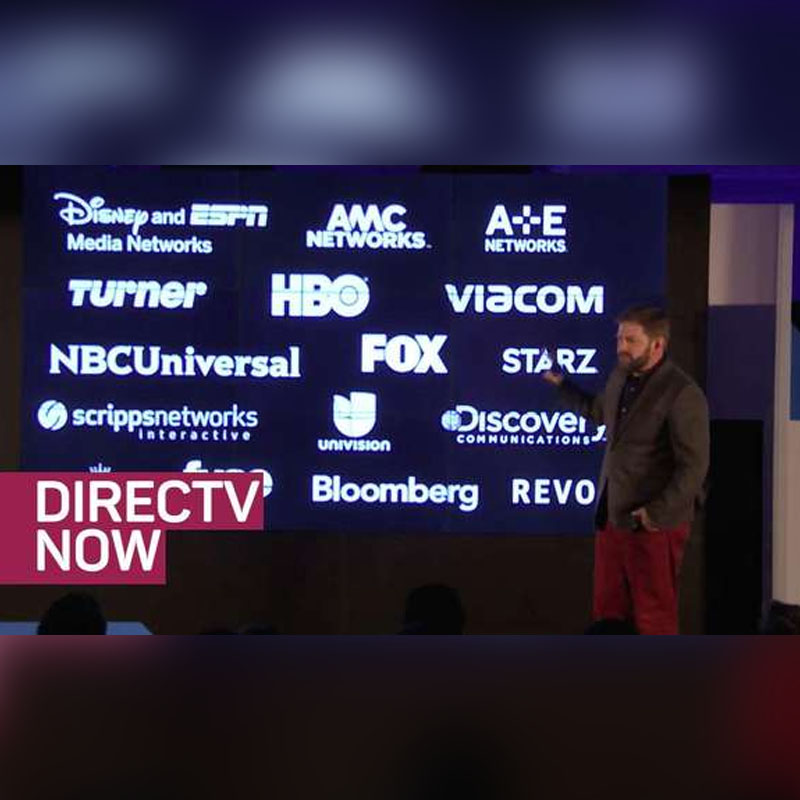
    MUMBAI: To win over subscribers who avoid pay-television subscriptions, AT&T has launched its streaming service DirecTV Now. The service will launch at prices ranging from $35 a month for over 60 channels to $70 for over 120 channels.

    The company has also announced that, for a limited time, more than 100 channels will be available for $35. The video service joins competitors like Sling TV and PlayStation Vue in drastically undercutting traditional cable and satellite packages, which often cost more than $100 per month. Dish Network launched Sling TV streaming service more than a year ago, and Sony PlayStation has its own package called PlayStation Vue. Next year, online video service Hulu plans to offer its own bundles of TV channels.

    The platform’s content will include live and on-demand video from Walt Disney, Twenty-First Century Fox, Viacom Inc and Scripps Networks Interactive. According to reports, the company is actively working to bring CBS Corp programming to its service.

    AT&T is counting on the mobile video market for new revenue as most U.S. consumers already have wireless service and further growth is limited. AT&T acquired DirecTV for $48.5 billion last year, making it the largest U.S. pay-TV operator with 25.3 million video subscribers, in an effort to diversify into the media and entertainment business.

    AT&T is also at near talks to acquire Time Warner for about $86 billion. This deal would create a media behemoth that offers TV, wireless, and the content that goes with it.

  • AT&T unveils live video streaming service, DirecTV Now

    AT&T unveils live video streaming service, DirecTV Now

    MUMBAI: To win over subscribers who avoid pay-television subscriptions, AT&T has launched its streaming service DirecTV Now. The service will launch at prices ranging from $35 a month for over 60 channels to $70 for over 120 channels.

    The company has also announced that, for a limited time, more than 100 channels will be available for $35. The video service joins competitors like Sling TV and PlayStation Vue in drastically undercutting traditional cable and satellite packages, which often cost more than $100 per month. Dish Network launched Sling TV streaming service more than a year ago, and Sony PlayStation has its own package called PlayStation Vue. Next year, online video service Hulu plans to offer its own bundles of TV channels.

    The platform’s content will include live and on-demand video from Walt Disney, Twenty-First Century Fox, Viacom Inc and Scripps Networks Interactive. According to reports, the company is actively working to bring CBS Corp programming to its service.

    AT&T is counting on the mobile video market for new revenue as most U.S. consumers already have wireless service and further growth is limited. AT&T acquired DirecTV for $48.5 billion last year, making it the largest U.S. pay-TV operator with 25.3 million video subscribers, in an effort to diversify into the media and entertainment business.

    AT&T is also at near talks to acquire Time Warner for about $86 billion. This deal would create a media behemoth that offers TV, wireless, and the content that goes with it.

  • Hotstar innovates; to explore 3D virtual reality with Kabaddi World Cup

    Hotstar innovates; to explore 3D virtual reality with Kabaddi World Cup

    MUMBAI: The Twenty First Century Fox owned video streaming platform is setting new benchmarks. First, it announced that it had become the most downloaded video app in India with the figure at about 90 million. Then it announced that it was looking at a watch time of a billion minutes a day. And then it made it possible for users to download its portfolio of local TV shows, movies and sports highlights to the phone Now it has announced that it will be streaming the upcoming Kabaddi World Cup in Ahmedabad from 7-22 October in stereoscopic 3 D virtual reality, something which has been rarely attempted in more developed streaming markets.

    All that viewers have to do to enjoy the 3D VR experience on is don the Samsung VR headsets and Google Cardboard devices while watching the action on both IoS and Android handsets. The VR experience will allow sports fans to get a complete panoramic view of the game and the stadium using touch and gyroscope. Fans will also be able to switch between different cameras in a 360 degree experience, thereby taking full control of their experience

    “We owe our loyal and growing platform users the very best video experience in the world,” says Hotstar CEO Ajit Mohan. “Fans in India look to Hotstar to set the benchmark for video streaming. We are excited to bring a dramatic new live experience to sports fans.”

    To enable this dramatic new experience, the Kabaddi World Cup games are being shot in stereoscopic 3D using two camera pods (in addition to the multi camera setup of the traditional production) including 12 cameras per pod, which allows for an immersive production and stereoscopic capture. Users of Samsung Gear VR will have access to the Hotstar app on the Oculus store, another groundbreaking initiative from the video streaming service.

    The live VR stream for the Kabaddi World Cup will be available to fans in two formats: a personalized, 2D user-controlled experience for viewers without headsets, and in full stereoscopic, TrueVRTM for Google Cardboard and Gear VR headsets. It is the first time VR content from a live event of this magnitude will be available on multiple headsets and mobile operating systems.

    Hotstar users will be able access the live TrueVR feed by either selecting the Google Cardboard feature in Hotstar’s iOS and Android apps or by downloading the Hotstar Gear VR app from the Oculus Store.

    The Kabaddi World Cup will see 12 National teams participating from across the globe. These teams have been divided into two groups, namely A and B. Group A comprises of India, Bangladesh, South Korea, Australia, England and Argentina, while Iran, Thailand, Japan, the US, Poland and Kenya are placed in Group B. Tournament favourites India begin their tournament journey with the first match against South Korea on 7 October , 8 pm IST onwards.

    The Kabaddi World Cup, meawhile, has managed to attract five sponsors among which figure Patanjali Special Chawanprash as co-presenting sponsor, Volini, Thums Up, Indo-Nissin as partners with the fifth sponsor being Syska LEDs. Star has made the telecast of the Cup available in four languages: while Star Sports 1 and 2 will provide English commentary. Star Sports 2 and 3 will provide the Hindi feed and Suvarna Plus and Maa Movies will telecast in Kannada and Telugu respectively

  • Hotstar innovates; to explore 3D virtual reality with Kabaddi World Cup

    Hotstar innovates; to explore 3D virtual reality with Kabaddi World Cup

    MUMBAI: The Twenty First Century Fox owned video streaming platform is setting new benchmarks. First, it announced that it had become the most downloaded video app in India with the figure at about 90 million. Then it announced that it was looking at a watch time of a billion minutes a day. And then it made it possible for users to download its portfolio of local TV shows, movies and sports highlights to the phone Now it has announced that it will be streaming the upcoming Kabaddi World Cup in Ahmedabad from 7-22 October in stereoscopic 3 D virtual reality, something which has been rarely attempted in more developed streaming markets.

    All that viewers have to do to enjoy the 3D VR experience on is don the Samsung VR headsets and Google Cardboard devices while watching the action on both IoS and Android handsets. The VR experience will allow sports fans to get a complete panoramic view of the game and the stadium using touch and gyroscope. Fans will also be able to switch between different cameras in a 360 degree experience, thereby taking full control of their experience

    “We owe our loyal and growing platform users the very best video experience in the world,” says Hotstar CEO Ajit Mohan. “Fans in India look to Hotstar to set the benchmark for video streaming. We are excited to bring a dramatic new live experience to sports fans.”

    To enable this dramatic new experience, the Kabaddi World Cup games are being shot in stereoscopic 3D using two camera pods (in addition to the multi camera setup of the traditional production) including 12 cameras per pod, which allows for an immersive production and stereoscopic capture. Users of Samsung Gear VR will have access to the Hotstar app on the Oculus store, another groundbreaking initiative from the video streaming service.

    The live VR stream for the Kabaddi World Cup will be available to fans in two formats: a personalized, 2D user-controlled experience for viewers without headsets, and in full stereoscopic, TrueVRTM for Google Cardboard and Gear VR headsets. It is the first time VR content from a live event of this magnitude will be available on multiple headsets and mobile operating systems.

    Hotstar users will be able access the live TrueVR feed by either selecting the Google Cardboard feature in Hotstar’s iOS and Android apps or by downloading the Hotstar Gear VR app from the Oculus Store.

    The Kabaddi World Cup will see 12 National teams participating from across the globe. These teams have been divided into two groups, namely A and B. Group A comprises of India, Bangladesh, South Korea, Australia, England and Argentina, while Iran, Thailand, Japan, the US, Poland and Kenya are placed in Group B. Tournament favourites India begin their tournament journey with the first match against South Korea on 7 October , 8 pm IST onwards.

    The Kabaddi World Cup, meawhile, has managed to attract five sponsors among which figure Patanjali Special Chawanprash as co-presenting sponsor, Volini, Thums Up, Indo-Nissin as partners with the fifth sponsor being Syska LEDs. Star has made the telecast of the Cup available in four languages: while Star Sports 1 and 2 will provide English commentary. Star Sports 2 and 3 will provide the Hindi feed and Suvarna Plus and Maa Movies will telecast in Kannada and Telugu respectively

  • Q2-2016: 21st Century Fox reports flat revenue, operating income up 2.1%

    Q2-2016: 21st Century Fox reports flat revenue, operating income up 2.1%

    BENGALURU: Rupert Murdoch’s 21st Century Fox Inc (Fox) reported almost flat YoY (down 0.7 per cent) adjusted revenue of $7,375 million in the quarter ended 31 December, 2015 (Q2-2016, current quarter) as compared to the $7,424 million in the corresponding prior year quarter.

    Adjusted Operating Income (OIBDA) in the current quarter increased 2.1 per cent YoY at $1,730 million as compared to $1,695 million. The company says that the decline compared to last year’s adjusted revenues reflects higher affiliate and advertising revenues at the Cable Network Programming and Television segments that were more than offset by lower revenues generated at the Filmed Entertainment segment due to lower home entertainment revenues and the absence of revenues from Shine in the current quarter. The adverse impact of foreign exchange rates in the current quarter impacted adjusted revenue growth by $207 million, or three per cent in total.

    According to Fox, the YoY increase in adjusted OIBDA compared to last year’s adjusted OIBDA primarily reflects eight per cent growth at the company’s Cable Network Programming segment partially offset by reduced contributions from the Filmed Entertainment segment. The adverse impact of foreign exchange rates impacted adjusted OIBDA growth by $109 million, or six per cent.

    Commenting on the results, Fox executive chairmen Rupert and Lachlan Murdoch said, “During the quarter, our cable business continued to drive our growth, delivering sustained increases in domestic affiliate fees and gains in advertising revenue, underscoring the power of our global brands and distinctive programming. In addition, we are encouraged by progress at the Fox Broadcast Network, which delivered significant advertising gains from both our sports and entertainment programming. At our television production business, we deliberately invested in a higher number of new original series this quarter in support of the network’s new primetime schedule and in creating valuable long-term assets for the company. We continued with our top priority of delivering standout storytelling and are proud of our industry-leading Academy Award nominations as well as Golden Globe wins across both our film and television businesses.”

    Cable Network Programming

    Cable Network Programming quarterly segment OIBDA increased eight per cent to $1.25 billion, driven by a nine per cent revenue increase on strong affiliate revenue growth and higher advertising revenues partially offset by a 10 per cent increase in expenses. The increase in expenses was primarily due to the impact from the consolidation of newly acquired National Geographic Partners businesses as well as higher planned sports programming costs led by soccer, Major League Baseball and college football rights. Foreign exchange fluctuations, primarily in Latin America and Europe, adversely impacted segment OIBDA growth by five per cent.

    Domestic affiliate revenue increased 10 per cent reflecting continued strong growth at FS1 and Fox News and sustained growth across all of the other domestic cable networks. Domestic advertising revenue grew three per cent over the prior year period reflecting solid growth at Fox News and the Regional Sports Networks, led by higher ratings for National Basketball Association games, partially offset by lower advertising revenues at FX Networks from lower ratings. Domestic OIBDA contributions increased seven per cent over the prior year led by higher contributions from Fox News and the domestic sports channels.

    International affiliate revenue decreased one per cent as 11 per cent local currency growth at Star and the Fox International Channels (FIC) was more than offset by a 12 per cent adverse impact from the strengthened US dollar. Despite an 11 per cent adverse impact from the strengthened US dollar, international advertising revenue increased 15 per cent as the Star and FIC channels generated strong local currency growth. Quarterly OIBDA at the international cable channels increased eight per cent reflecting strong local currency growth partially offset by the adverse impact of the strengthened US dollar.

    Television

    Television generated quarterly segment OIBDA of $279 million, an $11 million decrease over the $290 million reported in the prior year quarter. Quarterly segment revenues were six per cent higher than the corresponding period in the prior year due to strong retransmission consent revenue growth and a four per cent increase in advertising revenues, primarily reflecting low double digit
    advertising growth at the Fox Broadcast Network, which benefited from higher national pricing and increased audiences for both the National Football League and the new primetime schedule led by Empire, partially offset by lower cyclical political advertising revenues at the TV stations. The decrease in segment OIBDA was driven by higher contractual sports programming costs at the Fox Broadcast Network that more than offset the higher revenues.

    Filmed Entertainment

    Filmed Entertainment generated quarterly segment OIBDA of $302 million, a $34 million decrease from the $336 million reported in the same period a year-ago. Quarterly segment revenues decreased $392 million to $2.36 billion, primarily due to lower worldwide home entertainment revenues reflecting difficult comparisons to last year’s strong performance of X-Men: Days of Future Past and Dawn of the Planet of the Apes with this year’s home entertainment performance of Spy, the absence of revenue contributions from Shine and the adverse impact of the strengthened US dollar partially offset by higher television production network revenues. The OIBDA decline over the prior year primarily reflects lower contributions from the television production business due to higher deficits related to more new series delivered during the quarter and the absence of contributions from successful series that concluded in the prior year, including Sons of Anarchy, partially offset by higher film studio contributions driven by the worldwide theatrical performance of The Martian, which has grossed over $600 million in worldwide box office to date. Segment OIBDA comparisons were also adversely impacted by a 14 per cent negative impact from foreign exchange rate fluctuations.

  • Q2-2016: 21st Century Fox reports flat revenue, operating income up 2.1%

    Q2-2016: 21st Century Fox reports flat revenue, operating income up 2.1%

    BENGALURU: Rupert Murdoch’s 21st Century Fox Inc (Fox) reported almost flat YoY (down 0.7 per cent) adjusted revenue of $7,375 million in the quarter ended 31 December, 2015 (Q2-2016, current quarter) as compared to the $7,424 million in the corresponding prior year quarter.

    Adjusted Operating Income (OIBDA) in the current quarter increased 2.1 per cent YoY at $1,730 million as compared to $1,695 million. The company says that the decline compared to last year’s adjusted revenues reflects higher affiliate and advertising revenues at the Cable Network Programming and Television segments that were more than offset by lower revenues generated at the Filmed Entertainment segment due to lower home entertainment revenues and the absence of revenues from Shine in the current quarter. The adverse impact of foreign exchange rates in the current quarter impacted adjusted revenue growth by $207 million, or three per cent in total.

    According to Fox, the YoY increase in adjusted OIBDA compared to last year’s adjusted OIBDA primarily reflects eight per cent growth at the company’s Cable Network Programming segment partially offset by reduced contributions from the Filmed Entertainment segment. The adverse impact of foreign exchange rates impacted adjusted OIBDA growth by $109 million, or six per cent.

    Commenting on the results, Fox executive chairmen Rupert and Lachlan Murdoch said, “During the quarter, our cable business continued to drive our growth, delivering sustained increases in domestic affiliate fees and gains in advertising revenue, underscoring the power of our global brands and distinctive programming. In addition, we are encouraged by progress at the Fox Broadcast Network, which delivered significant advertising gains from both our sports and entertainment programming. At our television production business, we deliberately invested in a higher number of new original series this quarter in support of the network’s new primetime schedule and in creating valuable long-term assets for the company. We continued with our top priority of delivering standout storytelling and are proud of our industry-leading Academy Award nominations as well as Golden Globe wins across both our film and television businesses.”

    Cable Network Programming

    Cable Network Programming quarterly segment OIBDA increased eight per cent to $1.25 billion, driven by a nine per cent revenue increase on strong affiliate revenue growth and higher advertising revenues partially offset by a 10 per cent increase in expenses. The increase in expenses was primarily due to the impact from the consolidation of newly acquired National Geographic Partners businesses as well as higher planned sports programming costs led by soccer, Major League Baseball and college football rights. Foreign exchange fluctuations, primarily in Latin America and Europe, adversely impacted segment OIBDA growth by five per cent.

    Domestic affiliate revenue increased 10 per cent reflecting continued strong growth at FS1 and Fox News and sustained growth across all of the other domestic cable networks. Domestic advertising revenue grew three per cent over the prior year period reflecting solid growth at Fox News and the Regional Sports Networks, led by higher ratings for National Basketball Association games, partially offset by lower advertising revenues at FX Networks from lower ratings. Domestic OIBDA contributions increased seven per cent over the prior year led by higher contributions from Fox News and the domestic sports channels.

    International affiliate revenue decreased one per cent as 11 per cent local currency growth at Star and the Fox International Channels (FIC) was more than offset by a 12 per cent adverse impact from the strengthened US dollar. Despite an 11 per cent adverse impact from the strengthened US dollar, international advertising revenue increased 15 per cent as the Star and FIC channels generated strong local currency growth. Quarterly OIBDA at the international cable channels increased eight per cent reflecting strong local currency growth partially offset by the adverse impact of the strengthened US dollar.

    Television

    Television generated quarterly segment OIBDA of $279 million, an $11 million decrease over the $290 million reported in the prior year quarter. Quarterly segment revenues were six per cent higher than the corresponding period in the prior year due to strong retransmission consent revenue growth and a four per cent increase in advertising revenues, primarily reflecting low double digit
    advertising growth at the Fox Broadcast Network, which benefited from higher national pricing and increased audiences for both the National Football League and the new primetime schedule led by Empire, partially offset by lower cyclical political advertising revenues at the TV stations. The decrease in segment OIBDA was driven by higher contractual sports programming costs at the Fox Broadcast Network that more than offset the higher revenues.

    Filmed Entertainment

    Filmed Entertainment generated quarterly segment OIBDA of $302 million, a $34 million decrease from the $336 million reported in the same period a year-ago. Quarterly segment revenues decreased $392 million to $2.36 billion, primarily due to lower worldwide home entertainment revenues reflecting difficult comparisons to last year’s strong performance of X-Men: Days of Future Past and Dawn of the Planet of the Apes with this year’s home entertainment performance of Spy, the absence of revenue contributions from Shine and the adverse impact of the strengthened US dollar partially offset by higher television production network revenues. The OIBDA decline over the prior year primarily reflects lower contributions from the television production business due to higher deficits related to more new series delivered during the quarter and the absence of contributions from successful series that concluded in the prior year, including Sons of Anarchy, partially offset by higher film studio contributions driven by the worldwide theatrical performance of The Martian, which has grossed over $600 million in worldwide box office to date. Segment OIBDA comparisons were also adversely impacted by a 14 per cent negative impact from foreign exchange rate fluctuations.