Tag: TVR

  • India vs South Africa match engages 257 million viewers

    India vs South Africa match engages 257 million viewers

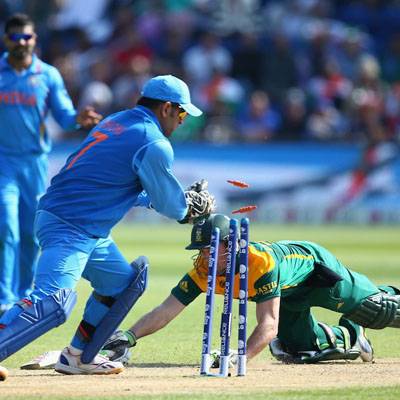
    MUMBAI: A whopping 257 million fans (TAM data CS4+ extrapolated to the universe using a standard conversion factor) tuned in to support Team India’s bid to retain cricket’s most coveted prize, as MS Dhoni and his men seized their ‘mauka’ opportunity and scored their first ever victory against South Africa in a World Cup match.


    The match rated 12.9 TVR across Star network including DD, with 10.5 TVR on Star network and 2.4 TVR on DD (All TAM data M15+ ABC).


    The joy of beating the Proteas was amplified for 76 per cent of the 257 million viewers as they tuned into the India South Africa game in their preferred language feed in Hindi, Tamil, Bengali, Malayalam and Kannada. The English feed contributed remaining 24 per cent of the total viewers for the game.


    Star India COO Sanjay Gupta said, “The viewership for India’s first two games of the ICC Cricket World Cup 2015 bears testimony to the cricket frenzy sweeping the nation. The fans, with their undiminished support for Team India, have been treated to some quality action and results of choice. The World Cup in regional language articulated by former India players has taken the viewer experience to the next level. Our efforts of bringing the fans closer to the world cup experience through a host of innovations have borne fruit and they continue to rally to Team India’s defence of its title.”


    The flagship ODI tournament has remained true to its billing of the most exciting cricket extravaganza drawing 473 million (TAM data CS4+ extrapolated to the universe using a standard conversion factor) fans to tune in to within the first two weeks of the tourney.


    The clash between two favorites for the ICC Cricket World Cup 2015 also sizzled across social media – with 175,000 unique authors driving 254,000 conversations – dominating the trends for the day. Star had extended its popular and disruptive ‘Mauka’ campaign to build anticipation ahead of the South Africa game, releasing a new promo under the fan passion theme, #maukepechauka, which was trending through the day in India.


    The viewership numbers for the India – South Africa game build on the record viewership for India’s tie against arch-rivals Pakistan. The blockbuster clash attracted 288 million viewers, making it the most watched television event in India since the finals of the ICC Cricket World Cup 2011.

  • Life OK, Sony are the biggest gainers of TAM wk19

    Life OK, Sony are the biggest gainers of TAM wk19

     MUMBAI: All’s Ok with Life OK and Sony Entertainment Television (SET) in week 19 of the TAM ratings report. The two channels are the biggest gainers in the ramped up digital universe that TAM is now reporting on from 5 May. TAM data (for Hindi speaking market including five new LC1 markets, C&S, 4+) sourced from a channel, shows Life OK added 21 GRPs this week to close the week with 123 GRPs (102 GRPs last week) and the No 6 slot. Life OK’s mythological drama Devon Ke Dev..Mahadev added some points to register 1.8 TVR (1.5 last week). Its crime-based show Hum Ne Li Hai…Shapath showed rapid improvement with 1.4 TVR (0.8 last week).

    SET, the other major gainer, continued its upward journey this week too by adding 12 GRPs to its last week tally taking it to 166 GRPs and the third spot among GECs. SET scored on the back of its crime-based properties like CID (2.2 TVR), Crime Patrol (2.0 TVR) and comedy reality show Comedy Circus that registered a 1.5 TVR. Its fiction shows such as Bade Achhe Lagte Hain added eyeballs as they rated 1.6 TVR (1.3 last week). Other fiction shows either stagnated or dipped marginally during the week.

    The good news for GECs, however, is that the genre has overall grown by 37 GRPs, taking it to 1,004.

    Back to the leader, Star Plus continues to lead the flock with an increase of eight GRPs to 232. The channel’s new talent hunt-cum-reality show India’s Dancing Superstar notched a 2.6 TVR on its Saturday and Sunday telecast even as fiction shows like Saathiya Saath Nibhana continue to be stable in week 19 with 2.2 TVR. Its chart topper, Diya Aur Baati Hum’s ratings, however, declined from 4.0 to 3.8 TVR in the week ended 11 May. Pyaar Ka Dard occupies No 3 position amongst all Hindi fiction shows with 2.9 TVR (2.8 last week).

    “We are doing very well in the expanded digital TV universe. But what is more important is that we have seen that our relative share has improved continuously over the last quarter. Though our relative numbers have been low (average of past 13 weeks) but the share of the channel has improved,” says Star India vice-president – marketing Nikhil Madhok.

    Following Star Plus is Zee TV, that held on to its second spot on the Hindi GEC chart with 174 GRPs (175 last week). Zee TV’s top performer was the fiction series Qubool Hai with 2.8 TVR (2.6 last week) followed by Sapne Suhane Ladakpan Ke that rated 2.7 TVR (3.0 last week). Its reality talent hunt India’s Best Dramebaaz’s viewership declined by a huge margin on Saturday to 1.8 TVR (2.4 last week) and on Sunday to 1.6 TVR (1.9 last week).

    At fourth spot, is Colors which dropped a point to record GRPs of 165. Its leading fiction series Balika Vadhu notched a 2.8 TVR (2.7 last week) and Madhubala rated a 2.5 TVR (2.4 last week). Sasural Simar Ka ended the week with 2.3 TVR (2.5 TVR last week).

    Multi Screen Media’s other Hindi GEC Sab maintained status quo with 131 GRPs and was at the No 5 spot. Ditto was the case with Max which is telecasting IPL6 which stayed put at 224 GRPs, while Sahara continued to shed GRPs and dropped to 13 GRPs.

  • Nach Baliye grand finale scores 4.1 TVR, Star Plus stays at top

    MUMBAI: Star Plus retained its position as the top Hindi general entertainment channel (GEC) in a week that saw the grand finale episode of its dancing reality show Nach Baliye delivering strong performance.

    The channel gained 18 GRPs to end Week 12 of 2013 at 291 GRPs, according to TAM data provided by a Hindi GEC.

    Star Plus aired the grand finale of Nach Baliye on 23 March from 8 pm to 11.30 pmwhich got 4.1 TVR. The show averaged 3.5 TVR.

    Zee TV stood second in the pecking order with 207 GRPs (last week 202) while Colors took the third spot with 192 GRPS (187). Sony Entertainment Television followed with 155 GRPS (163). Comedy channel Sab gained seven rating points to collect 142 GRPs for the week ended 23 March. Life OK lost seven GRPs and finished the 12th week at 128 GRPs.

    Star Plus‘ daily soap Diya Aur Bati Hum was the top rated show on TV with average TVR of 5.2 (5.3). Pyar ka Dard was the second highest rated show with average TVR of 3.7 (3.6) followed by Yeh Rishta Kya Kehlata Hai at 3.6 TVR (3.7).

    Qubool Hai continued to be Zee‘s top rated fiction show at 3.1 TVR (3.0) while Balika Vadhu scored the highest for Colors with 3.5 TVR (3.6). CID was Sony‘s top rated show with 2.4 TVR (2.5) followed by Crime Patrol at 2.3 TVR (2.5).

    The week saw the launch of two new shows on Hindi GECs – Badalte Rishton Ki Dastan on Zee (which replaced Mrs. Kaushik ki Panch Bahuen) and Bani-Ishq Da Kalma on Colors (which replaced Parvarish). Both the shows raked in average ratings of 1.6 TVR.

  • Zee TV strengthens weekends, Fear Files clocks 4 TVR

    MUMBAI: Zee TV has held on to the second position in the Hindi general entertainment channel (GEC) hierarchy, adding 15 GRPs after strengthening its weekend programming.

    As per TAM data (C&S, 4+, HSM) provided by the Hindi GECs, Zee TV recorded 253 GRPs. The new paranormal show of the channel, Fear Files, has garnered 4 TVR while DID lil Masters has improved in ratings. The Saturday (14 July) episode of DID registered 5.2 TVR while the Sunday (8 July) episode got 4 TVR. Interestingly, Zee TV is at No.1 in the weekend primetime programming and is at par with Star Plus in weekday primetime programming.

    Star Plus, even after a loss of 22 GRPs, continued to lead the genre with 276 GRPs. In the previous week, Star Plus had aired IIFA Awards that had helped the channel add 33 GRPs. However, leading fiction properties of the channel have seen a rise in viewership.

    Colors, meanwhile, maintained its status quo on the GEC ladder. The Viacom18 channel added five GRPs to its last week’s tally to register 235 GRPs. The channel’s three fiction properties – Uttaran (3.2 TVR), Balika Vadhu (4.3 TVR) and Sasural Simar Ka (2.9 TVR) – continue to rule their respective slots.

    Sony Entertainment Television (Set) also added 15 GRPs to end the week with 222 GRPs. Its fiction show Bade Achhe Lagte Hain has become the slot leader with 3.7 TVR (last week 2.6). The addition of eyeballs can be attributed to the five-year leap the show has undergone.

    Sab with 123 GRPs (last week 125) is at No. 5 while Life OK continues to occupy the sixth position with 114 GRPs (last week 103).

    Sahara One with 39 GRPs (last week 31) remains at the bottom of the ladder.

  • ‘We will post robust double digit growth’ : Disney UTV executive director and Disney kids network business head Vijay Subramaniam

    ‘We will post robust double digit growth’ : Disney UTV executive director and Disney kids network business head Vijay Subramaniam

    The kids television market in India is a tough nut to crack. Disney UTV executive director and Disney kids network business head Vijay Subramaniam, however, believes that the brand-driven media conglomerate has got the right formula to break the nut.


    Two of the channels have succeeded to penetrate the ratings. Disney Channel houses its global brands like MickeyMouse and is growing these franchises. Hungama is a fun-filled channel and works on Japanese anime content. TheWalt Disney Company India is now pulling its resources behind Disney XD to make the comedic action channel popular in the Hindi speaking markets.


    The company‘s strategy is two-fold: offer a wide spread of content that entertains not just kids but also the family; support this with strong activation to connect directly with the TG through multiple touch points.


    The challenge is to expand the advertising revenue which is pegged at Rs 2.5 billion. The genre is under indexed and the growth in audiences is not translating to a corresponding increase in advertising monies.


    Disney is waiting for digitisation to develop other genres that will yield more subscription revenues. The company is determined to find potential in live action and has three shows in development stage. Local animation is another genre that it wants to explore actively. The superhero genre is also to be exploited as an opportunity.


    In an interview with Indiantelevision.com‘s Javed Farooqui, Subramaniam talks about the potential the kids genre has amid tough revenue challenges.


    Excerpts:

    What is the challenge the kids broadcasting genre faces today?
    Some of the challenges that existed earlier even prevail today. Distribution, for instance, was a hard game to play when we launched in 2007. That situation continues and India is still one of the most expensive markets to procure distribution. So that definitely is a challenge. But we hope things will better with digitisation.


    Another challenge that has stuck around is that the kids market is highly under indexed. You can take a five year trend and you will find it is still under indexed, despite the fact that viewership on kids channels have grown overall. It’s a Rs 2.5-2.7 billion ad market. If you take the viewership, the total number of GRPs in 2007 was about 400-450 and currently it’s at about 700 GRPs. Every year this has been one genre that has added consistent growth, but it stays under indexed.

    Is that because the genre is highly fragmented?
    The question that advertisers need to ask is where the quality of viewership is and are they leveraging it. Going by the science of the marketplace, I don’t think advertisers have still realised the full potential of this audience.

    What could be done to overcome this hurdle?
    There are three things that we consistently do from a Disney kid’s networks standpoint and we believe it’s increasingly giving us returns. One is to have entertainment content that is completely family inclusive with the kid at the centre of it.


    Two, every single marketing activity that we have undertaken as a network has driven a very strong engagement value building loyalty through several intangibles. These become the talking points for advertisers and, more importantly, it deepens the relationship between the consumer and the channel. Take Jet Set Go as an example. We got six million entries from across the country and the best thing is that the contest was completely driven through Disney channels without cricket and Bollywood.


    Thirdly, we are constantly engaged in educating the advertising fraternity of the increase in value that the kids centric family brings. Yes, that’s a long journey to cover still. But the fact is that new categories of advertisers are walking in. Kids channels reach about 85 per cent of the genre’s universe.


    We are the leading kids network with 43 per cent share and we bring the power of terrific story telling through our franchises. The activations that we do are pretty wholesome and these are things that can be easily leveraged for value by brands. Having said that, it is a very competitive marketplace. And I don’t see enough attention being given to this segment when people strategise.

    So in an ideal situation what should be the size of the ad revenue market considering the audience delivery?
    That would be a hard one to say. I am of the view that brands that invest in kids channels should have a long-term view of building partnerships. We in Disney believe in evolving with the consumer and it’s important that brands demonstrate similar partnerships and evolve with us as we evolve with consumers. To illustrate a point, the engagement that we brought with Jet Set Go is something that money can’t possibly buy. Just imagine 33 families coming together and nobody knowing each other as they set out to experience the whole thing together at Disneyland. So these kinds of opportunities can be created by us. It’s more of a strategy that is driving this investment as opposed to asking ‘Can you spend a little more’? It’s not just about how you spend; it’s about how much you are staying invested with this important target audience.

    ‘The segment that we are going to drive as an opportunity as well as a strategy is the superhero genre. We have got the Marvel Universe premiering on Disney XD. That’s our first foray and we have got Marvel as a part of Disney‘

    Disney has been positioning itself as family entertainment channel. Do you think that works when you have to compete in the kids genre?
    The kids channel label is what prevents us from looking at family as a unit. If you look at it from the lens of a television professional, then that’s a limitation. But if you look at consumers in general and brand Disney in particular, we are a family entertainment channel worldwide. There are enough adults who buy Disney merchandise and then there is Disneyland which will give you an indication of just how big the Disney brand is.


    Agreed we are a young brand in India and we have not been here as long as the brand has been in other countries. But that said Disney stands for family entertainment. Secondly, if you look at consumers, they have at least one meal together and even as we live individualistic lives, the meaning of family is still very strong. We believe that Disney is a brand that provides the environment for families to come together. Yes, its kids centric but it’s something that is enjoyed by the family. And we believe that we have some of the best family comedy shows.

    But isn’t it still animation that works for kids channels?
    Agreed that animation is the staple diet for all kids channels. But it does not for a minute mean that the two cannot co-exist. In fact, there should be a healthy balance of the two.


    We will continue to invest on live action and we are very clear that we want to make it work. Ok, let me change the perspective and ask the same question about Satyamev Jayate. When you bring in a new format in a new slot, you will have people who will be very enthusiastic and supportive and there will be people who will be at the fence. As leaders, it is important to bring these new formats to the country. We have to drive it in a manner that Indian audiences find it most entertaining and relevant. We started with live action two years ago with Ishaan and we have three shows under development stage now. We genuinely believe that this is an added dimension for both kids and their families.


    Live action is fun but it is harder to do. We are fortunate that we have the repertoire of successful stories that have been scripted and aired successfully internationally.

    What is the ratio between live action and animation on Disney Channel?
    It’s between 15-19 per cent with just two shows – Suite Life of Karan and Kabir and Best of Luck Nikki.

    What is your content strategy for the three channels? Any specific genres that you are planning to experiment with?
    One segment that we have identified clearly is live action. It’s very rich and is something to which we are committed strategically and financially; we are going to drive that to build significant volume for us.


    We see huge opportunity in preschool content and have ambitious plans for it. Frankly, it’s a function of right timing because it can’t be driven using the ad sales model. This is a far younger audience and requires a lot more responsibility in managing it. This is one genre we would like to explore once we see where this digitisation piece is moving.


    The third genre that we want to play a role in is local animation. Indian animation has come a long way and we believe that there are lots of dimensions that are still to be explored. A day in the life of a kid is also an opportunity to explore much more; it doesn’t necessarily need to be mythology. So that’s the piece we are keen on.


    Musicals is something which is at the heart of everything we do. It is another interesting genre, but the challenge is how do we do so because development in some of these things is very difficult to do in an environment that is not necessarily seen as an opportunity through the eyes of the kid.


    Comedic action and adventure is an interesting genre that we are going to contribute significantly in.


    Lastly, the segment that we are going to drive as an opportunity as well as a strategy is the superhero genre. We have got the Marvel Universe premiering on Disney XD with Spiderman and Iron Man-Armored adventures on Saturday. That’s our first foray and we have got Marvel as a part of Disney. There are interesting stories to be built around them.

    How are Disney Channel, Hungama and Disney XD positioned?
    Disney Channel is the home of Disney brand and everything it stands for. All the Disney franchises are housed under this channel. Micky Mouse Clubhouse, Winny the Pooh and Phineas and Ferbs will be championed by Disney Channel as will the live action production that I spoke of – Suite Life of Karan and Kabir, Best of Luck Nikki and Art Attack (an art and craft show).

    Hungama is a brand aimed at the 4-14-year-olds. It is a total unbridled fun channel, so Japanese anime is the content expression there.

    Disney XD is an action and comedic brand channel targeting boys in the age group of 8-14 years.

    Hasn’t Disney XD been the weak link in your network?
    I would say Disney XD required the maximum amount of work among the three channels that we have in India. We have got Disney Channel and Hungama sitting pretty but our work is not finished yet. We have to stay on top of the live action game, something that I keep emphasising on. It has to be truly entertaining because that is what differentiates Disney from other entertainment products. Hungama is going to stay fun and enjoyable.


    With Disney XD, we are sure we will be able to take it to the position the other two are in. That’s really the game plan.

    What direction are you going to give Disney XD?
    Disney XD is a channel that has traditionally done well in the South and HSM (Hindi Speaking Market) was not a focus area. We are at a stage where we are going to focus a lot of our resources on Disney XD to make it strong in the HSM. We have made encouraging beginnings but we have a long way to go. We are pretty confident of reaching there. Prior to January, we were 30 odd GRPs, which is really nothing. But currently we hold about 60 GRPs on an average and are confident that it will be a 100+ GRP channel in the coming months, given that we have a whole lot of initiatives planned to give it the push.

    What are the growth projections for Disney network?
    I am not at liberty to share financials, but they are robust double digit numbers. The growth will be delivered by consistency of performance due to high quality programming and a discerning advertiser who is placing a premium on both brand value as well as consistency. As far as break-up of revenues is concerned, its 50-50 for us between distribution and ad revenue. Licensing and merchandising is a separate business altogether.

    How important is new media in the scheme of things?
    New media in most media companies is an extension of the linear product. But for us it’s a full-fledged digital universe onto itself. Disney is a unique brand that tells great stories and then disseminates them through as many platforms and environments as possible.


    We have Disney Interactive Media Group. Like DisneyConsumer Products, it is a separate company altogether that works across the length and breadth of the digital universe. When we did the Princess movie festival on the channel, we also built a game on mobile and they then fed it to over 7-8 million consumers. So that’s the scale we can build for our stories across platforms.

  • IPL ratings remain flat at 3.4 TVR for 46 matches

    MUMBAI: The viewership for the first 46 matches (44 matches excluding two abandoned matches) of the Indian Premier League remained flat at 3.40 TVR, despite the improved quality of matches and several close encounters.

    The cumulative reach of the current season of IPL matches stood at 151.58 million, according to Tam data for CS 4+ TG All India market.

    The season 4 of the IPL had garnered an average viewership of 3.54 TVR with a cumulative reach of 152.72 million. The season 1 of the tournament followed by season 3 had the best performance garnering 4.72 and 4.53 TVR respectively.

    The IPL ratings have gone down below the 3.5 TVR for the first time, marking a new low in its viewership.

    Earlier, the IPL had notched an average viewership of 3.41 TVR for the initial 36 matches with a cumulative reach of 144.9 million.

    The first 27 matches of the IPL had managed a viewership of 3.53 TVR, down from 3.88 TVR a year ago. Even the cumulative reach has taken a beating, down from 140 million last year to 137 million.

    The average viewership for the first seven matches was 3.76 TVR which further fell to an average of 3.65 TVR for the 16 matches.

    Explaining the falling viewership of the IPL, Percept Media Lab had released an analytical report according to which the IPL viewership has stabilised after going through a ‘level shift‘ or sudden drop in viewership.

    The report also stated that the viewership has dropped since the initial attraction and draw of sports combined with glamour has worn off, and there is no longer a ‘novelty’ around the IPL concept.

    It also established that the share of Female viewers for SEC ABC has dropped to 10 per cent from 13 per cent in IPL season 4 even as it retained its core Male TG.

  • ‘Max is an extremely successful channel’ : Max Sr EVP and business head Sneha Rajani

    ‘Max is an extremely successful channel’ : Max Sr EVP and business head Sneha Rajani

    Multi Screen Media‘s hybrid channel Max has completed 11 years and today is a prime asset of the company.


    While it telecasts the lucrative Indian Premier League (IPL), in the movie space it is in close fight with Zee Cinema for the top spot.


    In an interview with Indiantelevision.com’s Gaurav Laghate, Max Sr EVP and business head Sneha Rajani talks about how Max has successfully run its movie and cricket businesses separately and profitably.


    Excerpts:

    Max has been both, praised and criticised, for changes in cricket programming. Your comments…
    What we did with cricket was pioneering. We changed the way cricket was viewed and consumed in this country. Till then it was like a match being aired and a little bit of analysis thrown. What we wanted to do, and which is where we revolutionised cricket viewing, was that we wanted to increase the base.

    Cricket was predominantly male viewing till we came into the market. We knew that in order to increase the base, it couldn‘t be just confined to the men. We had to make it all inclusive.

    So we took some seriously bold steps like introducing a woman anchor way back in 2002 (Ruby Bhatia) and Extraa Innings.


    In the 2003 World Cup, we had three women instead of one – and purists went ballistic. The ratings increased five times, women audience grew 200 per cent and Extraa Innings touched a 19 TVR.

    Another milestone was duplicating the success of Extraa Innings with movies – Extra Shots. Mandira Bedi became the first movie jockey.


    From 2008 we are having IPL. There has been no dull moment since then – we are made for each other.

    What about movies?
    Blockbuster movie acquisition is something Max has been associated with always. Out of the 10-12 big films every year, Max has easily over half of them. Be it Lagaan, Devdaas, Om Shanti Om or 3 Idiots – you will always see the best and biggest movies on Max.

    3 Idiots is, perhaps, the biggest coup that Sony has pulled off. Look at the ratings of the first three airings.

    With so much controversies and bad publicity going around IPL, will it have any adverse impact on your revenue targets?
    I won‘t comment on numbers but any publicity is good publicity…it helps you look positively. And at the end of the day, the IPL is a league that the audience wants to watch. The thought and vision is so strong that the IPL will continue to be the biggest entertainment spectacle.

    Max being a hybrid channel, the cost of investment is much higher compared to a pure play movie channel…
    Yes, but we look at the two as completely separate businesses. And both are doing fairly well independently.

    And yes, as for cricket, the rights have been acquired for 10 years. We are well aware of the costs. But as far as movie acquisition is concerned, we know the prices have gone up tremendously, which is why we have been extremely careful about how many movies we have picked up this year and at what price.

    But you have acquired very few movies this year?
    Let me put it this way… We have not acquired as many films as we normally do simply because we did not want to pay unrealistically high. Acquisition has to make business sense.

    We have not acquired as many films as we normally do, simply because we did not want to pay unrealistically high. Acquisition has to make business sense

    As Colors is buying movies aggressively for its upcoming movie channel, what will be your plan of action?
    Not just Colors, Star has also picked up a lot of them. Colors is in a different life cycle; they are in a launch phase. We are nowhere in the launch phase, we have a very solid library. We have acquired enough number of premieres.

    So what are the parameters that you look for while acquiring the movies?
    We have a budget and a set of parameters. Our recent acquisitions are Robot, Crook, Raktacharitra, We Are Family and Hisss.

    When you are airing movies, you do not have scope for creative programming. How is your channel different from the other movie channels?
    The scope is very limited simply because we run movies back to back; there is very little space available for us to do anything else. But in the next quarter, we are trying to bring in at least a couple of innovations.

    So far we have Extraa Shots – which has a different look to it every month. We shoot with TV stars; we have picture-in-picture type shots etc. It has been refreshed continuously over time.

    But how will you differentiate between your channel, and say, Zee Cinema and Star Gold if everyone is playing the same movies?
    You are talking about the syndication model. But there are very few movies that have been shared between the broadcasters like Jab We Met airing on 10 different channels.

    I can say 99 per cent of our library is exclusive, and so is Zee‘s and Star‘s. There are very few – around 50 films that are shared in the market.

    So you don‘t believe in the syndication model?
    We as broadcasters are extremely and completely against the syndication model. If you talk to other broadcasters, I think they will also share the same views.

    I think it is not right for the broadcasters and for the movie itself. I think producers also should not encourage this as it completely devalues the product.

    But many channels have formed business models on syndication. Like Colors acquired first airing, Imagine TV got second airings…
    The response to that is the pricing is wrong. It does not mean that you change the model and introduce a model that completely kills your product and the brand of the channel.

    We had to acquire some movies on syndication as they were not available otherwise. But going forward, we have not acquired any film that is on syndication. It is outright acquisition model that we are following.

    Which movies you had to take on syndication?
    Om Shanti Om, Chandni Chowk to China, Bhootnath, Jab We Met and a few others. But after that, we haven‘t. Like 3 Idiots – which we acquired exclusively.

    The window between theatrical release and TV premiere has shortened. But a movie channel gets the movie after it airs on the general entertainment channel. Is there a return on investment?
    If not, why will Colors launch a movie channel? And let me tell you, I can‘t talk about the other movie channels, but Max is a very successful channel. Not just from the ratings point of few, but as a business it is extremely successful.

    And as you rightly said, the big premiere happens on a general entertainment channel simply because the effective rates on a GEC are far higher than a movie channel. But there is a model there which works, and that‘s why everyone is doing it.

    In other words, we recover what we invest.

    But Zee Cinema is not investing heavily on acquisitions and rates higher than Max. So is it not a more effective business channel?
    They do buy, maybe not as much as Star or Sony or Colors, but it is because their business model is different.
     

    And talking about Sony, even before we launched Max, our brand promise was that we are known for our blockbusters. Our strategies

    are different. I wouldn‘t say theirs is more effective or ours is.

    And if you see the last five years, Max has been leading more than them. Obviously our strategy is also working.

    Also don‘t forget that Zee Cinema has got a first mover advantage. It‘s a far older channel. People are used to it and in the Hindi heartland they have a huge following.

  • ‘Sab is the only channel in India that is doing daily comedies’ : Sab EVP and business head Anooj Kapoor

    ‘Sab is the only channel in India that is doing daily comedies’ : Sab EVP and business head Anooj Kapoor

    The top three Hindi general entertainment channels punched hard at the second-tier channels with differentiated content, high-cost reality shows and big ticket movies. Barring Sab, the others such as Star One and Sahara One cracked under pressure.


    So what did Sab do right? It correctly positioned itself as a family comedy entertainment channel and brought in light-hearted content that worked.


    Sab had a basket of shows that crossed 1 TVR, catapaulting the channel to 101 GRPs for the week ended 12 June.


    The channel will stick to its low-cost programming but also introduce family-based reality shows.


    In an interview with Indiantelevision.com, Sab EVP and business head Anooj Kapoor talks about how the channel progressed in a difficult environment and what content is planned for its growth.


    Excerpts:

    The top three Hindi general entertainment channels are seeing high drama. How has Sab managed to march ahead in this adverse environment for the second-tier GECs?
    The channel has traveled a long way since its 28 GRP days that it used to collect two and a half years ago. We have even crossed 100 GRPs. Our progress happened after we repositioned Sab as a family entertainment channel. We aired daily family comedy shows, showcased warm and lovable characters and mixed differentiation with familiar content.

    The familiarities come in the form of joint family settings, female protagonists, and linear shows running from Monday to Thursday. The differentiating part is content that is light hearted and positive. We have the only set of shows where the consumer and ‘sasural‘ both love the female protagonist and the channel is as such the only one which has a brand slogan in the GEC sector. This helps in our positioning and it is now clear, specific and well defined.

    What led to this change of positioning of SAB from a youth to a comedy channel?
    Earlier the wisdom in the channel was one which felt the TG should be between the 16-25 years age group. But we forgot that the viewership pattern in India is different. There are more single TV households and it is the women who control the remote.


    Thus all prime time spots need the women onboard as that is the key. That‘s why all shows depicting women suffering, like dowry issues, female infanticides etc. which are such deep rooted stigmas, strike a chord with the audience that is predominantly female, and can empathise and relate easily to what‘s shown.


    We, on the other hand, are addressing the fact that times have changed, families are now more nuclear, and there is more balance and light-heartedness. We have barely done 50 per cent of what we can do, but consumers have understood the message we are sending-“Laugh as a family, than cry alone.”

    Has this led to an increase in advertisement revenues?
    Yes, in the last 30 months our advertising revenues have increased as well. Earlier we had just about 35 advertisers on board, but right now we have more than 60. Back then, Star One and Sahara were in the 70s and 80s as far as GRP‘s go and now they are nowhere close to us, even though they have bigger budgets. In fact even NDTV Imagine, which we are only marginally behind on the overall GRPs and now ahead of in the primetime Monday-Thursday slot, has a seven times higher budget than ours.

    Are you looking to come out with some high cost production shows in the future, seeing the current trend in GECs?
    No, we are not looking to do any high cost productions since they are currently not needed, as we have not yet hit the stagnation level and are still growing at a steady pace. We are also not looking for funding of any kind.

    How has the journey into the comedy space been for SAB?
    We are currently the only channel in India that is doing daily comedies. Most channels will run a weekly comedy at the most. Apart from this, our silent comedy, Gutur Gu, is only the second ever silent comedy to be really successful, after Mr. Bean, and we are now going to sell the show abroad via syndication. So, I‘d say the journey into this genre has been hugely satisfying, successful and fun for all of us.

    We are on the lookout for non-fiction or reality shows. Our plan is to have a family-based concept for a reality show

    Have the lower budgets hampered on the production value?
    Well not really, as we have been able to manage our costs very well, even though the sets we create and use are very huge too. In Lapataganj we have created an entire village, while in Tarak Mehta Ka Ultah Chasmah the set is an entire colony. And to top it all in our newest show to be aired, Papad Pol Shahuddin Rathod Ki Rangeen Duniya, we have created an entire town as the set!


    Thus we have been able to improve at an operational level without compromising on our sets or production values, while maintaining a tight budget and getting the desired results.

    What are you the most proud of when it comes to SAB‘s current standing and position in the market?
    Currently 5 of our shows have a 1+ rating and this is really quite an achievement. I say this not only because it is quite difficult to have shows with even a rating of 1, but more so as we achieved this irrespective of the huge constraints we face as a channel. These include us not having an afternoon slot. Due to budgeting, our programming is restricted predominantly from Mondays-Thursday; the number of hours of programming and even our overall reach are all major hurdles we are currently faced with.

    What areas are you concentrating on in terms of investments why?
    We are going to invest a lot in distribution. Trying to move from the 38 to 55 per cent reach is the first gap we are hoping to plug. In just a few weeks of work, we have already managed to move from 38 to 41. We are also going to improve the placement of the channel.


    Besides, we want to expand our programming to 6 days, including Saturdays, without trying anything different in terms of genre.

    The current flavour of all channels has been reality shows and non-fiction. Is SAB going to venture into that space as well?
    As far as non-fiction or reality shows go, that is definitely on the cards too, and is a genre we would like to look at. We are, in fact, on the look out for a family-based concept for a reality show but are yet to come across something.

    SAB is one of the few channels that markets the entire channel and not just shows. What are the initiatives you are currently involved in?
    We are in the midst of many marketing initiatives right now, specifically in places where families will be together like theatres, bus shelters and other OOH areas.

    We even had a SAB mela in Ahemdabad which was a family fair attended by 27000 people and this was truly a one of its kind consumer connect campaign.


    The fair was another platform for family entertainment where people even got to meet and spend time with many of the artists from the shows they like. The fair also had a school connect program, where different schools and college teams participated in entertainment activities like group dance performances. We also had a lot of local artists and cultural flavours at the fair, and the overall response was so encouraging that we have decided to repeat this initiative in 15 more cities this year.


    Our other marketing plans as a channel include a radio promo, SAB ka Damadji wherein the “damadji” character created comes on air and talks to a group of ladies who ask him questions and he answers them via jokes and funny anecdotes.


    Also the virals we have been airing have done very well and have helped get in more viewers.

    Tell us a little about your new show, Papad Pol Shahuddin Rathod Ki Rangeen Duniya, that will be aired soon?
    We like taking renowned pieces of literature and using it for our shows. This is the basis of our new show too, which Shahuddin Rathod, an author with global following, has penned. His humour is warm, family based, closed knit and has a message.

    Papad Pol is like a street or machala where most of the people living are in the papd business. It is their lives and day-to-day interaction that forms the show.

    What‘s next for SAB viewers to look forward to?
    Next in the line for SAB is another silent comedy which will hopefully hit the air by July. The pilot has already been shot and approved. Apart from that, another show along the lines of Pink Panther, which is about a bumbling detective who solves crimes, will be specifically for weekend viewing.

  • Generation leap takes ‘Kahaani…’ atop ratings heap

    Generation leap takes ‘Kahaani…’ atop ratings heap

    MUMBAI: The leap theory has delivered yet again for India’s lead Hindi entertainment channel Star Plus. The channel’s second biggest show Kahaani Ghar Ghar Kii’s generation leap episode (Week 46 of 2006) has garnered a whopping 15.3 TVRs to top the ratings charts.

    The Wednesday episode reached out to more than 12 Million viewers (Source: TAM, Base: C&S 4+, Hindi Speaking Markets). This is a record-breaking ratings of sorts because no other show this year has delivered such phenomenal ratings, a statement issued by the channel claims.

    Star Plus overall week-day as well as weekend prime-time has simultaneously improved – with a total recorded growth of 14 per cent over the previous week.

    Additionally, the channel’s recent launch – Karam Apnaa Apnaa – has also performed well by touching its highest average rating of 6.93. Out of the weekend programming pool of Star Plus – Sai Baba has recorded the highest ratings of the year with 7.22 and Prithviraj Chauhan also has touched the highest ever rating of 8.55 TVR, the channel asserts.

  • ‘L’il Champs’ finale rockets Zee to top of ratings charts

    ‘L’il Champs’ finale rockets Zee to top of ratings charts

    MUMBAI: The tykes really did a number for Zee TV with their chart-busting ratings performance. The Sa Re Ga Ma Pa L’il Champs finale live event on 28 October fetched Subhash Chandra’s flagship channel a whopping 11.1 TVR, rocketing it to the top of the charts.

    What was quite remarkable about the numbers, which is for the HSM 4+ TG, is that this is the average TVR the show generated over the full three-and-a-half hours it was on air and it was still well ahead of the perennial number one – Star Plus’ half-hour queen of soaps Kyunki Saas Bhi Kabhi Bahu Thi – which registered a 10.3 TVR. The peak rating L’il Champs achieved was at 10 pm – of 15.4.

    The performance of L’il Champs gave Zee TV a reach of 30 per cent taking the channel to 350 GRPs, while Star Plus and Sony had 454 and 151 GRPs respectively.

    An elated Punit Goenka business head Zee TV remarked, “We are thrilled with the ratings of the finale. Sa Re Ga Ma Pa Lil Champs has been a very successful series since its inception. We have been overwhelmed by the response the show has garnered over the past few weeks. It provides an impetus to strive harder and clearly boosts the morale of the team. We will continue to put in our best efforts into making other shows such a grand success. As the average break TVR was 8.4, the show garnered high visibility for our partners as well.”

    Title sponsor Hero Honda would certainly be pleased by that bit of news of course.

    Expectedly, the highest ratings came in from the home cities of the three finalists.
    * Kolkata – Rating 15.8 and reach 39 per cent.
    * Mumbai – Rating 13.9 and reach 29.6 per cent.
    * Delhi – Rating 11.4 and reach 29 per cent.

    The Sa Re Ga Ma Pa story seems to be just getting better for Zee, much like American Idol has been for Chandra’s one time partner and now bitter rival in India Rupert Murdoch’s Fox Network.