Tag: TV18

  • Debkumar Dasgupta moves on from IndiaCast

    Debkumar Dasgupta moves on from IndiaCast

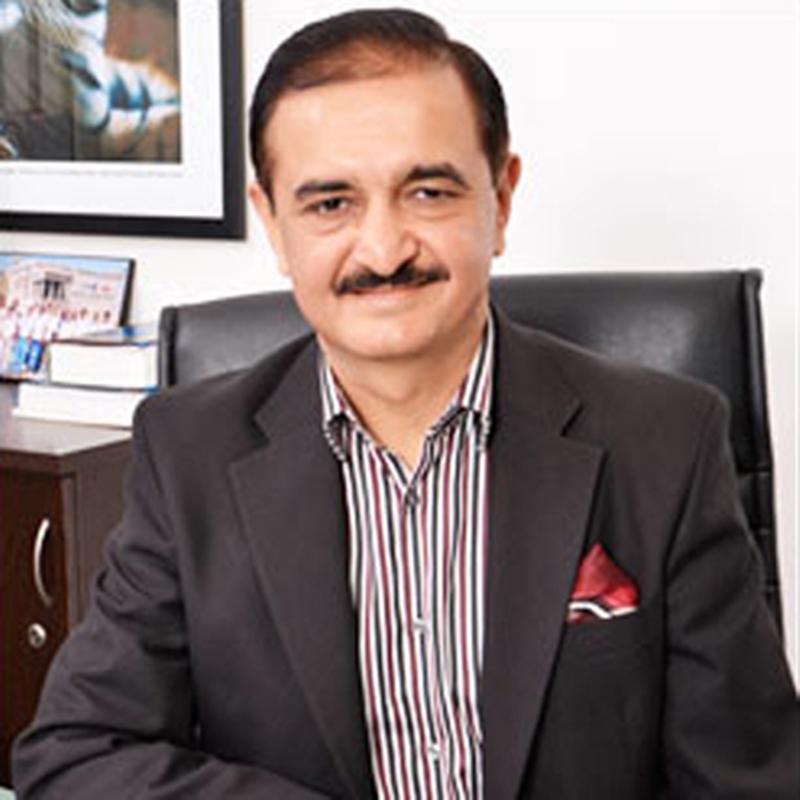
    Mumbai: IndiaCast Media Syndication head (Middle East-Africa) Debkumar Dasgupta has moved on from the group after a long stint of over two decades. He will be in the company till 31 December.

    Dasgupta was currently posted in Dubai as senior VP and business head- syndication, Middle East and Africa of IndiaCast- the international and digital distribution arm of Viacom18 and TV18.

    He joined the group 24 years ago, and initially managed the domestic distribution of the channel. But his role expanded post the launch of Colors, when he was appointed to manage the Asia Pacific channel distribution and global content sales and syndication. The syndication business recorded significant growth during the subsequent decade. Later on, he was elevated to manage the channel business including subscription, ad sales, syndication in the Middle East-Africa.

  • Network18 reports 53 per cent EBITDA growth in Q2 FY22

    Network18 reports 53 per cent EBITDA growth in Q2 FY22

    Mumbai: Network18 Media and Investments Ltd has announced its results for the second quarter financial year 2022. The media company reported that the consolidated EBITDA for the quarter grew 53 per cent year-on-year and operating margin at 18.2 per cent.

    The entertainment margin stood at ~19 per cent and excluding film business, revenue was up by 31 per cent YoY. The news margin stood at ~18 per cent and news business revenue was up by 18 per cent YoY. The revenues for digital news rose by 55 per cent YoY and margins at ~17 per cent. Profit after tax rose to ~ Rs 200 crore.

    The company reported that its entertainment broadcast business saw a strong performance in Hindi and select regional markets and that its share of the entertainment portfolio rose 90bps quarter-on-quarter to 11.8 per cent. “This was despite a marginal decline in the entertainment and overall TV viewership, which has now settled at the pre-Covid-19 levels,” it noted.

    It also reported that entertainment revenues surpassed pre-Covid-19 as ad volumes registered strong growth during the quarter. “Having already scaled to FY20 levels in Q1, ad revenue registered a strong growth (vs both FY21, FY20) during the quarter, driven by an action-packed programming calendar that strengthened the network’s viewership share,” the company said.

    According to the company, domestic pay-TV subscription revenue for the quarter was flattish YoY while international pay-TV subscription revenue remains under stress.

    The company confirmed that Viacom18 has acquired the rights to the next FIFA World Cup 2022 to be held in Qatar. It has also acquired rights to three of the five most-watched football leagues in the world – La Liga (Spain), Serie A (Italy), and Ligue 1 (France). It said, “Live sports on broadcast and digital platforms will complement the current entertainment offering and will strengthen the consumer value proposition of the network.”

    The company’s over-the-top platform Voot Select saw a sharp jump in paid subscribers during the quarter, which is attributed to the launch of “Bigg Boss OTT.” The show garnered more than 10 billion minutes of watch time (AVOD+SVOD) over a six-week period. The company reported that Voot was the fastest OTT to reach one million B2C subscribers.

    “This quarter has been quite remarkable, both from a macro as well as company’s point of view. The way the country came out of the grip of the second wave of Covid-19 was truly heartening and equally reassuring was the full-swing return of economic growth,” said Network18 chairman Adil Zainulbhai.

    “The outlook is looking quite promising from a medium-term perspective and this is good news for all our consumer-facing businesses. Our digital assets, both news and entertainment, got a lift during the pandemic and we continue to invest to leverage those gains. With expansion into the sports genre, we have taken a significant step towards scaling up our entertainment portfolio to the next level. This will help establish us as a truly integrated media company across broadcast, OTT, and content studio business spanning general entertainment, news, movies and sports,” he added.

  • HistoryTV18 to narrate story of Narendra Modi Stadium

    HistoryTV18 to narrate story of Narendra Modi Stadium

    Mumbai: HistoryTV18’s latest documentary “Modern Marvel: World’s Largest Cricket Stadium” premiering on the 17 September at 9 p.m, is the amazing story of building cricket’s largest arena on the historic Motera ground in Gujarat’s Ahmedabad. 

    The brand new Narendra Modi Stadium, inaugurated by the president of India earlier this year, seats as many as 1,32,000 spectators. This makes it the world’s largest cricket stadium by seating capacity, surpassing the Melbourne Cricket Ground (MCG) in Australia. It was rebuilt at a cost of Rs 800 crore in just 38 months. 

    Now, HistoryTV18 presents an in-depth documentary on this massive feat of design and engineering – constructing a futuristic stadium that is purpose-built for the modern-day game. Filmed on location in 4K and high-definition, the documentary reveals never-seen-before aspects of the logistics, architecture and planning that go into building a sporting venue of this scale while presenting jaw-dropping facts bound to fascinate viewers. 

    The film also features cricketing luminaries such as Sunil Gavaskar, Kapil Dev and Ravi Shastri along with cricketers Virat Kohli and Rohit Sharma. Viewers will also get insights and interesting details from BCCI secretary Jay Shah as well as from former Indian cricketers Gautam Gambhir, Parthiv Patel.

    “Modern Marvel: World’s Largest Cricket Stadium” will not just enthral viewers with astonishing facts and figures about the newest landmark in the world of cricket, it also features India’s cricketing superstars reminiscing about historic moments in Indian cricket and career milestones that were reached on the old Motera pitch. 

    Ravi Shastri speaks about playing the first test match ever on this ground against the West Indies in 1983. While ‘Haryana Hurricane’ and India’s World Cup winning captain Kapil Dev talks about Sunil Gavaskar becoming the first cricketer in the history of the game to reach 10,000 runs in Test cricket. All this and more happened at Motera. “It was a big thing for us to celebrate… a cricketer from our generation made 10,000 runs, so it was massive,” says Kapil Dev. 

    While Gautam Gambhir remembers playing a tough World Cup quarter-final against Australia in 2011, Parthiv Patel recollects that Kapil Dev had also broken a record right here in Motera surpassing Richard Hadlee to become Test cricket’s highest wicket-taker with 432 scalps. Jay Shah reminds viewers that it was also here that Bharat Ratna Sachin Tendulkar had scored his maiden double century in test cricket.

    And now, upon this hallowed ground has risen Ahmedabad’s glittering new edifice, a modern marvel of design and engineering and a fitting ode to a sport that has given billions of people and generations of Indians, some of their most cherished memories. 

    HistoryTV18’s ‘Modern Marvel: World’s Largest Cricket Stadium’ chronicles the construction of this newest landmark of India’s favourite sport. The new stadium is twice the size of Eden Gardens in Kolkata, and four times larger than the historic Lord’s in London. The Narendra Modi Stadium has been built by Larsen & Toubro (L&T), which is also credited with constructing some of the country’s most iconic landmarks, including the world’s tallest statue. 

    The sheer scale and complexity of the Gujarat Cricket Association’s grand project also meant bringing in design architects from Australia, roofing experts from the US, specialised canopy fabric from Japan, cables from Italy, and revolutionary LED stadium lighting from Spain. With attention to detail and revealing interviews with the people behind this mega build, HistoryTV18’s documentary provides a fast paced and compelling narrative of the vision and construction with gob-smacking facts that make the stadium a true marve.

    The programme is the latest in HistoryTV18’s offering of originals that tell engaging and entertaining stories of India that are relevant, informative and have best-in-class production values. Speaking about the film, Jay Shah said, “The Narendra Modi Stadium is one of the great Modern Marvels of the 21st century. HistoryTV18 has showcased cricket’s largest arena in a manner befitting its scale and grandeur.” 

    A+E Networks | TV18 managing director Avinash Kaul said, “At HistoryTV18, we believe in the power of great storytelling. Our teams work hard to bring compelling stories to life, creating content that’s differentiated, visually spectacular and relevant for our viewers. The Narendra Modi Stadium is a tribute to the nation’s love for cricket and an icon of rising India. We’re proud to have had the opportunity to tell this remarkable story and I’m sure our viewers will enjoy it immensely.

    Viewers can watch “Modern Marvel: World’s Largest Cricket Stadium” only on HistoryTV18 and HistoryTV18 HD.


  • SC adjourns NTO 2.0 hearing to 18 August

    SC adjourns NTO 2.0 hearing to 18 August

    Mumbai: The Supreme Court on Friday adjourned the hearing in a matter pertaining to the New Tariff Order (NTO 2.0) to 18 August.

    Last month, The Indian Broadcasting Foundation (IBF) and several leading broadcasters had filed a petition in the Supreme Court against the Bombay high court verdict dated 30 June, which had upheld the constitutionality of the NTO 2.0. The amended NTO 2.0, passed by the Telecom Regulatory Authority of India (TRAI) in January 2020, was challenged by broadcasters in the Bombay HC.

    After a legal tussle that lasted over a year, TRAI had managed to get a green signal from the court on 30 June on the implementation of the amended NTO 2.0. The division bench of the HC had stated that the challenge to the constitutional validity of the 2020 rules and regulations of TRAI does not hold any water. At the same time, it termed one of the twin conditions “arbitrary”, according to which the maximum retail price of an a-la-carte channel could not be more than one-third the maximum rate of a channel in the bouquet.

    The judgment was passed on the petitions filed by several broadcasters under the umbrella of the Indian Broadcasting Foundation (IBF) including ZEE Entertainment, Star India, TV18, and Sony Pictures Network India (SPN) who had challenged the NTO 2.0 terming it “arbitrary and in violation of their fundamental right”.

    The NTO 2.0 prescribed linkage between a-la-carte price and bouquet and reduced the price cap on the subscription fees for pay channels.

  • Den Networks calls off merger with Hathway, TV18

    Den Networks calls off merger with Hathway, TV18

    KOLKATA: Multi-system operator Den networks has decided not to proceed with the scheme under which TV18 Broadcast, Hathway Cable & Datacom and Den Networks were to merge into Network18 Media & Investments.

    “Considering that more than a year has passed from the time the board considered the scheme, the board of the company has decided not to proceed with the arrangement envisaged in the scheme,” it said in a regulatory filing.

    In February 2020, Reliance Industries announced a consolidation of its media and distribution businesses spread across multiple entities into Network18. It was planned that the broadcasting business would be housed in Network18 and the cable and ISP businesses in two separate wholly owned subsidiaries of Network18. The restructuring would create value-chain integration, and render substantial economies of scale, Reliance said at that time.

    The shareholders are aware that the scheme was filed with both the Bombay Stock Exchange and National Stock Exchange for their no-objection letter, Den Networks stated in the latest filing.

    “The Company had also disclosed in its quarterly financial results for the quarters ended 30 June 2020 and 30 September 2020, that the stock exchanges had returned the scheme stating that the company may apply to the stock exchanges once the Scheme is in compliance with SEBI circulars/ SEBI regulations. This pertained to the compliance by the company and Hathway Cable and Datacom Ltd of the minimum public shareholding requirement,” it said.

  • TV18 beats pandemic blues, consolidated profit leaps 77% in Q4

    TV18 beats pandemic blues, consolidated profit leaps 77% in Q4

    NEW DELHI: In the fourth quarter of the financial year that ended on 31 March 2021, TV18, a listed subsidiary of Network 18, has reported a 77 per cent increase in consolidated profit at Rs 251 crores. In a regulatory filing, TV18 revealed that the profit in the corresponding period was Rs 142 crores. 

    In a press statement, the company said strong recovery in TV ad growth to the high single digits in Q4 has helped TV18 to stay afloat. The profit growth was also driven by lower operating expenses including operating cost, finance cost, and depreciation. The 41 per cent year-over-year (YoY) fall in tax expenses at Rs 20 crores also added up to the profitability of the company. 

    TV18's total expenses for Q4 were at Rs 1,113 crores, 11.3 per cent down when compared to the expenses in the same period of the previous fiscal year which stands at Rs 1,254 crores. However, the company's consolidated revenue from operations was down by 5.4 per cent to Rs 1,347 crores in Q4 as against Rs 1,424 crores of the corresponding quarter in the previous fiscal year. 

    "Broad-based cost controls helped offset Covid impact and sharpened operating leverage. Q4 Opex was down 10 per cent YoY despite full resumption of programming and calibrated investments into marketing/distribution in tandem with monetization opportunities," said TV18 in a BSE filing. 

    TV18 Broadcast revealed that television viewership has settled higher above pre-pandemic levels due to the rising number of households that possess televisions. 

    "TV households have increased to 210 million vs 197 million in 2018 as per BARC, and penetration is still at 66 per cent. TV in India, therefore, is a growing medium with further headroom," the company added. 

    According to the filing, digital engagement continued to grow which is linked to the volume of high-quality content and key events. Industry sources indicate a 10 per cent YoY increase in OTT video consumption. 

    Group debt of the company was also reduced to Rs 893 crores in March 2021 from Rs 1,775 crores last year. 

    The report also noted that Viacom18’s OTT platform Voot has also succeeded in drawing new subscriptions in an already competitive market. 

    "Subscriber base continues to grow led by its quality of content, before-TV delivery of shows, attractive pricing, and smart bundling. The app posted 11 per cent QoQ growth in overall watch time. 50 per cent of our active paying subs were watching Bigg Boss every week," stated the report. 

    TV18 chairman Adil Zainulbhai said that the company has successfully dealt with challenges posed by the pandemic, and has posted much-improved profitability in a difficult year. 

    "Our brands have continued to grow in strength and salience during this period. Our plans to invest in digital growth and our resolve to excel in the television remain constants amidst a dynamic business environment," added Zainulbhai, Money Control reports.

  • A+E Networks | TV18 appoints Karishma Dhawan as revenue head

    A+E Networks | TV18 appoints Karishma Dhawan as revenue head

    NEW DELHI: Karishma Dhawan will be taking over as the revenue head at A+E Networks | TV18 and will be in charge of the network’s factual entertainment cluster. She will be reporting to A+E Networks | TV18 managing director and CEO-broadcast for Network18 Avinash Kaul.

    Kaul said, “Karishma has been part of the Network18 family for more than a decade, and has a proven track record of high performance. I’m confident that her keen eye for analysis and extensive experience across mediums will add immense value to our revenue efforts, as we continue to grow our brands and gain leadership within the factual entertainment genre.”

    Dhawan has spent twelve years in Network18, spread over two career stints, and is known for her skill at team management and business development. She will now be responsible for spearheading Display and Focus Sales for the A+E Networks | TV18 brands.

    Dhawan said, “I’m excited with this opportunity. I’ve been with the company for the better part of my career and it feels like family. I am looking forward to building on the strengths of our sales team and the iconic brands of A+E Networks | TV18”

  • Network18 reports lower loss on lower revenue due to Covid2019

    Network18 reports lower loss on lower revenue due to Covid2019

    BENGALURU: Mukesh Ambani’s Network18 Media & Investments Ltd (Network18) reported 34.5 percent decline in consolidated operating revenue for the quarter ended 30 June 2020 (Q1 2021, quarter or period under review) as compared to the corresponding quarter of the previous fiscal (Q1 2020). Consolidated operating EBITDA for the quarter reduced 40.9 percent as compared to the corresponding period of the last year. The company reported lower consolidated loss of Rs 60.60 crore for Q1 2021 2020 as compared to loss of Rs 127.66 crore reported in the the corresponding year ago quarter.

    The company says in an earnings press release for Q1 2021 that the COVID2019 linked clampdown on spending by advertisers dragged ad-revenues sharply, especially on Entertainment. However, TV subscription revenue remained resilient, and Digital subscriptions have accelerated. The business strategy and operating methodology were re-engineered amidst a strategic review to address the current challenging environment.

    The company said further that the cost base was comprehensively reset across verticals, as the organisation embraced tech-solutions and a leaner, nimbler approach. Operating EBITDA dipped on account of the revenue drag. However, aggressive and broad-based cost-controls across business verticals limited the fall. Consolidated PAT improved YoY led by a decline in finance costs.

    Network18’s reported consolidated operating revenue in Q1 2021 and Q1 2020 was Rs 807.07 crore and Rs 1,242.12 crore respectively. Consolidated operating EBITDA for Q1 2021 and Q1 2020 was Rs 27.39 crore and  Rs 46.35 crore respectively.

    Network18 reports revenue from two streams – (1) TV18 Broadcast Ltd or TV18 which comprises of News (TV18 standalone) and Entertainment (Viacom18+AETN+Indiacast) and (2) Digital, Print and Others. It must be noted that Viacom18 and AETN18 are 51 percent entertainment subsidiaries of TV18, while distribution-arm Indiacast is a 50:50 JV of TV18 and Viacom18. TV18's 24.5 percent minority stake in Telugu entertainment associate Eenadu TV (Ramoji Rao group) is not included in the TV18’s numbers.

    TV18 Broadcast Ltd's numbers for Q1 2021

    TV18 Broadcast Ltd (TV18) consolidated revenue reduced 35 percent in Q1 2021 to Rs 776 crore from Rs 1,1,98 crore in Q1 2020. TV18 consolidated operating EBITDA declined 43 percent in Q1 2021 to Rs 44 crore from Rs 77 crore in Q1 2020.

    News (TV18 standalone) reported 27 percent decline in operating revenue for Q1 2020 as compared to Q1 2020.  TV18 standalone or News revenue declined in Q1 2021 to Rs 230 crore from Rs 298 crore in Q1 2020. Operating EBITDA for News (TV18 standalone) dropped 82 percent in Q1 2021 to Rs 4 crore from Rs 20 crore in Q1 2020. Its contribution grew to about 30 percent to the revenues of TV18 consolidated revenues in Q1 2021 from about 25 percent in Q1 2020.

    The larger revenue stream for TV18 is Entertainment, which had revenue drop of 39 percent y-o-y during the same period.

    Entertainment revenue was Rs 546 crore for Q1 2021 and Rs 899 crore in Q1 2020. Entertainment revenue also includes subscription revenue – the company reported 6 percent growth in subscription revenue for Q1 2021 to Rs 450 crore from Rs 424 crore in Q1 2020 Operating EBITDA for Entertainment dropped 29 percent during the quarter under review to Rs 41 crore as compared to Rs 57 crore in Q1 2020

    Print, Digital and others and intercompany eliminations (Others) numbers

    Print, Digital and others and intercompany eliminations (Others) operating revenue for Q1 2021 reduced 35 percent to Rs 31 crore from Rs 48 crore in Q1 2020. Operating EBITDA for Q1 2021 was a lower operating loss at Rs 17 crore as compared to an operating loss Of Rs 31 crore in Q1 2020.

    Let us look at the other numbers reported by Network18 for Q1 2021

    All numbers in this report are consolidated unless stated otherwise.

    Total expenditure in Q1 2021 declined 33.4 percent y-o-y to Rs 871.65 crore from Rs 1,307.87 crore in the corresponding period of the previous year. Marketing distribution and promotional expense during the quarter under review decreased 32 percent y-o-y to Rs 171.54 crore in Q1 2021 from Rs 252.13 crore in Q1 2020. Employee benefits expense in Q1 2021 reduced 18.1 percent y-o-y to Rs 222.91 crore from Rs 272.01 crore in Q1 2020. Operational costs in Q1 2021 reduced 48.3 percent y-o-y to Rs 297.04 crore from Rs 574.32 crore in the corresponding year ago quarter. Finance cost declined 15.7 percent y-o-y to Rs 53.06 crore from Rs 62.91 crore in the corresponding quarter of last year. Other expenses in Q1 2021 declined 11.4 percent y-o-y to Rs 88.19 crore from Rs 99.59 crore.

    Company speak:

    Network18 chairman Adil Zainulbhai said: “The quarter that went by was the most challenging period that the industry has witnessed in many decades. That we are emerging on the other side bears testimony to our ability to question and modify established ways of operating, realign priorities and maintain focus, all while keeping our workforce safe and our audiences engaged. Our staff and employees undertook a heroic effort to adjust to the challenges posed by the pandemic, and kept our channels and properties running. We are proud of the personnel that kept the show going amidst trying circumstances, especially for the News18 network that provided peerless coverage and relevant campaigns during the pandemic. As we resume original content production in Entertainment amidst tight protocols, we wish to thank our audiences who have stood by us over the years. Growing TV and Digital media consumption, a nimbler business strategy and further-strengthened core brands in our portfolio…..we believe this is indeed the new normal.”

  • Den Networks reports higher profits despite lower revenue in Q1-2021

    Den Networks reports higher profits despite lower revenue in Q1-2021

    BENGALURU: Indian cable TV and broadband services provider Den Networks Ltd (Den) reported 3.8 percent lower consolidated revenue for the quarter ended 30 June 2020 (Q1 2021, quarter or period under review) as compared to the corresponding year ago quarter (Q1 2020). Consolidated operating profit (simple EBITDA) for the period under review increased 55.2 percent in Q1 2021 as compared to Q1 2020. The company’s profit after tax (PAT) more than quadrupled (increased by 308 percent) y-o-y in Q1 2021. The company has pared its expenses in Q1 2021 as compared to Q1 2020.

    Den reported consolidated operating revenues of Rs 301.31 crore and Rs 313.15 crore for Q1 2021 and Q1 2020 respectively. Consolidated EBITDA for Q1 2021 was Rs 63.93 crore, for Q1 2020 it was Rs 41.19 crore. PAT for the period under review was Rs 58.32 crore as compared to Rs 14.31 crore in the corresponding year ago quarter. Total Income (revenue) for the period was flat at Rs 364.47 crore as compared to Rs 364.40 crore in Q1 2020.

    Segment Revenue

    Den Networks has two major segments in Cable Business and Broadband Business.

    Den reported 3.6 percent decline in total revenue for its Cable Business in Q1 2021 at Rs 284.47 crore as compared to Rs 295.17 crore in Q1 2020. The company reported 6.93 crore operating result for the quarter under review as compared to an operating loss (negative result) of Rs 11.07 crore for Q1 2020.

    Den reported 14 percent growth in subscription revenue for its Cable Business for Q1 2021 at Rs 195 crore as compared to Rs 171 crore in the corresponding quarter of the previous year. Placement/Marketing Income declined 37.1 percent y-o-y in Q1 2020 to Rs 61 crore from Rs 97 crore. Activation Income increased 4.3 percent in Q1 2020 to Rs 24 crore from Rs 23 crore in Q1 2020. PAT for the segment more than tripled to Rs 65 crore in Q1 2020 as compared to Rs 20 crore for Q1 2020.

    Den reported 6.3 percent lower Broadband Business operating revenue at Rs 16.85 crore in Q1 2021 as compared to Rs 17.98 crore in Q1 2020. The segment’s operating loss (negative result) increased to Rs 6.32 crore in Q1 2020 as compared to operating loss of Rs 5.45 crore in Q1 2020.

    Let us look at the other numbers reported by Den for Q1 2021

    Total expenditure for Q1 2021 declined 12.8 percent to Rs 302.95 crore from Rs 347.32 crore in Q1 2020. Content costs declined 15.2 percent in the quarter to Rs 135.20 crore from Rs 159.41 crore in the corresponding year ago quarter. Placement fees declined 62.8 percent to Rs 3.59 crore in Q1 2021 as compared to Rs 9.65 crore in Q1 2020. Employee benefits expense for Q1 2021 increased 5.1 percent y-o-y to Rs 23.92 crore from Rs 22.75 crore in Q1 2020. Finance costs in Q1 2021 declined 87.2 percent to Rs 2.26 crore from Rs 17.64 crore. Other expenses declined 12.8 percent in Q1 2021 to Rs 74.69 crore from Rs 80.15 crore in Q1 2020.

  • TRAI consultation: B’casters insist on framework, stakeholder-based industry body for CAS/SMS

    TRAI consultation: B’casters insist on framework, stakeholder-based industry body for CAS/SMS

    MUMBAI: While one of the prime targets of digitisation, the cable industry, was bringing transparency, the irregularities in the conditional access system (CAS) and subscriber management systems (SMS) have been major concerns for broadcasters. Bringing a ray of hope to many broadcasters, the Telecom Regulatory Authority of India (TRAI) released a consultation paper seeking comments on the issue. In their submissions, all broadcasters have strongly advised a need to define a framework for CAS/SMS systems and an industry body to be entrusted with the responsibility. 

    Star India said that there is an urgent need to define a framework for CAS/SMS systems to benchmark the minimum requirements of the system before these can be deployed as presently there are many CAS and SMS systems deployed that do not have required features and capabilities for securing content and reporting accurate subscriber numbers. It added that robust framework is required in order to ensure that there is no possibility of manipulation of records and piracy/illegal retransmission of signals of channels by deployment of sub-standard CAS and SMS systems as the same leads to loss of revenue to the operator, broadcaster as well as to the government in form of taxes.

    It also recommended that the technical framework must be strengthened by forming an autonomous body that will be responsible for defining the framework, accreditation of the vendors, ensuring timely upgradation of Schedule III technical specification and operational requirements and continued compliance by the CAS and SMS vendors with the requirements of Schedule III. The broadcaster added that the autonomous body may be set up by representatives of broadcasters or DPOs or CAS and SMS vendors only. This body shall be entrusted with the task of accreditation, upgradation of specifications with the involvement of technical experts, and through a consultative process with relevant stakeholders defining the framework. 

    “However, till such time the autonomous body is set up, it is imperative that Schedule III of the interconnect regulations be amended at the earliest to reflect the proposed changes and to enable strict compliance of the requirements of the amended Schedule III by DPOs and CAS and SMS vendors in order to eliminate under-declaration, manipulation of subscriber numbers and illegal retransmission of TV signals and to enable the integrity of CAS and SMS systems. In the interim until the finalisation and setting up of the autonomous body, the CAS and SMS vendors shall be held responsible for compliance of Schedule III, through the DPO and the SLA between them, it added further.” 

    Schedule III of the interconnection regulation specifies the benchmark features or technical criteria that the systems are required to comply with. In addition, there are provisions in Schedule III that entail CAS and SMS systems to conform to certain technical features to check the piracy.

    Zeel Entertainment Enterprises Ltd (Zeel) said there is a need to define the minimum basic functionality (MBF) for every CAS/SMS system to be approved in the country. Irrespective of the technology deployed, the few basic criteria should be met. 

    However, Zeel has suggested different entities rather than one autonomous body. “There are different roles which need to be performed by a different set of entities so that checks and balances are maintained and there is a concept of maker, checker, reviewer, auditor and adjudicator. The role of setting standards for CAS, SMS, MUX and DHE should ideally reside with a multidisciplinary body which has representation from relevant ministries of the government, TRAI, CDAC, STQC, broadcasters, major distribution platforms, major CAS, SMS, MUX, STB, DHE vendors, chip manufacturers, device manufacturers and noted academicians of international repute and TRAI empanelled auditors.

    “Such an agency could work under the direct supervision of TRAI as they are well versed with the intricate issues of the industry and can bring realistic elements in a timebound manner. The body/agency drafting standards should not overlap with either the body/agency providing the certification and/or the body/agency in the role of audit of these systems at a later stage. All these three units should be watertight and completely mutually exclusive,” it added. 

    According to Zeel, there should be a designated agency to carry out the testing and certification to ensure compliance with such a framework. It mentioned that TEC is the agency which is appropriately placed to carry such testing as they have been doing the same for Telco equipment and have processes and procedures in place for same. In addition to that, TEC has no direct involvement with the routine activities of the broadcasting sector, it will be able to act as an independent accreditor. 

    Times Network also feels that changes are needed. “We feel that there is a need to define a standardised technical framework for CAS/ SMS systems to benchmark the minimum requirements of the system before these can be deployed by any DPO in India. The deployment of CAS/ SMS systems is suggested to be based on advanced embedded system backed by mandatory tests and necessary. CAS must comply with CSA-2 or CSA-3 standards of scrambling algorithm and embedded in SoC (“Security on Chip”) in STB,” it said.

    It has also highlighted that the standards should be made keeping in mind that these are at par with global standards and are also useful from middleware perspective. It added that there may be a specific SOC for CAS TO minimise the chances of hacking. It should be endeavoured that no sub-standard systems can be deployed.

    “We feel that an independent, autonomous, neutral body should be set up for defining the framework for CAS and SMS in India. The autonomous body may be set up by representatives of broadcasters, DPOs, CAS and SMS vendors, technology vendors, manufacturer or importers of devices, representatives of R&D Centres, members of regulatory bodies etc. who can be assisted by trained investigators, legal and law enforcement members, cryptography analysts and system/network security auditors,” the broadcaster added. 

    Echoing the tone of Zeel, Times added that the autonomous body should take into consideration global best practices and standards while proposing and suggesting the framework or technical standards for India. 

    Sony Pictures Networks India (SPN) is also of the opinion that there is an urgent need to define a framework for CAS and SMS/Systems to benchmark the requirements of the systems due to the reasons as stated in the foregoing clauses. Such new frameworks should be effective for all the existing systems as well. 

    “We firmly believe that this would also help protection of content, removal of rampant piracy and under-declaration of subscriber base and enhancement of consumer choices and experience thereby benefiting all the stakeholders. Hence the urgency to create a framework that would look at resolving the issues as raised herein. Further, the CAS and SMS vendors supplying their systems to the DPOs within India should also be mandated to follow the Schedule III requirements read with the TRAI regulations strictly and they should be made accountable for the same,” it added. 

    SPN has also proposed an independent industry body comprising mainly the technical members from all the stakeholders including government, broadcasters, DPO and the OEMs to define a framework for the concerned issue in the country. The task of this body should be to primarily define and set the framework for CAS and SMS/Systems, which should be a benchmark for future deployments. 

    “A standardised framework is required for CAS/SMS systems to benchmark the minimum requirements of the systems before it can be deployed by any DPO in India. Unsecured CAS/SMS system may lead to theft of broadcaster’s content and cause loss to the public exchequer. Substandard CAS/SMS system also impacts the performance of STBs thereby leading to unnecessary harassment of end-users,” TV18 stated. 

    Like its competitors, the broadcaster reiterated that industry body comprising of stakeholders from every level of the value chain should be entrusted with the task of defining the framework for CAS and SMS in India and that an industry-led body is best-suited solution that ought to be considered for the same. 

    “The industry body, thus, incorporated should take into consideration the framework adopted worldwide such as Movie Labs, IBCAP, DVB, etc. while defining the framework for India. However, it is necessary that DPOs, as well as CAS and SMS vendors, are made amenable to the Industry Body. In this regard, requirements such as, mandating CAS and SMS vendors to register as other service providers should be introduced,” it added.