Tag: TV

  • ‘B’cast pros will benefit from tec choices at Expo’ : AS Guin – Engineer-in-chief at AIR and president, BES

    ‘B’cast pros will benefit from tec choices at Expo’ : AS Guin – Engineer-in-chief at AIR and president, BES

    The NGO Broadcast Engineers Society is holding its 13th Expo this year from February 1 to February 3 at Delhi’s Pragati Maidan. It is a much larger exposition this year, and with the government setting the cut-off date for digitalisation, will showcase technology options. Possibly the most socially significant technology presented will be the low-band community radio system, supported by Unesco.


    Indiantelevision.com’s Sujit Chakraborty met AS Guin, engineer-in-chief at AIR and president, BES, to find out what’s on offer this year.


    Excerpts:

    The BES Expo is just a few days away. What are the new things expected this year?

    There are many changes in respect to last year. The participation has grown manifold and instead of the earlier venue of Hotel Taj Palace, as in 2006, this year we have to shift to a much larger arena, the Pragati Maidan, which gives us 20 per cent additional space.

    In terms of revenue, what is BES’ business model?

    Here too, there will be a 20 per cent rise in receipts. There will be 16 new companies who will take part for the first time. BES depends mainly on revenue from the exhibitions and membership. We have 1,600 members across the country, and we expect the number to grow further next year. We have to cut some of the costs, but then we also plan to start an educational programme, which will be no-loss, no-profit.

    What are the major technological windows that you wish to open this time?

    The biggest is of course the community radio solutions and mobile TV and radio. These would be most important in terms of both business and community service, with local NGOs being able to broadcast on their own radio, with all the support of AIR experts. Even our retired engineering staff is willing to offer their services free to persons willing to set up local channels.


    As I told you, we have 1,600 members across the country and they give us a tremendous outreach to help spread the low-band community radio movement. We are very excited about this programme, which will be a prime exhibit this year.

    Who all are supporting this event?

    The event is supported by the Ministry of Information and Broadcasting , Government of India, and endorsed by International Association of Broadcasting Manufacturers and also by Prasar Bharati, Asian Broadcasting Union, UNESCO, IGNOU and Department of Information Technology, Government of India.


    UNESCO is going to showcase its low-cost technological innovations and is with us at BES EXPO 2007, and will push forward the community radio programme. They are going to present suitcase radio, hand-wound sets (which need no battery or electricity to run) solar-powered FM transmitters, and other radio equipment compatible with Indian conditions.


    They will also set up in their stall a community multi-media centre, including radio, internet, and content networking programme, with live content programming.

    Many private sportscasters have announced their mobile programmes and one is running already, but these show snaps only. So how is your system going to be different?

    No, ours will be a full streaming. This will not be clips. In fact, this will completely shift prime time to office time, with people seeing DD or hearing AIR news and programmes on their way to office. These will not be clips, but as you see or hear news.

    New technology will always remain in the public domain, because of the sheer scale of operational costs, which the private sector would find very difficult to match

    Is this Prasar Bharati’s own technology?

    There is technology available in Europe and the US. The latter is using the MediaFlo. technology and Europe is using DVB-H. MediaFlo is a proprietary system, while DVB-H is an open system. An expert committee constituted by the Ministry of Information and Broadcasting has recommended DVB-H .With Secretary level approval a final decision is still awaited.

    What are the technical and operational differences in the two?

    DVB-H is IP-based and an open platform, where as MediaFlo has proprietary elements MediaFlo has less channel switching time than DVB-H. Both employ battery-saving techniques. They have different encoding and modulation schemes.

    What is the delay, and how long would it take?

    The proposal has been sent to the Planning Commission, which will study it and will have to sanction money. This could take eight to 10 months.

    What will be the outcome of the event?

    Broadcast professionals will be highly benefited in enhancing their knowledge about emerging broadcast technologies and also have a look and feel of new broadcast equipment systems in the exhibition. It will help the broadcast planners to choose viable and right technologies for their digitalisation plans.

    You have said that AIR and DD will turn digital during the 11th Plan. What is the cost you are looking at?

    For AIR, we have asked for something like Rs 5,900 crore and for DD another Rs 6,000 crore. But these are very large sums of money and chances are we might not get it all during the 11th Plan itself. But even if we get something like half of this, we could go digital and AIR could have seven digital channels. The output would be almost FM quality.

    Would these channels be available on the normal radio sets we use today?

    No, that technology is not available so far and even in the west, it is very costly, about $80 for a digital radio handset.New technology will always remain in the public domain, because of the sheer scale of operational costs, which the private sector would find very difficult to match.


    This will completely take away perhaps the only joy of millions of poor Indians who are totally dependent on AIR for news and entertainment, besides the public services as on health and agricultural advice. Well, the decision to go digital, across the world, has been taken, so this will have to happen. In any case the cut-off date set by the government for transition from analogue to digital is 2015. But then, as demand goes up, the prices will come down. A normal radio handset now costs Rs 200, and these sets will cost something like Rs 500, at the most, with cheaper technology coming in. But do remember that the audience will have a choice of seven channels.

    Any other benefits on offer for this costly technology?

    Interactive broadcasts and a number of value-added services will be possible. Well, one of the most important things will be the pro-active role AIR will get to play in disaster management. We will introduce a system all across the channels on the coastal belts, which will be integrated with the early warning systems. Thus, whenever an early warning is triggered off the computer linkage with the radio stations will ensure that the channel would automatically switch over to transmitting the warning, with the ongoing programme switched off. Once the warning has been issued, the radio station would switch over to the normal ongoing programme. This will give a huge lead time for people to evacuate.

    How do you see prices coming down?

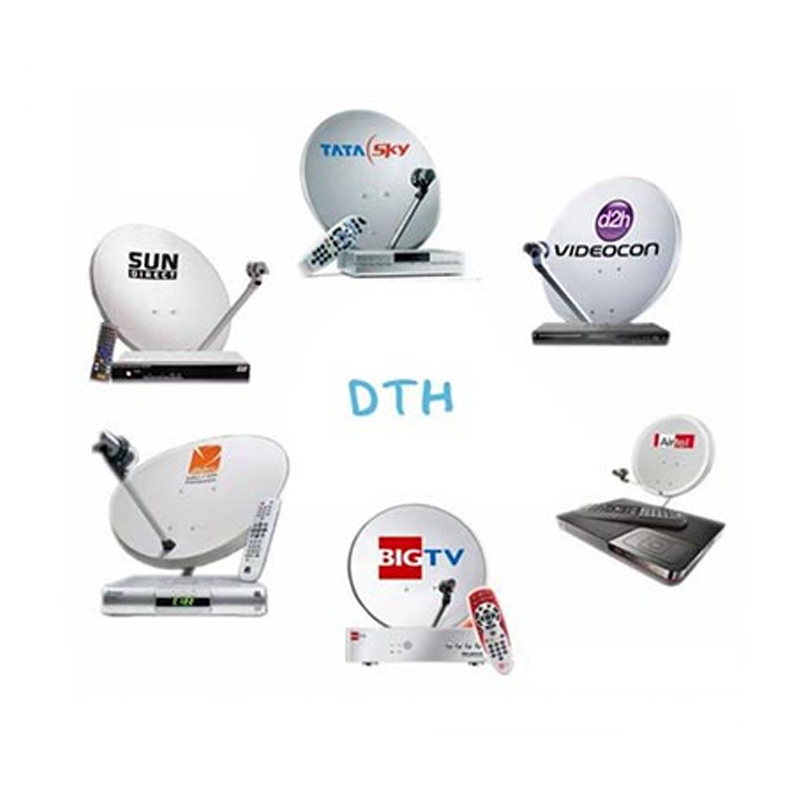
    Take the example of DTH. When it started the companies were asking for Rs 5,000 per dish, but we are now giving our DTH, DD Direct Plus at Rs 1,200. So this depends on two things, content and demand.

    Who are you looking to as technical collaborators?

    You see, the US has HD radio, and Korea uses DMB but that’s mostly for TV. China uses DRM technology for external services. We have spoken with China about DRM .It has shown a keen interest and once the two countries collaborate, the prices of receivers would dramatically come down. China would have to collaborate to set up factories in India, because if we have to import, prices would be very high.

    What are the network plans?

    The digitalisation process would start with all the studios. It would be the Short Wave transmissions that would go digital first. Each state capital would have one Short Wave transmitter and there will be three transmission complexes with five transmitters per complex for national digital radio coverage. These complexes will be suitably located., Each complex will transmit five digital channels across the country, including regional language channels. This will mean that these channels will be accessible across the country. So, a Bengali in Mumbai would not have a problem if he wishes to hear All India Radio Kolkata.

    Being a public broadcaster, how do you think the private players would match your line of thinking?

    Interestingly, I think that introduction of new technology will always remain in the public domain, due to the sheer scale of operations and costs that private enterprise would find it difficult to match. This is a Plan expenditure with government support. Only after it is introduced in the country will public private participation happen. For example, the private players have invested a huge amount in Phase 1 and 2 of FM, which is in the analogue mode. AIR is proposing digital FM in the near future, using DRM+, or DAB or HD Radio technology. But forget replacing the existing transmitters, even initial investment will not be easy for the private entrepreneurs, unless the receivers for digital broadcasting become low cost and catch the imagination of the public.

  • News Corp, VeriSign close Jamba deal

    News Corp, VeriSign close Jamba deal

    MUMBAI: News Corporation and VeriSign have announced that a joint venture giving News Corp controlling interest in VeriSign’s wholly owned Jamba subsidiary will finalise tomorrow, 31 January.

    The joint venture combines mobile ringtone and animation provider Jamba and Fox Mobile Entertainment assets to form a leading global provider of mobile entertainment. Lucy Hood, who was formerly president of Fox Mobile Entertainment, will become the company’s CEO effective immediately upon the close of the deal.

    It was in September that News Corp announced it would pay $188 million for a 51 per cent stake in VeriSign’s wholly-owned Jamba subsidiary and will combine it with Fox Mobile Entertainment assets. VeriSign, which bought Jamba for $ 270 million in 2004, operates intelligent infrastructure services that enable and protect interactions across voice and data networks anytime, from anywhere on multiple devices.

    The new company will serve 30 territories with a potential reach of more than a billion mobile subscribers. The new company intends to retain the Jamster brand in the US and the Jamba brand worldwide.

    Jamba was founded in 2000 and is considered a global leader in off-deck delivery of mobile entertainment.

    News Corp’s Fox Mobile Entertainment group got its start with American Idol text voting, which generated nearly 65 million text messages last season, up from 12,000 messages in the first season in 2001.

    Following the close of the transaction, Jamba will release its first products and offerings as a new entity, including:

    MySpace Mobile Store – In an alliance with News Corp’s wildly popular social networking site MySpace, Jamba will be MySpace’s global m-commerce partner.

    Also in the pipeline is The Simpsons Mobile – Jamba will exclusively offer mobile content from the series The Simpsons through a subscription package tied to exclusive content called the Yellow Plan.

    The joint venture combines mobile ringtone and animation provider Jamba and Fox Mobile Entertainment assets to form a leading global provider of mobile entertainment. Lucy Hood, who was formerly president of Fox Mobile Entertainment, will become the company’s CEO effective immediately upon the close of the deal.

    It was in September that News Corp announced it would pay $188 million for a 51 per cent stake in VeriSign’s wholly-owned Jamba subsidiary and will combine it with Fox Mobile Entertainment assets. VeriSign, which bought Jamba for $ 270 million in 2004, operates intelligent infrastructure services that enable and protect interactions across voice and data networks anytime, from anywhere on multiple devices.

    The new company will serve 30 territories with a potential reach of more than a billion mobile subscribers. The new company intends to retain the Jamster brand in the US and the Jamba brand worldwide.

    Jamba was founded in 2000 and is considered a global leader in off-deck delivery of mobile entertainment.

    News Corp’s Fox Mobile Entertainment group got its start with American Idol text voting, which generated nearly 65 million text messages last season, up from 12,000 messages in the first season in 2001.

    Following the close of the transaction, Jamba will release its first products and offerings as a new entity, including:

    MySpace Mobile Store – In an alliance with News Corp’s wildly popular social networking site MySpace, Jamba will be MySpace’s global m-commerce partner.

    Also in the pipeline is The Simpsons Mobile – Jamba will exclusively offer mobile content from the series The Simpsons through a subscription package tied to exclusive content called the Yellow Plan.

  • It’s raining diamonds on Big 92.7 FM

    It’s raining diamonds on Big 92.7 FM

    MUMBAI: Big 92.7 FM has launched a unique on-air contest Kiske Naam Inaam in Delhi and Mumbai. The contest enables listeners to win diamonds every hour by sending their names to Big FM.

    This is part of the programming strategy by the FM station to beef up its breakfast band 7 to 10 in Mumbai and 7 to 11 in Delhi. One registered name will be selected every hour and on answering questions will receive a diamond voucher from Orra, the sponsors of this contest.

    The show also has an in studio numerologist to explain the inner implications of the name and explain the fortune that a name can bring. Everyday three lucky winners can win diamonds in Delhi and 2 lucky winners in Mumbai.

    Big 92.7 FM national programming head Mr Manav Dhanda says, “The unique contest Kiske Naam Inaam will add fizz to the monotonous lives of millions of people who can just try their fortunes by sending their names to the breakfast show of Big 92.7 FM. Through this program we emphasize the commitment of Big 92.7 FM to offer Big entertainment.

    We are providing an opportunity to our valued listeners to win diamonds that everyone yearns for. We wish that each and every one of the participants win and help make the show a big success.”

  • Sun TV net jumps to Rs 598 million

    Sun TV net jumps to Rs 598 million

    MUMBAI: Kalanidhi Maran’s Sun TV Ltd has announced a net profit of Rs 597.7 million for the quarter ended December 2006 as compared to Rs 399 million shown during the corresponding quarter in 2005.

    Revenues for the quarter increased to Rs 1250.2 million from Rs 948.1 crore shown in the year-ago quarter.

    The Sun TV board also anounced an interim dividend of 30 per cent or Rs 3 per share.

  • Zee News net profit Rs 93 million

    Zee News net profit Rs 93 million

    MUMBAI: Zee News Limited (ZNL) today reported nine months revenues of Rs 1,665 million representing a 39 per cent growth over the corresponding period in the previous fiscal, compared on proforma numbers.

    Overall net profit stood at Rs 93 million.

    Subhash Chandra, chairman, stated, “Zee News Limited finished the nine months with a good performance, highlighted by strong advertising revenue growth of 54 per cent and robust operating profit growth of 179 per cent. We believe that Zee News Limited has the potential to grow into a media giant with a regional focus.”

    “We are extremely pleased to see the steady steps towards digitization of the Indian cable and satellite industry. CAS has been successfully implemented in the notified areas of Mumbai, Delhi and Kolkata. With more subscribers opting for digital services even in other parts of the country, it will give a big boost to our subscription revenues in the near future. All these have extremely positive and long term impact on our business given that most of our channels are pay.” Chandra added.

    Commenting on the restructuring exercise, Chandra continued, “The restructuring exercise for ZNL is now complete. ZNL is ready to exploit the vast emerging opportunities and will deliver long term shareholder value.”

  • TV18 net up 67% at Rs 193 million

    TV18 net up 67% at Rs 193 million

    MUMBAI: News network TV18 has announced a net profit at Rs 193.2 million, for the quarter ended December 2006 as compared to Rs 399 million shown during the corresponding quarter in 2005, an increase of 51 per cent YoY.

    TV18’s consolidated revenues were up 67 per cent (YoY) at Rs 647.46 million.

    Among the highlights of the quarter for TV18 were: scheme of arrangement completed; group company GBN’s IPO gets huge investor response, while internet revenues continued to post robust growth, rising over 120 per cent from the corresponding quarter in 2005.

    TV18 Consolidated Include revenues from CNBC-TV18, CNBC-Awaaz, moneycontrol.com, commoditiescontrol.com and various other Internet portals acquired by the company’s subsidiaries during the year. Current quarter’s revenues and costs are strictly not comparable with the same quarter in the previous year, since revenues and costs of Awaaz are being included from last quarter onwards, the company stated in a footnote.

  • Space Systems/Loral wins contract to build satellites for Echostar & Intelsat

    Space Systems/Loral wins contract to build satellites for Echostar & Intelsat

    MUMBAI: Space Systems/Loral (SS/L), a subsidiary of Loral Space and Communications and provider of high-power commercial satellites, has announced that it has been awarded a contract to manufacture a new direct broadcast satellite (DBS) for EchoStar Orbital Corporation II, a subsidiary of EchoStar Communications Corporation. EchoStar XIV will provide expanded services and flexibility for Dish Network’s more than 13 million direct-to-home (DTH) television subscribers.

    “Our long-term relationship with EchoStar is an endorsement of the performance, reliability and service that our company provides,” said Space Systems/Loral president John Celli. “With an ever-increasing amount of programming options, it is an exciting time for the DTH industry and Space Systems/Loral is well positioned to help EchoStar meet its growing demand for advanced services.”

    There are currently three SS/L-built satellites on orbit in the EchoStar fleet.

    “As the fastest-growing pay-TV provider in the nation and an innovator in advanced services such as HDTV, we need the power and capacity that a satellite from Space Systems/Loral can provide,” said EchoStar vice president of Space Programs Rohan Zaveri.

    In addition, the company has also recently announced that Intelsat Corporation has awarded SS/L a contract to manufacture Intelsat 14, a new, high-power C- and Ku-band fixed satellite service (FSS) satellite.

    “This contract underscores our long-standing relationship with Intelsat,” said Celli. “This new project provides SS/L the opportunity to demonstrate our success in combining heritage, space-proven satellite technology with new innovation. We are pleased to be awarded the contract for this important new member of Intelsat’s global fleet.”

    Intelsat 14, to be located at 45 degrees West longitude, will be the 44th Space Systems/Loral satellite built over the past four decades for Intelsat, the world’s largest fixed satellite services operator. The satellite will carry 40 C-band and 22 Ku-band transponders across four different beams, covering the Americas, Europe and Africa, informs an official release.

    Intelsat 14 will have a design life of 15 years and will replace the PAS-1R satellite when the new satellite is delivered in 2009. Intelsat 14 is the first satellite awarded to SS/L in 2007. The company received seven satellite awards in 2006 from a wide variety of customers, including FSS operators, direct-to-home and satellite radio service providers.

  • Deferred live on DD: Nimbus to file reply 9 February

    Deferred live on DD: Nimbus to file reply 9 February

    NEW DELHI: The Delhi High Court today issued notice to Nimbus Communications on a petition by Prasar Bharati challenging the order of the single bench last week permitting telecast of the ongoing one-day cricket series with West Indies with a seven-minute deferred telecast.

    A Division Bench of the High Court headed by Chief Justice MK Sharma asked Nimbus, who own Neo Sports channel, to file their reply to the notice by 9 February.
    The petition by Prasar Bharati has contended that the order of the single judge is violative of the principle of equitable justice as it treats viewers of satellite TV differently from those who receive signals terrestrially.

    Earlier on 23 January, Justice SK Kaul had permitted Doordarshan to telecast the matches with a seven-minute deferred telecast. He had, however, permitted All India Radio to broadcast the commentary live.
    The same court had a day later asked Nimbus to deposit Rs 55 million within a week, even as it gave the marketing rights to the former because it had said it could raise almost five times more than competing public broadcaster Prasar Bharati.

    Meanwhile, the rights to market events on AIR’s 69 channels lies with Prasar Bharati, and the court will decide on the revenue sharing ratio on 10 February, when the rest of the contentious issues would also be taken up.

    The court, however, held that though Prasar Bharati could stream the matches thorough its DTH platform, it would not allow any private DTH operator to access that and show the matches.

  • MTV US using search for a video game concept to spread awareness of Aids menace

    MTV US using search for a video game concept to spread awareness of Aids menace

    MUMBAI: mtvU, which is US broadcaster MTV’s college network and the Kaiser Family Foundation have announced the “Change the Course of HIV Challenge.

    This is a competition offering college students digital tools to reduce the spread of HIV/Aids among young people in the US. The challenge asks gamers, activists or any student with a great idea to propose a viral, Web-based video game concept to help raise awareness about HIV/Aids among 15-24 year olds in the US and to promote personal action in response to the epidemic.

    The winning individual or team will work with mtvU and the Kaiser Family Foundation — which are committing $75,000 to the development and marketing of the game — to see their idea realised. mtvU GM Stephen Friedman, says, “No undergrad in school today has known a world without HIV/Aids and a new young person someplace in the world is infected every 15 seconds GM. Through this challenge, we hope to inspire college students to use the power of online gaming to engage their peers, re-awaken them to the magnitude of this deadly virus and effect prevention.”

    Kaiser Family Foundation VP and director, entertainment media partnerships Tina Hoff says, “The competition is designed to help us reach young people in a different and engaging way to help inform them about HIV/Aids and spur action. As HIV remains the great public health challenge of this generation, it’s essential to find new and creative ways to engage and inform young people about the epidemic.”

    The two parties are looking for innovative, interactive concepts for video games that will spread rapidly online. Proposed projects should raise awareness about HIV/Aids among young people in the US, identify ways to stop its spread, and address the silence, stigma and discrimination surrounding the disease.

  • BBC World Service using Wegener to make the transition to a DVB based distribution platform

    BBC World Service using Wegener to make the transition to a DVB based distribution platform

    MUMBAI: Wegener which provides television, audio and data distribution networks worldwide has announced BBC World Service has completed the first phase of a multi-year, multi-phase project for the global distribution of radio and TV broadcasts using its equipment.

    The project involves BBC World Service transitioning to a DVB based distribution platform and the first phase of the transition is live transmissions to affiliates in Europe and the Middle East.

    BBC World Service head of transmission and distribution Nigel Fry says, “We have successfully integrated Wegener’s Compel Network Control system with our existing traffic system to manage distribution schedules and satellite receiver groupings. Operations here at the uplink and at our affiliate stations have been working well and we are very pleased with the first phase of our rollout and Wegener’s involvement. We look forward to continuing to work closely with Wegener throughout the remaining phases of the project.”

    Wegener president and COO Ned Mountain says, “Our job as a dedicated technology partner is to enable the BBC World
    Service to visualize and capitalize on additional opportunities inherent in a deployed Wegener network solution. With each phase of this global rollout Wegener is committed to providing exceptional integration and customer support.”