Tag: TV

  • Nextgen TV powered by ATSC 3.0 to be the focus for CES 2022

    Nextgen TV powered by ATSC 3.0 to be the focus for CES 2022

    Mumbai: The Consumer Electronics Show (CES) is all set to open in Las Vegas on 5 January with ATSC again taking exhibit space to showcase the expansion of next-generation TV by broadcasters and the growing list of consumer technology companies who are supporting the effort with integrated ATSC 3.0 receivers.
     
    With the recent expansion of Nextgen TV service in Los Angeles, CA and Washington DC, the next-generation broadcasting now reaches nearly half of all American viewers, it said on Monday. Stations in 46 US markets now offer Nextgen TV powered by ATSC 3.0, and market-by-market service launches are expected to continue throughout 2022.

    “With South Korea in its sixth year of ATSC 3.0 services, Jamaica launching commercial services in 2022 and other countries also considering the ATSC 3.0 broadcasting standard, next year is promising to carry forward the tremendous momentum of 2021,” said ATSC President Madeleine Noland.  “We’re excited to carry that message to CES in Las Vegas, as the consumer technology industry gathers to mark new innovations for the coming year.”

    Over 2200 exhibitors are confirmed to exhibit in person at CES 2022, which is set to begin on 5 January. According to organisers, in the last two weeks, 143 additional companies have signed up to exhibit in person. The event will also close one day early on January 7 in view of the current health protocols.

  • GUEST COLUMN: One accurate measurement is worth a thousand expert opinions

    GUEST COLUMN: One accurate measurement is worth a thousand expert opinions

    MUMBAI: Management guru Peter Drucker once said, “Because its purpose is to create a customer, the business enterprise has two — and only these two – basic functions: marketing and innovation.”

    Marketing is more important today than ever before as it leads to brand creation, which is the growth driver of the business. A brand is the biggest moat and one of the most powerful intangible assets a business has. Today around 11 per cent of a company’s revenue is spent on marketing. The second most important quote of Peter Drucker was, “If you can’t measure it, you can’t improve it.” And, how true is this even today in this age of data overload.

    Around 70 per cent of marketing spends are on media. Advertisers have never been under more pressure to prove ROI. TV has been leading and digital has been growing over the years. Together they contribute to around 80 per cent of spending. Measurement of both remains important, but it’s critical to focus on the right metrics which can drive action.

    TV viewership has undergone changes over the years, especially with digitisation, NTO & OTT. The pandemic has led to increasing the overall TV viewership with rural growing faster. If one has to look at genre level, then News, FTA & Regional has been on a continuous growth & Niche has been facing challenges. The good part about TV is that it has an industry-accepted third-party measurement system which drives most of the decisions on planning and investment. However, the industry needs to sort the recent ambiguity on news measurement.

    The consumer looks at TV and digital as a continuum. The majority of OTT content is TV shows, acting as catch-up TV. Growth of connected TV has been fast, though on a smaller base and with NTO 2.0 closer, it’s an indication that TV might keep tilting the balance towards rural & OTT will emerge as new Urban TV. The question is “When”? The audience being the key, can TV take a step further towards digital with improving targeting capabilities at a geo level as well as consumer interest and affinity?

    Digital has been growing and the launch of 4G and Jio has accelerated the growth. Specific measurement is possible at the customer level due to the availability of large data sets; however, digital comes with the challenge of a common currency and a heavy reliance on self-claimed platform level data.

    Platforms do not talk to each other leading to higher inefficiencies in planning. Over the last 18 months, digital spending has been moving to lower-funnel actions driving purchase and conversion. Evolved businesses do understand the need to balance the spending across the funnel (TOF) to get more efficiency on performance marketing without compromising on brand building.

    One of the major changes over the last few years is the advent of the creator economy. Scale is a challenge here and the industry needs to enable this. There is a need to move beyond views and likes. Coupon codes and affiliate links are solving the attribution question. However, the focus should also be to measure brand advocacy.

    With large data sets and extremely sharper targeting capabilities, digital also faces the wrath of privacy which is now being spoken at various industry forums and is at a cusp of change with regards to customer opt-in and usage of data.

    Hence TV & digital will have to come closer and there is a need for standardisation of the measurement mechanics, for improving the investment decisions. While the basic measures like monitoring reach, frequency, views, etc. are important to track, other outcomes remain critical like brand searches including marketplace, direct traffic, time spent, footfalls, etc. Tracking customer satisfaction, mind metrics, and NPS is also a key measure of brand health.

    While today’s consumer is multiscreen, measurement of media is operating in silos and the absence of single-source data adds to the woes. The industry has to take steps to arrive at a cross-media third-party measurement currency that helps measure effectiveness as well as efficiency of marketing spending.

    And finally, brand metrics across the marketing funnel, like awareness, consideration, and purchase intent will remain critical varying from business to business depending on customer engagement. The power of the brand will be determined by the ability to charge a price premium, loyalty, and advocacy, and it is imperative to measure these continuously.

    (Rahul K Shah is general manager, Motivator at GroupM. The views expressed in this column are personal and Indiantelevision.com may not subscribe to them.)

  • upGrad to offer online courses worth Rs 1.5 cr to job creators on ‘Shark Tank India’

    upGrad to offer online courses worth Rs 1.5 cr to job creators on ‘Shark Tank India’

    Mumbai: Homegrown higher edtech major upGrad announced on Monday that it will offer ‘online courses worth Rs 1.5 crore’ to the entrepreneurs pitching on Sony’s new reality show – ‘Shark Tank India’.

    The show which premiered on Monday night will have aspiring entrepreneurs from across the country pitch their business models to a panel of investors and persuade them to invest money in their idea. upGrad is also the presenting sponsor for the show.

    “At upGrad, we stand for job seekers as well as job creators. The entrepreneurs on ‘Shark Tank India’ today, can potentially create thousands of jobs in Bharat tomorrow. Assessing their business pitch and identifying possible lacunae, we are offering them need-based courses. This is our crusade to empower the entrepreneurial community – the job creators of tomorrow, to upscale their businesses,” said upGrad CEO – India Arjun Mohan.

    Throughout the first season of ‘Shark Tank India’, the edtech major will be awarding programs on a need-gap basis, across domains including Product Management, Masters of Business Administration, Supply Chain Management, Data Science, Digital Marketing, Business Analytics, and Operations & Finance to the ‘pitchers’.

    According to upGrad, the Indian chapter of the ‘Shark Tank’ serves as the perfect platform for the it to showcase to its audience the significance of upskilling and lifelong learning. “With an audience mostly comprising working professionals seeking to positively pivot their careers or nurturing their entrepreneurial zeal, this association will go a long way in improving upGrad’s deep India penetration plans and building an ecosystem of a skilled workforce,” the brand said in a statement,

  • TV Brand Fest 2021: Marketers relook at TV ad spends in times of disruption

    TV Brand Fest 2021: Marketers relook at TV ad spends in times of disruption

    Mumbai: The media industry and the economy saw an unprecedented level of disruption post-lockdown phase. As marketers went back to the drawing board to scrutinise their media spend, TV advertising moved from strength to strength commanding the highest share of advertising spends.

    “Television will continue to command the majority share of ad-spends in the next five to seven years,” asserted ITC head of media Jaikishin Chhaproo, as he began the discussion at the ‘TV Brand Fest 2021’ – a five-day event being organised by Indiantelevision.com, and co-powered by Star India. Day one of the event saw marketers and prominent TV advertisers discuss ‘The power of television in times of disruption’ and ways of ‘Using TV + digital strategy’.

    Maruti Suzuki India executive director – marketing and sales Shashank Srivastava noted that out of the Rs 700 crore spent on advertising, the brand spent 34 per cent on TV and 27 per cent on digital. “In terms of building brand imagery, especially in the auto category, there’s no substitute for TV,” he noted.

    Most industries were impacted by the pandemic. However, the edtech sector was one of the few that saw an increase in demand during the lockdown. Byju’s head of marketing Atit Mehta observed that this was an important moment for the edtech industry to build top of the funnel awareness. “One of the categories that increased their advertising spends during lockdown was edtech,” he said.

    The fast-moving-consumer-goods (FMCG) category remains the largest advertiser on TV. Despite the impact of the pandemic on the bottom line of most consumer goods companies, this category remained visible on TV. “FMCG cannot do without TV because you need the reach, frequency and eyeballs,” said ITC’s Chhaproo.

    “A significant number of categories operate around the magic price point of Rs 10. Due to the impact of the pandemic on the supply chain, continuing to offer this price point to consumers became a challenge”, said Chhaproo. “We had to constantly communicate to consumers to drive them to our products.”

    The category which usually invests on general entertainment channels, shifted media spends on other genres on TV. “We shifted our spends on TV to the news genre because consumption had gone up significantly,” remarked Dabur head of media Rajiv Dubey.

    Covid was a timeout for the entire world and when the normal choices were unavailable to consumers they began experimenting with different modes of consumption. When fresh content returned to GECs last year, Dubey observed that there was a significant consolidation of viewership in the eight regional markets that Dabur looked at including South (Karnataka, Andhra Pradesh/Telangana, Tamil Nadu and Kerala), West Bengal, Maharashtra, Orissa and Bihar.

    “The viewership has been on the upswing in these regional markets with consolidation of viewership in fewer programs and channels,” said Dubey. “We’ve seen that if you speak to a consumer in Maharashtra, in Marathi, using a Star of his choice, it works better.”

    There are 40-50 million homes that watch only free-to-air channels on Prasar Bharati’s free DTH platform DD Free Dish, Dubey said. “The FTA channels work like magic if you want to advertise products with smaller price points. Unfortunately, the major FTA channels only cater to Hindi-speaking audiences and no other language audiences.”

    In terms of consumer behaviour, there is a key overlap in terms of audiences on TV and digital. Audiences are watching both these media at different points in time. For Policybazaar.com’s vice president and head of brand marketing Samir Sethi it became important to map these audiences to optimise ad spends.

    He said, “The attention is now divided between a TV and mobile phone. Earlier, people watched TV undivided but now they’re also multitasking on a mobile phone. We’ve seen that there are times when people are influenced enough by your communication on TV that they respond by checking out your website or downloading your app on mobile.”

    A lot of digital and direct-to-consumer brands have understood and leveraged this behaviour. When it comes to achieving their growth targets, “all the major D2C brands have come on our platform (TV) to reach audiences at scale,” remarked Disney and Star India head of sales for infotainment, kids and regional cluster Dev Shenoy.

    In the last 18 months, ad spends have inevitably shifted to digital media platforms. For example, with retail spaces closed, certain category spends have completely moved to e-commerce. Maruti Suzuki’s Srivastava said, “At the top end of the funnel there is no substitute for TV. Digital becomes more important at the lower end. In the consideration stage of the brand, there’s an overlap.”

  • IN10 Media’s Epic readies for brand makeover starting 16 December

    IN10 Media’s Epic readies for brand makeover starting 16 December

    Mumbai: IN10 Media Network’s premier infotainment channel Epic is all set to undergo a brand makeover and offer a slate of new programming starting 16 December. The new brand positioning will carry the vision of ‘Soch Se Aage’ – highlighting the channel’s vision to forge a ‘future of infotainment’.

    According to the media network, this will add another dimension to its offerings, and help evolve the channel in keeping with the times.

    “EPIC is the first Indian platform to exclusively showcase India-centric content in Hindi, and always proudly wear the tag of being India Ka Apna Infotainment,” said IN10 Media Network MD Aditya Pittie. “The media universe is poised on the edge of transforming into a metaverse. ‘Glocal’ is no longer just a textbook phrase for the future, but the very essence of the modern audience. It is this ‘more’ that is at the heart of Epic’s new brand philosophy and will be the cornerstone of showcasing content that is ‘Soch Se Aage’ – beyond the known universe of knowledge, ideas, and stories; into the metaverse of an exciting future that continues to celebrate India.”

    The channel will launch new programming while recreating the old magic of its iconic shows in a reimagined presentation.

    Premiering Soon

    Commemorating Vijay Diwas, the first roll-out in the line-up of fresh content is Lakshya 1971 –‘Vayusena Ke Veer Yoddha’, that recreates the events of independent India’s most comprehensive military victory through the eyes in the sky with never-seen-before visuals and the story of the contribution of the Air Force to the war efforts. The show is anchored by Harman Singha.

    It will be followed by an ode to one of India’s oldest organisations – a four part docu- series on the Indian Postal service. India Post – ‘Dhaage Jo Desh Jode’ will recount the story of the largest postal network in the world by diving backstage and experiencing the ins and outs of its workings with the people who take things from one end of the country, making them appear at another end – almost magically. Narrated by Akul Tripathi, it tells the trials and triumphs of an institution and legacy that helped build a nation.

    ‘Jugaad Mania’ hosted by Chandan K Anand, will bring alive stories of ordinary people creating extraordinary innovations. Thinking not just out of the box but with a vision beyond their times, with a creativity that is intrinsic to Indian-ness; they are paving the way for a future by taking small steps towards viably solving larger problems with limited resources.

    ‘Homecoming- A Nation’s Fight for Its People’ will highlight the efforts of the people and the government, as they face and overcome unprecedented challenges, and implement ambitious solutions as they unite as one nation in bringing back all the stranded Indians during the Covid-19 lockdown.

    The channel will also continue some of Epic’s popular shows, beginning with the third season of ‘Raja Rasoi Aur Anya Kahaaniyaan’, that airs weekly from 17 December, followed by the third season of ‘Lost Recipes and Regiment Diaries’ in the ensuing months.

    Also in the works is a roadmap to bring to Indian screens international projects that resonate with the new brand philosophy, announced the channel on Monday.

    Digital Originals

    In sync with the broadcast originals, are a handful of digital first offerings that pack a punch of infotainment while driving forward the new philosophy.

    ‘Epic Khoj’ endeavors to trace the roots of Indian communities while ‘What’s in the Name’ delves into the stories and myths behind how various cities, rivers, historic places, and much more got their names. ‘Short Mid-Wicket Tales’ is a treasure trove of unlocking cricket-related stories and trivia.

    The content will be available on the network’s super-app, Epic On, for audiences across the globe.

  • India is BBC’s largest market for global audiences: GAM report

    India is BBC’s largest market for global audiences: GAM report

    Mumbai: India continues to be the biggest market among the BBC’s international audiences, with a weekly audience of 72 million adults, said the British broadcaster in its latest annual Global Audience Measure (GAM) report.

    This includes BBC News’ Indian languages, BBC.com and BBC Studios’ international channels, and is an increase of nine million from last year (63m in 2020). The GAM report records the total weekly number of adults accessing the BBC around the world.

    For 2020/21, the BBC achieved record figures globally with an average audience of 489 million adults every week, an increase of over 20 million from the previous year. This brings the BBC’s global audience close to the 500 million people target for 2022, it said in its report.

    According to the report, BBC’s international news services also reached record levels with 456 million adults using them each week (an increase of 18m). This includes audiences for World Service languages, World Service English, World News TV, BBC.com and BBC Media Action.

    BBC director-general Tim Davie said, the organisation is well on target to hit half a billion people by its centenary next year. “The fact that our audience has more than doubled in the last decade shows how trusted and increasingly valued BBC services are right around the world,” he said.

    According to the report, the languages division drove the largest share of total BBC growth, up 20m.  The language services now reach 313 million adults weekly. BBC News Hindi attracted an additional four million people. Both BBC News Gujarati and BBC News Punjabi service recorded a growth of more than 75 per cent, said the British broadcaster.

    BBC Indian Languages head Rupa Jha said, BBC has continued to reach a wider audience in India. “This growth comes from the impartial, accurate and courageous journalism that is helping audiences better analyse and understand current events in a growing era of polarisation and global disinformation,” she added.

    BBC Studios’ international channels reached 65 million adults, an increase of 16 million.

  • GUEST COLUMN: The future of Fantasy Sports Market in India

    GUEST COLUMN: The future of Fantasy Sports Market in India

    Mumbai: India has been a sports-loving nation. With Cricket, Football, and Kabaddi as the most sought-after sports, we’ve got thousands across the country who’d swear on their love for a good game. This has been one of the reasons for the emergence of fantasy sports in India. It gives the sports enthusiasts a chance to draft their teams with the best of players.

    Going to a sports match or sitting glued to the TV is something that every sports enthusiast in the country has done. Moreover, every fan has a set of opinions or expertise in the game. That’s where Fantasy Sports steps in. It gives the users the excitement of real-time action, a first-hand thrill of participating in future tournaments, and cash rewards if they win.

    With the increasing popularity of fantasy gaming leagues and frequent contests, fantasy sports enthusiasts are growing by the day. The number of fans capitalising on their sports knowledge has gone up 25X in the last ten years, and more potential players are waiting to join the trend.

    Along with a massive craze for sports, digitalisation is another factor that resulted in the emergence of fantasy sports platforms. More tech-savvy millennials in India are participating in fantasy sports tournaments. In fact, the past decade has witnessed a growth of around 700 per cent in the fantasy sports market.

    The online fantasy gaming platforms have allowed a massive chunk of sports aficionados to use their understanding of the game and play their role in online fantasy sports events. While the Cricket-frenzy in the Indian audience is well known, these platforms allow the users to explore other segments. With the introduction of new-age strategies in Fantasy Cricket, most platforms have seen a massive engagement of enthusiasts, with them becoming a part of the Indian T20 League and other tournaments. These platforms have started catering to a large audience, and are now expanding their offerings to league sports, even for Football, Kabaddi, and Basketball. Establishing a link between technology and the sports ecosystem, users can now be a part of multiple sporting events. The shift has been received well by sports enthusiasts increasing engagement in real-time sports that need attention.

    Currently, over 20 million people play fantasy games in India, and the number is estimated to reach 150 million by 2022. With so many people turning to fantasy sports, the market segment is expected to accelerate in the coming years. One of the reasons for the massive participation is the user-friendly fantasy gaming applications and increased internet penetration across the country. Besides gaining traction amongst the community keen on sports, the sector has seen large revenue growths too. In 2020, the industry generated a revenue of $3.4 million. In fact, the fantasy sports segment is estimated to reach $ 3.7 billion by the year 2024.

    With the potential of growth, fantasy sports platforms in India follow specific guidelines and principles as a part of the ‘game of skill’ category. It involves strategy, understanding, expertise, and knowledge by the participants. As a rapidly growing tech-driven industry, the market segment attracts a substantial number of investors. A report by NITI Aayog approximates that the fantasy sports industry has the potential to attract FDI of more than Rs 10,000 crore over the next few years.

    The sports ecosystem has seen a massive shift with the ongoing digitisation. The increase in the use of smartphones has enabled most sports enthusiasts to enjoy the thrill and excitement of sporting tournaments with fantasy sports. While increasing the knowledge of multiple sporting events, fantasy gaming platforms have witnessed a hiked participation in fantasy sports leagues and contests related to Cricket, Football, and Kabaddi, to name a few.

    Besides this, with a massive population of sports enthusiasts, surging demand in fantasy sports, and ever-evolving advancements in technology, India is set to grow rapidly in the online fantasy sports segment.

    (Amit Purohit is the founder of Fantasy Akhada. The views expressed in the column are personal and Indiantelevision.com may not subscribe to them.)

  • GoQuest Media and Wowow strike a deal for ‘Traitor’

    GoQuest Media and Wowow strike a deal for ‘Traitor’

    Mumbai: Global independent content distributor GoQuest Media has struck a deal for the Estonian espionage drama ‘Traitor’.

    Japanese broadcaster Wowow has acquired the spy thriller for its LinearTV and On-Demand streaming service. The award-winning series is directed by Ergo Kuld, and produced by multi service provider Elisa Estonia and Estonian public broadcaster ERR. It is written by playwright and screenwriter Martin Algus, who was awarded the ‘Best Screenwriter Award’ at Estonian Film and Television Awards 2019.

    The thrilling series stars Tambet Tuisk, who was also won the ‘Best Actor Award’ for ‘Traitor’ at the Estonian Film and Television Awards 2020

    Inspired by recent spy scandals in Estonia, ‘Traitor’ is a thriller which begins in 2004 just before Estonia joined Nato and became a top target for Russian intelligence. Greed and the need for recognition leads new recruit Alfred Vint (Tambet Tuisk) to cooperate with Russian intelligence, leading to a thrilling cat-and-mouse game with determined young Estonian counter-intelligence officer Marko Arrak (Veiko Porkanen) as they navigate the challenges faced in their personal lives.

    Wowow acquisition manager Chinatsu Otsuki said, “We are very excited to close the first deal with GoQuest Media. ‘Traitor’ is a superb spy thriller, and the story is very twisted. Our viewers love to watch ‘rewarding good and punishing evil’. However, we all know that reality is a lot more different from what is portrayed in fictional drama. This Estonian spy drama is very realistic in a way that is inspired by true events”.

    ERR head of programs Marje Tõemäe said, “We are very happy that stories which are based on our history and connect with our viewers are also relevant for other audiences all over the world.”

    GoQuest Media managing director Vivek Lath said that he was delighted that ‘Traitor’ will make its debut in Asia, and he couldn’t have asked for a better launchpad than Wowow. “As Japanese audiences watch the unravelling of a brutal but charming government servant who will betray everyone, including his country, to amass power and wealth, we promise that this compelling spy scandal drama may leave them shaken, but they won’t stop watching,” he added.

  • &TV’s to premiere new mythological show ‘Baal Shiv’ on 23 Nov

    &TV’s to premiere new mythological show ‘Baal Shiv’ on 23 Nov

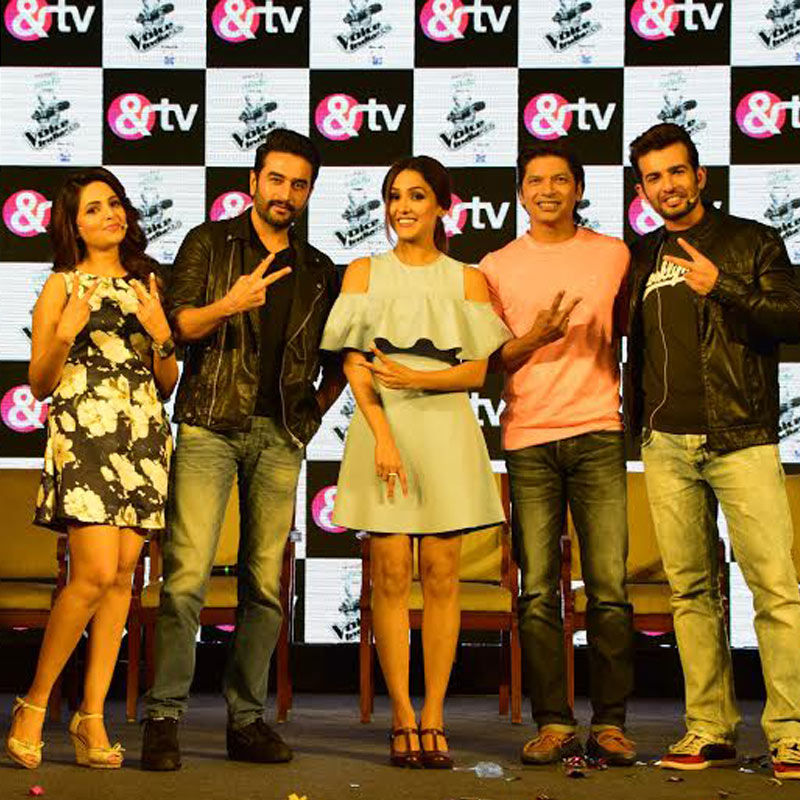
    Mumbai: Announced in August this year, &TV’s brand-new mythological “Baal Shiv” is all set to premiere on 23 November. The show depicting the eternal bond between the mother and son – Mahasati Anusuya and Baal Shiv – will air every Monday to Friday at 8 p.m.

    Produced by Zee Studios, “Baal Shiv” features Aan Tiwari as Baal Shiv, Mouli Ganguly as Mahasati Anusuya, Siddharth Arora as Mahadev, Shivya Pathania as Devi Parvati, Krrip Kapur Suri as Asur Andhak, Praneet Bhatt as Narad Muni, Danish Akhtar Saifi as Nandi, Dakssh Ajit Singh as Indra, Anjita Poonia as Indrani, Ravi Khanvilkar as Archarya Dandpani, Rajeev Bhardwaj as Rishi Atri, and Pallavi Pradhan as Maina Devi, amongst others.

    Lord Shiva had taken several avatars but never experienced childhood and mother’s love. Even though his marriage to Parvati helped him in finding a balance between his detached and householder self, his hermit nature often concerned Parvati as she felt that he lacked an understanding of domiciliary duties. To fulfil this wish, Lord Shiva took the Baal Roop (child form), becoming the dutiful son of Mahasati Anusuya, said the channel in a statement.

    Commenting on the show launch, &TV business head Vishnu Shankar said, “Indian mythology is a treasure trove of extraordinary tales and our fascination with them is limitless. Among these are the legends of Lord Shiva and his various avatars. However there is one ‘roop’ which is rarely spoken about and that is his ‘Baal Roop’. At &TV we are proud to present for the first time on Indian television this untold, unseen story through our show ‘Baal Shiv’. We invite all our viewers and Lord Shiva’s ardent devotees to watch and enjoy it wholeheartedly.”

  • Digital is now second important source of brand awareness after TV: Axis My India survey

    Digital is now second important source of brand awareness after TV: Axis My India survey

    Mumbai: In a reflection of the changing media consumption habit and the surge both in digital consumption & advertising, 38 per cent of consumers shared that they have majorly seen ads on digital platforms in the latest Consumer Sentiment Index (CSI) survey by Axis My India. In terms of brand advertisement placements, 44 per cent said they had seen it on television, while only 11 per cent and seven per cent of the audience believe that they have seen ads on print or outdoor respectively. This digital growth is led by the 26-35 age group audience, as per the survey.

    Consumer data intelligence company Axis My India released its latest findings of the India CSI, a monthly analysis of consumer perception on a wide range of issues. The sentiment analysis delves into five relevant sub-indices – overall household spending, spending on essential and non-essential items, spending on healthcare, media consumption habits, and mobility trends. The surveys were carried out via computer-aided telephonic interviews with a sample size of 10430 people. 62 per cent belonged from Rural India while 38 per cent belonged from urban counterparts.

    Reflecting the view of the majority, the survey for the month of October reveals that media consumption remains the same for 48 per cent of the families while the same has increased by 25 per cent. In addition, a combined 82 per cent said that they had seen more ads on TV and digital platforms over others.

    Overall household spending has increased for 63 per cent of families which reflects a seven per cent increase from the last month. This increase is highest in Northern India.

    The increase in spending on essentials like personal care & household items stands at 50 per cent reflecting a surge by five per cent. The net score which was +20 last month has increased to +27 this month. The growth in rural India is slightly higher as compared to urban markets.

    Spending on non-essential & discretionary products like AC, car, refrigerator has increased for 18 per cent of families. For 73 per cent spends on non-essential purchases remain the same which reflects an uptick of three per cent from last month. The non-essentials November net score, therefore, lies at +9. The trend on spends on discretionary products reflects a fine balance between caution and indulgence.

    With more exposure to outside activities, the importance of health bounced back quickly. Consumption of health-related items increased for 47 per cent of families as compared to 44 per cent last month. The health score which has a negative connotation i.e. the lesser the spends on health items the better the sentiments, has a net score value of -27.

    Consumption of media remains the same for a majority of 48 per cent of families and increased for 25 per cent of the family, while mobility net score reflects a constant improvement over the last four months.

    88 per cent of families said that they are going out the same or more on getaways/staycations /malls/restaurants, with travel bans being lifted and double vaccination providing easier movement opportunities. The overall mobility score is at -4 which is an improvement over last month which was at -5. This reflects slow but consistent progress in people’s sentiments for engaging in out of home activities

    Gauging views around the Diwali festivities, Axis My India, further discovered that 36 per cent of the consumers are planning to go beyond small-ticket purchases this festive season. While 24 per cent are looking to spend on household or personal items like White Goods (AC, TV, Washing Machine, Refrigerator, etc.), furniture, electronics, and jewellery; Nine per cent are looking to buy a four-wheeler or a two-wheeler. Further from a purely sentimental outlook, 59 per cent of the consumers reflect the view of a more hopeful and cheerful Diwali this year!

    The November net CSI score, calculated by percentage increase minus percentage decrease in sentiment, was recorded at +9, up from +7 last month and rising at a constant pace over the last three months, indicative of a positive shift in consumer consumption metrics.

    “With the festivities at its peak, one can easily witness consumer’s excitement in terms of loosening their purse strings for varied expenses and experiences. While Diwali has triggered spending on products of personal indulgence (like 2-wheeler/4-wheelers or jewellery) and household items, the upcoming festivities and enthusiastic consumer sentiment will further set the momentum for the last half of this year,” said Axis My India CMD Pradeep Gupta, commenting on the October report.

    “In addition, one can also witness a transition in terms of preferences amongst consumers’ like opting for EVs or cheering for privatisation of loss-making companies. The growth of digital as a medium of advertising overtaking print & just after TV reflects the change in media consumption habits which was triggered by the pandemic. Lastly, our survey shows that a vast majority of India is still not investing in this age of cryptocurrencies, it would be interesting to see how financial players beyond traditional banks can capture and convert their interests for investments using varied instruments,” he added.

    This month, Axis My India’s Sentiment Index also delved deeper to understand consumers’ views on varied issues of national interest. These include privatisation of loss-making public-sector companies like that of Air India, views on economic recovery by 2022, alternatives to rising fuel prices, investment preferences, sentiments around Diwali, and on brand advertisement placements.

    While the long-awaited sale of Air India to the Tata group reflected a hopeful future for the airline. Axis My India further gauged consumer’s sentiment on whether or not the government should privatise other loss-making public sector companies. 46 per cent are in agreement with privatisation of such companies while 36 per cent disagreed with this view.

    When asked if economy/livelihood and business is expected to bounce back by January 2022, 41 per cent believe that the same is possible and Southern India being more optimistic with 54 per cent agreeing to this. With rising fuel prices being a concern, 48 per cent are optimistic about shifting to electric vehicles wherein 33 per cent and 15 per cent said that they will consider buying a 2-wheeler and 4-wheeler respectively in this segment. The younger age group of 18-35 have a more likelihood, with 53 per cent in agreement to an EV shift.

    Sharing their views on financial planning, a majority of 23 per cent still prefers to park their money in savings accounts, while a combined 12 per cent prefers to invest in fixed deposits, shares/stock market, and mutual funds. Gold is still seen as a reliable investment option for four per cent of the consumers. 40 per cent of the audience still don’t invest and interestingly two per cent still save their money in post offices.