Tag: TV

  • Ratings: AXN maintains lead in English entertainment; Star World, Zee Café neck and neck

    Ratings: AXN maintains lead in English entertainment; Star World, Zee Café neck and neck

    MUMBAI: The English entertainment scene is witnessing a fair bit of action. The History Channel (THC) underwent a repositioning from infotainment to entertainment. AXN unfortunately got banned by the I&B Ministry last month on the dubious charge of showing inappropriate content.

    Tam data c&s 4+ all India from 15 July 2006 – 13 January 2007 shows that AXN has enjoyed a share of over 50 per cent over the past six months compared to Zee Café and Star World.

    Zee Café has, meanwhile, been steadily improving its share. From 15 July – 15 August its share among was 13 per cent. This has risen to 22 per cent for the period 1 January – 13 January 2007, with Star World slightly ahead at 24 per cent.

    However for the period 15-30 December 2006 Zee Café was ahead with a share of 22 per cent compared to Star World’s 17 per cent.

    For the metros, AXN’s share is 44 per cent, while Star World and Zee Café each have a share of 22 per cent. THC has a share of 11 per cent for the period 31 December 2006 – 13 January 2007. This marks a fall from 20 per cent for the period 15-30 December 2006 where it was on even terms with Star World and Zee Cafe. In fact for the most part, until 2007 THC has been on level terms with Star World and Zee Cafe in terms of channel share in the Metros.

    AXN’s Special Focus On Prime Time
    Talking about the performance over the past six months, AXN India business head Sunder Aaron says that a special focus was given to primetime. So the channel came out with the concept of Elite Weekdays and Elite Weekends. This is where its premium shows like CSI, 24 air. In the weekdays it is post 11 pm while on Saturday and Sunday it airs at noon. Aaron adds that what gives the channel further appeal are shows like Guinness, Ripley’s which go beyond the metro centric.

    On the local front he is satisfied at how The Amazing Race Asia fared in India. This was a pan Asian initiative and showed that regional fare with an Indian touch will work with viewers. The channel, Aaron says, has a few ideas on the table. One of this involves the second season of A Man’s World. It also appointed Sumona Roy as marketing manager. This is in line with the channel’s commitment to boost its operations in India.

    The problem still is the ban. Aaron declined to comment on when the channel would be back on air but said that care would be taken to ensure that content would not be offensive to anybody. The I&B Minister had issued the ban on the grounds of AXN showing ‘obscene programmes’. The ban will last till 15 March 2007.

    A Period Of Restructuring For Zee Café
    Zee Café business head Neil Chakravarti says that the programming lineup has gone through a significant restructuring over the past year. “Our endeavour was to become the only ‘true English GEC’ in the country. The aim is to offer the widest variety of entertainment across drama, comedy, thrillers, reality, soaps, fashion, lifestyle, music, movies and local English content.

    “As of February, the plans are largely in place. We have recently introduced America’s number one soap, The Young and the Restless which runs across weekdays at 8 pm. Our most exciting new product is Café Xtreme, which has action/ adventure/ thrills oriented programming, and will run every single day from 11 pm – midnight. In addition, we have introduced a movie band, Saturday Night Lights to showcase the best of Hollywood.”

    Zee Café last year launched among other shows the ninth season of the hospital drama ER, Bikini Destinations and the second season of Full House. No doubt the second show gave a bit of oomph to the channel. It also added some action to the mix with Without A Trace. Of course since both Zee Café and Star World focus on oven fresh shows from the US there is the occasional overlap. For instance both air Orange County, which recently came to an end in the US.

    Chakravarti adds that Zee Café recently started an initiative of running strip shows across the same time band during primetime on weekdays. The Tonight Show and E! News are telecast delayed live every day from the US, via satellite uplink. Young and Restless and Café Xtreme also run in stripped format, every weekday (and even weekends, in case of Xtreme)

    Star World Stays With Its Strategy
    Elaborating on Star World’s strategy, Star India GM content Harsh Rohatgi reiterates the efforts being made to bring the most popular and best shows from across the globe on the channel. The last six months saw the launch of various new shows and seasons on the channel.

    One of these was Rockstar Supernova. This was a global talent hunt show to find a new singer for a band formed by Motley Crew, Metallica and Guns & Roses. Then there was the comedy Two and Half Men with Charlie Sheen. Its core properties include Desperate Housewives, which came back for a second season as did the hospital soap Grey’s Anatomy.

    To give a boost in terms of variety there are award shows like the Golden Globes. It has also aired music specials like the Andrea Bocceli concert.

    In terms of where it lies in the English general entertainment space, Rohatgi points out that that as a genre English entertainment has a very niche audience base. The preference is more on the qualitative aspect of programming.

    “Star World’s programming speaks for itself and has successfully built a loyal audience base over the years that it continues to retain while adding on new audiences. As far as AXN goes we are poles apart in the programming structure. We classify ourselves as a family English entertainment channel with a mix of comedies/action series/dramas/ special events etc.

    “AXN is clearly a male skewed English entertainment channel. Hence comparing both the channels would not be fair.”

    English Entertainment Viewership Stagnating?
    Then there is the issue of viewership for English entertainment stagnating. Rohatgi counters by saying that there has been a marked increase in the spread of what an English entertainment viewer can watch.

    “Earlier English entertainment used to be demarcated quite clearly. But now infotainment/ Lifestyle channels/ English news channels are also wooing the same viewer. Hence we don’t think the genre is stagnating. On the contrary its expanding and the challenge is to keep up and expand the offerings with it.”

    Rohatgi says that for Star World constant research is being done to understand what are the needs, likes and dislikes of the viewers. “Koffee with Karan season two has been improved based on the feedback from viewers. We are also working on various local formats.”

    Star World Confident Of Success in Cas Environment
    Rohatgi is also confident about how the channel will fare in a Cas environment. “Our programming is the best, which is constantly revamped and updated as per the latest and best properties in the global scenario. Hence a viewer is assured of finding only the best fare on the channel. In a digital environment, channels in niche genres will be bought on both perception and the quality of programming.”

    Brands Cherry Picking Shows
    On the advertising front he says that there definitely has been a shift in the way the genre is being sold. Now the preference is to go along with properties that fit the brands rather than doing a broad based deal. Hence a lot of brands now look at handpicking shows they would want to associate with. Hence the sales teams have been pitching property specific deals to the clients.

    Chakravarti says that based on the feedback received Zee Café’s perception among the viewer universe as well as the media fraternity is quite positive at the moment.

    Cas, DTH Will Be The Final Levellers?
    A contention partially backed by OMS media director Madan Mohapatra, who says that while Zee Café’s perception has improved over the past year, it is still a little behind Star World. “However as Cas and DTH get entrenched, the perception gap will come down further. The push that Zee Café has given to its content over the past year has not gone unnoticed. The advantage that Star World has is that it made a sustained push earlier.” In Mohapatra’s opinion Star World benefits from high profile shows like Koffee with Karan.

    Says Mohapatra, “Besides the RODP route, clients often put money behind new shows on these channels like Orange County (the third season kicks off on Zee Cafe next month) if they feel that there is good traction and these shows will add new viewers to the channel due to marketing activities being done. However as a show gets older the enthusiasm of the client also goes down.”

    He notes that Zee Café compared to the other two players is more open to experimentation in terms of content and how it deals with clients. “They work with clients on customised and contextual programme breaks (ICI Pens did branded brake bumpers). This means that an ad appears depending on the mood of the show. I would draw a parallel to what happens with cricket where a pop up comes on depending on what has happened.”

    AXN, he says, is a little bit behind Star World perception wise because of its mostly male skew. It has gotten polarised as a result. The good thing for AXN is that it has followed a very clear path and has not deviated. While the effect of the ban has yet to be seen, it is likely that the lifestyle shows might take a hit. What is interesting is that Zee Cafe in the past year started airing some lifestyle shows like the earlier mentioned Bikini Destinations.

    Speaking about THC’s positioning, Mohapatra evers that that it is taking the right approach by broad basing its content.

    In conclusion one can say that the new platforms of DTH and Cas will help the channels segment those who watch them regularly from those who merely surf through them. Viewing habits will be more clear. It is up to the players to constantly finetune strategies to make sure that viewers will pay to watch them.


  • Most rapid DTH growth to come from Asia

    Most rapid DTH growth to come from Asia

    MUMBAI: Western Europe and North America continue to lead the digital satellite pay-TV market in subscribers and revenue.

    However the fastest growth over the next several years will come from other areas, especially Asia, reports market research firm In-Stat.

    Key satellite market trends include consolidation in established markets, interactivity, HD, launches, and bundling, the high-tech market research firm says.

    In-Stat analyst Michael Inouye says, “Most DTH platform launches in 2006 occurred in the less mature markets, including India and Eastern Europe. As DTH pay-TV platforms in many American and European countries have been in operation for a number of years, their subscriber growth has slowed. Total net new subscribers are growing each year, but only by single digit percentages.”

    Rsearch by In-Stat found the following:

    – Total DTH pay-TV subscribers are expected to reach over 117 million in 2010.

    – Global DTH-TV revenues will exceed $88 billion by 2010.

    – Consolidation occurred in 2006 with service providers like TPS and CanalSatellite and conditional access providers (Irdeto/ Cryptoworks).

  • FCC report suggests limiting of TV violence

    FCC report suggests limiting of TV violence

    MUMBAI: A new draft report from the US media watchdog the Federal Communications Commission (FCC) suggests the US government may be able to limit violence on TV in a way that does not violate the Constitution.

    The long-overdue report suggests that Congress could craft a law that would let the agency regulate violent programming much like it regulates sexual content and profanity — by barring it from being aired during hours when children may be watching, for example.

    An FCC official was quoted in media reports saying that violence could be treated similarly to broadcast indecency, with its airing prohibited during times when children might be watching.

    However the official the FCC hasn’t officially adopted the findings of the draft report. Congress could order cable and satellite TV providers to allow viewers to buy channels individually or in family-friendly packages to limit how much violence children see.
    The report had been requested by Congress. The report also suggests that cable and satellite TV could be subjected to an “a la carte” regime that would let viewers choose their channels.

    Citing studies, the draft says that there is evidence that violent programming can lead to “short-term aggressive behavior in children”.

  • MTV to shut down 3 ethnic channels targeting Asians

    MTV to shut down 3 ethnic channels targeting Asians

    MUMBAI: MTV World, a group of three customised MTV channels launched in 2005 and specifically designed to serve ethnic populations in the US, is being shut down.

    The three channels – MTV Desi, MTV Chi and MTV K – were being carried on satellite provider DirecTV and some other multichannel operators.

    Of the three, MTV Desi served audiences with roots in the Indian subcontinent living in the US, while MTV Chi and MTV K targeted ethnic Chinese and Koreans respectively

    The move to close down the three channels is part of an overall cost cutting exercise that has seen the loss of 250 jobs at the music network.

    Executives who have been sacked include MTV executive VP multiplatform programming Paul DeBenedittis, MTV head content strategy and scheduling Salli Frattini and MTV senior VP in charge of production Kathy Flynn.

    As far the closing of the three MTV channels is concerned the company says, “Unfortunately, the premium distribution model for MTV World proved more challenging than we anticipated in this competitive environment. As a result, MTV has decided to shut down its linear MTV World operation. However, we remain steadfast in superserving multicultural youth, and we are continuing to investigate ways to integrate the MTV Desi, Chi and K brands online and on our other screens.”

  • A busy year for newspapers around the world

    A busy year for newspapers around the world

    NEW DELHI: Though the entire world is being overtaken by a convergence wave riding on the wings of digital technology, those in the newspaper industry are trying their best to keep the print medium alive through various methods including tackling newer subjects or blending newer technologies.

    The World Association of Newspapers has slated a large number of events this year to keep alive the spirit of reading, which continues to grow despite the growth of television and the Internet.
    A World Newspaper Advertising Conference and Expo is being held on February 22 and 23 in Zurich (Switzerland) to examine what newspapers are doing to increase advertising revenues and market share. The meet is being hosted by Swiss Press.

    Early next month, there is a meet on ‘Digital Winners – Mobile Strategies for Newspapers’ in Oslo (Norway). Hosted by Telenor Broadcast and to be held on March 8 and 9, the meet will focus on how newspapers can follow the strategic lessons from mobile, Television and internet to make money from digital media. The conference will highlight what mobile solutions are available and why these have to be included in multi-media strategies. Subjects to be covered include ‘Mobile marketing; experiences and success stories’, ‘The digital user revolution’, and ‘Disruptive changes in the media industry’, ‘Adopting to the new business environment’.

    The Seventh World Young Reader Conference and Expo from March 25 to 28 in Washington will explore the full range of new strategies and tactics newspapers for reaching young readers who are accustomed to getting their news and information through non-traditional means. Hosted by the Newspaper Association of America Foundation, the meet will feature speakers from around the world. Studies will include those of cases of how newspapers learned to think young throughout the organisation without alienating the core readership both in print and via other multi-media channels, ‘Connecting a social network generation to our paper: how we did it’, ‘Myspace.com in print: how we did it’, and ‘Newspapers in Education (NIE) that works: How to get started or get even better in this core strategy for anyone who still wants to be doing print in 15 years’.

    The Sixtieth World Newspaper Congress, the 14th World Editors Forum, and Info Services Expo 2007, are being held in Cape Town from June 3 to 6. Hosted by the Newspaper Association of South Africa, the meet will discuss “Quality Journalism in the Digital Age” in nine sessions and eleven social events. Subjects include ‘The multi-newspaper newsroom is born!’ talking of the first newspapers that manage merged newsrooms, ‘Integrated newsrooms: what print does best and what online does best’ with examples of working mergers between print and online newsrooms, ‘Sharing best practices: five examples of newspaper cooperation’ where five prominent editors from around the world will present new ways of cooperative work among newsrooms and ‘Reuters Master Class on Web 2.0: is user generated content bringing anything new to news?’ by Reuters which is a partner of the 2007 Forum.

    Other events include the Third Middle East Publishing Conference is to be held on April 17 and 18 in Dubai on “The Middle East – The New Newspaper Revolution” to explore the rapid change occurring to newspapers in the region and around the world, and the World Digital Publishing Conference and Expo and World Editor and Marketeer Conference & Expo will be held from October 17 to 19 in Amsterdam (The Netherlands).

  • Blackout continues, Karnataka cable ops plan rally

    Blackout continues, Karnataka cable ops plan rally

    BANGALORE: The blackout of Tamil channels by the cable TV trade in Karnataka continues following the Cauvery water verdict.

    At the time of writing, a section of the cable operators was planning to voice their grievance to the authorities. The Karnataka State Cable Operators Association had planned a rally from Anil Kumble circle on MG road to the Governor’s residence on 20 February to hand over a memorandum against the verdict with the expectation of support from all the bodies involved in the cable TV distribution chain, including MSOs.

    A cable operator said that he expected participation from cable ops from the surrounding rural areas of Bangalore and from the interiors of Karnataka.

    Sources from the various associations representing cable operators and broadband service providers say that the black out of the Tamil cable channels was a voluntary decision, later reinforced by ‘requests from Kannada activists’ groups.

    A faction of the cable TV trade said that they were willing to restart the broadcast of Tamil channels saying that “it is the verdict that we are against, not the language, and we have given the longest support to the agitation against the verdict, but now we are willing to restart the Tamil feed.”

    Certain sources reveal that the trade is apparently becoming nervous about any backlash from vested parties and is considering asking for police protection should they go for the latter option. A meeting is expected to be held on 19 or 20 February to decide on the course of action.

    The Cauvery Tribunal verdict has already had its first victim in the form of union minister of state for information and broadcasting M H Ambareesh who put in his resignation from both the union ministry as well as Parliament in protest against it.

  • CCTV renews deal for the Oscars

    CCTV renews deal for the Oscars

    MUMBAI: Disney’s TV distribution arm Buena Vista International Television–Asia Pacific (BVITV-AP) has announced a TV licensing agreement with China’s movie channel, CCTV-6.

    This agreement builds on the company’s existing relationship with the broadcaster.

    In the first agreement, CCTV-6 has renewed its multi-year licensing agreement with BVITV-AP to broadcast live The 79th Annual Academy Awards including the 30 minute Red Carpet pre-Show on its movie channel. Since 2003, CCTV-6 has been the exclusive broadcaster in China for the live telecast of The Annual Academy Awards® and pre-Show. In India the Oscars will air on Star Movies on 26 February 2007.

    BVITV-AP senior VP, MD Steve Macallister says, “CCTV-6 has been a key business partner for many years and so we are delighted to be continuing our relationship with this new arrangement. As the leading dedicated movie channel in China, it’s only fitting that CCTV-6’s viewers continue to enjoy exclusive and premier access to the biggest movie event of the year, the Oscars.”

    Disney executive VP, MD for China and Hong Kong Stanley Cheung says, “China is a key strategic priority for the company and with these TV licensing agreements we are delivering our strategy to bring great family entertainment to China”.

    Later this year, the movie High School Musical will air on CCTV-6, in a separate multiple movie package deal concluded with BVITV-AP.

    The High School Musical US premiere in January 2006 broke Disney Channel ratings records, and, for its 16 airings, has now been seen by over 40 million unduplicated total viewers. The movie has already reached over 100 million total viewers on a global basis and delivered best-ever ratings for a Disney Channel Original Movie on Disney Channels in New Zealand, Australia, Southeast Asia and the UK.

    In the Asia Pacific region High School Musical has been licensed to six broadcasters including Seven Australia, The Movie Network Australia, TVNZ New Zealand, 8TV Malaysia, Fiji TV Fiji, and TVB Pearl Hong Kong. The made-for-TV movie made its international terrestrial TV debut in July 2006 in primetime on Seven Network Australia as the #1 movie in 2006 for Tweens 10-15 delivering a 17.9/67% rating/share and the #2 movie on Seven Network this year with a 9.5/40 per cent rating/share for the Under 55s. It premiered on TV2 New Zealand on 19th August, and was the number one programme of the night among People 5+.

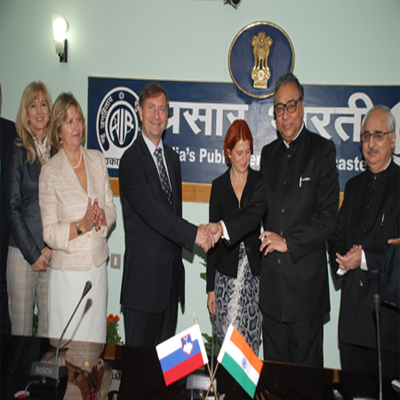
  • Prasar Bharati’s film ‘Video Game’ wins Tiger Award at Rotterdam Intl. Film Festival

    Prasar Bharati’s film ‘Video Game’ wins Tiger Award at Rotterdam Intl. Film Festival

    MUMBAI: The Public Service Broadcasting Trust (PSBT) / Prasar Bharati produced film Videogame, has bagged the Tiger Award at the Rotterdam International Film Festival.

    An official announcement quotes the jury’s citation for Vipin Vijay’s movie Videogame saying:

    “Video Game is yet another illustration that there’s more to the Cinema of India than can be contained with the received wisdom which seeks to encompass it by reference to a dualism opposing Satyajit Ray to Bollywood. Video Game shows a relentless, complex post-modern intelligence as it processes everything within its view, within its memory, within its wide range of cultural references.”

    “Its title is an index to this complexity, as it evokes not only digital game space as an aspect of real, but the pursuit of video within the understanding of a game, replete with strategies, movements, and counter-movements. A new kind of road movie, indeed.”
     

  • CAS REVIEW: MSOs claim adequate STB stocks, admit consumer order slowdown

    CAS REVIEW: MSOs claim adequate STB stocks, admit consumer order slowdown

     NEW DELHI: Multi-System Operators have told the sector regulator that there is no shortage of STBs anywhere in the country, but admit that there has been a slow-down of consumer orders, for which the MSOs themselves and broadcasters need to make various changes in their strategies.

    “None of the players, neither the cable operators, nor the broadcasters, not even us, have been reading the consumers’ minds, and we better take care of that from now,” a senior official of one MSO told indiantelevision.com today.

    Meanwhile, although these are “early days”, the trend that has emerged as a result of data analysis of customer choices as expressed in the forms submitted (for those who have opted for Cas in Delhi and Mumbai) “is bound to create major upsets in the market, especially in how the media buyers look at where to put their monies,” the official said.

    This was in the offing since the early days of Cas implementation, and the announcement could cause a mild to heavy temblor in the market.

    Meanwhile, cable operators here reported also that in some pockets people were not taking STBs because of regional preferences. In the predominantly Bengali neighbourhood of Chittaranjan Park, a fairly posh colony, many have stayed with the Bengali FTAs and decide to hang on to whatever rest they are getting in the FTA basic tier package (Rs 77, plus taxes).

    Likewise, in the Nepali dominated Vasant Gaon area and for people in RK Puram, where there is a predominance of South Indians from various states, it has been noted that since their most popular regional channels are FTAs, they have stayed away from STBs, Roop Sharma, president of Cable Operators Federation of India told this correspondent.

    None of the three MSOs approached in Delhi by this correspondent so far have divulged the clear analysis, saying that the Telecom Regulatory Authority of India (Trai) has asked for these and they can reveal the data only after reporting to it.

    But it is known by now that most of those who have taken the STBs have opted for a la carte and not packages or bouquets. “This clearly shows that the Indian customer knows its mind far better than we had anticipated,” sources admitted.

    CUSTOMERS IGNORED: In the soul searching process, media experts are now saying that the slowdown has been because of various reasons, primarily ignoring the customer.

    First, the DTH players promised to supply boxes and dishes but could not do so on time. In the first instance, they gave dishes but not the STBs. Then, they gave prepaid boxes, so when the month was over, the streaming was disconnected. Then, people started comparing that this never used to happen with the “cablewallahs”, who would wait till you paid and not disconnect.

    In fact, the “facelessness” of the DTH players, who operate through the BPOs, have been one reason for people in chunks getting put off by them, though it is a fact that DTH players have scored heavily in the bordering areas of Delhi proper by giving attractive prices to housing colonies.

    At the same time, MSOs admit that they too had failed to gear up to the search in the first 14 or 20 days of Cas implementation. “The packages that we gave did not meet the needs of the consumer,” said one MSO spokesperson.

    “We also did not make a clear statement on what package a cable home having two or more TV sets would get as discount, and no clear policy emerged in the beginning, and the packages were arbitrarily decided by us,” he added.

    Analysis and feedback from ground level fitters from cable operators show that due to this, most families set a budget for themselves as per their pockets, and decided to take channels they wanted, which is why they chose a la carte.

    This has caused major changes in the viewership patterns, and a lot of “myths” of TRP supremacy claimed by channels could come for a shake up, media experts aver.

    FENCESITTERS APLENTY: Data analysis shows that a lot of people are sitting on the fence, so far as fresh demand for STBs is concerned.

    As reported by indiantelevision.com earlier, MSOs say that there could be some kind of pace picking up with the World Cup cricket coming up, but they hold that much more than a global sporting event has to be looked into for the “second phase of Cas rollout” to be successful.

    MSOs have told broadcasters to tie-up with them to push for boxes. They have made several proposals so far on this with the major broadcasters.

    Though a recent seminar in Mumbai generally held that availability of STBs would be crucial for success of Cas and would rake in the moolah for all the players, reports emanating suggest that there is no shortage of boxes.

    All three MSOs, WWIL, Hathway as well as Incablenet have ample number of boxes, “which we have informed Trai about”.

    “We have told Trai that there is an urgent need for MSOs and broadcasters to tie up and create packages that are of substance to the consumers, which will be in their own best interest,” the official said.

    As of now, however, there is no such consensus emerging on a market that is there for the taking.

  • Pogo follows ‘Sabrina Down Under!’ on 18 February

    Pogo follows ‘Sabrina Down Under!’ on 18 February

    MUMBAI: Turner’s second offspring in India, Pogo is looking to rake in kids onto the channel this coming weekend with yet another feature film Sabrina Down Under! on 18 February at 2 pm.

    A tactic that the network often implements, last month Cartoon Network aired the second part of the animated Krishna series with Krishna Machan Chor on 26 January, which the network claims drew in hefty ratings.

    The up coming feature narrates the story of Sabrina and a fellow witch – Gwen, who travel to Australia’s Great Barrier Reef for a week long vacation.

    Instead, they find themselves in a situation to help protect a hidden mermaid colony whose habitat is threatened by ocean pollution, and by a local marine biologist, Dr. Julian Martin, determined to find the colony as his claim to fame. While in the process, Sabrina finds romance with Barnaby, a “merman” from mermaid colony, informs an official release.