Tag: TV

  • Pyramid Saimira, Moser Baer in deal for home video market

    Pyramid Saimira, Moser Baer in deal for home video market

    MUMBAI: Cinema chain operator Pyramid Saimira Theatre has entered into a strategic alliance with Moser Baer India for exploiting revenues from the home video market.

    Under the arrangement, Moser Baer’s range of home video titles will be available at all the theatres owned or managed by Pyramid Saimira. “The space cost will be taken care by us while Moser Baer will spend on furnishing the shops where the home video products will be sold. They will be able to reach out to more consumers through this retail chain,” says Pyramid Saimira Theatre managing director PS Saminathan.

    Pyramid Saimira will also allow its new films for Moser Baer to release in the home video format after a short window period. The plan is to release 100 films in South India across the country. Moser Baer will kick off by releasing Pyramid’s new Tamil film Mozhi (released on 23 February). “The window period will be drastically reduced and our films can be available on Moser Baer’s home video after one month of theatrical release. We believe we can get huge volumes as the DVDs are to be priced at Rs 34,” says Saminathan.

    Adds Moser Baer CEO, entertainment business, Harish Dayani, “This strategic tie up offers an excellent opportunity to increase our retail presence and availability. We are delighted that Pyramid Saimira Theatre is going to offer their new Tamil film content in home video format for the first time within a short period of releasing the film in the theatre.”

    The profit will be split equally between the two companies. This will include revenue generated from advertisement in VCDs and DVDs. The availability of DVDs at such low prices is aimed at killing the piracy market while also expanding the home video segment.

    Pyramid Saimira has also agreed to release films produced or distributed by Moser Baer in its theatres. Currently Pyramid has 255 screens in 225 locations.

    “Under the strategic alliance if we manage to generate volumes in the home video segment, we hope to add Rs 500 million to our bottomline every year without any increase in costs. While we take the content risk, they run the expenses for production of DVDs,” says Saminathan.

  • IP Video Test and Measurement market to witness high growth

    IP Video Test and Measurement market to witness high growth

    MUMBAI: From being a virtually non-existent market in 2003, the IP video test and measurement market saw significant growth in 2005.

    New analysis from Frost & Sullivan, World IP Video Test & Measurement Market, finds that this market earned revenues of $52.2 million in 2005 and is likely to reach $289 million in 2010.

    With telecom and cable TV companies aggressively offering triple play services, there is a rising trend among test equipment and solution vendors to offer IPTV test capability ‘within the same box’. Telecom companies are increasingly launching VoIP and offering bundled video, data and voice services to meet the intense competition from cable TV providers and the growing migration of customers to VoIP-based telephony and wireless networks.

    IPTV enables telecom companies to leverage their DSL access networks, and thereby offer their customer base an additional video service to supplement existing voice and data offerings. By adopting such measures, they are able to contain losses while retaining valuable customers.

    “With such intense competition among service providers, subscriber experience and quality of service become key differentiators, compelling them to roll-out monitoring systems and protocol analyzers at the same time as they launch their IPTV services,” remarks Frost & Sullivan Industry Manager Jessy Cavazos. “This factor is considered to be a strong driver, particularly for the network monitoring systems market segment, and is expected to have a very high impact on market revenues throughout the forecast period.”

    Tolerance levels in IP video services are minimal compared to VoIP services, in which the conversation can be continued even if a couple of packets are lost. Thus, it becomes highly essential to have effective monitoring and troubleshooting tools when networks are deployed in the present market scenario, increasing the demand for suitable test equipment.

    Again, the emphasis on quality is higher in the IP video and TV market than in the VoIP market. This poses a significant challenge to test equipment providers catering to this market. The capital costs of the test equipment used for IPTV and video are very high, running into billions of dollars. Since these costs eventually get passed on to the users, it is hardly surprising that they demand the highest quality possible to get maximum value from the service.

    The challenge for test equipment providers is to keep pace with the latest technologies in IP video and TV and to be able to develop suitable solutions to test them.

    “With end users looking at channel change time issues before roll-out and measuring channel change infrastructure in networks after deployment, this presents a significant opportunity for test vendors,” says Cavazos. “Frost & Sullivan believes that channel changing performance test to assess the functioning of one or more devices under test (DUT) or systems under test (SUT) in IPTV deployment is the biggest opportunity, from a customer target application perspective, in the near future.”

  • BBC Worldwide holding showcase for global buyers in the UK

    MUMBAI: BBC Worldwide’s trade event BBC Showcase is taking place in Brighton England till 1 March 2007. 560 buyers from all over the globe are in attendance. The annual event sees BBC Worldwide generate programme sales and broker international funding deals for co productions on behalf of the BBC, other UK networks and independent producers.

    Delegate numbers the BBC says have grown as buyers from traditional television networks are increasingly joined by a new generation of buyers looking to license content for digital media platforms such as mobile television, independent video on demand services and digital extensions to traditional television networks.

    The past year has seen BBC Worldwide secure content deals around the world with major digital media platforms across Europe, Asia Pacific and the Americas, including Vodafone, Orange, T-Online, Telstra, ONO, Netflix, Amazon US, Hanaromedia Korea and Telefonica. Combined with strong growth in traditional programme sales, these new markets for content are seeing BBC Worldwide’s Global TV Sales division well on target to make around £190million (US$370million) this financial year, up from last year’s £171million (US$333million).

    BBC Worldwide Global TV sales MD Mark Young, said, “We secure the best deal for our content and this involves a much wider number of viewing platforms in each ter-ritory than previously. Traditional television platforms remain a central part of our business, but there is a great deal of room to embrace new platforms alongside them. Viewing habits are changing and our business is changing with them.”

    In line with the increasing digitisation and convergence of its client base, BBC Worldwide is taking steps to future-proof its content and delivery capabilities. Already, over 1,000 hours of programming has been digitised and BBC Worldwide is now investing heavily in digitising all current and back catalogue in order to protect quality, improve delivery across a wider range of devices and move towards a tapeless business.

  • Rationalise excise duty, Vat on TV, STBs: Planning Commission


    NEW DELHI: Acknowledging that the major hurdle in digitization presently is the absence of digital receiver sets and the fact that about 45 per cent TV sets are Black and White, a sub-group of the Planning Commission has recommended rationalization of the total taxation level to 12 per cent.

    The sub-group on ‘Going Digital’ set up by the Planning Commission and headed by Rajeeva Ratna Shah, member secretary in the Planning Commission and a former CEO of Prasar Bharati, said this will mean the excise duty on digital TV set, set top boxes (STBs) and its inputs be rationalized to 8 per cent and there should be a state VAT of 4 per cent. This will give impetus to the indigenous STB industry, which would generate economic activity and employment in the country.


    The sub-group noted that STBs and the digital Conditional Access System (Cas) act as a catalyst for implementation of digitization. The Consumer Electronics and TV Manufacturing Association (Cetma) has indicated that the cost increase in case of a TV set, capable of receiving digital terrestrial signal in addition to analogue signal would be about Rs 1000 from the existing prices. For the existing analogue TV sets, which are expected to be around 120 million by year 2010, the consumers would need to have Digital Terrestrial Transmission STB to receive the signals. The cost of STB is presently about Rs 2250 and is decreasing every year by 7 to 8 per cent. 

    The industry would require a lead time of six months to meet the demand for the digital TV sets and radio receivers. Similarly, the industry would be in a position to provide STBs in about 16 to 20 weeks from the time the government decides to change over to digital broadcasting.


    “But for successful rollout, the government needs to firm up the transition path and announce timelines so that all the stake holders could put their acts together and make the transition as smooth and successful as possible. The success of DTT depends upon the availability of requisite consumer end equipment and introduction of STB coupled with Cas.”

    The sub-group added that India was a price sensitive market and one solution or product fits all cases is not commensurate with consumer thinking. Hence there may be need to introduce various models of STBs (having digital to analogue converter with addressability of channels with Cas to high-end models) with increasing value added features to meet the requirements of the consumers. The requisite standards need to be put in place for this. 

    Out of 61 million households cable connections all over India , 35 per cent are in rural areas. This service is easily available and affordable in the rural areas. This industry is geared up to meet the challenge of digital broadcasting, the sub-group noted. 

    At present, the signals from uplink station to satellite and from satellite to cable TV head-end are already digital. The signal from cable TV head-end to subscriber is both in digital and analog format. Most of the multi-service operators (MSOs) in the metros and big cities have already gone digital. Thus, only 7000 head-ends required to go digital.
    Furthermore, all franchisees are not affected by digitization as they only pass the signal (analog/digital) received from the head-end to the subscribers and do not process the signal. Digitization of subscribers end depends on introduction of digital TV in the market at affordable prices and immediate digitalization of cable TV head-end. 

    To further galvanize the rollout, all the content producers – Prasar Bharati as well as private operators – should provide agreed and identified channels in the digital/HDTV format to MSO/cable operators under the “Must Carry” clause. 

    Going digital encompasses digital broadcasting, telecom as well as other technologies for access and backbone networks which deploy digital systems. While some of the frequency bands used for broadcasting have exclusive allocations for ‘broadcasting’, most of the bands are shared with other services. 

    For example, the 800/ 900 MHz bands used for cellular services – GSM & CDMA, etc. are available for broadcasting also. The satellite based TV broadcasting is mostly in the frequency bands, which are shared with microwave systems. Hence, while evolving/ modifying the NFAP (National Frequency Allocation Plan), the relative national priorities of various spectrum based services have to be taken into account.

    Normally digital transmissions require larger bandwidth. However, with modern compression techniques, which are improving continuously, it is now possible to accommodate multiple channels in the RF bandwidth of a single existing (analogue) channel. Hence, on complete transition to digital systems in broadcasting, the spectrum requirements should reduce or alternatively, it would be possible to transmit larger number of channels in the bandwidth occupied by existing channels. 

    During the transition phase, existing analogue and new digital systems would need to be broadcast together, requiring larger spectrum bandwidth. The requirements can be assessed once the number of channels for simultaneous transmission is worked out. With digital broadcasting, it is possible to include data, Internet, etc. within the broadcasting channels. 

    During the migration from Analogue to Digital Radio, new frequency assignments have to be identified to facilitate smooth migration and for some time both the existing analogue transmissions as well as new digital transmissions would continue. Hence, there will be spectrum constraint during this transition phase. Also, the spectrum for digital migration may need to be identified for both Prasar Bharati as well as Private FM Broadcasters. 

    The sub-group, comprising 17 members, was set up by the Committee on Information, Communication and Entertainment (ICE) that has been examining the larger issue of convergence and advent of modern technology. Members include the secretaries in Information and Broadcasting and Department of Telecommunications, the Prasar Bharati CEO, the presidents of Cetma, Mait, Nasscom, and ISP Association of India, co-chairman of the Ficci entertainment committee Kunal Dasgupta, chairman of the CII entertainment committee, chairman of the Film & Television Producers Guild of India, president of the Cable TV Operators Association, Rajiv Mehrotra who is the managing trustee of the Public Service Broadcasting Trust, Virat Bhatia from AT&T Communications Services, Zee Telefilms President Abhijit Saxena, Sameer Rao who is vice-president in charge of strategy, planning & regulatory in Star India, and a representative of the Prime Minister’s Office.

  • Eating unhealthy – Blame it on television

    Eating unhealthy – Blame it on television

    MUMBAI: The American Journal of Clinical Nutrition published their findings on the link between unhealthy eating habits amongst children and television viewing.

    The research study states that watching television disrupts children’s’ normal response to food , that is, they will eat more while they’re sitting in front of the tube, whether or not they’re really hungry.

    “These data, combined with those from other studies, support recommendations to reduce television watching and restrict eating while watching television as part of a healthy lifestyle,” University at Buffalo Dr. Jennifer L. Temple concludes.

    Temple and her team looked at how television affected ‘habituation to food cues’.Simply stated it means that when a person consumes food repeatedly, he will eventually lose interest in it and his stomach will signal that it is full. ‘Non- food stimuli’ or watching television can disrupt this process. Children are distracted when they watch television and do not know when their hunger is satisfied.

    Given that kids tend to eat high-calorie foods when watching television, snacks in front of the tube have the potential to “profoundly” affect how many calories children consume, even if

  • Govt targets 20 million broadband subscribers by 2010

    Govt targets 20 million broadband subscribers by 2010

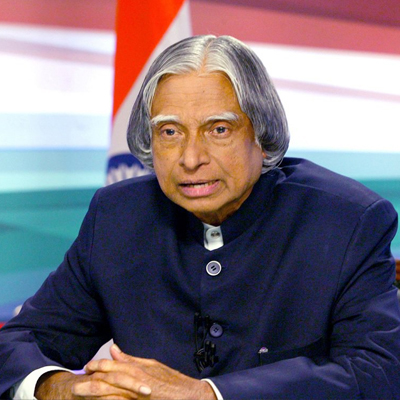
    NEW DELHI: Even as President A P J Abdul Kalam declared that the year 2007 will be the ‘Year of Broadband’, there are plans to increase to more than two-fold the broadband and internet users in the country over the next three years.

    In his address to the joint sitting of both Houses of Parliament on the opening day of the Budget session, Dr Kalam had said yesterday the government was committed to bridging the digital divide by providing broadband coverage throughout the country. ‘Our information technology sector continues to develop and remain globally competitive’.

    According to the Broadband Policy 2004, there were approximately six million internet and three million broadband subscribers in 2005, and this figure is estimated to rise to 18 million and nine million respectively this year. By the year 2010, India hopes to have 40 million internet and 20 million broadband subscribers.

    Plans are on the anvil to provide broadband services in 400 cities and service providers have plans to reach 1000 cities by the end of 2007. These cities include the 63 cities identified under the National Urban Renewal Mission. The real challenge is to connect the remote villages unconnected so far due to various reasons. One of the viable options for providing connectivity is through wireless mode.

    According to the Sub-Group on ‘Going Digital’ set up by the Planning Commission and headed by Rajeeva Ratna Shah, Member Secretary in the Planning Commission and a former Prasar Bharati CEO, introduction of broadband connectivity opens up new market for providing value added services which can be derived from the digitization.

    The Sub-Group noted that penetration of TV is much higher than PC in the industrialized countries, and provides interactive services including internet on TV and TV on internet. These services can potentially benefit especially the ‘information poor’ and thus reduce the information gap in the society, which is an important implication of the convergence.

    Internet on TV can be provided using Out Of Band (OOB) and In Band (IB) structures. In the IB structure the internet is transmitted alongside with the broadcasting signal. Here the characteristics of the broadcasting infrastructures will have a decisive role on the available services.

    It noted that TV on internet which is also known as WEB TV/Cyber TV will be the future of broadcasting. A precondition for the WEB TV to be able to replace digital TV is the transmission capacity at the end users site increases to such level that it can be possible to provide digital TV services. WEB TV needs to be co-evolved with digital TV and act as complementary for delivery of services.

    The Sub-group has accordingly drawn up a roadmap of digitalization through a a phased approach should be taken for going digital covering all the seven mega cities by 2011 in the first phase and the rest of the country by 2013.

    The Sub-Group comprising seventeen members was set up by the Committee on Information, Communication and Entertainment (ICE) that has been examining the larger issue of convergence and advent of modern technology. Members include the secretaries in Information and Broadcasting and Department of Telecommunications, the Prasar Bharati CEO, the Presidents of CETMA, MAIT, NASSCOM, and ISP Association of India, Co-chairman of the FICCI Entertainment Committee, Chairman of the CII Entertainment Committee, Chairman of the Film & Television Producers Guild of India, President of the Cable TV Operators Association, Mr Rajiv Mehrotra who is the Managing Trustee of the Public Service Broadcasting Trust, Mr Virat Bhatia from AT&T Communications Services, Zee Telefilms President Abhijit Saxena, Mr Sameer Rao who is Vice-President in charge of Strategy, Planning & Regulatory in STAR India, and a representative of the Prime Minister’s Office.

    It was also agreed that a group chaired by Mr B S Lalli, the CEO of Prasar Bharati who is also Chairman of the Indian Broadcasting Foundation, and some private broadcasters like Star, Zee, Sony, Eenadu etc. and their major MSOs will examine an eleven-stage process and firm up their sequencing and put the entire process on a “digital upgrade timeline”.

    The Sub-group has accepted a recommendation for an eleven-stage process for laying down the migration path for migration from analogue transmission to digital domain:

    i. Testing, publication and adoption of technical standard for digital terrestrial transmission.

    ii. Publication and adoption of national standards for digital cable television.

    iii. Prasar Bharati’s roll out of transmission conversion from analogue terrestrial to digital terrestrial both for radio (AIR) and Doordarshan (DD).

    iv. Introduction of addressability and conditional access system in cable and satellite TV environment.

    v. Road map and commencement of indigenous production of STBs containing features such as (a) digital analogue convertors for delivery of digital signal at subscribers’ end and (b) conditional access and addressability features.

    vi. Publication and adoption of national digital television standards for manufacture of digital receivers.

    vii. Commencement of indigenous production of digital receivers.

    viii. Commencement of digital terrestrial broadcast in selected cities by Prasar Bharati staring with Delhi by 2010 and covering all areas by 2013 in four steps.

    ix. Commencement of HDTV broadcast for Commonwealth Games 2010 by Prasar Bharati.

    x. Commencements of digital signal delivery at subscribers end in Cable and Satellite (C & S) homes.

    xi. Nationwide switch off of analogue broadcast both for terrestrial and C & S homes (2015).

  • Dishtv, Tata Sky plan schemes for World Cup

    Dishtv, Tata Sky plan schemes for World Cup

    MUMBAI: DTH service providers Dishtv and Tata Sky will use the upcoming cricket World Cup to entice their viewers and increase subscription numbers.

    Dishtv has come out with a World Cup For Free offer. It has come out with a special world cup promotional pack at Rs 3990, all inclusive with six months subscription free. This also includes dishtv’s sports active services free for the same six-month period. The offer is being introduced by the dishtv mascot who entices the viewer with his histrionics and invites them to this unique experience only on dishtv.

    Dishtv is positioning itself as offering active services that enable a better than stadium experience for the viewer. Besides digital picture quality and stereophonic sound, viewers will have value added controls.

    The matches can be viewed with multi-camera angles. Subscribers can watch a match through three different camera angles – the main feed, the square leg and the third which will be a mix of stump cam/high wide shot.

    Language Feed: The dish subscriber will have the opportunity to hear the commentary from a choice of five languages – English, Hindi, Tamil, Telugu and Bengali along with a live stadium ambient sound.

    Highlights: Match highlights, i.e. all wickets and key shots like – 4’s, 6’s will be available to the dishtv viewers at the press of a button whenever they want

    Statistics: The dishtv subscriber will have access to a stupendous Amount of cricketing data like team line ups, score cards, in-depth history of the players, their past records and so on again on their TV screens merely at the touch of a button.

    The firm says that subscribers will get the Sports Active services at no extra cost that would otherwise cost Rs. 25 per month.

    Dishtv CEO Arun Kumar Kapoor says, “Cricket is like religion in our country and the Cricket World Cup being the biggest opportunity to delight the consumers. With the advent
    of active services and new consumer offers available in the market, the subscribers have a win win situation. dishtv has always worked towards maximising its viewer’s delight and will continue to do so”.

    Commenting on the caricature launched by, dishtv to flag off the World Cup campaign, dishtv VP marketing Anjali Malhotra says, “The mascot lends a face to the brand that is warm, consumer friendly and trustworthy. Moreover he seems to simplify an otherwise perceived technology product apart from adding an element of fun to our communication as we are but, an entertainment provider to Indian homes. We are sure that the consumers will warm up to him.”

    As far as Tata Sky is concerned the company’s MD and CEO Vikram Kaushik says, “Tata Sky is offering free subscription for three months and has roped in actor Hrithik Roshan for its new marketing campaign.”

    He explains that as part of this campaign select viewers who have subscribed before 15 April will get to watch the World Cup final match with him. In adition the company is extending the free pricing policy to the second, third and fourth television set within a consumer’s household.

    “The new marketing campaign is a step to reach one-million subscriber base by the end of this year. We expect phenomenal subscription during the World Cup.”

  • Fox acquires ad tech firm to boost MySpace

    Fox acquires ad tech firm to boost MySpace

    MUMBAI: Fox Interactive Media (FIM) in the US has bought ad technology firm Strategic Data Corporation.

    It is hoping to better leverage the data of its social networking site MySpace from user profiles, blogs and bulletins.

    The acquisition will allow for more-refined audience segmentation and contextual micro-targetting.

    Media reports state that FIM will be able to create lifestyle audience segments and ad packages for performance- and CPM-based ad campaigns. The company has not yet employed user profile information to target display ads, but it has used the data to better target Google sponsored text ads.

    FIM properties generated more than 40.4 billion page views in January, according to ComScore, with the vast majority coming from MySpace. News Corp chairman Rupert Murdoch recently said that MySpace is generating about $25 million per month in ad revenue, growing at about 30 per cent per quarter. Yet despite the fast growth rate, the site lags far behind revenue generated by sites of similar size, with generic ad impressions often priced at less than $1 CPMs because FIM has so far not been able to target them to visitor interests.
     

  • Reuters launches pan-African news and financial data website

    MUMBAI: Busines and financial news service Reuters has launched Reuters Africa — a new commercial website dedicated to pan-African news and financial data.

    Reuters Africa, www.reuters.com/africa, showcases Reuters extensive coverage of the continent and offers breaking news, in-depth features and financial information from across Africa. HSBC has joined Reuters as the exclusive launch advertiser.

    The launch of Reuters Africa supports Reuters commitment to cover Africa in detail and from all angles, to give a wider sense of the issues and their contexts, and to explore the individual countries and cultures. Reuters Africa will target both those living on the continent, and anyone globally who follows African development, investment and news.

    John Chiahemen has been named the editor of Reuters Africa. Chiahemen, who has over 25 years of experience with Reuters covering the continent, was previously Reuters chief correspondent in southern Africa. Chiahemen will use his extensive knowledge of the continent to build out the site and develop its content over the coming months.

    Reuters Africa features an interactive map to access local Reuters news across the continent, organized by country. Reuters Africa also provides extensive economic, business and financial news and data, including stock and currency market data and company information, from around the continent. Reflecting the importance of commodities to many African economies, the site features exclusive online content on metals and mining, energy and oil, and agricultural commodities.

    As part of Reuters continuing efforts to incorporate a wider set of voices and commentary into its news content, the site will incorporate country-specific blogs via GlobalVoices, the international network of bloggers coordinated through the Berkman Center at Harvard University. In addition, links to Reuters AlertNet, a project of the Reuters Foundation, are integrated across the site, providing the latest news, images and insight from the world’s disasters and conflicts.

    Chiahemen said, “Reuters Africa will be an essential source for news as Africa becomes more integrated into the global economy. As multi-national corporations continue to expand their presence on the continent, they increasingly need up-to-date and reliable commodities, economic, political and general news. Our goal is to be the leading online source for African news for both Africans and for the world.”

    Reuters Foundation chairman Geert Linnebank who coordinated work on the site said, “Africa is changing fast. And people- in politics, business, or simply as travellers or interested citizens- can no longer afford to ignore what’s going on across the continent. Reuters journalists have chronicled Africa since the late 19th century, reporting news first hand. Now, Reuters comprehensive coverage of the continent can be found on a dedicated site along with a forum for readers and local bloggers to contribute to the discussion as well.”

  • Tata Sky files case against Sun TV in Delhi High Court

    Tata Sky files case against Sun TV in Delhi High Court

    NEW DELHI: Direct-To-Home (DTH) satellite TV operator Tata Sky has approached the Delhi High Court seeking directions to broadcaster Sun TV to share its feed. TataSky had filed the petition in this regard on 22 February.

    The petition said that though Tata Sky had filed a petition with TDSAT, the Tribunal was delaying issuing the necessary orders, due to which TataSky was not getting the feed from Sun TV, as a cosequence of which it was losing business.

    In its petition in the High Court, Tata Sky has alleged that Sun TV was violating the regulations of broadcast and cable sector regulator Trai (Telecom Regulatory Authority of India). A Bench comprising Justice Vikramjit Sen and Justice J P Singh asked Sun TV to file its reply and posted the matter for further hearing on 13 March.

    Tata Sky has contended that as per section 3.2 of Trai Regulations, no broadcaster can deny signals to any DTH operator or service provider.

    However, Sun TV has refused to do so by quoting very high rates. This amounted to violation of broadcasting guidelines of Trai, Tata Sky alleged.

    The company also said by such denial Sun TV, controlled by Kalanidhi Maran, was depriving its customers in the southern region from viewing many regional channels.

    It is learnt that TDSAT had asked Tata Sky to file written submissions and the case is still pending with TDSAT, but the DTH player meanwhile decided to approach the High Court.